

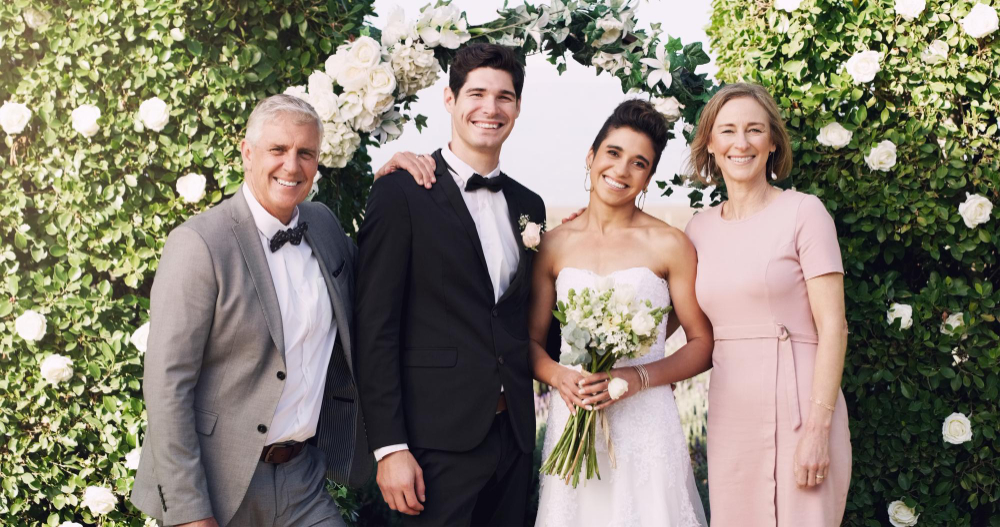
There was a time when “wedding guest style” meant one thing: a floral midi dress, a pair of nude heels, and a silent prayer that nobody else showed up wearing the exact same print. That era isn’t gone entirely, but it’s no longer the whole story. As wedding guest season stretches across the calendar, from late spring garden ceremonies to fall receptions under string lights, the way people are dressing for other people’s weddings has quietly become one of the more expressive corners of everyday fashion.
Part of that shift comes down to volume. Millennials and Gen Z are attending weddings at a pace that makes the old one-and-done dress feel impractical, both financially and creatively. The result is a wardrobe approach that favors versatility and personality over playing it safe, and nowhere is that more visible than in the rise of jumpsuits as a legitimate, even preferred, alternative to the dress.
The Jumpsuit Takeover
It makes sense. Jumpsuits photograph well, move well on a dance floor, and sidestep the anxiety of wind, hemlines, and seating logistics that come with a dress. But there’s also something more interesting happening beneath the practicality: the jumpsuit has become a way for guests to signal a bit of individuality within an event that, by design, centers someone else. Wide-leg tailoring in a rich jewel tone, a plunging neckline balanced by structured shoulders, or a matching set with a cropped blazer, these are choices that read as considered rather than default. In a culture increasingly skeptical of over-consumption, the jumpsuit’s built-in restyling potential (swap accessories, change shoes, alter the whole mood of the outfit) also fits neatly into a broader appetite for getting more wear out of fewer pieces.
The Dress Isn’t Going Anywhere
None of this is to say the dress has lost its cultural weight. Wedding guest dresses remain the default for a reason: there’s an emotional register to a great dress that a jumpsuit, for all its practicality, doesn’t quite replicate. What’s changed is the range of what counts as appropriate. The rules have loosened around color (deep, saturated tones are as welcome now as soft pastels), silhouette (asymmetric hems, corseted bodices, and unexpected necklines have entered the mainstream), and even formality, with many guests now treating the “dress code” line on an invitation as a starting point for interpretation rather than a rigid instruction.
Dressing for the Vibe, Not Just the Event
What ties both trends together is a broader move away from dressing for the occasion in the abstract and toward dressing for the specific vibe of a specific wedding. A vineyard wedding in September calls for a different energy than a downtown loft wedding in June, and guests are increasingly attuned to that distinction, treating each invitation almost like a mini creative brief. It’s a small but telling example of how personal style has become more fluent, more attentive to context, even in situations that used to default to a single, safe uniform.
Wedding guest season will always come with its unspoken rules, no white, don’t outdress the bride, check the dress code twice. But within those boundaries, there’s more room than ever to actually enjoy the process of getting dressed. Whether that means reaching for one of the jumpsuits currently dominating shopping carts everywhere or committing to a dress that finally does the moment justice, the throughline is the same: guests aren’t just attending weddings anymore. They’re styling for them.

