

Industrial designers have traditionally specialized in a single product category. But as industries become increasingly interconnected and AI reshapes the design process, designers are moving across disciplines more than ever before. From smart appliances to juvenile products, from hardware to soft goods, the products may change, but the goal remains the same: designing around people.
Kaiyuan Chen, an industrial designer based in New Jersey, has experienced this shift firsthand. Drawing on projects across consumer electronics and baby products, he reflects on how industrial designers can adapt to different industries while keeping people at the center of every design decision.
Looking across the design industry, manyz practitioners establish their careers by specializing in a single product category. Kaiyuan Chen, however, has successfully bridged the gap between premium smart home appliances and consumer juvenile soft goods—a rare demonstration of truly cross-category design expertise.
Throughout his career, he has remained committed to a core design philosophy: design should serve people, not products. While product categories may differ in form and function, authentic user experience remains the enduring foundation of every design decision. Guided by this consistent and practical human-centered design methodology, Chen has continuously delivered outstanding work across a wide range of vastly different product sectors.
His achievements have earned widespread recognition from the international design community, receiving prestigious honors including the Red Dot Design Award, the International Design Awards (IDA), and the MUSE Design Awards, among others. These accolades not only acknowledge the craftsmanship, innovation, and execution of his work, but also affirm the professionalism and universal applicability of his human-centered design philosophy. As a result, he has established a distinctive identity as one of the emerging designers recognized for excellence across multiple design disciplines.
“Many industrial designers explore different product categories in school,” Chen says. “But in professional practice, every industry has its own design logic. What never changes is the responsibility to understand the people you’re designing for.”
For hardware products, aesthetics and functionality are inseparable. Good design is not only about appearance—it must also be reliable, intuitive, and enjoyable to use. That means understanding how people actually interact with a product, then using design to solve real problems.
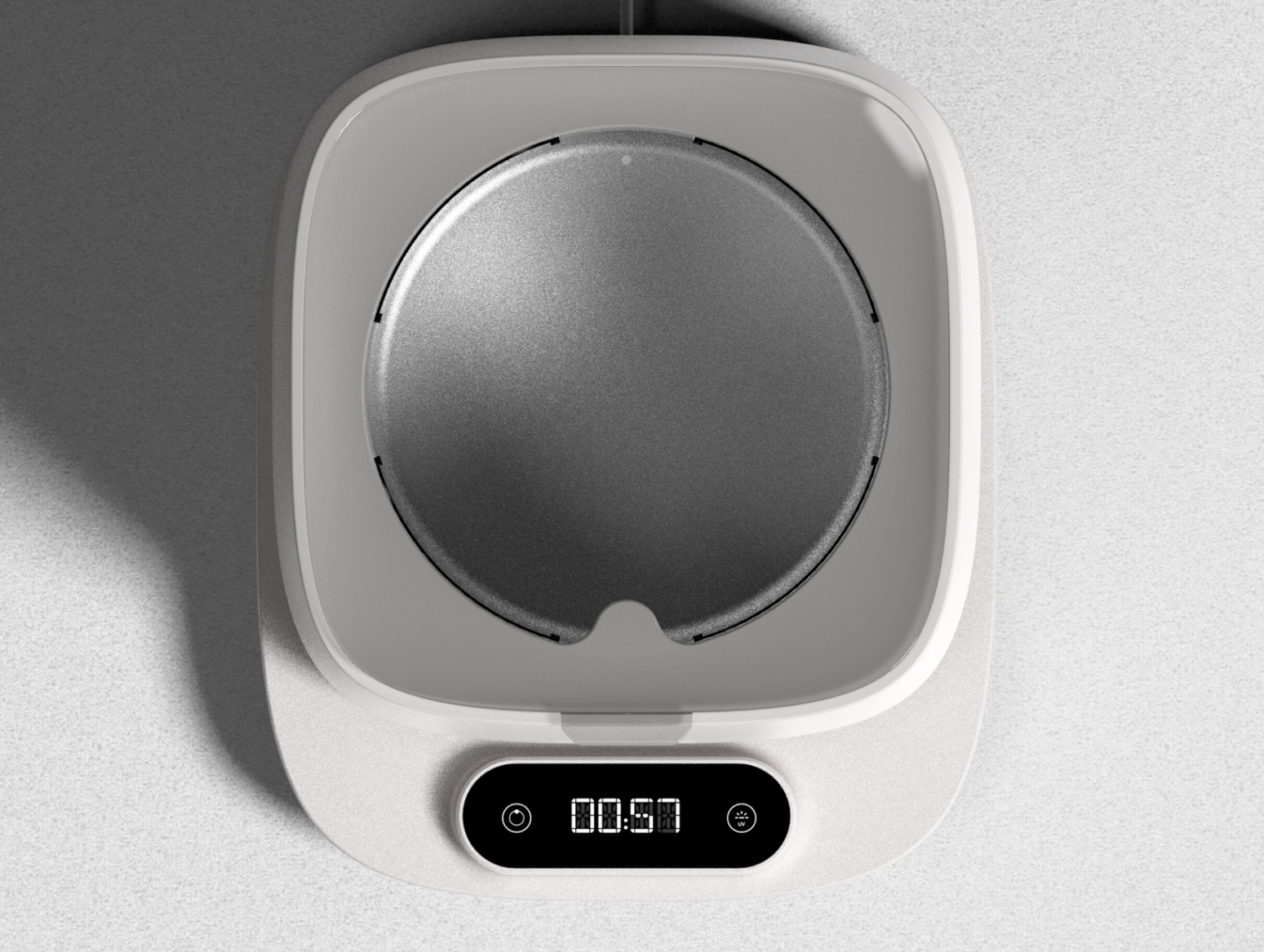
While developing an ultrasonic cleaner, Chen’s team identified overheating and water resistance as two major user concerns through extensive research. Instead of treating them as purely engineering issues, the team approached them as design opportunities.
Guided by a forward-thinking human-centered design philosophy, Kaiyuan Chen and his team identified users’ most critical safety concerns and redesigned the product around a modular thermal architecture that improved both heat dissipation and water resistance while keeping manufacturing practical.This approach effectively addressed common issues in household appliances, including overheating and inadequate water resistance. Compared with the industry’s more conservative engineering-driven fixes, the solution successfully balanced user safety, manufacturability, and commercial viability, overcoming the longstanding limitations of traditional hardware design, which often prioritizes technical specifications over real-world user experience.
Through meticulous user-focused innovation and strong end-to-end implementation capabilities, the project was honored with the Gold Winner title at the 2026 MUSE Design Awards and the DNA Paris Design Awards. Rather than relying on superficial novelty, these international recognitions demonstrate that breaking away from conventional engineering thinking and allowing human needs to drive design optimization can produce more refined, mature, and impactful industrial products. They also further validate the reliability and forward-looking nature of Kaiyuan Chen’s human-centered design approach.
Compared with the technical optimization required in hardware design, soft goods design demands a far deeper understanding of user scenarios and significantly stronger supply chain integration capabilities—areas that have become Kaiyuan Chen’s defining strengths as a designer.
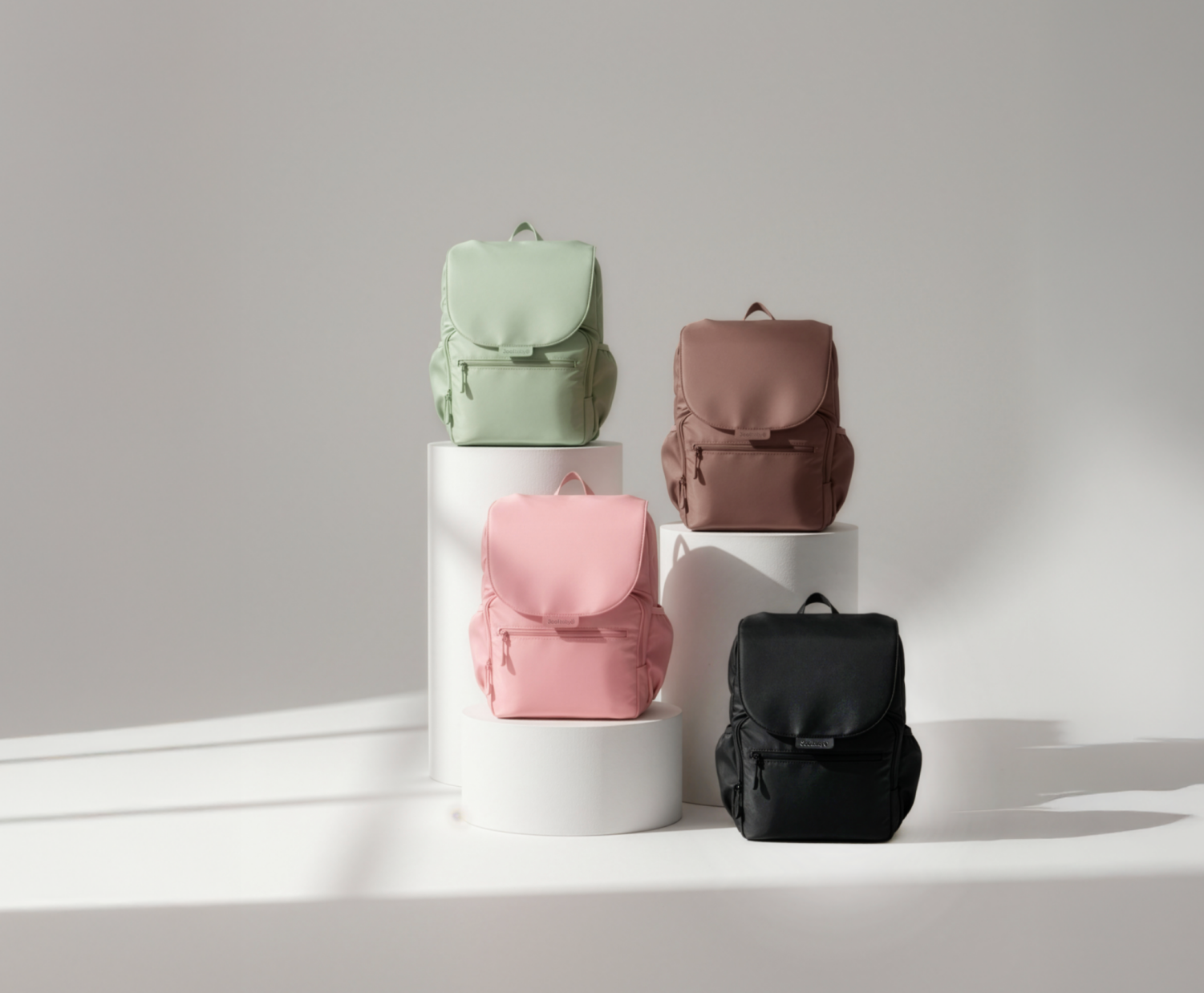
Today, the baby and children’s juvenile soft goods industry is increasingly constrained by product homogenization. Many products emphasize visual appeal while compromising practicality, and rising cost pressures often make it difficult to deliver both quality and user experience. In 2024, Chen led the design of an mass-market maternity and baby organizer for Walmart, undertaking the project amid escalating tariffs and stringent cost controls. Guided by the principles of design begins with scenarios, value outweighs form, and cost should serve the user experience, he challenged the industry’s conventional “form-first” development model and pioneered a reverse design methodology centered on material research, scenario analysis, and precise value allocation.
Rather than designing around the product itself, Chen began by thoroughly analyzing the complete journey of parents caring for children outdoors. Storage zones were planned according to authentic usage patterns, ensuring that the most frequently used essentials remained immediately accessible. Through carefully considered scenario-based design decisions, the organizer simplified everyday parenting routines while reducing cognitive and physical burden for users.
Facing strict budget constraints, Chen viewed cost not as a limitation to design, but as an integral component of it. Instead of sacrificing quality or simplifying essential user experiences, he strategically allocated resources by eliminating non-essential decorative elements and concentrating investment on the features users genuinely perceive and value most.
To achieve this balance, Chen immersed himself in every stage of the supply chain and established an integrated end-to-end development process. He introduced an original systematic decomposition framework for soft goods design, transforming what was traditionally conceived as a single bag into a coordinated multi-component system. By methodically removing low-value decorative features, the project redirected limited resources toward enhancing the core parenting experiences that matter most to users.
This innovative methodology effectively addressed one of the soft goods industry’s longstanding challenges—the perceived trade-off between cost efficiency and user experience—while providing a practical and scalable model for delivering high-quality design in affordable consumer products.
The organizer was ultimately launched across more than 3500 Walmart stores throughout North America and generated an overwhelmingly positive market response.. Its scenario-driven, value-oriented design approach has since become a meaningful reference for the evolution of similar products within the industry, further reinforcing Kaiyuan Chen’s reputation as a designer distinguished by cross-disciplinary expertise, strong execution capabilities, and meaningful innovation.
Reflecting on his experience, Chen believes that working across disciplines is becoming the norm for industrial designers. Yet the greatest value of crossing industries is not simply learning new materials or manufacturing processes—it is gaining a deeper understanding of people.
“The products may change,” he says, “from appliances to juvenile products, from hardware to soft goods. But the people we design for remain the same.”
For Chen, human-centered design is not tied to any particular product category. It is a way of thinking that connects technology, manufacturing, business, and everyday life. As industries continue to evolve, he believes the designers who understand people—not just products—will create the solutions that matter most.

