

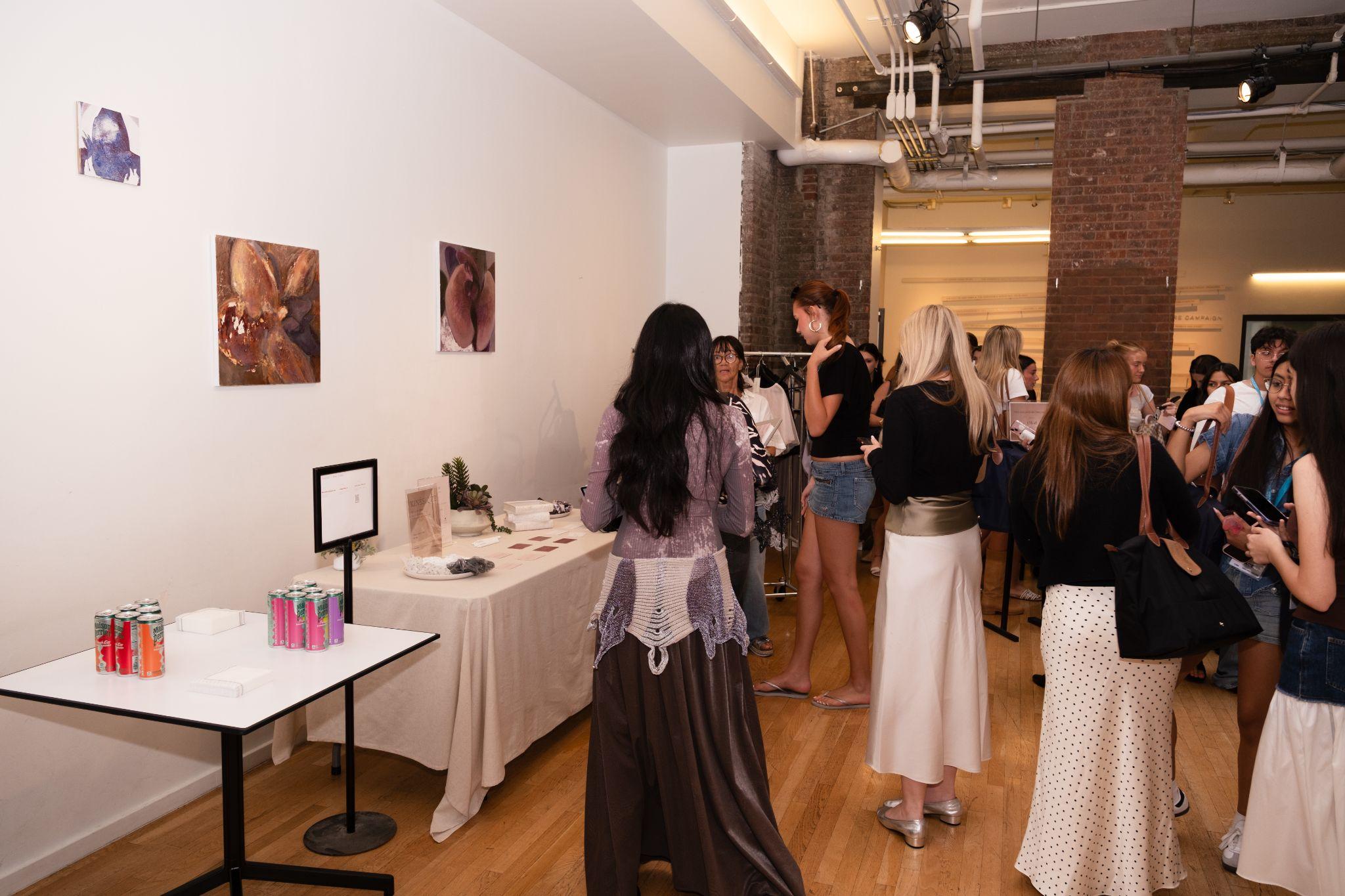
At Kinésique’s presentation in Lower Manhattan, fashion designer Kiki Peng transformed original knit structures, modular construction, and the movement of the body into a tactile design language—one that could be worn, altered, and experienced in real time.
Fashion designer Kiki Peng does not treat clothing as a static object. In her work, garments respond to the body—stretching, revealing, restraining, and protecting as movement continually reshapes their form and meaning. That approach came to life on July 24, 2026, when Peng presented a selection of her original textile and garment works during Kinésique’s three-hour presentation at Gibney: Agnes Varis Performing Arts Center, located at 280 Broadway (entrance at 53A Chambers) in Lower Manhattan.
The event introduced Kinésique as a fashion-led dancewear brand interested in the silent language of the body, including posture, gesture, tension and release. A curated selection of ballet-inspired garments appeared alongside original textile works created by Qian “Kiki” Peng, Fashion Designer at Kinésique. The selected pieces articulated the brand’s studio-to-street vocabulary, while Peng’s original knits showed how that language could be expressed through original textile development, construction and body-responsive design.
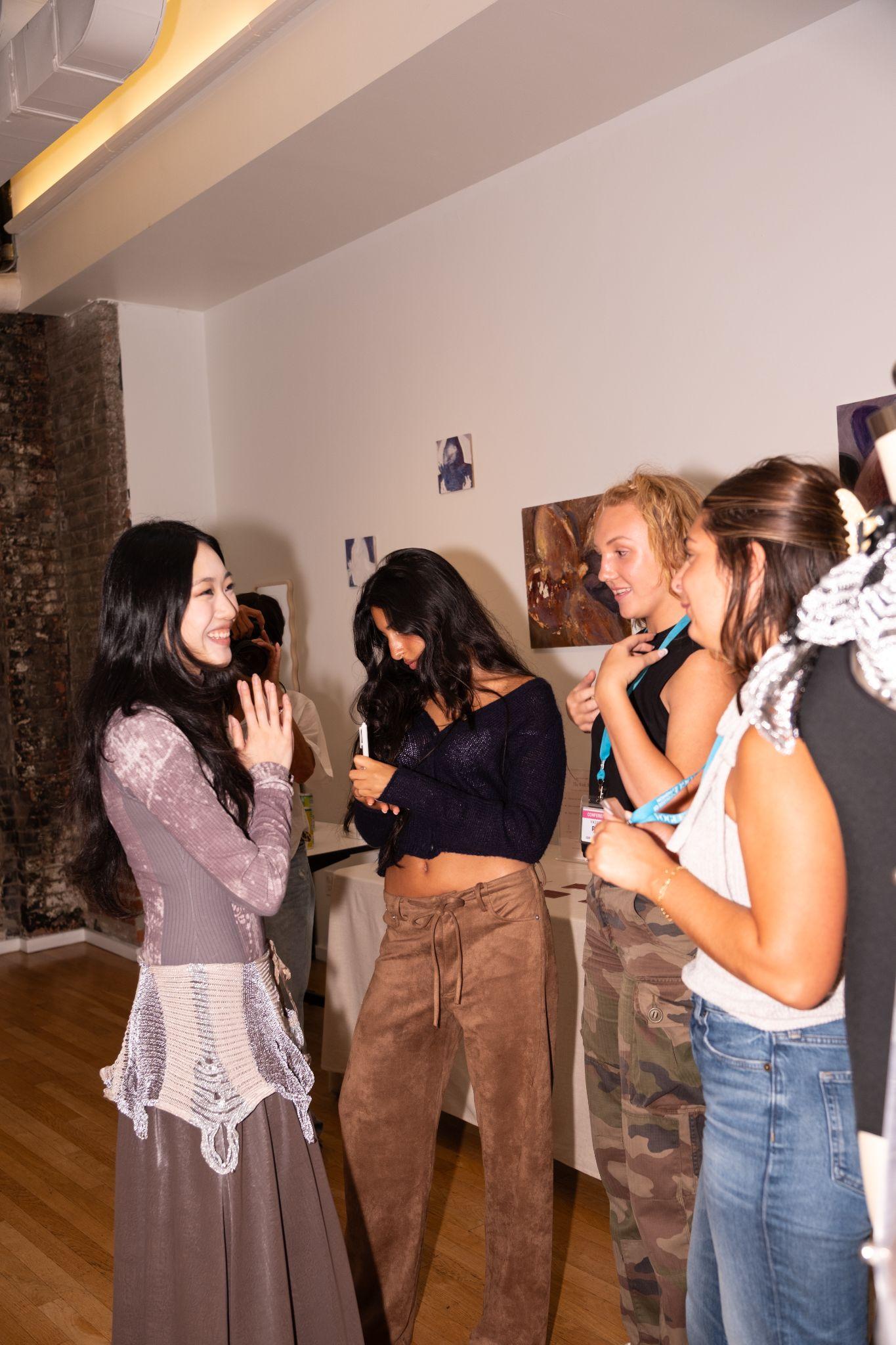
Known professionally as Kiki Peng, Peng’s work has been presented during New York Fashion Week and featured in Elle China, Harper’s Bazaar China, Sicky, and Goji Magazine, while one of her designs was worn by artist Sevdaliza in media promotion. Her practice spans fashion and textile design, with particular attention to material, proportion and the relationship between garment and body. At Kinésique, she applies that focus through original textile development, technical construction and body-responsive design. Her work often begins with the textile itself, testing how a material holds, releases or extends the body and allowing those qualities to shape silhouette and movement.
At Gibney, these ideas became visible through live fittings, as the placement and proportion of the pieces changed on different wearers.
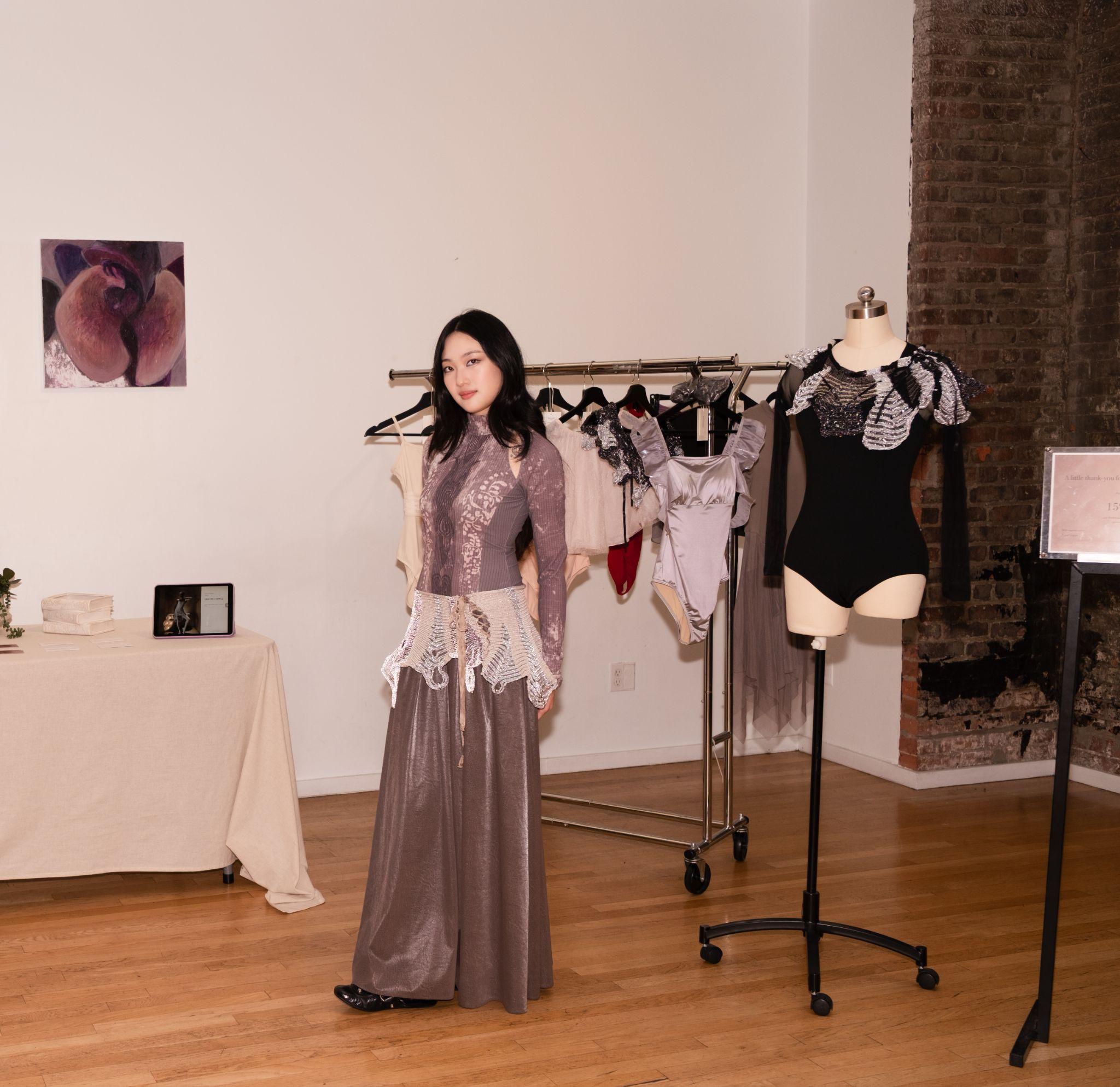
That process is rooted in Kinésique’s larger creative framework, The Dual Self. Kinésique describes the concept as an exploration of the contrast between the controlled self presented outwardly and the more instinctive self beneath it. Rather than approaching ballet only through its polished image, the framework also considers the discipline, fatigue and vulnerability involved in producing that image. These ideas appear in Peng’s designs through differences in structure, density, exposure, fit and the relationship between the garment and the body.
Peng’s knit pieces offered the clearest material expression of that framework. Irregular open structures sat beside denser sections; pale metallic tones met darker ones; loose extensions and adjustable ties shifted with the wearer. The work suggested protection and exposure at once. Irregular edges and loose extensions gave the pieces a less fixed silhouette and allowed their form to change according to placement.
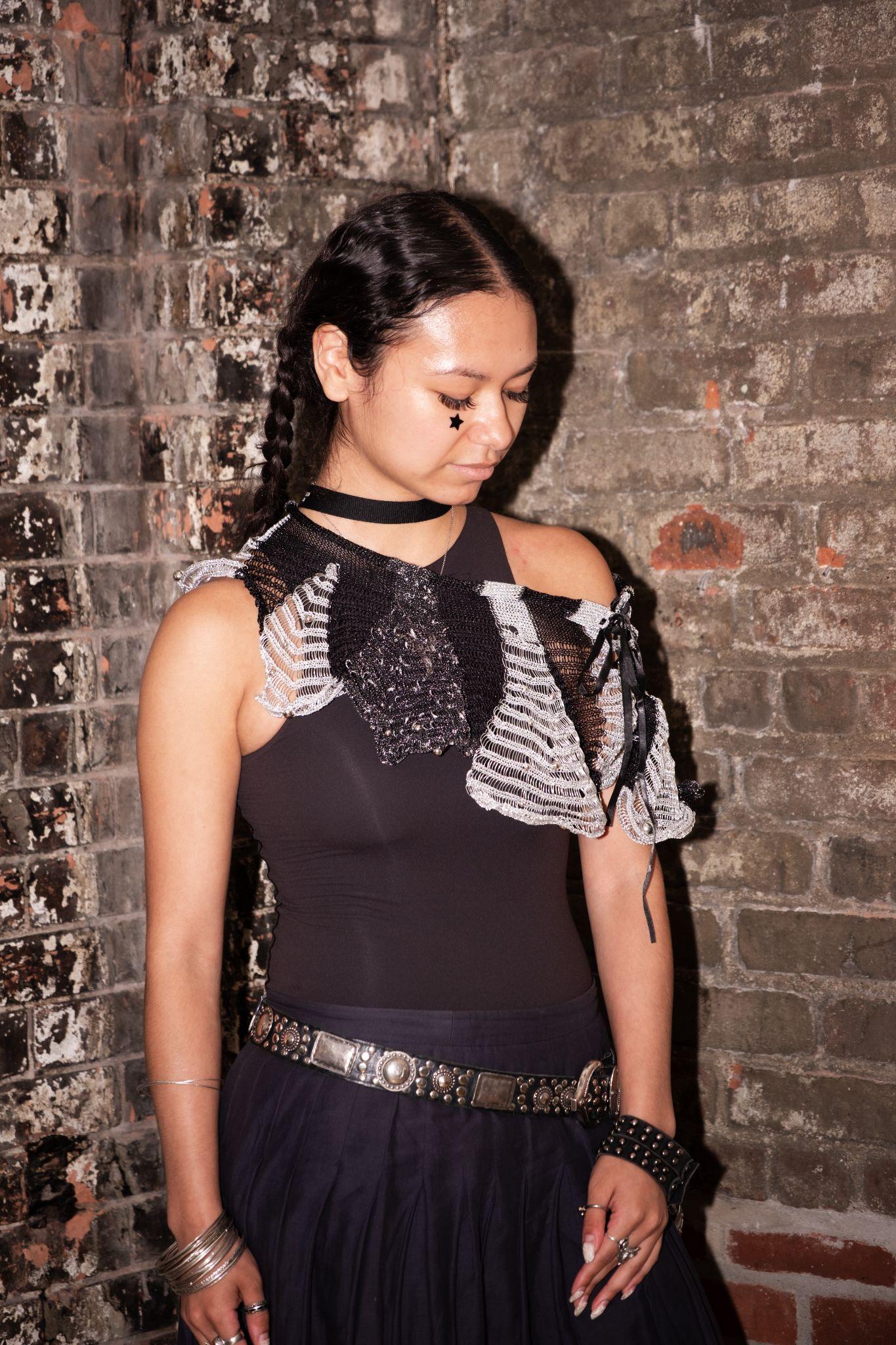
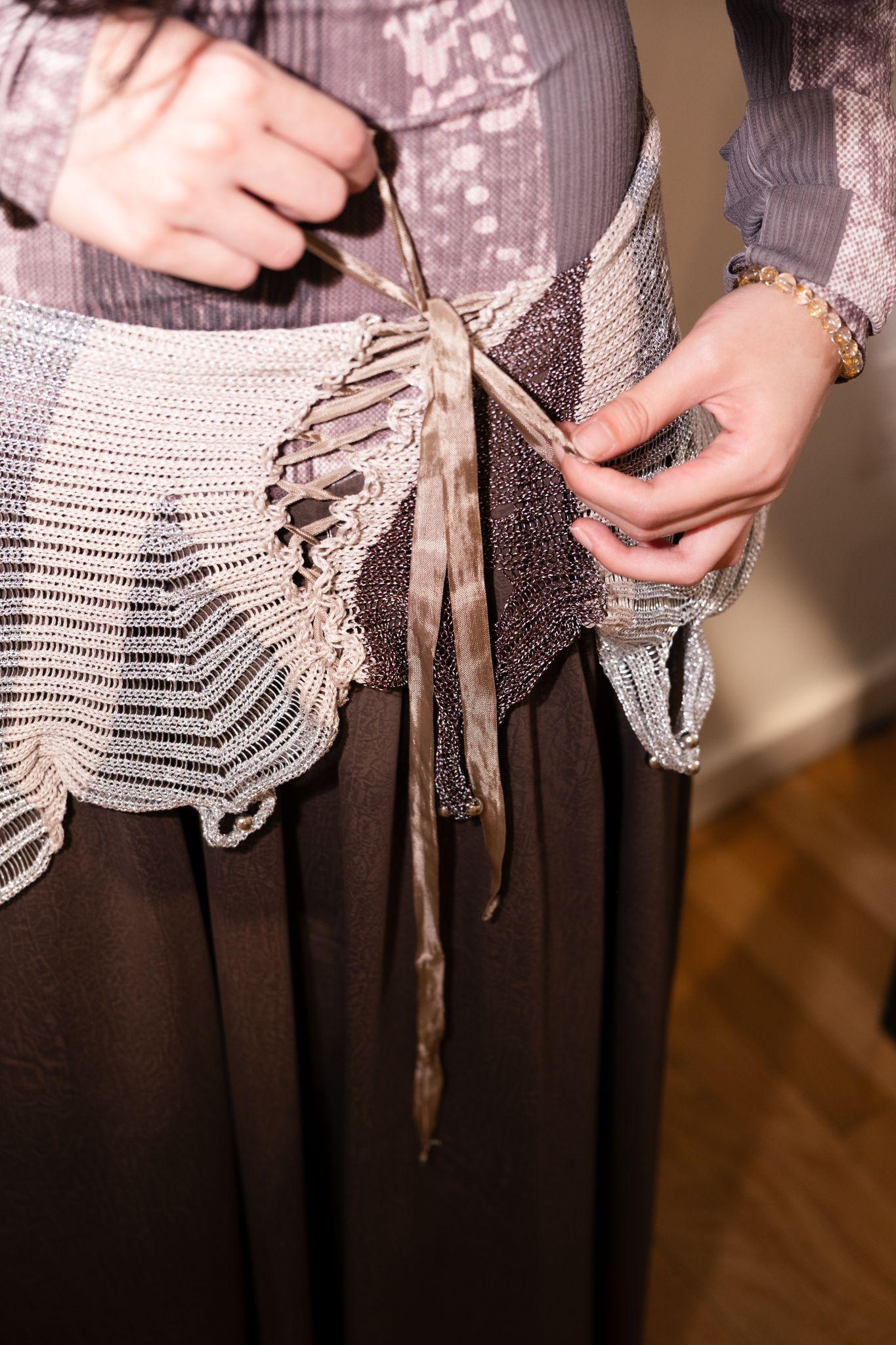
The modular knits became some of the presentation’s most discussed works. Throughout the event, guests asked to try the pieces, while Peng adjusted their ties, placement and proportion for different wearers. The fittings showed how the same design could take on different proportions and functions depending on placement, styling and the wearer.
The black-and-silver knit, for example, moved between shoulder piece, collar and sculptural accessory. As Peng guided guests through its ties and placement, she also explained the thinking behind the work, including how restraint can create visual tension, how an exposed opening can suggest vulnerability and how an apparently decorative form can behave like a piece of armor.
At the Gibney pop-up, Peng presented the textile and garment studies connected to The Dual Self alongside early visual research and selected design drawings. The presentation gave visitors insight into how the concept was being translated into textile, silhouette and construction without presenting the forthcoming collection as a finished result.
Participation extended beyond the fitting area through Kinésique’s Wish Box. Visitors selected prompt cards about movement, identity, uncertainty and the body, then contributed handwritten responses. More than 30 people took part. The activity was designed as more than an event keepsake: the anonymous reflections formed a archive of participants responded to questions related to the ideas informing Kinésique’s work.
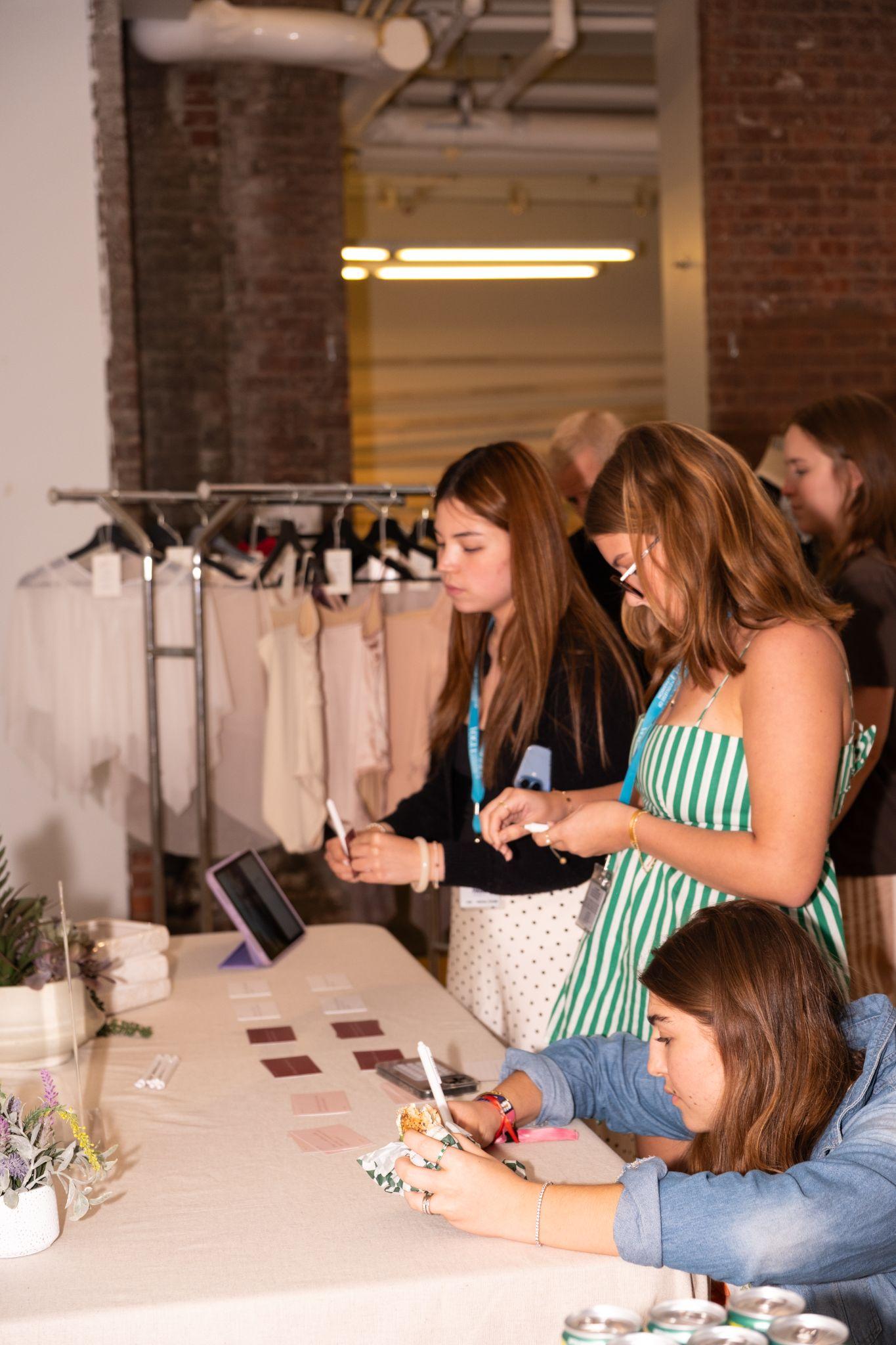
In response to the question, “What did dance teach you that nothing else could?” one participant wrote: “It’s okay to not know your next move. Your body will know what to do even if your mind doesn’t.”
The response connected closely with questions about the body and perception explored throughout the presentation. For Peng, the anonymous reflections provided another source of observation alongside the fittings and conversations taking place during the event.
Peng plans to carry the ideas tested through these knits into Kinésique’s forthcoming original collection, currently being created under the working concept The Dual Self: Becoming. The new collection will continue the framework established in The Dual Self while placing greater emphasis on transformation through original garments and textile work.
For Kinésique, that work will continue through in-person presentations, fittings and exchanges with dancers and other wearers. These settings give Peng an opportunity to observe how people move in the garments, how they interpret different forms and how the pieces respond to different bodies. The Gibney pop-up demonstrated that relationship by placing Peng’s design process in direct contact with the people wearing and encountering the work.
The presentation at Gibney brought Kinésique’s conceptual framework into physical form through Peng’s original textiles, modular construction and direct interaction with wearers.
Photography: Julie Wu

