

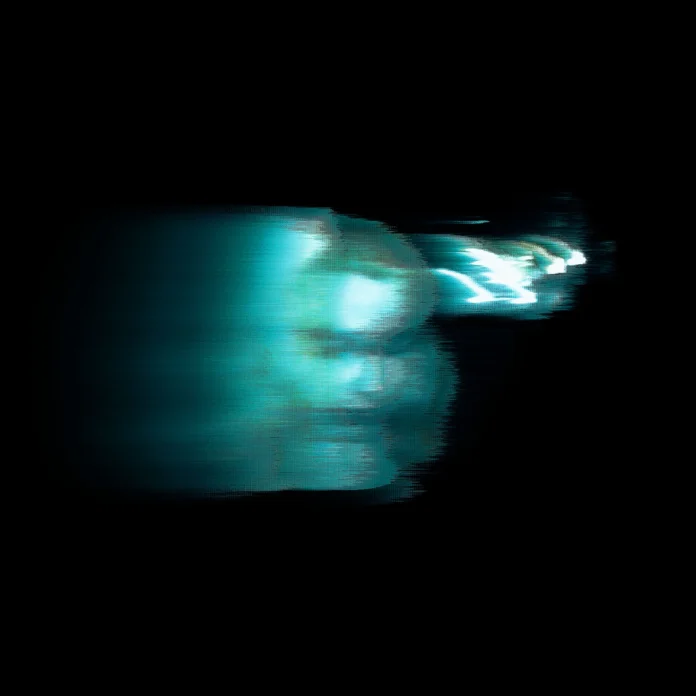
Sleep comes up at least half a dozen times on Lost Weekend. Phoebe Bridgers daydreams about sleeping; talks in her sleep; fakes sleep, which is nothing new. But one of the most gut-wrenching moments on her first album in six years arrives when she finds herself walking early in the morning, awake before her significant other. “I don’t know why I’m crying/ Until we’re dead or die trying,” she sings. We know why we get into and out of bed; we have to. Why tears well up in our eyes is harder to rationalize, but there’s a reason “crying” is the first word on the album, and Bridgers keeps stirring us to the edge of it, just as she’s forced to reckon with our proximity to death. With Ethan Gruska, Jack Antonoff, Tony Berg, and Alex G splitting production duties alongside her, it is by far her dreamiest album, a miracle of sound design and imaginative world-building. In a way, these are songs she wrote while hiding off from the world, sleeping in, with “too much money and nothing to lose.” But they are also the mark of a great songwriter who, in grief and in love, wakes to the double-edged sword of existing unalone, and can’t help but brave through the thought of oblivion: forthrightly, ambitiously, and right before our eyes.
1. The Outside
As if searching for a hidden frequency in pitch-dark space, ambient synths flatline for the first twenty seconds: we could be catching alien feedback, time traveling, or simply closing our eyes to the hum of a hospital room. Most realistically, though, we are in the middle of a funeral, the vocoder betraying a flash of dissociation (and a bit of influence from her partner, Bo Burnham, who accompanies her on vocals). “One more time for old time’s sake/ I’ll watch him get carried away,” she sings, letting the double entendre take her back in time, to a violent domestic scene that left her frozen in place, and then forward, to a concert where strangers kept her suspended in the air for what seemed like an eternity. “But I was on the outside, watching,” she repeats, yet something about the realization clears up her voice, gorgeous over Ethan Gruska’s unfurling piano and Rob Moose’s string arrangement. Raw emotion, synths fully in the rearview.
2. Lost Boys
An obvious single, ‘Lost Boys’ remains the sprightliest and most anthemic song in the context of the album, an exercise in flooding a song with intricate production while maximising its radio-friendliness; ‘Kyoto’ sounds simplistic (if still superior) by comparison. But Bridgers counters accessibility by rendering it the most lyrically ambiguous song on the record, opening it up to interpretation in ways that help frame the entire album – “Weightless but not scared” is basically an extension of the feeling on ‘The Outside’. You can hear it echo throughout Lost Weekend.
3. Kill Me
Bridgers zooms out, dodges the first person (“Times are scary”), and sinks her voice low and reverberant, a stark contrast to yet emotionally reminiscent of the Killer EP over a decade ago. This time, she sets the scene plainly (“Costume party/ When the veil was thinning”) and the plot moves fast: “He kissed me hello/ He tastes like a flower with chemical petals/ Bobby, you taught me that I know nothing.” (Ethan Gruska and Jack Antonoff are both credited with sound design, but none of their contributions overburden the arrangement; you have to lean in to hear the rustling percussion evoking the kiss.) If Lost Weekend is the Kid A to Punisher’s OK Computer, this is Bridgers’ ‘How to Disappear Completely’, and it makes sense that someone who indisputably sounds like Cameron Winter would be her Thom Yorke, referencing the case of a man who was found dead on a beach, dressed in a suit, with a scrap of paper in his pocket that read “Finished” in Persian. So the song – the longest on the album – cuts off abruptly, at the peak of its drama.
4. The Governor’s Waltz
With Christian Lee Hutson’s fingerpicked guitar and mandocello taking center stage, ‘The Governor’s Waltz’ hews close to the sound of his Bridgers-produced albums, while Alex G brings his We’re All Going to the World’s Fair ghostliness to the funhouse. Caroline Shaw’s vocals may be otherworldly, but Bridgers’ lyrics don’t leave much to the imagination, relaying the demise of a relationship in plain, if still playful, language. Someone had the fine idea to inject the echo of a dance beat as she sings of “dancing ourselves clean late New Year’s Eve,” before landing one of the album’s stingiest punchlines: “You deserved better, you wanted me.” And what does she want?
5. Bobby
The album pummels back to life with ‘Bobby’, and Alex G’s conspicuous absence is filled out by Antonoff’s banjo and head-spinning synths – not to mention electric guitar, which Jesu and Mike Kinsella also, astoundingly, supply on the same song. It’s a dizzying rush of infatuation that spins the portentous “end” in a positive light, cushioned by Burnham’s baritone and Shaw’s viola. “We’ve got stars on the ceiling and clothes on the floor/ And a thing in a box I don’t fuck anymore,” Bridgers sings. It’d be as radio-friendly as ‘Lost Boys’ if it didn’t end in a minute-long puddle of synths, like falling asleep to the light at the end of the tunnel.
6. Lost Weekend
The title track strips everything down to Bridgers’ voice and a droning church organ, mostly, with tender flourishes filling in the cracks of her vulnerability, palpable in her confession that “I had the thought you would outlive me/ I loved you, and you couldn’t forgive me for that,” or the more headline-grabbing “I’m supposed to be married, but I called it off.” What sounds at first like Bridgers giving herself some breathing room, steadying herself in a moment of upheaval, turns into an uplifting swirl of production – as soon as she runs out of words, the sky seems to open up and steal every string instrument from the musicians’ hands, streaking the clouds.
7. Haunted
And so we find Bridgers traveling above ground, fighting insomnia with painkillers and a streak of hope for the future. “I have no secrets, only feelings/ And I know those go away,” she sings, or at least she can escape the house that’s definitely not haunted by going on the road again. “I am not afraid,” she once again declares, but this time it’s a feeling that leads, not a clarifying sentence. It’s a country song complete with pedal steel courtesy of Greg Leisz, but its sense of propulsion is extra-human; three different people contribute drum programming, and it somehow works in carrying Bridgers away. Of course, it helps that her boygenius bandmates are right there beside her.
8. Panorama
The sky is once again Bridgers’ canvas, and for two whole minutes ‘Panorama’ revels in a kaleidoscopic array of strings, horns, and synths before settling into Ethan Gruska’s woozy piano. Checking in after a long trip, the singer is spent, and the hint of vocoder gives something away, pushing her unfiltered self, like a drink, further on the outside.
9. Still Standing
In the most delicately hushed voice, Bridgers returns to the violent incident alluded in the opening track, trying to make sense of the details still etched in her memory. How to reconcile the empathy and gratitude she feels in the wake of her father’s death with the indifference she’d grown accustomed to, a defence mechanism. Maybe she recognizes her own need to escape, as conveyed in ‘Haunted’, when she sings, “You left your suitcase by the bed/ Like you needed to know you could go whenever you wanted.” There are gaps and in her memory as well as her imagination, and when she tells herself it wasn’t so bad, “in a way” is doing a lot of the heavy lifting. It’s one of Bridgers’ most devastatingly conflicted songs, and all the more resonant for it.
10. Liberty Tree
It makes sense to follow ‘Still Standing’ with a joyfully carefree song about acting a little reckless in an abandoned mall and running through the airport; to have some fun while putting herself in the shoes of her child self, if you want to get psychoanalytical about it. “You were made in the image of god/ But you look like your mom/ In this picture of us,” she sings, giving Burnham a run for his comedic money, before landing on a crushingly sincere note: “Don’t die, Bobby/ Before I die/ It feels so good to have you in my life.” Instead of ending right there, the song balloons back into its cosmic melody, if only for a moment.
11. Never Going Back!
Bridgers repeats “The way it used to be is not the way it is” like a triumphant mantra, warm enough to huddle around the campfire. She even lets out a euphoric scream before the instrumentation is reduced to a simmer, making way for a sobering voice message from her dad. “I know you’re busy. Being a rock star takes up a lot of your time, I imagine,” he says, words strung with guilt after she’s basically boasted about all the other things she can do with it. After ‘Standing Still’, you wonder if this could really be the same person haunting Lost Weekend, and ‘Never Going Back!’ sounds like Bridgers wondering the same thing. “The past is looking brighter all the time,” perhaps, and yet it can’t be changed.
12. Other Plans
There’s a sadness reverberating through ‘Other Plans’, but the least decorated song on the album goes to show that love is only as simple as succumbing to fate, even against one’s best instincts: a beautiful, helpless feeling.
13. Lost Parade
A distorted memory or a twisted future? ‘Lost Parade’ offers some much-needed pause before the record’s breathless final stretch.
14. I Can’t Wait
‘I Can’t Wait’ might be Lost Weekend’s crown jewel, a bid to let life drag on in misty reverie, leaving the past behind. It’s a gradual liftoff, and with the return of “Son-John Johnson,” as the voice that now sounds even more like Cameron Winter is credited, a big payoff. “All my life/ Side by side/ Hyde Jekyll Hyde/ Finally together,” they sing in curious harmony, and there’s Conor Oberst peeking through with a harmonica. The credits may be rolling, but this is not the end; it feels like a satisfied yawn before the world stirs up.
15. As Above
The old Hermetic axiom that gives the song its title suggests that all life dissolves into what the occultist Helena P. Blavatsky described as an “etherealized astral planet,” which might as well be where the album is set. The acceptance of death’s reality and the possibilities of a new life coalesce in climactic fashion; the emotional rollercoaster leaves Bridgers wildly defiant, mustering all her strength to proclaim: “You won’t have to believe in magic/ Leave it to me, and I’ll make it happen.” Unlike Punisher’s epic resolution, the instrumentation seems to be working against her – shrinking, fading, highlighting the strain in her voice, the futility; and the magic.
16. Lost Weekend (Reprise)
The album grants itself a smooth landing, Bridgers’ voice clear and sober, even if the distant, wailing chorus of ‘Kyoto’ inevitably comes to mind as she resolves, “When a dream comes true, a fantasy dies.” Just like the reprised melody bears traces of ‘Graceland Too’, except there’s no moon to stare at, no stars in the sky – only on the bedroom ceiling, and if you’re lucky enough, one of 40 planetariums around the globe. It may not be as poetic or fantastical, but Bridgers doesn’t make it sound so bad, this earthly plane. In a way, there’s no universe where Lost Weekend could be any better.

