

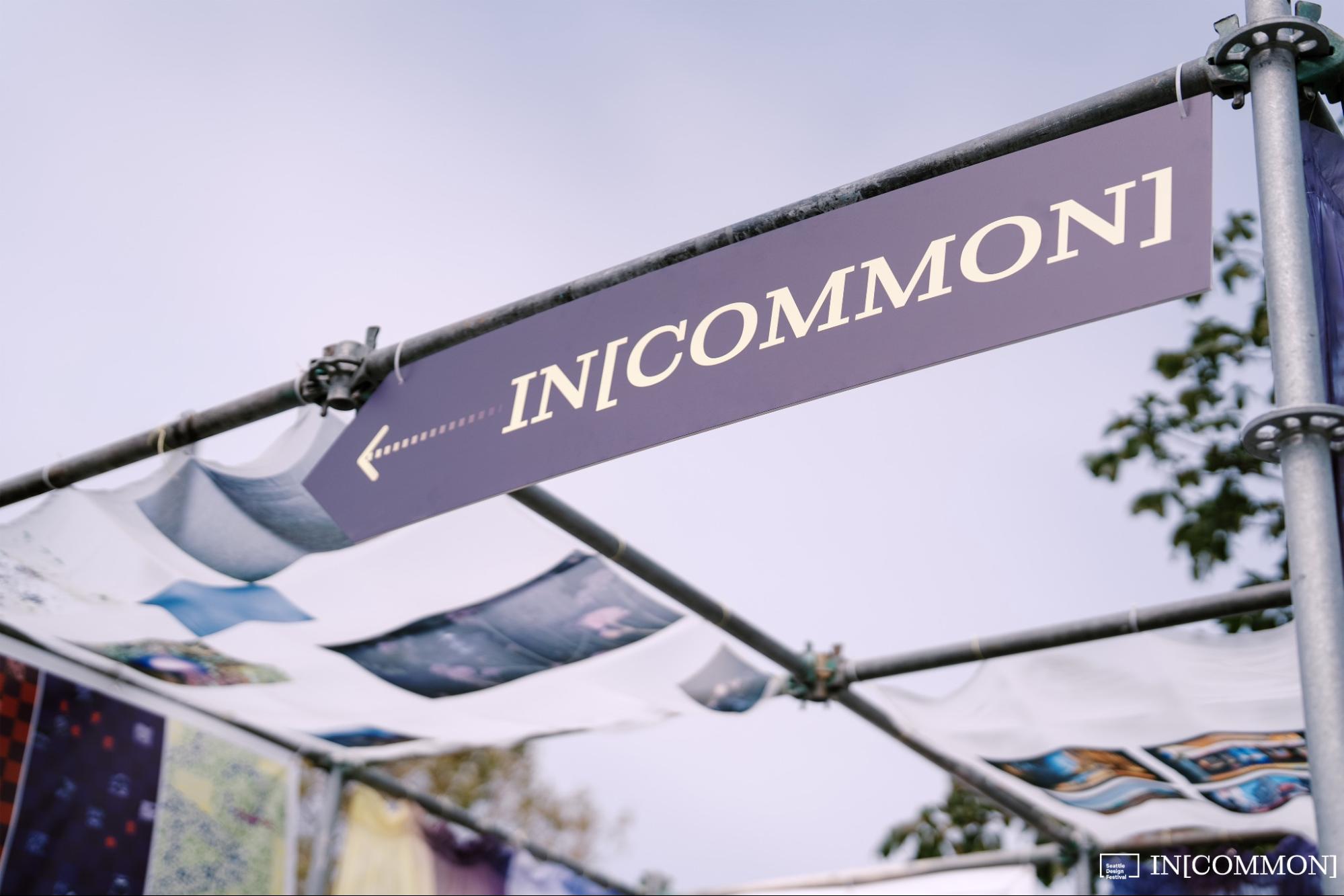
Summer is one of the best times to experience Seattle. Emerging from months of gloomy days and rainy nights, the city comes alive with families, creative communities, and colorful gatherings along Lake Union. This summer, that energy extended into the Seattle Design Festival, where installations, public programs, and the annual Block Party transformed the waterfront into a place to gather, interact, and experience design together.
Founded in 2011 by AIA Seattle, the Seattle Design Festival has grown into one of the Pacific Northwest’s largest community-driven design events, bringing architecture, urban planning, art, and experiential design into public conversation. Over the years, the festival has brought together voices from internationally recognized architecture and design firms including Gensler, HOK, and Mithun, alongside independent designers, artists, and community organizations, creating a platform where established practices and emerging perspectives meet.
As part of this year’s festival, global curatorial nonprofit Artistry Edge led by Chenyang Nie and independent creative director Sophie Wei presented IN[COMMON], a group exhibition bringing together eight artists and designers from around the world. The exhibition also marked the official launch of 1Merge, their collaborative arts and design development program created to connect emerging and mid-career practitioners with international exhibitions, design festivals, public programs, and professional development opportunities.
What Do We Have in Common?
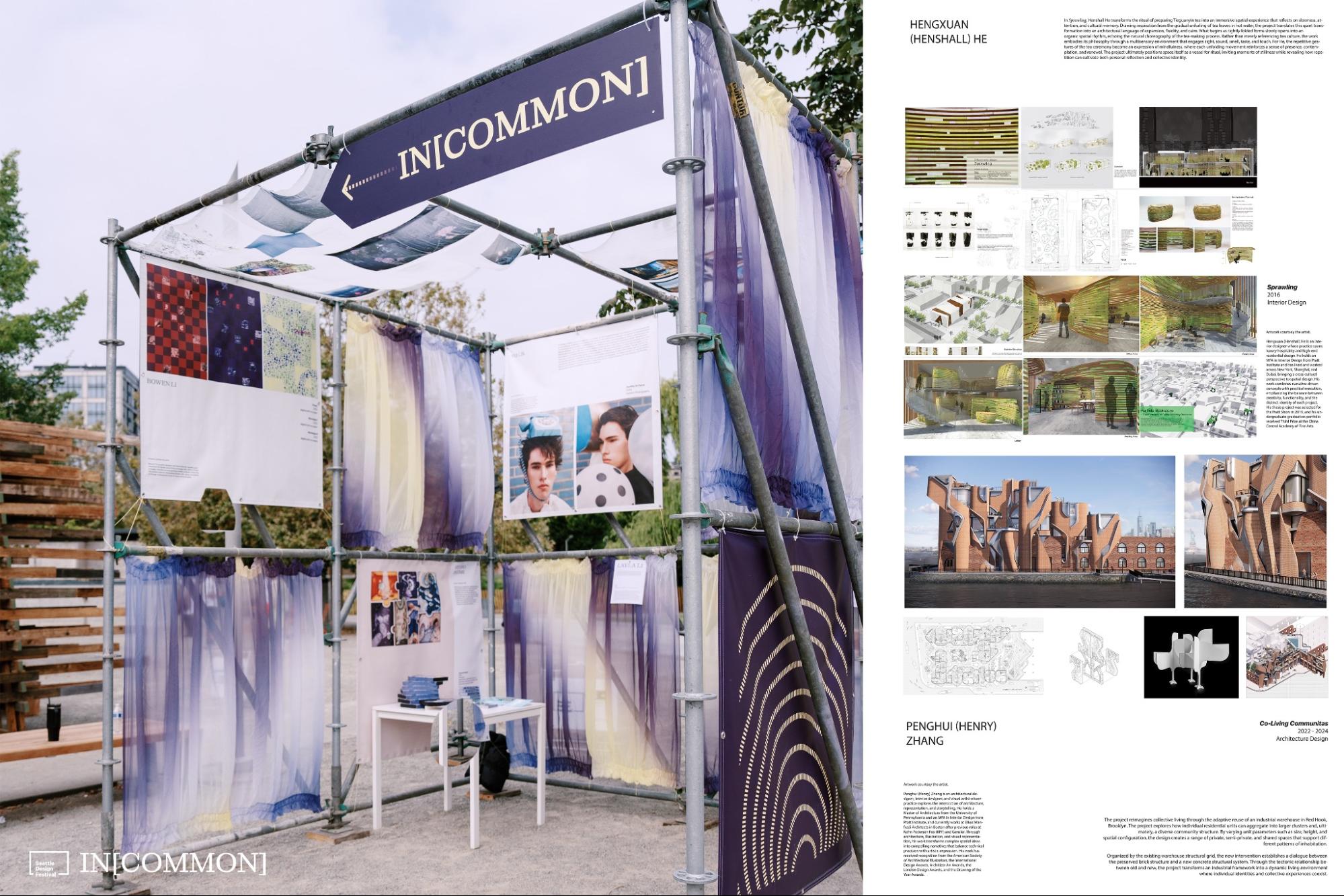
IN[COMMON] begins with a simple question: what do we actually have in common? Across architecture, photography, moving image, graphic design, illustration, publishing, and spatial practice, the exhibition looks at the experiences that connect us despite differences in discipline and background. Memory, identity, nature, ritual, time, and our relationships with one another become recurring threads. Rather than asking the works to look alike, IN[COMMON] places different perspectives beside one another to reveal how differently we can experience the same world.
Hengxuan (Henshall) He finds commonality through ritual. Sprawling transforms the preparation of Tieguanyin tea into an immersive spatial experience inspired by tea leaves slowly unfolding in hot water. A culturally specific tradition becomes a meditation on something universal: our need to slow down, pay attention, and reconnect with the present.
Bowen Li explores identity, uncertainty, and memory through contemporary visual communication. Works including Chaos and the Nostalgia series reflect the instability of locating ourselves between culture, recollection, and change—turning deeply personal experiences into questions that many of us share.
Yui Lin examines how we see and define one another. In Fluidity in Form, ribbons, balloons, toys, and delicate textures are placed alongside male bodies to reconsider masculinity through the female gaze. Softness and vulnerability emerge not as opposites of strength, but as alternative expressions of it.
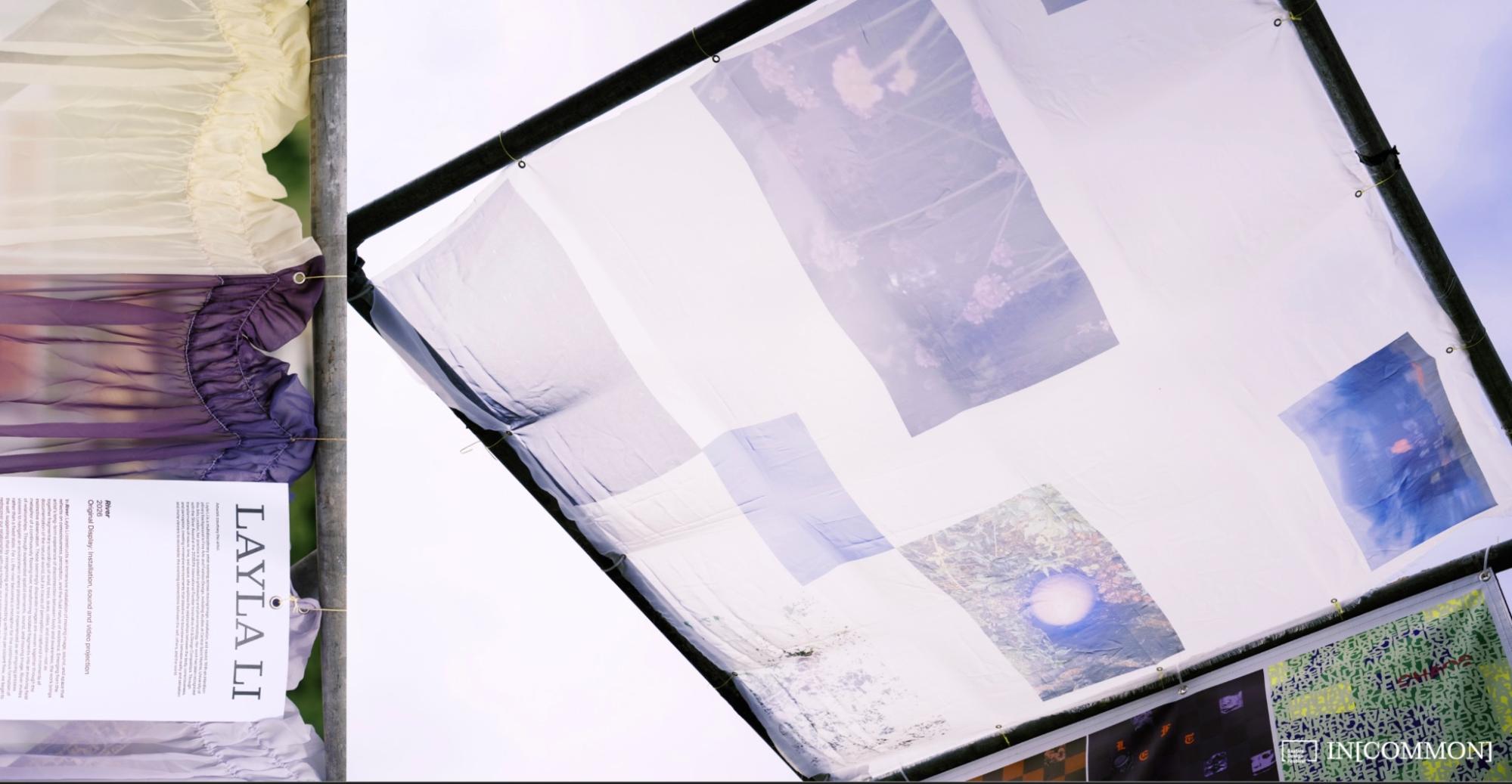
For Layla Li, what we share is continuous change. River weaves fragments of wind, trees, skies, cities, crowds, sound, and moving images into an immersive environment. Like a flowing river, the work suggests that identity is never fixed, but continuously shaped by our bodies, surroundings, and relationships with others.
Penghui (Henry) Zhang turns the idea of being “in common” into an architectural question. Co-Living Communitas reimagines an industrial warehouse as a collective living environment where private homes develop into clusters of semi-private and communal spaces, asking how architecture might support both individual identity and collective life.
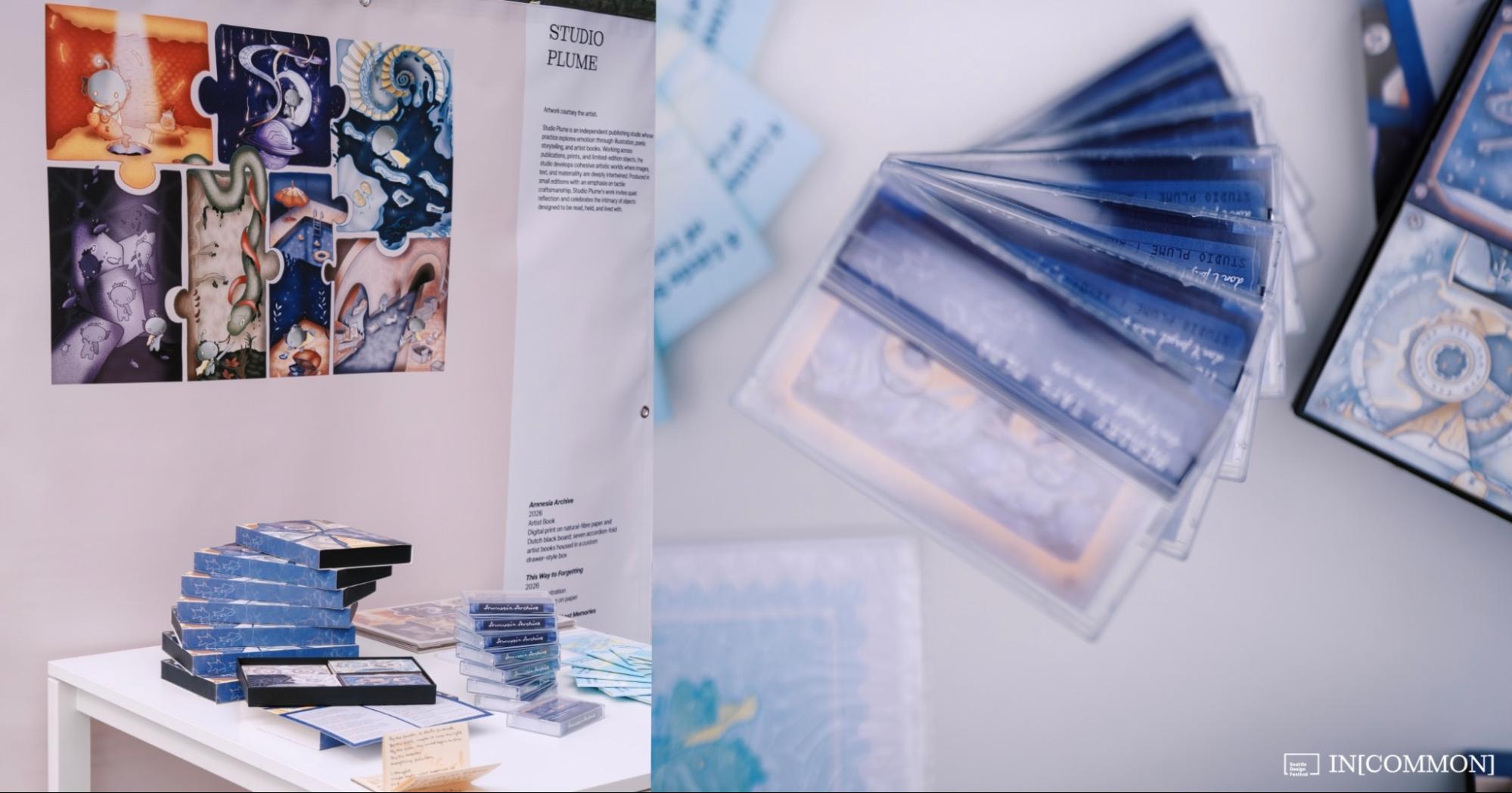
Studio Plume approaches the theme through remembering and forgetting. Artist books, illustrations, and Risograph prints including Amnesia Archive and A Little Sea of Lost Memories turn intimate objects into containers for emotion. Memory may be personal, but the desire to hold onto fleeting experiences—and the inevitability of losing some of them—is widely shared.
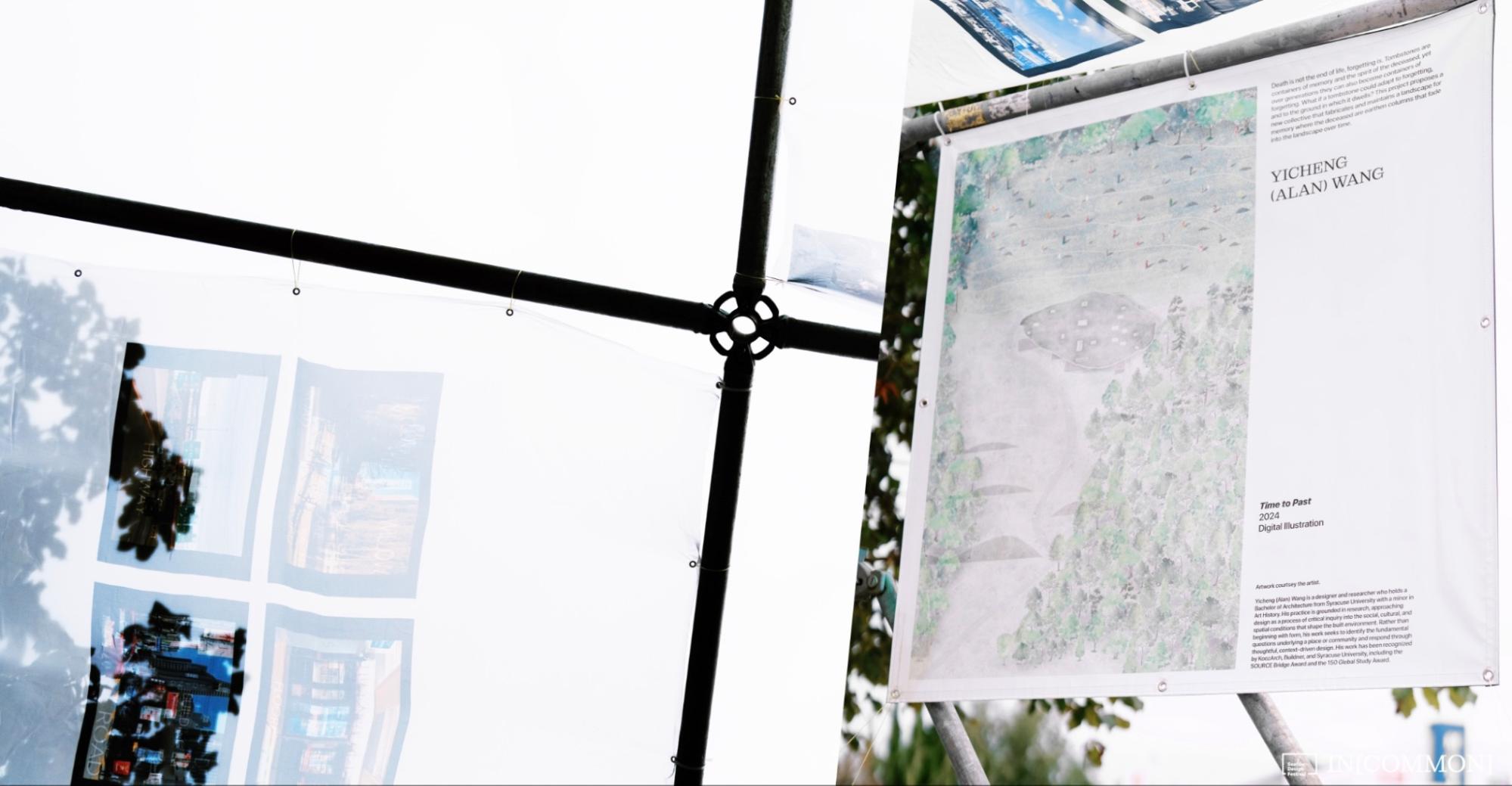
Yicheng (Alan) Wang extends this exploration across generations. Time to Past considers tombstones as containers of both remembrance and eventual forgetting, imagining earthen memorials that gradually disappear back into the landscape. Rather than treating memory as permanent, Wang presents it as something communities inherit, maintain, and eventually transform.
Ziyue Bai explores our shared relationship with the environment through eCO2, an interactive wearable backpack combining microalgae and sensors to visualize air quality. By turning invisible climate data into a living sensory experience, the project connects biotechnology, design, and everyday movement to make climate change feel immediate and personal.
Finally, Yuzhuo Wang explores the strange familiarity of places we have never known. In Isn’t This Familiar?, illuminated photographic landscapes blur memory and observation, showing how past experiences can make an unfamiliar environment feel unexpectedly recognizable. Here, what we have in common can be as intangible as a feeling—the sensation that somewhere unknown somehow feels like home.
Together, the eight practices suggest that being IN[COMMON] does not mean being the same. We remember, forget, change, inhabit, question, and search for belonging differently, yet these very acts form a shared human experience.
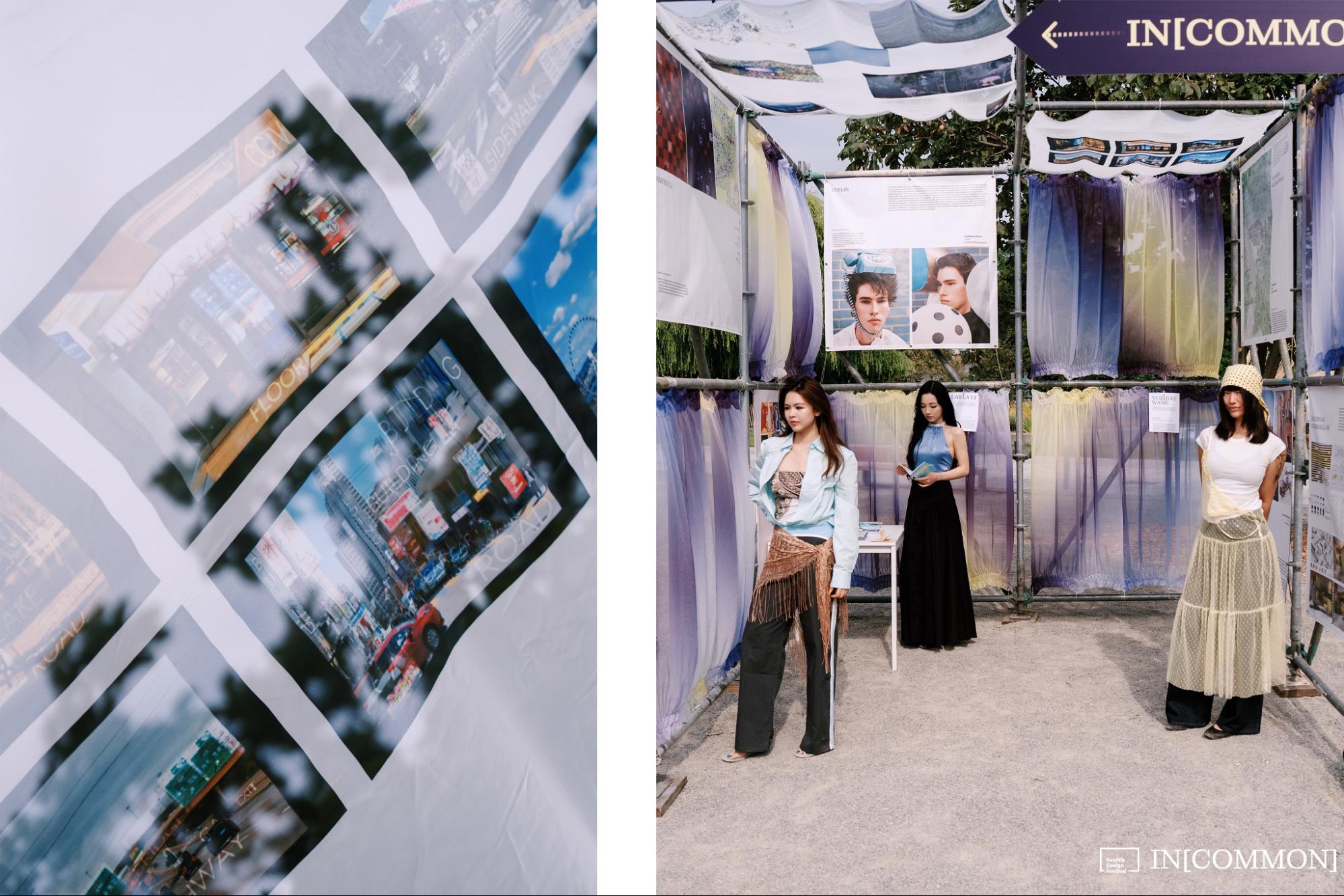
From Exhibition to Practice
IN[COMMON] also became the first platform for 1Merge’s “Designer in Practice” initiative, which invited emerging interior and experiential designer Tianyin (Hazel) Yu to participate in the development and fabrication of the outdoor exhibition. Rather than treating an exhibition only as a finished product, the initiative opens its process to emerging practitioners, giving them opportunities to translate creative ideas into physical experiences for real audiences. Yu brought a multidisciplinary background spanning interaction, interior, spatial, and experiential design to the project.
Behind 1Merge are two practices coming from different sides of the creative field. Artistry Edge, founded by Chenyang Nie, works across the UK, US, and China to support emerging artists through curatorial strategy and cross-cultural exchange. Sophie Wei is an independent designer, curator, and creative director working across branding, advertising, spatial experience, and cultural programming, with creative work and collaborations involving Lexus, Adobe, and HYROX. Together, they formed 1Merge to connect curatorial practice with a broader world of design, cultural programming, and professional creative practice.
Against the summer landscape of Lake Union, IN[COMMON] became more than a collection of individual works. It offered a small experiment in what an exhibition can do: bring different disciplines and perspectives into the same place, give emerging practitioners space to learn by making, and create unexpected moments of connection between creative work and the people who encounter it.

