


My mom is very vocal about the challenge of deciding what to cook for the day. Aside from running out of recipes to try, she has to consider a lot of things. Saving money. Achieving dietary preferences. Avoiding rushed grocery runs. Reducing food waste. There’s a lot that goes into it when you have to face the same situation seven days a week. Meal planning solves that, in theory. In practice, it’s its own chore: cross-referencing what’s in the fridge, what everyone will actually eat, and what fits the week’s schedule. That’s where AI tools for meal planning come in.
According to a Harvard meal prep guide, meal planning helps conserve time, save money, reach health goals, and reduce stress. And with AI tools, it becomes even easier. That said, this guide lists smart picks that help anyone preparing meals for the week, aiming for a specific nutrition target, or just tired of deciding what to cook.
Top Five Best AI Tools for Meal Planning
FoodiePrep
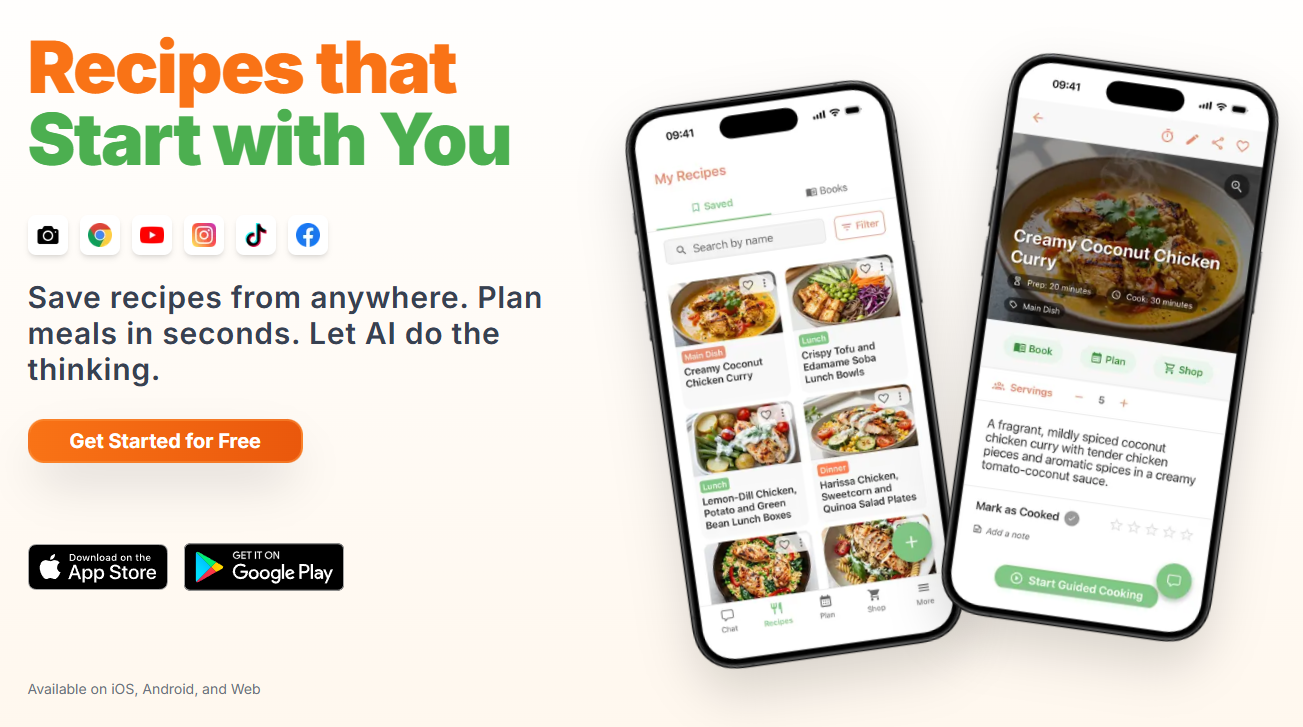
FoodiePrep uses advanced AI models to make meal planning effortless. The workflows revolve around Chef Foodie. A dedicated AI culinary agent that understands natural language. Users can enter prompts and have it create personalized weekly meal plans. Each recommended plan is built around the user’s diet, preferences, and what’s already sitting in their pantry. Plus, FoodiePrep includes pantry tracking that flags what they already own before generating a grocery list.
Key Features:
- Detailed nutritional information for smarter dietary choices
- Recipe import from photo uploads, social media, and websites
- Automatic calorie and macro allocation
Pricing:
- Free Package
- Nutrition Pro Package – $8.99 per month
Real Use Case:
Households trying to reduce food waste can use FoodiePrep. They can particularly use it to plan meals around ingredients already available. This makes it easier to use food items nearing expiration instead of throwing them out.
NumYum
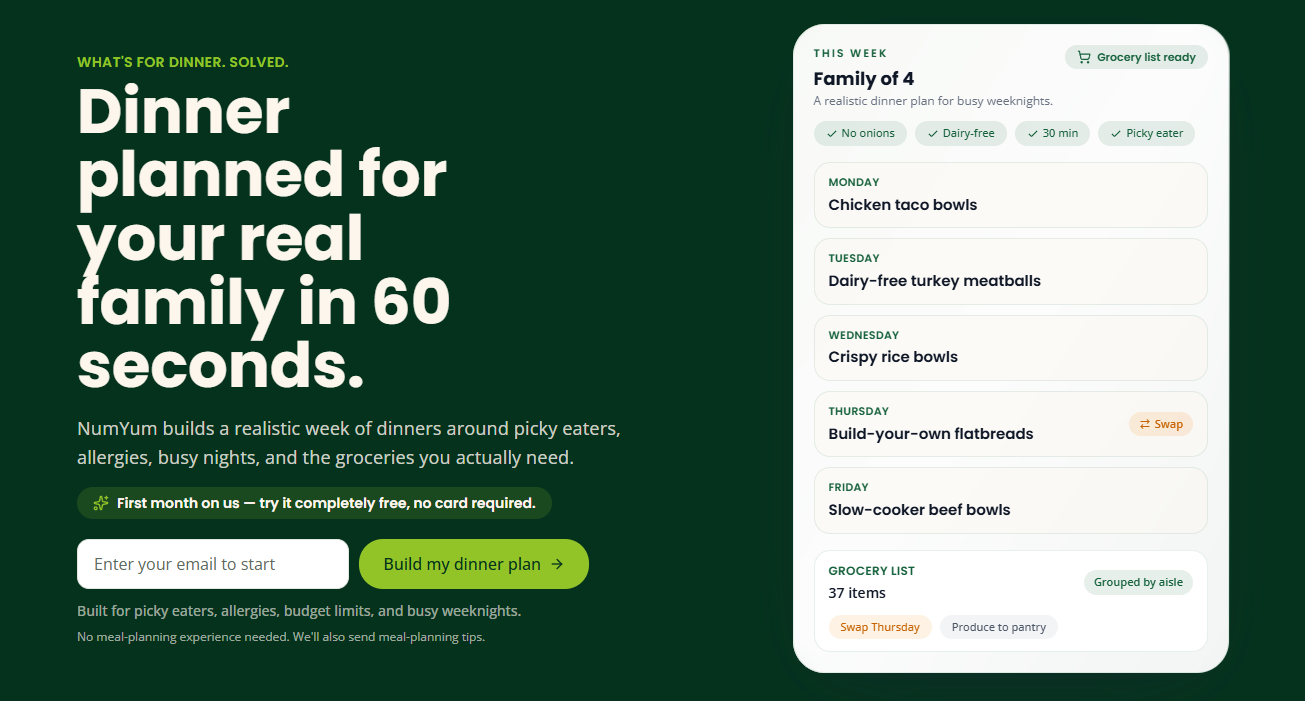
NumYum builds household-aware weekly meal plans. How? By focusing on the practical problems that make household meal planning difficult. Users can enter a few guidelines. Like allergies, budget, dislikes, and weeknight timing. NumYum then curates 5 to 7 meals that align with the user’s house rules. Another feature is a dedicated dashboard for monitoring grocery needs organized across the week. What’s more? This tool adapts its meal suggestions based on saved preferences, recorded ratings, and past swaps.
Key Features:
- Generating meal plans with household constraints in mind
- Consolidates the necessary ingredients into a grocery list
- AI memory for smarter meal prep recommendations
Pricing:
- Free Trial
- Paid Package – $4.99 per month
Real Use Case:
Parents managing different dietary preferences can use NumYum to avoid preparing separate dinners. They can quickly generate one dinner schedule for the household. One that accounts for a vegetarian family member, a picky child, and someone with a peanut allergy.
DishGen
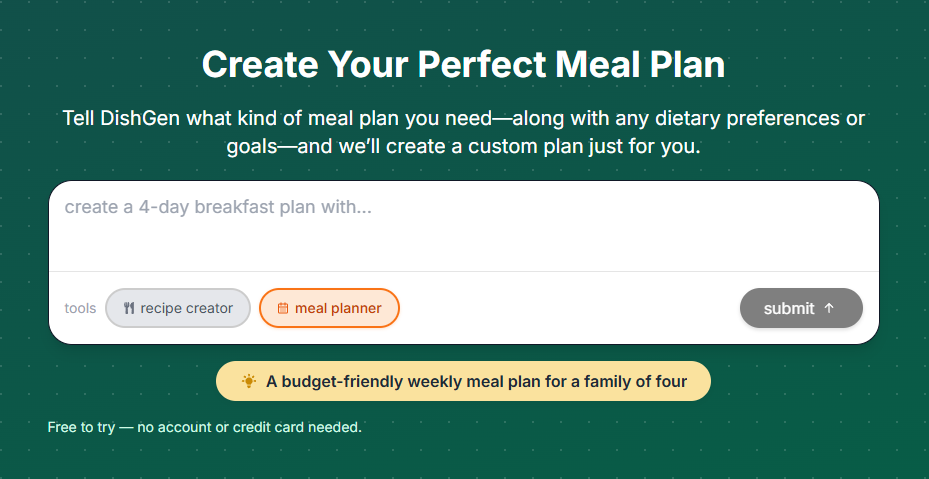
DishGen takes a more flexible approach by making the entire process chat-based. That means users just need to describe their ideal meal plan. This includes specifying health goals, budget, dietary restrictions, and meal variety. DishGen can then create multi-day meal plans. Double down on the planning stage by accessing the tool’s built-in recipe generator. It delivers recipes tailored to the user’s specific meal plan. It doesn’t stop there, either. Users can continue refining meals through AI prompts.
Key Features:
- Comprehensive nutrition facts for every recipe or meal plan
- AI-generated meal plans and recipes
- Built-in AI chat companion for conversational planning
Pricing:
- Free Package
- Premium Package – $7.99 per month
- Pro Package – $15.99 per month
Real Use Case:
Someone dealing with an assortment of ingredients from the market can turn to DishGen to organize them into several dinners. They can even ask for a substitute when they don’t have a particular ingredient for a recipe.
Samsung Food
Samsung Food (formerly Whisk) comes in as a versatile cooking app. One particularly useful offering is its tool for creating custom meal plans. Available through the paid Food+ tier, users can generate tailored seven-day meal plans based on AI-personalized recipes, health goals, and nutrition tracking. On top of that, it has a dropdown checklist that lets users specify their target diet and what to avoid. Another feature worth noting is the ability to generate a smart, organized shopping list.
Key Features:
- Shareable meal plans
- Smooth recipe import from any source
- Saved meal plans that can be turned into reusable templates
Pricing:
- Free Trial
- Food+ Package – $6.99 per month
Real Use Case:
Holidays often cause hosts a chaotic morning of last-minute prep. But with Samsung Food, they can take control by scheduling an entire holdifay meal plan days in advance.
ChefGPT
ChefGPT’s dedicated meal planner relies on personal information to provide the most appropriate suggestions. To start, it asks users to enter their gender, height, weight, and age. At the same time, it can also tailor smart meal plans based on a user’s health goals. Like losing weight, eating healthy, or gaining muscle. Beyond that, ChefGPT considers specific daily activity levels and dietary requirements. What sets it apart is that it can produce a meal plan for up to an entire month.
Key Features:
- Offers several specialized “Chef Modes” for different use cases
- Personalized AI-powered meal planning
- Ready-to-go shopping list
Pricing:
- Free Package
- Pro Package – $2.99 per month
Real Use Case:
Athletes tracking a high-protein diet ahead of a training block will benefit from ChefGPT. They can use its goal-oriented features when planning meals around their nutritional preferences. No need to eyeball portions against a generic meal plan.
Choosing the Top AI Tools for Meal Planning in 2026
Meal planning fails for different reasons in different kitchens. As such, the right AI tools for meal planning depend on where you break down. FoodiePrep handles the full loop from pantry to plate. NumYum solves multi-person households with real dietary complexity. Samsung Food brings AI planning in a broader ecosystem. DishGen turns odds and ends into an actual dinner. ChefGPT builds meals around a specific number instead of a vague goal.
Remember, the best AI meal planner is the one that solves the part of meal planning that frustrates you most. Nonetheless, these tools can turn preferences, available ingredients, schedules, and goals into practical meal ideas.
If you find this article helpful, be sure to check out our list of AI tools for fitness and workout.

