

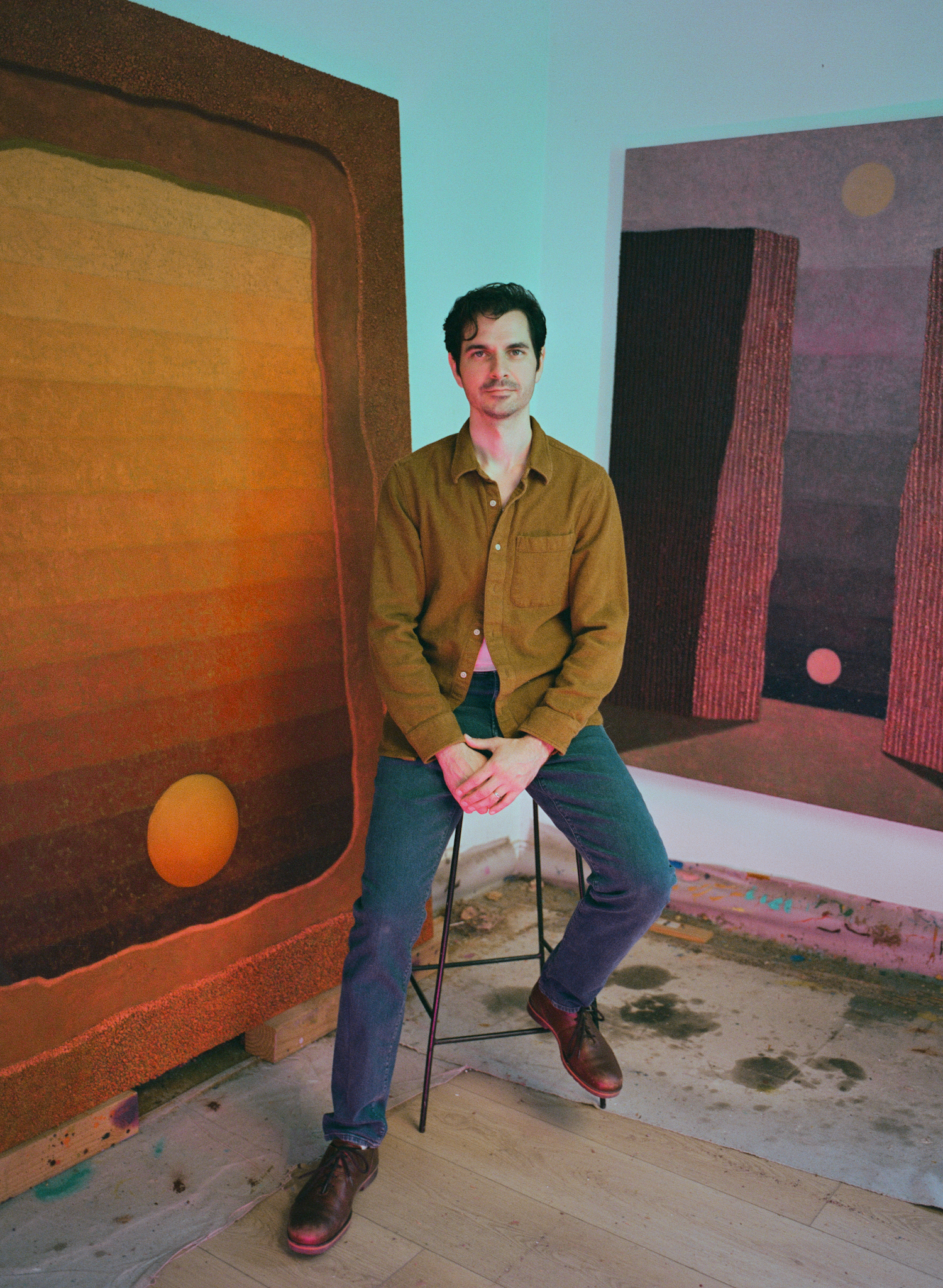
Jonathan Ryan (b. 1989, Buffalo, NY; lives in Los Angeles, CA) received his BFA from Louisiana State University and MFA from the Tyler School of Art at Temple University. Ryan has exhibited across the US and Europe, including solo shows at Megan Mulrooney (Los Angeles, CA), the Landing (Los Angeles, CA) and Hesse Flatow (New York, NY). He has also been in group exhibitions at Monti8 (Latina, Italy), Andrea Festa Fine Art (Rome, Italy), Gerhard Hofland (Amsterdam), Hesse Flatow East (Amagansett, NY), la BEAST gallery (Los Angeles, CA), Ekru Project (Kansas City, MO), Good Mother (Los Angeles, CA), Tiger Strikes Asteroid (Los Angeles, CA), The Brand Library (Glendale, CA), Field Projects (New York, NY), and the Woodmere Art Museum (Philadelphia, PA). His work was recently included in “Altered States in the Acid West” at the Utah Museum of Contemporary Art. Ryan has received fellowships and awards from Woodmere Museum of Art, Tyler School of Art, Vermont Studio Center, and LSU School of Art.
Jonathan Ryan: The Hour of the Pearl will be on view from September 12 – October 24, 2026 at Megan Mulrooney Gallery, Los Angeles.
Could you start by telling us a little about your background and how you first found your way into painting?
I’ve been drawing and painting since middle school, starting out by copying cartoon characters and artworks from books. I grew up in a low-income household in rural Louisiana, without access to museums or anyone who could introduce me to contemporary art. But my parents and teachers noticed and supported my interest, and I went on to study painting in college. I was always drawn to art, but it wasn’t until my senior year of undergrad that I truly identified as a painter and committed to it as a career — before that, I was weighing art-adjacent paths like museum studies or animation. I continued on to graduate school for painting, but the real turning point came after graduating in 2014, when I moved to Los Angeles and rented my first real studio. I’d identified as a painter in grad school, but this was the moment I felt truly independent — no institution behind me, just me figuring out how to build a life and career as an artist.
How has living in LA affected the way you think about landscape?
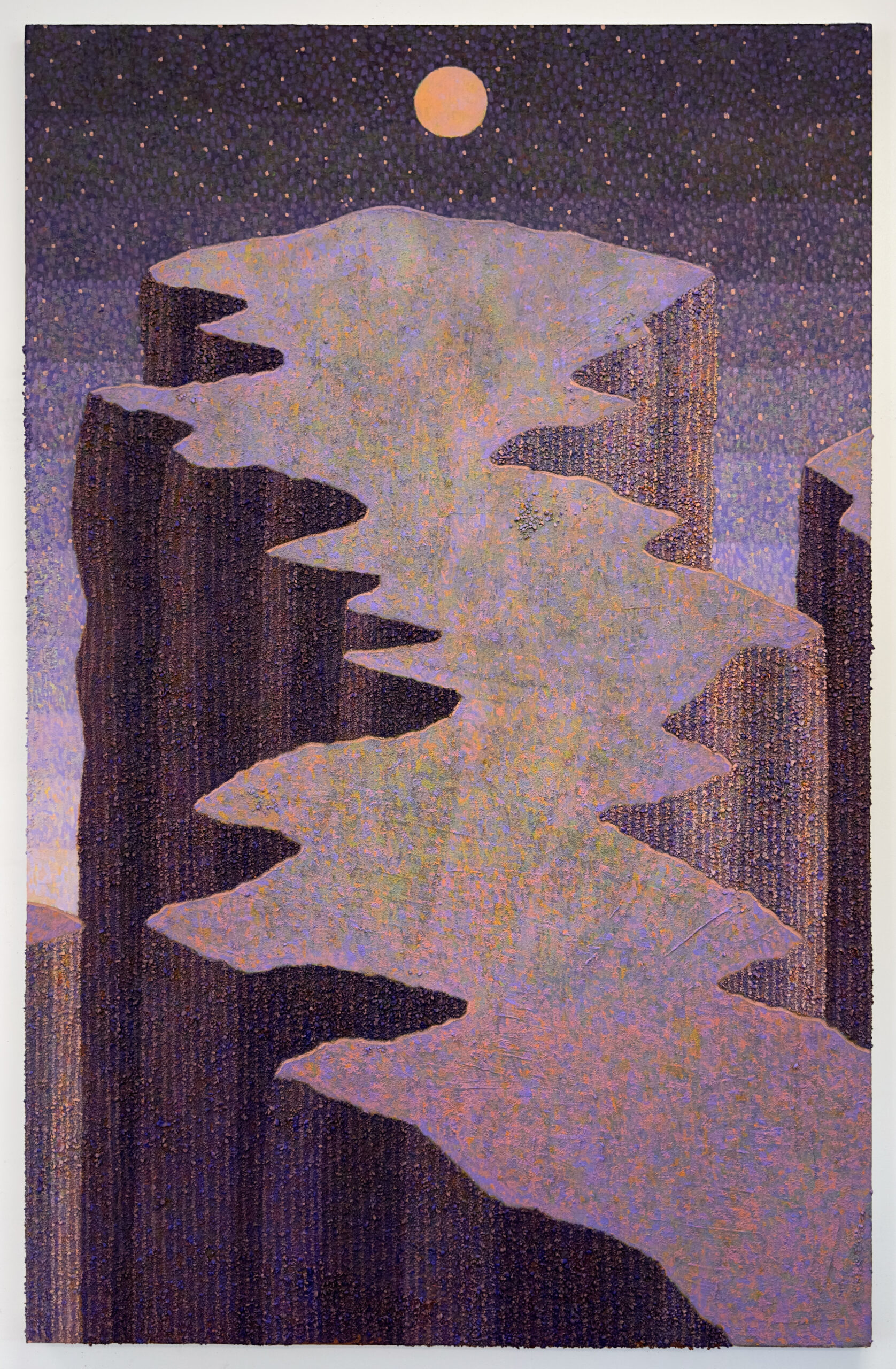
I arrived in Los Angeles on a motorcycle, after a road trip from Philadelphia through the southwest and beyond. The landscapes and coastal light had a deep impact on me, and I immediately began making drawings and paintings of my surroundings. But LA is also full of great artists who’ve had some version of that same experience, and that made me feel like a very small fish. It was a tough realization — after about a year in, I had to admit I wasn’t excited by the work I was making, even with all that inspiration around me. So I reset my practice and started making major shifts in how I worked, which pushed me in new and exciting directions that eventually led me to where my work is today.
You incorporate sand and pulverised granite directly into your paintings. How did you first arrive at this process and what does it allow you to achieve that conventional painting doesn’t?
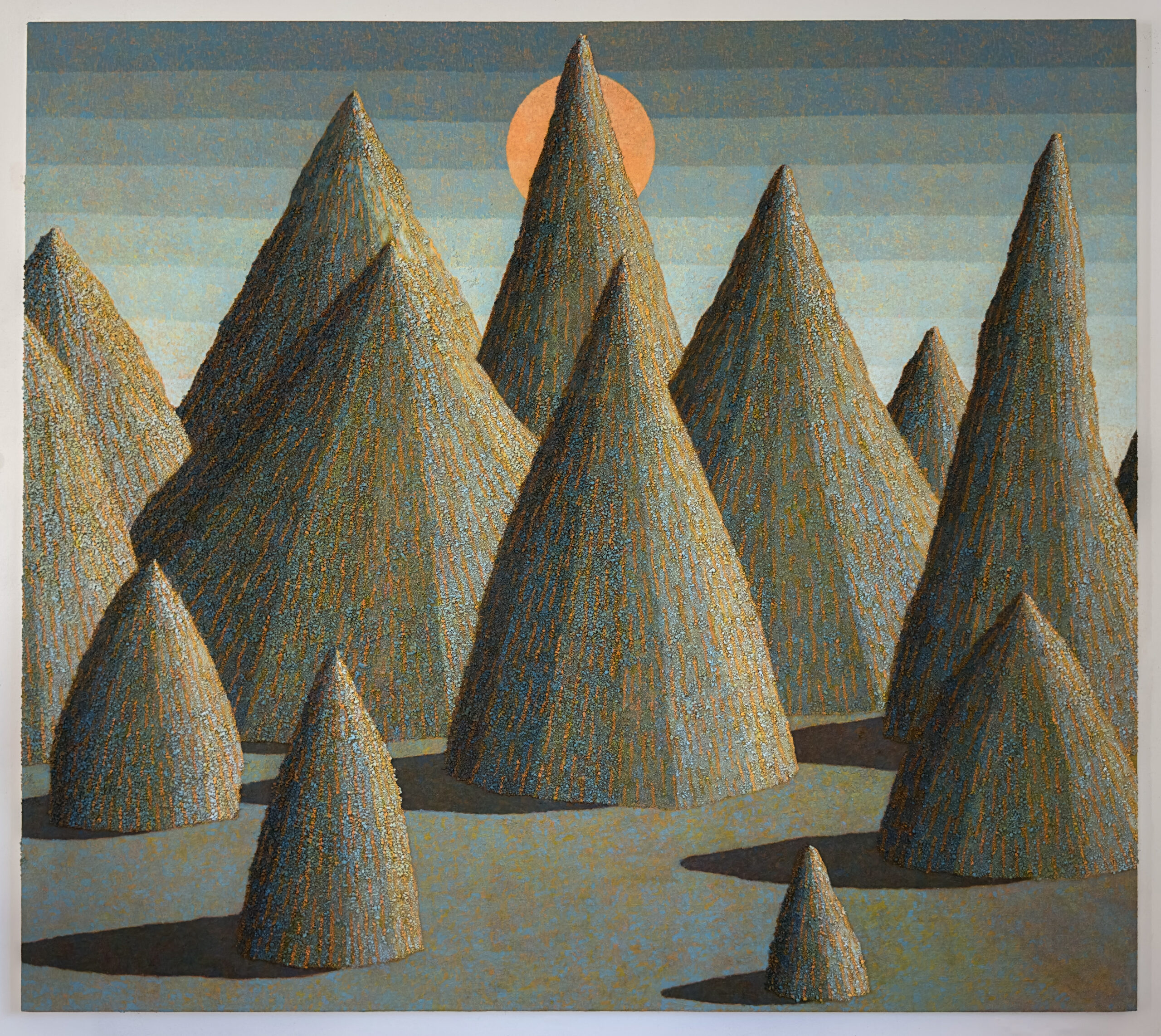
During that “reset,” I started experimenting with all kinds of new materials on the surface of my paintings. Nothing quite worked until I poured some sand from my garden onto a piece I was struggling with. I liked the texture and quality to the surface it added without overtaking the image. That was about ten years ago, and now every painting I make starts with layers of sand and small rock adhered to the surface. This surface dramatically slows me down, forcing a more methodical approach — I have to paint slowly in thin layers, each one influencing the next. Over the past decade, I’ve developed my own language for working with these materials, which has been an important step in finding my voice and confidence as an artist.
Early Atari games seem to have influenced the visual language of your landscapes. What initially attracted you to those digital environments, and what do you think they share with painting?
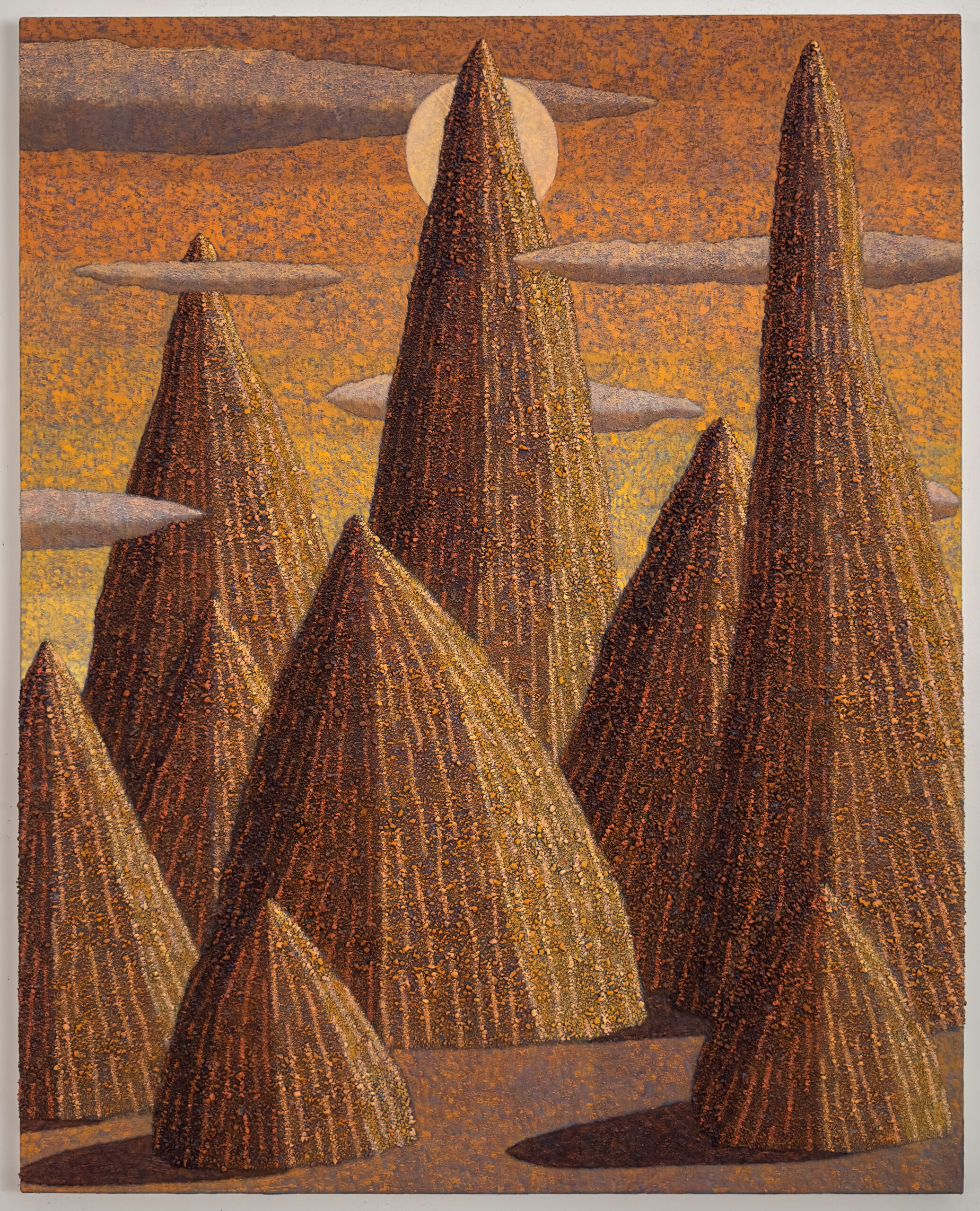
Not quite Atari — those graphics are a bit too basic — but a few years back, I made a body of work looking at landscape imagery from early-90s arcade and video games, among other source material. I was drawn to how the designers built these functional, explorable worlds, and I had fun bringing some of that into my own landscapes for a time.
Your recent work also draws on German Romanticism, which seems worlds apart from 90s video games. How do those two influences meet in your practice?
One of the things I love about painting is how relevant historical examples can feel to a contemporary artist and audience. I often begin drawing studies by sitting down with a stack of artist monographs and history books — lately I’ve found myself returning most to Giorgio de Chirico and Monet. I wouldn’t say German Romanticism is a defining reference for this work, though there’s certainly some compositional influence from Caspar David Friedrich in some of these paintings. As for the video game imagery, that’s not something I’m looking at for the paintings I’m making now, but I’ll absorb any image into my practice if it connects with me, whether it comes from a museum, film, photograph, or anywhere else.
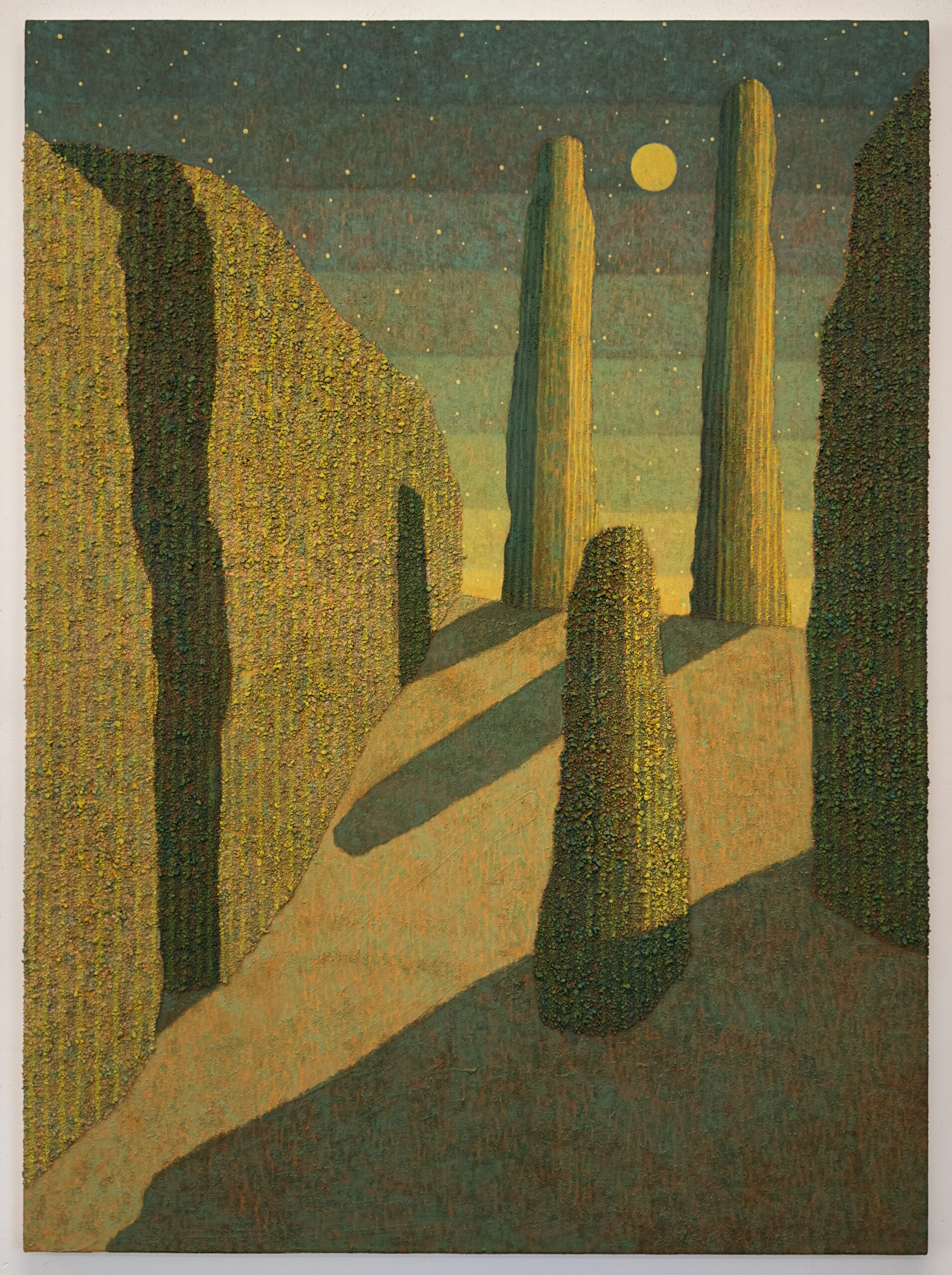
Your exhibition takes its title from John Steinbeck’s Cannery Row and its description of the “hour of the pearl”. What resonated with you about that particular passage?
This passage describes a time in the early morning, before the sun has risen. Light has begun to illuminate the landscape, but the atmosphere is hazy, still, and quiet. It’s a time of reflection but also quick and fleeting. I connected with the tension in that passage and the visual depiction it conjures. The Hour of the Pearl is a haunting, beautiful phrase that resonated with me the moment I first read it in the studio, and the closer I looked at the whole passage, the more it felt like a perfect fit for the work I made for this show.
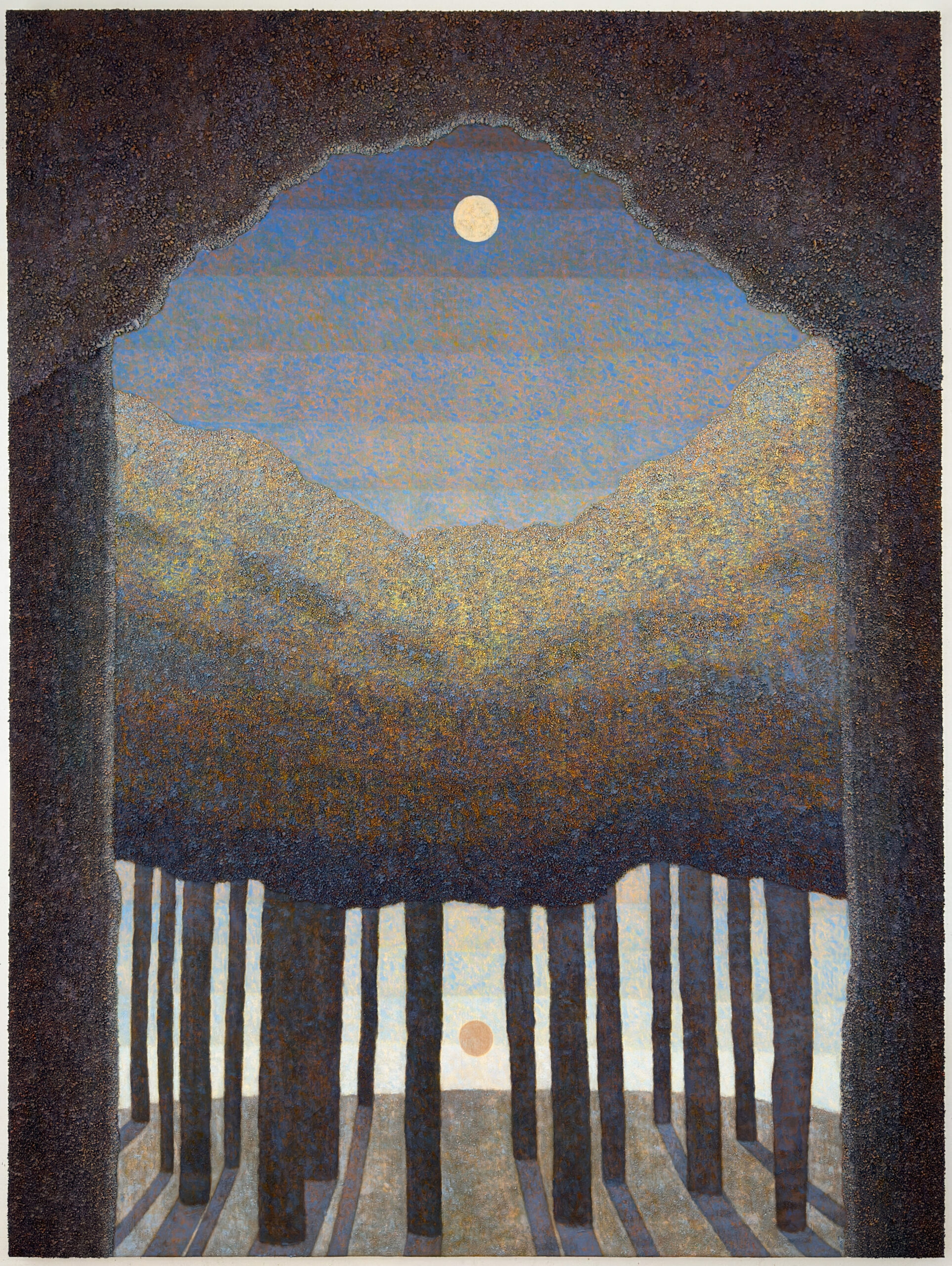
Are there any artists or artworks that have felt particularly inspiring to you lately?
The artists I’ve felt a close connection to lately are Giorgio de Chirico, Ken Price (his drawings of Southern California landscapes in particular), Monet (especially the Rouen Cathedral series), and Caspar David Friedrich.

