


What makes cooking hard isn’t always the cooking part. It’s the part that comes before it. Opening the fridge and seeing a bunch of ingredients that make dinner feels like a puzzle. Or seeing a dish somewhere, but there’s no recipe to search for at all. Traditional recipe searches don’t always help either. Scrolling past twelve paragraphs about someone’s childhood on a food blog. Flipping through pages of cookbooks with limited options. On the bright side, you can now find AI tools for finding recipes that skip straight to the useful part.
There’s no shame in using AI tools. It doesn’t make you less of a cook or chef. A Statista survey even showed that 60% of respondents reported using AI for food-related activities, including recipe suggestions. And here’s where it gets even better. This article gives you a curated list of the best picks when the usual recipe question strikes.
Top Five Best AI Tools for Finding Recipes
DishGen
DishGen is home to an intuitive chat-based recipe generator. Describe a dish idea or a set of ingredients in plain language, and the tool produces a unique recipe. And take note: the output comes with an overview, ingredients, and instructions. No dealing with a page of loosely related search results. Beyond that, users can continue refining the results. Over the chat, they can ask for ingredient substitutions, other cuisines, or dietary adjustments. There’s even a tab for saved recipes to revisit later.
Key Features:
- Dedicated AI-Powered Kitchen Coach for smarter suggestions and efficiency
- AI-driven meal planning and nutrition facts
- Shareable food recipes
Pricing:
- Free Package
- Premium Package – $7.99 per month
- Pro Package – $15.99 per month
Real Use Case:
Families with a bunch of leftovers in the fridge can avoid food waste with DishGen. They can use the AI to generate several dinner ideas and choose one that uses most of those ingredients.
ChefGPT
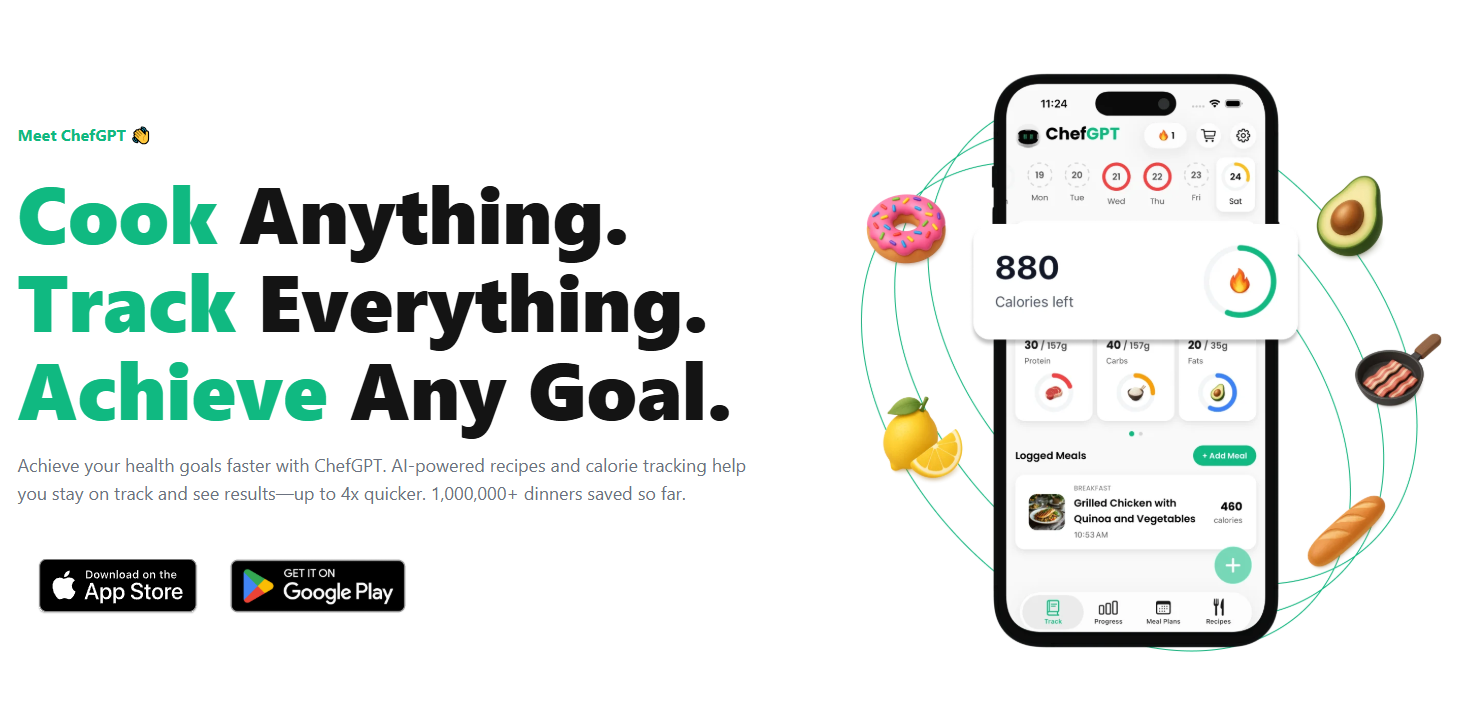
ChefGPT puts the power of AI on users’ plate. With three different themed modes for finding recipes, people are sure to get what they need for every situation. PantryChef is ideal for getting recipe inspiration using the ingredients users have on hand. MasterChef caters to ambitious meal cravings. And MacrosChef is a strong choice for achieving macronutrient goals. What’s more, people can customize every request based on various preferences. That includes meal types, kitchen utensils, available time, skills, servings, and more.
Key Features:
- Built-in cook mode for AI-assisted meal planning
- Integrated inventory for real-time pantry tracking and organization
- Image-based nutrition and calorie monitoring
Pricing:
- Free Package
- Pro Package – $2.99 per month
Real Use Case:
Busy parents arriving home with eggs, potatoes, and vegetables can ask ChefGPT’s PantryChef for help. They can get a recipe built around using all three and turn them into a practical dinner.
Samsung Food
Samsung Food is ideal for people invested in the Samsung ecosystem. In its Food+ tier, users can access AI-powered features that make finding recipes and planning meals more tailored to individual preferences. That means people can customize their meals to balance macros, make them healthier, or add a fresh twist. A handy addition is that Samsung Food’s AI helps users with steps, tips, and appliance control. Other than that, it’s also useful for saving and organizing recipes from any source. Plus, it offers a library of thousands of recipes for quick searches.
Key Features:
- AI-powered recipe personalization
- Built-in grocery list generator and meal planner
- AI-guided recipes for a smoother workflow
Pricing:
- Free Trial
- Food+ Package – $6.99 per month
Real Use Case:
Casual home cooks can save recipes that expected visitors enjoy and use Samsung Food to discover similar options. They can even use the app to customize recipes and spice up dishes.
SideChef AI
SideChef AI blends recipe discovery with guided cooking. And it does so in many ways. For starters, there’s RecipeGen AI. It lets users photograph the ingredients they have and have the AI tailor a fitting recipe. If needed, they also get an automated shopping list for additional ingredients. Meanwhile, MySubstitution AI allows users to tweak any recipe based on cooking preferences, dietary restrictions, and health goals. Guess what? There’s more to it. Users can also find tools for cooking instructions, cooking progress monitoring, and more.
Key Features:
- Recommends recipes based on preferences and available ingredients
- Step-by-step guidance for multi-recipe cooking
- AI companion for food pairings, nutrition facts, and recommendations
Pricing:
- Free Trial
- Premium – $4.99 per month
Real Use Case:
College students who forgot to get the recipe for a dish they tried at a friend’s party can turn to SideChef AI’s RecipeGen AI. They can take a picture of the food and let the AI analyze and reconstruct a usable version to cook at home.
CookAIFood
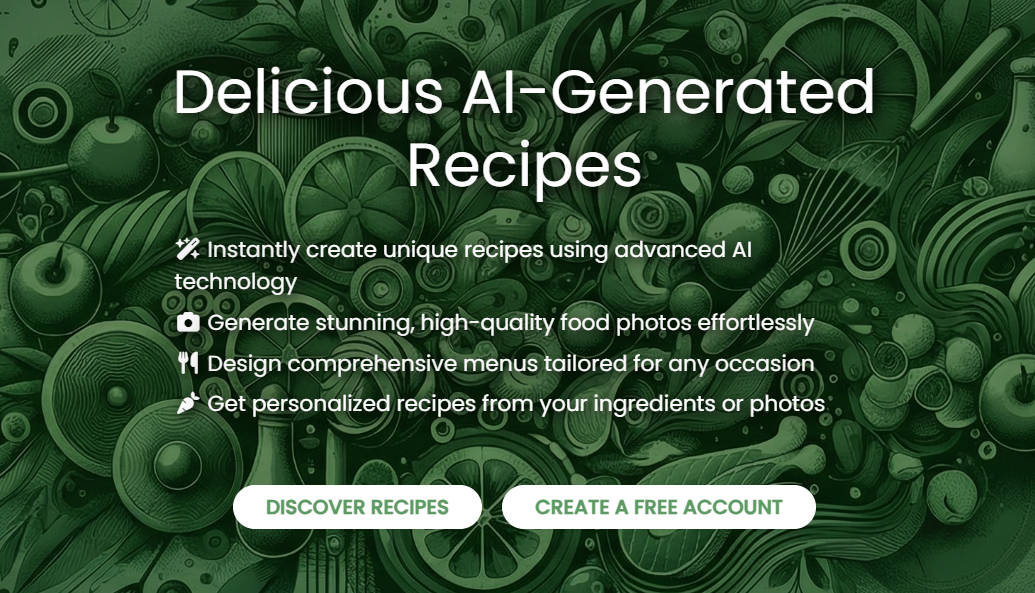
CookAIFood helps users create unique recipes and discover new dishes. When it comes to generation, the tool can produce recipes from ingredients, cuisines, descriptions, or a photo of what’s available. On the other hand, CookAIFood offers a massive collection of AI-generated recipes that are readily available. This makes it useful when the goal is to find what can realistically be made right now. Not just to find a specific dish. And one differentiator is that it also handles full menu and food visual creation well.
Key Features:
- More than 9,000 AI-generated recipes
- Image generation for food content purposes
- Shareable AI-powered recipes
Pricing:
- Free Package
- Basic – $5 for 100 credits
- Advanced – $10 for 225 credits
- Premium – $20 for 500 credits
Real Use Case:
Home cooks can capture their on-hand ingredients and let CookAIFood suggest three fitting recipe options. At the same time, they can use it to generate a shareable-looking AI-generated photo to post that day.
Choosing the Best AI Tools for Finding Recipes in 2026
Finding a recipe isn’t always a search-bar problem. And these five solve different versions of it. Overall, these AI tools for finding recipes can work backward from your ingredients, preferences, dietary needs, and even cravings. Not just search by dish name alone.
When making a choice, focus on what you’re trying to solve. That means pick a tool based on whether you’re starting with an idea, an ingredient, a photo, or other resources.
For those interested in exploring more food topics, read our guide on the top AI tools for meal planning.

