

You’re probably reading this on your phone. In 2026, Americans spend an average of 4 to 5 hours per day on their smartphones, with active phone-use estimates ranging around the five hour a day mark.
This time block is heavily stratified by generation, with Gen Z averaging over 6 hours of daily phone use, Millennials around 5 hours, Gen X near 4 hours, and Baby Boomers just over 3 hours, according to eMarketer, Statista and DataReportal.
In addition to these stats, Americans check their phones anywhere from 96 to 186 times a day, with roughly half of all screen time devoted to social media platforms like TikTok, YouTube, and Instagram. So it makes sense that motion graphics and video reels are in demand for brands who advertise on social media.
With the majority of consumer interactions on digital screens, senior brand and motion designer Sofia Garcia is calling for a fundamental shift in how corporations build visual identity, arguing that motion design must be integrated at the start of the branding process, rather than treated as an afterthought.
Garcia, whose portfolio spans major global brands including Samsung, Disney, Tennis Channel, Hilton, and Pampers, emphasizes that static logos and color palettes are no longer sufficient in an ecosystem dominated by video feeds and interactive platforms.
“Historically, branding was often thought of as something that lived in a logo, typography, color, and a few static applications,” Garcia said. “Motion came later as a way to bring those elements to life. But the way people experience brands has changed. A lot of the first places someone encounters a brand today are already in motion.”
Originally from Costa Rica, Garcia relocated to the United States to study at the Savannah College of Art and Design (SCAD), where she earned dual B.F.A. degrees in Motion Design and Advertising & Branding. That dual focus laid the foundation for an extensive career leading end-to-end creative direction, motion systems, and integrated campaigns across agency and studio environments.
In a digital environment saturated with fast-paced video content, Garcia’s approach focuses on narrative substance and visual restraint rather than movement for its own sake. But just adding movement is not enough to capture audience attention.
“The biggest mistake is designing for the format instead of designing for the idea,” Garcia said. “I try to create something that gives people a reason to keep watching. That can be a visual hook, an unexpected transition, a strong opening frame, or simply a story that unfolds in a way that makes you want to see what happens next.”
She added that grabbing attention does not require overwhelming visuals: “I don’t think everything needs to be loud or constantly moving. Sometimes a very simple, well-timed moment can be more effective than trying to grab attention with everything at once.”
Garcia’s technical expertise as a motion designer is reflected across a wide variety of commercial and entertainment properties. Her portfolio includes projects like Warner Bros. Games’ Gotham Knights, FCB Chicago’s Leaked Secrets of Motherhood campaign for Poise, brand identity design for Berni Bean Coffee Co., and campaign work for Samsung AI and Disney Social.
Her work on Synchrony Bank’s short film The Lemonade Stand showcases her ability to align motion graphics with narrative storytelling. Garcia spearheaded the project’s title sequence from concept through execution, creating custom illustrations that animated the evolving relationship between a father and daughter.

“The story really dictated the visual approach,” Garcia explained. “I developed an illustrated visual language around those themes and looked for ways to represent the relationship between the father and daughter without over-explaining it. The lemonade stand itself became an important visual metaphor for learning, ambition, and the idea that bigger dreams can start with something very small.”
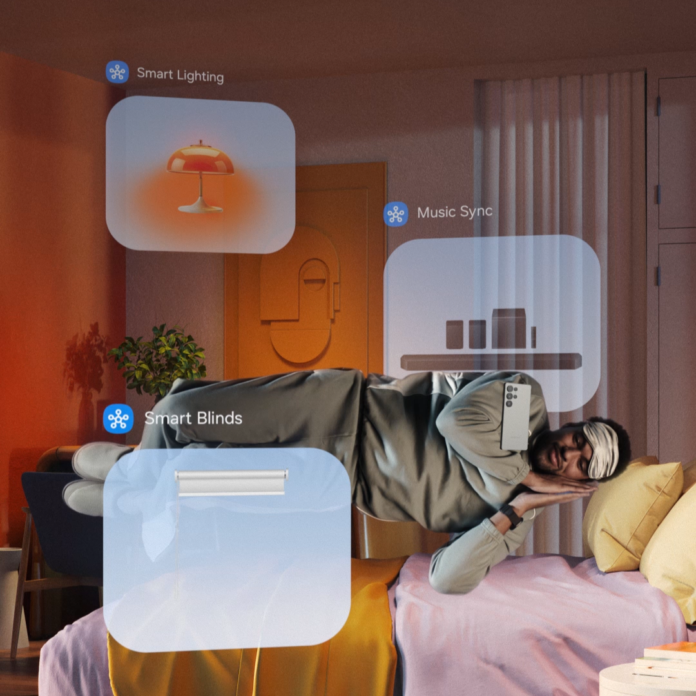
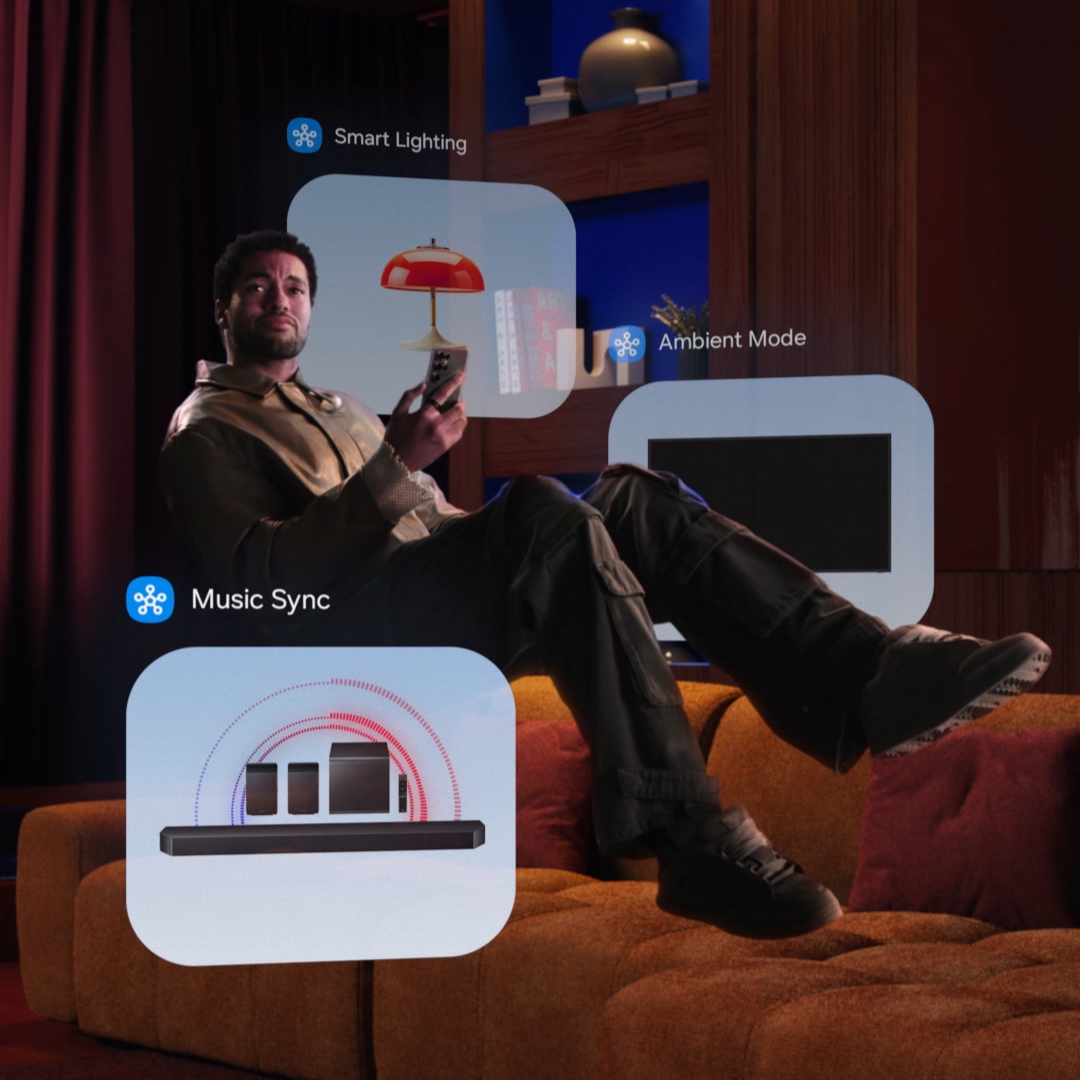
Similarly, in her work for commercial campaigns, Garcia focuses on human connection to make commercial messaging resonate. Reflecting on her work for Samsung SmartThings, including campaigns centered on everyday relatable moments like “Manifest maximum tail wags,” Garcia noted the importance of balancing product features with entertainment.
“Instead of focusing entirely on the technology itself, the story starts with an emotional outcome people can immediately understand,” Garcia said. “I could use movement and timing to emphasize the personality of the idea while still keeping the product message clear.”
Motion designers are currently expanding their roles. As brands adapt to digital-first communication, Garcia sees the role of the motion designer expanding far beyond basic animation. It veers into brand strategy and creative direction territory.
“The demand for visual communication keeps expanding,” Garcia said. “Every platform, brand, product, and campaign needs content, and increasingly that content needs to work in motion. The designers who can understand branding, storytelling, strategy, and the needs of different platforms can contribute at many different stages of a project.”
Rather than asking how to animate an existing static brand, Garcia urges executives and creative directors to rethink their initial approach.
“Instead of asking, ‘How do we animate this brand?’ the question can be, ‘How does this brand behave?'” Garcia said. “That shift opens up a much bigger opportunity for motion designers to contribute to the identity itself.”

