

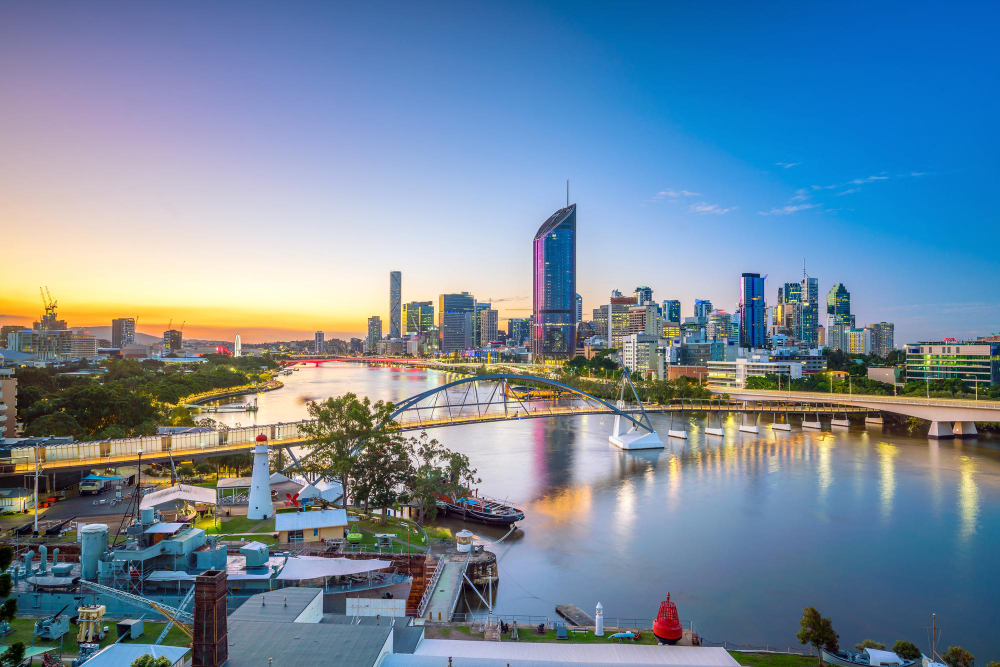
For most of its history, Brisbane was a city people left. Ambition meant a one-way ticket south, to Sydney’s harbour money or Melbourne’s laneway cool. The joke, told often enough that locals stopped laughing, was that Brisbane was a big country town that happened to have a river running through it. Then, sometime in the last decade, the joke stopped landing. People started arriving instead of leaving. The clearest place to watch that change was after dark.
Daytime cities look much alike. It is the night that gives a place away: what stays open, who is out, and who is working while everyone else winds down. Brisbane’s night used to be short. Now it runs long, and the shape of it says more about the city’s reinvention than any skyline render or Olympic logo.
The city that used to empty out
The old Brisbane closed early by design. A conservative licensing culture, a spread-out population, and a habit of treating the city as a place to pass through kept the night economy thin. Talented people did not so much reject Brisbane as bypass it. The southern capitals had the venues, the labels, the galleries and the wages, so that is where the leaving-age crowd went.
Brisbane’s cultural history is partly a history of its exports. The Saints and the Go-Betweens, two of the most important bands the country ever produced, formed in its suburbs and made their names elsewhere. The pattern held for decades. The city grew the talent, and somewhere else got the career.
What turned it around was partly luck and partly weather. As living costs in Sydney and Melbourne climbed, the sums began to favour the north. The pandemic years sped it up, when space and sunlight suddenly counted for more than a short walk to a CBD tower. Queensland’s migration figures told a story the state had waited a long time to hear: the people moving in began to outnumber the ones the city had trained and lost.
What the night built
You can date the shift by its venues. Howard Smith Wharves, a derelict strip under the Story Bridge for the better part of a century, reopened as a riverfront run of bars, a brewery and a hotel, and it worked. Fortitude Valley, long the city’s designated entertainment precinct, matured from a rough late-night strip into something broader: live music rooms, laneway bars, restaurants that fill on a Tuesday. West End, New Farm and Newstead each grew a night of their own.
The change did not stay in the centre either. Suburban high streets that once went dark when the shops shut grew their own small bars and late kitchens. A night out stopped meaning a trip into town and a taxi home at the end of it. It could be ten minutes from your front door, which is exactly the sort of ordinary convenience that makes people stop treating a city as temporary.
None of this was incidental to the reinvention. It was the reinvention. A city persuades people to stay by giving them somewhere to be after six o’clock. The venues were the argument, and enough people found it convincing that the population kept climbing. Winning the 2032 Olympic Games, awarded in 2021, was less a cause of Brisbane’s new confidence than a confirmation of it. The city had already decided it was worth staying in.
The people who work while the city sleeps
A longer night is a jobs story before it is a lifestyle one. Every extra hour a city stays open is an hour someone is on shift. The bar staff and kitchen hands, the rideshare drivers running people home, the security workers on the doors, the cleaners who reset a venue before dawn: this is the labour a night economy runs on, and it grew as the night did.
The adult trade is one worked example inside that same economy, and it moved in the same direction. Sex work has always been part of the after-dark city, but the way it operates has professionalised alongside everything else. Where the trade once lived in the classified back pages of street press, it now runs through digital platforms with the tools any modern service uses.
A search for Brisbane escort listings today returns verified profiles, stated rates and clear booking terms, the kind of infrastructure that follows any service industry once it grows up and expects to be taken seriously. The framing is deliberately mundane, and that is the point. What was once informal and hidden now looks like the rest of the night economy: organised, contactable and accountable.
It is easy to sentimentalise a city’s nightlife and forget that, for thousands of people, the night is simply where the work is. Brisbane’s reinvention is usually told through the people who moved there to enjoy it. It is at least as true of the people who keep it running, and a decade of Olympic build-up will only add to their number.
A reinvention you can only see after dark
Cities announce their changes in daylight, through cranes and press releases and bid documents. They reveal them at night. The measure of Brisbane’s shift is not that it built a few good bars. It is that the whole ecosystem around the night thickened at once: the venues, the transport, the trades, the workers who chose to build a life around hours the city once shut down.
Brisbane spent a long time apologising for being a quiet town. It is quieter than Sydney still, and it may always be. But the quiet reads differently now. It is the quiet of a place that no longer feels the need to prove itself, told most honestly in the hours after the offices empty and the real work of the night begins.

