

Long before Shilajit came in glass jars with lab certificates and fulvic acid percentages, it belonged to the mountains. Chris Simon, founder of One Life Foods, has watched it travel from relative obscurity to one of the strangest success stories in modern wellness.
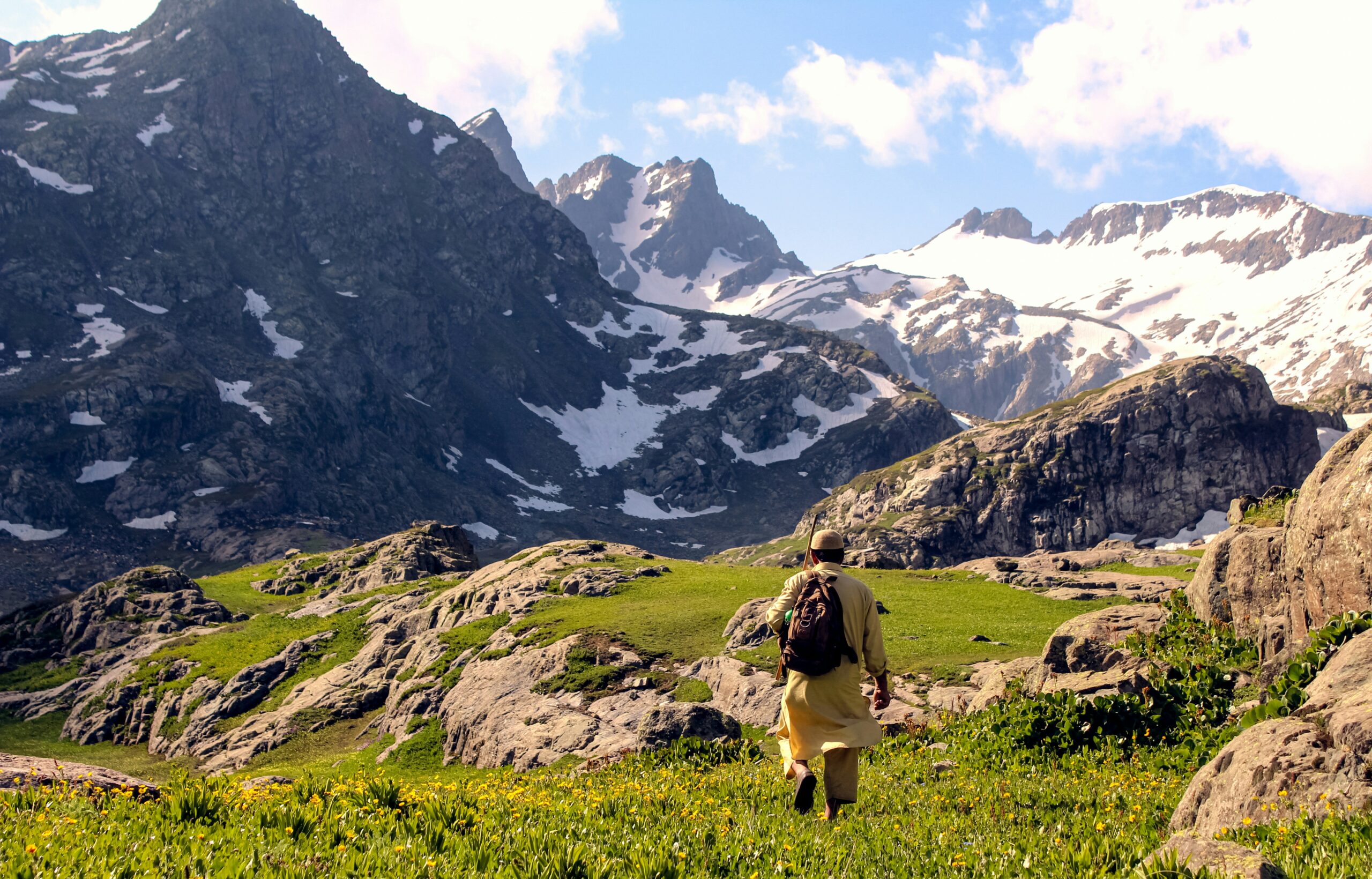
Picture an older man leaving a village beneath the Pir Panjal early in the morning. There is no production line waiting for him, no extraction facility and certainly no GPS coordinates being passed between procurement departments. He knows the mountains because he has spent a lifetime around them, and he knows where to look because that knowledge has been learned over years rather than downloaded onto a phone. The journey might take hours, and in some regions collectors travel considerably further. The work is seasonal, physical and dependent on knowing the landscape. Raw Shilajit isn’t sitting there conveniently in black puddles waiting to be spooned into jars. What comes away from the rock can contain sediment, grit and debris, and the material carried back from the mountain still has a long way to go before anybody should be putting it into a cup of tea. So imagine the old man returning later with a modest amount of dark, Shilajit-bearing material gathered from the rock. Considering the effort involved, it probably doesn’t look terribly impressive, but the collecting is only the first part. Traditionally, the raw material is mixed with water so that the soluble fraction can be separated from stone, grit and other insoluble matter. It is allowed to settle, filtered, sometimes filtered again and again, and then gradually concentrated until the familiar dark resin remains. The precise process varies considerably between regions and producers, but the principle itself is remarkably simple: collect it, separate it, purify it, concentrate it, and wait. Some of the finished material might remain nearby, and the collector may keep a little for himself. The rest might be sold onwards, passing through several hands before it reaches a processor, an exporter, a brand and eventually a customer thousands of miles away. By the time it gets there, the old man and his mountain have usually disappeared from the story.
I first saw Shilajit in 1994
My own introduction to Shilajit came long before I ever imagined selling it. I was about 16 and, if I remember correctly, we were listening to what was, to us at least, a new phenomenon (the Wu-Tang Clan) when my friend’s grandad appeared, brew in hand, with a small piece of what we mistakenly thought was hash in the other. My friend’s grandad was a Pakistani migrant and he always had plenty of tales to tell. Today’s tale was about this mysterious black gold: a strange, sticky substance that looked nothing like the vitamins or medicines I recognised from my mum’s supplement shelf at home. To him, it was black gold. More memorably, he told us it was the secret to youth. At 16, I wasn’t thinking about analytical chemistry, heavy metals or the quality of human clinical trials. I just remember being fascinated by it. It felt mysterious, although not mysterious in the way products are deliberately made mysterious now, with Himalayan graphics, Sanskrit lettering and slightly breathless stories about ancient warriors. It was mysterious because I’d never seen anyone drop what looked like a piece of tar into a cup of tea and sip it as though it might solve all his problems. Then life moved on, as it tends to. I encountered Shilajit again in 2012 and this time started paying proper attention. By 2018 I’d introduced it to the One Life Foods range, but hardly anybody cared. That probably sounds strange today, when Shilajit can appear in your social feed several times before breakfast, but selling it back then usually involved explaining what the word meant before you could even begin explaining why somebody might want it. I nearly stopped selling it. Then, somewhere around 2020, something changed. People started arriving already knowing the name. Instead of asking, “What’s that black stuff?”, they were coming to us specifically looking for Shilajit. Over the following few years, the product I’d once struggled to explain became part of the global wellness conversation. Today you can buy Shilajit as resin, capsules, powders, gummies, drops and blended drinks. It gets discussed alongside creatine, testosterone support, adaptogens, nootropics and longevity supplements, while social media has supplied it with an entirely new mythology of its own. The substance hadn’t suddenly appeared, we had.
Long before the wellness industry
As we explain in our guide to Shilajit, its traditional history is considerably older than its current popularity. Scientific literature describes it as a naturally occurring brown to blackish-brown material associated with mountain rock, particularly across the Altai mountains, Himalayas and Hindu Kush, and it has a longstanding place within Ayurvedic and Siddha traditions. Historical texts place it within the broad concept of rasayana, traditionally associated with rejuvenation and maintaining vitality. I think that history matters. If people have used something for generations, it’s worth paying attention to, and Shilajit clearly had a place in these traditions long before the wellness industry got hold of it. But age alone shouldn’t be used as proof that every claim made for it is true. For that, I’d rather look at what has actually been studied in people and what the evidence can reasonably support. It may be less romantic, but I’d rather know what it can actually do than what somebody says it has done for centuries.
We do now have genuine human research on Shilajit. At One Life Foods, we recently went through the published human research we could locate and found 16 oral human studies in which the effects of Shilajit could be interpreted reasonably directly, alongside other research involving formulations, topical preparations and older studies that were considerably more difficult to interpret. There are randomised controlled trials among them, which is encouraging. There are also small studies, uncontrolled studies and trials using particular standardised preparations that shouldn’t automatically be treated as evidence for every black resin with the word Shilajit printed on the label. So, as is often the case, the interesting position sits somewhere between dismissal and evangelism. There is science, and some of it deserves to be taken seriously. There is also an awful lot the science hasn’t settled yet.
Then the world discovered it
There is something slightly absurd about the journey Shilajit has made. A substance associated with remote mountain communities and old systems of medicine now has to survive the logic of the modern internet, which means it needs a headline, a percentage, and a benefit people can instantly understand. Even better if the percentage is larger than the one claimed on another brands website. And so a remarkably complicated natural material becomes compressed into a handful of phrases: 80% fulvic acid. 85+ minerals. Lab tested. Testosterone boosting. Ancient superfood. The details are considerably harder to fit on the front of a label, and suddenly the mountain itself isn’t quite enough.
Once something becomes globally desirable, its supply chain changes too. What may once have been a relatively small local trade can develop into networks of collectors, middlemen, processors, exporters, laboratories, wholesalers and brands. That isn’t automatically a bad thing. Commercial demand can provide income to remote communities, whether that’s in the Himalayas, Hindu Kush or Altai. The wider Himalayan trade in medicinal and natural materials has long been economically important to rural households, and research from Nepal has documented substantial increases in both the volume and value of commercially traded medicinal products over time.
Scale can improve things as well. Processing can become more controlled, traceability can improve, finished products can be screened for contaminants, and laboratories can tell us things that the person collecting material on a mountain could never reasonably be expected to know. Romanticism is all well and good until somebody asks how much lead is in the black gold. Modern analytical chemistry certainly has its uses.
What does Shilajit look like at scale?
The image most people have of Shilajit is probably one collector and one mountain. Once you start producing it in any real volume, things can look very different.
Raw material may be brought together from multiple collectors and different sites before larger processors extract, filter and concentrate substantial batches. From there, it can pass through several more hands before eventually being packed under the name of a brand that may never have met the people who collected it, or even visited the region it came from. That doesn’t automatically make the finished product worse. A small supply chain can be badly run just as easily as a large one can be well run. What matters is whether you can still work out where the material came from and what happened to it along the way. Where exactly was it collected? Who collected it? Was material from different locations mixed together? How was it purified? Was too much heat used? Was anything added? Who tested it, what did they actually test for, and was the lab sample supplied by the manufacturer or taken independently from stock that genuinely reached the brand? Those are the questions I’d be asking.
And then come the fakes
A product like Shilajit almost invites imitation. It’s dark, it’s sticky, its natural consistency varies and most customers have never seen the raw material in their lives. Even people who have taken Shilajit for years can’t look at a spoonful of black resin and possibly determine its chemical composition.
The famous home authenticity tests don’t solve much either. Something dissolving in warm water doesn’t prove it’s genuine Shilajit, and neither does stretching it, freezing it or holding a flame against it. Lots of dark substances can be persuaded to behave fairly convincingly in a kitchen.
This isn’t merely hypothetical. In 2026, the official food-control laboratory CVUA Stuttgart reported results from 12 Shilajit products it had analysed. In three of them, investigators said there was reasonable suspicion that Shilajit was absent or present only in traces. Several showed signs of strong heating, four had elevated mineral-oil saturated hydrocarbons relative to orientation values used for other foods, and one sample was judged unsafe because of its mineral-oil aromatic hydrocarbon content. Perhaps the most revealing part wasn’t even the chemistry. Nine of the products were marketed as “lab tested”, yet CVUA Stuttgart considered eight of those claims misleading after looking at what had actually been tested and what the products contained. That’s worth remembering because “lab tested” isn’t a result. It’s the beginning of a question. 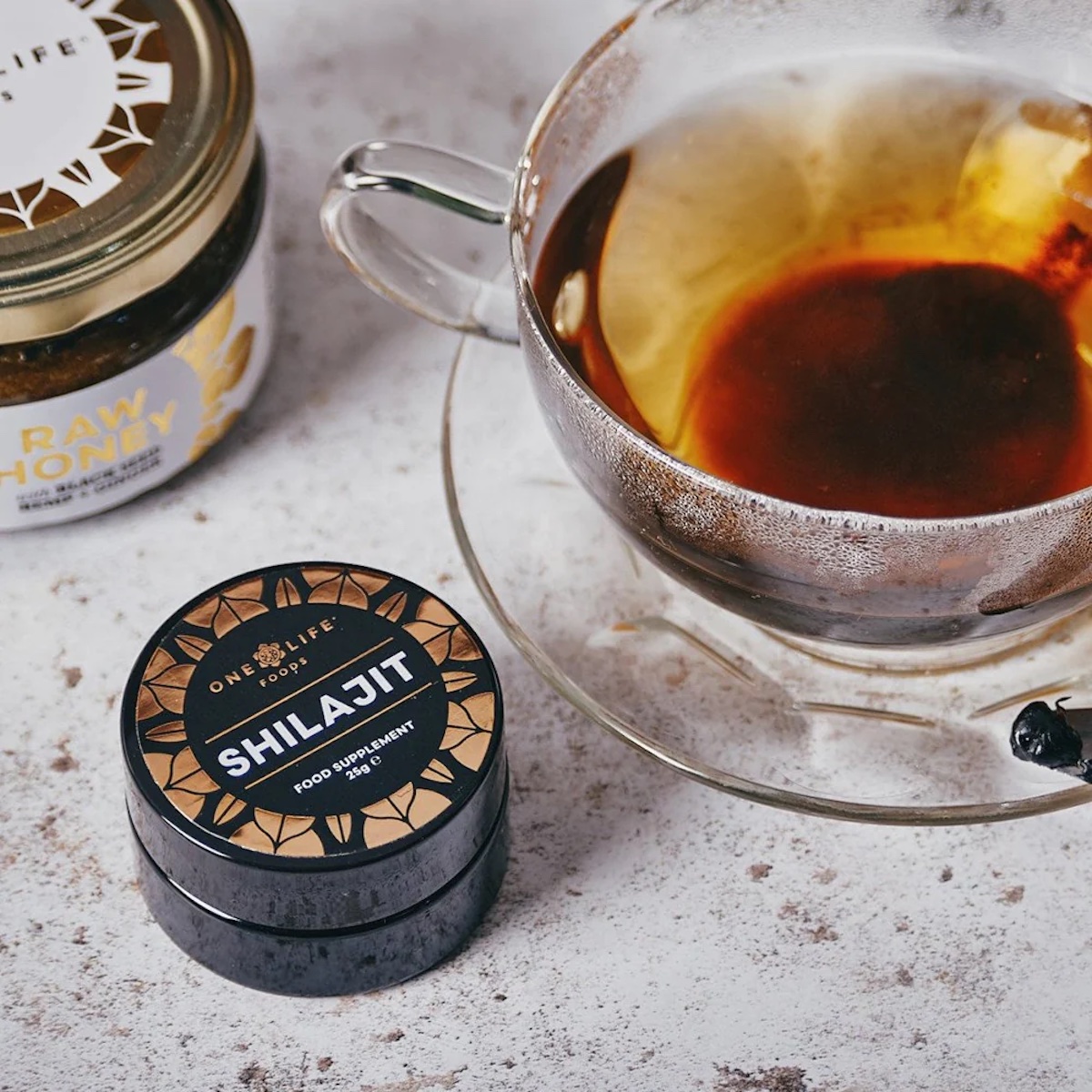
The percentage problem
Fulvic acid has become one of Shilajit’s great marketing battlegrounds. One jar says 40%, another says 60%, and somebody else appears with 80%. The natural reaction is obvious: eighty must be better than sixty. Except analytical chemistry has an irritating habit of ruining simple comparisons. Different analytical methods can define, separate and quantify fulvic fractions differently, and results may also be expressed on different reporting bases. Unless you know how a figure was produced, two impressive-looking percentages aren’t necessarily measuring precisely the same thing in precisely the same way.
We’ve spent rather too much time looking into this at One Life Foods. Possibly enough that “Shilajit geeks” is now a more honest description than “Shilajit experts”. Our own testing uses an IHSS-aligned approach implemented under ISO 19822:2018, and we’ve published the analytical methods alongside the results. That isn’t because we believe one lab number proves a product is premium. It’s because a percentage without the method behind it can tell consumers much less than they are encouraged to think.
Shilajit is also not simply fulvic acid with good branding. Its composition varies according to its source, local geology, processing and purification. And recent research comparing samples from different geographical origins has found substantial variation in their elemental profiles. (PubMed) Nature, inconveniently, doesn’t manufacture to a marketing specification.
What happens when demand reaches the mountain?
This is the part of the Shilajit boom I find most interesting, and probably the part the industry knows least about. What happens at the other end of the supply chain when millions more people suddenly want something that comes from remote mountain environments? There is an obvious temptation to tell a very simple story: Western consumers discover ancient substance, demand explodes, mountains are stripped bare. It makes for a good headline, but I’m not convinced we know enough to say that.
There isn’t good published evidence, at least that I’ve been able to find, quantifying global Shilajit reserves or showing exactly what current harvesting is doing to those reserves across the different regions where it occurs. There are places where collectors can’t simply go wherever they like; protected areas, permits and local restrictions can limit where material is collected, and the rules vary considerably from one region to another. But that still doesn’t tell us whether deposits are becoming harder to find, how quickly they replenish, or what increasing demand is doing to the resource itself. We just don’t have particularly good answers to those questions yet.
There is, however, plenty of research showing what can happen when commercial demand grows for high-value Himalayan natural resources. Studies from Himalayan regions have documented increased collection, pressure on wild resources and the difficult balance between conservation and the livelihoods those resources support. Shilajit isn’t a medicinal plant, so I wouldn’t use that research as evidence that the same thing is happening here. But it does raise questions that I think the Shilajit industry ought to be asking. Does a collector have to travel further today than he did 20 years ago? Are good deposits becoming harder to find? How has the price of raw material changed? Does higher value encourage people to harvest more carefully because the resource matters more, or more aggressively because there is more money to be made? And when genuine material becomes expensive or difficult to obtain, does that create an incentive for inferior material to find its way into the supply chain?
Then there’s the question of money. How much does the person doing the difficult work on the mountain actually receive compared with the eventual price of a jar in London or Los Angeles? I’d like the Shilajit industry to talk about those questions more. Including us.
Progress isn’t the enemy of tradition
It’s easy to become sentimental about the old way of doing things. An elderly collector, a mountain village, water, sunlight and patience. It sounds idyllic, and in some respects it probably was.
But “traditional” doesn’t automatically mean safe, sustainable or superior. Raw Shilajit can contain unwanted environmental contaminants, and geological materials can naturally contain potentially harmful elements. Published analyses have found considerable variability between samples, with researchers identifying lead, arsenic, cadmium, mercury, nickel, thallium and other elements across different raw materials and commercial products. That is precisely why proper purification and meaningful analytical testing matter.
The answer isn’t to reject modern processing. It’s to stop pretending that modern processing and ancient tradition have to be enemies. I’d rather buy material from a properly paid collector whose knowledge is respected, maintain meaningful traceability through the supply chain, purify the material carefully and then subject the finished product to modern analytical testing. There is no virtue in leaving a contaminant in something because removing it would somehow be insufficiently romantic.
At the same time, efficiency shouldn’t become an excuse to erase provenance, rush purification or treat a mountain resource as though it were an infinitely scalable industrial ingredient. If Shilajit really is going to become a global product, there has to be a middle ground where the knowledge that came before us isn’t discarded simply because the machinery has improved.
The secret to youth, thirty-two years later
I sometimes think back to that conversation in 1994. The first person who introduced me to Shilajit didn’t talk about testosterone trials or fulvic acid. There wasn’t a certificate of analysis, and he certainly didn’t tell two 16-year-olds what percentage of the hydrophobic fulvic fraction had been isolated using an internationally recognised analytical method. He called it black gold and told us it was the secret to youth.
More than thirty years later, the wellness industry is, in many ways, still selling essentially the same promise. We’ve simply found considerably more complicated ways to say it. Some of those complications are useful. We know more about Shilajit now. There is human research worth taking seriously, even if there is much more still to learn. Analytical science can tell us more about composition and contamination, and responsible producers can provide levels of testing and transparency that simply weren’t available to the person collecting the material generations ago. But something can also get lost when an old material becomes a global trend. Behind the polished jar, the discount code, the influencer and the spectacular percentage is still a substance that has to come from somewhere. Somebody has to find it, somebody has to collect it, and somebody still has to bring it down from the mountain.
That might be the part of the Shilajit story worth remembering most. The old collector probably doesn’t know his product is trending. The mountain certainly doesn’t.
Chris Simon is the founder of One Life Foods. He first encountered Shilajit in 1994 and has worked commercially with it through One Life Foods since 2018, with a particular interest in sourcing, analytical testing and the gap between supplement marketing and what the evidence can actually support.

