

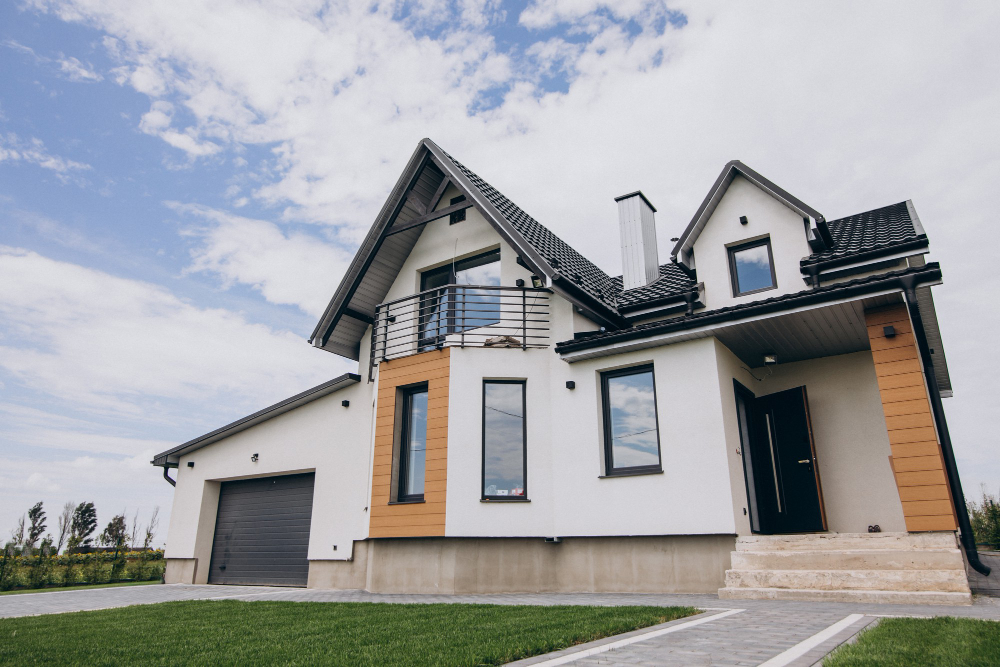
Buying an existing home is usually cheaper, faster and more predictable than building one from scratch. A ground-up custom home can run 20% to 30% above the cost of an equivalent existing house once land, site work and financing costs are counted, and move-in takes far longer. Building wins in narrower circumstances: you already own a buildable lot, you pick an efficient plan, and you compare the project against a genuinely similar existing home rather than a national average. Homeowners weighing three choices, buy move-in ready, buy and remodel, or build, should compare all-in costs, not headline prices.
Is It Cheaper to Build or Buy a House? The Short Answer
Three factors decide this question. First, all-in costs versus headline price: a listing price includes the land and the structure, while a building quote often includes neither the land nor the extras. Second, cost certainty versus cost range: a purchase price is a number, a building budget is a range. Third, a production home sold by a builder is a different product from a custom home built on your own land, and conflating them wrecks the math. Before pricing anything, separate your must haves from the features you would simply enjoy.
- Buying move-in ready: lowest cash outlay, fastest occupancy, least control.
- Buy and remodel: middling costs, phaseable work, established neighborhoods, moderate uncertainty.
- Building a custom home: full control, highest variance, highest risk of blowing the budget.
What Housing Data Show About Buying an Existing Home vs. Building
The median new single-family home sold in 2025 went for $417,400 at a median 2,194 square feet, per the Census Bureau, while the average sale price of $523,800 was pulled upward by expensive outliers. For contractor-built homes started in 2025, the median original building contract was $404,000, land excluded. The National Association of Realtors put the existing-home median at $429,100 in August 2026, with 4.9 months of supply, which gives buyers real negotiating room.
These are not apples to apples. Existing homes cluster in established, land-constrained neighborhoods, while a new house often sits farther out on a smaller lot. Treat the numbers as context, not a verdict.
Why a Building Quote Is Not the Full Construction Cost of a House
The Census contract price excludes the land, because the owner already owns it. It also excludes later change orders and separate contracts for exterior or grounds work. That single definition explains most of the bad comparisons you will read online.
The NAHB 2024 Construction Cost Survey found average building costs of $428,215, roughly $162 per finished square foot, or 64.4% of the final sales price. The finished lot added 13.7%, with an average final sales price of $665,298. That survey drew 41 usable builder responses, so read it as a map of where the money goes, not a local estimate.
A complete building budget includes land and closing costs, design and engineering (architect fees commonly run 5% to 10% of building costs), permits and impact fees, clearing and foundation work, utility extensions or well and septic, the contract covering labor and materials, allowances and change orders, construction loan interest, temporary housing, driveway and landscaping, and a contingency. Materials prices and labor rates move, and supply chain issues can stall a delivery and stretch a schedule, so a quote collected months before breaking ground is a starting point, not a promise.
What Does Buying an Existing Home Really Cost?
The listing price is not the whole story. Add closing costs, inspections and specialist reports, immediate repairs, near-term remodeling, moving, HOA dues, special assessments and property taxes.
Age matters. The 2021 American Housing Survey put the median age of owner-occupied homes at 41 years. Among homes built before 1950, recent buyers spent a median of about $3,900 per year on upkeep, against roughly $1,500 for owners in place ten years or more. A low purchase price is often followed by concentrated early spending on a roof, a panel upgrade or plumbing supply lines. The advantage of buying is leverage: you can negotiate repairs or price after an inspection, which nobody can do with a house that does not exist yet.
Does Building Your Own Home Save Money on Energy Efficiency and Maintenance?
Partly. New roofs, systems and appliances have most of their service life ahead of them, builder warranties cover major defects, and homes constructed after 2000 use about 21% less energy for heating than older stock. Energy efficient equipment, better materials and solar-ready design cost far less to install during framing than to retrofit later.
New does not guarantee top-tier performance. There is no single national residential energy code, and jurisdictions adopt different editions with their own amendments. If energy efficiency carries part of your financial case, use a measurable standard. EPA reports that ENERGY STAR certified new homes are at least 10% more efficient than standard new homes built to code. Those savings soften a building premium. They rarely erase it.
The Overlooked Third Option: Buy and Remodel for Better Value
A structurally sound but dated house in the right neighborhood often beats building from the ground up on total cost. Foundation, framing and utility connections already exist, and you are purchasing location you cannot manufacture.
Price the work before you make an offer, sorted into three buckets: cosmetic, system replacement and structural. Cosmetic items such as paint and flooring are predictable. Structural work is where budgets break. Renovation also phases well, which is more cost effective than paying for everything at once. For a Pacific Northwest example of the design-build scope buyers should price before choosing a fixer-upper, the services described by JDI Construction show why remodeling belongs in the comparison as an all-in alternative to buying turnkey or building a new house.
How Land and Site Conditions Decide Whether Building Is Cheaper
One question decides most building budgets: is this lot actually buildable at the price you assumed? Check these factors before purchasing.
- Slope, retaining walls and drainage
- Soil conditions and required foundation type
- Wetlands, flood zones and environmental constraints
- Demolition and tree clearing
- Distance to water, sewer, power and road access
- Septic approval and well depth
- Local labor rates and code requirements
- Permit, impact and utility connection fees
Site development alone can swing from a few thousand dollars to six figures. NAHB’s 2026 industry survey estimated that government regulation accounts for 26.4% of a new home’s final price across land development and building. That is an industry estimate, and local rules vary widely.
Construction Loans, Timelines and the Cost of Waiting
Per the CFPB, a construction loan is short-term and funded in draws as building progresses, typically at higher interest rates than a purchase mortgage. Some convert to permanent financing; others require a second application once the house is complete. Compare equity required, interest charged during the building process, draw and inspection fees, one-close versus two-close structures, rate locks, appraisal from plans and specs, and what happens if the budget is exceeded.
Then add time. Census data for 2025 show an average of 8.8 months from authorization to completion: about 7.4 months for a built-for-sale home, 11.7 months for a contractor-built custom home and 14.3 months for an owner-built home. That clock starts at permit and excludes land search, design and financing approval. Every extra month means paying rent, storage or a duplicate housing payment.
Do You Need a New House, or More Space at Your Own Home?
If the real problem is square footage rather than the house itself, the cheapest fix may already sit on your property: an addition, a finished basement, a permitted garage conversion, or an ADU used as a rental, a caregiver suite or one of the home offices a household now needs. Feasibility is property-specific, so setbacks, lot coverage, slope, utility capacity and the permitting process come before any per-square-foot estimate. A local builder such as Modern Buildings Seattle ADU Builder illustrates the questions that belong in an ADU feasibility budget. Rental income can make the project closer to investing than to pure spending.
A Build-vs.-Buy Cost Comparison Worksheet
Fill all three columns using the same location, finished square footage, bed and bath count, garage, finish quality and ownership period. If the columns describe different homes, the totals mean nothing.
| Line item | Move-in ready | Buy + remodel | Custom build |
| Land or purchase price | |||
| Closing costs | |||
| Design, engineering, permits and fees | |||
| Site prep and utilities | |||
| Contract for labor and materials | |||
| Financing costs | |||
| Temporary housing | |||
| Immediate repairs | |||
| Contingency | |||
| 10-year maintenance and energy costs | |||
| Total cash required | |||
| Target move-in date |
When Buying an Existing Home Is Cheaper
- Comparable inventory is available in your target area
- You need to move within months, not years
- Buildable land is scarce or expensive locally
- Available lots need heavy grading or long utility runs
- The house you found needs cosmetic work only
- You are purchasing a first home and need predictable numbers
- You have little tolerance for a moving budget target
When Building a Custom Home Is Worth the Premium
It is rarely cheaper to build than to buy a comparable existing house, but the gap narrows sharply when the conditions below line up.
- You already own a buildable, serviced lot
- A compact, standardized plan meets your needs
- Site factors are known and uncomplicated
- Existing stock would need major structural work to function
- Accessibility or household-specific requirements cannot be bought
- A specific vision, including future needs, shapes the floor plan
- You will stay long enough for layout and low early maintenance to repay the investment
- Builders in your market are competing on price or incentives
Owners who build their own house in an appreciating market sometimes realize value above their building costs, but that is market-dependent. Customization does not automatically return equal value when you sell.
Your Final Checklist Before Booking a Free Consultation
- Two or three comparable existing homes, priced with closing costs
- A realistic renovation estimate if a fixer-upper is in play
- Written land and site-development assumptions
- A preliminary design and building budget, architect fees included
- Construction-loan terms in writing
- Insurance and property-tax quotes
- A timeline with temporary housing costs and a project contingency attached
- A local valuation of the finished home
A free consultation with a builder, remodeler or construction lender costs nothing and sharpens your planning. Public resources help too: verify assumptions with the city or county planning department, utility providers and the assessor, and hire a surveyor and a licensed inspector before you commit.
Frequently Asked Questions
Is $100,000 enough to build a house?
Rarely. It may cover a very small structure or a modest ADU on land you already own with utilities in place, but land, site work and permits usually absorb much of that money on their own.
Is $400,000 enough to build a house?
Often, for a modest plan on a serviced lot you already own. The 2025 median contractor-built contract was $404,000, land excluded, so purchasing a lot or paying for heavy site work makes it tight fast.
Is $500,000 enough to build a house?
Usually, for a mid-size house in many markets when the site is straightforward. NAHB’s 2024 survey showed an average final sales price of $665,298. Do not throw every last dollar at finishes; hold back a contingency, because change orders and site surprises break budgets.
Is it financially better value to buy or build your own home?
Buying usually wins on upfront costs, speed and certainty. Building competes when you control the land, the site is simple and the plan is efficient. For many homeowners, buy-and-remodel or adding an ADU deserves its own column in the worksheet.

