

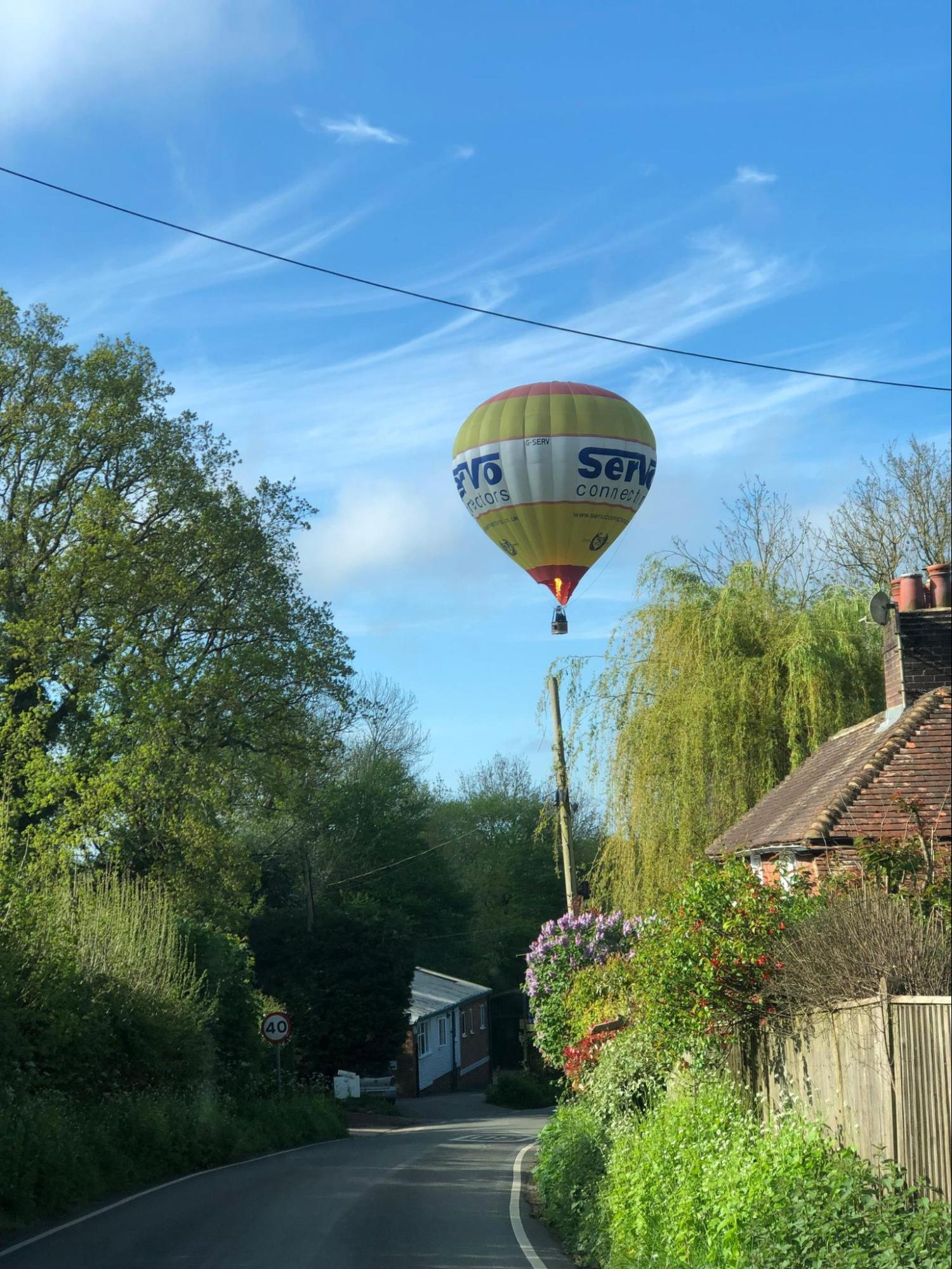
A hot air balloon flies over a quiet country road. Is it taking off, coming into land, or merely passing by? It speaks to me of the inherent tensions that surround belonging to a particular place, town, or country, and how all these borders are human and social constructs.
The borders didn’t exist until groups of people drew the lines we now adhere to, and we often feel we should be able to cross them without hindrance, just as this hot air balloon flies across our field of view. The sponsor on the side of the balloon speaks about how companies seem to transcend borders and operate across different locations and countries more easily than humans can, and asks whether that should be the case.
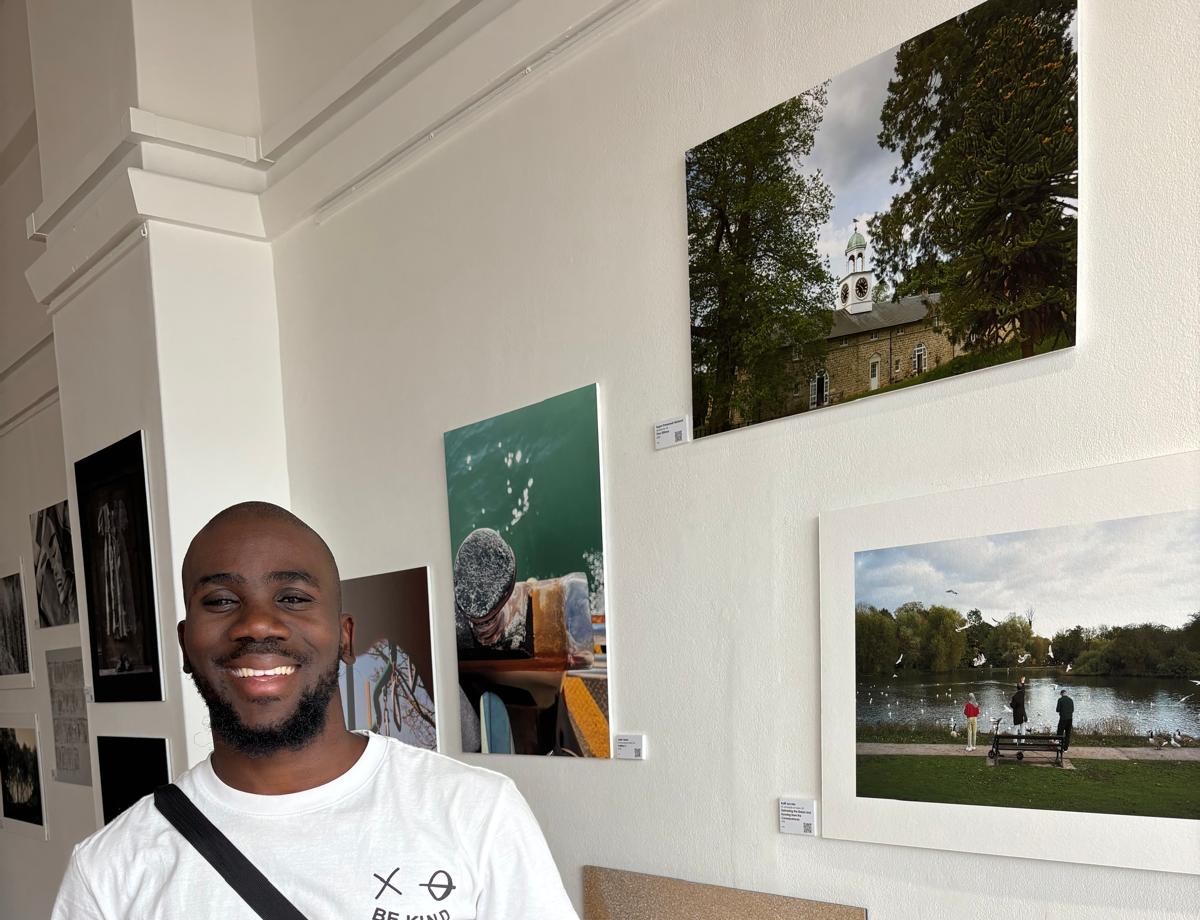
Segun Emmanuel Akinremi is a photographer born in Lagos and now based in Kent, so he is familiar with the concept of crossing borders and also the tensions that remain around them, both in Africa and Europe. He also has an eye for capturing everyday images and using them to create narratives that tell important stories about identity and belonging.
Gentler pieces look at how there are no boundaries for nature, forests and rivers, other than those humans impose on them. They grow and run free throughout the world, even carving through man-made structures if given enough time. Man-made structures produce a similar sensation, as we see the clock tower between the trees in another work, and wonder how much change and history this building has seen over the years it has told time to those passing by.
The idea of finding narratives within the landscape harks back to a tradition in the UK, which includes great painters such as John Constable, Thomas Gainsborough and Paul Nash. It also displays similarities to Jon Rafman’s Nine Eyes of Google Street View, which elevated the mundane images captured by Google into a contemporary digital masterpiece.
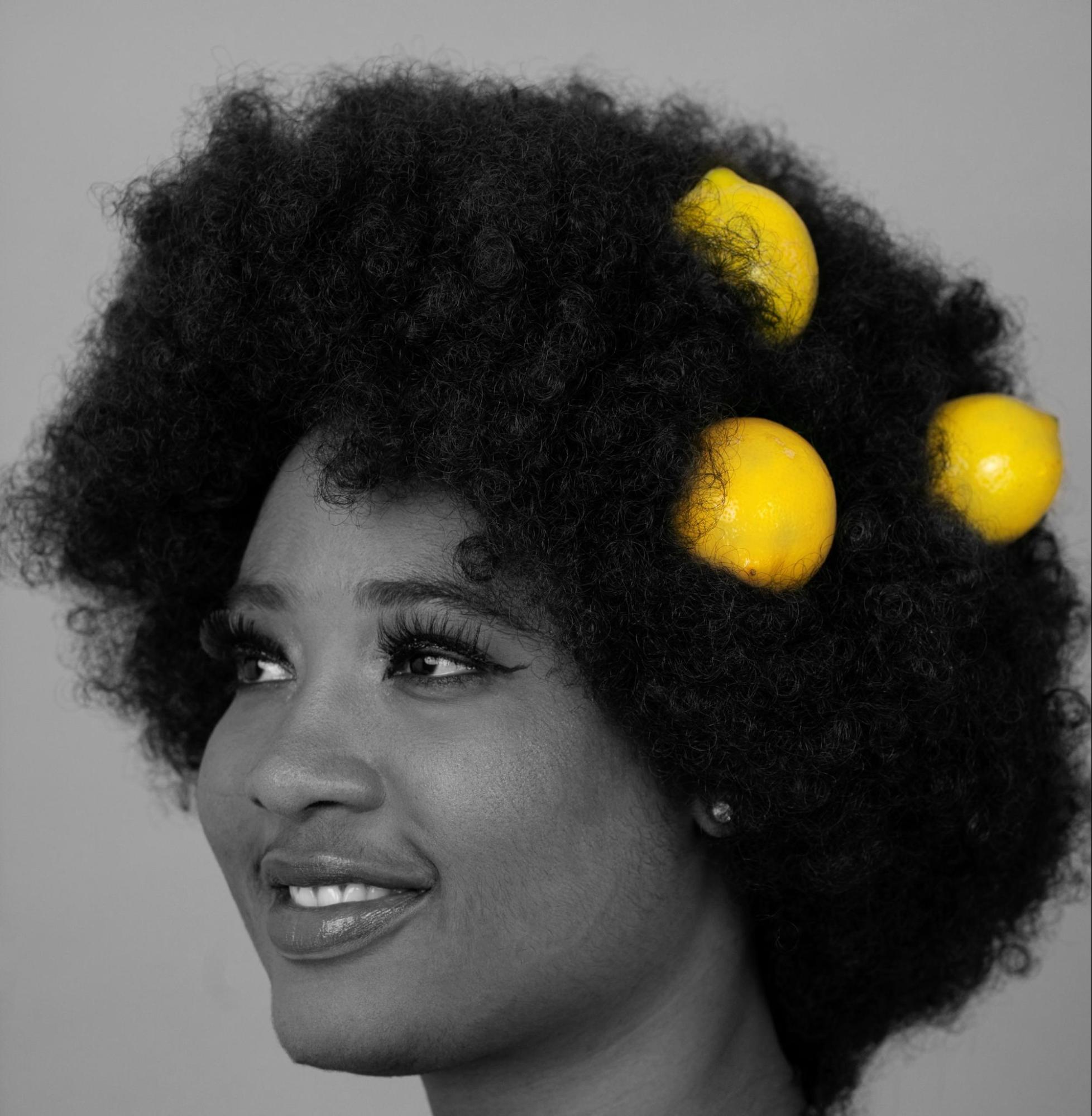
Akinremi is also able to turn his lens toward conceptual portraiture, as seen in a photograph of a woman with lemons embedded in her hair. While fruit are often used in art to highlight life’s transience, here they appear more joyful and playful, within the hair of a smiling young woman. With only the lemons in colour, there’s a surreal feel to the photography that ties into the practice of artists such as Man Ray and John Stezaker, who both manipulate photography to create their works.
The use of black-and-white to capture a figure’s identity reminds me of the work of South African artist Zanele Muholi, whose work makes race one of its key themes, or the candid street photography of Akinbode Akinbiyi in Lagos.
As Akinremi’s work evolves, I’d like to see a deeper narrative about identity and belonging that spans both his Nigerian heritage and life in the UK. The similarities and differences in culture and what belonging looks like for those of the West African diaspora living in Britain.
More information on Segun Emmanuel Akinremi may be found on his website.

