

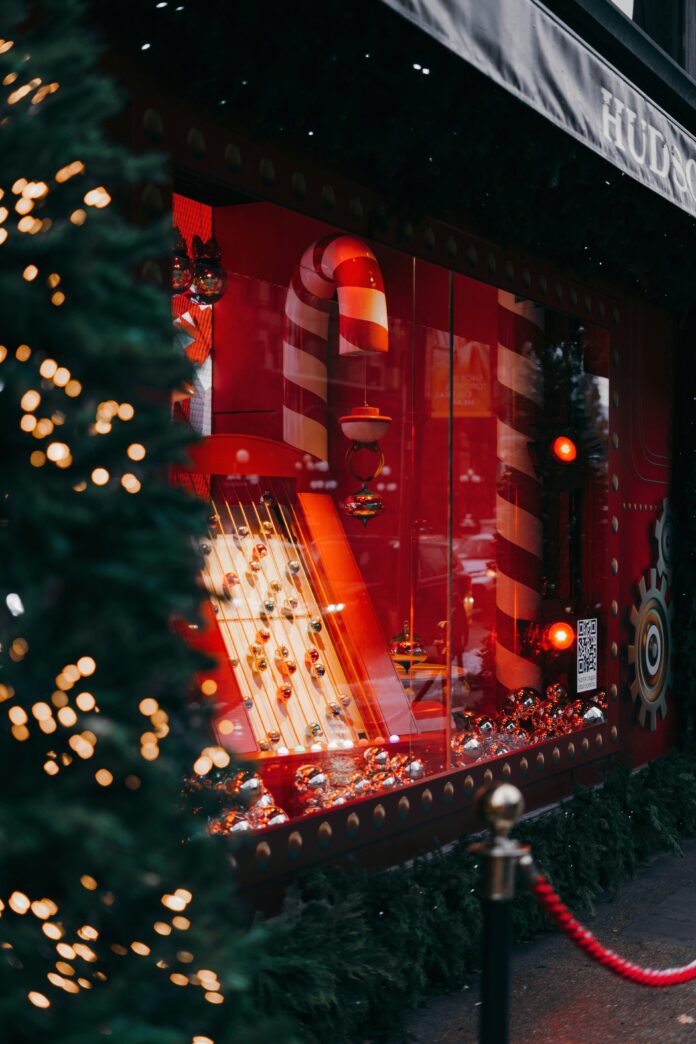
Ah, Christmas windows. The yearly miracle where red glitter, fuzzy sweaters, shiny mannequins, and overpriced ornaments team up to convince you that your life is incomplete without a $300 candle shaped like a pine tree. Every year we stroll by, eyes wide and wallets subtly trembling, pretending the fairy-tale streets are magic. I’ve got news for you. All the magic is really just a $5,000 marketing plan wrapped in tinsel, there’s a reason why December is the busiest shopping month of the year.
Since the 1800s, a beautifully lit scene of fake snow and cute little props could make you feel something. Μostly regret, later at checkout. Department stores realized early on that a mannequin in the right light could manipulate your wants harder than a year’s worth of marketing campaigns. These displays create worlds. Cozy nostalgia, childhood magic, fairy-tale fantasies. I’ve seen many sidewalks turn into holiday spectacles, but I’ve seen more shoppers turn into willing victims of twinkle-light hypnosis. Now it’s all interactive, immersive, and borderline controlling, but at least it’s aesthetically pleasing. The mission hasn’t changed a bit though. Make you feel, but above all, make you hand over your money with a smile.
Here’s the genius of Christmas windows, they don’t just display stuff, they turn stores into trapdoors, they don’t show you products, they preload you emotionally before you ever touch one. People flock to see them, and lo and behold, they leave with things they didn’t even know existed. Desire is manufactured outside the door, long before price tags or sales assistants get involved and just like that, shopping transforms from boring adult responsibility into an “experience” you’re already invested in. The holidays officially start when a city block sparkles just right, everyone knows that. Memories and loyalty? Naturally created, like magic, but really just a side effect of clever retail. Physical stores get a leg up on online, because no algorithm can replace standing still in front of a window you didn’t plan to look at, social media turns every passerby into a free promoter, and consumers… well, you’ve been trained to want exactly what they want you to.

