In this segment, we showcase the most notable albums out each week. Here are the albums out on March 27, 2026:
Robyn, Sexistential
 At one point on her self-financed, self-titled, and first independently released album, Robyn assumed the role of a captain attempting a crash landing before launching into a song called ‘Crash and Burn Girl’, echoing her description of Sexistential as feeling “like a spaceship coming through the atmosphere at a really high speed.” More than two decades after Robyn, and aided by early collaborators like Teddybears member Klas Åhlund, Sexistential still prioritizes the pleasure principle – “I’m never inspired by pain,” she told one celebrity fan, Tinashe – while defiantly eschewing the trappings of a “maturing” pop star. Read the full review.


Snail Mail, Ricochet
 Snail Mail is back with her third album, Ricochet. Working with Aron Kobayashi Ritch, the bassist and producer of New York’s Momma, the Valentine follow-up finds Lindsey Jordan transposing a period of self-imposed yet heavenly isolation into her most comfortably subdued songs to date. There’s still a delicate tension gnawing beneath the surface, as solitude’s gorgeous quiet borders on obsessive dissocation. Jordan, though, will go a long way to dance around it. Read the full review.
Slayyyter, WOR$T GIRL IN AMERICA
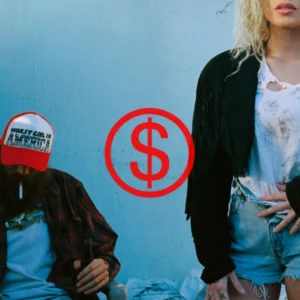 In the lead-up to WOR$T GIRL IN AMERICA‘s release, Slayyyter dropped the album’s entire first half in a promotional rollout that has included a healthy amount of shitposting. But stick around for the record’s back half, which flits between the star-flaunting noise of ‘Yes Goddd’ and ‘I’m Actually Kinda Famous’ and surprisingly clean-sounding indie-pop on tracks like ‘Unknown Loverz’ and ‘Old Fling$’. “This music was made from a very pure place, chasing songs I wanted to listen to over and over after the studio,” Slayyyter said in press materials. “By approaching it that way, I rediscovered how much I love making music. The prompt wasn’t thinking about hits, or algorithm music. I began asking myself: If I died tomorrow and had one last thing to contribute, what would it sound like?”
Courtney Barnett, Creature of Habit
 Aptly for a record called Creature of Habit, Courtney Barnett steps into a familiar groove very quickly on her latest album. More than just humanity’s habitual tendencies, the Australian artist’s fourth album was inspired by some major life changes, including moving from Australia to Los Angeles and closing her long-running label Milk! Records. On the stirring ‘Site Unseen’, featuring Waxahatchee’s Katie Crutchfield, the pair sing, “Letting go of everything that might have been/ And if we like it here, we’ll stay another year/ Let’s figure out the rest another day.”
Charlotte Cornfield, Hurts Like Hell
 Charlotte Cornfield’s sixth album and Merge debut is an invitation to feel everything a little more intensely. Vulnerability has always been the singer-songwriter’s forte, and she refines it on Hurt Like Hell, twirling melodies around with remarkable ease. The Philip Weinrobe-produced record features vocals from Feist, Buck Meek, Christian Lee Hutson, and Maia Friedman, as well as some good tour stories, including a fictional one based on a band named Squiddd (no relation, I presume). Cornfield’s backing band also included Palehound’s El Kempner (guitar/vocals), Lake Street Dive’s Bridget Kearney (bass/vocals), Adam Brisbin (guitar/pedal steel), and Sean Mullins (drums).
Dry Socket, Self Defence Techniques
 Self Defence Techniques is the second LP by Portland hardcore band Dry Socket. Muscular and urgent, it follows 2024’s Sorry For Your Loss as well as a series of one-off singles, EPs, and split singles. “I wanted to write an emotionally angry album about everything that’s going on now,” vocalist Allen said in our Q&A. “It feels really uncontrolled for most of us, like we don’t have choice in how we interact in the world right now.”
Fcukers, Ö
 New albums by underscores, Robyn, and Slayyyter leave you wanting more? Fcukers have got you covered. Ö, the debut album from the buzzy New York-based duo of Shanny Wise and Jackson Walker, has some strong competition this month, but offers more of an indie house bent, bolstered by equal parts sleek and sharp production from Kenneth Blume (fka Kenny Beats). Dylan Brady contributed additional production, while the record was mixed by multi-Grammy winner Tom Norris.
The New Pornographers, The Former Site Of
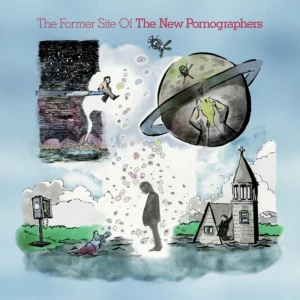 The New Pornographers have followed up 2023’s Continue As A Guest with The Former Site Of. Homing in on the reflective, understated songwriting that marked their previous record, the band’s 10th LP finds A.C. Newman, Neko Case, Kathryn Calder, John Collins, and Todd Fancey being joined by legendary session drummer Charley Drayton. “Having time in my studio really opened things up,” Newman explained. “I don’t like wasting my bandmates’ time, and always felt guilty when I’d give them a song, ask them to do something, then completely change the song and ask them to do it again. Now I can get the skeleton of a song together first—just a couple of elements, the key feeling, really as little as possible—before bringing it to the band and running from there.”
Flea, Honora
 Andre 3000’s flute album, Flea’s trumpet album – what’s next? It’s far from a one-to-one comparison, to be fair. Flea’s electric bass playing is still a prominent feature on Honora, the 63-year-old Chili Pepper’s debut solo album, especially on the Thom Yorke-assisted ‘Traffic Lights’, and it’s hardly an ambient-leaning record, save for the 10-minute delight ‘Frailed’. But it does bring together a star-studded cast of players, including guitarist Jeff Parker, bassist Anna Butterss, and saxophonist Josh Johnson. Even his bandmates Chad Smith and John Frusciante briefly show up.
Sluice, Companion
 Companion could be about whoever you please. The third LP and Mtn Laurel Recording Co. debut from Sluice – now a four-piece featuring Justin Morris on guitar and vocals, Oliver Child-Lanning on bass and various instruments, Avery Sullivan on drums, and Libby Rodenbough on fiddle – opens itself up for projection as its subjects naturally shapeshift. Recorded with producer/engineer Alli Rogers at Betty’s, where 2023’s Radial Gate took shape, in the winter of 2024, the LP was crafted over two years, sounding both weathered and sincerely open-hearted. Don’t miss out on the 8+ minute sprawlers, ‘Gator’ and ‘Unknowing’.
The Twilight Sad, IT’S THE LONG GOODBYE
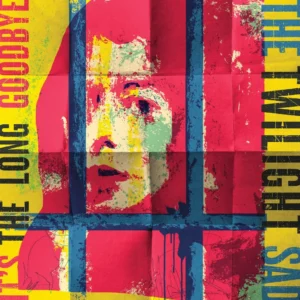 The Twilight Sad have returned with a cathartic new album, IT’S THE LONG GOODBYE. The Scottish post-punk group’s first LP in over seven years features The Cure’s Robert Smith on several tracks. “To know that I’m saying things that connect with other people, that’s such a powerful thing,” singer/lyricist James Graham commented. “I want to be a relatable person that talks about things that can happen and give an opportunity for people to go, well, you’re not alone. I want people to be able to listen to this record and hear that it comes from a place of raw emotion. The album is an opportunity to share my experience and move forward with my life.”
RAYE, THIS MUSIC MAY CONTAIN HOPE.
 RAYE’s sophomore album, THIS MUSIC MAY CONTAIN HOPE., has arrived. The cinematic (Hanz Zimmer is actually featured on ‘Click Clack Symphony’), ambitious record is divided into four “seasons,” with each side of the vinyl representing a different chapter in a journey from darkness to light. “Music is medicine, I’ve always said that,” RAYE said. “I guess I’m in the process of making medicine for myself that I can share with the world. I want us all to say to ourselves that it’s going to be all right, and I’m going to have faith in the seeds that I’ve planted beneath the snow. I wanted to create something that is a hug, bed or soft place for that person who needs it.”
Stuck, Optimizer
 Stuck have dropped Optimizer, their third record in the span of six years. The trio of Greg Obis (vocals, guitar), David Algrim (bass), and Tim Green (drums) accentuates the absurd, idiosyncratic edges of their post-punk sound, which is naturally anxiety-ridden. The band worked with engineer and producer Andrew Oswald, tracking at Chicago’s Electrical Audio studios. Speaking about the single ‘Instakill’, Obis reflected: “I found myself in a bad way in 2024. Reeling with financial stress and a deep sense of precarity with my career, I was desperate for answers. This led me down a deep hole of online self-help huckster gurus. Charitably, I think that many of these people mean well and a few genuinely have good advice. But even the best of them are trying to prey on your insecurities and circumstances in order to sell you a course or a health supplement, which I think is both dark and funny. ‘Instakill’ uses these huckster gurus to explore the futility of constant self-optimization. Is it possible to change who you are?”
José González, Against the Dying of the Light
 José González is back with another album of soothing, fingerpicked guitar. That said, there’s a bit more heft and rage baked into Against the Dying of the Light, as it takes its name from the famous Dylan Thomas poem. “Against The Dying of the Light is a collection of songs reflecting on humanity,” the Swedish singer-songwriter explained. “Who we are – tribes of sentient apes with stories that sometimes are incompatible with each other and tools that could eventually lead to dystopia or extinction. It’s also a reflection of how we create hurdles to human flourishing by stubbornly clinging to dogmatic ideologies, where people follow dudes who pretend to know shit they don’t.”
New German Cinema, Pain Will Polish Me
 Fear of Men’s Jessica Weiss has unveiled her debut solo album under the moniker New German Cinema. Five years in the making, Pain Will Polish Me was produced with Alex DeGroot t (Zola Jesus, Cate Le Bon), drawing inspiration from German art-house auteur Rainer Werner Fassbinder as well as the “quiet dissonance” of modern Berlin. “Germany’s history is everywhere but it’s unsaid,” she noted. “Fassbinder brought it into view. I wanted to approach the same sense of unease through sound.”
Other albums out today:
Irreversible Entanglements, Future Present Past; Yeat, ADL (A Dangerous Lyfe / A Dangerous Love); Tigers Jaw, Lost on You; Lauren Auder, Whole World As Vigil; Chief Keef, Skeletor; Holy Fuck, Event Beat; King Tuff, MOO; Konradsen, Hunt, Gather; Irreversible Entanglements, Future Present Past; Paula Kelley, Blinking as the Starlight Burns Out; Monster Rally, Echoes of the Emerald Sands; Melissa Etheridge, Rise; worriedaboutsatan, No Knock No Doorbell; Wintersleep, Wishing Moon; Cannons, Everything Glows; Caroline Davis, Fallows; Emil Mark, Mellemtid; Myrath, Wilderness Of Mirrors; Shinichi Atobe, Silent Way; Dobrawa Czocher, State of Matter.