Home Blog Page 1151

6 Sports Betting Strategies You Should Try to Win Big

Sports betting has gradually become a multi-million industry over the last few years. Partly because of the COVID pandemic and the possibilities it offers for large profits, it is a great source of prospective income for people worldwide. There are many different points of view regarding the selection of the best sports betting strategy out there on sites like www.newyorkxgambling.com.

Most players try to improve on their already favorite betting way by being adaptable and intuitive, while others believe there is a perfect method that they have yet to discover. Whatever the truth is, here are 6 basic betting strategies that you could use in your efforts to make more money.

1. Bet on Live Games

Probably the most useful tip nowadays is betting while the game is still being played. The reason for this is that most games are now streaming online and you can assess the possible outcome if you have experience in the specific sport. Live bets should be treated the same as your standard pre-bets. Because the odds can change rapidly in this situation, it’s a good idea to look at a specific range of probabilities and assess their value.  

Being able to monitor the game simultaneously adds greatly to the particular benefits of this type of play, as you’re able to adapt to the possible changes and alter your bet accordingly. Naturally, this betting method requires a great deal of work and concentration. You can’t possibly be distracted by other activities, because you may lose everything in a moment. 

2. The Unpopular Draw

A draw isn’t exactly the most favorable wager, as most people are fascinated by a team’s victory, let alone the fans of a specific team, who will probably not play against it. However, draws are well compensated! It’s sometimes better to aim for a tie rather than a victory or defeat. 

Let’s not forget that every game begins with a tie and sometimes it also ends that way, as well. So, a good tip here is to look for matches in which both sides have a difficult time beating each other. A good example is one of the top teams in the league playing against an antagonistic top team in its home base. It’s often so difficult for either to win, that they are both content with a tie, which is frequently the outcome. 

3. The Early Cashout

Another helpful tip, especially suitable for soccer, is the early cash-out, as it allows the gamblers more influence over the wagers they’ve already made and a good chance for a profitable outcome.

 If you’ve placed a bet that has evolved positively for you, you can cash your money out before the end of the game, while the sum is still in your favor. Here in Indonesia, any experienced and trusted soccer gambling agent, or Agen Judi Bola Terpercaya, will point out that this move ensures a large portion of the total amount while safeguarding your initial bet at the same time, which is a valuable play if the game is erratic and the score keeps changing from one moment to the next. However, if the winning team scores one more goal, then the odds are that they will ultimately win, so cashing out early is not a wise choice in that case. 

4. The Outsider Bet

Gambling on the “double chance” 1X is considered an effective betting technique if the favorite team is contested by an outsider at home. In this situation, the “1X” wager offers reasonable odds and lucrative profit potential. With this method, you don’t even need to identify and evaluate games that feature absolute opposites and evident class distinctions. As a result, you avoid betting against the big teams as away teams. Even if you choose teams who aren’t huge underdogs but are still considered outsiders by the oddsmakers, we can obtain incredibly appealing odds. 

5. Betting all-in Odds

This betting plan has to do with winning a series of wagers and always taking advantage of the maximum number of opportunities to make a reasonable profit. However, it is equally clear that if you lose a wager, you will lose all your money, whereas winning thirty to fifty times in a row will ensure you a large profit. For this, you should utilize odds of roughly 1.20 – preferably, you should search for the bets you’re playing in real-time. You shouldn’t make a move until all the odds have reached the ideal amount, just as you normally do with the approach of betting over 1.5 goals. 

The optimal bet here is the over 0.5 bet, meaning the game will not end in a 0-0 tie. If there is no score after thirty minutes, the rate is usually 1.20 (it could be higher or lower, of course). 

6. The 1-3-2-6 system

The 1-3-2-6 is a technique that was created for wagers that yield an even amount and is similar to other popular games of the casino. It is in fact a pretty basic system, where you simply modify your bets according to a few basic guidelines. First and foremost, you must determine the value of your betting piece. As a general rule, once you’ve decided how much you’re prepared to lose in a set period, your wagering amount should be roughly 2% to 5% of that amount. You change your stake per the formula 1-3-2-6 if you win the bet. 

If it’s your initial wager, you then raise your stake to three betting units. If you win again, you bet 2 units on your next try and six in the following bet if you win yet again. If you score the fourth bet in a row, the series is concluded, and you can begin again. Remember that if you lose, your bet will be restored to one betting unit as well. 

There are many more tips that you could use for a permanent potential winning streak, but these 6 mentioned above are the absolute essentials for starters. The best way to learn more is to keep doing your research online while exchanging information with other players at the same time.

You never know what ingenious betting system someone else has thought of that you could also adopt in your own gaming. The possibilities are literally endless and the more you bet the better you can become, as long as you have a disciplined system and you stick to it until the end.

Rina Sawayama Shares New Single ‘Catch Me in the Air’

Rina Sawayama has previewed her upcoming album Hold the Girl with a new single called ‘Catch Me in the Air’, which follows lead cut ‘This Hell’. It was co-written with Oscar Scheller, Gracey, Clarence Clarity, and Stuart Price. Check it out below.

Discussing the new song in an interview with Zane Lowe on Apple Music 1, Sawayama said:

Sometimes I feel really ready for the emotional work. And then other times I’m like, “Oh, I’m too tired. I just want to write just a stupid, silly song.” And sometimes I do write stupid, silly songs that don’t mean anything. But I feel like I’m able to emotionally process that feeling when I write a song about it, so it feels really nice and to be able to share it, and then have that same emotional response from other people is amazing, so it’s worth doing… it was one of the first ever sessions that I did during lockdown in person, and so I was so anxious about catching COVID. Everyone was really feeling anxious about it. And then, so I think because of that, I wasn’t able to write and nothing was coming. Gracie was like, “Oh, my God, Gwen Stefani’s releasing a new song.” And I was like, “Why don’t we just pretend to write for Gwen? Like, “Let’s just get our brains out of our heads and let’s just pretend”… But after that I was like, “Ooh, I’m so about pre-chorus key changes at the moment.” So, I think it was going into the chorus or maybe even going into pre chorus. But anyway, I was like, “Oscar, come up with a key change please.” And he was racking his brains because doing a key change is really hard… and what’s harder than an obvious key change is a really subtle key change.

Hold the Girl is set to arrive on September 2 via Dirty Hit.

Fiona Apple Releases Statement on Roe v. Wade Reversal

Fiona Apple has shared a statement about the Supreme Court’s reversal of Roe v. Wade, the 1973 case that guaranteed a constitutional right to abortion in the United States. Apple spoke out about the decision directly in a video shared via her Fiona Apple Rocks fan channel, noting that she would be donating to abortion funds and bail funds rather than politicians. Watch her message below.

“We have to talk about how we feel about this, how unacceptable this is. We have to keep expressing ourselves because this is all about control,” she said. “You know that. It’s all about control. It’s not about life. It’s about control. It’s about control of women, about control of our bodies, about taking our control of our own bodies away, about taking our autonomy and our privacy and our agency away, taking our choices about what we can do with our lives away.”

Jane Remover Shares New Songs ‘Royal Blue Walls’ and ‘Cage Girl’

Jane Remover, the new project of the New Jersey artist formerly known as dltzk, has shared two new songs: ‘Royal Blue Walls’ and ‘Cage Girl’. Take a listen below.

In a statement about their new creative alias, Jane explained:

The stage name dltzk has never sat right with me. Oftentimes in interviews or during conversations, I struggle to get the name out of my mouth. Originally being a username I’d conjured when I was a kid, it reminds me of what I’ve been doing with my teen years… Hiding. The best way to figure out who you really are is through honest self-expression and I’d prefer to start anew.

With that being said, most people know I’m not very fond of my EP Teen Week; it encapsulates a gradual acceptance of my own true self. While making that project, years ago, I was not in the same headspace, as I currently am today. I was much younger… I was a teen (LOL) and I was still learning how to navigate life. I’m not comfortable with the project as it currently is, so in the next coming weeks, that EP will be abridged to a version more to my liking.

dltzk reminds me of a period of my life I’d like to move past, and I hope you all understand my reasoning as to why I’m dropping it. I’ve spent enough time facing bigotry in my life, from the closest people in my life to even my own fans. I know, for a fact, who I am and what I stand for. Just so everyone is in the loop now, and I don’t have to keep beating around the bush: my name is Jane, from now on I make music as Jane Remover, and that’s all there is to it.

“Royal Blue Walls” is a song about… yeah 😎

Watch Phoebe Bridgers Join the Jesus and Mary Chain for ‘Just Like Honey’ at Glastonbury

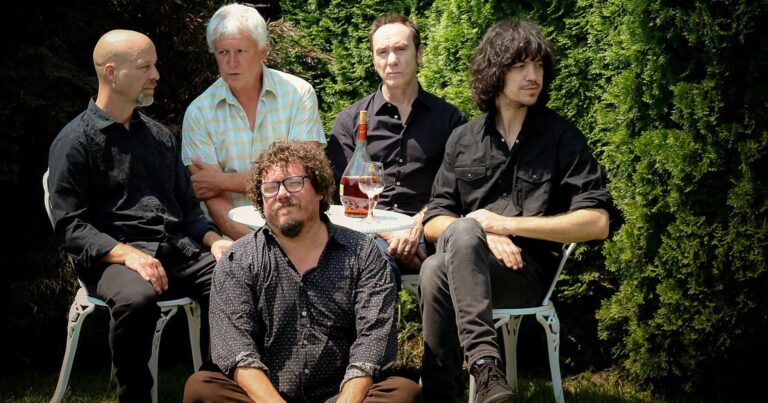
Phoebe Bridgers joined the Jesus and Mary Chain on stage at Glastonbury on Sunday night (June 26), providing backing vocals during a performance of their 1985 song ‘Just Like Honey’. Check it out below.

Bridgers’ guest appearance followed her own Glastonbury set on Friday night, which saw her lead the crowd in a chant of “Fuck the Supreme Court” and bring out Arlo Parks for ‘I Know The End’. It happened just hours after the United States Supreme Court’s reversal of Roe v. Wade, a 1973 ruling that made abortion legal on a federal level.

Bridgers has a few more dates in the UK and Europe before returning to the US for a run of shows in August. The Jesus and Mary Chain released their latest album, Damage and Joy, in 2017.

This Week’s Best New Songs: Beyoncé, Alex G, Rachika Nayar, and More

Throughout the week, we update our Best New Songs playlist with the new releases that caught our attention the most, be it a single leading up to the release of an album or a newly unveiled deep cut. And each Monday, we round up the best new songs released over the past week (the eligibility period begins on Monday and ends Sunday night) in this best new music segment.

On this week’s list, we have Beyoncé’s comeback single ‘Break My Soul’, a cathartic dance anthem that samples Robin S’s 1993 house hit ‘Show Me Love’ and interpolates Big Freedia’s 2014 track ‘Explode’; Alex G’s laidback, tender ‘Runner’, the latest single from his newly announced album God Save the Animals; ‘Heaven Come Crashing’, the lead single from Brooklyn-based artist Rachika Nayar’s upcoming sophomore album, a collaboration with Maria BC that blurs the line between haunting and euphoric; ‘Flood’, the warm, gentle title track from Stella Donnelly’s forthcoming LP; Soccer Mommy’s harrowing, Sylvia Plath-invoking Sometimes, Forever cut ‘Darkness Forever’; and ‘Sewn’, a viscerally propulsive highlight off Zola Jesus’ new album Arkhon.

Best New Songs: June 27, 2022

Song of the Week: Beyoncé, ‘Break My Soul’

Alex G, ‘Runner’

Rachika Nayar feat. Maria BC, ‘Heaven Come Crashing’

Stella Donnelly, ‘Flood’

Soccer Mommy, ‘Darkness Forever’

Zola Jesus, ‘Sewn’

BET Awards 2022: The Full Winners List

The 2022 BET Awards took place on Sunday night (June 26), with Taraji P. Henson hosting for the second year in a row. Sean “Diddy” Combs received a Lifetime Achievement Award during the event, which celebrated the industry legend with a tribute performance from Mary J. Blige, Jodeci, Nas, Lil’ Kim, Busta Rhymes, and more. The ceremony also featured performances from Latto, Chlöe, and Jack Harlow (who wore a Lil Nas X T-shirt in support of his ‘Industry Baby’ collaborator, who criticized the network for snubbing his chart-topping debut album), while Bruno Mars accepted the award for album of the year for An Evening With Silk Sonic, his collaborative record with Anderson .Paak. Check out the full list of winners below.

Lifetime Achievement BET Award

Sean ‘Diddy’ Combs

Best Female R&B/Pop Artist

Ari Lennox
Chlöe
Doja Cat
H.E.R.
Jazmine Sullivan
Mary J. Blige
Summer Walker

Best Male R&B/Pop Artist

Blxst
Chris Brown
Givēon
Lucky Daye
The Weeknd
Wizkid
Yung Bleu

Best Group

Silk Sonic
Chlöe X Halle
City Girls
Lil Baby & Lil Durk
Migos
Young Dolph & Key Glock

Best Collaboration

“Essence,” Wizkid feat. Justin Bieber & Tems
“Every Chance I Get,” DJ Khaled feat. Lil Baby & Lil Durk
“Family Ties,” Baby Keem & Kendrick Lamar
“Kiss Me More,” Doja Cat feat. SZA
“Way 2 Sexy,” Drake feat. Future & Young Thug
“Whole Lotta Money” (Remix), Bia feat. Nicki Minaj

Best Female Hip Hop Artist

Cardi B
Doja Cat
Latto
Megan Thee Stallion
Nicki Minaj
Saweetie

Best Male Hip Hop Artist

Drake
Future
J. Cole
Jack Harlow
Kanye West
Kendrick Lamar
Lil Baby

Video of the Year

“Family Ties,” Baby Keem & Kendrick Lamar
“Have Mercy,” Chlöe
“Kiss Me More,” Doja Cat feat. SZA
“Pressure,” Ari Lennox
“Smokin Out the Window,” Silk Sonic
“Way 2 Sexy,” Drake feat. Future & Young Thug

Video Director of the Year

Anderson .Paak a.k.a. Director .Paak
Benny Boom
Beyoncé & Dikayl Rimmasch
Director X
Hype Williams
Missy Elliott

Best New Artist

Baby Keem
Benny the Butcher
Latto
Muni Long
Tems
Yung Bleu

Album of the Year

An Evening With Silk Sonic, Silk Sonic
Back of My Mind, H.E.R.
Call Me If You Get Lost, Tyler, The Creator
Certified Lover Boy, Drake
Donda, Kanye West
Heaux Tales, Mo’ Tales: The Deluxe, Jazmine Sullivan
Planet Her, Doja Cat

Dr. Bobby Jones Best Gospel/Inspirational Award

“All in Your Hands,” Marvin Sapp
“Come to Life,” Kanye West
“Grace,” Kelly Price
“Hallelujah,” Fred Hammond
“Hold Us Together (Hope Mix),” H.E.R. & Tauren Wells
“Jireh,” Elevation Worship & Maverick City Music
“We Win,” Lil Baby X Kirk Franklin

BET Her

“Best of Me (Originals),” Alicia Keys
“Good Morning Gorgeous,” Mary J. Blige
“Have Mercy,” Chlöe
“Pressure,” Ari Lennox
“Roster,” Jazmine Sullivan
“Unloyal,” Summer Walker & Ari Lennox
“Woman,” Doja Cat

Best International Act

Dave (U.K.)
Dinos (France)
Fally Ipupa (Democratic Republic of the Congo)
Fireboy Dml (Nigeria)
Little Simz (U.K.)
Ludmilla (Brazil)
Major League Djz (South Africa)
Tayc (France)
Tems (Nigeria)

Best Movie

Candyman
King Richard
Respect
Space Jam: A New Legacy
Summer of Soul
The Harder They Fall

Best Actor

Adrian Holmes, Bel Air
Anthony Anderson, Black-Ish
Damson Idris, Snowfall
Denzel Washington, The Tragedy of Macbeth
Forest Whitaker, Respect | Godfather of Harlem
Jabari Banks, Bel Air
Sterling K. Brown, This Is Us
Will Smith, King Richard

Best Actress

Aunjanue Ellis, King Richard
Coco Jones, Bel Air
Issa Rae, Insecure
Jennifer Hudson, Respect
Mary J. Blige, Power Book II: Ghost
Queen Latifah, The Equalizer
Quinta Brunson, Abbott Elementary
Regina King, The Harder They Fall
Zendaya, Euphoria | Spider-Man: No Way Home

YoungStars Award

Akira Akbar
Demi Singleton
Marsai Martin
Miles Brown
Saniyya Sidney
Storm Reid

Sportswoman of the Year Award

Brittney Griner
Candace Parker
Naomi Osaka
Serena Williams
Sha’carri Richardson
Simone Biles

Sportsman of the Year Award

Aaron Donald
Bubba Wallace
Giannis Antetokounmpo
Ja Morant
LeBron James
Stephen Curry

Author Spotlight: Julia Armfield, Our Wives Under the Sea

Something’s wrong with Leah. She returned from her deep-sea exploration weeks ago, but she’s troubling her wife, Miri, plodding around the apartment seeping water, spending days in the bath, and locking herself in the bathroom.

The book switches between the two characters — Miri, contacting her friends for some relief and being neglected by the enigmatic Centre which Leah’s expedition was a part of — and Leah, recalling her time under the sea surrounded by two crewmembers. While Miri tries again and again, through repeated calls and online forum visits, to see what has happened with her wife, Leah grows stranger, her symptoms worsening as the book deepens. Sections correspond to the ocean’s laters, starting from the benign “Sunlight Zone,” ending with the dark and horrifying “Hadal Zone.”

As Leah recalls her time stuck at the bottom of the ocean, losing track of time, Miri attempts to find the wife she once knew underneath the literal and metaphorical watery wall an unknown entity has erected in front of Leah. Combining bodily horror with an unnerving sense of realism, Our Wives Under the Sea is one of the most frightening of the year — no jumpscares required.

Our Culture chatted with Julia Armfield about her research from the book, the banality we meet with extreme events, and how queer relationships are portrayed. 

This book terrified me to my core — this idea that someone coming back from the sea, thoroughly changed, is so scary. What made you think of this? 

When I first started writing it, it was initially a short story idea. There’s a Lauren Groff novel, The Monsters of Templeton, it’s sort of about somebody coming back to their childhood home, and dealing with that in a sort of realist, personal level. But at the same time, there’s this monster that’s been found in the lake there. I love when people do the juxtaposition of realism and genre — I find it so interesting. I feel it’s a fulfilling way of dealing with everyday emotions. I knew I wanted to talk about grief, and I knew I wanted to talk about queer relationships. But I wanted it kind of smashed up against this weird thing going on. I’ve always been really interested in the way that when weird, shocking, or bad things happen, people don’t actually go on being shocked. It’s not like that H.P. Lovecraft thing where people keep reacting in horror at something. People always, I think, make an accommodation. I was interested in that — how the dailiness of everything would continue to assert itself over everything else that was going on.

Miri struggling to connect the Leah she had before with the one she has now is the main conflict of the book, while in Leah’s sections, she reminisces on her time under the sea. What was the effect of this disparity?

I always wanted there to be two voices — I always wanted it to be a novel that’s in conversation with itself. I see the narrative as one going up and one going down, as they go. I was thinking of a submarine while I was doing the narratives. It was sort of necessary as a way of talking about trauma, and necessary as a way of centering Leah very much in what happened to her. And then Miri being the tool in which I used to investigate everything else. I needed to spend an appropriate amount of time on what actually happened to Leah, and it felt like her plot line had to be distinctly that.

This is my favorite type of horror — instead of jumpscares or gore, it’s just this really unsettling and creepy tone through the book. Is this the type of horror you gravitate towards as well?

I have a broad taste, where horror is concerned. But the thing I’m interested in is the fact that horror itself is actually a relief. The thing that is scary is dread. Do you know what I mean Because it’s like, ‘This thing is gonna happen, it’s gonna happen, it’s gonna happen’ and it’s not happened yet — that’s the thing that freaks you out, when you’re waiting for the jumpscare. I always wanted to write a novel about that dread. Because I think so much of the novel — I hope — is about anticipation of something that happened outside of this submarine and you don’t know what. It’s also about an anticipation of grief and losing someone. I think that the dread of all that and the sense of not knowing is what I find really scary. I like most horror, so it’s not necessarily the only horror I’m interested in, but it was definitely the one I wanted to write.

The agency or organization Leah’s connected to, The Centre, is unhelpful and vague, which is especially annoying considering that Miri is just trying to help her wife and find out what happened. Was this place inspired by infuriating calls to companies previously, where you’re repeatedly asking for a representative and all you’re getting is unhelpful robotic replies?

That was very, very intentional — I think so much of it has to do with a smashing up of realism and genre against themselves. Obviously, so much of the horror is like, ‘What happened in the submarine?’ But a lot of the horror is just the clanging bureaucracy of not being able to get an answer or having the right password for the phone, or no one talking to you. It’s not dissimilar to dealing with companies or seeking medical care. It was very important to include people having very realistic reactions to bizarre things. Because actually, what would have happened is it probably wouldn’t be cosmic and fascinating — what would happen would be that you wouldn’t be able to get through to someone on the phone.

I thought it was interesting how in her calls to the Centre, Leah is almost a malfunctioning product to Miri, who is calling the company to find out what happened. She’s like, ‘Something’s wrong. I need help,’ when there’s no product guide for fixing a human.

I think that’s a really nice way of looking at it — I think you’re right. I can’t remember it, because I don’t remember my own writing, but there’s a bit where she’s, like, ‘Can you give her back better?’ or something like that. And I think it’s sort of tied to something which I really wanted to focus on, which is selfishness of grief. I don’t mean that in a bad way, but I mean when you’re grieving for someone, you are ultimately grieving for yourself without that person. Obviously, everyone is altruistic and when you love somebody, you have multifaceted responses to something. But a lot of what you are grieving for is ‘I no longer have what I have.’ So I think it had to do with coming to terms with the loss of a person even when they’re still there.

And I think that was why, when I was writing about that, I thought it was important to write about Miri’s past experiences with her mother, who has had this deterioration. Miri hasn’t dealt with it very well, and isn’t dealing with it well now. There’s a sense of coming to terms that, like I said, grief is selfish and that’s okay. You can’t control your emotions where love is concerned. And when you focus on something as a malfunctioning product, you’re still reacting to something in the realm of the fixable. So it kind of goes hand in hand with denial.

You are an evil genius for separating the book into sections representing the ocean’s layers, starting from the Sunlight Zone and ending with the Abyssal Zone. Chills literally ran down my spine once I realized what you were doing. How did you come up with that idea and where did you think to divide the chapters?

I remember sort of thinking about that, because in the acknowledgements, there’s this reference I have cited which is this interactive site where you can scroll through all the layers of the sea. It’s this illustrative resource where it keeps getting darker… Yeah, it’s quite disturbing. I remember seeing that when I was reading about the ocean a bit and I remember there being five different sections. I don’t get this very often, but you know when you just have a lightbulb moment, like, ‘Oh, this would be a really really nice way to structure things.’

I write completely chronologically. I really envy people who can go all over the place, do the important bits, and link them all together, but I have to do grunt work. I have to just hack through the novel as it will be on the page. In some ways it’s a very frustrating way to write, but also, it makes it quite easy to tell when you’re dipping down into a different tone or when something is getting worse. I think it’s also helpful for pace, because you can tell where things are going to be. So it felt quite natural, really to structure things like that. Because essentially, it’s a novel about things getting worse. I can’t remember if it’s the second or third section that’s quite a big rush of flashbacks, which I think is quite necessary to have nestled in the middle. But in general, it more or less dictated itself in terms of pace.

There are so many details that make the book insanely clever and well-rounded. What comes to mind is the online forum for wives to roleplay their husbands going to space, or a congregation called the Church of the Blessed Sacrament of Our Wives Under the Sea. How did you think of these small details that add some humor to this bleak situation?

I think it’s always necessary, to me, to have levity. I’m interested in the ridiculous quite a lot. I’m interested in when something terrible is happening, and yet, there’s always somebody focusing on something unbelievably irritating. There’s always somebody doing something bizarre. It came from the drive towards realism, I think. I’ve spent a lot of time on the internet —  I’ve seen this kind of place. It felt natural to me that some people’s reaction would have been to join that exact website. The forum is Miri looking for some point of connection or something that will help her smashing up against something that’s really quite straight.

I think that was kind of what I was doing in a lot of other areas as well. The specificity of going through something as a lesbian couple and looking for something that is helpful, and the norm not necessarily being that, or people not necessarily considering that the norm, and how alienating and difficult that can be.

There’s a lot of different notes to that, and I think it just happens — when I was having surgery in November, and I remember my girlfriend was looking for something about it on the National Health Service. She found this resource that was basically for husbands being like, ‘When your wife goes through this, she might not want to do this and this.’ The way it was worded, like, ‘If your female wife doesn’t want to do this…’ This still happens! It was mainly levity. To a certain point, it was heteronormativity. 

With Leah’s sections, we see her at the bottom of the ocean with her crew. How did you go about constructing details of a place that — I hope — you haven’t been before?

There’s some really great resources — there’s an excellent New Yorker piece about bathyspheres, there’s a really good Guardian longread about being hundreds of miles under the sea. But to some degree, it was less important to me to do high sci-fi. I love sci-fi, but I’m not explaining to you in great detail how the spaceship works, how the submarine works. It was more important to me to be in a situation which essentially felt like a haunted house. They’re trapped in this space, there are noises, there’s something about the space which is wrong. I was thinking more about The Haunting of Hill House when I was writing. At the same time, it was important just to do what needed to be done. I don’t want to take the piss when I’m putting something together — it needs to be believable. But it doesn’t need to be believable to a marine biologist, just to a man on the street. 

I wanted to talk a little bit about the research of this book — so many times, when an author writes a book about a narrator with a specialized profession, it’s based on the author’s experience. For example, Hillary Clinton’s new book is about a fictional U.S. Secretary of State. Obviously, you were pulling from your own mind. You talk so much about the sea, but as you say in your note at the end, you’re not a marine biologist — what was the research process like? Were you always interested in the sea, or did this story just require more knowledge to tell?

I was definitely always interested in the sea. In my short story collection salt slow as well, there’s a lot of watery elements to it. In the last story, it’s like an end of the world oceansphere. But I think that in general, the research was fairly light. Like I said, I’m not too interested in everything being deeply provably accurate. I just needed to advance the plot; I didn’t need it to distract or say anything wrong. I’m really interested in horrible things, weird noises, glaciers carving, the way things look under the sea. To some extent, I could do research as long as it benefitted and interested me, which was nice because it meant that I could construct a book filled with stuff that I liked.

With some books, it’s clear the author just went on Wikipedia and researched whatever they’re talking about, and it ends up being dense and on the nose. That’s what I liked about this book — it was clear there was research, but it was never too dense; you just felt the presence of it.

That’s really kind of you. I think I wanted it to not wear its research too heavily, because I completely agree, I think you can always tell. You can tell when the author has done so much research when they’re loath to let go of something, and therefore they shoehorn the information in somewhere. You have to learn what is in your character’s voice, but you also have to learn what you just have to let go, even if you found something really interesting, because it might not serve the plot.

In your research, did anything surprise or shock you? Any cool deep sea facts you picked up?

This is really sad — did you know that I had no idea that the director James Cameron is one of the very few people who has been right to the bottom of the sea in a piloted craft? He’s one of, like, six people or something.

That’s really scary. I’m not a huge movie person, but that’s dedication.

I know! And when I tell people this, they’re, like, ‘Well, I guess he did direct Titanic.’ And it’s like, yes, but he didn’t do it there. It’s just very weird.

The book is being published later next month in the United States, and after that, what are your future plans? Another novel or project you’re working on?

Another novel, I think, at the moment. We’re at about 20k words, which my friend describes as having a little stew. Everything’s being cooked up, but it could still go disastrously wrong, so keep your fingers crossed for me.

Cyndi Lauper Releases New Version of Abortion Rights Song ‘Sally’s Pigeons’

Cyndi Lauper has released a new version of her 1993 song ‘Sally’s Pigeons’ in response to the Supreme Court’s repeal of Roe v. Wade, the 1973 ruling that guaranteed a constitutional right to abortion in the United States. The song was originally inspired by the story of Lauper’s friend, who received a back-alley abortion after becoming pregnant and died due to the attempted procedure. Check out ‘Sally’s Pigeons (Redux 2022)’ below.

“The Supreme Court’s radical decision today makes the re-recording and re-release of ‘Sally’s Pigeons’ more relevant than ever,” Lauper wrote in a social media statement. “In my childhood, women didn’t have reproductive freedom and 50 years later we find ourselves in a time warp where one’s freedom to control their own body has been stripped away. When I wrote this song with Mary Chapin Carpenter in 1991, we wrote about two little girls who dreamt of stretching their wings like the pigeons they watched that flew above them. They dreamt of being free. But freedom then for women and unfortunately now comes at a big price. If we don’t have control over our own bodies then we have no real freedom. We are second class citizens. We need to mobilize. We need to let our voices be heard.”

The House Always Wins Concept

Many players are always looking for a way to beat a casino. This idea has been around for as long as gambling itself has existed. To understand how realistic it is, you need to understand a simple truth: all casino games have a negative mathematical expectation. This means that you have no chance of beating the casino in the long run. Undoubtedly, you may win over a short range of, say, a hundred spins. But it doesn’t always work. The same goes for systems for winning that are devised by enterprising players. Once they come up with a system, a lot of people think it works. But as soon as the mathematical expectation goes negative, the system does not work and the client loses.

Theoretical return is only true in the long run

The RTP is set by simulating 1 billion rounds on a game server. That is, to obtain a licence from the regulator, the vendor must go through a certification process and an independent auditor must verify the game server simulation. This audit determines the correctness of the declared RTP. Casino owners cannot independently regulate the percentage of returns.

It is worth noting that over the short-range, some players notice a change in the theoretical return. However, this is not the case. The problem is that players don’t make enough spins because they are limited in the time and money needed to make it through the long haul. This suggests that you can only see a real theoretical return over the long haul. Therefore, you may notice that some players lose.

Apart from that, it should be understood that slots have another mathematical model besides RTP. There are low volatile and highly volatile games. In practice, this means that in the first case with low volatile games you will get frequent, but small winnings. And with most volatile games on the contrary, quite rare, but big winnings.

Why you can not win at casinos long term

Let’s look at an example: a particular slot has an RTP of 95%. It follows that the casino’s advantage, in this case, is 5%. These two concepts imply the same thing but in reverse. In the first case, the RTP indicates that on a long-distance the return to the player will be 95% of all his bets. The second one tells us that the casino will get 5% back from each of your bets, also in the long run. Looking at an example, it looks like this: for every 1 USD wagered, the slot should return 0.95 USD to you. Of course, if it were that simple, it would just be paying 5% for each spin. That’s why the developers’ planned RTP, which is built into the slot, only aligns to its ideal over a distance of millions of spins and constantly changes by fractions lower or higher. That is, it works like this, you bet 1 USD per spin and end up winning 1.90 USD. This means that you take back not only your 0.95 USD which the slot should have returned but also the other player’s 0.95 USD. Simply put, the casino will earn 5 pennies from every 1 USD paid in slots. Sometimes slots can pay out huge winnings and the online casino is on the losing end. But, in the long run, mathematics takes its course. The same is true for the rest of the games. No matter how many bets you make, you will lose out over the long haul.

Casino games with a low house edge

Blackjack (0.5% or even lower with basic strategy used). Blackjack is a card game that is played with two decks of cards. It is one of the most popular casino games in the world. The player’s goal is to beat the dealer’s score by getting as close to 21 as possible without going over. The game ends when the player either wins or goes over 21, depending on how many rounds have been played.

Craps (house edge can become even 0% given that a player makes only certain bets). In craps, the player bets on the outcome of rolling two dice. The player can win or lose depending on what happens. Depending on how many numbers are rolled, players can win by betting a certain number or lose by betting an amount that is less than or equal to their bet. The game begins with the shooter throwing two dice onto a table and calling out “come-out” before each roll. The shooter then makes one pass with each die before throwing again and calling “pass.” If either die rolls seven, it is called a “natural” and wins for the shooter and all other players who have made bets on that number (other than those who have placed a point).

Baccarat (1.06% for Banco bets). Baccarat is a game of chance that is played with two decks of cards, the player and the banker. The game can be played on a table or in an online casino. Baccarat is a game of chance that was invented in France in the 17th century. It is popular among high-rollers and celebrities who like to gamble with their money. The player bets on either the banker or any other player and takes one card from each deck as his/her stake, then one card from the remaining deck as his/her first bet. The first round of betting ends when all players have placed their bets and drawn one card from each deck for their second bet, or when all but one player has folded.