What Dubai households actually pay for an AMC in 2026
Most Dubai residents searching for an annual maintenance contract in Dubai find prices ranging from AED 1,499 to AED 3,999 per year for apartments, with villa contracts starting from AED 2,999 per year. These figures come from European Technical’s pricing, published as a three-tier structure that ties cost directly to service frequency, included repairs, and emergency response speed.
The monthly equivalent: AED 125, AED 209, and AED 334. For a flat in Business Bay or JBR running a split-system AC through the Dubai summer, the mid-tier is where most households land.
The three apartment tiers explained: AED 1,499, 2,499 and 3,999
The tier you choose governs AC service frequency, whether minor repairs are included, emergency response time, and the discount rate on any out-of-scope work.
Essential: AED 1,499 per year (AED 125 per month): two AC services for up to four units, one plumbing inspection, one electrical inspection, 10 percent off extra work, four-hour emergency response via hotline.
Premium: AED 2,499 per year (AED 209 per month): three AC services for up to six units, two plumbing and two electrical inspections, minor repairs on both systems, water heater maintenance, two-hour emergency response with unlimited callouts.
Platinum: AED 3,999 per year (AED 334 per month): four AC services with no unit cap, quarterly plumbing and electrical inspections, repairs across all three systems, annual pest control, annual AC duct deep clean, four handyman hours per quarter, one-hour emergency response.
Essential covers two AC services annually for up to four units, one plumbing and one electrical inspection, a 10 percent discount on extras, and a four-hour emergency response via hotline. Minor repairs are not included. Premium at AED 2,499 adds a third AC service for up to six units, doubles inspection frequency, includes minor plumbing and electrical repairs, adds water heater maintenance, and cuts emergency response to two hours. Platinum at AED 3,999 delivers four AC services with no unit cap, quarterly plumbing and electrical inspections, repairs across all three systems, annual pest control, annual AC duct deep clean, and four handyman hours per quarter. Emergency response is one hour.
Villa contracts start higher, and for a reason
Villa plans at European Technical start from AED 2,999 per year. A villa in Arabian Ranches or Dubai Hills Estate typically runs multiple split units, a larger plumbing network, and sometimes a chiller system. The service load is greater by design. The company publishes a direct comparison: individual trade calls for a villa above AED 10,000 per year. A structured contract from AED 2,999 changes that substantially. Exact villa tier prices are not listed; European Technical quotes based on the specific property.
What moves the price up or down (units, tiers, portfolio size)
Unit count is the main driver: Essential covers up to four AC units, Premium up to six, Platinum has no cap. A three-bedroom flat with splits in each room and a cassette in the living area sits at the Essential ceiling, which makes Premium the realistic starting point for that home. Portfolio scale is the second lever: landlords holding three or more units receive a 15 percent discount, applied at the three-unit threshold only.
How an AMC price compares with paying per breakdown
The sharpest number European Technical publishes is its two-bedroom apartment comparison: pay-per-service across a typical Dubai year runs to AED 6,000 or more, against an AMC from AED 1,499. The company attributes that 50 to 75 percent saving to the shift from reactive call-outs to scheduled visits. The full picture of AMC costs in Dubai starts with call-out fees: European Technical charges none to AMC holders. Every uncontracted visit carries that fee on top of labour and parts. Over four or five visits in a year, the total adds up quickly.
Parts turnaround is the other variable most people miss. When a repair needs an ordered component, the technicians return within 24 to 48 hours. All completed work carries a 12-month workmanship warranty. The 14-day money-back and the option to cancel after six months with a prorated refund keep the entry risk low. The cost of waiting usually surfaces during the first serious heatwave.
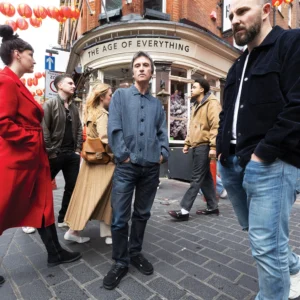
Johnny Marr has announced a new solo album, The Age of Everything, arriving October 2 via BMG. It’s led by the bouncy, shimmering ‘Spin’, which comes paired with a music video. Check it out below.
“This is the record that’s been the most cathartic,” Marr said in a prss release. “The title came to me early in the process and became an inescapable idea. It seemed to sum up the way I think a lot of people are feeling. It’s all encompassing, but it’s not necessarily a negative statement. There’s a sense of overwhelm in the culture brought about by technology, but looking at it with a different light, there could also be a sense of possibility.”
The Age Of Everything Cover Artwork:
The Age Of Everything Tracklist:
1. Spin
2. Beyond The Rain
3. It’s Time
4. How Come
5. Ophelia
6. That Feeling
7. In And Out Of Love
8. Just Once More
9. Fire With Fire
10. All In A Life
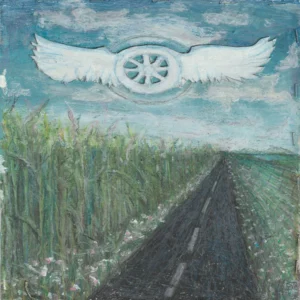
Squirrel Flower has announced a new album called Say a Prayer to the Gods of Getting Going. The follow-up to 2023’s Tomorrow’s Fire is set for release on August 21 via Polyvinyl. The heartfelt lead single ‘Reelin’ is out today, and you can check it out below.
“The lyrics started as an art piece I made on an overdue Kansas Turnpike toll bill,” Ella Williams said in a statement about ‘Reelin’. “This song is my ode to the push and pull of domesticity and unraveling. Leaving and getting reeled back in, over and over and over and over.”
She added: “This video was born from serendipity and divine timing. There was a huge storm at the time Clay, Jackson and I had planned to shoot in this industrial area I’d been scoping out, and we called the shoot off. At the last minute, I looked at the sky and decided it’d be worth trying. We pulled up to the spot just as the clouds were breaking and a gorgeous double rainbow shot across the sky out of the sparkling city. The other footage is from the Indiana dunes, referencing many performance art videos I’ve made of myself playing accordion with the dunes and factories in the background.”
The new album was recorded live at Door County, WI’s Merry Meadow with a cast of collaborators including co-producers Seth Engel and Jack Henry, and later rerecorded in Asheville with Alex Farrar at his Drop Of Sun studios. It features contributions from Dave Hartley (The War on Drugs), Seth Kauffman (Angel Olsen), Dimitri Giannopolous (Horse Jumper of Love), Sofia Jensen (Free Range), Clay Frankel (Twin Peaks), Andy Krull (Red PK), Book Not Brooke (Babywave), and family members Jameson, Jesse, and Nate Williams.
Say a Prayer to the Gods of Getting Going Cover Artwork:
Say a Prayer to the Gods of Getting Going Tracklist:
1. Say a Prayer to the Gods of Getting Going
2. Cleveland
3. Not Me
4. Helicopters
5. Highway Woman
6. Reelin
7. Foot Thick Ice
8. Sick Tooth
9. Fought a Hornet
10. Surfing USA
11. Weightless, Untethered
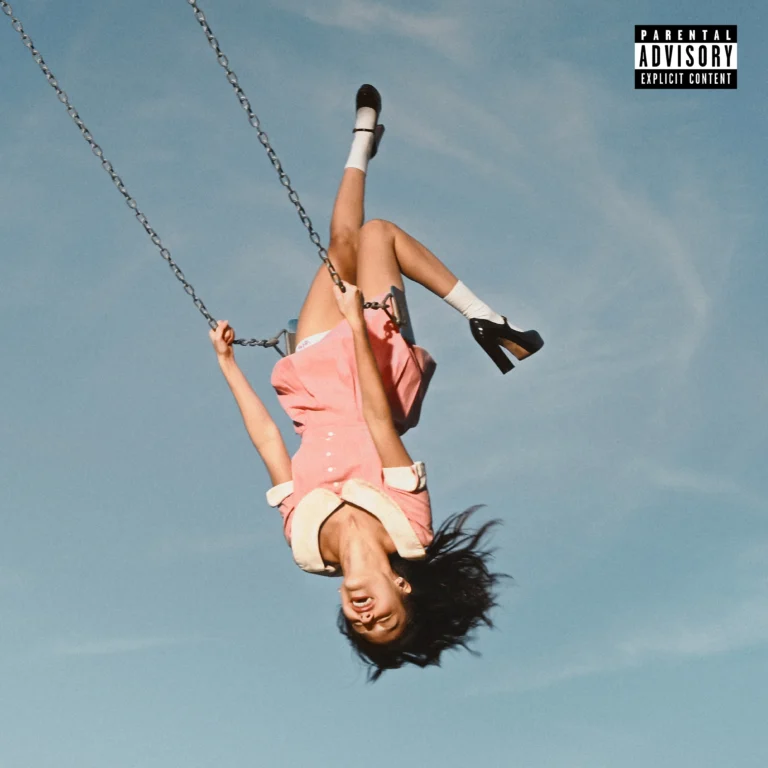
After debuting his collaboration with Olivia Rodrigo at Primavera Sound, Robert Smith used the pop star’s music as a reference point for the Cure’s “upbeat” next album. “It’s really poppy, but it doesn’t compare melodically to the stuff that Olivia does, but it’s my idea of Cure Pop,” he said. “It’s probably 20 BPM slower than anything she does.” Slower than ‘honeybee’? Slower than ‘less’? Did he even receive an advance of the 23-year-old’s latest album before going into the studio to sing ‘what’s wrong with me’? If the Cure’s new album is sadder than ‘the cure’, I’m worried. Of course, this is to say that anyone’s idea of Olivia Rodrigo Pop is fallible, as she anchors in a range of influences that have always included the likes of the Cure and Hole – now also triangulated with Devo, Weyes Blood, and more – while stretching them in subtly unexpected ways. On you seem pretty sad for a girl so in love, she charts a romance from its incandescent beginnings to its very last flicker, showcasing new strengths while throwing herself at the mercy of forces beyond her control. The fact that it’s bittersweet isn’t surprising; the execution just keeps getting better.
1. drop dead
The magic of ‘drop dead’ isn’t just how Olivia Rodrigo sounds like “the most alive I’ve ever been” – it’s how she superimposes that aliveness on her surroundings, be it the ghosts of Versailles or the internet, where she pieces together a crush’s past less like a puzzlethan a Frankenstein’s monster. It was a striking lead single, but with each listen new details perk up, especially in Dan Nigro’s production: the ride cymbals emulating the rush of blood when our protagonists are “all pressed up in the bathroom line,” the subtle distortion hinting at the supposed incongruity between a Pisces and a Gemini. I don’t know about them, but ‘drop dead’ makes anxiety and exhilaration sound really good together.
2. stupid song
“I want you more than any stupid song could ever say,” Rodrigo sings in the chorus of a track that, after exploding from its balladic beginnings, does a little more than your standard love song. Nigro’s busy drum programming takes it to the next level (echoing the work of a certain Lorde collaborator, if not the one credited later on the album), a dynamism matched by Rodrigo in the rapturous bridge, emphasizing the motion in “I’m going mad” as if the state of delirium hasn’t already totally consumed her.
3. honeybee
Rodrigo’s best vocal performance? As the totalizing force of infatuation deepens into commitment, its subtle breathlessness recognizes the currents beyond her control, even if the kind she exerts over her voice is impeccable. “But even when I’m quiet/ I love you, baby, I promise,” she sings, less of an affirmation of love than the freedom to express it this way. What’s quietly unfolding in ‘honeybee’, for all its focus on Rodrigo’s voice, is a kind of ego death: when “Here’s to hoping” gives way to a choir, you understand why there’s no me instead of to. Even if this love goes away, even when it colours everything in your periphery, it feels so much bigger than you.
4. maggots for brains
On the bright side, side effects of the beloved’s seemingly temporary absence may include: zombification, colour vision deficiency, and total derailment of the protagonist’s life. The key word is temporary, though, so what better way to accentuate the prescribed daydreaming with some actual dream-pop, which fits into the album’s trajectory instead of feeling like a tossed-off influence.
5. u + me = ˂3
Having established the tenuousness of “forever,” Rodrigo dives headfirst into it, sprinting through the same stylistic signifiers with some added jangle. I’m not a mathematician, but a more accurate representation of a relationship that accounts for the variability of time might be something like ‘u + me = ˂3(t)’, but Rodrigo isn’t scared of how it could evolve just yet. She might even let go of her disdain for yacht rock to win his sister’s affection. That’s commitment.
6. my way
Rodrigo lets some rage out on the new-wavey ‘my way’, giving the old-fashioned jealousy and swagger of some of her older hits a different shine. The maturity and nuance on display throughout the record may win over critics, but straightforward anger is sometimes the only way to get the message across: “Let me be direct: just stop,” she tells the girl who won’t stop flirting with her guy. No need to get all flowery about it.
7. purple
Rodrigo reconsiders the equation in terms of colour: if the lover’s absence has a flattening effect, together their red and blue simply turns her world to purple. It’s sweet, if typical of the way bitterness seems to infect all of the album’s love songs by the end. Co-produced with Jim-E Stack, the track flickers and darkens the melody’s edges, until Rodrigo’s whisper is less a sign of intimacy than loss of self. Romance blurs into codependency, in the strange way that a favorite colour can turn ambiguous, or your favorite florist can become a person to avoid. Nothing feels the same way afterwards – not even the music that precedes it.
8. the cure
The unraveling begins with ‘purple’, but by ‘the cure’ her heart is already filled with doubt; the love that was supposed to be restorative turns actively toxic. Though a single, the acoustic track scans almost like an outlier on you seem pretty sad, whose sadness has so far been expressed on relatively bouncy songs. It’s a chilling display of what Rodrigo can do with the format as an artist who doesn’t overuse it, steadily building the song up as if hanging on for dear life.
9. begged
The album’s second stripped-down track in a row is much more subdued, a fingerpicked ballad that serves as the reflective counterpart to ‘maggots for brains’. If that song aims for metaphor, this one craves truth: no display of affectation can heal romantic misalignment, no grand gesture can compensate for what should come naturally. During its Saturday Night Live debut, Rodrigo was backed by a group of singers that included Weyes Blood’s Natalie Mering, but hearing her harmonize with her own voice on record – doing all the heavy lifting – only further drives the point home.
10. what’s wrong with me [feat. Robert Smith]
If name-dropping ‘Just Like Heaven’ on the album’s first song and naming the second single ‘the cure’ wasn’t enough, Rodrigo revealed that the first feature on any of her albums would be Robert Smith. Stylistically, a song like ‘maggots for brains’ sounds way more inspired by a certain side of the Cure, while ‘what’s wrong with me’ is rather nondescript, though still punchy and textured – like Rodrigo’s endearing vocal interplay with Smith, it seems intended to overshadow how scathing and direct the lyrics actually are. Universal, too: Heartbreak may mean different things at different stages in life, but the symptoms – “I can’t eat, I can’t sleep” – are all the same.
11. less
‘less’ is more of a classic piano ballad than ‘honeybee’, if only to underline how the appearance of elegance means little when the message itself is heartbreaking. “I think it was us trying to practice a little bit of restraint,” Rodrigo said in an interview, but its uninhibited vulnerability hardly sounds practiced – even if stretching the word “LAX” to its emotional extreme took hours to perfect.
12. expectations
Rodrigo doubles down on the sense of unruliness while ramping up the pace on ‘expectations’, the song that’s most likely to catch casual fans off guard. Over a dance-punk rhythm and positively silly synth line, the lines “Now I am secure/ I am so evolved” seem to scoff at anyone overeager to praise Rodrigo’s maturity at the three-album mark. Just like ‘less’, it thrives off spontaneity, not calculated deliberation – she might grow over the lyrics “I’m not kissing any boy that is passive/ Their indecision is painfully unattractivе” as soon as they’re written down, but she sure sells them.
13. cigarette smoke
‘cigarette smoke’ may be a bit too obvious (“Some nights can be/ So fucking lonely/ But it’s better than begging for you to stand up for me, honeybee”) and lackluster of a closer, tallying up sentiments and recycling sonic tropes without the surprising twist other songs here offer. I have to highlight PJ Cartwright’s strings, though, as they mirror Rodrigo’s memories begging to be erased – a darkness perhaps not borne of honesty, as she wishes, but through the sheer passage of time. Nigro’s production, suddenly BJ Burton-like, begins to crowd the entire field of vision. Better to burn out than to fade away, they say, yet Rodrigo still ties up everything in a neat bow – a melancholy gracefulness that, as she’s just demonstrated, can still cut like a knife.
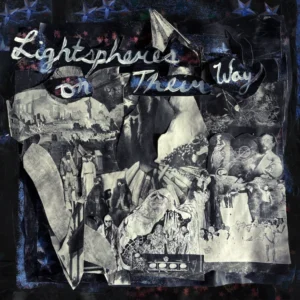
Lily Seabird has announced a new album titled Lightspheres on Their Way. The follow-up to 2025’s Trash Mountain comes out September 4 physically and October 2 digitally via Lame-O Records. Following the fantastic non-album track ‘Demon in Me’, today’s announcement comes with the rollicking, fiery lead single ‘Election Day’. Check out its Asher Groh-directed video below, and scroll down for the album artwork (by Seabird herself) and tracklist.
“A lightsphere can be so many things,” Seabird said in a press release. “An actual light like a star, the sun, a UFO; headlights, a flashlight in the night; but also life, living things, people, relationships.”
Of the new single, Seabird commented: “This song is about having to make a decision and both options are painful, confusing. I wrote this song on election day which works as a great metaphor for this in our current political climate but this song is not about voting. The chaos of painful decisions that are difficult and when it suddenly comes to a point where a decision does have to be made. Getting lost in the darkness, searching for the light.”
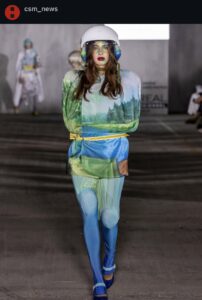
For the first time since its 2011 move to King’s Cross, Central Saint Martins didn’t host its BA graduate show on campus. Instead, insiders, students, and the occasional aunt found themselves pulled out of the King’s Cross bubble and dropped into a car park in Peckham. Getting there required a guided ascent through stairs drenched in a shade of pink that a 2016 LA wall would probably rather forget. The climb seemed designed to “warm up” guests for London’s uncooperative breeze, which promptly ignored the invitation and made itself very present at the rooftop level instead. Frank’s Café, perched above the site like it’s been asked to comment on the weather, offered a brief moment of calm. That is, until the wind decided to come back significantly less polite. A few flights down, the car park finally reveals itself as a much quieter seating plan.
Until, of course, the lineup rolls out. This is still a space for experimentation, after all, not marketability. Some of the 40 designers got their hands on prints, some on childhood memories, and some on social commentary. Take it from Polina Kadilnikova, a Ukrainian womenswear student who won the first prize (voted by the public instead of a room full of industry eyes this time) with a collection shaped by displacement, where home is no longer a fixed point but a condition. Silhouettes hinted at armour, but never fully resolved into safety. The first model walked down the runway in a helmet and disguised kneecaps, and a tunic printed with a painted forest image, arms pinned in place, movement not an option.
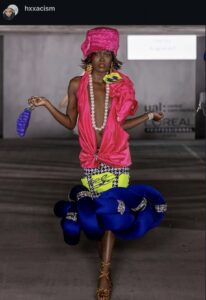
Harley Angrabeit, who took home the H&M Sustainability Fashion Award (and kept our attention firmly glued), built a collection pulling from dancehall’s sweaty glamour, Ridley Road Market bargaining, and the proximity of church aunties watching over everything at once. A wooden hanger, scaled up to the size of a small car, carried both model and look down the runway. A jewelry stand was built into a garment just under the bust. Elsewhere, what looked like both Medusa’s head and an inflatable airplane pillow appeared at the hem of a skirt. Weirdly brilliant.
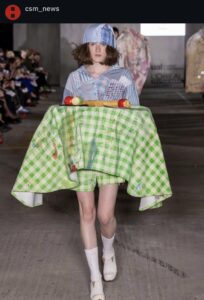
Yuki Naka, who also got his hands on that same award, managed to fashion garments from soap, bubbles and all. His collection began with a letter from his grandmother, remembered more for its smell than its words, pulling from domestic settings and sensory cues. In CSM, that translates into wearable dinner tables, outerwear in the size of fitting rooms, even bubbles. I imagine that same box full of letters holding childhood paintings too, and Finlay Maguire seems to lean into that logic. His collection pulls from those arguably ugly floral motifs on paper your mother used to receive after school. Colorful capes read almost like oversized rugs in motion, while wellies suggest the flowers were never ugly, just childish all along. Everyone got personal, including knitwear student Arora Nielson, whose Notes app mantra ended up on a jacquard mini dress. We hear you, Nielson. Steak, eggs, avocado, meditation, not mad at it.
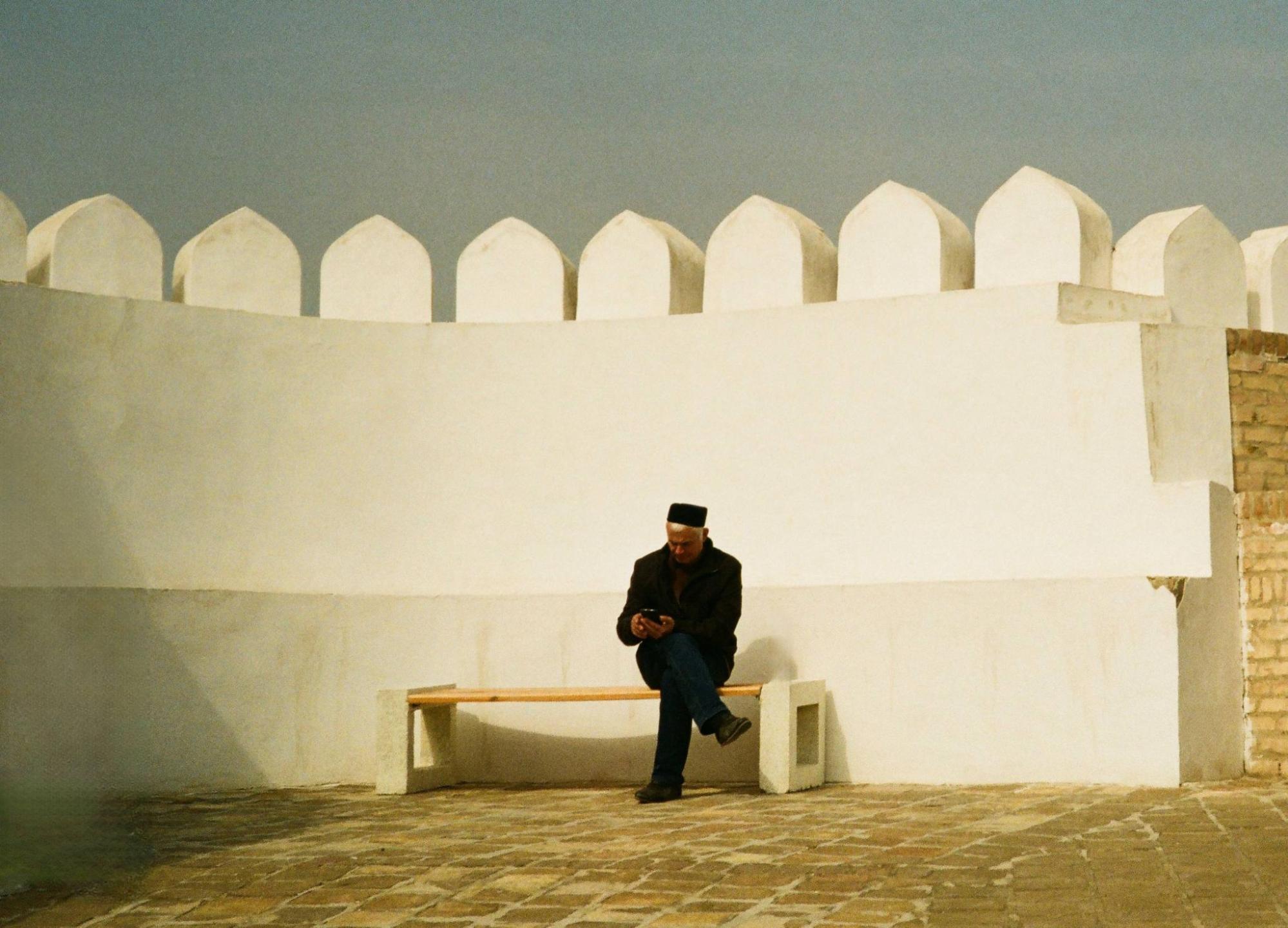
When you look at a photograph of a moment, you aren’t just witnessing that fraction of a second when the camera captured the scene we see. We are witnessing a moment from a story and then building our own narrative around it. That’s what London-based analogue photographer Arlau is encouraging people to do through the images she has captured across Central Asia in her solo exhibition ‘Chromatic Terrains’ at the Handbag Factory in Vauxhall, London.
If the places she’s captured are places you’ve been, then we meld our memories with what’s in each photograph to create a story that’s part our own and part Arlau’s. It’s likely that most visitors to the exhibition haven’t been to Uzbekistan, Kazakhstan, and Georgia, and she’s painting a picture of these places: the people, the natural beauty, and her own nostalgia for the places she has visited.
The colour photographs range from stunning architecture to a cat lying atop a piece of street furniture, capturing the everyday life that greats like Martin Parr, Vivian Maier and Jeff Wall have done. However, the Central Asian setting of Arlau’s images would make them unfamiliar to a largely Western audience. The use of analogue photography does give them a dated feel, deliberately employed to trigger a sense of nostalgia that wouldn’t be as effective in a digital format.
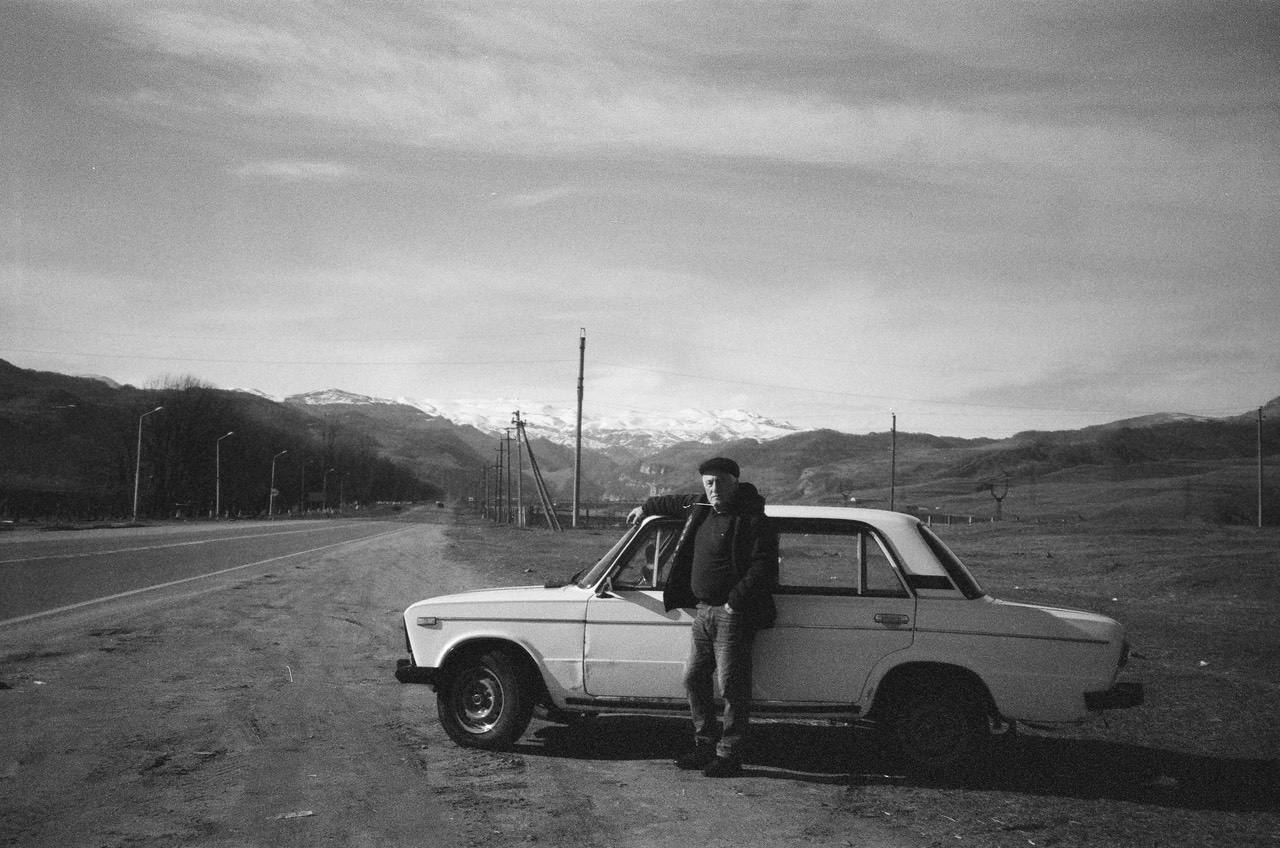
The black-and-white photographs have the timeless quality we associate with the medium, and the grand, sweeping landscapes evoke the work of Sebastiao Salgado and Ansel Adams. Placing these empty landscapes alongside those of people on a train or in a car parked within the landscape provides a strong contrast and highlights how landscapes transform with human presence.
The final third belongs to risographs, which feature far less detail, so we only get snatches of the information we find in Arlau’s photographs. However, risographs are much more tactile than photography, so there’s more information to be found in the way they feel.
Each of the three sets of images – colour, black-and-white photography, and risographs – is given one wall each, in a beautiful curation by Darya Kalembet. It represents how memory functions: we remember a moment vividly, in colour, before it fades to monochrome and then to the faintest details, as we see in the risographs.
By placing the works in a scattered hang, rather than in straight lines, the hang captures how memory works: we get snatches of it when we see a familiar image, sound, or smell, rather than a linear projection that lets our brains fixate on a particular date.
The centre of the space features bowls from Bukhara, Uzbekistan, in recognition of the traditional crafts that are such an important part of Central Asian culture and heritage.
Arlau’s work reminds us of how much there is still to explore in the world, the images we are yet to capture, the memories we will form, and how those memories will consolidate or fade over time. As the great Ansel Adams once said, “You don’t make a photograph just with a camera. You bring to the act of photography all the pictures you have seen, the books you have read, the music you have heard, the people you have loved.”
‘Chromatic Terrains’ by Arlau, curated by Darya Kalembet, was on at The Handbag Factory in London, from 4-9 June.
In an art world increasingly shaped by digital visibility, artists and curators are navigating a paradox: the more they are encouraged to share, the harder it becomes to sustain a meaningful and coherent presence. Beyond the pressures of constant output and algorithmic performance, a quieter shift that prioritises structure over speed is emerging, and legibility over reach.
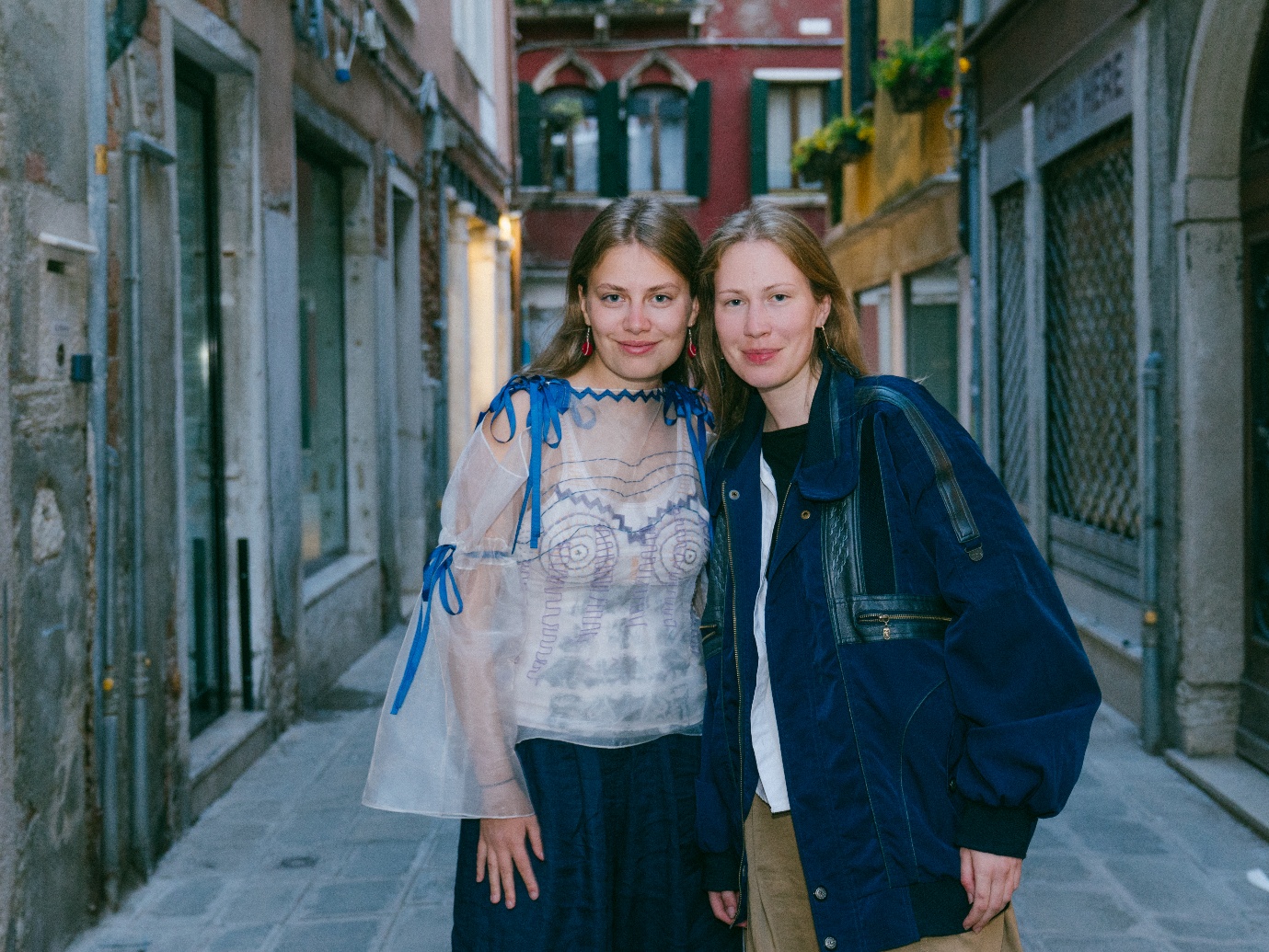
Sisters Evelīna Gorbačova, Digital Development Lead and Veronika Gorbačova, Curatorial Lead, are part of a generation rethinking how creative practices exist online. Through their work with FOLLOW.ART, they explore how artists and curators can move beyond fragmented digital identities and instead build intentional, enduring representations of their work, using data not as a metric of performance, but as a tool for reflection, connection, and long-term development.
We spoke with them about the evolving role of digital presence, the shared challenges between artistic and curatorial practices, and what it means to be truly understood, not just seen, today.
There’s a growing fatigue around algorithm-driven visibility. From your perspective, what feels fundamentally broken about how artists and curators are currently expected to exist online?
E: Perhaps nothing is “broken”, but there is a mismatch. Many platforms seem normalized to frantic speed, search for and respond to quick bursts of information and short attention spans. Artistic work tends to demand more time and may not automate well into the quick-hits.
What ends up happening then is that the artists start trying to tailor what they’re doing to the platform. And after a while that gets tiring, because they’re not actually able to do what they do because they’re working within the parameters of how they’re supposed to share.
V: Exactly! Nowadays artists are supposed to be their own social media and marketing managers (some combine it with also being art managers and curators for themselves), and juggling multiple jobs never seems to be rejuvenating for anyone, so why should it be for them? And there’s a simple truth that, in my opinion, reveals that fundamentally broken aspect of online self-presentation: algorithms prefer what they know and fear the unknown. Artists and curators tend to do the opposite.
E: And there’s the risk of artistic and curatorial work becoming flattened; you begin to focus on how it’s going to appear online, how people are going to respond to it, rather than what it actually is; and in a way you’re attempting to fit into an environment that isn’t even real. That’s why one of the core principles of FOLLOW.ART is to stay algorithm free.
Both artists and curators rely on visibility, but in very different ways. Where do you see their challenges overlapping and where do they diverge?
E: For artists, communication often occurs through their work. It’s a sensory and intuitive way of sharing that requires time and attention from the viewer. What we see online is usually fragments of it.
V: And that’s still considering that most artists can actually show what they’ve been working on through social media. Whereas curators rarely can fit the final product of their research into the rectangular IG feed. Their work is reduced to a few installation shots and some bits and pieces of an interview, if they’re lucky, but most of it is left behind the curtains, because it’s hard to translate into visual formats.
That’s why one of the top priorities for curatorial profiles at FOLLOW.ART was to have as much space for text as possible, so that each project can be described in detail.
E: It’s always worth asking yourself what kind of visibility you are actually aiming for. Do you want to reach as many people as possible, or do you want to connect with the right people who might work with you and support your practice over time? We built FOLLOW.ART exactly for intentional connections. Each artist and curator has their own profile – the Cards, a multifunctional portfolio that answers to the needs of the creative practice and is designed to be used on-site during exhibitions, art fairs, studio visits and other IRL situations in the form of a QR code. By scanning it, the visitors can save your contacts, see your last projects, book a studio visit or a meeting directly and even support creative’s practice financially in seconds. All of that without the need for the audience to register at the platform.
V: To make a quick point about visibility: artists already spend a lot of time posting about exhibition openings and inviting hundreds or even thousands of followers to come and see the work. Imagine if, the next day after the exhibition, the artist could see that visitors had supported their practice financially or reached out to arrange a studio visit to see more works. That goes beyond likes and following on social media. That is the real mutual support system that we’re building, where visibility can lead to something more concrete. Where artists and curators are not only giving, while visitors simply take in the experience. It’s a two-way street.
You often speak about moving from visibility to legibility. How would you define “legibility” in the context of a creative practice, and why does it matter now?
E: In my view, legibility is about being understood by allowing someone to spend time with your work and connect with it. Right now, artistic and curatorial work is visible, but mostly through fragmented posts, just like Veronika mentioned: an image here, a caption there.
V: I would define legibility as the ability to understand what someone’s practice is really about, not just see that they are active.
This is especially important for curators, both in their communication with colleagues and potential partners, and with the wider audience. However, the professional art circle is relatively small, so people often connect through mutual contacts and each other’s projects. Whereas the gap between art professionals and the audience is much bigger, and I think that is worth putting at the centre of the conversation, especially now.
If people cannot understand the work, it is much harder to imagine them supporting it. And audience support is exactly what curators, and the art industry as a whole, need at a time when cultural funding is under pressure and many art professionals are working in even more fragile conditions.
E: For me, the best way to understand artists’ work is to visit their studio and see the conditions where work comes to life, and hear artists talk about what they’re exploring. This is the experience that stays with you and has the power to transform your thinking. Studio visits shouldn’t be limited to professionals. Friends, acquaintances, and local communities can also provide valuable interactions, especially when so much of an artist’s work happens in isolation.
This is where support comes into play. When someone feels connected, they often want to give back. It’s a very natural exchange. Through FOLLOW.ART, artists and curators can receive tangible support in a form of micro-patronage from the audience, who are not necessarily collectors. We’ve seen this in practice across exhibitions and fairs where even small contributions, from £20 to £200, made a difference, not only financially but also in how audiences engage. It turns a passive viewer into an active participant.
V: In more practical terms, it works like this: Each of our members has their own QR code, which they place in the exhibition space or their studio. When scanned, it not only gives a direct way to support their practice financially but also gives visitors a clear overview of their practice, invites them to save contact information, arrange a meeting or studio visit. It’s about saying to the audience: “I’m open to you. Let’s have a conversation.” rather than keeping a distance.
On a monthly basis, we also host curatorial roundtable discussions with multiple members who are using micro-patronage in their exhibitions. These conversations have been really valuable because curators share what actually works in practice, often down to the smallest details, like where to place QR codes in an exhibition space so they don’t interfere with the artworks but are still visible enough for visitors. And those details matter, especially because talking about money is still uncomfortable in the art industry. So we try to keep this as an open conversation with our members, learning from them what feels natural and what could work better.
Within the team, we really believe that more people should feel invited into art, not only as visitors, but as audiences who understand what they are experiencing and have a direct way to support the practices they value.
Photographer’s Credit: Anastasiia Havrylenko
The idea of using data within a creative practice can feel counterintuitive, even uncomfortable. How do you reframe data as something reflective rather than reductive?
E: It depends on the type of data. If we focus only on likes, views, and followers, it does feel limiting. But that’s just one type of data, mostly related to marketing.
V: One artist told us she keeps an Excel sheet for every material cost behind each work. Very unromantic, yet it proved to be very useful. For her data wasn’t about ‘making more money’, it was about sustaining her practice in the long run. Data helps you protect your future self before burnout becomes the business model.
E: Yes, that kind of data gives you a sense of control and helps you make informed decisions and sustain your practice over time.
V: Data can also be valuable when it helps artists and curators understand how people engage with their work in real situations. That is why we included statistics inside our members’ profiles, showing things like how many times their QR code was scanned. During an exhibition or event, this gives a useful sense of audience response. Did visitors notice the QR code? Did they want to learn more? Was it placed in the right spot? These are small details, but they can make a real difference in how people are invited to connect with the work.
Curatorial work has always involved structuring relationships, between artworks, ideas, and audiences. Do you see a parallel between curating exhibitions and structuring one’s own digital identity?
V: It’s an interesting thought, but before answering, I ought to rescue the word ‘curating’ from mild overuse. Today, everything is curated, from an Instagram feed and a playlist to a breakfast plate if the lighting is right. In that context, ‘curating’ often just means selecting. And we all know that curating an exhibition is much more than choosing works and placing them on walls.
But if by digital identity we imply professional online self-presentation, then its effectiveness indeed rests on three main pillars, namely your work, your idea (or message) and your audience. And the causes of imbalance are noticeable everywhere.
If you cut the audience out of the equation, your online presentation becomes a one-way street. We see this quite often with artist websites that are visually beautiful, almost artworks in themselves, but absolutely impossible to navigate. They have a clear artistic value, but if a potential buyer, curator, or sponsor gets lost in what was supposed to be your professional introduction, then the presentation is not really doing its job.
Now, if you cut your messaging short, the presentation also loses depth. This happens quite often with artists who share the practical details of their work, such as size, medium and price, which, don’t get me wrong, are absolutely important and should not be hidden somewhere in a mysterious corner of the internet. But without your personal intent, the work can easily appear too flat online, yet again leaving your audience disconnected from you.
And if you cut the work itself short, this becomes especially visible with curators. For a long time, curators had very limited online infrastructure to present what they actually do. Instagram became the default place, but it is not exactly generous to text-based or research-led practices. So complex curatorial work often gets reduced to a carousel of opening night images. It may look cool, but it again reduces the labour behind the project. This is also one of the ideas at the root of FOLLOW.ART, and it has shaped my role from the beginning, which is to provide high-quality infrastructure that curators have long been missing.
For artists, there is often pressure to continuously produce and share. How can they move toward a more sustainable, intentional form of presence?
E: I believe this shift is already underway. In the broader creator space, there is less emphasis on reaching the largest audience possible. Instead, the focus is on building a smaller group of people who genuinely care about the work.
For artists, that may mean focusing less on constant production and more on clarity. Make sure that when someone encounters your work, they can understand it, return to it and maintain a connection.
Artists and curators excel at creating communities around their work. That’s what people are seeking right now, especially in larger cities. An exhibition, a studio visit, or a small event does create shared experiences that are very important for a healthy society. The challenge is how to maintain that relationship. That’s why we made the Card in a way that when you meet someone, you can easily share your work, and people can revisit it later, stay connected or support it.
How can mapping elements like themes, collaborations, or research interests actually influence the direction of someone’s practice over time? Have you seen this shift happen?
V: This is almost fundamental for curatorial practice. Curators work through research, so mapping themes, references, and collaborations is part of how projects are created. When you start seeing those patterns more clearly, it becomes easier to develop future exhibitions and to position your work within a broader context.
At the same time, you often need to find artists or other curators who are already working with similar ideas. That’s where having access to a structured network becomes very important. Through the Connectory, this process becomes more intentional and you can actively search and reach out to people whose work aligns with your research.
E: Also, many artists reach a point where they want to explore a new medium or research direction, but might want to have more direction in navigating it. Having access to a community where you can find people who have already worked with similar materials or topics makes a significant difference. Instead of figuring everything out alone, you become part of a network where knowledge is shared more openly.
Many creatives today feel caught between intuition and optimisation. How do you balance the need for structure with the unpredictability that’s essential to artistic work?
E: I really like what the Berlin-based curator Jenia Yanes said: “Creativity is an error in a controlled environment.”
In a world that is becoming more structured and automated, creativity is one of the few areas where unpredictability still thrives.
So, structure should not replace intuition; it should support it. Structure helps you move things forward, but too much can stifle the process. There needs to be some space and flexibility. That’s also how we view the infrastructure we create. It should enhance the workflow, not dictate it. Each artist and curator should have the freedom to use them as they choose, as the infrastructure is quite multifunctional, depending on the needs of each creative.
If we think about digital presence as a kind of “living archive,” what should artists be preserving and what can they afford to let go of?
E: It comes down to what you want to preserve. What represents your work over time? There’s often pressure to document everything, especially with social media, but I see more people getting off that.
But digital presence functions as an archive whether we intend it or not. And it requires maintenance because formats change, platforms close down, links break. It’s worth keeping your materials across multiple places, backing things up on drives, and even keeping physical copies when possible. It might sound basic, but it becomes important over time.
The Card can help with this in a very practical way. It is not an archive, but it can point to the places where different parts of your practice live like your website, cloud folders, articles, catalogues or other links. And even if some links break over time, the Card still holds the essential information about your practice in one place.
V: For curators, there is too little preserved rather than too much. Exhibitions are temporary by nature, and once they are over, what remains is usually limited documentation. So preserving the thinking behind the project becomes very important. There are surprisingly few spaces where curators can share their research that are not academic research papers. There is a need to know what your peers are working on, what kind of questions they encounter, and to have documentation of the thinking process rather than only the finished work. Currently, we’re giving our Substack platform to our curatorial members to share their unfinished research or reflections on their past projects, to prolong the lifecycle of a project and encourage a more casual and accessible dialogue around the process of curatorial work.
Looking ahead, what does a healthier digital ecosystem for artists actually look like? What needs to change?
E: A healthier space would be one where artists are not constantly pressured to reshape their work for platforms. Digital tools should help them showcase what they already do instead of demanding changes. I think we’re already witnessing a shift. People are more interested in depth, process, and understanding where work originates.
V: Right now, visual and fast-moving content dominates. Research-based and process-driven work often remains invisible. So change needs to be not only technological, but also cultural. A recognition that not everything valuable can be reduced to immediate visibility. And that slower, more complex practices also need space and infrastructure to exist.
If you are an artist or curator, you can join the FOLLOW.ART movement and create your FOLLOW.ART Card
No Joy has announced a new EP, Big Life, Big Leaf, a companion EP to last year’s Bugland. Jasamine White-Gluz worked on it with the album’s producer Angel Marcloid, aka Fire-Toolz, and it lands August 21 via Hand Drawn Dracula. The effervescent title track was co-written with longtime collaborator Jorge Elbrecht. Check it out below.
“This was a demo I had that we never got around to during the Bugland sessions,” White-Gluz explained in a statement. “In 2024 I brought it to Jorge Elbrecht (Japanese Breakfast, Sky Ferreira), who I have a long history of writing with. We really love exploring the absurd, combining musical ideas that shouldn’t really make sense together – it felt great picking up where we left off after 2020’s Motherhood LP. Bringing the song back around to Angel Marcloid (Fire-Toolz) more recently (post-Bugland LP sessions) made perfect sense to me; both Angel and Jorge have insane musicality and melodic imagination. Angel is a brilliant pop producer, she has a knack for shaping where a song can take you emotionally. Tara McLeod (Kittie) rips on guitar as usual, continuing to bring this heavy-but-effervescent energy.
“Lyrically, I wrote and recorded these vocals in one take during an emotional time this past spring,” White-Gluz added. “I was exploring the boundless pain one feels when it is time to say goodbye to someone or something. It is also during those moments that it is important to remember, ironically, to have joy. To mourn is also to celebrate.”
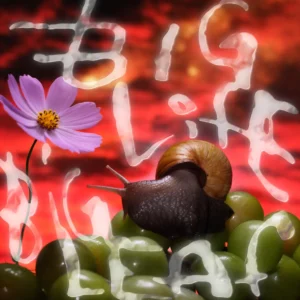
Big Life, Big Leaf EP Cover Artwork:
Big Life, Big Leaf EP Tracklist:
1. Barking at the Sun
2. Big Life, Big Leaf
3. Süki & Amadeus
“I want to love and be loved, but I also want to be free,” Julia Jacklin said in a press release. “The tension between those two things has been the central question of my life. The Gem felt like a metaphor for the whole process, because a lot of it did feel like digging. I felt like I was doing it almost in the dark, just trusting I was going to find something.”
The new album is named after a small bar in Melbourne, Australia, where Jacklin moved from Sydney in 2017. She worked on it with Rat Shack studios owner Robert Muinos, guitarist Jacob Diamond, bassist Mimi Gilbert, and drummer Jess Elwood, recording in a makeshift studio in one of the hotel rooms above the pub.
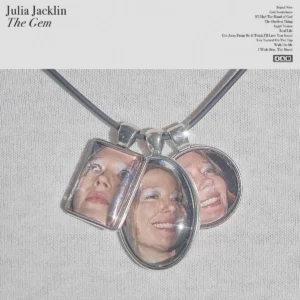
The Gem Cover Artwork:
The Gem Tracklist:
1. Brand New
2. God Sometimes
3. If I Had the Hand of God
4. The Hardest Thing
5. Angel Vision
6. Real Life
7. Get Away From Me (I Think I’ll Love You Soon)
8. You Turned on the Tap
9. Walk on Me
10. I Wish [feat. The Maes]