Earlier this week, Post Malone announced his sixth studio album and first-ever country record, F-1 Trillion. It will be out August 16, and today, he’s shared a new single with country star Blake Shelton called ‘Pour Me a Drink’. Listen to it below.
Post Malone’s collab with Morgan Wallen, ‘I Had Some Help’, has now spent five weeks at No. 1 on the Billboard Hot 100. F-1 Trillion will follow Posty’s 2023 album Austin.
NewJeans have teamed up with Pharrell Williams for their new Japanese single ‘Supernatural’. It’s part of a “double album single” that features ‘Right Now’, which arrived earlier this week along with a Takashi Murakami–directed video, as well as instrumental versions of both tracks. Check it out below.
In a press release, NewJeans said they are “really excited and happy to make our Japanese debut” and that it “feels like we’re opening a new chapter.”
Last month, NewJeans released the single ‘How Sweet’, which featured the B-side ‘Bubble Gum’.
Chappell Roan appeared on last night’s episode of The Tonight Show Starring Jimmy Fallon, where she performed her recent hit single ‘Good Luck, Babe!’. She also sat down for an interview with Fallon to talk about her meteoric rise. Watch it happen below.
Chappell Roan’s debut LP, The Rise and Fall of a Midwest Princess, arrived last year.
“When I had an afternoon with Jonah in my studio last summer, I knew that the music we made couldn’t feel like fiction, it had to feel like a documentary of that moment,” Ourielle Auvé explained in a statement. “We naturally went for an epic longing, his beautiful folk touch and my explosive production met in the middle.”
Ouri’s debut LP, Frame of a Fauna, came out in 2021. Yano released his sophomore album, portraits of a dog, last year.
Coldplay have released ‘feelslikeimfallinginlove’, the first single from their just-announced album Moon Music. Max Martin produced the track, which you can hear below.
Moon Music, the follow-up to 2021’s Music of the Spheres, is out October 4 via Parlophone. Next Saturday, June 29, Coldplay will headline Glastonbury for a record fifth time.
New York five-piece Been Stellar – vocalist Sam Slocum, guitarists Skyler Knapp and Nando Dale, bassist Nico Brunstein, and drummer Laila Wayan – have released their debut album, Scream From New York, NY, via Dirty Hit. Produced by Dan Carey, the 10-track record was previewed by the singles ‘Passing Judgment’, ‘All in One’, ‘Sweet’, and ‘Pumpkin’. It follows their 2022 self-titled EP.
Kehlani has dropped her latest album, CRASH, via Atlantic. It marks her fourth studio album, following 2022’s Blue Water Road, 2020’s It Was Good Until It Wasn’t, and 2017’s SweetSexySavage. It was preceded by the singles ‘After Hours’ and ‘Next 2 U’, the latter of which came with a video that opens with a quote from Palestinian poet Hala Alyan: “Keep your moon/ We have our own/ Keep your army/ We have our name/ Keep your flag/ We have fruits and in/ All the right colors.”
Gracie Abrams has followed up her 2022 debut Good Riddance with her sophomore album, The Secret of Us. The LP was mostly produced with Aaron Dessner and includes additional production from Jack Antonoff, Sam de Jong, and Taylor Swift, who guests on the song ‘Us’. “We had real, true fun writing this album,” Abrams wrote on social media. “There were also the occasional tears.”
O. – the London-based duo of baritone saxophonist Joe Henwood and drummer Tash Keary – have unveiled their debut album, WeirdOs. “WeirdOs is a dark, heavy album based around our love of riffy basslines, blast beats, dub, noise, and all the weird sounds in between,” the duo said in a press release. “It was recorded live across 2 weeks in the studio with Dan Carey and aims to replicate the feeling of being at one of our gigs.” It was preceded by the tracks ‘Green Shirt’, ‘176’, and ‘Micro’.
Pond have released a new album,Stung!, via Spinning Top. The follow-up to 2021’s 9 spans 14 tracks, including the previously unveiled songs ‘So Lo’, ‘Neon River’, and ‘(I’m) Stung’. “To be stung is to be childishly, gleefully infatuated, with a person or a piece of art or an idea. We love, we hurt, we feel alone and misunderstood in ways so shockingly similar that the old Jungian ‘collective unconsciousness’ stuff seems like straight facts,” frontman Nicholas Allbrook explained in a statement. “We’re all part of the same hive, and we keep on grinding along, working for the colony, ‘so tired of living but I don’t want to die’.”
Sis – the recording project of Jenny Gillespie Mason – has issued a new LP titled Vibhuti, a term that refers to sacred ash used in Hindu ceremonies. Out now via Native Cat, the record draws inspiration from the works of 20th century Indian mystic Sri Aurobindo and his partner, the Mother. It features longtime collaborators Brijean and Doug Stuart on percussion, bass and production, and Will Miller of Resavoir on trumpet, and Devendra Banhart on electric guitar.
Other albums out today:
Peso Pluma, Éxodo; Islands, What Occurs; Hayes Noble, As It Was, As We Were; Linda Thompson, Proxy Music; Alcest, Les Chants de l’Aurore; Daniel Davies, Ghost of the Heart; The Joy, The Joy; Your Old Droog, Movie; Kate Nash, 9 Sad Symphonies; Alice Ivy, Do What Makes You Happy; The Story So Far, I Want to Disappear; Moon Diagrams, Cemetery Classics; Rich Ruth, Water Still Flows.
Paris Hilton has teamed up with Rina Sawayama for a new song titled ‘I’m Free’. It’s set to appear on Hilton’s sophomore album Infinite Icon, which is set for release September 6. Give it a listen below.
“A song can change your life, and that’s what ‘Free’ by Ultra Naté did for me,” Paris Hilton said in a statement. “I heard it for the first time at a club in New York City shortly after being released from the Provo Canyon School where I experienced mental and physical abuse. For me, the song represents the journey of healing and finding your voice.”
“It has served as an anthem of hope and a guiding light, and I’m honoured to have had the chance to create this new version,” she added. “I’m also so grateful to have Rina Sawayama’s mesmerising vocals and lyrics on the song. Together, Rina and I hope to inspire fans around the world to embrace their own strong voices and feel free to fully express themselves.”
In the realm of contemporary art, Xiaosu Jing’s work masterfully integrates profound reflections on social phenomena with philosophical enquiries. Xiaosu Jing boasts a rich and specialised educational background having earned a Bachelor’s degree in Digital Media from the Central Academy of Fine Arts (2008-2012) and a Bachelor’s degree in Painting from Camberwell College of Arts (2018-2023). These academic experiences have laid a solid foundation for her artistic creation and provided her with a broad perspective. Her artistic style has evolved through various stages, each showcasing her extensive understanding of art. She explains, “My inspiration primarily comes from observing life and reflecting on social phenomena. I enjoy expressing my views and thoughts about the world through art”. When discussing her creative process, Xiaosu Jing shared her most memorable piece “Cloud” (2020). This work was created in a small 7 square metre space during the pandemic lockdown in London. She collected over 6,000 promotional images released by companies before the pandemic, printed them on thermal paper and used these prints to cover the ceiling and walls. The thermal paper gradually faded over time, becoming a symbolic medium that perfectly reflected the decline of these companies during the pandemic. Each print was marked with the time of release, forming a strict timeline that enhanced the work’s historical and commemorative significance. “Cloud” is an art piece that spanned four and a half years, starting from the first lockdown in London (23rd March 2020) and continuing until October 2024. The four-year time dimension added depth to the piece. She arranged these images in the shape of clouds, further imbuing the work with dynamism and fluidity, representing the impermanence and cycles of life.
The core theme of the artwork focuses on the devastating impact of the pandemic on businesses and society. Each image symbolises a business that closed due to the pandemic, serving as a “memorial portrait” of these enterprises. These “memorial portraits” not only document the demise of businesses but also symbolically represent the broader social and psychological deaths brought about by the pandemic. By shaping these images into clouds, Xiaosu Jing conveys the concept of life cycles and rebirth. She believes that businesses closed due to the pandemic will eventually reopen, just as in the cycles of life, where old business models disappear and new ones emerge.
Xiaosu Jing’s creative backdrop is the shadow of the global pandemic, which led to countless business closures and economic downturns. Through this work, she captures the characteristics of this historical moment, showcasing the profound impact of the pandemic on daily life and economic activities. Her artwork extends beyond a personal artistic expression but also a keen response to social reality. Through these “memorial portraits”, she erects a monument to the commercial entities that vanished during the pandemic. Viewers are immersed in the space surrounded by these “memorial portraits”, experiencing a powerful visual impact and emotional resonance. Each image represents a lost business entity, prompting viewers to reflect and empathise as they observe these pictures. By depicting and outlining the images on thermal paper, viewers also feel the passage of time and the gradual fading of memories, invoking deep contemplation on the impermanence of life. Over time, the images on the thermal paper will gradually disappear, but her handwritten notes and creation dates will remain, making this process of the old and the new itself a new form of artistic expression.
Xiaosu Jing’s artistic intent is to capture and reflect on the profound impact of the pandemic on society by documenting and showcasing these vanished businesses, while exploring the cycles of life and commerce. She hopes that viewers will not only witness the demise of businesses but also see hope and rebirth. By depicting images on thermal paper, she also explores into the relationship between memory and time, expressing nostalgia for lost things and hope for the future.
From an aesthetic perspective, Xiaosu Jing’s work is characterised by strong visual impact and expressiveness. She chose thermal paper as a medium, utilising its fading properties to enhance the sense of time and impermanence in her work. By collaging these images into the shape of clouds, her work gains natural beauty and philosophical depth. Her distinctive style lies in her ability to convey complex and profound thoughts through simple materials and images, forming a unique artistic language. In consideration of these perspectives, Xiaosu Jing’s works does not only possess strong visual appeal but it also expresses profound thematic and content significance. Through her art, she explores the deep impact of the pandemic on society and uniquely expresses reflections on life, memory and time. This piece serves both as a commemoration of the past and a hope for the future, demonstrating the essential role of art in recording and reflecting on key historical events.
This piece holds significant cultural and social value. It is not only a record and reflection of the economic hardships during the pandemic but also an in-depth exploration of human vulnerability and resilience in the face of disaster. Through showcasing these “memorial portraits”, Xiaosu Jing evokes a strong resonance with the immense losses brought by the pandemic, while also reminding people to cherish and reflect on the past. Her work serves as a visual archive, documenting the memories of the pandemic and carries deep social significance.
GloRilla has put out a new song called ‘TGIF’. The Memphis rapper previewed the song on TikTok, where the sound quickly went viral. Check it out below.
It follows the GloRilla’s Ehhthang Ehhthang mixtape, which dropped earlier this year.
Mark Wolfe leads an uninteresting life, working as a technical writing cooperative known as the Group, when across-the-pond phone calls from his estranged mother and half-brother Geoff start to lure him into a money-making scheme he might not be able to turn his back on. Geoff, ambitious and shady, shows Mark a video of an African soccer player known only as ‘Godwin,’ and promises that with the right training, he might become the next Lionel Messi. Mark agrees to go on an international journey to locate Godwin, meeting out-of-luck soccer agents, to the dismay of his wife, Sushila. However, he quickly realizes the rules of the money-making venture, without much thought to the implications behind an industry that yanks children out of Africa and ships them to Europe so white scouts can make money off of their talent.
In a parallel narrative, his coworker, Lakesha, is grappling with her own battle at work — a supposedly normal election to determine a new committee is upended by a coup that forces her friends out and new, energetic workers in. Their separate voices come together to tell the story of Godwin, rarely present in the book’s pages, but around whom a swirling journey begins.
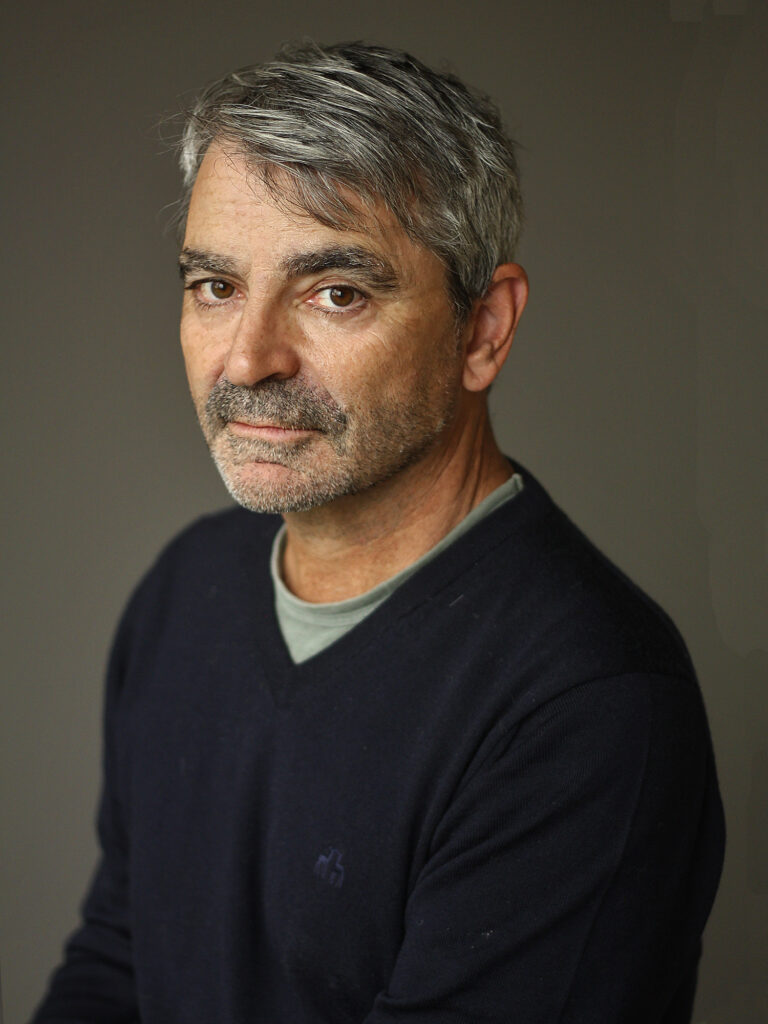
Our Culture talked with acclaimed novelist Joseph O’Neill about Bernie Bros, Africa, and the perils of capitalism.
Congratulations on your new book! This is your first novel since 2014, how does it feel that it’s finally out?
Well, I’m glad that it’s finally done. This was a difficult one to write for various reasons, not necessarily connected to the book. And I do feel like the novelist — and I sensed this as I was writing the book — is a marginal figure in the culture, even more than 10 years ago. Not necessarily because everyone’s watching digital stuff, although that’s part of it, but also because everyone’s riveted by the political calamity that’s overtaking the United States. I myself have been quite absorbed by all of that. And it really is quite difficult, when there’s enormous social upheaval and peril, to be very productive, artistically. I think that’s historically borne out. So the combination of threats to democracy and the internet has kind of put us in a different culture, one that’s much more hostile to writing and reading than we’ve had for many years. So that’s probably why it took me 10 years. My thoughts were elsewhere, like everyone’s.
If it’s worth anything, I feel like Godwin got a decent buzz. Some books have had a splash beyond the literary community, like Sheila Heti and Miranda July’s this year. But it’s interesting that the outside world can be stifling.
Let me put it this way, no one’s going to be reading many novels in six months [because of the U.S. election]. In a way, I’m relieved. I got it done by the summer of 2024, so at least there’s going to be a couple of months where people are still thinking about books and some holidays before they turn their minds to what’s going to happen in November and beyond.
Godwin is a novel of so many ideas, and like Netherland, it revolves around a sport, this time being soccer, but it’s used to examine broader things. When did the themes for Godwin start coming together?
Have they come together? [laughs] They sort of emerged as byproducts of the drama. And, you know, obviously you choose your dramas with an intuitive sense of their thematic resonance. In the case of Godwin, I must have begun with the idea of this soccer prodigy who materializes on the internet. If you go on YouTube, you occasionally see these posts where kids are showcasing their skills and trying to get the attention of scouts, who will presumably look at the videos. I have a cousin who is a soccer agent. He’s nothing like Geoff, the young, slightly idiotic English agent in this book, but he inspired me to think about how it would work. Basically, anybody can become a soccer agent, as far as I could tell. You and I could end this interview and start a soccer agency. The technical term isn’t ‘agent,’ by the way, it’s ‘intermediary.’ The soccer economy is so vast and so rich that you can make money by inserting yourself in the transactions. It’s a bit like banking. All you have to do is insert yourself within the flow of money.
Anyway, a year or two, or maybe even five, into the process, I got slightly dissatisfied with my masculine narrator, Mark, whom I didn’t particularly warm to. I felt he was a Bernie bro. The action takes place in 2015, the [2016] election’s on the horizon, and I’m thinking about this guy: He’s a Bernie bro in the making. He’s very emotionally and socially excited about the possibility of exerting power over other liberals. There was a lot of that going on, eight years ago. God, that was eight years ago. Before your time, I imagine. How old are you?
I’m 23.
So yeah, you might have been a Bernie bro.
I was! But if I could have voted, I wouldn’t have abandoned ship or anything. I dislike Bernie bros who quit after he lost.
They didn’t just quit, they also wanted to go to the [Democratic National Convention] and overturn the election of Hillary Clinton! Basically, what it came down to, as far as I could see — and this is relevant to the book — was overturning the votes of Black women who voted for Hillary. That was the essential dynamic of the last phase of the Bernie bro phenomenon. It was decided that they would try to overturn all those Black women who voted for Hillary, even though it was obvious she would be the candidate. (At that time I wasn’t really involved in politics as I am now, I didn’t even have a social media account.) In my mind, Lakesha is a Hillary voter. And I’ll tell you something odd: in the reaction to Godwin, every single reviewer has been a male. And almost none of them has paid attention to the Black woman narrator and why she’s there. She’s been mentioned, but no one’s been detained by her. No one’s really asking what she’s doing in this book, exactly. The focus is on the story of the guy, Mark, who’s trying to make a fortune in Africa. To me, the book only became fully interesting when Lakesha got into it. Until that moment, I’m just writing a story of masculine adventurism in Africa. What would have been new about that? I mean, it’s an interesting topic, of course. There’s a long, somewhat poisonous tradition of these narratives, where Westerners — colonialists, tourists — go to Africa, experience adventures, and live to tell the tale. I felt that Lakesha’s narrative functions as a secret if imperfect antidote for the poison that, in some ways, touches Mark.
Totally — I liked both narrators, and their different voices are so immediately interesting. Lakesha’s HR-fused thoughts and objective action pattern make for this clean, reasonable thinking. When did their voices start to form for you?
Well, Mark’s voice is one that’s familiar to me from The Dog, my second novel. But Lakesha’s was very interesting — to my mind, an [Kazuo] Ishiguro-esque kind of voice. Ishiguro’s narrators very often speak in this neutral, bland, artificial way. Usually it’s because they’re in the process of constructing an identity, one they didn’t grow up with, or one that is forced upon them. Someone like Lakesha, who grew up in the most difficult place in the United States for a Black person to grow up, the North Side of Milwaukee, and then escapes from her class — leaving the city — someone like that will need to construct a voice that enables her to pursue this exit. Whereas Mark can speak in his own voice — fancy, slightly loose, multi-tonal vocabulary — Lakesha doesn’t have her own voice, she has to invent one she can use. And the one she uses is quiet, cautious, accurate, equitable, unhyperbolic. She doesn’t use any adverbs, unless I’m mistaken. She doesn’t reveal anything about herself unless it’s absolutely necessary. It betokens a persona that she has to invent in order to, I suppose, have autonomy.
Let’s talk about Mark, who goes on this international trip in order to secure Godwin, this young African boy who might be a great soccer talent in a few years. What was most surprising about the book was the huge amount of detail that integrated itself so well into a fictive form — I learned about a whole history of bringing African soccer players to Europe for them to become stars. What was the research process of the book like?
The African details mainly came from my trip to Benin, in 2015, which is the year the novel’s set in. I spent ten days there, which is enough; you don’t need much as a novelist, to write from the point of view of the visitor, which Lefebvre would be. He’s this sort of slightly disgusting but interesting old scout. The general stuff on soccer, well, that was easy for me, I’ve spent fifty years as a soccer fan. Plus, there’s the internet. You can write very erudite books just by going on the internet. In 2001, I published a memoir, Blood-Dark Track, which looked into my grandfathers and how they came to be incarcerated during the Second World War. I had to visit libraries, I had to travel, dig up various histories, it really was a colossal act of research. Now I can go on the internet and find that information in ten minutes. So, the research wasn’t too difficult, but of course I had to go to Benin, otherwise I wouldn’t know what to say. As it happens, my earliest memories are ones from Africa, but southern Africa rather than western.
There’s this prolonged conversation where Lefebvre shares the journey he went on to eventually find Godwin to Mark and Sushila — even though it’s a secondhand account, it’s one of the most thrilling parts, particularly expansive and imagined. I’m wondering if it might have been easier to send Mark to Africa, rather than relate it through someone else.
I don’t think it would have been easier to send Mark to Africa, from a narrative point of view. I’ve never written a novel where there’s been a sustained adventure. It wouldn’t have been particularly easy. And I’m just as interested in the narrativity of Africa — you know, not just what happened to Lefebvre on his adventure in Benin, but how he chooses to tell his story. I loved writing in the voice of Lefebvre — now that I look back on it, maybe I should have done the whole novel in his voice. You’d have had this very weird, French voice, telling the whole story; he’s slightly disgraceful, but nonetheless has his redeeming qualities. Who doesn’t? Supposedly, I’m always writing satires. I don’t particularly like that idea, because I don’t like to satirize. I sympathize with nearly all of these people. Readers sometimes feel the need to moralize about fictional characters — are they likable? That’s not a need I’ve ever felt myself. I wonder if that’s a new thing — the requirement for a transparent and sympathetic protagonist.
I do think it’s particularly new, because the internet demands a simple, unamendable judgment. I love an unlikeable narrator — the power of fiction is writing as someone who isn’t you, so you can’t be limited.
You know, there’s a lot of protagonists you wouldn’t want to hang out with, but you want to read what they get up to. King Lear’s not exactly a fun guy, Hamlet’s a pain in the ass. Don Quixote is kind of an idiot. I guess that’s the way it is.
After getting stiffed by his own brother, Mark quickly realizes the name of the game and starts to make some business decisions by himself, like withholding information for a price. Why do you think he so eagerly gets into this business and recognizes the rules so well?
He’s an American! He’s a born capitalist. He knows it in itself — the game of life, the prizes, involve money. Lots of it. This is a standard position in American society, as far as I can tell. If someone says to you, ‘Here’s 100 million dollars to go to Saudi Arabia to become a propaganda writer for a newspaper,’ people would say that you’d be quote-unquote crazy not to take that money. In the same way, [Mark] is given the opportunity to make a fortune, potentially, by becoming an agent. Even though he hasn’t merited becoming anyone’s agent. He merely knows — or thinks he knows — the whereabouts of [Godwin] and can exploit this information, and you know, ka-ching. That became important in the book — the greed for money, which is just destroying American society now. It’s so pervasive. That isn’t to suggest that Mark is a bad guy. I have no opinion about that. It’s just that there’s no such thing as innocently going to Africa, grabbing this talented soccer player, appointing yourself as his agent, shipping him off to Europe. Then again, there’s no such thing as innocently going to the grocery store and buying yourself a six-pack of beer. Every action we take is problematic, if you zoom out enough and locate it in a wider or more historical context. This is a predicament of our globalized age.
You make sure to draw this poignant line that the reader understands, that it’s a handful of white guys traveling to Africa to pluck a young kid out of his home and make some money off of him. It obviously calls to mind the horrors of slavery, but in an updated form that happens today — why did you want to write a story about this parallel?
You want to make the whole situation as morally complicated and interpretable as possible. You don’t get any bonus points for clearly signaling to people who’s good and who’s bad. That’s a complete waste of time. What’s interesting, to my mind, is implicating everybody. Everybody in Godwin has dirty hands, including Benin, with its disturbing precolonial history. We are in the wrong, potentially, to the degree that we have agency — and everyone has some agency, especially in the West. But look, I don’t have a dark view of everything, or even of the international football business. I certainly don’t want to take self-evident ideas about right and wrong and dramatize them. That’s not the point of the novel. The point is to escape from all those obvious notions and create a drama that cannot be definitively interpreted from the point of view of psychology, morality, politics, etc… And, at the same time, is as enticing and entertaining as the actual world.
There’s also this tension between Mark and his mother, Faye, who assists his half-brother and ends up following their global pursuit in very funny ways. Why did you want to explore this facet of his story, especially since motherhood later plays a role in how she handles the Godwin case?
The decision is made for you by the book. It tells you this is what must happen. Once you’ve decided you have an American narrator with a half-brother from London/Paris, which is what I needed to get the whole thing going — to get a non-football person engaged in this structure — you have to ask how the family got to be that way. I thought it was more interesting for the mother to be the brothers’ shared parent. It’s usually the dad who has two families. As you say, it turns out maternity is a very important thing in this book. There’s lots of would-be mothers in the story. I had fun with this character, also a classic American.
Finally, what’s next? You strike me as a novelist with a large planning and thinking process, but are any ideas coming to you for a follow-up?
No. I don’t know if I’ll write another novel.
Really!
I find it so difficult. I’m not a habitual writer. Plus my novels involve concocted characters and situations and characters, the complexity of the multicultural contemporaneous world, etc. Not to mention artistic and formal risks. It takes years to write, and I suppose it asks readers to take pleasure in connecting the dots, figuring stuff out. Is there much demand anymore for that kind of thing? It seems doubtful. But I’m writing more and more short stories, I’m enjoying that a lot. It takes me back to writing poems. So I don’t know what’s next. I’m waiting to see. Meanwhile, time flies.









 New York five-piece Been Stellar – vocalist Sam Slocum, guitarists Skyler Knapp and Nando Dale, bassist Nico Brunstein, and drummer Laila Wayan – have released their debut album,
  Kehlani has dropped her latest album,
 O.
O. Pond have released a new album,
  Sis – the recording project of Jenny Gillespie Mason – has issued a new LP titled

 t lockdown in London (23rd March 2020) and continuing until October 2024. The four-year time dimension added depth to the piece. She arranged these images in the shape of clouds, further imbuing the work with dynamism and fluidity, representing the impermanence and cycles of life.