There is nothing quite like a well-dressed gentleman – be that formal or casual – who knows what works for his body and doesn’t mind using a tasteful piece of jewelry – or two! Yes, you heard that right: men’s jewelry is making a comeback, and if you want to start adding it to your wardrobe, there are a few trends and options available to you that you can rock and rock well! Let’s talk about it, shall we?
Why Men’s Jewelry Matters
Men’s jewelry has had a big revival over the last few years, and its direction is more innovative than ever. For some, the idea of wearing jewelry may be more traditional and reserved for formal situations, but fashion is focused on personality and self-expression. The most important thing is the message you want to convey, whether you’re going out for brunch or a party.
The Power of Subtle Accessories
Keep things simple. A simple bracelet or thumb ring can prove to have a priceless effect, and you’ll look like a million dollars without reaching too far. Adding a bracelet, a steel cuff, a leather strand, or a few rings to your men’s jewelry collection will help you present yourself in a totally new and different way.
Chains and Necklaces: Timeless and Trendy
The chain is the first piece of men’s jewelry that has to find its way back into your collection this year. Choose a gold one with big, functional links or a small, silver one. Either way, it brings a certain elegance to your everyday look and if you add a pendant or combine it with your clothing pieces, you’ll definitely be rocking the current trends.
You can view the entire jewelry collection at Nomination, and you’ll be impressed by how many high-quality and on-trend pieces for men are available here. From a thin and simple chain to a strong, eye-catching piece certain to be noticed, you will definitely find something to enrich your priceless jewelry collection.
Bracelets: A Subtle Yet Bold Choice
A bracelet is the perfect way to bring back men’s jewelry. It’s an added bonus that gives you cool points. Riding a wave and rolling with the momentum of new ideas, wear an armband, steel cuff, a silver, steel or leather bracelet and make sure to choose a model that is right for you. If you prefer a discreet impression, there are design offers to fit that style. If you want to make a bold statement, any large designs will sit well on your wrist.
Rings: More than for Engagements
Gone are the days when rings were only for engagements and weddings. Now, men’s rings can be a fashionable statement. From signet rings to basic bands, you can wear a fashion ring on any finger to express your unique style. Whether you like thick, chunky rings or a plain, thin band, there is a style for everyone. Don’t be scared to experiment with metals, stones and designs; with a lot of styles to choose from, you are sure to find the perfect one for you.
Watches: A Classic with a Twist
Watches can be classified as the most important piece of men’s jewelry. Watches are a beneficial item to have and also represent a person’s individuality through their style. While most men lean toward a classic, timeless watch with simple faces, there is also a trend in oversized watches and intricate faces. Also, watches can be perfectly styled with a bracelet or a ring to complete the jewelry ensemble. When selecting a watch, make sure it matches your style, whether it is a sporty look or a dressed-up style.
The Bold and the Daring
While minimal men’s accessories are all the rage right now, there has also been a spike in the oversized, bold, statement jewelry trend. Think big rings, layering chains, and bracelets. If you’re someone who enjoys pushing the limits when it comes to your fashion sense, then go all out. Mix metals, play with textures, and go for larger, more flamboyant features.
Whether you are into sensitive accessories or bold statements, men simply need to wear what makes them feel good. Accessories can spice up an outfit, bring character and individuality, and say a lot about someone’s style.
The seasonal period is upon us, and many families are starting to think about getting their homes prepared for all the Christmas cheer that is to come during December.
Whether you enjoy going all out at Christmastime, or prefer to keep things low key, here are five top tips for getting your kitchen full of festive cheer.
1. Make some Wreaths
Wreaths are a wonderful way to get your home looking ready to introduce some festive cheer.
Whether you opt for traditional evergreen plants, create a fake wreath that will last for years to come, or simply use flowers for a well-needed splash of colour, you can make a wreath that will accurately reflect your personality this holiday season.
Simply add a wire frame to begin and intertwine your greenery around it to create a wonderful shape. Add a hook to the back to attach to your front door for a boost of Christmas cheer.
2. Use a Festive Tablecloth
A tablecloth is a fantastic way to decorate your dining table ready to welcome your guests for Christmas dinner. You might want to go for traditional colours of red and green, but why not add some festive sparkle with gold or silver instead for a timeless touch?
You can also add extra touches of decoration with some candlesticks, name cards or gorgeous napkins for some supplementary Christmas magic.
3. Order Your Christmas Food Shopping
Whilst some families will leave their Christmas food shopping until the last minute, it’s probably not a good idea! Most shops will close early on Christmas Eve, and will likely have limited stock available due to the Christmas rush.
It’s best to get ahead of the game and have your ambient and freezable food delivered ahead of time to your home. Not only is this a great way to save on your fuel costs, but it can also mean that you don’t have to put up with the rush of shoppers.
Food delivery companies like Ocado are well-known for their high quality delivery service that is committed to efficient delivery. Sit back, relax, and let the experts pick out your delicious Christmas feast and deliver it to your door.
4. Redecorate Your Kitchen
If your kitchen is in dire need of a facelift, there is no better time to do it than before Christmas! Introduce your loved ones to a new kitchen complete with brand new durable worktops from companies like Lawcris.
By buying from a reputable retailer, you are buying from a company who are dedicated to providing you with the best solutions for a high quality stylish kitchen.
5. Add a Cosy Hot Drink Station
There’s no better way to welcome the festive season than with a cosy drink station for your hot chocolate, coffees and teas. If you want to browse high quality and tasty beverage options, retailers like Whittard offer a huge range of hot chocolates, teas and coffees for everyone’s palate.
Whether you opt for jars of marshmallows, your favourite syrups or aesthetic mugs, a cosy drink station can be your one stop shop for the best beverage for your favourite Christmas film!
Do you have any tips for getting your kitchen Christmas ready? Share your thoughts in the comments section below!
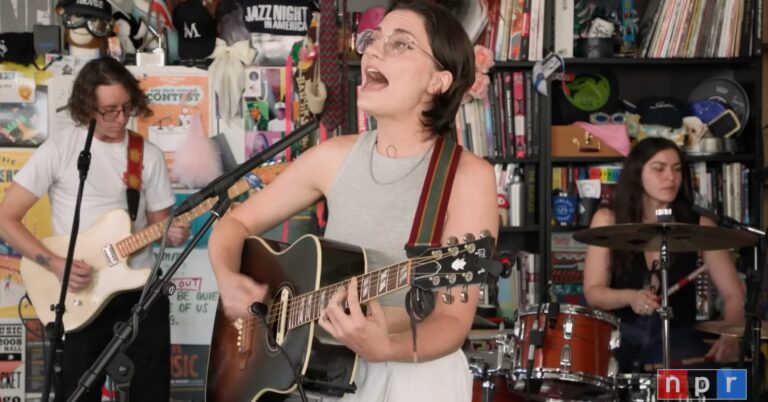
Rosie Tucker is the latest guest to perform at NPR’s Tiny Desk. Joined by bassist Jamie Orlando, drummer Maria Castro, and guitarist Wolfy Scheckel, the Los Angeles singer-songwriter ran through three songs from their latest album UTOPIA NOW! – ‘All My Exes Live In Vortexes’, ‘Paperclip Maximizer’, and ‘Unending Bliss’ – before closing with Sucker Supreme‘s ‘Ambrosia’. “It’s very satisfying to sing a song about murderous paperclip technology in an office building,” Tucker quipped after singing ‘Paperclip Maximizer’. Watch the full set below.
Sam Fender has shared ‘Wild Long Lie’, the latest single from his forthcoming album People Watching. The English rocker recorded the track in Los Angeles with the War on Drugs’ Adam Granduciel. He’s also shared a bonus track, ‘Me and the Dog’, which was tracked in London with co-producer Markus Dravs. Check it out below.
People Watching is set to arrive on February 21 via Polydor Records. In addition to Granduciel and Dravs, Fender worked on the follow-up to 2021’s Seventeen Going Under with longtime collaborators Dean Thompson and Joe Atkinson.
FACS have dropped a new song, ‘Desire Path’, taken from their upcoming album Wish Defense. Check it out below.
Wish Defense, which was led by the title track, is due out February 7 via Trouble in Mind. It marks the last album engineered by the late Steve Albini.
Discussing ‘The Tooth Fairy’ in a statement, Owen Ashworth explained:
I’ve been playing ‘The Tooth Fairy’ at my live shows since the spring and it tends to get a strong reaction. I’ve seen more people walk out of my shows after this song than any other song I’ve written. Other people have told me that it’s their favorite song of mine. It’s a song that messes people up, myself included. I had to practice playing it for a long time before I could get through it without crying. I feel a little silly about this, partially because it’s one of my shortest songs, and also because very little actually happens in it. But some of my biggest fears from my experiences as both a parent and a child are right there in it. Sometimes it feels terrible to unload my worst thoughts and feelings into other people’s heads, but there’s also a great deal of satisfaction that comes with getting it right. To be heard and to be understood. These are the reasons I’m still compelled to write and perform songs after doing it for so many years.
At this point, I’m going to ask that you listen to the song before reading any further.
‘The Tooth Fairy’ is based on an actual experience I had with my oldest kid around eight years ago, a few months before their fifth birthday. We were driving cross country, just the two of us, and we stopped for the night at a motel in a small town in northern Wyoming. We’d had a big day of driving and they were tired and it wasn’t long after they’d put on their pajamas and brushed their teeth that they were asleep. I realized I’d left my luggage in the car, so I tiptoed out of the room, quietly closing the door behind me, then walking down the motel’s interior corridor towards where I’d parked the car out in front of the motel. I noticed the neon lights of a convenience store a block away and wished I could walk over there but I knew it was a bad idea to leave my kid alone for any longer than was necessary. Instead, I started up the car and drove it around to the back of the motel where I could park it closer to our room. I returned to our room with my bag and found the motel room door open. My kid wasn’t in their bed. They weren’t in the bathroom, either. I quietly said their name before fully panicking and running outside, calling for them. I ran back around to the front of the motel and there they were, barefoot in their pajamas, standing where I’d originally parked the car when we’d arrived. They turned to me and casually asked ‘where’s the car?’ They were fine. But I’ve replayed that scene a thousand times, imagining every possible outcome, everything I could have done differently, everything they could have done differently. I’ve tried to put that feeling into a song a few different times, but I just couldn’t get it right. But I was stuck on the images of that convenience store down the street, the empty motel bed, and my kid standing in the motel parking lot in their pajamas and bare feet.
Meanwhile, I’d also been trying to write a song about getting a text from my wife asking if I had a one dollar bill. Our youngest kid had lost a tooth and one of us was going to have to be the tooth fairy that night but neither of us had any small bills. It was meant to be a much lighter story about the duties of parenthood. Somehow, those two stories turned into one song, and although ‘The Tooth Fairy’ is a fictional song about fictional characters, it gets closer to my real feelings than my previous attempts to tell two separate true stories.
About the music video, Rubin said:
I was so moved by ‘The Tooth Fairy,’ as I am by really all of Owen’s music. For this song, I wanted to create a fairy tale capturing the ethereal, disappearing nature of childhood and the horrifying dangers that lurk around its edges. These dark possibilities live in the peripheral awareness of all parents (and children). I think of the house as a central metaphor for containment and safety. When the dad steps outside of that structure, the possibility for catastrophe emerges. Although the most tragic outcome is averted, particles born of his maybe imperfect action linger, forever a part of the relationship and acts of daily love.
I used mostly erase and redraw of graphite to create the movement and some cut-out animation. I love working in erase and redraw, partly because the residue from one moment becomes part of the next frame. I like to leave openness in the drawing process, responding to these smudges. I think the technique invokes the feeling and nature of memory and the murky aspects of being a malleable person across time. I often let my drawn characters change according to their situation and always focus on light in relation to the drawing and paper.
Horrible Occurrences is due for release on December 6 via Run for Cover.
SoundCloud is a platform that allows musicians to upload and promote their songs freely. Using SoundCloud for artists brings more exposure to songs, and it allows musicians to create their presence on the platform. It’s also a great way for artists to connect with their audience, share ideas, and acquire feedback for their music.
SoundCloud’s Subscription Plan
SoundCloud offers a subscription system that helps you grow your reach and connect with people. There are 2 subscription plans, one that’s free and one that’s paid.
SoundCloud’s Next
If you’re an artist who wants to bring his music to SoundCloud, there are different ways to go about it. In the SoundCloud Next, free program, you have access to the following:
3 hours of uploads
The ability to share private tracks with your collaborators
You can post tracks publicly
Access to audience insights.
However, if you want to go the extra mile, you can opt for the Next Pro program.
SoundCloud’s Next Pro
SoundCloud’s Next-Pro
The Next Pro program costs $8.25 a month. The service offers great improvements to the free, Next program, along with exclusive features:
You have an unlimited number of uploads
Unlimited track promotion, where the algorithm will recommend your track to people that listen to the same genre or style
3 mastering credits are offered every month
You have unlimited replaceable tracks, without worrying about losing any stats
No limit to monetization or distribution
Additionally, you can access community management tools and audience stats/insights.
It’s the best option to consider if you want to grow your account, increase your presence and reach more people.
Benefits of SoundCloud’s Next Pro
SoundCloud Next Pro is an ideal solution for you to connect with other people and ensure that your music gets heard. The advantage of this approach is that you can share your music quickly, and it removes limits that you might encounter if you use their free, Next program.
1. Unlimited Uploads
With SoundCloud next, you only have the option to do 3 hours of track uploads. If you upgrade to Next Pro, there are no upload limits. You can upload thousands of tracks if you want. In addition, SoundCloud will help with the distribution process. That helps immensely when you want to grow your profile and connect with a larger audience. They also make it easy to obtain insights as well, with more details than before.
2. Unlimited distribution
Aside from that, SoundCloud Next Pro can also help you with distribution. Sure, you can try to promote the music yourself, but you still have limitations. SoundCloud will help you with an algorithm boost, but also with distribution to streaming platforms or TikTok. That will allow you to bring more people to your profile to hear the song. Even if you have the best music, you still need a way to distribute it, and that’s how this approach will help. The advantage is that you don’t have to deal with upsells, using a custom label name, or anything like that. Everything is in your Next Pro subscription and fully ready to use!
3. First Fans
First Fans is a unique feature from SoundCloud that uses the autoplay algorithm to recommend newly uploaded tracks. They study the previous listening history of a person, and if your music fits, they will recommend it to them. It’s a very good way to bring more eyeballs onto your music. And it’s also great because you can have access to more fans a lot quicker than expected.
How to Get Paid on SoundCloud by Next Pro?
You also can get paid on SoundCloud by Next Pro. They give you a multitude of monetization options, each with its different benefits. You can also choose to split the earnings with collaborators if you have a Next Pro subscription, something that can help with transparency and growing as an artist.
1. Fan Powered Royalties
Fan-powered royalties can be an exceptional way for you to monetize your music. These are a transparent, detailed way for any independent artist to get paid on SoundCloud. Simply put, the more people listen to your music, the more you will get paid. And thanks to Next Pro, you keep 100% of your royalties. With fan-powered royalties, you always get paid based on the listening habits of your fans. If you have dedicated fans and they listen to your music often, that will help you get paid more. It’s a great approach to help artists, especially independent ones, to sustain themselves financially!
Buy SoundCloud plays
If you want to capitalize on this, a good idea is to buy plays on SoundCloud. It’s the best way to grow your profile, generate revenue, and boost the way the SoundCloud algorithm promotes your content. Once you have more people that listen to your content often, you can get more fan-powered royalties!
Conclusion
Getting paid on SoundCloud is an effective way to sustain yourself as an artist. These methods shown above are known for being easy to understand, and they will provide a very good return. It’s highly recommended to start implementing these tips if you want to get paid on SoundCloud today.
When you’re struggling with mental health challenges or substance abuse, the journey to recovery can feel overwhelming. You might not need full hospitalization, but outpatient care may not feel like enough.
That’s where partial hospitalization programs step in. And this post will look into them, so you know exactly what to expect and how to choose the right option for you. Read on.
What Is A Partial Hospitalization Treatment Program
A partial hospitalization program (PHP) is a structured mental health or addiction treatment plan. It’s more intense than traditional outpatient therapy but less restrictive than inpatient hospitalization.
You’ll typically spend several hours a day, several days a week, in therapy sessions, group meetings, and skill-building activities. At the end of the day, you return home. PHPs bridge the gap between needing intensive care and maintaining your daily responsibilities.
If you want to read more about the subject, you can learn more here.
Who Can Benefit From PHPs
PHPs are designed for individuals who need significant support yet don’t require round-the-clock supervision. It’s a great fit if:
You’ve recently been discharged from inpatient care and still need structured support;
You’re struggling with severe symptoms of anxiety, depression, or bipolar disorder;
You’re battling substance abuse and want to avoid relapse to be better at rebuilding a healthy life;
You’re dealing with co-occurring disorders (mental health and substance use); and so on.
In short, PHPs are there to help you regain stability while staying grounded in your everyday life.
What Treatments Do PHPs Offer
Most PHPs provide a variety of evidence-based therapies and holistic treatments. Here’s a closer look:
Individual Therapy: You’ll work one-on-one with a therapist to dig deep into your challenges. It’s a chance to explore root causes, identify triggers, and develop coping strategies.
Group Therapy: Group therapy helps you connect with others facing similar struggles. Sharing your experiences and hearing others’ stories can be incredibly empowering.
Family Counseling: Your family often plays a crucial role in your recovery. PHPs offer family therapy to improve communication and build stronger, healthier relationships.
Skill-Building Workshops: You’ll learn practical skills to manage stress, regulate emotions, and build healthy habits. Workshops often focus on mindfulness, anger management, and problem-solving.
Medication Treatment: If medications are part of your treatment, a psychiatrist or medical professional will monitor and adjust your prescriptions as needed.
The Benefits Of Partial Hospitalization Services
Why choose PHPs over other treatment options out there? There are several advantages. They include:
PHPs strike a balance between providing intensive care and allowing you to maintain parts of your normal routine. You can sleep in your own bed, see your family, and keep up with responsibilities.
With multiple hours of therapy daily, PHPs give you the time and space to focus on healing. You’ll get more support than a weekly therapy session but without the stress of living in a hospital.
Compared to inpatient hospitalization, PHPs are often more cost-effective. You’ll get comprehensive care without the high price tag of overnight stays.
If you’ve just left inpatient treatment, PHPs provide a step-down approach. They ensure you don’t lose momentum in your recovery.
How To Choose The Right One Among Different Partial Hospital Programs
With so many options, picking the right PHP can feel daunting.
Start by assessing what you need. Are you looking for mental health support, addiction treatment, or both? Do you need a program that accommodates your work or family schedule?
Next, look for programs with licensed professionals. You want therapists, psychiatrists, and counselors with the right credentials and experience. Aside from that, make sure the PHP uses various evidence-based treatments. Holistic options, such as art therapy or yoga, can add value as well.
Moving forward, hearing from others who’ve been through the program can provide valuable insights. Look for feedback about the staff, environment, and effectiveness.
And remember: recovery doesn’t stop when the program ends. A good PHP will have aftercare options, like outpatient therapy or support groups, to keep you on track.
What To Expect On Your First Day Undergoing Partial Hospitalization Programs
During orientation, you’ll meet the staff, tour the facility, and go over the program schedule. Next, during assessment, a therapist will evaluate your needs and create a personalized treatment plan. When getting started with your wellness journey, you might join a group session, attend an individual therapy session, or start a skill-building workshop.
By the end of the day, you’ll likely feel more comfortable and optimistic about what lies ahead.
Final Words
Choosing a partial hospitalization program is a courageous step toward healing. Whether you’re dealing with mental health challenges, addiction, or both, PHPs offer the care and support you need to move forward.
Remember, recovery isn’t a one-size-fits-all process. Take the time to find a program that fits your needs and goals. With dedication and the right resources, you can achieve lasting change.
In today’s digital world, online marketing, content sharing, and social media engagement are all heavily dependent on effective link management. One of the most efficient tools available for this purpose is a URL shortener. These tools allow users to condense long, cumbersome URLs into short, manageable links that are easier to share and track. But what exactly are URL shorteners, and how can they benefit individuals and businesses alike? In this article, we will delve into the world of URL shorteners, explore their uses, and benefits, and how to choose the right tool for your needs.
What Are URL Shortener Tools?
A URL shortener is an online tool that converts long web addresses (URLs) into short, concise versions that are easier to share and remember. These tools replace long and complex URLs, which may contain numerous characters, with a shortened string of text, often making the link more user-friendly. For instance, a URL like:
This makes the link much easier to share on platforms like social media, in emails, or on websites, where space and character limits are often a concern.
Why Are URL Shortener Tools Important?
URL shorteners offer several significant advantages that help streamline communication and online marketing efforts. Some of the key reasons why URL shorteners are widely used include:
1. Clean and Concise Links
One of the most obvious benefits of using a URL shortener is the ability to generate clean and concise links. Long URLs can be overwhelming and may even break in emails or text messages. By shortening them, users can make URLs more visually appealing and easier to manage.
2. Improved User Experience
A shorter URL is also easier for users to type, remember, and share. When sharing links on social media platforms, users are often limited to a certain number of characters. Shortened URLs take up less space, leaving room for other important content in the message.
3. Tracking and Analytics
Many URL shorteners come with built-in analytics tools. These tools allow you to track how many times your shortened link has been clicked, where the clicks are coming from, and even what time of day the link is receiving the most traffic. This data can be incredibly valuable for marketers, content creators, and businesses that are trying to understand the effectiveness of their campaigns.
4. Customization Options
Some URL shorteners offer the ability to customize the shortened URL, allowing users to create branded links. This is especially useful for businesses that want to reinforce their brand identity or create more memorable links for their audience.
Top Features to Look for in URL Shortener Tools
When choosing the right URL shortener tool, there are several features that can make a significant difference in its effectiveness. Below are some of the top features to look for:
1. Analytics and Tracking
Effective analytics and tracking features are one of the most important aspects to consider when selecting a URL shortener tool. These features allow you to monitor the performance of your shortened links and measure their success. Look for tools that provide detailed insights into metrics such as:
Click-through rates (CTR)
Geolocation of users
Referrers and traffic sources
Device and platform data
2. Customizable URLs
Having the option to customize your shortened URLs adds a layer of personalization and branding to your links. Custom URLs can be memorable, and engaging, and help build brand recognition. Choose a tool that offers this feature if you want to create more attractive links for marketing purposes.
3. Integration with Other Tools
If you are using multiple tools for marketing, content creation, or analytics, it’s important to choose a URL shortener that integrates seamlessly with these platforms. Many tools allow integration with email marketing software, CRM systems, social media platforms, and other analytics tools, making it easier to manage your campaigns and analyze results in one place.
4. Security Features
Security is an essential consideration, especially when dealing with sensitive or private information. Some URL shortener tools come with built-in security features like password protection and link expiration. These features help ensure that your links are safe from unauthorized access and that they expire after a certain period.
5. Ease of Use
The usability of the tool is another critical factor. A URL shortener tool should be simple to use, even for beginners. A user-friendly interface and straightforward setup process are essential for those who need to create and manage links quickly.
Popular URL Shortener Tools Available
There are numerous URL shortener tools available today, each offering unique features and benefits. Below are some of the most popular tools:
Bitly
Bitly is one of the most well-known URL shortener tools available. It is known for its customizability, allowing users to create branded links and track the performance of their URLs. Bitly offers robust analytics, making it ideal for businesses that need detailed insights into how their links are performing. It also integrates well with other platforms, including social media and email marketing services.
TinyURL
TinyURL is another popular and easy-to-use URL shortener tool. It offers a straightforward way to shorten links without the need for an account. While it doesn’t have as many advanced features as Bitly, it’s perfect for users who simply want a quick and easy tool to shorten their URLs. TinyURL also offers the ability to create custom short links, which can be helpful for businesses and marketers.
Rebrandly
Rebrandly is a URL shortener tool focused on brandable links. Unlike other tools that assign random characters to shortened URLs, Rebrandly allows users to create custom domains for their links, making them ideal for branding purposes. This feature is especially beneficial for businesses and organizations that want their links to be recognizable and reflect their brand identity.
BL.INK
BL.INK is a professional-grade URL shortener tool aimed at businesses and enterprises. It provides detailed analytics and can handle large volumes of links, making it a great choice for larger organizations. BL.INK also offers custom link creation, link management, and security features such as password protection.
T2M
T2M is another highly rated URL shortener tool that offers a range of advanced features. It allows users to create both short and long URLs, offers detailed analytics, and supports QR code generation. T2M also offers both free and premium plans, making it accessible to a wide range of users, from individuals to businesses.
How to Choose the Right URL Shortener Tool for Your Needs
When selecting the right URL shortener tool, it’s important to consider your specific needs and goals. For example, if you are an individual or small business owner looking to share links on social media, a simple tool like TinyURL might be sufficient. However, if you are managing a large-scale marketing campaign and need detailed analytics, a more advanced option like Bitly or Rebrandly may be a better fit.
For Businesses and Marketers
If you run a business or manage a marketing campaign, it’s crucial to choose a tool that offers detailed tracking, analytics, and the ability to create custom-branded links. Tools like Bitly, Rebrandly, and BL.INK are all excellent options for businesses that need to maintain their brand identity while tracking the performance of their links.
For Personal Use
For personal use or casual link sharing, a simpler tool like TinyURL or T2M might be more appropriate. These tools are user-friendly and offer basic features that are ideal for personal or non-commercial use.
FAQs about URL Shortener Tools
Q1: Are URL shorteners free to use?
Yes, many URL shortener tools offer free plans that allow users to shorten links without any cost. However, some advanced features, such as custom branding or detailed analytics, may require a premium subscription.
Q2: Can I track the performance of my shortened links?
Yes, most URL shorteners offer tracking and analytics tools that allow you to monitor how your links are performing. This can include metrics such as the number of clicks, geographic location of users, and the time of day when the link is clicked.
Q3: Are shortened URLs secure?
While most URL shorteners are secure, some tools offer additional security features such as password protection or link expiration. If security is a concern, choose a tool that provides these added layers of protection.
Q4: Can I customize my shortened URLs?
Yes, many URL shorteners, including Bitly and Rebrandly, allow you to create customized short links, which can be useful for branding and making your links more memorable.
Q5: How long do shortened URLs last?
The lifespan of a shortened URL depends on the tool you are using. Some URL shorteners allow links to expire after a set time, while others keep them live indefinitely. Always check the settings of your chosen tool.
Conclusion
URL shortener tools are indispensable in today’s digital landscape. Whether you’re a business owner, marketer, or casual internet user, these tools provide an efficient and user-friendly way to manage and share links. By selecting the right tool based on your needs, you can improve your link management process, track performance, and enhance brand visibility. With countless URL shorteners available, it’s important to choose the one that aligns best with your goals and objectives. By doing so, you’ll be able to streamline your link-sharing process and optimize your online presence for greater success.
LEYA is the New York-based avant-pop duo of harpist Marilu Donovan and vocalist/violinist Adam Markiewicz, who started making music together in 2018. From the beginning, their work has not only challenged their instruments’ associations to notions of divinity and purity – one of their earliest projects was the soundtrack to a Pornhub exclusive directed by Brooke Candy – but also the boundaries inherent in the experimental scene in which they operate. Interweaving detuned harp, beguiling strings, and droning, operatic vocals, their music seeks to embody difficult feelings, often somewhere on the spectrum between ecstasy and uneasiness, without registering as difficult in itself. Following their debut record, 2018’s The Fool, the duo honed in their sound on 2020’s eerily intimate Flood Dream before linking up with Julie Byrne, Eartheater, Okay Kaya, Actress, claire rousay, and more for the 2022 mixtape Eyeline. Their new mini-album I Forget Everything, arriving on the heels of extensive touring and collaborations with fashion houses, filmmakers, and choreographers, finds them recentering their approach of simplicity and experimentation. What pours out is a raw humanity that remains palpable yet elusive, a profound loss that cannot be named yet permeates their drifting tapestry of sound, warped as memory. Even if everything’s starting to fade, LEYA suggest, you might find bits of it in the music.
We caught up with LEYA for the latest edition of our Artist Spotlight series to talk about theiir collaborative language, breaking the barriers of electronic music, their headspace going into I Forget Everything, and more.
Although it provided an avenue for experimentation, I Forget Everything is also framed as a return to the foundations of your music. What do you remember about beginning to build that collaborative framework for LEYA?
Adam Markiewicz: Like many projects, it sort of started by accident. Marilu asked me if I wanted to jam and play a show; we prepared one 10-minute piece, and there was kind of a little song embedded in it. It was pretty cool. We were like, “Oh, let’s do this again.” You were experimenting with the tuning system, and I, at the time, was working in another project that was kind of notes-as-sound, detuned metal stuff. But all this detuned, weird music I was trying to synthesize into very straightforward heavy music and these short format songs. Marilu and I had a similar approach to trying to work outside of standard tuning, but framing that within songs that are very digestible. It’s really not meant to be looked at as experimental music or meant to be difficult to parse. It’s just supposed to be connected and very emotive. Over time, that’s built to this kind of character in the music, where it’s generally uneasy, tense, anxious; there is a certain color to the whole thing. But originally, we were really just concerned with taking some of this language that we associate with new music, with experimental music, and bringing it into a world that is really for everyone.
I actually do loathe the term “experimental” as it gets applied to art a lot. That’s not to say that I don’t luxuriate and live in the world of experimental music – I certainly do – but I think it acts as a barrier very often. It makes us think we need to sit down and study something, be quiet, be tense, that we can’t disturb the environment. We really wanted to start a band. What gave this project some motion was we made a song, put out a video, and were preparing to put this tape out when we got contacted by Pornhub and Brooke Candy to do this adult film project. That was very early on in the group, and it gave us this realization that we could spend more time doing this. As this stretches out over the years, whereas the idea originally was to take this language and make it feel more universal, it became, “We should work with people who are in these disparate areas.” The unifying notion is not about making something difficult; it’s just about making cool stuff and trying to capture people. As far as live shows are concerned, we play club shows, we play raves. We want to be part of the party.
You said you first collaborated on a 10-minute piece that had a little song embedded in it. Is your method for locating the three-minute pop song, if you will, still subtractive in that way, now that you’re more aware of your musical language? Where does the song come in?
Marilu Donovan: That’s a hard question. I don’t even know how to begin to answer that.
AM: We have a bit of a process. The harp usually comes first, and it is absolutely the center and kind of the basis for everything. I don’t think it’s so subtractive anymore. I think we work from really small bits and kind of build it out. Maybe more so than other folks, we really do sit in the room together for a lot of the process. We work on each other’s parts together and chisel away and make things that don’t work very well until they start to work better, you know. Marilu is very patient with me, I will say.
Are there times where you conceptualize the interplay between the harp and the violin, or is it still mostly guided by instinct?
AM: I think the writing process is kind of inverted a little bit. Initially, we were playing around with the idea of writing things really quickly. We wanted to get out of our own way with composition a little bit, but that has kind of faded over the years. In the beginning, we were building these larger drone pieces and working amidst improvisation to compose these pieces out of it. But now it’s pretty intentional. We sit and try to envision the thing from the start. We’re trying to get better at songwriting, speaking efficiently through the work. We like a limited palette, and we’ve stuck with this very specific setup: we use harp, we use violin, and we use voice. We’ve dabbled in other things with other people, but as far as this record is concerned, everything is generated from that.
MD: Even the samples and the more production-oriented elements are all solely from harp, violin, and voice. That’s why when we discuss this record in particular, it’s kind of going back to the basics. We’re expanding on it, but we’re only using these three elements.
To me, when those electronic sounds come in, they feel like a response to the imagery you invoke in the opening track: “filling the Eden with haze.” What prompted you to create them using these elements, as opposed to maybe experimenting with other production techniques or instruments?
MD: We’ve both been playing these instruments since we were little kids – I personally don’t really know how to do anything else. I’ve spent my entire life honing this craft, going to school, studying. I’ve thought about, in LEYA, doing perhaps something on piano or maybe guitar, but I don’t think there’s ever been a question of not using harp and violin.
AM: Yeah, I would echo that. We don’t know how to do anything else. It’s kind of the only way we know how to go about this stuff. You said something really interesting about “filling the Eden with haze.” I’m not entirely sure what this record is about. It’s definitely a document of a bit of confusion, but this idea of a space being colored by something that’s maybe less organic or new, or maybe even synthetic, is certainly a palpable element that you really hit on in a pretty direct way. We spent a number of years, up until recently, very engaged with making work with other folks and trying to expand the language through that, and this was an attempt to kind of go back to our roots a little bit, so to speak. We also sought to fuck it up a little bit and to push this in a direction where we’re thinking about production as a component of the thing that we haven’t really in the past. We’re stepping into something that we know a little less about.
What surprised you the most about working without collaborators at this point in time?
MD: I think we pushed ourselves more than we thought we could.
AM: We thought about even making this record with a producer or a primary person, and then we just did it ourselves instead. We made a lot of mistakes with it; some of the recording process was very rough-around-the-edges process. And then it turns out it’s okay. claire rousay talks about this frequently – this idea that, and it seems like a “duh” type of thing, but it’s really not, because many of us get in our own way with this type of stuff: whatever you have at your hands in front of you is enough. If you’re using a cheap interface to record yourself at home, you don’t need a nice one to unlock your potential. You don’t need an expensive microphone. You don’t need to play an instrument you don’t know how to play. You just need to do the thing.
I think there’s a lot of pressure because we’re living in a time where people are becoming so proficient in production. You can do anything you want in the box. You can strive for this kind of perfection. There’s a lot of athleticism and competition – this is a very palpable thing in music, I think, in various contexts. Certainly as a classical musician, from a very young age, you kind of know where you rank amongst your peers. I remember orchestra seats in high school – I grew up in New England – being like, “This is where I rank amongst all the violinists in New England.” And that means X and Y for my future – that means I have these opportunities, and I don’t have these. I could get into the fact that that’s a very dark way to educate the youth about getting hyped on making music, because it makes them feel as if they’re not enough from a very young age. And I think the same thing applies a little bit to recorded music. I’m not saying this is a triumph of a record – in fact, I’m really pleased with the fact that we’ve learned a lot.
MD: It’s a messy moment in our lives, and we’ve put it out there for everyone, or no one, to listen to.
AM: It was not like a fancy studio record.
In ‘Eden of Haze’, you can literally hear my upstairs neighbor walking in.
AM: We haven’t put anything out in a couple of years, and I think we could have put a lot of pressure on this release to be this very high-fidelity, big leap into the next frontier of fanciful recording stuff. Instead, we’ve embraced where we’re at.
MD: Which is literally my living room. [laughs]
I’m not sure if this is necessarily related to the title, but I was wondering whether there was an effort to approach I Forget Everything as a kind of clean slate, removing it from the context of everything that came before. Or if that maybe happened unconsciously, where the title suddenly reflected the process itself, or what you wanted out of it.
MD: Isn’t that a dream – to forget everything? Is it even possible? It can mean so many things. I mean, I’m very forgetful.
AM: We both are, yeah. [laughs]
MD: We’re both gutting stone and writing stupid songs, and then it’s like, “Wait, I literally don’t know what I just did.” One could take it that way. But I would hope that even in life, it’s like, can you start fresh and forget what happened before? Or are you forever changed by what happened, what led you to the current moment?
AM: I think music, how we experience it as people, is so inherently tied to not only memory but our idea of memory – the phenomenology of being conscious of time, of what’s happening in music. Any time you’re overwhelmed by the beauty of something, it’s due to it being unexpected, right? If we stand in a present moment and regard the past and the future, as we get farther into the past, the horizon diminishes, and as we get farther into the future, the horizon also diminishes. So, in any given moment, as we move to experience what’s next, this happens amidst an expectation, and sometimes expectation is somewhat defied. But what’s also true is that what we think we know of the past gets distorted the farther we get out. It’s the very essence of functional harmony: when we hear one chord, we expect to hear another chord after, or a certain number of options. It’s based on cultural context and history and everything we’ve heard in our lives. What I think is basically true is that it’s all very deceptive, and what we think we know is not always true.
But it’s also, as you said, Marilu, really hard to shake the past. Our last mixtape, Eyeline, came out in 2022. We toured that heavily for about a year and a half, and part of this was post-pandemic touring bonanza. We were on the road as much as possible. We weren’t playing shows with guests or anything, but we were living in the space of promoting work based on collaborations. We were like, “We need to come back to our own voice here and really speak on our own about the story we’re trying to tell.” I think this EP is us stepping back into that. We had an expectation of how it was going to go, and it all went a little differently. At the end, we needed to name it, and we were like, “Well, I kind of forget everything that happened.” We were both very worn out in the middle of 2023 when we got back from touring. Even in our small little world, there’s pressure to get the next work out so you can keep the whole wheel turning–
MD: Amidst the world collapsing around us. Can’t forget about that.
AM: I feel like in Western society right now, we’re consenting to things as a society that we can’t really go back from. Everyone I know understands that what’s happening in the Middle East is unthinkably evil, and yet the powers that be have looked us all square in the face and said, “Okay, we kind of know it too, but are you going to do anything about it?” The truth of the matter is it’s happening. These moments in humanity – you can’t go back from them. I don’t know if we’re talking about an era beyond this where things get worse and worse and this is just the beginning benchmark…
MD: The beginning of the end.
AM: “Filling the Eden of haze.” We were also thinking about the idea of paradise as something private, something you create with the people directly around you, and you sort of block out the world. Maybe these utopian ideas need to be shattered sometimes because the reality is there’s so much suffering going on beyond the immediate realm. It just feels like a good time to question absolutely everything as far as one’s own instincts are concerned.
MD: I mean, what is reality? We’re all experiencing wildly different versions of it.
AM: We had a bit of a brain break amidst this process, trying to think about all this at once.
MD: How do artists fit into the world that we’re heading into, that we’re already experiencing? What do we do? For us, in a simple way of thinking about it, this is a release of us experiencing grief – even if it’s in a mundane way or a very extreme existential way, literally just acknowledging the world is pretty fucked up right now.
AM: We don’t really make work that is extremely content-forward. The lyrics to LEYA used to be multilingual and based in vowel painting, kind of like how Joni Mitchell composes or what Cocteau Twins songs are or what Melvins songs are. We’ve attempted to make a bit more of a vessel for poetry with this one because there feels like an impetus to have more direct contextual meaning in the work. But it’s still really just about a feeling and trying to understand that feeling. It’s like when you’re trying to process or deal with feelings; rather than naming them, it’s better to ask, “Where is this in my body? What color is it? What does it sound like?”
There’s also this feeling of inertia, and the word that comes up a lot on this record is “waiting” – it’s all happening, but you’re also waiting for something to happen. It could be anticipation or apprehension – what kind of feeling is that waiting for you?
AM: I love that. I hadn’t thought about that, but I do think that’s a very unifying state among these things – waiting.
MD: It’s interesting you picked up on that; there was another song about being in a waiting room that didn’t make it on the record.
AM: Yeah, we had this choral piece that was kind of pontificating about being in a waiting room. A bit of a nod to the Fugazi song. I have very bad ADHD, and waiting is this weird, arrested state for people with that specific type of neurodivergence. If there’s something happening in like 10 minutes, you’re not going to be able to get your brain to focus on anything other than waiting for the scheduled event.
Could you share one thing that inspires you about each other?
AM: I think his sense of curiosity – wanting to try something new. When you’re working with someone, you always have to make compromises. Sometimes we’ll be playing through something, and he’ll be like, “Why don’t we try this?” And my immediate thought is, “No, I don’t want to,” but he’s like, “No, let’s do it.” And it ends up being the best option. There’s something almost childlike about his curiosity and excitement that can be really fun to be around, but also inspiring musically. You know, the inspiration we have to have between the two of us isn’t just us writing songs; we’re literally in a van together for months on end, just the two of us playing shows, having to entertain each other. And I’m inspired by that sense of excitement and wonderment.
AM: One thing I really appreciate about you is that you look at music in a way that is incredibly direct. Whether it’s explaining equal temperament to me or something, you would talk about it in a way that I could never. When we first started playing together, we’d be sitting in the room and you’d be just noodling on the harp, and I would just kind of melt into the wall. It would just feel so good to be there. I think that you’re such a natural musician; you just do it. As you said, you’ve been doing this your whole life. When it comes time to write – Marilu can play all this crazy classical music that I can’t – you have all this facility to do these things, and yet you take your music and put it into this simple humanity. It’s not about barriers; it’s about kindness. When we’re writing and I get too deep into the weeds, you’ll be like, “No, this is just this.” You’re grounded in the reality of what it is to play music in a way that’s unlike anyone I’ve ever met.
This interview has been edited and condensed for clarity and length.