Home Blog Page 566

Artist Spotlight: Adult Jazz

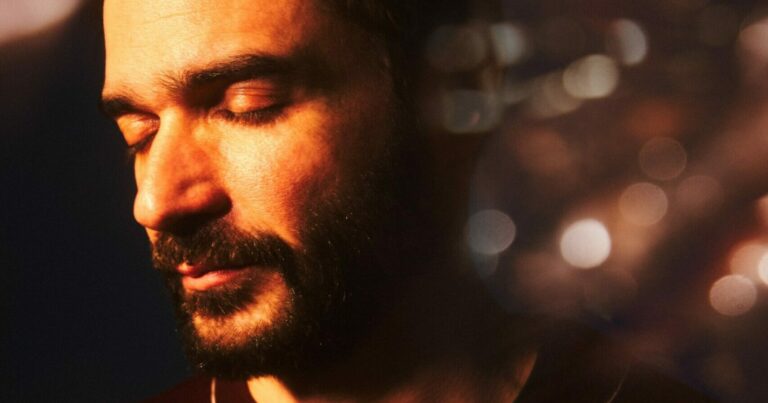
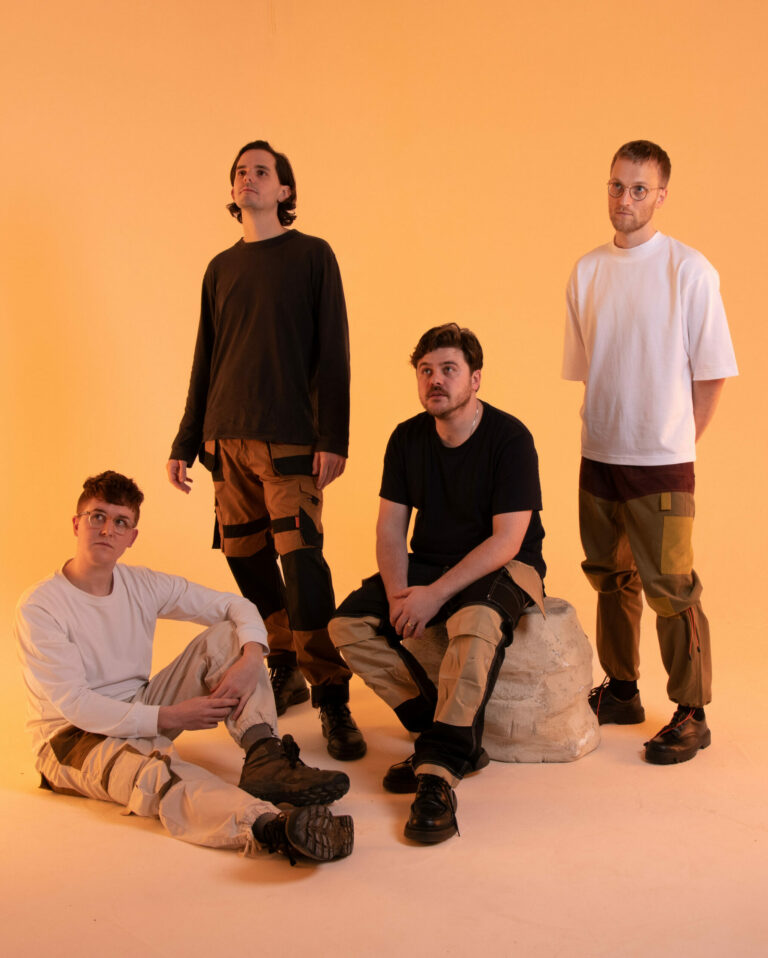
Adult Jazz is the London-based quartet composed of Harry Burgess, Tim Slater, Steven Wells, and Tom Howe, who all grew up in Guildford, Surrey before forming the project at the University of Leeds. In 2014, they made waves with their debut album, Gist Is, which is as off-kilter as it is poppy and as dynamic as it is idiosyncratic, earning fans among the likes of David Byrne and Björk. That record was four years in the making, and their latest full-length, So Sorry So Slow – the group’s first new material since 2016’s Earrings Off! EP – took even longer to complete. The album title stuck due to its tongue-in-cheek resonance but was not meant as an apology, Burgess explained, instead encapsulating one of the album’s main themes: how regret sinks in and is magnified over time. Exactly what kind of regret is hard to decipher, as Burgess’ lyrics remain cryptically abstract though more emotive than ever, blurring the line between the personal and the ecological, beauty and desolation. The music – brooding, swelling, shuddering, but always trudging on – is fragmented without breaking itself apart, beguiling without getting lost in the murk. It is not despite their love of warped sounds that it moves this way but because of it, reaping joy and wonder out of the process.

We caught up with Adult Jazz’s Harry Burgess, Tim Slater, and Steven Wells for the latest edition of our Artist Spotlight series to talk about balancing slowness and freneticism, how the personal and ecological collide in their new album, their collaborative process, and more.


You started writing So Sorry So Slow in 2017, which makes me wonder about slowness as a component of the album itself. I get the sense that it’s something the record adheres to, and there’s a lightness and a warmth that comes with that, even if it momentarily scrapes against feelings of dread, pain, and regret.  Was that pace something you felt you had to surrender to for this record to come together?

Harry Burgess: I think you’re right in that, although there are moments of quite frenetic and bright things, there seems this whole time to be this return throughout the record to this kind of slightly sluggish undercurrent. There were a lot of songs we spent a lot of time with that had no drums or anything, so we were seeking to balance that in some way. But there is an element of surrender, a kind of thematic element, in that we were thinking about the ecological situation on Earth and how slow some of the change that we’re witnessing is to a human observer. It’s subtle, sometimes, these shifts – and actually, that’s a privileged position; here in the UK, the shifts feel subtle, but they’re not. They’re insanely rapid in data terminology. There’s this Bob Wilson opera, which ANHONI did the music for and William Defoe was acting in, called The Life and Death of Marina Abramović. I’m not completely into her vibe, but the opera had her sitting on this plinth, incredibly po-faced and serious, with ‘Disintegration Loops’ by William Basinksi playing in the background. It’s a really austere, stoical brass piece, and it changes slowly, but in the rehearsal footage which you can find on YouTube, there’s William Defoe crawling, wearing a vest, singing – this wavering, cat-like singing over this really austere and grand Bob Wilson choreography, with loads of dry ice on the floor.

Making sense of it now, that image is the one I just kept coming back to, and I think it’s that sense of a kind of slow, austere, managed decline. This understanding of what is going wrong: everyone knows it and we’re all talking about it, and then they’re feeling like they’re not being the panic or yelping or screeching feeling, which I guess personally is the one that I am contending with a lot when it comes to like what the planet is going to be like in 10-20 years. I was feeling a lot about endings, and I think endings in music, when represented, are brass, they’re slow, they’re dirges. And that feeling didn’t sum up what I wanted to evoke really, so there had to be that slightly screeching and bright and unstable element that fought with that.

What does it look like trying to achieve that balance as a group?

HB: There will always be someone in the four of us who is advocating for simplicity, directness, beauty; there’ll always be someone in that same moment who is advocating for obscurity or complexity and difficulty. And what’s nice is that will always change, who that is. I feel like in the early days, when we were writing with Steve, I would find it quite hard to predict which side of that fence you will be on at any given point. I’ve got this idea, let’s take it to Steve. Is he going to give me the, “This needs to change because it’s too obstructive or difficult,” or is he gonna say, “Follow that route and go in.” I think there’s a balance that is struck just as a mode of operating as well for us.

Steven Wells: I think it’s fun to push with it as well and play devil’s advocate with it. That’s the fun of making music with other people, isn’t it, that you try and push things down a slightly different road.

Were the knottiest and most complex arrangements on the album, like ‘Earth of Worms’ or ‘I Was Surprised’, the most challenging to complete?

HB: This is an interesting one, because ‘Earth of Worms’ was incredibly easy and ‘I Was Surprised’ was incredibly challenging. In terms of the process, most of the songs, the first bit of recording was a live, off-the-grid, no metronome performance of two or three elements, or sometimes one, recording of something which is then like led upon. That was a technical challenge, which is how to create when you haven’t got the grid to help you organize rhythms; you’re really constantly teasing and pushing things around to feel where those nice, interesting moments of rhythm are. But ‘Earth of Worms’ was just guitar and drums recorded, and then I sang over the top of it. The bulk of that was done really quickly. ‘I Was Surprised’ was a much longer recording of Tim playing trombone and some harmonies that we stacked up there, and some live drums. That morphed for a long time; we’d been doing recordings of that since 2017. The first time we recorded ‘Earth of Worms’ was like a year ago.

I think one thing that can be frustrating regarding how the music is received is the emphasis on it being technically techy. But my music theory is appalling – I don’t know what time signature I’m in at all. Usually, anytime we’re in a funny time signature, it’s just because the melody needs to be that long at that point. Someone did their master’s thesis about Gist is and was asking us questions about it, which is really amazing that they wanted to do that, but it’s a musicology master’s thesis, they’d written out lots of the harmonic things that we’ve done, or time signature things, and I had no idea what any of it was. Apparently, there’s no functional harmony in Gist Is, which is amazing. I don’t know what that means; I think it just means singing over a drone a lot. But that’s never at the forefront of our heads. The main thing we’re looking at is feeling, instinct, and emotion; really trying to tease out a particular feeling from something. Perhaps in the way that we’ve spoken about it in the past, there’s this kind of intellectual kookiness that gets put forward, like we’re willfully trying to make clever stuff. But I just think it’s always about the feeling; even the conceptual, thematic stuff is about the feeling.

The only time where I kind of go into an intellectual mindset, as it were – I don’t think intellectual is the right word, but when I’m thinking about meaning more, would be with the lyrics. There’s a kind of baked-in, slight thinkiness about that. But when we’re looking for that balance, it’s always like trying to make something that is that slightly uncomfortable intersection of appealing and not necessarily appealing, which I think is just a sensibility that we have. But also, especially with this record, more than ever, it was about beauty and love, and how much, when writing the words, I love the earth and how it’s foundational to everything of value to me personally. But obviously, you extrapolate that out, and I think there’s this kind of elegiac thing about not knowing – are we saying goodbye to that? Do we have to say goodbye to that? Truly, truly do we have to do that? All the complexity in the arrangement or anything that feels knotty, it’s because the feeling’s knotty and the feeling is complex. And when you want to sing a line with a specific word that lasts and follows this melodic pattern, I’m sorry, Tim, you’re gonna have to play another beat on drum kit. [laughs]

Tim Slater: Yeah, the technical musicianship follows feeling. And I think that’s probably also the case in what we like in terms of references for the album. I generally find virtuosic musicianship a turn-off. I definitely like music that has it – one example I’ve been listening to this week is that new Adrianne Lenker record; she’s an incredible musician, but the technical musicianship is incidental. I don’t think any of us are into that, and often it gets in the way for me.

HB: It’s lucky none of us have any!

TS: [laughs] Exactly.

SW: Something that I thought was interesting as you were saying, Harry, with the recordings, that we’d start with two or three instruments and build up from that – none of the songs at any point did we scrap and start from the beginning, and some of the challenges around that was that there was a commitment to the foundation of every track. So when we got to points where we’re like, “This isn’t quite working,” at no point did we say, “Let’s just completely go from the start again.”

TS: Maybe that is a healthy way to do it, maybe other artists scrap stuff.

SW: I’m sure they do. But there’s a stubborness, I think – what was felt originally, thinking about all the things that we’ve made, is the most consistent thing to any Adult Jazz song. It’s the original intention of when something was jammed in a room that should always be honored.

HB: When people say that Arthur Russell thing of “first thought, best thought,” it’s always “Do it really quickly.” But I think there’s a “first thought, best thought” version, which is where you have this thought, and then eight years later, you have honoured the thought. [laughs] We all know we need to think of a way to do it so it doesn’t take quite so long next time, but yeah, Steve, you’re absolutely right about this fidelity to the idea at the start. Often there’s this sense of true artistry doesn’t compromise, but I think compromise is actually a really fertile space for ideas, because you’re forced to innovate and you’re forced to find unlikely points where things rub against each other in a pleasurable way, or they create a kind of friction which is interesting because you’re having to find the point between two quite disparate things. We never really have arguments about how the music should sound, we just wait until the compromise that is struck is interesting to everyone. And so compromise is at the core of how we work, because someone will have this really extreme idea, and then someone will also in their head want it to be like a pop song. That’s where the interesting grit is, from how ideas form around those little tears in the fabric of what you’re trying to do.

I want to zoom out and talk about some of the ecological themes that you mentioned, but one of the interesting “little tears,” as you put them, comes in the way you warp your voice in some moments. One example is ‘y-rod’, which stood out to me because the distortion is even reflected in the lyric sheet. Was that also a natural kind of impulse?

HB: The piece originally was just the strings, and it felt like there needed some kind of human thread in it. I really loved it without the voice, but it’s another point of compromise where you have to find this way of uttering something – because it needed singing, that felt true the moment it started. But the moment of uttering stuff like that was very instinctual, hence there’s this slightly preformed singing which finds clarity at certain points, roughly about what I was thinking about. A y-rod is a twig that you would hold to douse for water in the past. It’s a slightly mystical way of finding water, especially in times when water is scarce, and I was thinking about that and singing. It was really early ideas stage and I had a few nouns and words written down, I didn’t really know exactly what was going to come out. I guess the decision to do that was because I wanted that to be this main, bold, loud line throughout the piece and needed to situate the voice in the frequencies as well.

Throughout this whole record, there’s this figure of a special animal, which is a way to talk about human centrality and this idea of species exceptionalism, of how we relate to the earth. I think that has its roots in monotheistic religion, us as stewards of the earth. And I think this special animal was me trying to look at us from a distance – I was, early days, messing around, trying to make facial prosthetics to get a sense of what that animal would look like [laughs] – and the format shift on the voice is this idea of a quite lumbering, possibly quite sweet creature. I think I wasn’t being horrible about this creature, i.e. us. I think I was looking at that creature with love and compassion, but seeing this really strange exceptionalism it had. The moments when I’m warping the voice are often the times when that creature is in a period of pure expression. There’s something tragic in the traditional theatrical sense about the creature, and the slightly pitched-down and format-shifted things have this mopey, self-pitying sound to me. Shifting down the voice makes it sound kind of sweet, but a bit dim maybe.

And I think that is what we are like. There’s this not being able to take ourselves off the pedestal at the center of everything, even when we approach nature with a view to make ourselves feel small, like that famous Caspar David Frederick painting, Wanderer above the Sea of Fog, where he’s standing on top of the valley, and this Romantic era: the human is shrunken in the face of the sublime force of nature, but he’s still central in the frame. All the ways that we try to decentralize ourselves still absolutely smack of our complete inability to not be this special creature. I think most of the time the voice has shifted, that creature is in a kind of wounded and confused period, and that is just me looking retrospectively back at these instinctive decisions of what I want it to sound like and the slight theater of the character at that point or my theater at what emotion I want to convey. But also, it’s fun to warp your voice and it can make it sound better. [laughs] That’s the trick of AutoTune.

TS: I think it also reflects that we were quite conscious to breathe space into this record as a whole. I think we, by default, are busy with ideas – the kind of through-composed, proggy thing that people pick up on – and we wanted to give it time and space. And I think by making that vocal pitch shifted, it reads more as an instrumental to me, and therefore feels like a breathing space in the record.

Harry, you’ve talked about the conflation of the personal with the ecological throughout the album as something that happened as a result of writing about relationships. What I found interesting how that conflation often comes about as a sort of logical or poetic conclusion, particularly on the songs ‘No Relief’ and ‘Suffer One’. Were the personal and ecological always merged in your mind as you were writing, or did one lead to the other?

HB: The first half of the record tended to be songs about romance and relationships. Our first record was personally about having come from being queer in church and having come from a place where its main mode of operating, in terms of trying to hurt you, is to make it impossible to imagine a future. And it makes it impossible to imagine a relationship or happiness – that thought is extinguished before it can arrive at you. And I think this record is a time when I feel so far from those concerns and feel so happy as a queer person, and it’s kind of this ironic moment. The seed of the meaning of the record came from a book I wrote called Toffee Hammer, which has a lot of stuff, slightly tongue in cheek, about finally reaching this kind of gay peak with legislation and my own journey from religion – finally reaching that as the world begins to descend into crisis. There’s a party in the UK, UKIP, and they had this counselor who, around the time of gay marriage being passed, blamed all of the regional floods on that legislation. Also, looking at the history of the UK, there are lots of towns in the North which are drowned towns where a village has been evacuated to flood remake a reservoir for a large city. So I was writing a lot about that: having left that space of tension with gender and sexuality from a faith background, immediately it felt like the world was ending for other reasons.

So the first half of the record, what happens is, I write a song about love or whatever, and it’s nice because it’s not about passing out some form of morality and it’s not about the world, it’s about me. At the end of ‘Suffer One’, there’s this moment of pathetic fallacy where the sky starts blinking the word “suffer” at me, and at the end of ‘No Relief, there’s “The only earth aflame before me/ I don’t mind if he ignores me.” I think up until ‘Marquee’, it’s just been this tacked-on thing at the end, where suddenly there’s this flash of panic about that. But then the moment you get to the second half of the record, starting with ‘Dusk song’, the conflation seems much more enmeshed rather than this interruptive force. There seems to be this constant push-and-pull where metaphors could work on both those levels.

I was writing about unsustainable relationships in 2017, and then in 2018 the IPCC report came out, the one that said it’s really bad. And I think I was talking to a friend who said, “How are you gonna respond to that?” And I hadn’t really thought of that, I just kind of thought of it as news. It was actually Jack Armitage, who makes music as Lil Data with the PC Music crew. I just read it and felt terrified, and then I turned that into something which is – I guess the only way that it’s hopeful is you have to reckon with something as true before you can do something good about it. I’m not saying there’s doom, I don’t think doom is inherent. I think there’s the possibility of a good future. But I think you have to just reckon with it. You have to be true about it and bring your feeling to the table. And the first response, in ‘Dusk song’, is pure panic. [laughs]

I’m also fascinated by how love takes shape in the album: as a “breeze” or a “spasm” or hope, something you “whisk from the air.” Were you conscious of the language you used around love, given the weight of the word?

HB: I think I was trying not to be afraid of it. Maybe a younger me would have worried about the kind of cliche that has existed about that word. But I think there are sad ways to talk about love and nice ways. Spasms, whisked from the air – I think in those times love is viewed in a slightly derogatory way or something that is paper thin and maybe not embodied. But then there is a love in the record throughout, and it’s a love that is almost the absolute peak of that feeling, is in loss. I think that’s where love is expressed most in the record, is through the fear of loss. ‘Windfarm’ is this acceptance, maybe, that the story is over, and there’s a lot of love in that song. I was thinking a lot about the extremes of the earth, uninhabited places, mile-long big bits of granite and boiling lava, just the extremities of the earth, and I think that was an expression of love. A lot of the nouns in the record are about love, and they’re about things I love.

There’s this childlike love of animals that I think was actually a weird counterpart to the record, getting back into how much I used to know and love about animals. The lyric video for ‘Earth of Worms” is filmed on my phone through binoculars of a peregrine falcon nest I saw in Pembrokeshire, Wales. I sat there for hours watching it. And then the lyric visualizer thing for ‘Suffer’ is this barrel jellyfish from Wales, a massive jellyfish that was, I think, dead at the time, sadly washed up on the beach. There’s a lot of love in the natural imagery as well. The human love is maybe spoken about with more difficulty. I basically tried not to shy away from it and to feel it.

That’s a duality you bring up on the final song, between impulse and preparation, in how a life plays out. How does that resonate with each of you? Does it feel like an even balance, in your personal and creative lives?

HB: Personally, being a teacher, you’re kind of limited; for any job, you’re limited in how much impulse you can have. I think I’m happy when there’s a baseline and minimal structure to my life, but then I do enjoy being able to follow a thread. But if I’m too deeply in that without structure, I think you’re absolutely right about the balance. That’s maybe what the verse was trying to patch out: as you grow older, you feel calmer about the eddies and peaks and troughs of those forces in your life.

TS: I think my life is more preparation than impulse, probably more so as I grow up and get older, and as responsibilities mount up a little bit. I think music is a point of impulse in my life, which is why I’m still doing it. It feels like an antidote to career – to an extent, to having kids as well. Being a parent is a mixture of both.

HB: You have to be the structure, I guess, and they get to do the impulse.

TS: But also, conversation finds creative paths without you having to make it happen. Spending time with toddlers – my daughter’s four – takes you to very impulsive places, when a child is leading the space, but also, so much of it is drudgery, planning, prep, logistics, nursery. I’d say it’s a balance of both. But I think the reason I’m still drawn to making music is definitely around that impulse, feeling a need to balance.

Mine’s probably quite boringly similar to Tim, because I’m a new parent as well – newer than Tim. Definitely that idea that music allows you to be creative and impulsive, but I’d quite like to think that the other parts, what some people might conceive to be the more mundane parts, the bits where there’s more responsibility, it’s really important that you’re impulsive in those as well. Being a teacher, I definitely get the most satisfaction from my job and my life when you’re playful with it. I think music is one really deliberate outlet of that.

HB: I think you’re right about playfulness. That is at the core of the thing. I think that is also just a really nice way to spend time with your friends, being playful and loose and explorative. I think that is an important throughline in the project, is not questioning it – the word I would use in regards to music would be an instinct rather than an impulse, but just honoring an instinct and doing what it requires to find its expression.


This interview has been edited and condensed for clarity and length.

Adult Jazz’s So Sorry So Slow is out now via Spare Thought.

Harmony Unveils New Song ‘Thot Daughter’

Former Girlpool singer Harmony Tividad, who makes music under her first name, has dropped a new song called ‘Thot Daughter’. It comes with a video shot by Lauren Schiller, which you can check out below.

Harmony released her debut solo EP, Dystopia Girl, last year. More recently, she teamed up with Chris Lanzon for ‘Angel Litany’ and Sam Short for ‘Aphrodite’.

Mdou Moctar Drop New Song ‘Oh France’

Mdou Moctar have released a new song called ‘Oh France’. It’s the latest offering from the band’s upcoming album Funeral for Justice, following ‘Imouhar’ and the title track. Listen to it below.

Funeral for Justice, the follow-up to 2019’s Afrique Victime, lands on May 3 via Matador.

La Luz Release New Song ‘I’ll Go With You’

La Luz have dropped a new single, ‘I’ll Go With You’, lifted from their upcoming album News of the Universe. It follows previous offerings ‘Poppies’ and ‘Strange World’. Check it out below.

“This song is heavily influenced by Yanti Bersaudara, a group of Indonesian sisters who released some of my very favorite music originally released in the mid 60s and early 70s,” lead vocalist Shana Cleveland said of ‘I’ll Go With You’ in a press release. “Lyrically, this song is a retelling of a dream I had one night when I had gone to bed with the melody of this song in my head. I had some different words in mind, but this sweet little romance dream took over.”

News of the Universe drops on May 24 via Sub Pop.

Jon Hopkins Announces New Album ‘RITUAL’

Jon Hopkins has announced his first album since 2021’s Music for Psychedelic Therapy. It’s called RITUAL, and it arrives August 30 via Domino. Collaborators on the LP include ylana, 7RAYS, Ishq, Clark, Emma Smith, Daisy Vatalaro, and Cherif Hashizume. As a preview, Hopkins has shared ‘RITUAL (evocation)’, which is meant “to give listeners a window into the full experience.” Check out a video for it below.

Discussing the new album, Hopkins said:

I have no idea what I’m doing when I’m composing. I don’t know where it’s coming from, and I don’t know where it’s going, nor does it seem to matter. I just know when it is finished.So all I can really do is feel my way to the end, then try and retrospectively analyse what might be going on, and try and figure out what its purpose is. What is clear is that this one has the structure of a Ritual. I know what that Ritual is for me, but it will be something different for you. It feels important not to be prescriptive about what this Ritual actually is.

It feels like a tool, maybe even a machine, for opening portals within your inner world, for unlocking things that are hidden and buried. Things that are held in place by the tension in your body. It doesn’t feel like “an album” therefore – more a process to go through, something that works on you. At the same time, it feels like it tells a story. Maybe it’s the story of a process I’m going through, and one that we are all going through. Maybe it’s also the story of creation, destruction and transcendence. Maybe it’s the story of the archetypal hero’s journey – the journey of forgetting and remembering.

RITUAL Cover Artwork:

RITUAL Tracklist:

1. part i – altar
2. part ii – palace / illusion
3. part iii – transcend / lament
4. part iv – the veil
5. part v – evocation
6. part vi – solar goddess return
7. part vii – dissolution
8. part viii – nothing is lost

Locking Legends: Flowerboogie’s Captivating Journey at the MUSCLE MAN Competition

0

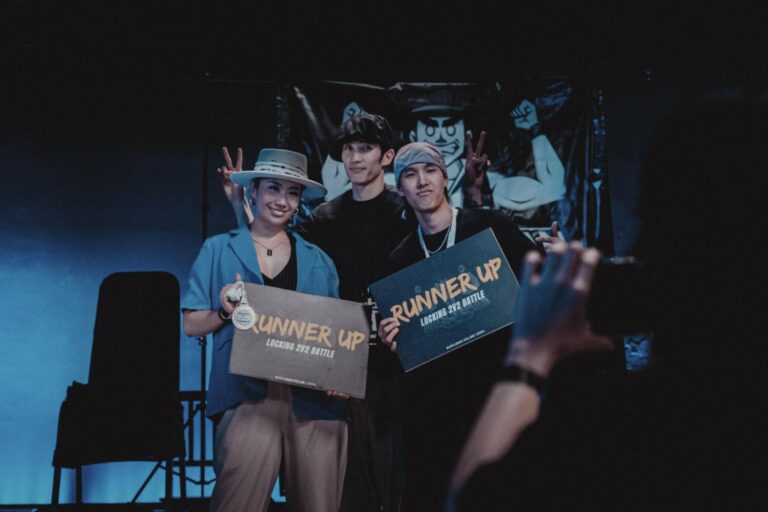
Earlier this year, Singapore played host to an electrifying display of dance prowess at the MUSCLE MAN vol.1 2v2 locking dance competition. While the team from Hong Kong, Jose and Kayi, clinched the championship, the spotlight was also brightly focused on China’s Flowerboogie (Yingying Li) and her partner Ray, who achieved a remarkable runner-up position.

Flowerboogie, a luminous star in the locking dance scene, had already made her mark by winning championships in the United States and the Philippines in 2023. Her participation in the Singapore competition was highly anticipated by dancers and spectators alike. Without a doubt, her exceptional performance and undeniable talent once again underlined her status in the dance community.

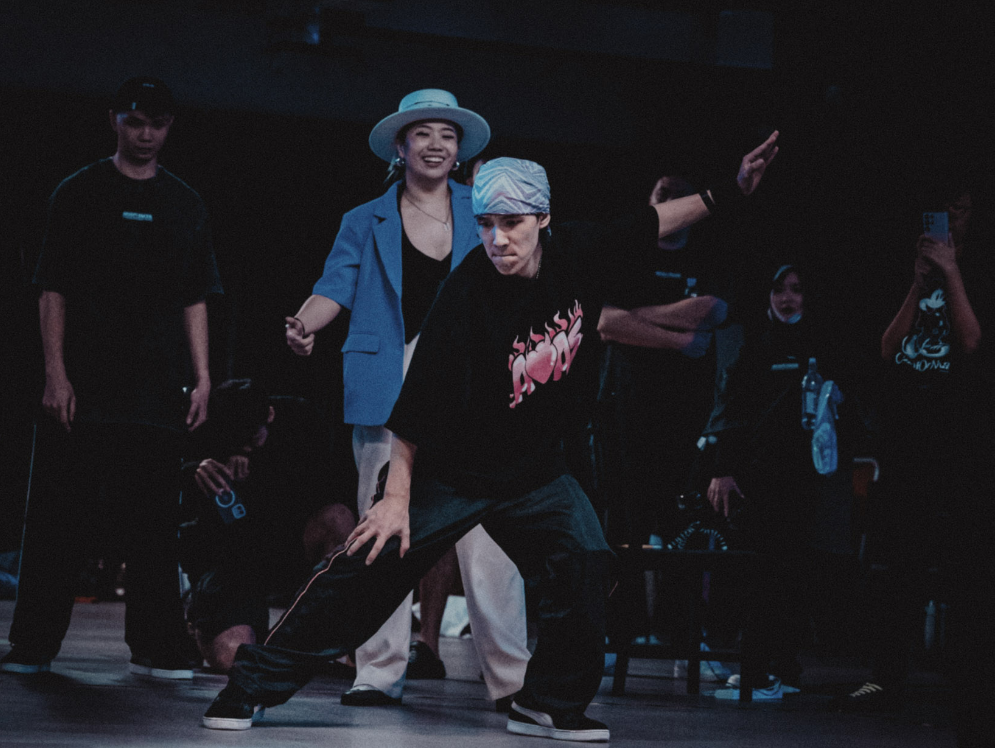
The finals of the competition were particularly enthralling, especially the showdown between Flowerboogie and Jose. Against the backdrop of a rhythmically explosive track, both dancers showcased their exceptional skills. Despite Jose and Kayi securing a tie in this round with their synchronised routines and high completion level, Flowerboogie’s solo performance, following a brief collaboration with Ray, captivated the audience with her unique charm and prowess.

This competition marked the first collaborative effort between Flowerboogie and Ray in a contest setting, with contrasting styles between the two—Ray being known for his strength and explosive power, and Flowerboogie for her smoother, more dance-oriented performances. Despite having only one day for rehearsal and coordination, the synergy and surprise they brought to the stage demonstrated their dedication and talent.

The event was adjudicated by Locking Neal from South Korea, a respected figure in the international dance scene known for his significant achievements. His fair judgment added an extra layer of credibility to the competition.

Flowerboogie and Ray’s exceptional performances garnered widespread admiration and respect from the audience. Their journey in dance is far from over, with each stage challenge marking a step forward in their continuous growth and evolution. The dance community looks forward with great anticipation to more of Flowerboogie’s dazzling displays in the future.

Melodies in the Spring Breeze: A Symphony of Nature and Music at Mary Flagler Cary Hall

0

On the evening of April 10th, the gentle breezes of spring wafted through New York’s Mary Flagler Cary Hall, transforming it into a resonating space where music and nature intertwined. The Sunway Music Foundation, in collaboration with acclaimed violinist Shiqi Luo and pianist Nianyi Huang, presented “Petrichor,” a concert that captured the essence of spring through a meticulously curated selection of pieces, immersing every attendee into a vibrant garden of musical vivacity.

The evening opened with Vivaldi’s “Spring” from The Four Seasons, setting an elegant and rejuvenating tone. This was seamlessly followed by a cascade of evocative compositions: Chopin’s Mazurka in A minor, Op. 67, No. 4; Tchaikovsky’s Song Without Words, Op. 2, No. 3; Mozart’s Divertimento in D major, K. 334, Minuet; and Debussy’s enchanting “Clair de Lune.” Each piece blossomed with its unique charm, echoing the freshness of spring air.

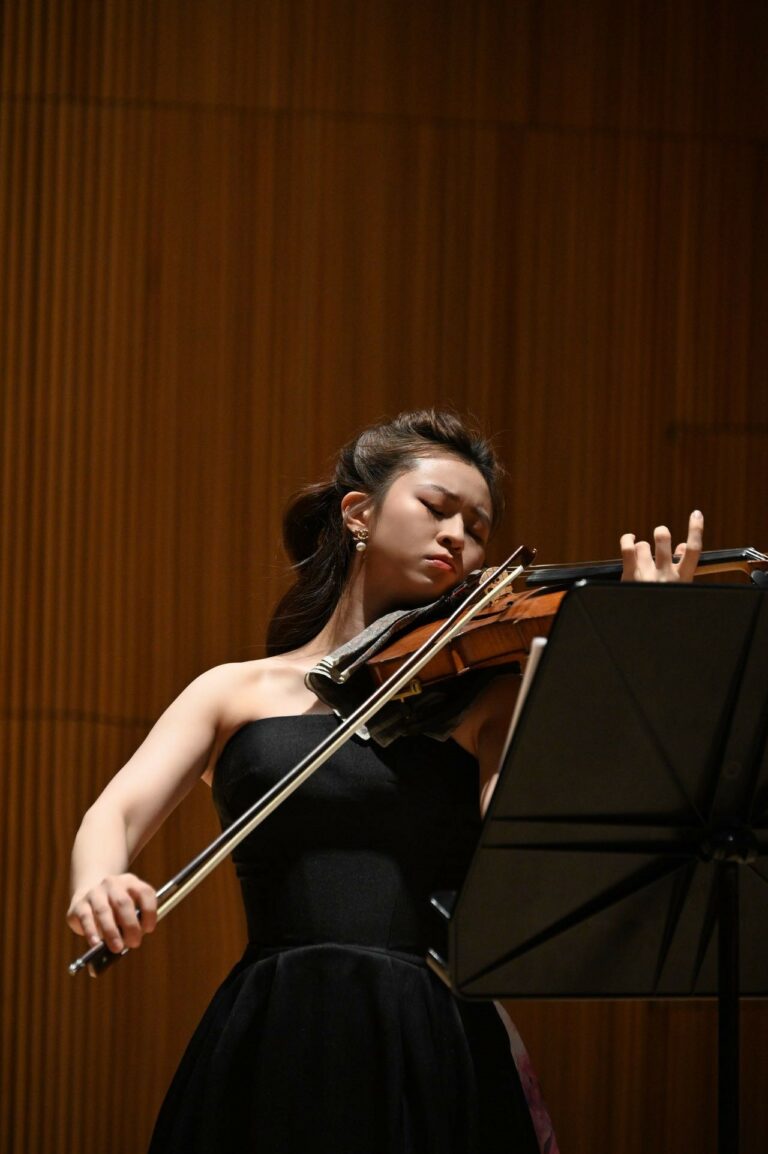
Violinist Shiqi Luo, founder of the Sunway Music Foundation and a globally recognized soloist and chamber musician, was more than just a performer that evening—she was a conduit of sensory and emotional experiences. Since establishing the foundation in 2023, Shiqi has dedicated herself to discovering and nurturing young musical talents, with her efforts now bearing significant fruit in the world of music.

Throughout the concert, Shiqi not only showcased a range of melodiously elegant pieces but also, as the event’s producer, ensured that the essence of spring resonated deeply with each audience member. Her rendition of Mendelssohn’s “Spring Song” was especially poignant, with her flowing violin narrating the unfolding story of spring, culminating the evening with a perfect crescendo.

Pianist Nianyi Huang, a distinguished guest and long-term collaborator with the Sunway Music Foundation, complemented the evening with his exceptional piano skills. Currently pursuing a Doctor of Musical Arts in Music Performance at the Manhattan School of Music under the guidance of renowned pianist and educator Jeffrey Cohen, Huang’s profound artistry and musical insights have established him as a prominent figure on the classical music stage.

The concert not only celebrated the arrival of spring but also showcased the limitless power of music to convey hope and beauty. This springtime symphony allowed every attendee to experience the harmonious resonance between music and nature, highlighting the profound cultural significance and humanitarian values underlying the performances. This event wonderfully illustrated the enduring power of music to inspire and uplift, truly embodying the spirit of the season of renewal.

Opening Spiritual Potential: An All-Inclusive Manual for Prayer in OSRS

On your trip through Gielinor, a battle skill in Old School RuneScape (OSRS) is the key to unlocking spiritual power. To improve your fighting skills, you must become proficient in the art of Prayer, regardless of whether you are a warrior playing for free or a member enjoying the many benefits of pay-to-play. We’ll examine a variety of training techniques in this tutorial, aimed at both free-to-play and pay-to-play gamers.

The Foundations of Prayer: Comprehending the Ability

Many techniques can be used to improve prayer. These include dispersing demonic ashes, burying bones, praying at Ectofuntus with buckets of slime and bonemeal, utilizing altars in the chaotic temple or player-owned residence, and killing reanimated monsters with the Arceuus Spellbook. Your prayer points are reduced when you activate prayers until they are disabled. These prayers influence assault, defense, and strength, which enhances the effectiveness of combat. As you advance in skill, new prayers become available that provide you more battle stats and adaptability.

A Word on Players Who Do Not Pay

The main training method available to free-to-play warriors is burying large bones, but this requires a lot of time and resources. It’s a wise move to finish the “Restless Ghost” quest and stop praying there until you join. As an alternative, killing Hill Giants and either burying their bones or making money off of them offers a way to engage in battle and have a praying experience. It is possible to obtain gold for membership by using third-party sites such as ChicksGold.

Pay-to-Play Methods

The Gilded Altar is a costly yet effective technique that is well-liked by members. This altar offers three and a half times more experience than burying bones, and it has no special criteria. A Gilded Burner can be built by players with level 75 building in their homes, while altars can be used in world 330 by other players. Visit the Remington Portal with indicated bones and coins to maximum experience gain. This somewhat more click-intensive method will result in a significant experience boost.

Reviving Ensouled Heads: A Mystifying Experience

For members looking for a different kind of prayer experience, reanimating ensouled heads provides a choice. At least level 3 Magic, 60% Arceuus House Favor to access spellbooks, and respectable combat stats to take on reanimated monsters are prerequisites. If you cast the reanimation spell close to the dark altar—which is reachable by fairy rings—you’ll find a more economical way than with the Gilded Altar. If they work quickly, players can get about 200 ensouled heads every hour.

Selecting Your Course: Beginning and Progressing

It is recommended that novices begin with the Gilded Altar and proceed to ensouled head reanimation gradually when prerequisites are satisfied. The ensouled head approach gains more traction as you level up magic, increase food supplies, and gather better gear. It’s a calculated process that guarantees effective Prayer skill leveling and fits in with your character’s development.

Conclusion

A powerful fighting ability that necessitates planning and strategy, particularly in the varied OSRS universe. Whether you’re a member exploring the game’s vast possibilities or a free-to-play enthusiast, this guide will provide you with the knowledge to improve your Prayer skill. There are a plethora of experiences available in OSRS, and this tutorial will help you get started. Happy gaming! Don’t be afraid to find and share new techniques while you explore Gielinor.

Video Games as a Form of Art

The debate about whether video games can be considered a legitimate art form has been ongoing for years. As video games evolve, gaining complexity and depth, more people recognize them as entertainment and a severe artistic expression. This article explores the creative aspects of video games, including visual design, music, and storytelling, and discusses how these elements are recognized within traditional art circles.

The Visual Artistry of Video Games

The visual component of games is the most immediately apparent form of artistic expression within the medium. Game graphics have evolved dramatically and this evolution has been seen all cross the board down to King Billy Casinos. From the pixelated characters of the early arcade games to the almost photorealistic environments of the latest releases. Artists and designers spend countless hours creating detailed worlds, characters, and objects designed to be interactive and responsive within the game’s universe.

Games like “Journey” and “The Legend of Zelda: Breath of the Wild” are prime examples of gaming visual art. “Journey,” with its vast, sweeping landscapes and elegant character design, utilizes a distinctive visual style that communicates emotion and story without words. “Breath of the Wild” uses a cel-shaded art style that turns the game into a living painting, where every frame is a breathtaking view capable of evoking a strong sense of place and mood.

Creating these visual elements involves traditional art techniques, including drawing, modeling, and animation, combined with advanced computer graphics technology. The result is a form of visual art that is interactive and immersive in ways that traditional paintings or sculptures can never be.

Musical Composition in Gaming

Music in video games has transcended simple background tunes, becoming a pivotal part of the gaming experience that can enhance the atmosphere and evoke emotional responses. Composers like Koji Kondo, Nobuo Uematsu, and Hans Zimmer have brought significant attention to the craft of composing for video games, producing works that stand on their own as substantial musical compositions.

The interactive nature of video game music, where the composition may change based on player actions, represents a musical art unique to the medium. Games like “Final Fantasy” and “The Elder Scrolls” series have soundtracks celebrated by gamers and classical music enthusiasts. Concerts featuring video game music, such as “Video Games Live,” have gained popularity worldwide, demonstrating the music’s ability to connect with audiences in and out of gaming contexts.

Storytelling and Narrative Design

The narrative depth of video games has also seen significant development. No longer confined to simple plots of rescuing princesses or defeating villains, modern games feature complex narratives and character development traditionally seen in literature and film. Games like “The Last of Us,” “Bioshock Infinite,” and “Red Dead Redemption 2” provide narratives that are rich, emotionally engaging, and full of moral complexities.

Video game storytelling is interactive, requiring the player to participate actively in the narrative and make choices that can alter the story’s outcome. This level of interactivity offers a new form of storytelling, pioneering new techniques and strategies that are only possible within digital games.

Recognition in Traditional Art Circles

Despite their artistic achievements, video games have struggled to gain recognition in traditional art circles. However, this perception is gradually changing. In 2012, the Smithsonian American Art Museum hosted an exhibition titled “The Art of Video Games,” highlighting the evolution of video games as an artistic medium. Moreover, the Museum of Modern Art in New York has added several video games to its architecture and design collection, recognizing their importance as design objects.

Video games are increasingly studied in academic settings, with courses and programs dedicated to exploring the artistic and cultural impacts of gaming. They are analyzed not just for their technological innovations but also for their creative content and how they engage audiences in artistic experiences.

Video games combine visual art, music, and storytelling into a cohesive whole that is more significant than the sum of its parts. As they continue to develop in sophistication and depth, the recognition of video games as a form of art only grows. The unique interactivity of video games sets them apart from other art forms, offering a new way of experiencing and interpreting art. This capability to engage players in dynamic and immersive artistic experiences cements video games as a significant form of modern artistic expression.

As society continues to embrace digital and interactive media, the artistic value of video games is increasingly acknowledged. The conversation about video games as art is not just about what games have been but also what they have the potential to become. By blending technology and traditional art forms, video games offer a new canvas for entertainment and artistic expression that resonates with a global audience.

FAQ: Video Games as a Form of Art

Can video games be considered a legitimate form of art?

Video games can be viewed as a legitimate art form. Like traditional art forms, video games involve creativity in their design and execution, including elements such as visual art, music, and storytelling. The interactivity of video games adds a unique dimension to the artistic experience, engaging players in ways that traditional art forms do not.

What are some examples of video games known for their artistic value?

Several video games are celebrated for their artistic value, including “Journey,” “The Legend of Zelda: Breath of the Wild,” “The Last of Us,” “Shadow of the Colossus,” and “Bioshock Infinite.” These games are known for their exceptional graphics, immersive storytelling, and innovative gameplay that contribute to their overall artistic impact.

How has music contributed to video games being recognized as an art form?

Music in video games has become a crucial element that enhances the gaming experience, similar to how a soundtrack enhances a film. Composers of video game music, such as Nobuo Uematsu and Koji Kondo, have created iconic scores that resonate with players outside the gaming context. Additionally, concerts featuring video game music have helped legitimize the artistic value of gaming compositions.

Are there any institutions that recognize video games as art?

Yes, several prestigious institutions now acknowledge video games as a form of art. Notably, the Smithsonian American Art Museum and the Museum of Modern Art in New York have held exhibitions and included video games in their collections, acknowledging their cultural and artistic significance.

What makes video game storytelling unique compared to other mediums like films or books?

Video game storytelling is unique because it is interactive. Players make decisions that can influence the narrative, leading to multiple endings or varying character developments. This interactivity allows players to become part of the story in a way that is impossible in more passive media forms like films or books.

How do video games use visual art?

Video games use visual art through detailed graphics, character design, and environment creation. Art styles in video games can range from photorealistic to stylized, each chosen to enhance the thematic elements and gameplay experience. The visual aspect of games is not only about aesthetics but also about creating a functional, interactive world.

Why has there been resistance to recognizing video games as an art form?

Resistance to recognizing video games as an art form often stems from misconceptions that video games are solely for entertainment or are primarily aimed at younger audiences. Additionally, the commercial aspect of video games can lead some traditional art critics to view them more as products rather than artistic creations. However, as video games’ cultural impact and artistic ambition continue to grow, these perceptions are gradually changing.

How are video games studied in an academic context?

In academia, video games are studied under various disciplines, including media studies, cultural studies, and game design programs. Scholars examine video games for their narrative techniques, artistic elements, cultural impact, and their role as interactive media. This academic interest further validates video games as a form of creative expression.

Juvederm: Transform Your Look with Med Supply Solutions’ Elite Products

A Leader in Hyaluronic Acid Fillers

Recognized globally for its extensive line of hyaluronic acid dermal fillers, Juvederm, offered by Med Supply Solutions, stands at the forefront of cosmetic treatments designed to combat facial aging. This premier line includes products like Juvederm Voluma XC, Ultra XC, and Ultra Plus, each tailored to meet specific aesthetic needs, from smoothing lines to restoring volume lost due to aging.

The Science Behind Juvederm’s Effectiveness

At the core of Juvederm’s success is its formulation of hyaluronic acid, a naturally occurring substance in the human body known for its ability to retain moisture and add volume. Juvederm fillers are designed with a smooth gel consistency, allowing easy injection and immediate, natural-looking results. These gels are specifically created to integrate into the tissue, enhancing volume and improving skin quality and smoothness over time.

Targeted Treatments for Every Facial Concern

Juvederm’s diverse product range addresses various aesthetic concerns:

  • Juvederm Voluma XC is expertly crafted for cheek augmentation, effectively restoring mid to deep dermis volume.
  • Juvederm Ultra XC and Ultra Plus are perfect for lip augmentation and the correction of perioral lines, offering subtle and striking results.
  • Juvederm Vollure XC and Volbella XC specialise in smoothing moderate to severe facial wrinkles and folds, such as nasolabial folds and marionette lines.

Med Supply Solutions: Ensuring Access to Top-Quality Fillers

Med Supply Solutions offers a dependable source for purchasing Juvederm products, ensuring that healthcare providers can deliver consistent and optimal treatment outcomes. By partnering with reputable manufacturers, Med Supply Solutions guarantees that all fillers are genuine, FDA-approved, and sourced responsibly, providing clinicians and patients with peace of mind regarding the quality and safety of their cosmetic treatments.

Juvederm Injections: A Procedure Tailored for Comfort and Efficacy

The injection process for Juvederm fillers is minimally invasive and typically completed within a single office visit. Before treatment, a properly licensed practitioner will evaluate the patient’s medical history and discuss any previous allergic reactions or severe allergies to ensure suitability for the treatment. During the procedure, Juvederm is carefully injected into the targeted areas using an ultra-fine needle, with the amount and depth of injection tailored to achieve the desired aesthetic outcome.

Emphasizing Safety and Post-Treatment Care

While Juvederm is celebrated for its safety and efficacy, patients are advised to avoid strenuous exercise, extensive sun or heat exposure, and alcoholic beverages for the first 24 hours following treatment to minimize swelling and optimize results. It is also important for patients to report any unusual pain, severe headache, or vision abnormalities to their practitioner immediately, as these could be signs of complications.

Juvederm remains a gold standard in injectable fillers, offering transformative results that rejuvenate and enhance facial features. In the next section, we will delve deeper into Juvederm treatments’ benefits and transformative outcomes and explore how Med Supply Solutions continues supporting aesthetic medicine’s evolving needs with this advanced filler technology.

The Advanced Science of Juvederm

Refining Facial Aesthetics with Juvederm’s Injectable Gels

Juvederm’s suite of HA dermal fillers, particularly the Ultra XC injectable gel, is pivotal in restoring lost volume and adding smoothness to the skin. These injectable gels are meticulously formulated to target moderate to severe facial wrinkles, including smile lines and forehead lines, seamlessly blending into the skin to promote a youthful and vibrant appearance.

Specialized Solutions for Comprehensive Facial Enhancement

Juvederm XC injectable gel is renowned for addressing age-related volume loss, enhancing lip volume, and defining chin contours. The gel’s versatility allows for tailored applications, ranging from subtle lip enhancements to significant volume additions in areas like the cheeks and chin, providing options for both minor touch-ups and major transformations.

Addressing Complex Aesthetic Needs

Juvederm offers solutions beyond typical dermal fillers for those with specific concerns, such as deep smile lines or sagging in the lower face. The Ultra XC and Voluma XC gels are designed to penetrate the mid to deep dermis, effectively restoring volume and firmness to areas affected by severe volume loss. These products are especially beneficial for patients seeking noticeable, long-lasting results without surgical procedures.

Innovations in Injection Techniques and Safety

Juvederm fillers are administered through advanced skin injection procedures that prioritize patient comfort and precise results. Each injection site is carefully selected and treated to ensure optimal gel integration, enhancing facial contours and maintaining natural facial expressions. The technology behind Juvederm also includes safeguards against severe allergic reactions, with formulations free from gram-positive bacterial proteins, which significantly reduces the risk of adverse immune responses.

Overcoming Challenges with Juvederm

While Juvederm is generally well-tolerated, patients must discuss any history of multiple severe allergies or skin conditions with their healthcare provider before treatment. Proper assessment and technique are essential to avoid complications such as permanent scarring or skin sores. Furthermore, Juvederm’s unique properties ensure that the filler remains effective even in highly mobile face areas, preventing unnatural stiffness and promoting lasting skin smoothness.

Juvederm: A Trusted Name in Cosmetic Treatments

As a leading product in aesthetic medicine, Juvederm continues to set high standards for dermal fillers. Med Supply Solutions offers a comprehensive range of Juvederm products, ensuring practitioners can provide customized, effective treatments. By stocking Juvederm, Med Supply Solutions helps clinics and medical professionals keep up with the latest advancements in cosmetic treatments, providing their patients with safe, reliable, and cutting-edge solutions.

Frequently Asked Questions

How much does 1 syringe of JUVÉDERM cost?

The cost of one syringe of JUVÉDERM typically ranges from $600 to $1,000, depending on the specific product within the JUVÉDERM line and the geographical location of the clinic.

How long do JUVÉDERM fillers last?

JUVÉDERM fillers can last 6 months to over a year, depending on the specific HA dermal filler used and the individual’s skin type and lifestyle.

Is JUVÉDERM better than Botox?

JUVÉDERM and Botox serve different purposes. JUVÉDERM is a dermal filler used to add volume and smooth deep folds, while Botox is used primarily to relax facial muscles to reduce the appearance of wrinkles, making them complementary rather than competitive treatments.

What does JUVÉDERM do to your face?

JUVÉDERM adds volume to facial tissues, reduces wrinkles, enhances lips, and restores youthful contours to the face through minimally invasive facial injections, providing a smoother and more refreshed appearance.