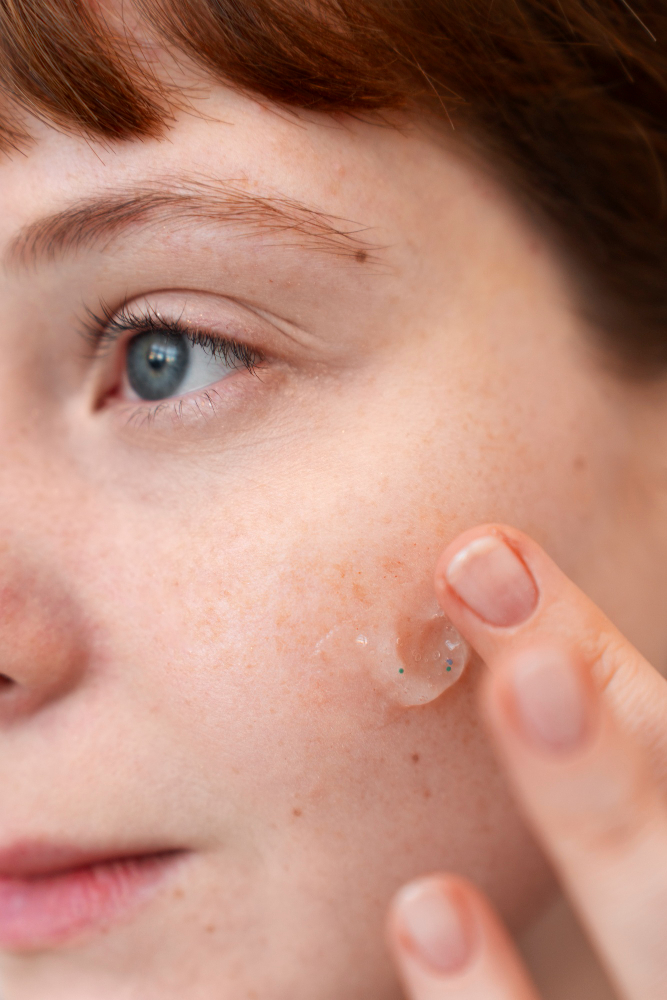
Dry patches rarely stay gone just because they’ve been treated once. The surface clears, the flaking settles, and it feels like things are back to normal. Then the same area starts to feel tight again, usually without much warning.
That pattern doesn’t come from the treatment failing. It comes from how the skin is handled after it improves. What worked to clear the patch isn’t always what keeps it from coming back.
The Area Stays Slightly Off Even After It Looks Fine
Once a patch has formed, that spot doesn’t behave exactly like the rest of the skin. It tends to lose moisture faster and react more easily, even when it looks smooth again.
This is where routines often shift too quickly. The heavier products get removed, and everything goes back to baseline. The skin looks ready, but it hasn’t fully settled yet.
Keeping a bit of support in place for longer helps prevent that early return.
Moisture Needs to Stay in the Routine
After the patch clears, hydration tends to become less consistent. It feels unnecessary when the skin looks normal.
That’s usually when dryness starts building again. A steady layer of moisture keeps that from happening, especially in areas that tend to dry out first.
Using something likecherry almond lotion regularly keeps those spots from slipping back without making the routine feel heavy or overdone.
Cleansing Pressure Adds Up Over Time
Dry patches often return in the same places because those areas take more friction than others. It’s not always noticeable while it’s happening.
Rubbing too firmly or even drying the skin roughly can affect those spots more than the rest of the face.
Softening that step doesn’t feel like a major change, but it reduces how often those areas react.
Environmental Changes Build Slowly
Dry air, indoor heating, and long hours in controlled environments don’t always show immediate effects. The skin adjusts at first, then starts to lose moisture gradually.
That’s why dryness can feel like it comes back out of nowhere. The cause has been building for days.
Slightly increasing hydration during those periods helps keep the skin from reaching that point.
Keeping a Few Habits in Place Makes the Difference
Instead of reacting once dryness appears, it helps to keep a few things consistent:
Apply moisturizer daily, even when the skin feels balanced
Be gentler with areas that have dried out before
Avoid adding or switching products too often
Pat the skin dry rather than rubbing it
Adjust hydration when the environment changes
These don’t require much effort, but they keep the skin from slipping back.
Product Changes Can Reset Progress
Trying new products can interrupt what’s already working. Even when the skin looks fine, it’s still adjusting after the patch clears.
Frequent changes make it harder to maintain that balance. The skin has to readjust each time, which can bring dryness back sooner.
Keeping things consistent for a while tends to hold results longer.
Certain Spots Need Ongoing Attention
Areas that have dried out once tend to do it again. They need a bit more awareness.
Applying slightly more moisture to those spots or checking how they respond over time helps keep them stable.
Treating everything the same way doesn’t always work once patterns start forming.
It Comes Down to What Happens After the Fix
Preventing dry patches from returning isn’t about finding a stronger treatment. It’s about what happens once the skin looks better.
Consistent moisture allows gentle cleansing and lets you enjoy routines that don’t shift too quickly. As a result, those patches don’t come back as often.
It’s a quieter approach, but it tends to hold better than repeating the same fix each time dryness shows up again.
In the fashion world, golfcore is still on the rise. What began as a subtle nod to the relaxed, off-duty elegance of icons like Princess Diana, this luxury aesthetic has evolved into a full-blown aesthetic, infiltrating street style, high fashion, and athletic wear.
This trend has given rise to a new wave of brands looking to redefine what it means to dress for the green. Among them, Los Angeles-based curated retailer Erthe Golf is making a distinct mark, not by manufacturing apparel, but by mastering the art of curation and creative direction. At the helm of this vision is Yuanchao Zhang, a multidisciplinary designer whose innovative approach is reshaping the digital and cultural experience of golf fashion and the rise of golfcore.
Zhang, who serves as the Art Director for Erthe Golf, is at the intersection of sport, style, and technology with a background in Web3 communities and a passion for culture. He shares his insights on the evolution of golf fashion, the identity of Erthe, and the groundbreaking digital experiences he is crafting for the modern consumer.
The Genesis of Golfcore: From Nostalgia to Evolution
The rise of golf-inspired fashion didn’t happen in a vacuum. It was part of a larger cultural reset, where comfort, heritage, and a renewed interest in classic silhouettes took center stage. Zhang pinpointed the shift to the 2021 zeitgeist, a moment awash in 1990s nostalgia.
“I started to notice golf fashion gaining real traction around 2021,” Zhang explains. “It began when people revisited 1990s British casual style, especially Princess Diana’s off-duty looks, and realized how effortless and versatile those silhouettes were. At the same time, golf was being reinterpreted across design, music, and lifestyle circles.”
For Zhang, this wasn’t just about aesthetics; it was a shift in mentality. He saw how streetwear and performance wear began to blend with classic tailoring, creating a new aesthetic space where function met elegance. This fusion signaled a departure from golf’s historically exclusive image. “What caught my attention was the change in attitude,” he notes. “Golfwear was no longer about exclusivity but about focus, precision, and quiet confidence.”
This observation became the seed for Erthe. For Zhang, the movement is less about a simple nostalgic callback and more about a cultural evolution. “It reflects how people today balance discipline with creativity, structure with freedom,” he says. “That idea became the foundation for Erthe.”
Erthe: A Curation Mindset in a Saturated Market
In a Direct to Consumer market now flooded with tenniscore, golfcore, and other sports-inspired lifestyle brands, standing out requires more than just a preppy logo. Erthe’s secret weapon is that it isn’t a traditional apparel label, at all. Rather, it is a meticulously curated multi-brand store, a digital concept boutique built around a specific philosophy of style, offering various high profile brands.
“We saw that as golf fashion grew in popularity, many products started to look the same, focused only on performance or old money aesthetics,” Zhang says. “Erthe wants to redefine that space through a styling mindset.”
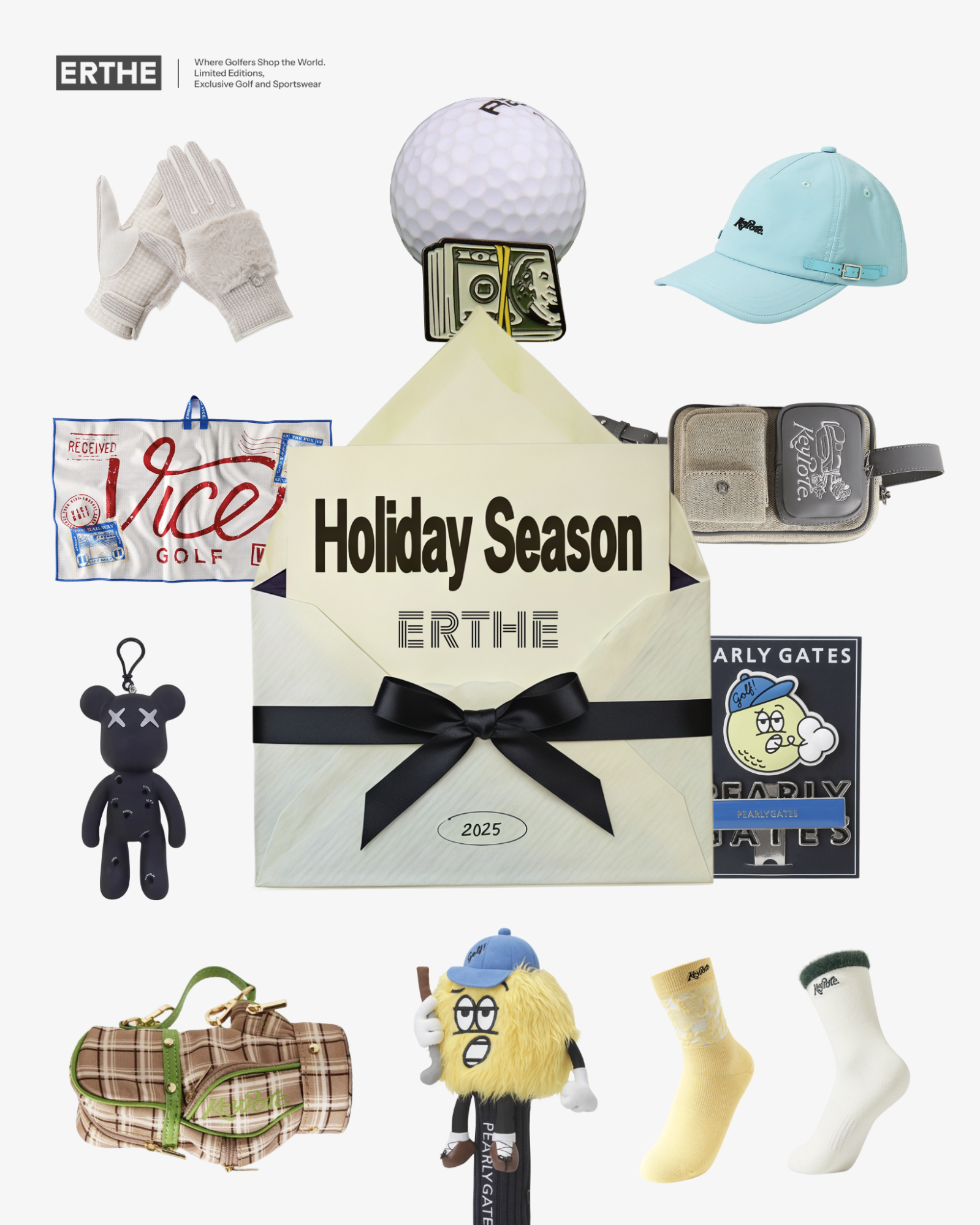
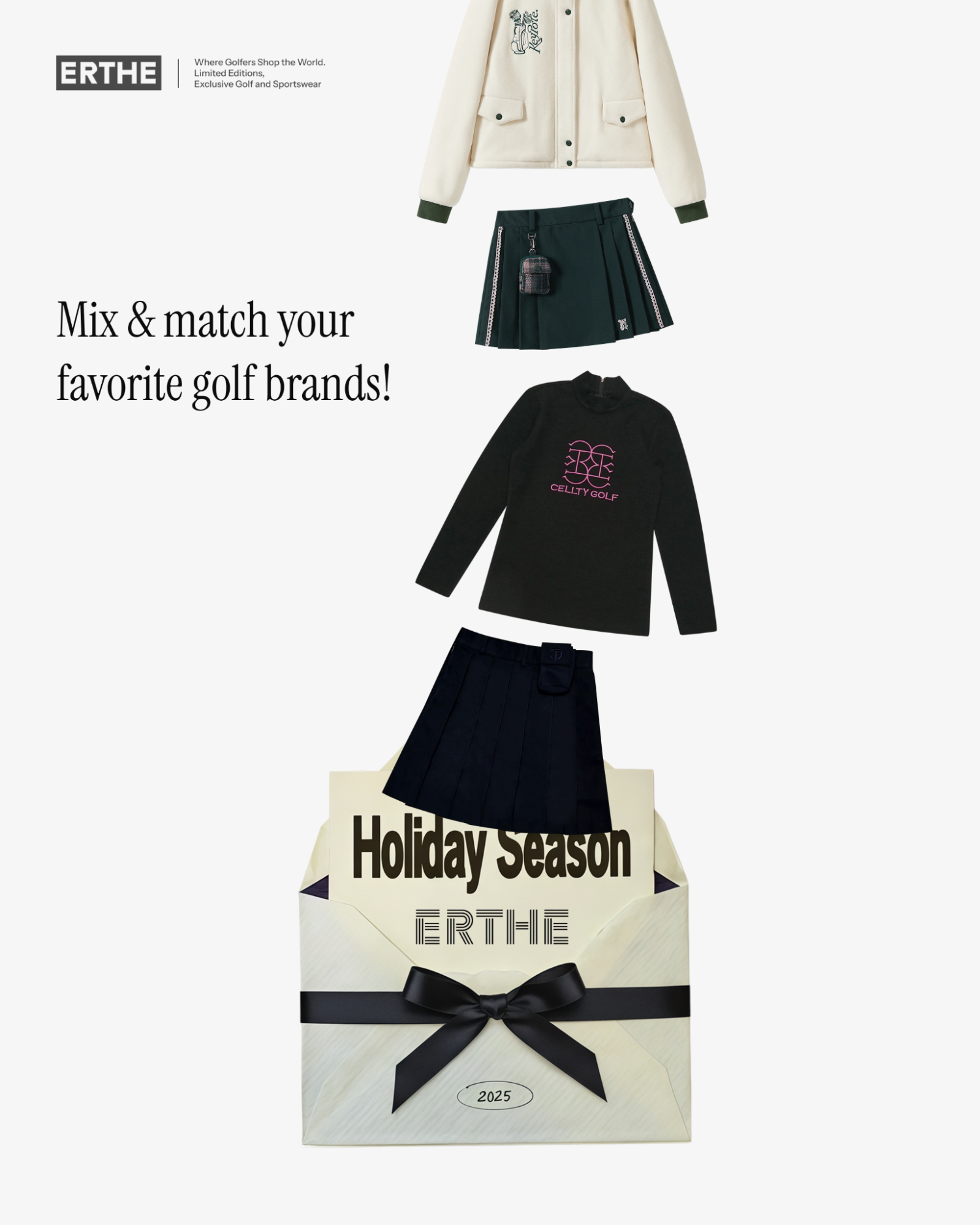
Instead of designing its own line, Erthe curates pieces from a global selection of independent and performance-driven designers, including Keypote, Head Golf, Lend Golf, WAAC, Lanvin Blanc, and Golden Bear. The goal is to bring individuality and modernity back to golfwear. Each selection is made with versatility in mind, designed to flow naturally between the golf course and daily life.
“You can wear golfcore to brunch, to work, or to a night event without it feeling out of place,” Zhang emphasizes. This philosophy is central to the brand’s mission, articulated by Erthe founder Ellie: “Players define the game, Erthe inspires individuality.”
The brand seeks to break traditional confines, providing golfers and sports enthusiasts with more options to express their personality, proving that performance can indeed feel elevated.
The Creative Director’s Vision: A Digital Concept Store
As Art Director, Zhang is responsible for translating Erthe’s philosophy into a tangible, or rather, digital, experience; one that is intuitive, aesthetically pleasing and easy to navigate. The Erthe website is not a mere e-commerce platform; it is an extension of the brand’s curated identity.
“The website is built to reflect how Erthe curates and redefines golf culture through design,” Zhang states. “It is structured like a digital concept store, where each page feels purposeful and composed.”
The design focuses on blending product discovery with styling inspiration. Zhang utilizes his expertise in innovative technology, employing AI visualization tools to show customers how pieces can be worn, layered, and combined. This moves beyond static product shots into a more intuitive, dynamic shopping experience. “The layout stays simple and direct, with clean grids, soft transitions, and calm tones that keep attention on the products,” he adds. “Our goal is to let people understand Erthe’s taste and styling logic while shopping in a way that feels natural and personal.”
This vision is also reflected in Erthe’s campaign shoots, which function as styling references rather than traditional advertisements. The campaigns are “real and relaxed,” showcasing how different looks—from Minimalist and Clean to Sporty and Performance or Classic and Preppy—can be achieved using pieces from Erthe’s selection. By focusing on light, movement, and texture, these visual narratives demonstrate how golfcore can adapt to different personalities and settings, especially for someone shopping for the right golfcore look.
Influences and Inspirations: The Legacy of Self-Expression
Zhang’s creative approach is deeply informed by broader cultural movements, particularly one he identifies as being led by artist A$AP Rocky. This movement, which saw formalwear and luxury fashion merge with street culture, fundamentally changed the rules of style.
“He once said that coming from the bottom, dressing well was one of the few ways he could claim dignity,” Zhang explains. “That idea reshaped how people think about style. It turned fashion into a form of self-expression rather than a symbol of hierarchy.”
Zhang sees a direct parallel between this ethos and the modern golfcore movement. “I see golfcore as part of that same evolution, transforming something once traditional into something open and personal,” he explains. “What attracts me is this balance between discipline and attitude, function and culture, where fashion feels both effortless and meaningful.”
The Future is Now: AI and Personalized Style in 2026
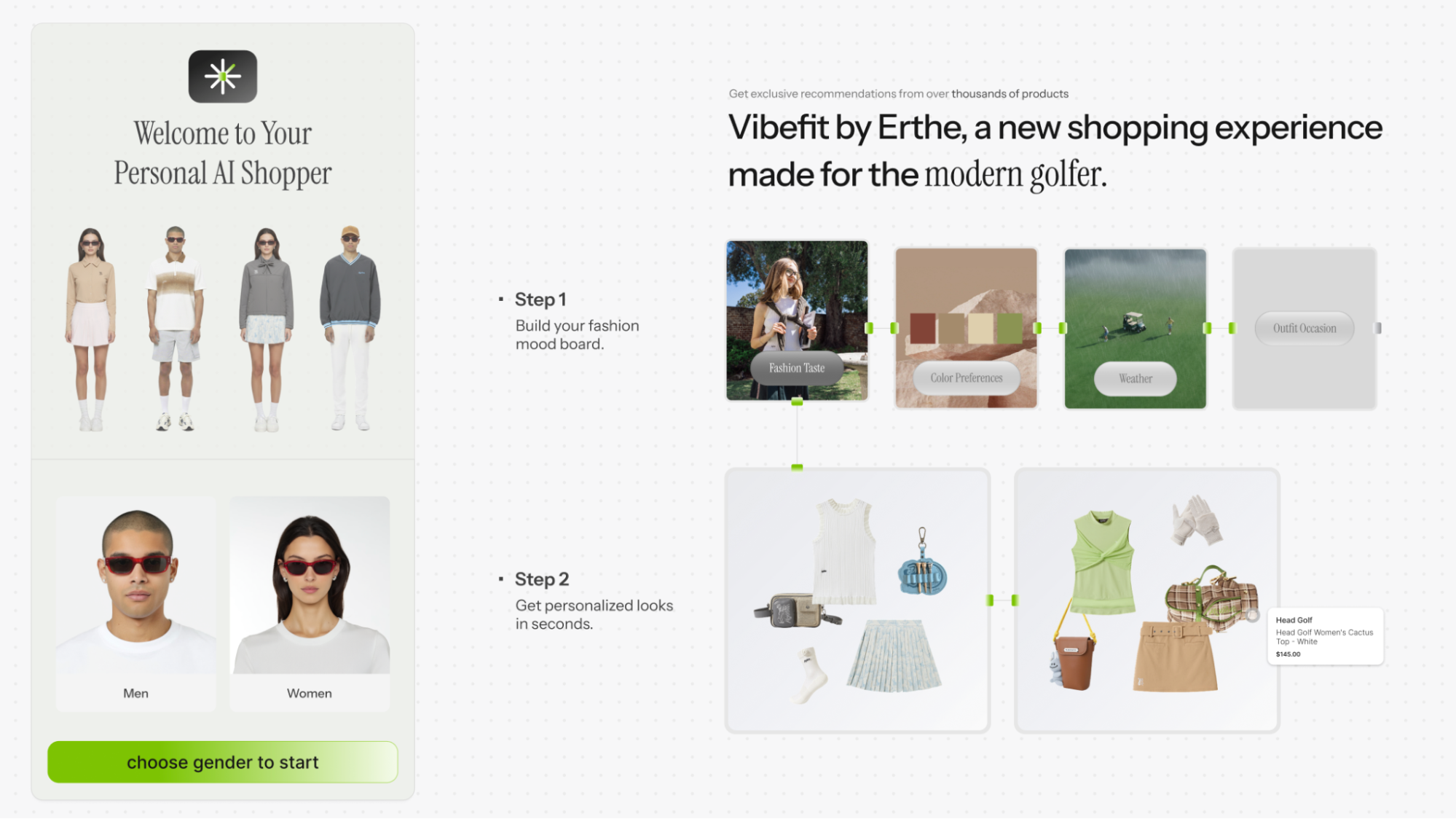
Perhaps the most ambitious aspect of Zhang’s work at Erthe is his push to integrate cutting-edge technology directly into the customer journey. He is currently developing an AI stylist experience designed to transform the online store into an interactive styling space.
“Our next step is to build an AI stylist experience on the website,” Zhang reveals. “It will help customers create outfits based on their style preferences and mood. By analyzing colors, silhouettes, and textures, the system can suggest combinations from our curated selection.”
This initiative is the culmination of the brand’s “AI creative web experience campaign,” an interactive styling tool Zhang describes as “playful and intuitive, like building your own style map.”
Here’s how it works: Customers answer a short series of visual questions about their preferences—color palette, fit, pattern, weather, and activity level. Each answer generates a visual card, forming a personalized moodboard in real-time. The system then analyzes these choices, considering factors like climate and occasion, to recommend full outfit combinations from Erthe’s curated inventory. It makes shopping easier and much faster.
“The goal is to make shopping more creative, personal, and visually guided,” Zhang says. “Instead of scrolling through endless products, users see how different pieces connect to their taste and lifestyle.”
What’s Next for Erthe?
With a strong brand identity, a clear creative vision, and a pioneering approach to digital retail, Erthe Golf is well-positioned at the forefront of the golf fashion movement. Yuanchao Zhang’s work exemplifies how a creative director can do more than design; they can architect an entire ecosystem of culture, community, and commerce.
As golf continues to shed its staid reputation and embrace a new generation of players who value style as much as sport, brands like Erthe will lead the way. By blending the discipline of the game with the freedom of personal expression, and using technology to make that blend accessible to all, Zhang and the Erthe team are not just participating in the rise of golfcore—they are actively defining its future.
For more information on Erthe Golf, visit their website at erthe.com.
If you’re on TikTok, you’ve met a tradwife. Short for ‘traditional wife,’ code for the fantasy of total domestic control. You’ll never catch her working, but you’ll see her cooking, cleaning, gardening, mothering, smiling, possibly passive-aggressive, and somehow convincing strangers online that cleaning counters is peak feminine achievement. Now you have three types of people. The nostalgic mourners, the freedom embracers, and the eternally baffled, those who simply cannot fathom getting serotonin from a day spent feeding sourdough starter. Fashion, of course, rarely stays neutral.
I’ve seen Nara Smith chopping up greens I didn’t even know existed, and making bubblegum from scratch, all while wearing Schiaparelli. Which, I don’t necesarilly love, but I don’t hate either. If anything, I find it kind of funny. What I do hate, though, is that this contemporary, highly romanticized 1940s woman is being shoved down our throats. A creeping sense of horror comes over me every single time without fail, watching young girls plead with the internet to explain why anyone would ever quit playing house. I fall squarely into the second category, my beloved freedom embracers, as long as everything’s a choice. Women have spent far too long without it. Not because every household was a tyrannical patriarchy, but because laws, banks, and landlords made sure independence was just out of reach. Education, jobs, property, everything came with strings attached. And even when the choice technically existed, society made sure most women felt it didn’t. And yes, I knead bagels too.
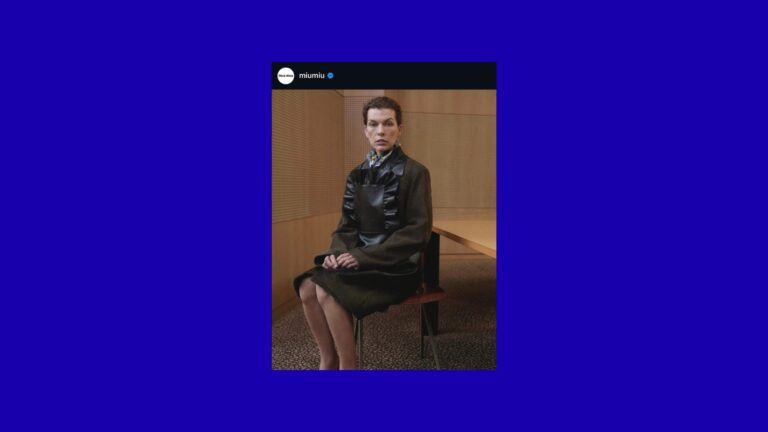
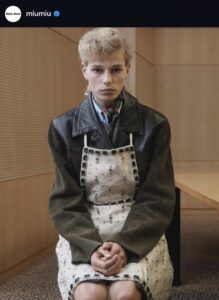
Now, she’s not oppressed, it’s just couture. What started in the kitchen has taken over runways, red carpets, and is slowly bleeding into the street. Miu Miu Spring 2026 played with aprons, Emma Chamberlain showed up at the Oscars afterparty with Valentino and washing-the-dishes-yellow gloves on, a year after Julia Fox wore real washing-the-dishes-yellow gloves to the Grammys. Of course, material carries meaning. That fantasy of purity doesn’t survive contact with latex. You may escape the gloves and aprons, but not a 50s inspired silhouette. Fashion weeks are flooded with Peter Pan collars, pearl necklaces, cinched waists, and full skirts. Even Carrie Bradshaw wore a puffy, floral, prairie dress in ‘And Just Like That..’ (not for the faint of heart).
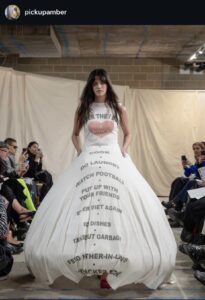
Of course, not everyone is wearing this with a straight face. Some lean into it with something far sharper, like two CSM graduates. Amber Pickup sent out a printed dress bearing a perfectly worded refusal: “After the I do’s, I don’t cook, do laundry, put up with your friends, ever diet again, do dishes, take out the garbage, feed mother-in-laws, make packed lunches, or iron your shirts.” Lydia Chelovska, meanwhile, took the classic shirt dress and fused it with a literal vacuum cleaner. Ashley Williams sent out “don’t worry, dinner’s ready” silhouettes creased, crumpled, and far from composed, on the Spring 2026 runway.
A sourdough starter isn’t the problem. Dressing like you’re feeding it on city streets might be. Trend, if we must call it that, aside, this isn’t the real world. It’s styling. You can buy into the look, just remember, the life it references was never that simple. The fantasy being sold though, is precisely the opposite.
Despite the headlines, Stefano Gabbana hasn’t quit the brand he co-founded in 1985. Dolce & Gabbana, the label built on a Mediterranean fantasy of sun-soaked excess, overstyled masculinity, ornamental women, and money smoothing out the awkward bits. He stepped down as chairman, dramatic wording for what is mostly fewer meetings, a steady 40% stake, and definitely not an exit.
“As part of a natural evolution of its organizational structure and governance, the Dolce & Gabbana Group confirms that Stefano Gabbana has tendered his resignation, effective as of 1 January 2026, from his positions within Dolce & Gabbana Holding Srl, Dolce & Gabbana Trademarks Srl, and Dolce & Gabbana Srl,” as the company put it on Friday. The change is part of an internal reshuffle, with Domenico Dolce’s brother and chief executive, Alfonso Dolce, ending up in the chair. Talks with banks over nearly €450m in debt are being handled with help from Rothschild & Co, after a temporary waiver kept things moving. Gabbana is said to be reviewing his 40% stake, while former Gucci CEO Stefano Cantino enters management as part of the ongoing restructure. Which, honestly, is not where things get interesting.
Money might not be their trump card, but Dolce & Gabbana has never struggled with consistency when it comes to a notorious public image. Off the top of my head, I go back two decades, when a Spring/Summer 2007 ad had an uncomfortable woman pinned down to the ground while a group of men gathered around, sexual violence, repackaged as fashion at the headquarters. Not everyone bought it, governments, thankfully, weren’t impressed. In 2015, the duo referred to IVF babies as “synthetic babies”, while throwing in comments against queer marriages. A year later, Spring/Summer 2016 introduced the “slave sandals,” that quickly became the “decorative flat sandals in napa leather with pompoms.” And then there’s 2018, no shortage of material there either. A Shanghai campaign showed a Chinese model awkwardly eating Italian food with chopsticks, which didn’t exactly land as cultural appreciation. After the backlash, leaked DMs had Gabbana comparing China to a poop emoji, quickly followed by the hacked account excuse. Might’ve been the same one that called Selena Gomez openly “ugly” on Instagram earlier that year. If anything, it’s been consistent.
A dog that barks at night can disrupt sleep and create stress in the home, and many owners feel unsure about how to stop the habit. Nighttime noise often links to anxiety, lack of routine, or excess energy, so a clear plan helps restore peace and order.
This article explains three simple methods that help reduce nighttime barking and support calm, quiet nights. It guides dog owners to build a steady bedtime routine, apply positive training, and shape a calm sleep space so the dog feels secure and settled after dark.
Establish a consistent bedtime routine
A clear bedtime routine helps a dog feel safe and settled at night. Dogs rely on patterns, so a set schedule lowers stress and reduces sudden barking. Therefore, owners should choose a fixed time for the last walk, feeding, and bathroom break.
After the final walk, the home should shift into a calm state with dim lights and low noise. Soft music or quiet time in a favorite resting spot can signal that the day has ended
Consistency matters more than complexity. The same short steps each night, such as a brief play session followed by water removal and a calm cue like “bed,” teach the dog what to expect next. As a result, the dog relaxes faster and reacts less to outside sounds.
Owners should also create a stable sleep space. A crate or dog bed placed in a quiet area away from windows limits visual triggers that may cause barking. However, the space should not feel isolated, since many dogs rest better near family members.
Over time, this steady routine builds trust and reduces anxiety that often drives nighttime barking. The dog learns that nighttime brings rest, not alert duty, and that predictability replaces tension.
Use calming products with natural ingredients
Some owners also add a dog pheromone collar to reduce anxiety as part of the nighttime routine when barking links to stress or separation discomfort. These collars release calming pheromones continuously, helping the dog feel secure throughout the night without requiring extra interaction from the owner. Because the calming signal remains active while the dog sleeps, it can reduce restlessness and lower reactions to outside noises that often trigger barking. When combined with a predictable bedtime schedule and a comfortable sleep area, this simple tool can reinforce relaxation and support quieter nights over time.
In addition to pheromone collars, calming sprays or diffusers placed near the dog’s bed can create a relaxing scent environment, while anxiety wraps or calming vests apply gentle pressure that helps some dogs settle more quickly. Long-lasting chew toys designed for relaxation can also redirect nervous energy before bedtime, giving the dog a calming activity as the household winds down. Some owners introduce orthopedic or weighted dog beds that provide extra comfort and a sense of security during rest.
When combined with a predictable bedtime schedule and a comfortable sleep area, these supportive tools can reinforce relaxation and help dogs transition into quiet, uninterrupted sleep more easily over time.
Use positive reinforcement training
Positive reinforcement teaches a dog that quiet behavior leads to rewards. Instead of scold or shouting, the owner rewards the dog each time it stays calm and silent. As a result, the dog links silence with something pleasant.
First, the owner should teach a clear “quiet” command during the day. He or she says the cue in a calm voice, then rewards the dog as soon as it stops barking. Short, daily practice builds a strong habit, and the dog begins to understand what the word means.
At night, the same method applies. If the dog barks, the owner waits for a brief pause, then gives praise or a small treat. This response shows the dog that silence brings attention, while noise does not.
Consistency matters because mixed signals confuse dogs. If a person reacts with anger one night and offers comfort the next, the dog cannot predict the outcome. However, steady and calm responses help the dog feel secure and reduce the urge to bark for attention.
Owners should also avoid reward by mistake. For example, if the dog barks and the owner rushes in with petting or play, the dog may repeat the behavior. Instead, the owner should enter the room only after the dog grows quiet, then offer praise.
Over time, the dog learns that nighttime is for rest, not noise. Clear cues, calm reactions, and steady rewards shape better habits and lead to quieter nights.
Create a calm environment with soothing sounds
Nighttime noise often triggers alert behavior in dogs, so a calm sound environment can reduce sudden barking. Soft background audio helps mask sharp sounds such as car doors, footsteps, or distant voices. As a result, the dog reacts less to small changes in the home or outside.
White noise machines work by producing a steady sound that covers unpredictable noise. This steady output reduces the contrast between silence and sudden sound, which often startles a dog. In addition, many devices offer gentle nature sounds or low, steady hums that support relaxation without overstimulation.
Some owners also use soft music designed for pets. Slow-tempo music with simple patterns can lower arousal levels and create a stable routine before bed. The dog begins to link that sound with rest, and this link can shape calmer behavior over time.
Volume matters, so keep the sound low and consistent rather than loud. Place the machine near the dog’s sleep area, but not too close to the ears. Therefore, the dog hears a smooth background tone that blends into the room instead of a sharp source of noise.
Use the same sound each night to build a clear routine. Predictable cues help the dog settle faster, and a steady sound can reduce the urge to react to every small disturbance.
Conclusion
Nighttime noise often stems from boredom, anxiety, or medical issues, so owners must identify the cause before they act. Then they can apply three clear methods: increase daily exercise and mental work, teach a quiet cue with rewards, and adjust the sleep space to limit noise and stress.
Consistent routines and calm responses help the dog learn which behavior earns attention and which does not. If the problem persists, a veterinarian can rule out pain or age-related decline and guide next steps.
Your sex drive depends more on your hormones than you might think. Testosterone, estrogen, and other chemical messengers work together to control desire, performance, and satisfaction. However, stress, poor sleep, and bad food choices can throw these hormones off balance and reduce libido.
Male hormones affect sexual desire in direct ways, and low testosterone often leads to reduced interest in sex, fatigue, and performance problems. The good news is that natural methods can help restore balance without relying on medications. Simple changes to daily habits make a real difference in how the body produces and uses hormones.
The connection between hormones and sex drive is clear. Cortisol levels rise with stress and lower testosterone production. Poor diet choices disrupt hormone creation. Lack of exercise reduces the body’s ability to maintain healthy levels. This article explains how these hormones work and provides practical steps to balance them through lifestyle adjustments.
Understanding Male Hormones and Libido
Male sexual desire relies on several hormones that work together to maintain a healthy sex drive. These chemical messengers control everything from desire to physical performance, and even small shifts can affect confidence and intimacy.
How Hormonal Imbalance Impacts Male Sexual Health
Hormonal imbalances create a range of sexual health challenges. Low testosterone leads to reduced desire, difficulty achieving erections, and decreased confidence in intimate situations.
When cortisol stays elevated for extended periods, it actively blocks testosterone production. This means chronic stress doesn’t just affect mental health but also directly damages physical and sexual function. Men often notice they feel too tired or distracted for intimacy.
Imbalanced hormones also affect physical performance. Blood flow decreases, making it harder to achieve and maintain erections. Energy levels drop significantly, reducing stamina for physical activity of all types.
The psychological impact can be just as severe as the physical symptoms. Men may experience anxiety about performance, which further increases cortisol and worsens the problem. Depression and mood changes often accompany hormonal shifts.
Natural supplements like Spartan Alpha Ignite and others support by combining ingredients that target multiple aspects of hormonal health. These formulas typically work over six to eight weeks as the body responds to the natural compounds.
Key Hormones That Influence Libido
Testosterone serves as the primary hormone behind male sexual desire. This hormone peaks in early adulthood and gradually declines with age. Men with low testosterone often notice reduced interest in sex, decreased energy, and difficulty maintaining muscle mass.
Dopamine acts as a neurotransmitter that creates feelings of pleasure and motivation. The brain releases this chemical during sexual activity and anticipation. Higher dopamine levels increase sexual interest, while lower levels can reduce drive and satisfaction.
Cortisol is the body’s main stress hormone. Chronic stress keeps cortisol levels elevated, which directly suppresses testosterone production. This creates a cycle where stress leads to hormone imbalance, further reducing libido and energy.
Thyroid hormones regulate metabolism and energy throughout the body. An underactive thyroid slows down bodily functions, including sexual desire. Men with thyroid issues often report fatigue and reduced interest in intimacy.
Serotonin helps regulate mood and emotional balance. While this neurotransmitter stabilizes mood, excessively high levels can actually dampen sexual desire. Certain medications that increase serotonin may have this side effect.
Common Causes of Hormonal Changes
Age represents the most common cause of declining testosterone. Men typically lose about one percent of their testosterone each year after age 30. This gradual decline affects most men but impacts each person differently.
Poor sleep disrupts hormone production significantly. The body produces most testosterone during deep sleep stages. Men who consistently sleep less than seven hours face lower testosterone levels and higher cortisol.
Diet plays a major role in hormone health. Diets high in processed foods and sugar increase inflammation and reduce testosterone. Deficiencies in zinc, vitamin D, and healthy fats impair hormone production.
Lack of physical activity leads to multiple hormonal problems. Exercise stimulates testosterone production and helps reduce excess cortisol. Sedentary lifestyles contribute to weight gain, which further disrupts hormone balance.
Chronic health conditions affect hormones in various ways. Diabetes, obesity, and heart disease all correlate with lower testosterone. Medications for these conditions may also have side effects that impact libido.
Excessive alcohol consumption lowers testosterone and increases estrogen in men. Regular heavy drinking damages the cells that produce testosterone in the testes. Even moderate alcohol can affect hormone levels over time.
Exposure to environmental toxins and endocrine disruptors can interfere with hormone production. Chemicals in plastics, pesticides, and personal care products may mimic or block natural hormones in the body.
Natural Ways to Balance Hormones and Support Male Libido
Men can improve hormone balance through targeted lifestyle changes, smart food choices, stress management, and regular exercise. These methods work together to support testosterone production and regulate other key hormones that affect sexual desire.
Lifestyle Adjustments for Hormonal Health
Sleep quality directly affects testosterone production. Men who sleep less than six hours per night often have testosterone levels up to 15% lower than those who get seven to eight hours. The body produces most of its testosterone during deep sleep, so consistent sleep patterns matter more than occasional long nights.
Alcohol consumption disrupts the endocrine system. Moderate to heavy drinkers experience reduced testosterone and increased estrogen levels. Limiting alcohol to one or two drinks per day helps maintain better hormone balance.
Key lifestyle changes include:
Sleep seven to eight hours nightly
Reduce alcohol intake
Avoid exposure to endocrine disruptors in plastics
Maintain consistent daily routines
Environmental toxins found in certain plastics and chemicals can act like estrogen in the body. Men should minimize contact with BPA-containing products and choose glass or stainless steel containers instead.
Nutritional Strategies for Optimizing Hormone Levels
Healthy fats support hormone production. Testosterone is made from cholesterol, so diets too low in fat can reduce hormone levels. Sources like olive oil, avocados, and fatty fish provide the raw materials the body needs.
Zinc and vitamin D are essential for testosterone production. Oysters, beef, and pumpkin seeds offer high zinc content. Sun exposure or supplements help maintain adequate vitamin D levels, as studies show men with sufficient vitamin D have higher testosterone.
Cruciferous vegetables like broccoli and cauliflower contain compounds that help the body process excess estrogen. This natural detoxification process supports a better testosterone-to-estrogen ratio.
Foods that support hormone balance:
Grass-fed beef and other quality proteins
Oysters and other shellfish
Dark leafy greens
Nuts and seeds
Citrus fruits
Processed foods and refined sugars cause insulin spikes. These spikes can lower testosterone over time and contribute to hormonal imbalance.
Stress Reduction Techniques and Their Role
Chronic stress elevates cortisol levels. High cortisol blocks testosterone production and reduces libido. The body treats stress as a survival threat and shifts resources away from reproductive hormones.
Meditation and deep breath work lower cortisol levels measurably. Just 10 to 15 minutes of daily practice can reduce stress hormones and improve overall hormone balance. These practices also improve sleep quality, which further supports testosterone production.
Social connection and meaningful relationships buffer against stress. Men with strong social support networks show better hormonal profiles than isolated individuals.
Time in nature reduces cortisol. Simple activities like walks in parks or time outdoors help regulate the stress response. Even 20 minutes in green spaces can lower stress hormones.
Physical Activity and Its Effects on Male Hormones
Resistance training boosts testosterone more effectively than other exercise types. Compound movements like squats, deadlifts, and bench presses trigger the strongest hormonal response. Sessions lasting 45 to 60 minutes provide optimal results without overtaxing the body.
High-intensity interval training (HIIT) also supports testosterone production. Short bursts of intense effort followed by rest periods create favorable hormonal conditions. However, men should avoid overtraining, as excessive exercise raises cortisol and lowers testosterone.
Moderate cardio supports overall health without negative hormone effects. Activities like brisk walks or light jogs improve circulation and insulin sensitivity. Better insulin control helps maintain stable testosterone levels.
Exercise guidelines for hormone balance:
Lift weights three to four times weekly
Include compound movements
Limit sessions to under 60 minutes
Allow adequate recovery time
Add two to three cardio sessions weekly
Rest days are just as important as workout days. The body needs recovery time to produce hormones and repair tissue. Men who train every day without breaks often see declining testosterone levels.
Conclusion
Hormones play a major role in male sexual desire, with testosterone, estrogen, and other chemical messengers all part of the process. However, libido depends on more than just hormone levels alone. Lifestyle factors like sleep quality, stress management, and diet also contribute to sexual health.
Men can take steps to support hormonal balance through natural methods. These include regular exercise, adequate sleep, stress reduction, and a nutrient-rich diet. For some men, these changes may help restore sexual desire and overall vitality. Anyone concerned about persistent low libido should consult a healthcare provider to rule out underlying medical conditions and discuss appropriate treatment options.
Music and fashion have always moved in sync, each shaping the other in a constant cultural exchange. From the rebellious leather jackets of punk rock to the oversized silhouettes of hip-hop, style has long served as a visual extension of sound. Accessories, in particular, have played a crucial role in this dialogue, offering artists and fans alike a way to express identity without saying a word.
Among these accessories, link necklaces have emerged as a defining element of modern style. Their bold yet versatile design allows them to exist comfortably across genres and aesthetics, making them a natural fit for the ever-evolving world of music culture.
The Origins Of The Chain Aesthetic
The history of chain jewelry in music culture dates back decades, with early roots in hip-hop’s golden era. Heavy gold chains became symbols of success, resilience, and self-expression, worn proudly by artists who had risen above adversity. These pieces were more than accessories—they were statements.
Over time, the chain evolved. What once leaned heavily toward oversized, statement-making pieces began to diversify. Designers experimented with different link sizes, shapes, and finishes, creating styles that could be both understated and impactful. This shift opened the door for link necklaces to move beyond a single genre and into broader fashion spaces.
From Subculture To Mainstream
As music genres began to blend and influence one another, so too did their associated styles. Streetwear, once rooted in niche communities, became a global phenomenon. Artists across pop, indie, R&B, and electronic scenes adopted elements of street style, including link necklaces, integrating them into their personal wardrobes.
Social media accelerated this transition. Platforms like Instagram and TikTok turned artists into style icons overnight, allowing fans to replicate looks with unprecedented speed. A simple chain necklace worn during a live performance or music video could spark a trend that spreads across continents within days.
This democratization of style helped link necklaces to shed their association with any single subculture. Instead, they became a universal accessory—adaptable, expressive, and accessible.
The Power Of Versatility
One of the key reasons link necklaces have endured is their versatility. Unlike more ornate or trend-specific pieces, they offer a clean, structured look that complements a wide range of outfits.
In music culture, where image is constantly shifting, this adaptability is essential. A minimalist chain can elevate a casual outfit during a daytime interview, while a chunkier design can add edge to a performance look under stage lights. Layering multiple chains creates depth and personality, allowing wearers to curate their style in a way that feels intentional yet effortless.
This flexibility resonates strongly with modern audiences, who value pieces that can transition seamlessly between different aspects of their lives.
Street Style As A Cultural Catalyst
Street style has played a significant role in cementing the popularity of link necklaces. Unlike traditional fashion channels, street style is organic, driven by real people rather than runway trends. It reflects what individuals are actually wearing, making it a powerful indicator of cultural shifts.
In cities known for their music scenes—New York, London, Los Angeles, and beyond—link necklaces have become a staple. They are worn by emerging artists, creative professionals, and everyday individuals who draw inspiration from the same cultural sources.
This grassroots adoption has reinforced the necklace’s relevance. It’s not just something seen on stage or in editorial shoots; it’s part of daily life, woven into the fabric of contemporary style.
Genderless And Boundary-Breaking Appeal
Another factor contributing to the rise of link necklaces is their gender-neutral appeal. In an era where fashion is increasingly fluid, accessories that transcend traditional categories are particularly valuable.
Link necklaces, with their simple yet striking design, can be styled in countless ways regardless of gender. They can be paired with tailored suits, oversized hoodies, vintage tees, or high-fashion ensembles. This inclusivity aligns with the values of modern music culture, which often celebrates individuality and self-expression over conformity.
Artists who challenge norms—both musically and stylistically—have embraced link necklaces as part of their signature looks, further amplifying their cultural significance.
The Influence Of Visual Media
Music videos, live performances, and editorial shoots have all contributed to the prominence of link necklaces. In a visual-first era, these platforms serve as powerful tools for shaping trends.
A close-up shot of an artist adjusting a chain before stepping on stage, or a stylized music video featuring layered necklaces, can leave a lasting impression. These moments are often shared, clipped, and reposted, extending their reach far beyond the original audience.
As a result, link necklaces have become synonymous with a certain kind of effortless cool—an accessory that feels both intentional and unforced.
Minimalism Meets Statement Style
What makes link necklaces particularly compelling is their ability to balance minimalism with impact. At first glance, their design is straightforward. But upon closer inspection, the details—the weight of the links, the finish of the metal, the way they catch the light—reveal a depth that elevates the piece.
This duality mirrors the evolution of music itself. Just as a stripped-back track can carry emotional weight, a simple chain can make a powerful style statement. It’s this balance that keeps link necklaces relevant, even as trends come and go.
For those looking to explore this aesthetic, collections like those at LINK Necklaces offer a range of options that reflect both classic and contemporary interpretations of the style, making it easier to find pieces that align with individual tastes.
The Future Of Link Necklaces In Culture
As fashion and music continue to evolve, link necklaces show no signs of fading in relevance. If anything, their adaptability positions them to remain a staple for years to come.
Emerging designers are experimenting with new materials and sustainable practices, while artists continue to incorporate chains into their visual identities. The rise of digital fashion and virtual performances may even open up new avenues for how these pieces are represented and experienced.
At the same time, the core appeal of link necklaces remains unchanged. They are simple yet expressive, understated yet impactful—a reflection of the dynamic culture they inhabit.
A Lasting Cultural Symbol
Ultimately, the rise of link necklaces is about more than just fashion. It’s about the ways in which style, music, and identity intersect to create something meaningful. These pieces have moved from niche subcultures to global prominence, all while retaining their sense of authenticity.
In a world where trends can feel fleeting, link necklaces offer a sense of continuity. They connect past and present, individuality and community, sound and style. And in doing so, they prove that sometimes, the simplest designs can have the most lasting impact.
Streamlining workflows is a prevalent practice in the fast-paced digital world. Many creators want to achieve high-quality results in their creative projects without spending lots of time and money in the process. That is why they constantly look for tools to simplify everything without draining their budget. Accordingly, Simfa is one of the emerging platforms in this field. It is the modern solution designed to help make content creation more efficient. However, one of the typical questions people ask before trying it is: Is Simfa free to use?
This guide will break down the cost aspect of Simfa, including the available free plan and the paid options, so you can decide whether it is the right tool for you.
Introducing Simfa: The Ultimate Creative Lab
Before diving into the pricing, allow us to introduce this promising app first. Simfa is a creative toolkit powered by advanced artificial intelligence (AI) designed to enhance and streamline content creation for brands and creators alike. From face swaps to product enhancers, this app delivers top-notch results that elevate all creative projects.
Is Simfa Free to Use?
Growing popularity often leads to the big question: Does it cost anything to use? As for Simfa, the short answer is: Yes, there is a free plan, but it comes with limitations.
This setup is common in most modern platforms that use the same freemium model. However, there is a slight difference. With other platforms, the free version is either available for a limited time or provides only the basic features. Meanwhile, Simfa allows free users to access all of its creative tools, including the advanced ones. The limitation is in credits. Users would need to buy credits to leverage everything, prompting them to opt for the paid deals. Nevertheless, Simfa gifts users 200 free credits upon signing up, which is a great starting point for testing the platform.
For beginners or casual users, this is often enough to explore what Simfa has to offer. However, the limitations may take a toll once all the free credits are used.
Exploring Simfa’s Paid Packages
As with any other platform of this kind, getting the paid packages unlocks the full potential of the tool. The premium plans of Simfa cater to creators who need more flexibility, higher quality, and fewer restrictions. At the same time, moving beyond the free plan enables users to access optimized services.
Starter Package ($15/month)
Image Tools
Video Tools
Asset Management
Create Boards
Commercial License
Standard processing
Email support
500 credits/month
Plus Package ($23/month)
All the inclusions of the Starter Package
2,500 credits/month
Simfa+ Package ($99/month)
All the inclusions of the Plus Package
Human Support
Event Invites
Priority processing
Priority support
Early access to new tools
AI Image Generations
15,000 credits every month
Enterprise Package (Custom)
All the inclusions of the Simfa+ Package
Custom credit volume
Dedicated support
Custom integrations
SLA & uptime guarantee
Team management
Final Thoughts
So, is Simfa free to use? Yes, but with limitations. While users still benefit from high-quality results through the free plan, credits can run out quickly. It is especially true for those planning to use the app daily. To fully unlock its capabilities and have an uninterrupted experience, upgrading it to a paid plan is highly recommended.
Simfa stands out for its user-friendly interface, fast results, creative freedom, and accessibility. Such qualities make it a smart investment for a wide range of users, including casual users, social media creators, digital marketers, brands, and companies. So, if you are searching for a compelling option in today’s content creation landscape, there is no reason not to try Simfa.
To see how this creative toolkit performs against other options in the market, check out our comparisons with platforms like Reface, DeepFaceLab, Invideo, and Higgsfield.
Nunu Fine Art has announced a collaboration with the Metropolitan Museum of Manila to present German artist Peter Zimmermann’s solo exhibition Painting Rules, which opened at Nunu Fine Art Taipei on 11 April 2026. The exhibition, first presented in Manila earlier this year, marks Zimmermann’s first solo presentation in the Philippines and brings together his recent sticker-based installation works alongside a new body of epoxy paintings.
Together, these works signal a move towards a more experimental direction in Zimmermann’s practice, inviting viewers to reconsider painting within the context of quickly evolving digital imagery and artificial intelligence. While his earlier work centred on canvas-based painting, Painting Rules introduces stickers as a primary material, treated as modular units that can be repeated and reconfigured to generate imagery within the exhibition space.
The exhibition also reflects Zimmermann’s long-standing engagement with image translation and digital processes, which he has explored since the 1990s through algorithmically altered source material. By extending these concerns into spatial installation, the works position painting between the digital and the physical, while also raising questions around perception and the reliability of images. Following its presentation in Manila, the exhibition will travel to Taipei, where further iterations of the sticker-based installations will be developed.
The Su Xiaobai Foundation has announced the launch of a new curatorial residency programme in Shanghai, developed in partnership with the USC Roski School of Art and Design. This initiative will provide annual support for curators to undertake research-driven projects, with a focus on international exchange and the development of new curatorial approaches.
The inaugural resident is Jenny Lin, Associate Professor at USC Roski, who will be based in Shanghai while advancing research into global art and fashion networks linking China, Italy and the United States. During the residency, Lin will work across a number of institutions, including the Rockbund Art Museum, Yuz Museum, Los Angeles County Museum of Art, Victoria and Albert Museum and Metropolitan Museum of Art. Her programme includes the development of an exhibition project and the completion of a book.
Structured around research rather than studio production, the residency offers tailored support including travel, housing and a stipend, with projects shaped through institutional collaboration. Alongside the launch, the Foundation has also announced Su Xiaobai’s Alchemical Universe, an exhibition organised with LACMA that will be presented in Venice Biennale this May as an official collateral event.
Jenny Lin (pictured at American Academy in Rome) Photograph by Claudia Gori