

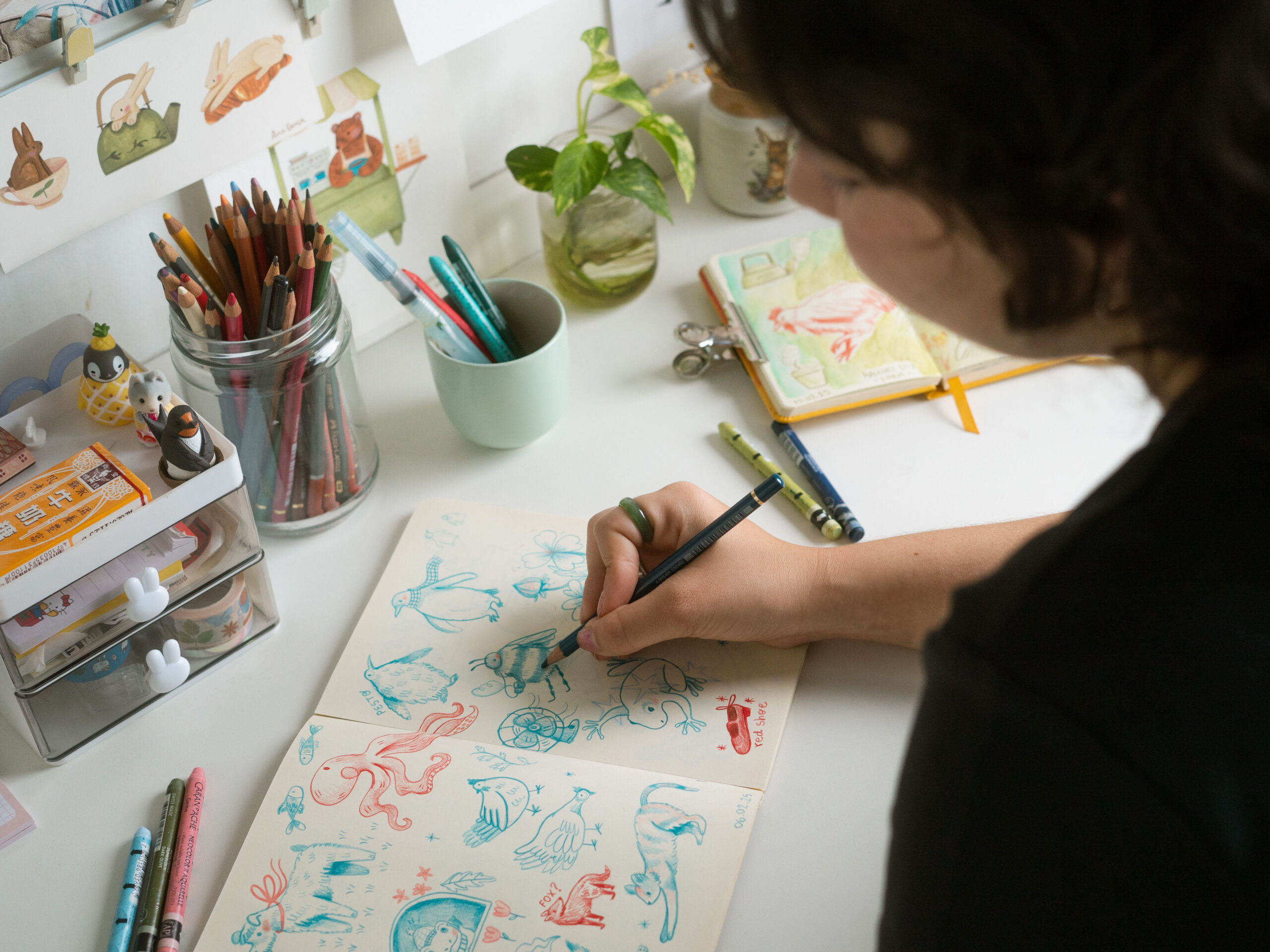
From independent publishing to national television, Brazilian-born illustrator Ana Graça is challenging the conventions of children’s literature by bringing overlooked childhood experiences into the spotlight.
In May 2026, Natalie Cassidy read an independently published children’s book on CBeebies Bedtime Stories. Young Carers in Space, written and illustrated by Brazilian-born, London-based artist Ana Graça, was selected for BBC’s CBeebies Bedtime Stories, where actress Natalie Cassidy introduced its characters to families across the United Kingdom. It was the programme’s first story about young carers.
Rather than coming from an established publishing house, Young Carers in Space was developed through an independent initiative involving children who care for family members. Its appearance on national television brought the experiences of young carers to families who might never have encountered them in a picture book. Her illustrations helped make the story approachable for children unfamiliar with young carers.
Giving Invisible Children a Place in Literature
Across the UK, children help relatives with everyday tasks while keeping up with school. Some care for a parent; others help a brother or sister, as Honey does in Graça’s books. Teachers and classmates may know little about what happens at home.
Graça addresses this gap through her Young Carers series, beginning with Young Carers in Bunnyland in 2024 and continuing with Young Carers in Space in 2025. Both books follow Honey, a six-year-old girl who helps care for her autistic older brother, Pip.
What distinguishes the series is its refusal to define childhood caring exclusively through hardship. But Honey has adventures of her own, too. The books leave plenty of room for play.
In Young Carers in Space, Honey embarks on an extraordinary journey beyond Earth, discovering other children who share similar experiences. She meets children who know what her days at home are like.
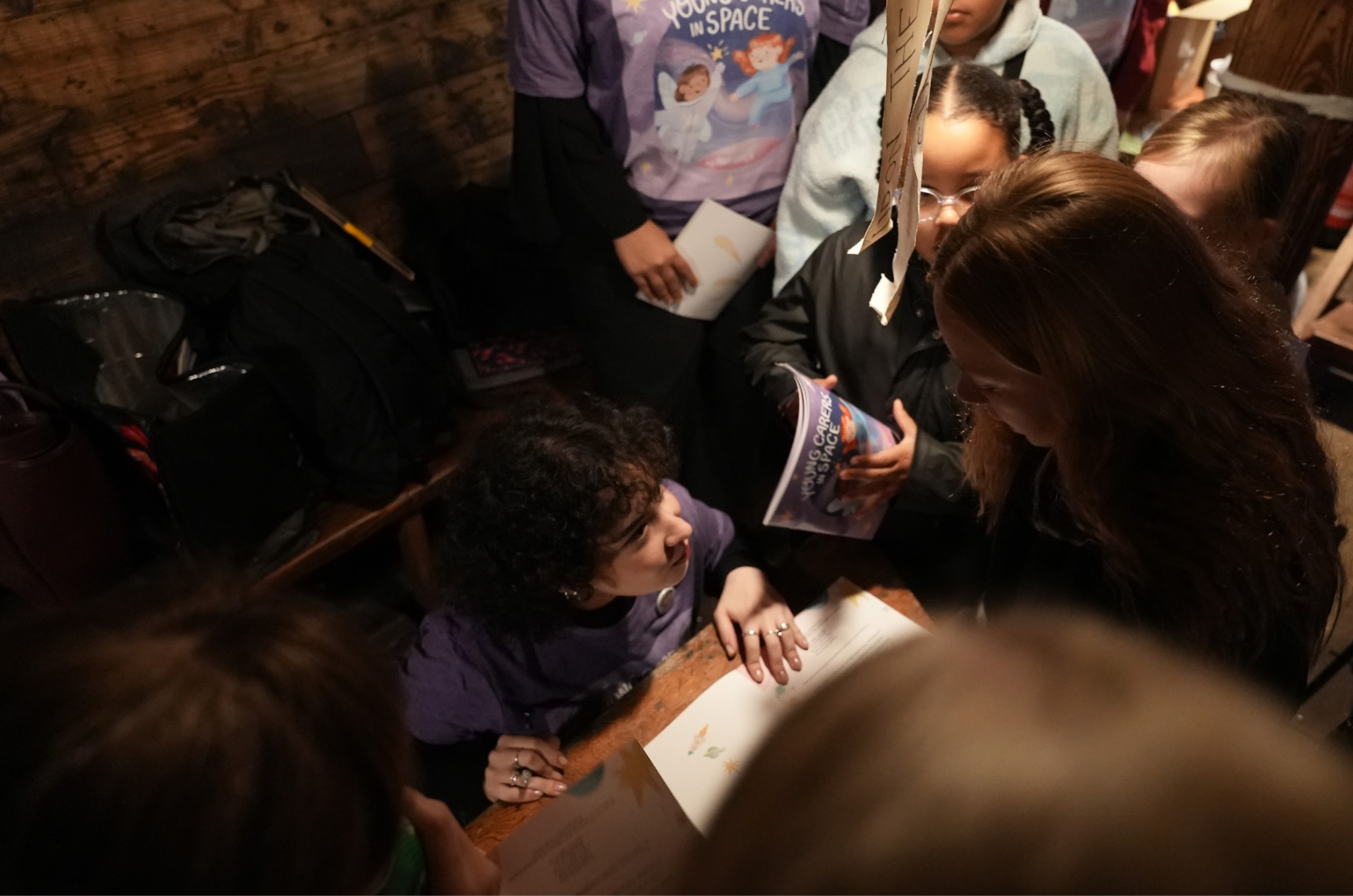
Graça developed the book through workshops with the Young Carers Illustration Project and organisations including Kingston Carers Network, where young carers helped develop the characters and story.
In a 2026 feature published by Kingston Carers Network, young participants described the significance of recognising their own experiences in the finished book. For some, the book was a rare chance to recognise their own lives on the page.
Most children’s books are written by adults, even when they deal with experiences unfamiliar to those adults. Graça approached this project differently. She invited young carers into the creative process and used their suggestions to develop the story.
The Art of Making Difficult Subjects Accessible
The illustrations are central to how Graça tells these stories. Soft textures and rounded, expressive characters give her illustrations an inviting quality even when the subject is difficult.
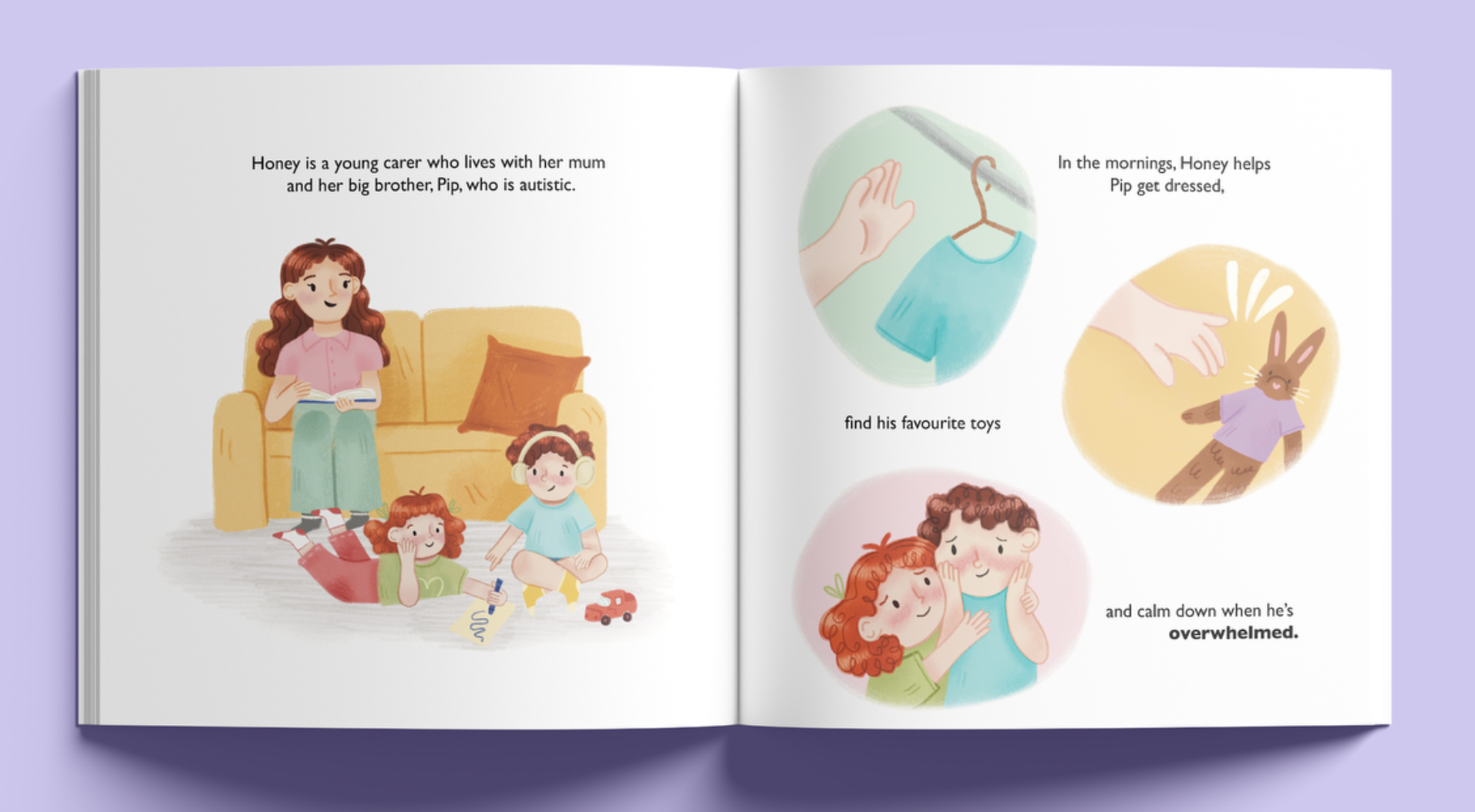
One spread from the Young Carers series depicts Honey helping Pip through ordinary daily activities. She assists him with dressing, finds his favourite toys and comforts him when he feels overwhelmed. The composition divides these moments into small, intimate scenes, letting readers pause over each gesture.
Graça gives these ordinary gestures weight without making the scene melodramatic. A reassuring touch between siblings conveys more than an explicit explanation of their relationship could. The restrained visual approach is particularly effective for younger readers. The illustrations acknowledge the responsibilities Honey carries without making her world appear frightening or hopeless. The characters feel familiar, rather than distant or pitiable.
Elsewhere, Graça embraces fantasy on a much larger scale. Enormous pastel-coloured creatures inhabit rolling green landscapes, while children encounter magical figures and fantastical environments. Characters with different physical abilities occupy the same imaginative universe, with disability presented as one aspect of human diversity rather than an exceptional condition requiring explanation.
In these scenes, children with different abilities share the same fantastical landscape. The scene needs no explanatory caption about disability. Although the Young Carers books are digitally illustrated, they retain the softness and tactile quality often associated with traditional children’s book art. Irregular outlines and soft, grainy textures keep the digital images close to the feel of drawings made by hand.
The books leave room for playfulness even as they introduce readers to the responsibilities young carers carry.
From Community Project to Cultural Recognition
The books soon began to circulate beyond the groups involved in making them.
Following its publication in November 2024, Young Carers in Bunnyland attracted sufficient demand to require a reprint within just 19 days. It also reached organisations working directly with children and families. The Local Government Association subsequently identified the project as a source of free educational materials for primary school-aged children who may have caring responsibilities. The books also appear among resources shared by Carers Trust. The project’s impact resonated far beyond its initial community, earning powerful endorsements from the NHS and acclaimed actor Colin Farrell, further cementing its cultural significance.
Schools and organisations supporting young carers could use the books to begin conversations that children might otherwise struggle to start. In May 2026, Young Carers in Space appeared on CBeebies Bedtime Stories as part of the BBC’s Caring Matters Week. For many viewers, it may have been their first introduction to the idea of a young carer.
As BBC coverage of the special broadcast demonstrates, the book formed part of a wider effort to increase public awareness of unpaid caring responsibilities, including those undertaken by children. For a book developed through community workshops outside mainstream publishing, the broadcast was a considerable breakthrough. Its use by schools and support organisations is as telling as its publishing history.
An Artistic Practice Beyond a Single Medium
For Archie’s New Neighbours, Graça has put aside her digital tools.
Originally from Brazil, she draws inspiration from the natural environments of both her home country and the United Kingdom. Animals, plants and fantastical creatures recur throughout her work, often appearing in playful compositions that blur the boundaries between everyday reality and imagined worlds.
Her artistic development has also been informed by postgraduate studies in Children’s Literature: Children’s Book Illustration at Goldsmiths, University of London. One of her current projects, Archie’s New Neighbours, demonstrates a different side of her practice. Unlike the digitally illustrated Young Carers series, the unpublished picture book explores mixed-media techniques, incorporating acrylic paint, gouache, pastels and pencils.
The illustrations are busier, with looser lines and thicker layers of colour. Birds and animals move through lively street scenes.
The contrast with the quiet scenes in Young Carers is striking. Visible marks and layered colours bring movement to its scenes of birds, animals and children. The book is still in development and seeking a publisher. The change in materials suits the livelier pace of the new story.
Illustration as a Language of Social Change
For Graça, drawing can help people communicate what they struggle to put into words.
She traces that impulse back to early image-making, when people used drawings to share what they saw around them. A picture book can give a child and an adult something concrete to look at together when a subject is hard to discuss.
The Young Carers books show what she means. Their gentle scenes and flights of fantasy make space for children’s caring responsibilities without turning the stories into instructions or warnings. The BBC broadcast brought a story shaped by young carers into homes across Britain. Those children could now see their story reach viewers well beyond their own communities.

