

A swimsuit size chart only works as well as the numbers you bring to it. Most charts ask for the same three or four measurements, and each one takes less than a minute to take. The part that decides whether a suit fits is what happens around those minutes: how you set up, which number you trust for which piece, and what you do when the numbers disagree.
Swimwear leaves less room for error than everyday clothes. A T-shirt that runs a little large just hangs loose, but a swimsuit is cut to sit flat against the skin, so a small gap or a tight spot shows right away. Sizing also shifts from one label to the next, and the size on an old suit is not always a reliable guide to the next one.
Fresh numbers solve that. With them in hand, each new chart becomes a quick comparison, one piece at a time, instead of a guess.
Set Up Before Measuring
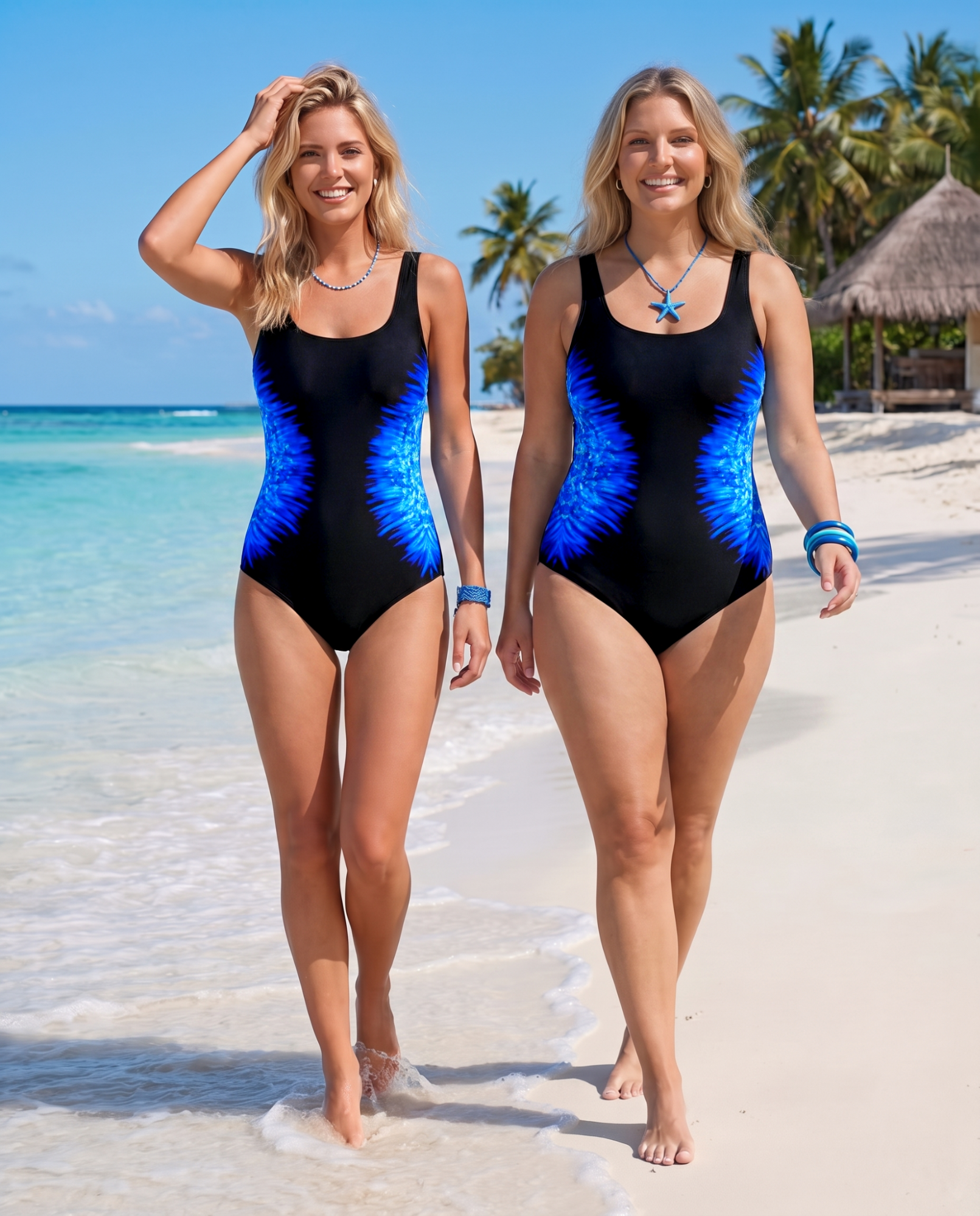
Tummy Coverage Ombre Black One Piece Swimwear
A soft fabric tape is the right tool, the kind that comes in a sewing kit. A metal tape from the toolbox bends in the wrong places and adds half an inch without anyone noticing. A piece of string marked with a pen and laid against a ruler also works.
Wear as little as possible, or something thin and close to the body. A non-padded bra is fine for the bust measurement, since padding can add an inch or more. A heavy sweater or jeans will throw every number off.
Stand in front of a mirror with your feet together and your arms relaxed at your sides. The mirror is there to check one thing: that the tape runs level all the way around. A tape that dips lower at the back is the most common reason a measurement comes out too large.
Breathe normally and let your stomach stay where it naturally sits. Pulling in for the tape gives a number that the swimsuit will have to live with all afternoon. Measure to the nearest quarter inch, then take each measurement a second time.
If the two readings differ, measure a third time and keep the one that repeats. Late afternoon is a good time to do this, since the body is often a little fuller than first thing in the morning.
The Four Numbers
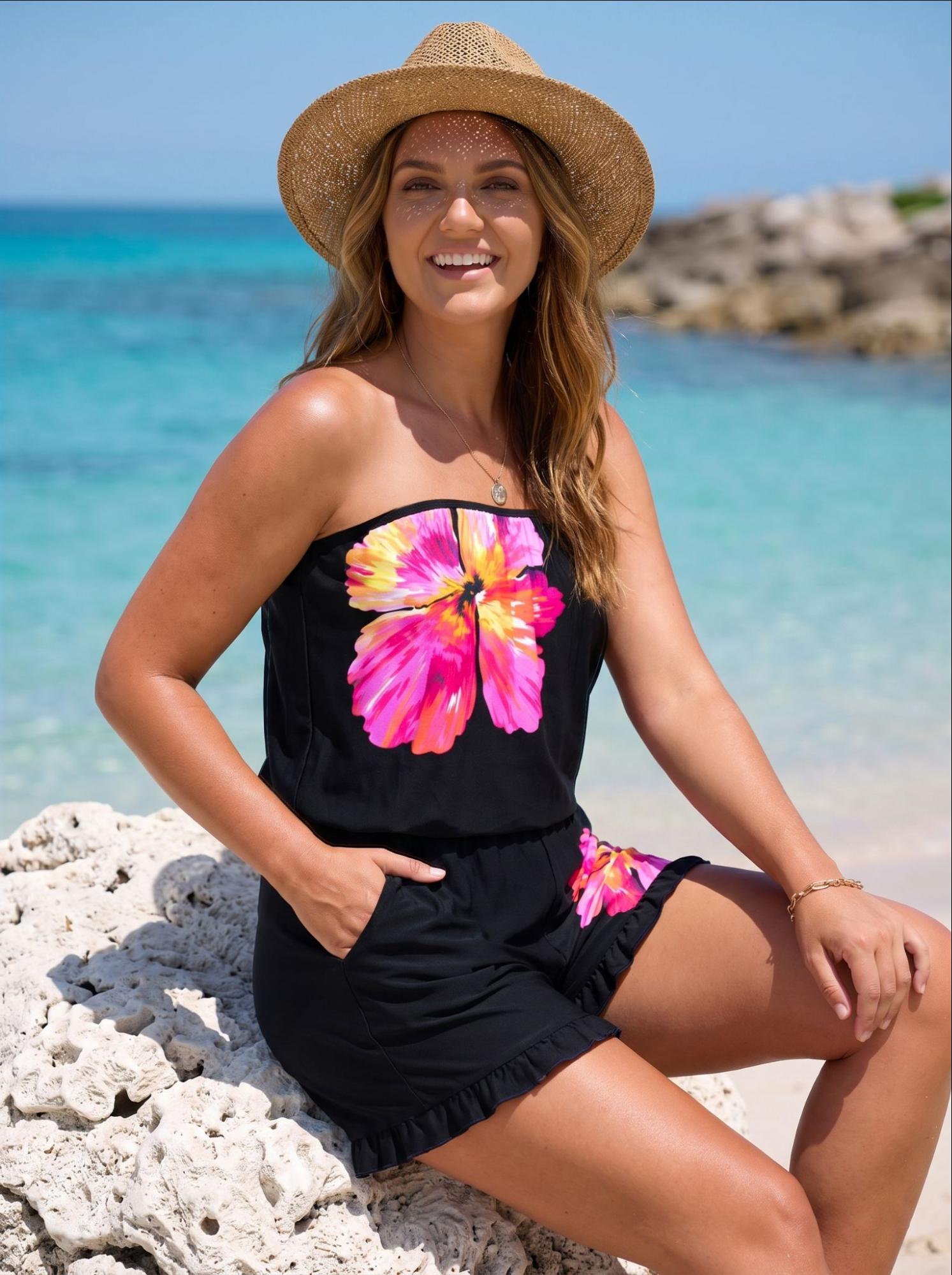
Black Ruched/shirred Floral Print One Piece Swimwear
Swim charts usually ask for some combination of these measurements.
- Bust: around the fullest part of the chest, usually across the nipple line, with the tape snug but not pressing in.
- Waist: around the narrowest part of the torso, typically an inch or so above the belly button.
- Hips: around the fullest part of the hips and seat, with the tape parallel to the floor.
- Torso: a vertical loop from the top of one shoulder, down the front, between the legs, and back up to the same shoulder.
Write all four down in one place, with the date. Bodies change over a year, and an old note can quietly lead to the wrong size.
The Torso Loop
The torso loop is the one measurement that is hard to take alone, and it is also the one that decides whether a one-piece fits. Start the tape at the highest point of the shoulder, where a bag strap would sit. Run it down over the bust, through the legs, and up the back to the same point.
Keep the tape snug against the body but not pulled tight between the legs. If no one is around to help, clip the end of the tape to the shoulder of a close-fitting top with a small binder clip, then feed it through and read the number in the mirror.
Match Numbers To Pieces
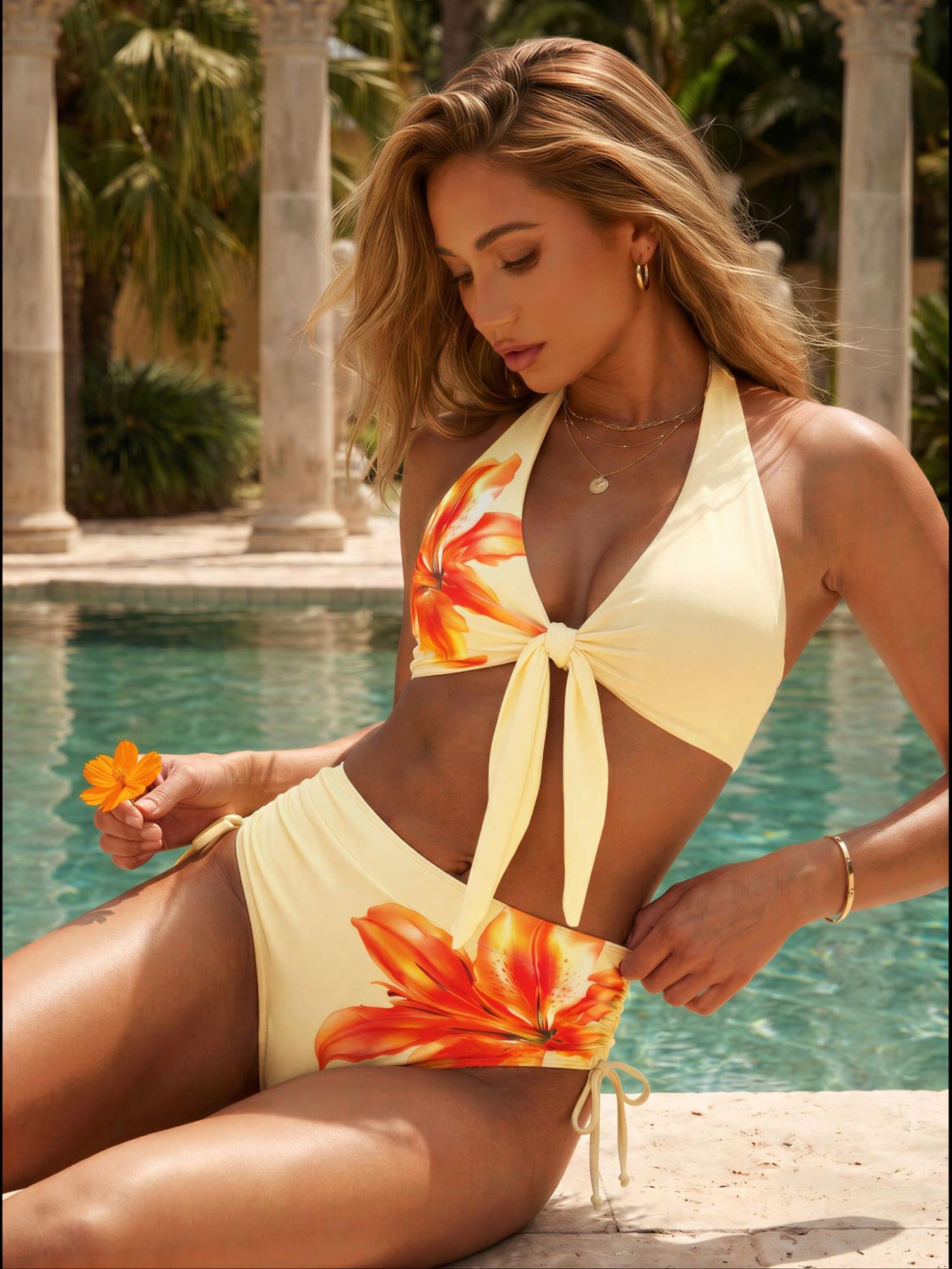
Light Yellow Mid Waisted Ruched/shirred Floral Print Bikini Set
Each measurement matters more for some pieces than others. Knowing which one leads saves a lot of returns.
A one-piece is ruled by the torso loop and the bust. If the torso is too short for the suit, the straps dig in and the leg openings ride up. If the torso is too long for the suit, the fabric sags at the chest and wrinkles at the waist. A one-piece that matches the waist and hips but misses the torso will not sit right.
Two-piece styles split the decision in half. A bikini or tankini top follows the bust measurement, and the bottom follows the hips. This is why so much womens swimwear is now sold as separates, with the top and bottom sized on their own. Someone who measures a medium on top and a large on the bottom can buy exactly that, and the result usually fits better than a matched set in either size.
The waist measurement is the tiebreaker for high-waisted bottoms and swim skirts, where the waistband sits right on that line.
Caught Between Two Sizes
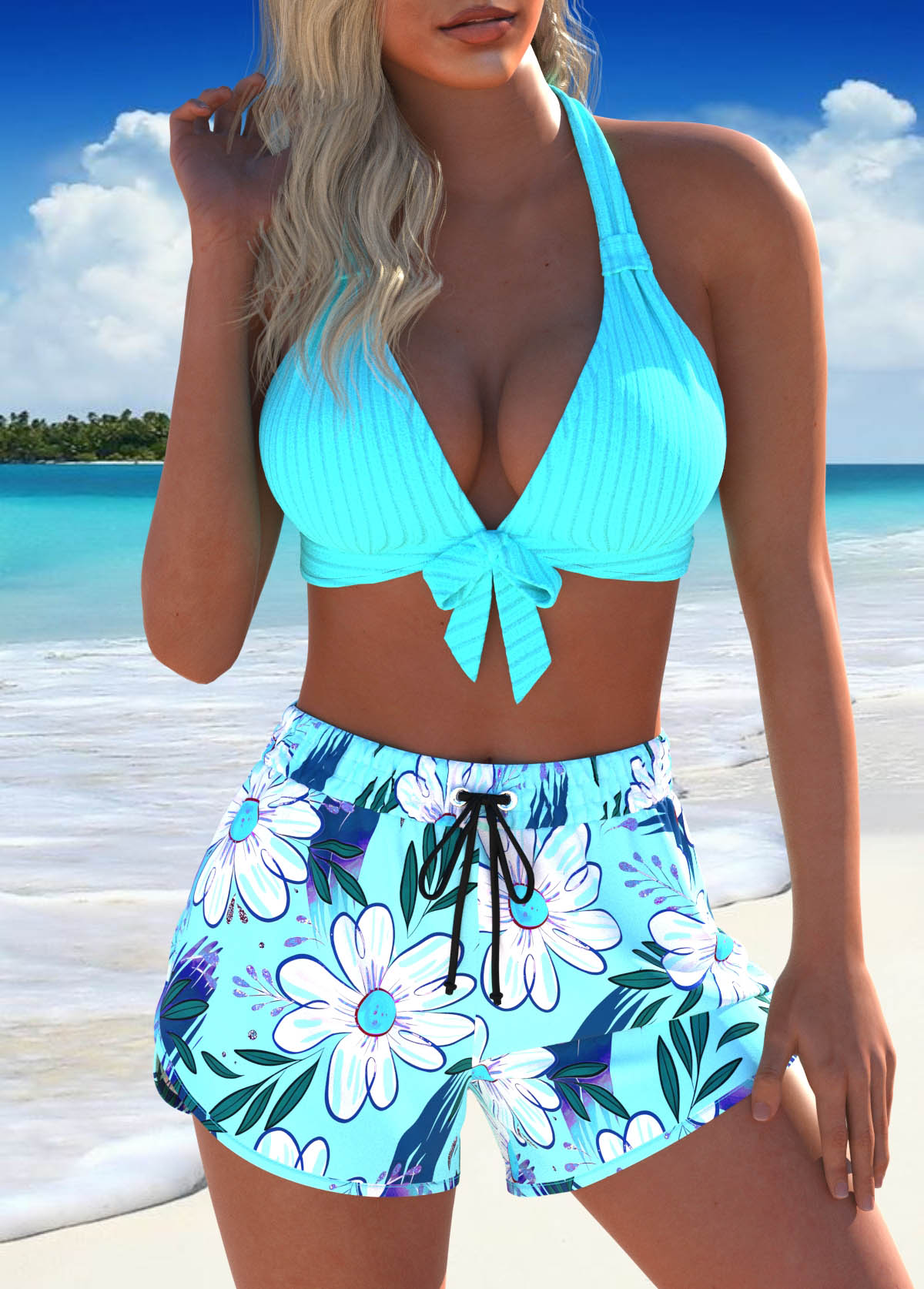
Tie Floral Print Cyan Bikini Set
Falling between two sizes on a chart is common, and the first step is to find out which number is causing it. If the hips land in a medium and the bust lands in a large, the answer depends on the piece. For a one-piece, go with the number that leads, usually the bust or torso. For separates, simply buy two sizes.
When a single measurement sits right on the line, the fabric helps decide. Swim fabric relaxes slightly when it is wet, so a suit that feels comfortably snug when dry often settles in the water. For that reason, many fitters suggest taking the smaller size when in doubt.
The exception is the torso. A one-piece that is too short in the body will not loosen enough to fix itself, so a long torso usually calls for sizing up. Adjustable straps, ruched side seams, and tie details also give a suit more room to adapt, which makes them a safer choice for anyone who sits between sizes.
Recheck When It Arrives
Measuring gets the order right, and the try-on confirms it. Put the suit on over clean underwear with the tags still attached, then move. Sit down, bend forward as if picking up a towel, raise both arms overhead, and walk across the room.
Watch for a few signs. Straps should not leave marks on the shoulders. Leg openings should stay flat, not roll or cut in. The bust should be covered without gaping when leaning forward, and the back should not pull down when sitting.
When a suit passes those checks, add its size and style to the note with your four numbers. The next time a chart appears, you will already know which size works for you, and the tape can stay in the drawer.

