

There are neighbourhoods in Istanbul where the past is behind glass, in museums and palaces with ticket booths. Karaköy is not one of them. Here the past is the street itself. You walk on it, eat in it, and sometimes drink a coffee in a building that was once a bank, a warehouse or a ship’s chandler.
For centuries this was Galata, the trading quarter facing the Old City across the Golden Horn. Genoese merchants built its tower. Ottoman, Greek, Armenian, Jewish and Levantine families ran its banks and shipping offices. Then, for much of the twentieth century, the district drifted. The port moved, the offices emptied, and Karaköy became a place of hardware shops and wholesale stores.
The last fifteen years have turned it inside out again. Today Karaköy is one of the liveliest cultural corners of the city, and one of the best places to understand how Istanbul keeps reinventing itself. Here is a walk through it, from morning to evening.
Start high: the Galata Tower
Begin at the Galata Tower, built by the Genoese in the fourteenth century. The queue can be long, so go early. From the top you can read the whole story of this walk: the Golden Horn on one side, the Bosphorus on the other, the Old City across the water, and below you the steep streets running down to the port.
Down the Kamondo Stairs
Walk down from the tower towards the water and look for the Kamondo Stairs, a small, elegant flight of steps built in the late nineteenth century by the Camondo family, one of the great Jewish banking dynasties of the Ottoman capital. The stairs curve back on themselves in a gentle Art Nouveau loop. They are one of the most photographed corners of the city, and still a working shortcut for the people who live here.
SALT Galata: a bank turned library
At the bottom of the hill, on Bankalar Caddesi, the “street of banks”, stands the former Ottoman Bank headquarters. Designed by the architect Alexandre Vallaury in the 1890s, it is now SALT Galata, a free cultural centre with a research library, exhibitions and a café. Walk through the old banking hall and down to the vaults. It is a beautiful example of what Istanbul does best: giving old buildings a second life.
Mosques by the water
Walk east along the shore and you reach two very different mosques. The Kılıç Ali Paşa Mosque was designed by Mimar Sinan, the great Ottoman architect, in the 1580s, together with a hammam that still welcomes bathers today. A little further on, the Nusretiye Mosque, from the early nineteenth century, shows how Ottoman architecture absorbed European Baroque. Seeing them a few minutes apart is a quick lesson in two hundred years of change.
Istanbul Modern and Galataport
Right beside them is Galataport, the redeveloped cruise port, and inside it Istanbul Modern. The museum moved into a new building by Renzo Piano in 2023. Its collection of Turkish modern and contemporary art is the best in the country, and the building itself, light and open to the water, is worth the visit alone.
Galataport’s promenade, once closed behind port fences, is now open to everyone. It is a good place to slow down after a morning of walking.
A sweet stop
No cultural walk in Karaköy is complete without a plate of baklava. The district is home to some of the city’s most famous baklava makers, and a few layers of pistachio pastry with a glass of tea is as much a part of local culture as any museum.
End the day above the water
As the sun goes down, the best way to take in everything you have walked through is from above. A terrace on this shore gives you the Bosphorus in front, the Old City across the water and the lights of the Asian side coming on in the distance.
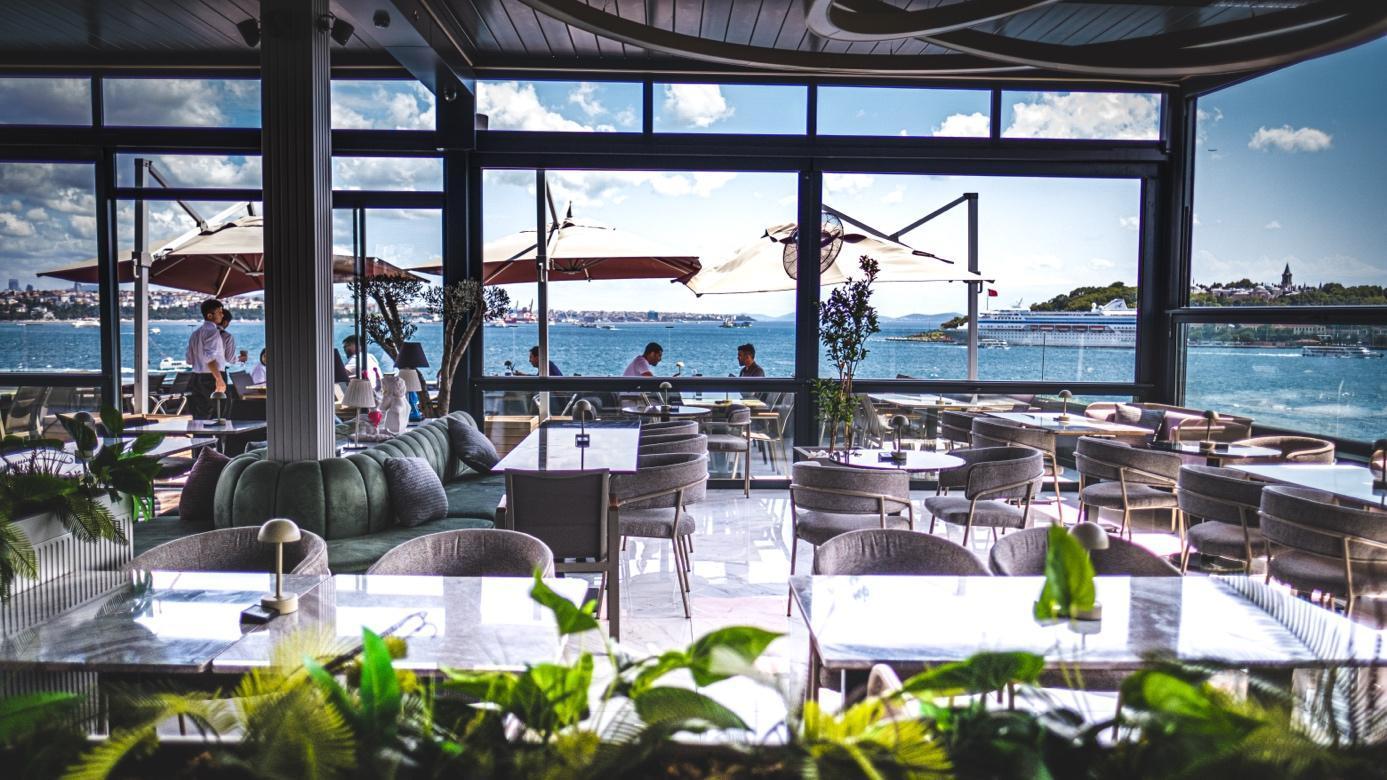
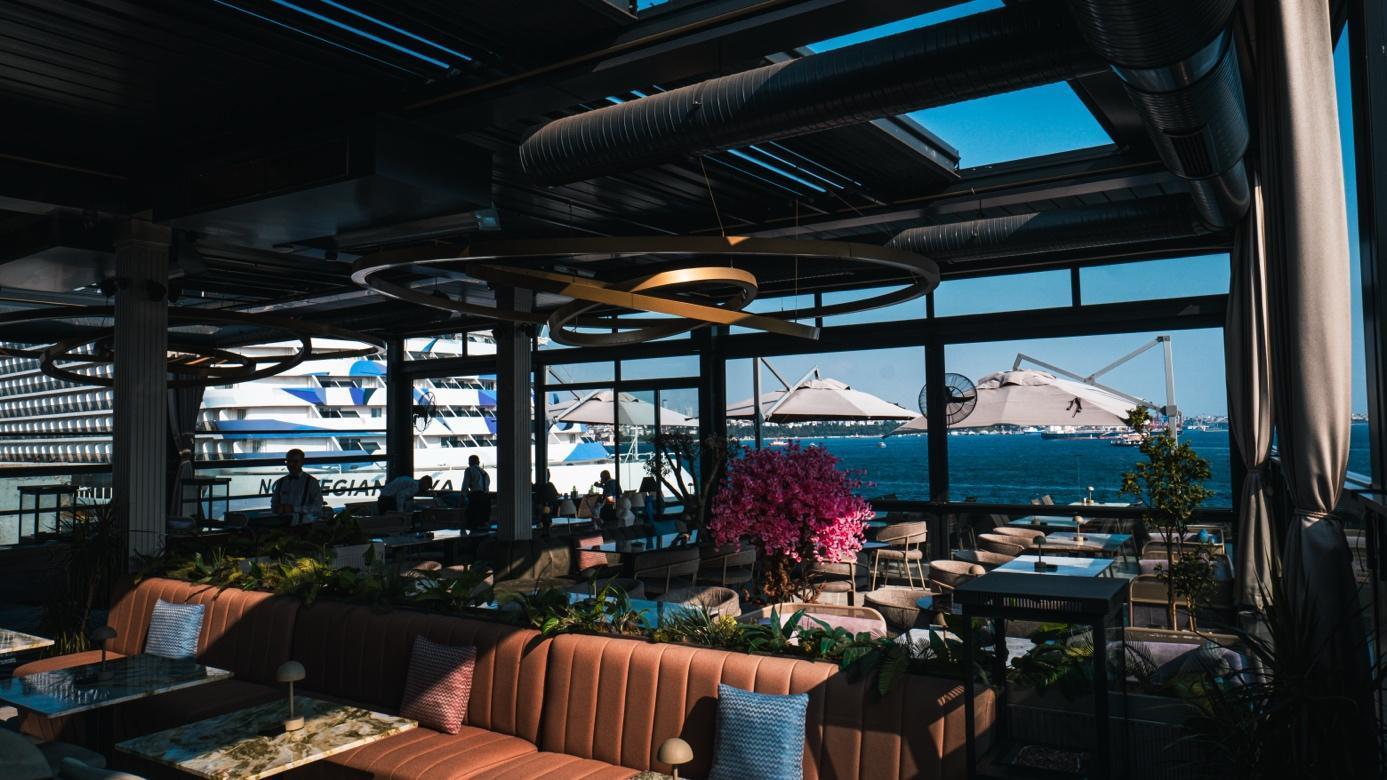
For dinner, Loi Bosphorus, a terrace restaurant in Karaköy right next to Galataport, is a fitting final stop. Its terrace faces straight out over the Bosphorus, with Topkapı Palace and the Historic Peninsula across the water and the cruise ships of Galataport right below, so the ferries, the ships and the evening light are all part of the meal. The kitchen mixes Turkish and European cooking, so you can end a day of history with mantı or the house Loi kebab, or keep it simple with grilled sea bass. After a day spent among Genoese stone, Ottoman banks and contemporary art, it is a reminder that in Karaköy the story is still being written, one table at a time.
Practical notes
- Distance: The whole walk is under 3 kilometres, but allow a full day with stops.
- Getting there: The T1 tram stops at Karaköy and Tophane, and ferries arrive at Karaköy pier from the Asian side.
- Closures: Check museum opening days before you go; many are closed on Mondays.

