Home Blog Page 143

The Importance of LGBT Visibility in Literary Culture

Literature has always held the ability to shape societies while it influences how people think and provides expression to marginalized groups. The representation of LGBT people in literature has increased throughout history to help readers comprehend different identities and life experiences. The inclusive literature, which exists from classical novels to contemporary storytelling establishes understanding between different audiences.

Readers today want to find stories that show the authentic diversity that exists in real life. The current situation has created a critical need for LGBT literature because it serves essential functions of representing people to promote understanding and social acceptance.

Why LGBT Representation in Literature Matters

The existence of LGBT characters in literature shows readers about various human experiences and personal identities that society usually fails to recognize. The program provides books concerning transgender people when they see themselves depicted in stories that exist beyond their common experiences.

All literary works possess equal importance because they shape how people view different social groups. It may be possible to defy prejudice by honest and respectful representation and promote acceptance. The tales create a universal world that is shaped by their narratives to form meaning and tolerance among all human beings.

The Rise of Queer Literature in Modern Times

Queer literature has developed over the past ten years to be more than just an underground movement to be accepted as mainstream content. Writers are now more liberalized to explore issues that touch on identity, love, and acceptance.

The following factors contribute to the growth of this movement:

  • The public now possesses a better understanding of social issues
  • People want stories that include diverse perspectives
  • Publishers and readers provide backing for this movement

Modern readers seek both traditional stories and gay books which depicts genuine relationships and deep emotional experiences. The stories present complex characters who experience actual difficulties while moving beyond common stereotypes.

Transgender Narratives and Their Cultural Impact

Transgender narratives function as essential elements that shape cultural understanding and awareness. They showcase actual life experiences that people in society frequently misunderstand and ignore. Through storytelling, readers gain a clearer view of gender identity and personal journeys.

The stories attempt to break down any stereotype that exists as well as encourage different social groups to understand each other. This empathy, formed by their genuine voices, is what can be used to bring a feeling of inclusion in literature and culture. The outcome of their efforts brings about a society that acquires knowledge as well as open-mindedness.

Most Influential Queer Books That Shaped Literature

Historical texts that have been developed over time have influenced the development of the queer literary culture. The commendation for some of the most influential queer books has facilitated a better understanding of how queer identities are implicated in society.

Key Characteristics of Influential Queer Literature

  • Strong and relatable characters
  • Honest storytelling
  • Exploration of identity and belonging

It comprehensively captures the pain of the Partition and exile of millions during those festivals.

How Literature Builds Awareness and Acceptance

Literature serves to foster awareness for the general public as it puts before the reader an array of identities and life experiences. Stories enable people to unravel perspectives on the alternative environments that they have yet to run into in real life. The result is that people are allowed to actualize decisions without ado.

In connecting to characters’ journeys at the emotional level, literature becomes a means to enter into acceptance of different identities. That way, readers come to comprehend, beyond their personal experience, what a struggle, hope, and relationships might actually mean. Such bonding brings empathy toward understanding fellow beings, thus envisioning a society that accepts everyone and propagates understanding.

Digital Platforms and the Growth of LGBT Literature

The internet has enabled people to access LGBT literature from all around the world. Digital platforms now provide readers with access to multiple stories through eBooks, blogs, and online libraries. The accessibility system enables more users to discover hidden voices who do not receive proper representation.

The platforms offer publishing opportunities to first-time authors and independent authors who want to display their work to readers worldwide. Writers can share authentic stories without needing to follow traditional publishing requirements. The LGBT literature continues to expand because it reaches more readers than before.

Challenges Still Faced by LGBT Literature

LGBT literature faces ongoing challenges despite its growing presence in the world. The field suffers from three main problems, which include regional representation limitations and censorship, and insufficient support from the general public.

Some common challenges are:

  • Cultural and societal resistance
  • Limited publishing opportunities in certain markets
  • Misrepresentation of identities

The rising need for inclusive narratives leads to the gradual elimination of existing obstacles.

The Future of LGBT Literary Culture

The future of LGBT literary culture has reached a point where it now exists as an established and accepted artistic movement throughout the globe. The growing demand from readers brings a need for stories which authentically show real identities and actual life experiences. The rising need for content requires publishers and authors to create more vital works that include diverse perspectives.

Digital platforms now enable new writers to easily publish their personal stories. The publishing procedure enables them to publish their work without facing a lot of challenges when presenting new ideas to more people. These new developments make people get to know different communities better, and hence, more people become more accommodating, and social systems that embrace every individual are formed.

Conclusion

LGBT visibility in literary culture functions as a permanent social advancement that creates inclusive spaces for all people to enter. Literature establishes social norms through its most important queer texts and contemporary storytelling methods. The program enables readers to comprehend various identities through its educational content.

The exploration of various storytelling methods allows readers to understand authentic human experiences. The combined reading of gay literature and transgender literature enables readers to develop empathy while breaking down common misconceptions. The increasing demand for LGBT literature will drive its development into a more inclusive society.

Live Dealer and Digital Table Games at Casoola Casino

0

Live dealer tables and digital table games create two very different kinds of online casino sessions. For many players, Casoola Casino is a place where the distinction often comes down to social presence, pacing, and how “real” the game feels on-screen. Understanding those differences helps explain why players may switch formats depending on mood and time. At Casoola Casino, the distinction often comes down to social presence, pacing, and how “real” the game feels on-screen.

For many people, the choice between live dealer tables and digital table games shapes the overall feel of an online session. Both formats share familiar rules and outcomes, but the moment-to-moment experience can be noticeably different. Factors like tempo, attention demands, and interaction change how a game fits into a relaxed evening or a quick break. Looking closely at what each format emphasizes clarifies why they appeal to different preferences, with this casino offering both to meet a range of playing styles.

What Live Dealer Play Is Like

Live dealer games are built around a real person running the table on camera, with cards dealt or a wheel spun in real time. That human element introduces small variations—tone of voice, rhythm, and table manner—that make consecutive rounds feel less uniform. Many live tables also include a chat function, which can range from simple table etiquette to brief, casual exchanges.

The pacing is typically set by the dealer and table flow rather than by a single player. That creates a more “event-like” rhythm, where rounds unfold at a steady cadence and there is time to watch the hand develop. Players who enjoy observing physical cards, chips, and table procedures often prefer this format because the visuals and timing mimic traditional casino presentation, and live dealer options at this casino highlight the social atmosphere without requiring in-person attendance.

Because the experience is shared, attention often shifts between the game and the broader table environment. Even without actively chatting, players may notice other participants joining, leaving, or reacting to outcomes. For some, that subtle sense of company is the main appeal; for others, it is simply background texture that makes the session feel less isolated—something frequently sought by players at this casino.

What Digital Table Games Feel Like

Digital table games run through software rather than a live camera feed. The interface is designed for quick input and immediate results, so the overall sensation is usually faster and more self-directed. With no dealer-led cadence, players can move through rounds at their own pace, pause easily, or switch games without waiting for a table cycle to finish. Digital table games are a mainstay at this casino, providing consistent access for those who want efficiency and privacy.

This format can feel more private because there is typically no live chat and no shared table atmosphere. The focus stays on controls, outcomes, and the on-screen layout. For players who like consistency, digital tables can offer a more uniform rhythm from round to round, with fewer external distractions—qualities valued by regular visitors to this casino.

Digital tables also support short, structured sessions: a few hands, a quick pause, then back later. That stop-and-start flexibility changes the experience from something that resembles an “occasion” to something that can fit into small windows of time, with this casino making it easy to tailor sessions to a busy schedule.

Pacing, Attention, and Interaction

The biggest practical difference between formats is often tempo. Live dealer play generally asks for sustained attention while a round unfolds, and it can be easier to stay engaged for longer stretches because there is always something happening on camera. Digital games, by contrast, can be sped up or slowed down instantly, which makes them easy to adapt to changing attention levels—one reason Casoola Casino can suit both live and digital preferences.

Social interaction is also a dividing line. Live dealer tables can feel communal even when conversation is minimal, while digital tables tend to feel solitary by design. Some players shift between the two depending on whether they want a shared environment or a quiet, self-paced session.

Both formats emphasize different parts of the table-game experience: live dealer play foregrounds presence and procedure, while digital tables foreground speed and control. For someone moving between them, the contrast is less about rules and more about how the session feels minute to minute, and Casoola Casino supports that range of styles.

Crypto beyond hype cycles: Here are the 5 emerging themes investors should keep an eye on in 2026

Historically, the world of cryptocurrencies has been marked by recurring hype cycles, driven by rapid price surges fueled by speculation, followed by sharp corrections. However, 2025 marked the return of crypto to the financial mainstream, with institutional engagement accelerating, regulatory standards advancing, and capital markets finally thawing after years of frost. In the new year, the narrative is only evolving, and according to experts, the institutional era of crypto is emerging, characterized by increased demand for alternative investments and improved regulatory clarity, which is bringing in new capital and fueling adoption.

Macro factors such as inflation trajectories, interest rates, and geopolitical tensions will influence market direction, so it’s worth taking the time to understand the trends that will emerge if you’re planning to add crypto to your portfolio. Still, you should remember that the market can be volatile, and you need to make the most of tools like the fear and greed index to help you protect your funds and not make bad calls that will end up in a disaster. Now, let’s dive into the trends for this year, shall we? 

Image source: https://unsplash.com/photos/a-pile-of-bitcoins-sitting-on-top-of-a-pile-of-gravel-4PljbcYIzyE 

Increased institutional adoption

Institutional demand for cryptocurrencies is increasing worldwide. Ever since the launch of U.S. spot Bitcoin ETFs in 2024, crypto investment products have seen about $87 billion in inflows, with less than 0.5% of U.S. adviser-managed assets allocated to crypto.

Why is this gap relevant? It shows that this cycle is still in its early stages. With familiar ETF structures and a clearer regulatory framework, large investors such as sovereign wealth funds and university endowments are beginning to add exposure to this asset class, which will attract more inflows in 2026. This demand for alternative stores of value, such as Ethereum and Bitcoin, could drive crypto prices over the next year, allowing investors to grow their portfolios.

AI-based crypto projects

AI cryptos are converging on agentic AI, in which software agents use tokens to pay for compute, data, and execution. By next year, it’s expected that these agents will trade assets, manage workflows, and coordinate services independently, with the blockchain providing secure coordination and settlement. This trend is already emerging, as Fetch.ai has collaborated with Bosch to create decentralized AI agents for mobility and industrial applications.

Moreover, decentralized GPU marketplaces such as Akaash Network and Render may capture interest due to the ongoing compute shortage that is impeding the growth of AI innovation. The theme of decentralization will also become increasingly prominent amid discussions of AI risks, and crypto could play a major role in changing how AI is governed and managed, particularly through transparency, decentralized ownership, and incentive alignment.

Mass adoption of rollups and L2 networks

Ethereum’s scaling upgrades are shifting activity to Layer-2 (L2) networks. After the Dencun upgrade in 2024, which increased throughput and eliminated fees, the L2 share of Ethereum ecosystem activity rose from around 52% to about 68% by the end of 2025, according to available data. The result? Crypto has become easier to use and much more affordable, and L2 networks such as Arbitrum can now handle billions of transactions per year and support apps, games, and DeFi with smoother performance and lower fees.

L2s are now raising attention, including MegaETH, and the most important question is whether they can challenge well-established players such as Optimism, Arbitrum, and Base. What’s more, 2026 could be a breakout year for app chains (like Unichain), as enhanced user experience and performance could lead to more protocols launching their own chains.

Stablecoin clarity, crypto regulations, and banking integration

Crypto is gradually seeing clearer regulations, with stablecoins emerging as the winner. They enable low-cost cross-border payments, provide fiat exposure, and serve as a hedge against volatility, and it’s no wonder that they are seeing increased acceptance across financial systems. According to the data, stablecoin supply was on course to achieve  $300 by the end of 2025, representing an increase of more than 50% from $191 billion.

Real-world integration is also notable, with stablecoins expected to be integrated in derivatives collateral, cross-border payments, online consumer payments, and corporate balance sheets, as prediction markets add incremental demand.

Asset tokenization

In 2026, asset tokenization is also expected to accelerate, as regulations become clearer and blockchain infrastructure matures. This tokenization of real-world assets, including bonds, stocks, and commodities, eliminates geographic barriers and makes global markets more accessible to a larger pool of investors.

At the same time, demand for diversification is increasing globally, and investors in regions facing capital controls, war, or high inflation can protect their wealth by accessing foreign assets via tokenized products on public digital ledgers, including Solana and Ethereum.

Crypto sectors that are likely to perform better than expected in 2026

In 2026, Layer-1 networks and tokenization platforms will likely lead, with Solana and Ethereum seeing increased activity as bonds, stocks, and commodities shift on-chain. The leading crypto, Bitcoin, also stands out, driven by macro conditions that continue to support the store-of-value narrative. Potential ETF-driven inflows, continuous institutional demand, as well as treasury adoption could impact Bitcoin’s growth, and select large-cap altcoins -and Ethereum- could also be shaped by clearer ETF pathways.

Another major driver is scalability, with Ethereum L2s capturing increased transaction volumes, and app chains and new L2s competing on user experience and performance alike. One thing to note is that most L2 tokens have experienced poor price action due to poor tokenomics, such as low float/high FDV properties and excessive insider allocations.

An area that deserves the same attention is AI-crypto infrastructure, with AI and GPU projects such as Render linked to real demand for automation and compute, which provides them with more durable upside compared to hype-driven themes. Finally, stablecoin infrastructure could quietly outperform, too, with banking and rising payment use lifting networks such as Tron, Ethereum, and Solana, alongside infrastructure providers that support tokenized finance.

The bottom line

In 2026, trends such as Layer-2 scaling, institutional adoption, and AI infrastructure will shape where sustainable growth emerges in the crypto market, while hype-driven sectors are expected to fade. For investors, there will be a shift from chasing hype cycles to grasping structure, with the networks and projects that align with regulations, global finance, and real-world application being the ones to benefit the most as crypto becomes more and more integrated in the financial system.

Best Places to Propose in Paris (and the Perfect Engagement Rings to Match the Vibe)

Paris holds a unique charm for couples looking to celebrate their love with a momentous proposal. Whether you’re drawn to the iconic beauty of the Eiffel Tower or the timeless elegance of a historic street, Paris offers the perfect setting for one of life’s most unforgettable moments.

Here are some of the most breathtaking places in Paris to consider for your proposal, along with matching engagement rings to create a memory that lasts forever.

The Modern Icon: Trocadéro & The Architectural Bezel

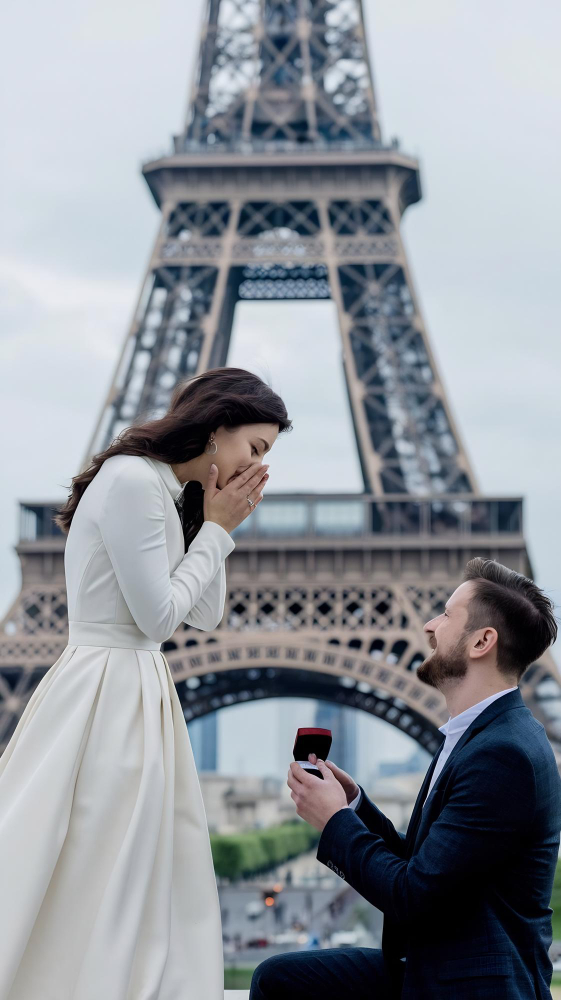
The Trocadéro offers an unmatched view of the Eiffel Tower, making it one of the most celebrated spots in Paris to pop the question.

As the towering iron structure gleams against the backdrop of the Parisian skyline, the moment becomes as monumental as the city itself. For this modern icon, an engagement ring with an architectural bezel is a perfect match.

A ring featuring a solitaire diamond framed by a bold, structured bezel will complement the urban sophistication of this location, adding a touch of timeless elegance while celebrating your future together.

Riverside Romance: The Seine & The Teal Sapphire

If you seek a more intimate setting, the banks of the Seine provide an undeniably romantic backdrop. As you stand on one of the charming bridges that span the river or share a quiet moment along its banks, the beauty of Paris truly surrounds you.

This calls for an engagement ring that echoes the water’s tranquil blue. Opt for a teal sapphire, which brings a pop of colour while maintaining a sense of elegance and rarity.

This gemstone offers something distinctive compared to the traditional diamond, and its soft, cool tones will harmonise beautifully with the river’s reflective surface.

Hidden Heritage: Le Marais & The Vintage Gold Band

Le Marais is full of narrow cobblestone streets, charming courtyards, and hidden gardens. If you both appreciate history and the timeless allure of old Paris, this district is the perfect setting for a proposal steeped in heritage.

The vintage aesthetic of Le Marais pairs seamlessly with a classic, antique-inspired ring. A vintage gold band with intricate detailing will reflect the district’s historical charm and evoke the idea of a love that stands the test of time.

Artistic Elegance : The Louvre & The Toi et Moi

For a couple who shares a passion for art, the Louvre presents an inspiring and elegant setting. Amid the masterpieces of the world’s most renowned museum, you can create your own masterpiece of love.

The Louvre’s combination of grandeur and history makes it an ideal location for an engagement ring that is both meaningful and distinctive. Consider the romantic “Toi et Moi” design, where two stones symbolise the union of two people.

This pairing could feature a diamond and a coloured gemstone, such as an emerald or ruby, reflecting the complementary nature of your relationship. The design captures the essence of the Louvre’s artful spirit, turning your proposal into a statement of lasting love.

Lana Del Rey Surprise-Releases James Bond Theme Song for ‘007 First Light’

Lana Del Rey has always been a top candidate for a James Bond theme song. Today, fans finally get to hear her take on the formula – sort of. ‘First Light’, surprise-released today, is a collaboration with five-time Bond film composer David Arnold, but it’s not tied to any movie. Instead, it serves as the official title song for the upcoming video game 007 First Light from IO Interactive and Amazon MGM Studios. Listen to it below.

“It’s a joy to watch two extraordinary talents like Lana Del Rey and David Arnold combine forces, the result feels instantly ‘Bond’ while still bringing a fresh identity for 007 First Light, Bond’s return to gaming is a landmark moment for us at IO Interactive, and having a title song of this quality makes it all the more unforgettable,” Hakan Abrak, CEO at IO Interactive, said in a press release.

Arnold added: “The Bond theme is a unique storytelling moment; it has to capture scale, drama, and intrigue all at once. Having been part of that musical lineage, I understand how important it is to honor its heritage while allowing it to evolve. Lana brought an elegance and atmosphere to the song that felt perfectly suited to continuing that tradition while introducing something fresh for a new era.”

Lana Del Rey is supposed to be releasing a new album in 2026, but the details around it keep changing. We named its latest single, ‘White Feather Hawk Tail Deer Hunter’, one of the best songs of February.

Kevin Morby Shares New Single ‘Badlands’

Kevin Morby has shared a new single, ‘Badlands’, the third offering from his upcoming album, Little Wide Open. “Welcome to the Midwest/ Where the sky knows best/ And you’ll finally get some rest/ ‘Til the tornado sirens start harmonizing/ And I can’t tell if I’m in heaven or if I’m in the badlands.” The song’s actual harmonies come courtesy of Amelia Meath (Sylvan Esso) and Justin Vernon (Bon Iver). Check out a lyric video for it below.

Little Wide Open is due out May 15 via Dead Oceans. It includes the previously unveiled singles ‘Javelin’ and ‘Die Young’.

Four Quotes by Pre-Raphaelite Painter Ford Madox Brown

While lesser known today, Ford Madox Brown was a significant figure in 19th-century British art, closely associated with the Pre-Raphaelite Brotherhood. Although he was never an official member, his influence on artists like Dante Gabriel Rossetti helped shape the movement’s distinctive style.

Born in 1821 in Calais, Brown trained across Europe before settling in England. His work took modern life as its subject with unusual seriousness. The most famous examples of this, Work and The Last of England, examined migration and the harsh realities of Victorian society with a directness that set him apart from his contemporaries.

He remains a difficult figure to categorise: aligned with the Pre-Raphaelites yet fiercely independent, committed to painstaking detail and deeply preoccupied with what art owed to the world around it.

On his birthday, here are four quotes that offer a glimpse into his character and artistic inspirations:

“What a miserable sad thing it is to be fit for painting only and nothing else.”

View from Shorn Ridgway, Kent by Ford Madox Brown.NMW A 363 – National Museum Cardiff via Wikimedia Commons

“I was never was so astonished in my whole life… [Millais] is a master of the most exalted proficiency.”

Work by Ford Madox Brown. Source: Wikimedia Commons

“Your picture seems to me without fault and beautiful to its minutest detail.” (source: letter to William Holman Hunt)

The Last of England by Ford Madox Brown. The image depicts two emigrants leaving England to start a life in Australia. Source: Wikipedia.

“I mean to be much more careful in future, and try next time to satisfy myself.”

Massive Attack and Tom Waits Team Up on New Single ‘Boots on the Ground’

Massive Attack and Tom Waits have surprise-released a new collaboration, ‘Boots on the Ground’. Sprawling over seven minutes, the brooding protest song is billed as a reflection on the broader political climate. It’s accompanied by a short film made with work by the documentary photographer known as thefinaleye, focusing on opposition to ICE raids, the militarisation of domestic forces, and state authoritarianism. Check it out below.

‘Boots on the Ground’ arrives just days after Massive Attack frontman Robert Del Naja was arrested at a recent Palestine Action protest. “It’s a career honour to collaborate with an artist of the magnitude, originality and integrity of Tom, but this track is arriving in an atmosphere of chaos,” the group said in a statement. “Across the western hemisphere, state authoritarianism and the militarisation of police forces are fusing again with neo-fascist politics. Seen within the American emergency, at home and overseas, this track contains pulses of callous impulse & abandoned mind.”

The track marks Waits’ first new material since 2011’s Bad as Me, with additional vocals by his son Casey. As an exclusive to vinyl B-side, Waits has also contributed a sardonic spoken word piece called ‘The Fly’. “One day many years ago I accepted an invitation from Massive Attack to collaborate,” Waits explained. “Way back then, we sent them ‘Boots on the Ground’. Their long release delay never worried me. Today, as in all of mankind’s yesterdays, guarantees this song will never go out of style. Man’s fiasco folly is a feast for the flies. Hence, the B side of Massive Attack’s upcoming 12 inch ‘The Fly’ features my appreciation for the winged nuisance.”

On April 17, along with the film and track release, Massive Attack will publish an exclusive spoken word reflection on the themes of the work from the author Omar El Akkad. In addition to Massive Attack’s first new music in six years, it’s also the group’s first to be distributed under a Spotify exemption policy. Per a press release, “further releases are scheduled prior and subsequent to the band’s run of live performances.”

The Good, the Nude, and the Latest Footwear Drops

Instagram has been particularly committed lately to pushing new sneaker releases right up against life updates you didn’t ask for. I might’ve missed my highschool best friend’s wedding post, but not a single shoe drop escaped me. Some of them were good, occasionally a little strange, all blissfully dunk-free. If you’re looking for something beefy, colorful, or technical, which, if I’m being honest, I happen to be wearing as I type (full disclosure: my yellow laces could blind you), I completely get it, just not today.

SNS x Gab Bois Paperbag Boot
@hypebeast via Instagram

SNS x Gab Bois – Paperbag Boots

Before we get to the sneakers, it’s only fair to give the boots their due, launched, of course, on April Fool’s. But the tale begins February 2025, with Esenes stopping mid-scroll at Bois’ surreal Instagram feed. She had shared bag-boot ideas, zip-locks, garbage bags, but it was the humble brown paper bag that held the feed hostage. Fast-forward a year, and leather now looks like paper, boots sport toothed edges, carrying handles, even receipts. I wasn’t planning on it, but I’m already thinking in outfits.

Adidas x Pharrell VIRGINIA Vario “Flat Earther”
@highsnobrietysneakers via Instagram

Adidas x Pharrell Williams – Virginia Vario Flat Earther

Last year, Pharrell and adidas went big with the Adistar Jellyfish. This year, they went small, with a look back at 2004. The low-profile Virginia Vario Flat Earther draws from the Yoga Vario, rooted in yoga and mindful movement, reinterpreted by Pharrell into a lifestyle pair. The name hints at balance, grounding, and playing with perspective. “Stay close to the earth. Move with intention.” Pharrell said, just after slapping three green/black stripes on there, which oddly make the shoe feel like it’s giving itself a hug.

SKYLRK x Zellerfeld Earthbender cave
@skylrk via Instagram

SKYLRK x Zellerfeld – Earthbender

And suddenly everyone wants to hug a tree. Or at least a 3D printer. Justin Bieber’s SKYLRK tapped Zellerfeld, (who, conveniently, have very good ones) late last year. Earthbender was introduced to the world in ‘lilac,’ which was even more pink-ish than the name suggested, and very interesting for an alarmingly soft cleat-leaning silhouette. Now comes “cave,” deeper in tone, and just as easy to like.

Onitsuka Tiger x Versace.
@versace via Instagram

Versace x Onitsuka Tiger – TAI-CHI Sakura

Did you know Dario Vitale was Miu Miu’s design director before he joined Versace for a quick, and very 80s, 8 months? Long enough, apparently, to invite a guest onto the runway. Onitsuka Tiger’s TAI-CHI, slightly grown up, slightly more diva. The low-top now comes dressed in suede and leather, finished with gold Medusa emblems, straight out of the Sanin factory in Tottori. Not my pair, but it won’t sit on shelves. Its people are already lining up.

Why Is Your Smile Your Best Calling Card Today?

You have probably already noticed that the way we understand beauty today has changed dramatically compared to past decades, when the focus was on “fixing” isolated little details or following specific molds that the industry itself defined as beauty standards. What we look for now is real harmony, something more natural, where everything we project truly aligns with our essence.

These days, looking good goes far beyond choosing a great outfit or being consistent with the skincare routine you do at night. In 2026, the smile stopped being a complement and became the true star of personal style. It is the best accessory because it brings everything together and gives you confidence.

Let’s talk about the importance of your smile in a society where the best calling card is the one you present on your face.

Beauty is no longer thought of in isolated parts

For a long time, aesthetics were organized into separate categories: clothing on one side, the face on another, and personal care somewhere else.

Today, that division is no longer as clear, because beauty is now understood as a system where everything is connected. A look does not end with clothing. What really closes the circle and elevates your image is that spark of confidence that only an authentic smile can convey. It is the accessory that never goes out of style and the one that says the most about you without speaking a single word.

The logic of the contemporary polished look

What does “looking put together” mean to you? For generations, the answer would have changed radically, but today it no longer implies excessive styling. Instead, it means a sense of balance, where we see harmony between:

  • Well-cared-for skin, not overloaded
  • Well-chosen clothing, without excess
  • Details that add something without taking over

Within this logic, the smile works as the finishing point of the whole look.

So what happens with the smile and modern beauty?

The smile is no longer seen only as a health issue, because now it forms part of how a person presents themselves to others. A smile can communicate confidence, order, or attention to detail, even without being the main focus. That is why it has become such a central point in conversations about personal care.

So why is it no longer seen as only a clinical issue?

The most important change is cultural. What used to be seen as a functional procedure has now become a key part of a person’s aesthetic identity. But be careful, this does not mean it loses its medical foundation. It simply becomes part of a broader conversation about personal image.

The intersection of wellness, aesthetics, and personal style

Wellness has expanded its reach and is no longer limited to exercise or nutrition. It now includes everything that affects how a person feels and how they project themselves. That is why the smile is connected to habits and ongoing care, not only to occasional interventions.

One of the most visible changes is the way aesthetic improvement is now understood. Before, the goal might have been to correct or transform. Today, the focus is on achieving harmony, and that comes from maintaining natural proportions, avoiding results that feel artificial, and seeking coherence with the face.

Social media, close-ups, and visual culture

It is important to point out that the growth of social media and media exposure has changed the way people observe themselves and perceive their own image. Front-facing cameras, video calls, and digital content have placed the face in the foreground, and now we pay more attention to details that once went unnoticed.

Because of this, people see themselves more often, and that influences how they perceive their image and which aspects they decide to care for more closely. Naturally, the smile, being a central part of the face, has gained much more importance and plays a stronger role in this daily self-observation.

The smile as a style decision, not only as a procedure

As we mentioned before, the decision to work on the smile is no longer made only from a functional perspective. It is now also approached from an aesthetic angle, even though both concerns can often be addressed at the same time. Specialized aesthetic dental clinics, such as Olive Dental Solutions, have entered a conversation that is no longer just medical, but also cultural and visual.

This reflects a growing demand for highly specialized professionals who can address both the functional and aesthetic needs of a person’s smile without stripping away identity. The goal is not transformation, but subtle refinement.

The rejection of artificially uniform results

Another important trend is the rejection of results that look the same in every case and make people show fake-looking smiles with overly artificial teeth. That is why it is so important to visit specialists who know how to do the best work according to what you actually need, instead of following generic beauty trends.

What this trend says about today’s image culture

The way image is built today has a lot to do with how people want to be perceived in a society driven by visual trends. For that reason, it is important to be careful, because the goal is not only to look good, but to make sure your image does not lose its natural quality or functionality.

A good dental clinic will guide you before any aesthetic procedure and will be honest with you if your teeth are already healthy and do not require invasive treatment, but only a few subtle adjustments.

The smile as part of this generation’s personal edit

Beauty in 2026 is built through detail. There is no single element that defines image, but rather a series of decisions that together create coherence.

The smile has become part of this logic as one more component of personal style. It is no longer an isolated topic, but part of how people edit and present their own image.

This transformation is also reflected in the way certain clinics present their services, adapting to a conversation where the focus is no longer only technical, but also aesthetic and cultural.