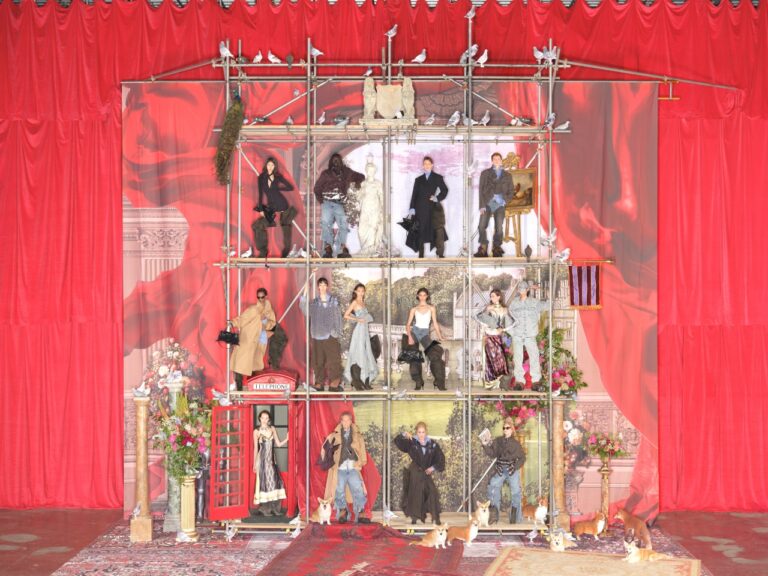
From plant-based feathers to seven-year-olds playing the violin to the most controversial creative debuts, Paris Fashion Week SS26 was yet another reminder that France and fashion will always share the same capital. Not just because of the city’s craftsmanship but also because of its creatives’ approach to the art surrounding it. After merging these two, here are our top 5 highlights.
Do you dare enter, the house of Dior? Written in a giant screen pyramid in the middle of the runway, this was the first thought we absorbed in Jonathan Anderson’s debut for Dior. The creative teamed-up with filmmaker Adam Curtis to open with a video that revisited the house’s highlights, including Christian Dior himself. Anderson celebrated the ones who came before and took the courage to claim his own place in a storied house seconds later.
For his first ready-to-wear collection under the Maison Margiela name, Glenn Martens placed an off-key orchestra of sixty-one children, aged seven to fifteen, on the runway. The raw unrefined sound of Beethoven, surprisingly echoed the house’s character of imperfection and tradition of finding beauty in harshness.
The most surprising appearance of the week was also the most polished. Meghan Markle attended the Balenciaga show, once again wearing a custom Pierpaolo Piccioli piece. The Duchess chose to make an all-white entrance with a bold ground-touching cape layered over a white oversized button-down shirt and wide-leg trousers, which she paired with black pointed heels and a black clutch in hand.
Pierpaolo Piccioli made a walkman and a cassette player his weapon of choice for his debut at Balenciaga. Guests were eagerly unboxing the invitation, searching for clues about the house’s new collection, “The Heartbeat”, only to hear a literal heartbeat. The sounds of the tape merged with the quickened pulse of the guest list, building a rhythm of suspense.
At Maison Margiela’s catwalk, Glenn Martens made sure the show’s beauty wasn’t about makeup. Models walked the runway with surreal mouthpieces, an avant-garde reference to the brand’s four stitch logo, creating the impression of walking puppets. A conversation between past and future, inviting us into Margiela’s story.
Muhseen Abdullahi has an underlying true confidence. It is the confidence of the fact that light is more than light. A designer by profession, he has discovered a design of life which possesses a different relation to things between use and beauty. The consciousness of the essence of light in all its developments is at a high point of fruition; the expression is organic, something more than light, some factor, some revolution of a substance, some feeling manifested by the quality of time and space in the perception of it. It is the awareness of the fact and therefore the method of his expression that makes his exhibition what it is.
To Abdullahi, light is never a mere phase of process technique. It is the substance in which to describe it. It is through light that sympathetic distribution and form are given to air, the substance in which the importance of the meaning is expressed. His work is a manifestation of pity and attitude of sympathy in that the process technique indicates the artistic perception. It does not forcibly impress itself. It patiently awaits. It is worth remembering after its departure because it does not compel remembrance — it commands it.
When a phase of light is presented to him, as has been exhibited in a deep feeling in his first expression of Christmas village lighting in Abuja, designed for the Transcorp Hilton, it gave a commonplace look to a public space a transubstantiation into something sentimentally evanescent. Incandescent light bulbs were hung and the forms gently glowed above the crowd heads and changed the air into something vital. The expression did not only decorate the space there — it was a new expression of it. It taught people to feel the thing. That particular expression made Abdullahi realise that light is not something to be seen at — it is something to be perceived.
In Great Britain this idea grew. Abdullahi, at Castle Park Arts Centre in Cheshire, designed light where the light related to art and did not overshadow it. Exact track lights and linear battens gave texture and tone in subtlety, allowing tranquillity to exist by nature. The result was stillness, but not sterility. This was gaining growing confidence and that maturity which tells one to act with restraint. It was elegant, minimal, and intentional. It was quietness of brilliance.
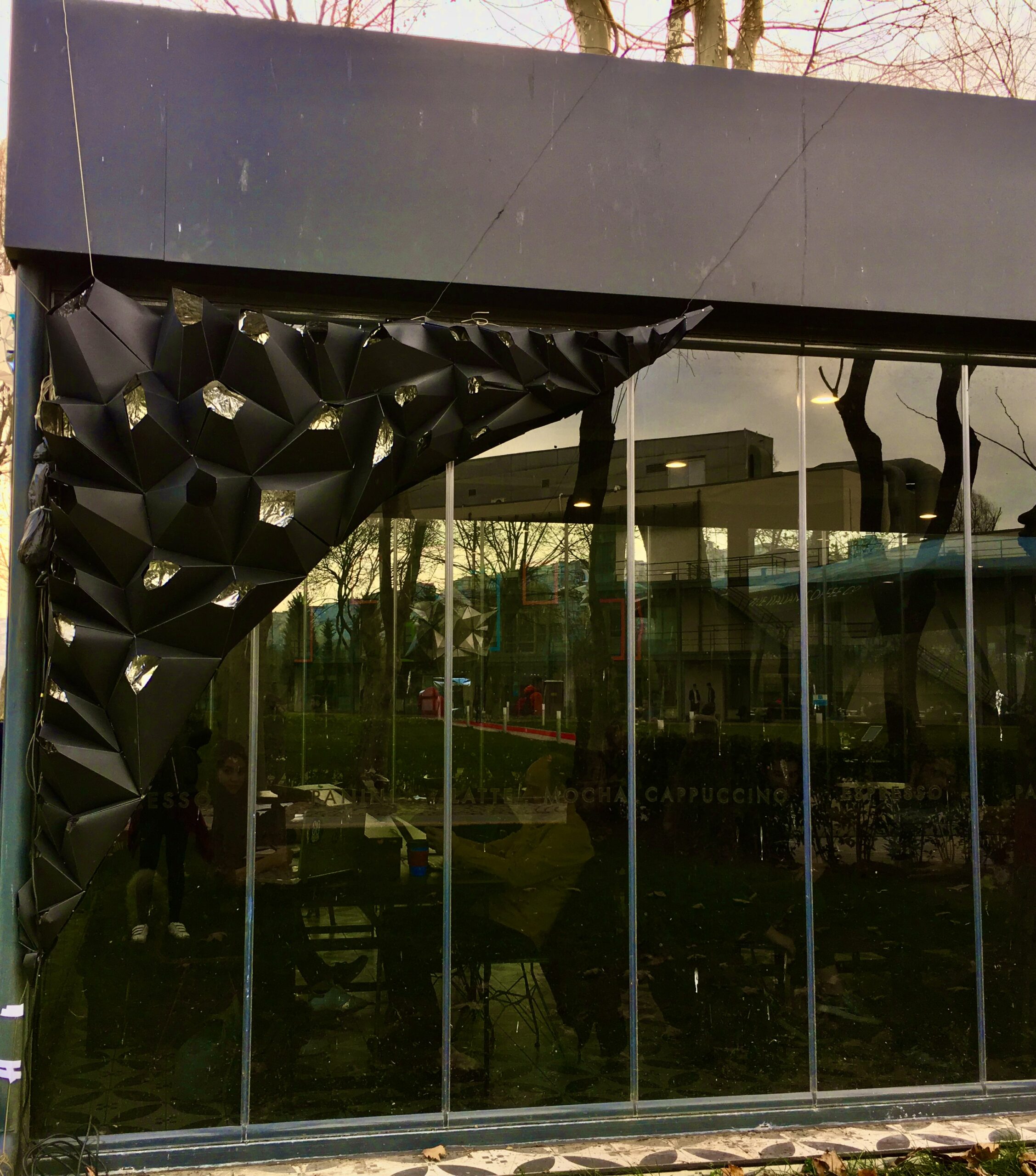
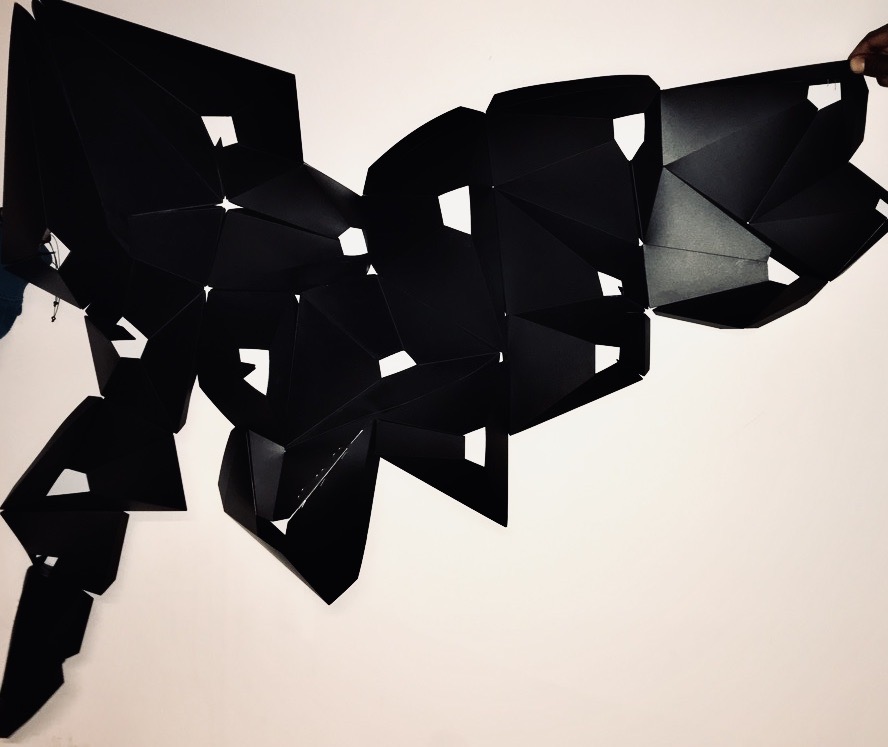
His Sensory Architecture: Light and Sound Interaction installation pursued that ethos. Created during his study at Istanbul Bilgi University, it considered geometric forms, sound, and light as modifiers of perception. It consisted of triangular modules, illuminated by LEDs, which in virtue of their being invited people to conceive space as something breathing, reactive, alive. It was, but not noisy. It was precise yet emotional, analytical and poetical. It demonstrated Abdullahi’s rare sensitivity to produce something naturally technical which was deeply human.
This proves also on a grand scale in the Nasarawa Technology Village Project in Nigeria. Here, as Chief Lighting Designer, Abdullahi has evolved a lighting masterplan on a new estate. This was not pure function, but identity. The feeling and practical were fused in the design, where a harmonious lift of visual rhythm was set forth to interlink street, house, and public fenestration. This was light as infrastructure — yet again, language. The project was national in its congratulations and worth commendation for its balance of sustainability, its emotion, and its vision.
Other creations, like the City Gate EU Day Installation in Abuja and London offices on Ganton Street and Southwark Street, still propound that same search of subtlety. They show consideration of proportion, softness, and human presence. Abdullahi finds tranquillity in purely functional spaces. Unity is produced where most would prefer utility. Abdullahi’s light is sculptured, not placed thus. He designs for human habitation internally, not externally observed.
Abdullahi’s technical mastery of the tools — Dialux Evo, Relux — generates precision, but that is concurrently as fundamental for emotional purposes. It is never cold. Structure in the interest thereof of soul. Light hence becomes an instrument of composition of atmosphere, a little mathematics of comfort. Not relying on extravagance or difference, he finds the appropriate temperature, the relevant tone, tone, and rhythm. His work is regulated, honest, emotionally true. Hence, in the place of novelties, the adequacies are celebrated. That which gives his method its justification is its honesty. Fame and spectacle are not striven for. Limitation, humility, and real concentration.
What he is concerned with is how light in virtue may not be natural but considered sympathetic. All his projects, great or small, are conceived by starting with that premise: how can light connote a link between spaces and people? This is the question which enables the consistency of his work. Hence every experiment bears of itself the physical coherence of being a part of a sounding board of a larger discussion — that between art and architecture, structure and soul. Abdullahi’s conception is simple, but profound. He does not make illumination merely in order to reveal form, but illumination which gives form. His work does not imitate grandeur; it, on the other hand, sustains it.
Fast Fashion’s Swedish leader H&M has announced Glenn Martens, former creative director of Diesel and Y/Project and recently of Maison Margiela, as its new guest designer. While this unexpected collection drops on the 30th of the month, we already took a peek and there’s a lot to say.
H&M has shown its dedication to blending high-fashion with accessible style before with countless creative partnerships, but bringing Martens on board means bringing his unique perspectives that challenge fast-fashion alongside. This time the collection goes beyond creating wearable pieces. It’s all about offering a glimpse of innovation that is usually reserved for the runway. We like to look at it as proof that H&M is positioning itself as a label that is willing to offer its audience a taste of bold, elevated streetwear design, at a price point that is inclusive and approachable.
Photo credit: H&MPhoto credit: H&M
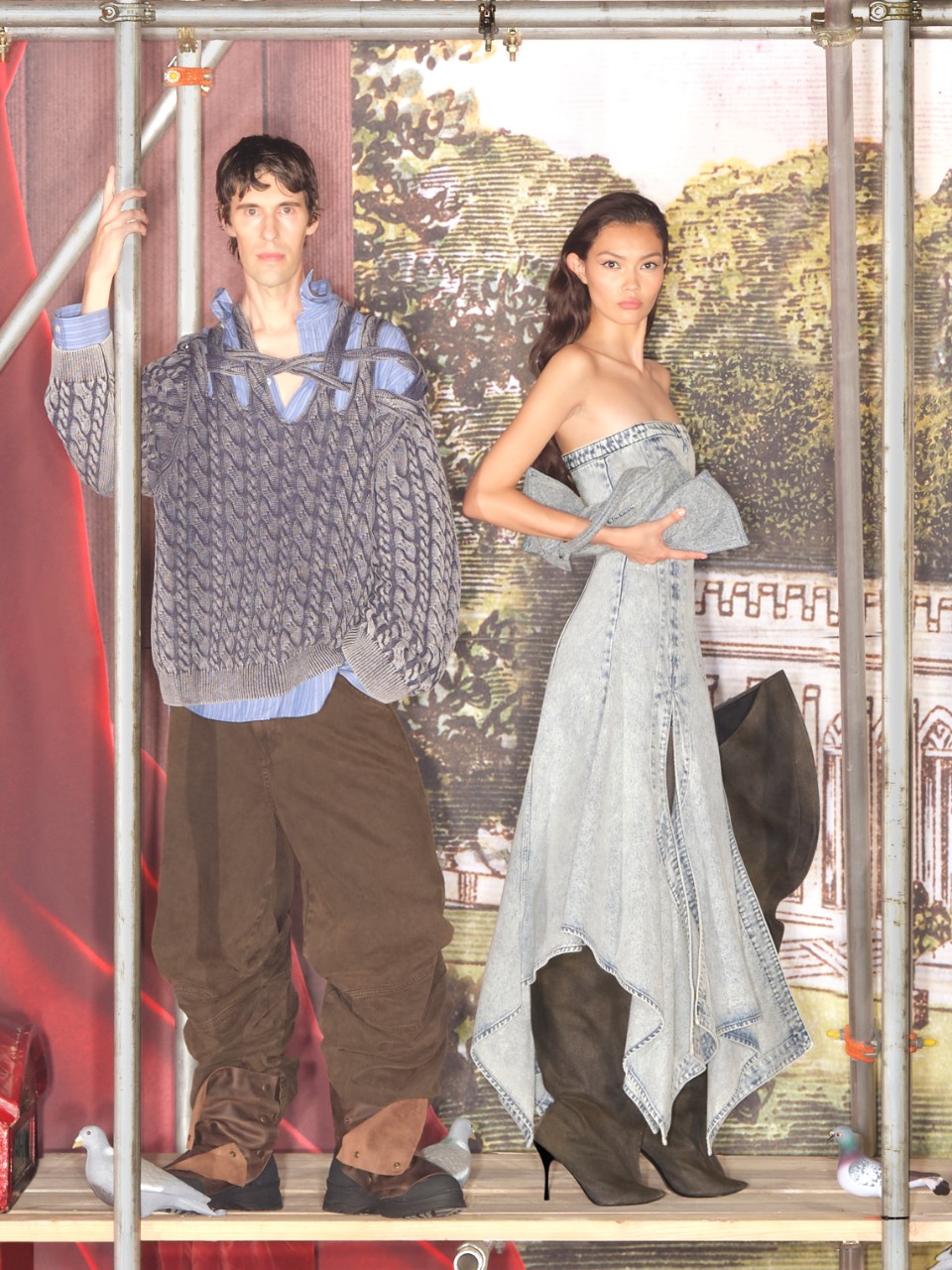
With a nod to his Y/Project heritage, Martens delivers deconstructed silhouettes, Gen Z approved patterns, oversized tailoring, broken down knitwear, giant slouchy boots and an everything-denim philosophy. The collection mixes muted tones with hints of popping color, exploring the contrast between structured suiting and fluid fabrics, layered in unforeseen combinations that feel intentionally refined.
After going through the H&M archive and putting Martens’ signature on it, this collaboration makes us look beyond the hanger. We see it as a statement of the evolving role of fast-fashion and a reminder that this can be exciting again. This is your open call to experiment, engage and rethink what approachable design can look like.
Culture has never been confined by geography, and nowhere is this more evident today than in the world of video games. Once dismissed as a niche hobby, gaming has become one of the most powerful cultural bridges of the 21st century. Online communities, global releases, and cross-cultural storytelling have created a shared space where players from vastly different backgrounds can connect, collaborate, and compete.
Language as a Gateway, Not a Barrier
One of the most striking aspects of modern gaming is how it challenges the idea that language is a barrier to enjoyment. Titles such as Ghost of Tsushima, its sequel Ghost of Yotei, and Silent Hill f demonstrate how players are increasingly embracing games in their original languages. Many choose to experience Ghost of Tsushima with Japanese voice acting and English subtitles, immersing themselves in the rhythms and cadences of the culture it depicts. Similarly, Silent Hill f, set in 1960s Japan, is designed to be played with Japanese dialogue, offering authenticity that resonates across linguistic divides.
This willingness to engage with games in their native languages reflects a broader shift in global entertainment. Just as international cinema and music have found mainstream audiences without needing to conform to English-language norms, games are proving that emotion, atmosphere, and storytelling transcend words. Players are not deterred by subtitles; instead, they see them as a bridge to richer, more authentic experiences.
Shared Worlds, Shared Cultures
Beyond individual titles, online gaming communities have become spaces where language differences are negotiated in real time. Whether collaborating in Fortnite, competing in League of Legends, or exploring vast open worlds in Final Fantasy XIV, players often communicate through a mix of text, voice, and even non-verbal cues. Emotes, pings, and visual signals allow for collaboration that bypasses linguistic boundaries, creating a kind of universal gaming shorthand.
Esports has amplified this phenomenon on a global stage. Tournaments in Seoul, Los Angeles, or Berlin attract audiences of millions, many of whom follow the action regardless of the language of commentary. The spectacle itself becomes the common language, uniting fans in shared excitement.
Global Exchange and Evolving Leisure
The games industry thrives on cultural exchange, with ideas and innovations travelling as freely as the players themselves. Japanese studios have long shaped the design of Western role-playing games, while European indie developers have pioneered mechanics later adopted by American giants. This constant cross-pollination ensures that no single region dominates the creative landscape; instead, gaming evolves as a global dialogue, enriched by diverse perspectives and traditions.
This interconnectedness extends beyond design into the ways societies approach leisure itself. In South Korea, high-tech esports arenas draw crowds comparable to major sporting events, while in Europe and North America, competitive gaming has become a mainstream spectacle. At the same time, conversations about recreation increasingly reflect regional attitudes towards regulation and cultural norms, from the booming esports infrastructure of Seoul to the growing interest in a casino in UAE, which illustrates how globalisation is reshaping not only how we play but also how we frame leisure within society.
Together, these trends highlight how gaming is no longer confined to consoles and PCs but is part of a broader cultural conversation. The blending of design influences and evolving leisure practices demonstrates that play is both a creative and social force, capable of bridging borders and reflecting the shifting values of a connected world.
The Power of Play
Ultimately, the globalisation of gaming is not about erasing differences but celebrating them. A teenager in Manchester might spend an evening immersed in a Japanese horror game, team up with Brazilian players in an online battle, and watch a South Korean esports final, all in the same week. Each of these experiences adds a new layer to the shared cultural fabric, reminding us that creativity and connection are at their most powerful when they travel, transform, and unite.
Far from being a barrier, language in gaming has become a gateway, an invitation to step into another world, to hear its voices, and to understand its stories on their own terms. In doing so, games prove that play is a truly universal language.
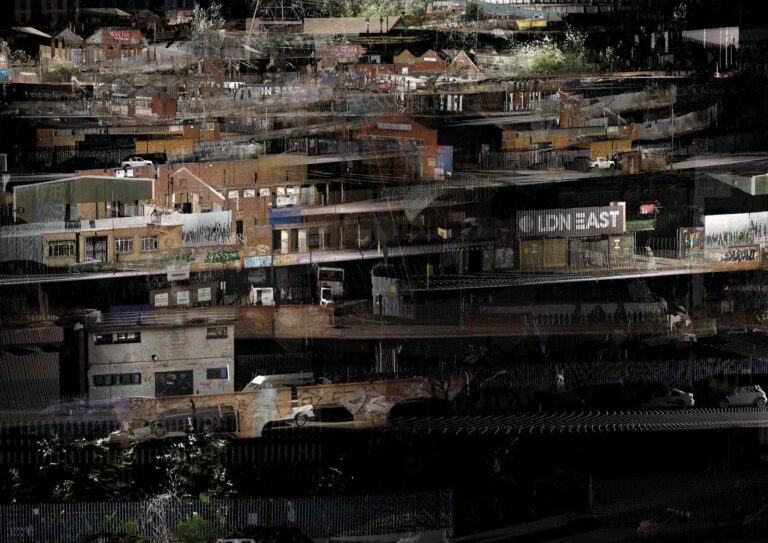
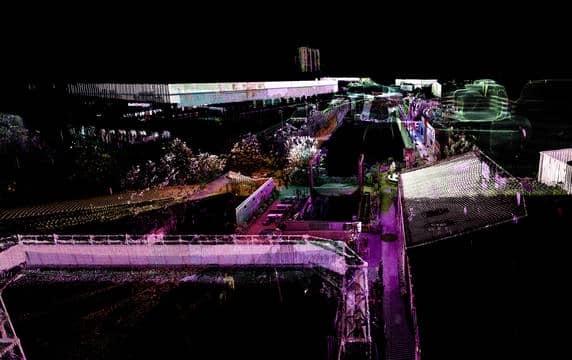
The through-line of Peiyan Zou’s practice is neither material nor a typology but a way of seeing a computational gaze that treats LiDAR not as a survey instrument but as a cultural medium. Across city landscape, architecture, interiors, and time-based art, Zou turns point clouds into arguments about perception: how measurement becomes image, how error becomes form, and how machine vision can widen the moral and imaginative range of creation. A London based artist designer and researcher, he has been recognised with the RIBA Donaldson Medal, the Bartlett Medal, and the Fitzroy Robinson Drawing Prize. He works at the seam between technical exactitude and poetic disturbance.
Zou says: “I try to use LiDAR’s so called ‘errors’ rather than fix them. The variety in my practice from objects, interiors, and architecture comes from one aim: exploring a more universal, future adaptable method of creation, where machine vision is part of the toolkit.”
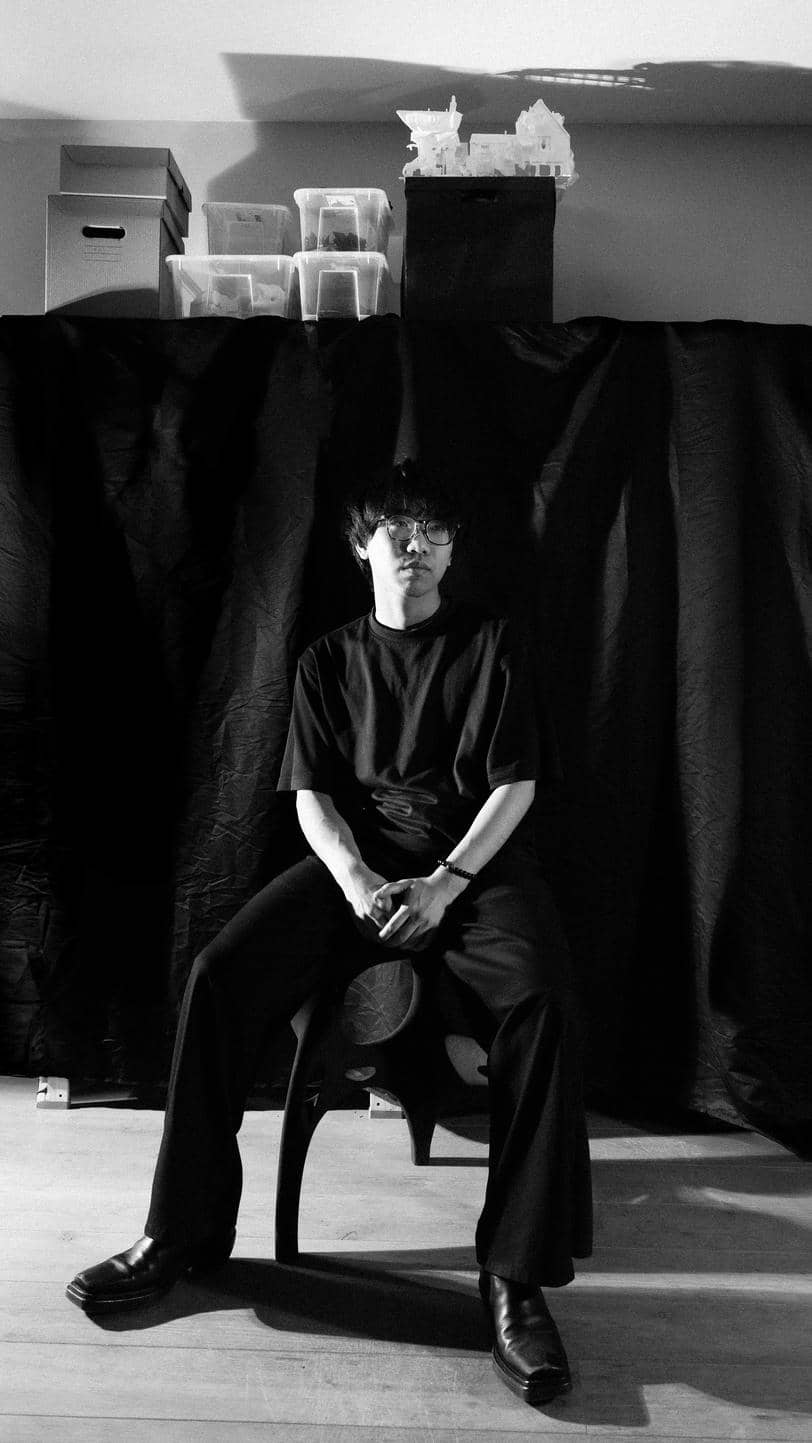
Peiyan Zou in his studio, seated on Coccyx— a piece he designed for Wedge’s Epoch I collection
Architecture: From “As-Sensed” to “As-Built”
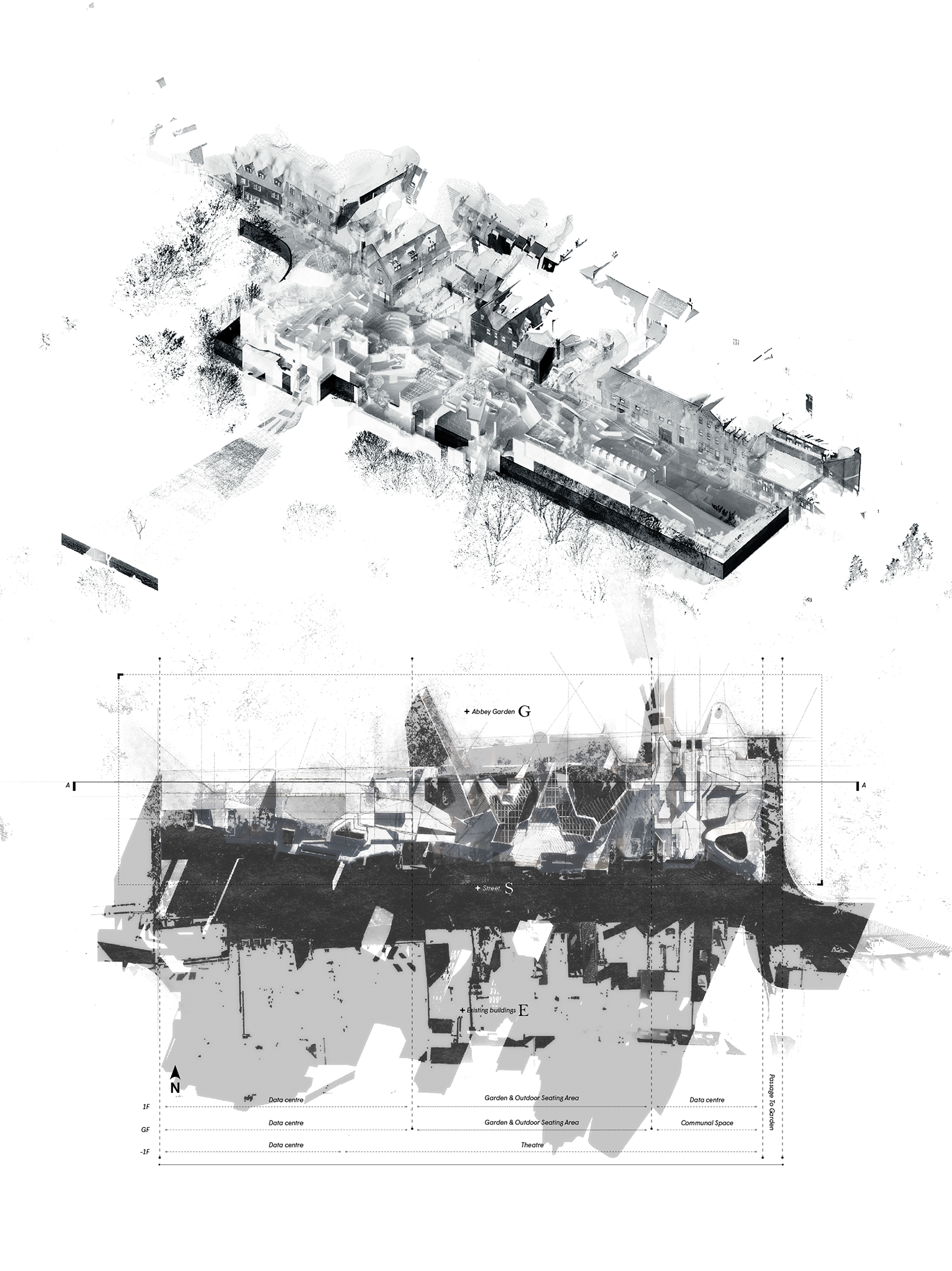
Zou’s LiDAR driven research into architectural and urban perception follows a clear arc. It begins with early student projects, moves through the AIA New York hosted PlanScapeArch Conference 2024 keynoted by Iain Macdonald, and extends into the context of the 2025 Venice Biennale. Here, LiDAR is recast not as a street “capture” device but as a medium for expressing urban uncertainty: occlusion, motion blur, and spectral drift, the very phenomena that conventional pipelines try to erase. Rather than sanitise them, Zou keeps and activates these traits, letting confidence scores and imaging artefacts drive sensing and volumetric reconstruction. The result is an as sensed urbanism that treats noise as civic information, not computational waste.
In Peter Cook’s studio, most visibly on the Serpentine × LEGO 2025 project and under NDA on Saudi commissions, Zou has been the quiet engine behind customised parametric toolsets. As Architectural Designer, he turns concepts into actionable geometry and feeds the results back into the design loop, working at the boundary between workflow and authorship.
Recently he has extended this method to the digital twinning of Sir Peter Cook’s drawings. These are not simple copies but dynamic and interactive counterparts. In collaboration with Norwich University of the Arts on the Peter Cook Wonder Hub, Peiyan contributed to the interior exhibition design and integrated these twins into the spatial narrative. The result preserves the temperament of the originals while opening new modes of interpretation, including animated presentations, VR experiences, and live 3D models generated from 2D drawings. This work lays a clear pathway from pieces on the studio wall to a responsive computational platform.
Interiors: Performance as a Material
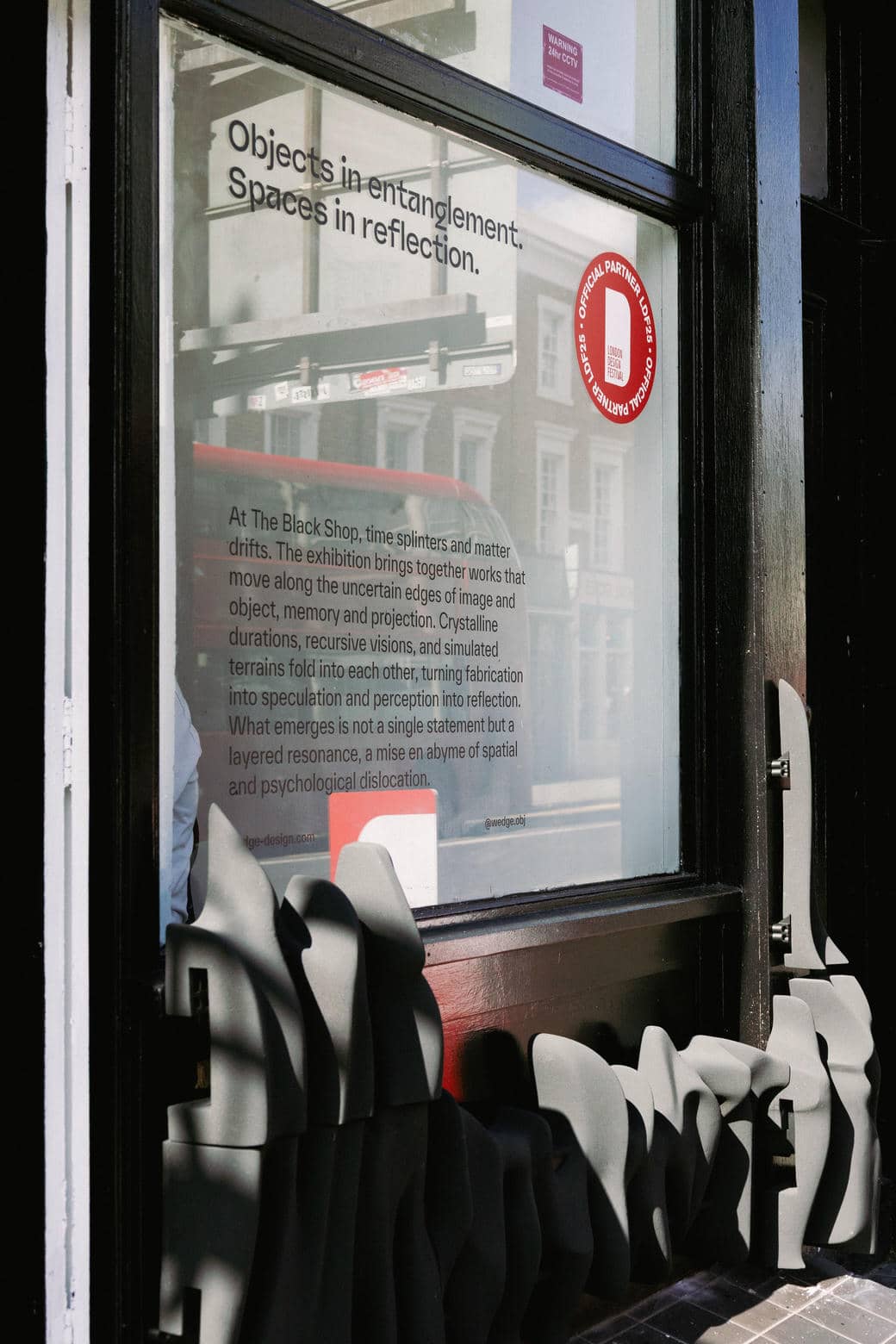
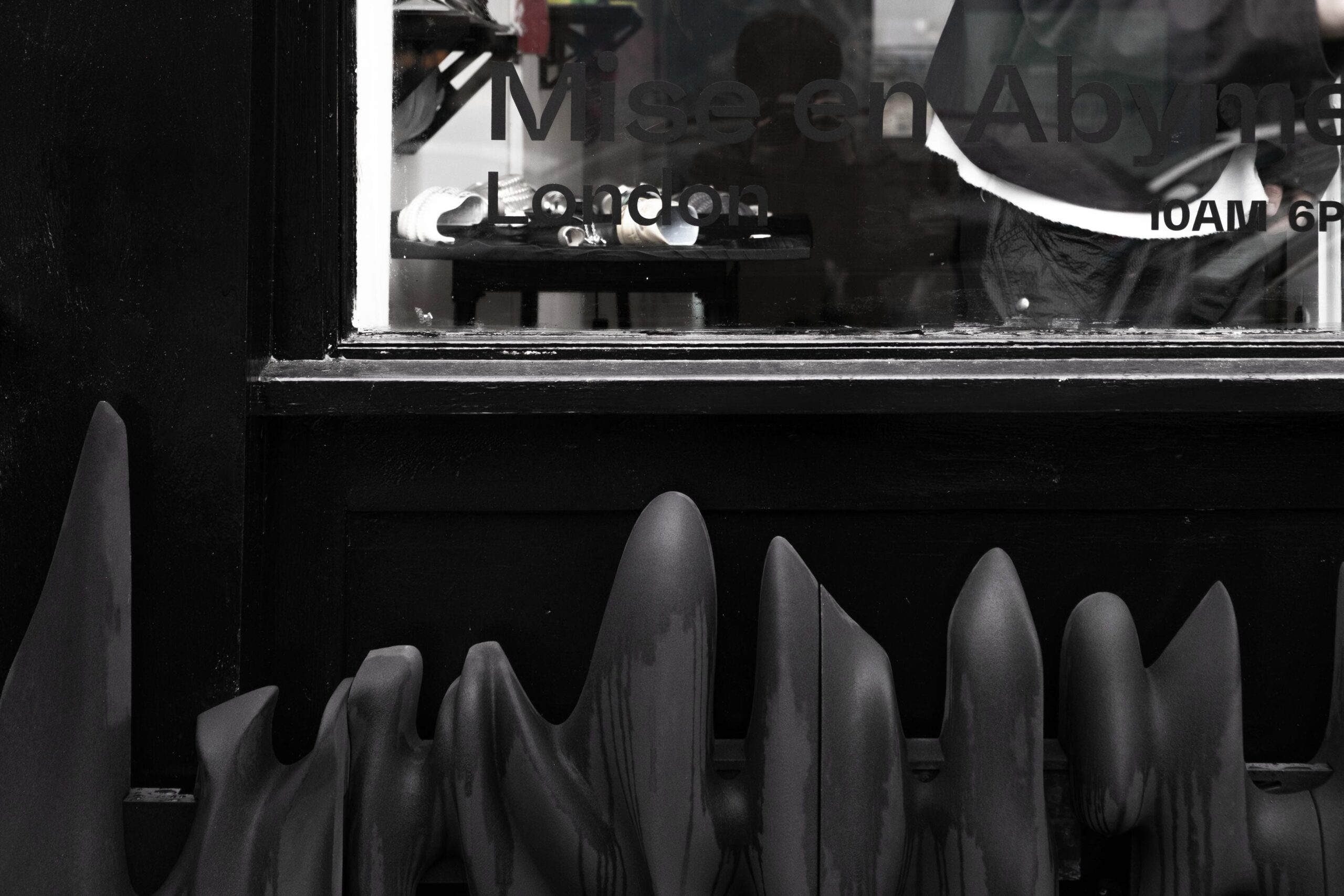
As Director and co-founder of Wedge, Zou translates scanning logics into inhabitable façade details and interior objects. He has built a generative toolkit in which LiDAR-based sampling seeds the form and surface behavior of furniture and cladding—a future-facing spatial experiment developed with Chinese manufacturers and labs rather than a parametric “style.” The medium is silica sand, 3D-printed with a biodegradable resin binder; the material can be disassembled and reused up to eight cycles.
“Imagine a chair at home,” he notes. “Two years later you return it to Wedge. We mill and sieve it, reload the sand, and reprint a table. Furniture stops being a fixed object and becomes geometry that adapts to need.”
This proposition is already in production. Wedge has launched market-ready pieces at 3daysofdesign in Copenhagen, at London Design Festival, and at Material Matters, and has delivered what is billed as the first mass-produced, silica-sand-printed furniture for a Swiss hotel client. ELLE Decoration UK recognised the strength of this approach and selected Wedge for an exclusive feature during London Design Festival, the only exhibitor to receive this distinction and to represent Material Matters. The studio is now scaling into more spatial commissions, including landscape components for a new project in Denmark and an experimental dining environment for a noted restaurant, with Zou treating Wedge as a multi-scalar playground. The stakes are clear: this reframes computation from prototyping myth to supply-chain reality, tying algorithmic authorship to durability, sustainability, and novel materials, while testing a bold commercial pathway for his machine-vision design methodology.
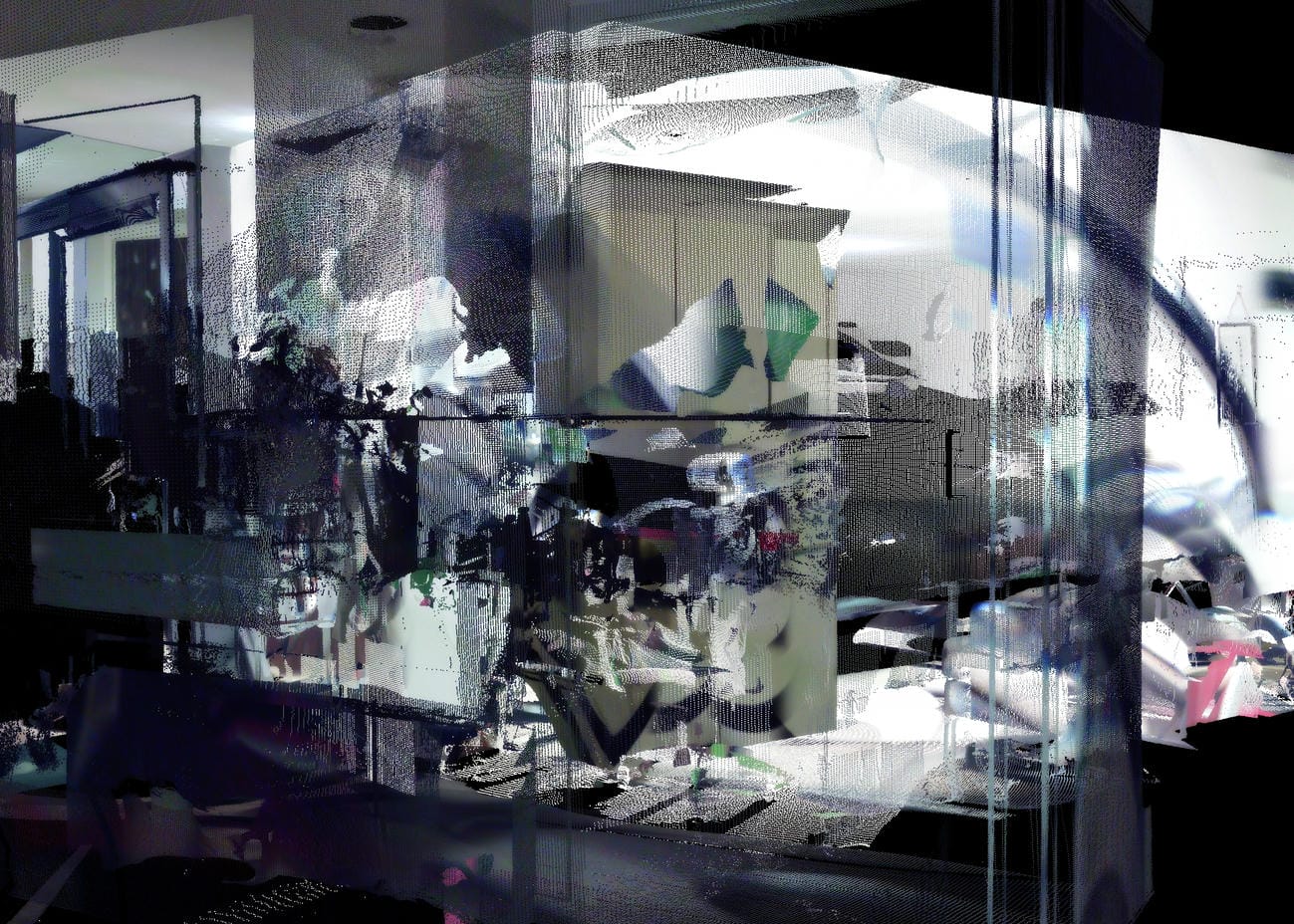
Zou’s artistic practice orbits the ethical dimension of machine vision. From the Peckham Rye Old Waiting Room to galleries in Hackney, he treats LiDAR point clouds as paint, as a photographic medium, and as a sculptural substrate. The data can be layered, abraded, and made to flow. His visual language of fracture, erosion, and apparition grows from a refusal to “correct” the scan. Errors are not edited out; they are inscribed as structure, implicating the viewer. If the machine looks for us, what do we still ask of the image? Moving between design and art contexts, the work declares a hybrid grammar that is both proposition and tool, much as painters once used the camera obscura to pursue realism.
“This isn’t a side project that wandered in from my architectural journey,” Zou notes. “My education at The Bartlett School of Architecture taught me to think about architecture from non-architectural angles. “I value not only the novelty of this method but its rigour. It is a way of working in which drawing, making, research, and experimenting strengthen one another.” Seen across venues, exhibitions, and collaborations, a clear picture comes into focus: an artist designer using advanced technologies to explore how we see and feel space, pointing toward futures that may be more posthuman in how they sense the world.
A Grammar of “Constructive Uncertainty”
What distinguishes Zou’s practice is his refusal to police the boundary between tool and medium. In architecture, LiDAR unsettles the authority of spatial measurement. In interiors, it choreographs encounters between the body and recyclable materials. In art, it stands in for the camera obscura’s pinhole and exposes our appetite for augmented vision. For him, technology is a grammar whose language shifts with context. That portability keeps the work singular without slipping into techno kitsch. His computational instruments—sampling, voxelisation, and error field transforms—stay legible whether scripting a façade, shaping a seat, or composing scan-based photographs.
The risks are real. Without a careful ethics of selection—what to keep and what to erase—the poetics of the artefact can slide into mannerism. Zou’s strongest works confront this directly and bind aesthetics to responsibility. Is a city sensed, and if so, by whom, under what conditions, and to what ends. When these questions are made explicit, the work’s beauty hardens into critique.
Peiyan Zou’s contribution is to reposition frontier technologies as civic instruments: tools that do not simply optimise workflows but reorganise how we attend to the world. He insists that computation carries a responsibility to perception, and his projects model a practice in which architecture, interior design, and art serve as three theatres for the same argument. When treated with care, uncertainty isn’t a flaw in our tools. It is part of the world we share. In this spirit, Zou’s LiDAR aesthetic is less about ever finer scans and more about a truer way of living in and with places.
Margaret Sohn has returned with ‘Tourist Mind’, their first Miss Grit release since 2023’s Follow the Cyborg. “It’s about how curiosity for other people’s thoughts can slowly disorient you and make it harder to return to yourself,” they remarked. Listen to the swirling, atmospheric track below.
Oneohtrix Point Never has announced a new album titled Tranquilizer. The follow-up to 2023’s Again is set for release on November 17 via Warp. The album was inspired by Daniel Lopatin’s discovery of “a vast archive of ’90s sample CDs had vanished from the Internet Archive,” as well as a routine visit to the dentist. Today, he’s previewed it with three hypnotic instrumentals: ‘For Residue’, ‘Bumpy’, and ‘Lifeworld’. That last one also comes with a video that Lopatin directed himself. Take a listen and find the LP’s cover art and tracklist below.
“It’s a record shaped by commercial audio construction kits from a bygone era — an index of clichés turned inside out,” Lopatin said in a press release. It is a return to a process-oriented form of music making for me that I felt best evoked a certain kind of madness and ennui in the heart of culture today.”
Tranquilizer Cover Artwork:
Tranquilizer Tracklist:
1. For Residue
2. Bumpy
3. Lifeworld
4. Measuring Ruins
5. Modern Lust
6. Fear of Symmetry
7. Vestigel
8. Cherry Blue
9. Bell Scanner
10. D.I.S. 11. Tranquilizer
12. Storm Show
13. Petro
14. Rodl Glide
15. Waterfalls
As autumn settles across city streets and golden leaves begin to fall, fashion turns its focus toward refinement, texture, and individuality. Neiman Marcus welcomes Fall 2025 with a collection that celebrates the evolution of modern femininity. This season’s new arrivals embrace artistry, craftsmanship, and versatility, offering garments that are as expressive as they are timeless.
From bold prints to sculptural silhouettes, these six designs, by Johnny Was, L’Agence, Rebecca Vallance, Rails, ALEMAIS, and Cinq à Sept, capture the confidence, creativity, and elegance that define the contemporary woman. Each piece is a statement, a story, and an invitation to rediscover what it means to dress with meaning.
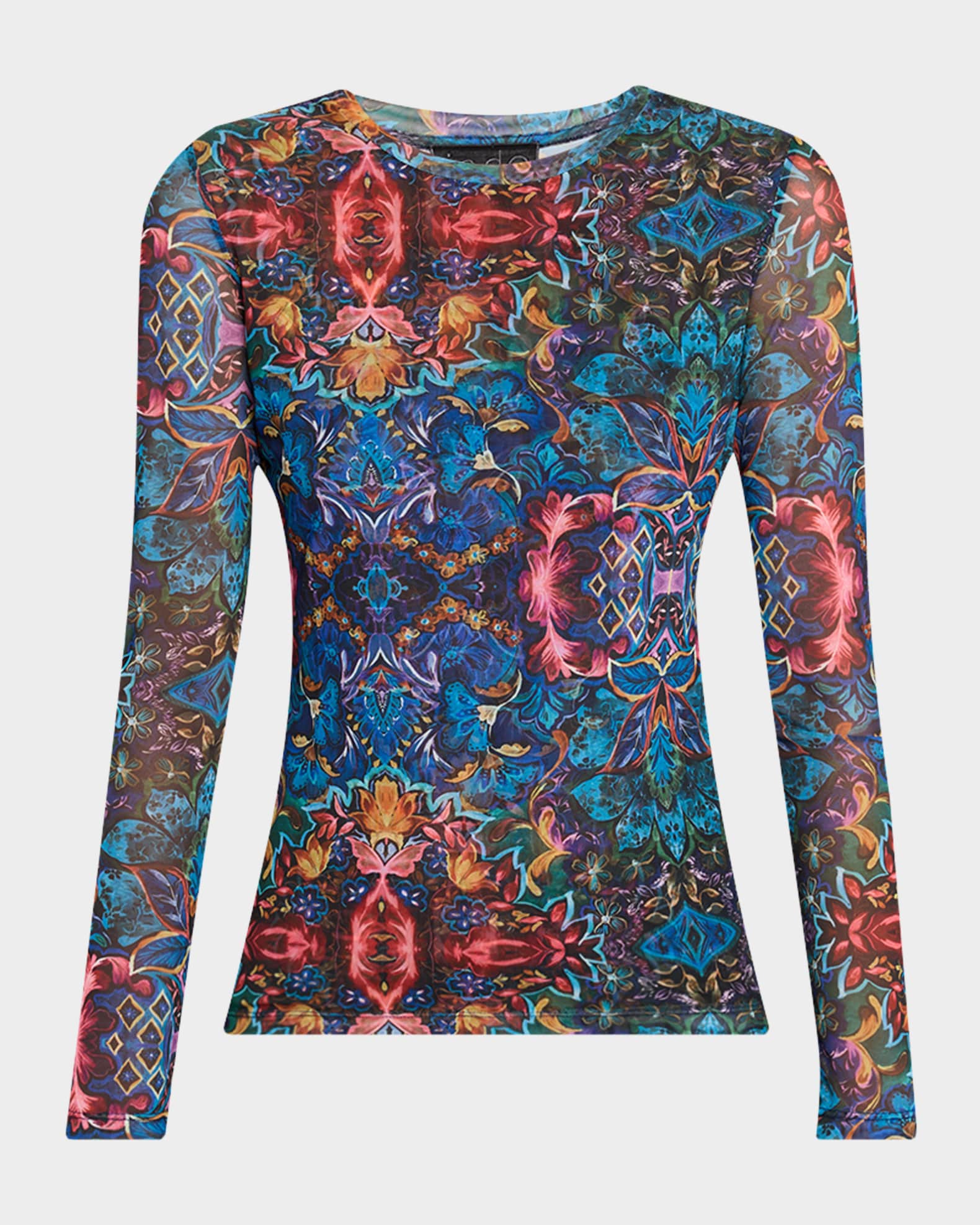
Johnny Was – Natalie Kaleidoscope-Print Mesh Tee ($148)
Vibrant, free-spirited, and endlessly versatile, the Natalie Kaleidoscope-Print Mesh Tee by Johnny Was embodies the artistic soul of the brand. Priced at $148, this long-sleeve top is crafted from lightweight mesh, offering a breathable, body-skimming fit that feels effortless against the skin.
The print is a masterpiece of color and geometry, featuring radiant shades of red, sapphire blue, violet, and gold woven together in a kaleidoscopic pattern that celebrates individuality. The crew neckline and pullover style make it practical, while the vibrant design transforms it into a statement piece.
Perfect for layering, the Natalie Tee pairs beautifully with tailored blazers, denim jackets, or structured skirts, adapting easily from daywear to evening. Its sheer texture adds depth and sophistication, lending an element of artful edge to any ensemble. The piece is ideal for women who embrace color as an extension of personality, creative, bold, and unapologetically expressive.
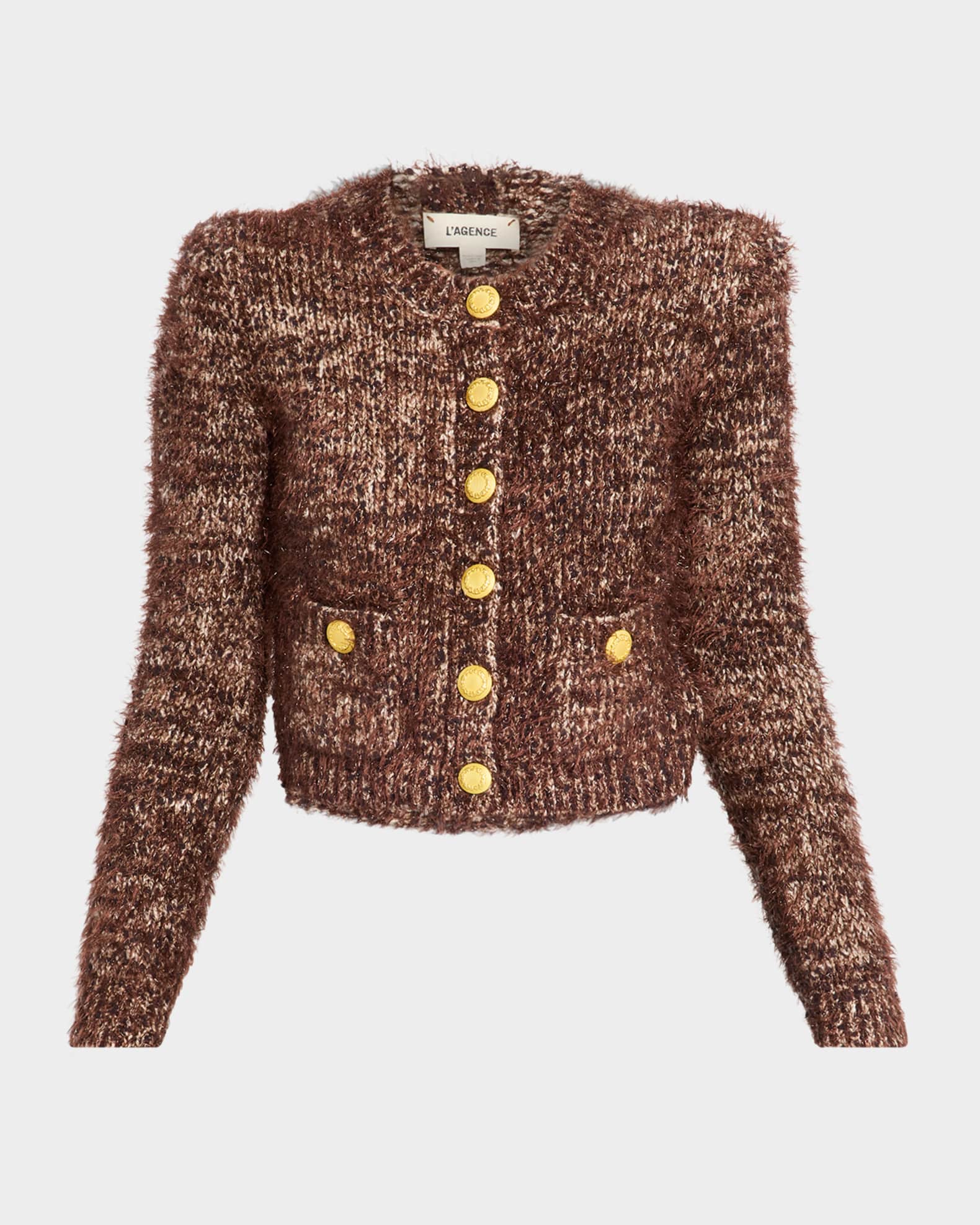
L’Agence – Una Knit Cardigan ($550)
The Una Knit Cardigan from L’Agence, priced at $550, is an ode to understated luxury. It captures the brand’s signature blend of Parisian polish and California ease, creating a piece that feels both chic and inviting.
Made from a soft boucle-style knit, this cardigan offers texture and warmth without heaviness. The rich chocolate-brown tone gives it a sense of depth, while structured shoulders and a cropped silhouette add a modern touch. The fit is tailored to flatter, sitting neatly at the waist for a feminine shape.
Its most striking feature is the row of gold embossed dome buttons that gleam subtly against the knit fabric, exuding quiet sophistication. The cardigan transitions seamlessly from workday elegance to evening refinement. It can be styled with high-waisted trousers, silk skirts, or classic denim, making it an adaptable essential.
L’Agence continues to master the art of refined simplicity. The Una cardigan is not merely a layering piece; it is a wardrobe foundation, timeless, versatile, and undeniably elegant.
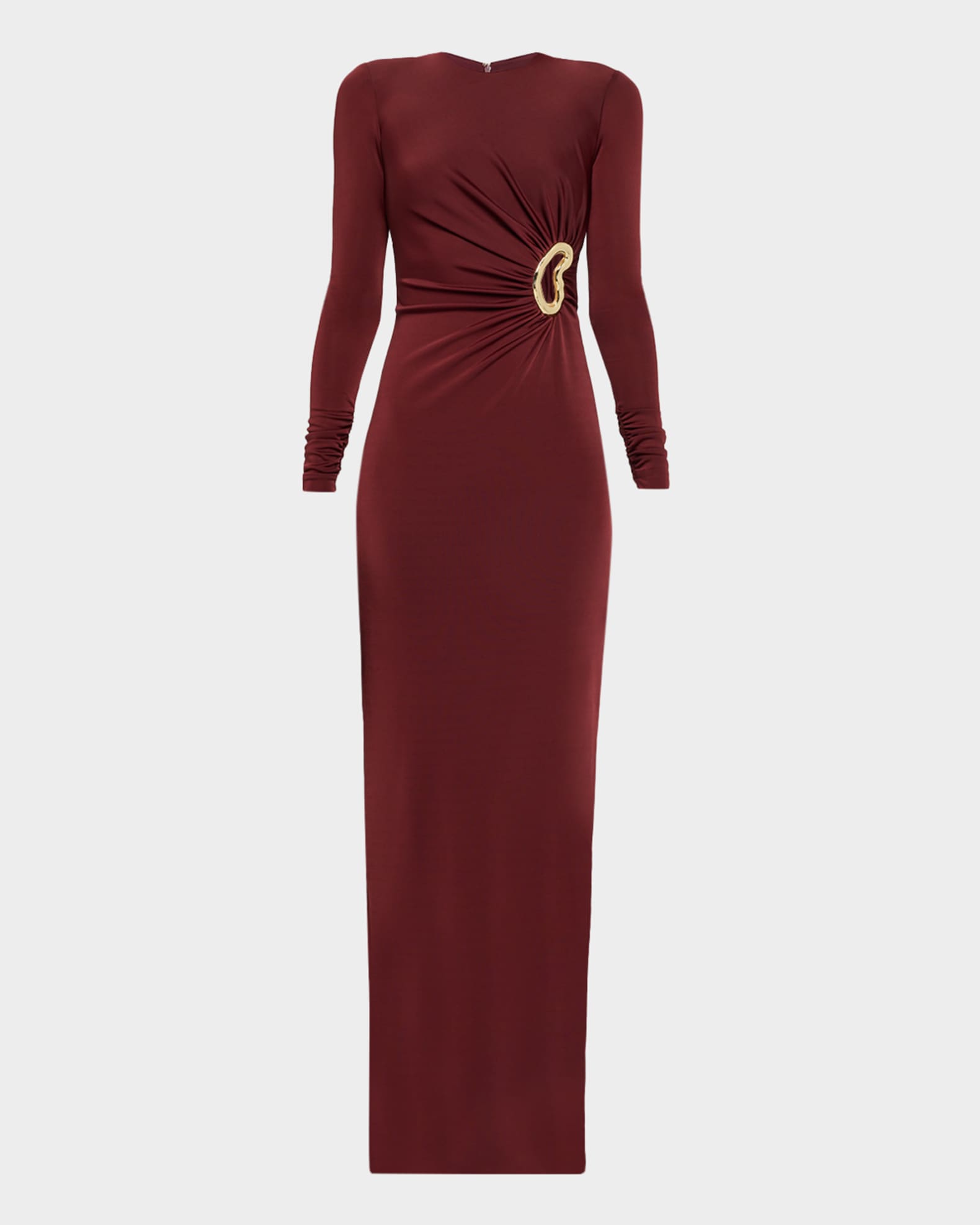
Rebecca Vallance – Mischa Cutout Jersey Column Gown ($795)
For moments that call for poise and drama, the Mischa Cutout Jersey Column Gown by Rebecca Vallance offers effortless glamour. Priced at $795, this gown redefines eveningwear through minimalist architecture and fluid form.
The gown is crafted from a premium stretch jersey, designed to sculpt and flatter while maintaining comfort. Its deep wine hue evokes sophistication and complements the season’s palette of rich, earthy tones. The long sleeves and high jewel neckline create a sleek profile, while the gathered waist and metallic cutout detail add dimension and intrigue.
At approximately 58 inches in length, the gown falls gracefully to the floor, with a subtle back slit allowing for movement. Every seam and curve is precisely placed to enhance natural shape without excess ornamentation.
Rebecca Vallance is renowned for her structured, feminine designs, and the Mischa gown perfectly encapsulates that vision. It is ideal for black-tie events, elegant dinners, and red-carpet occasions, offering the kind of confidence that comes only from impeccable tailoring. With its sculptural silhouette and refined sensuality, the Mischa gown turns simplicity into sophistication.
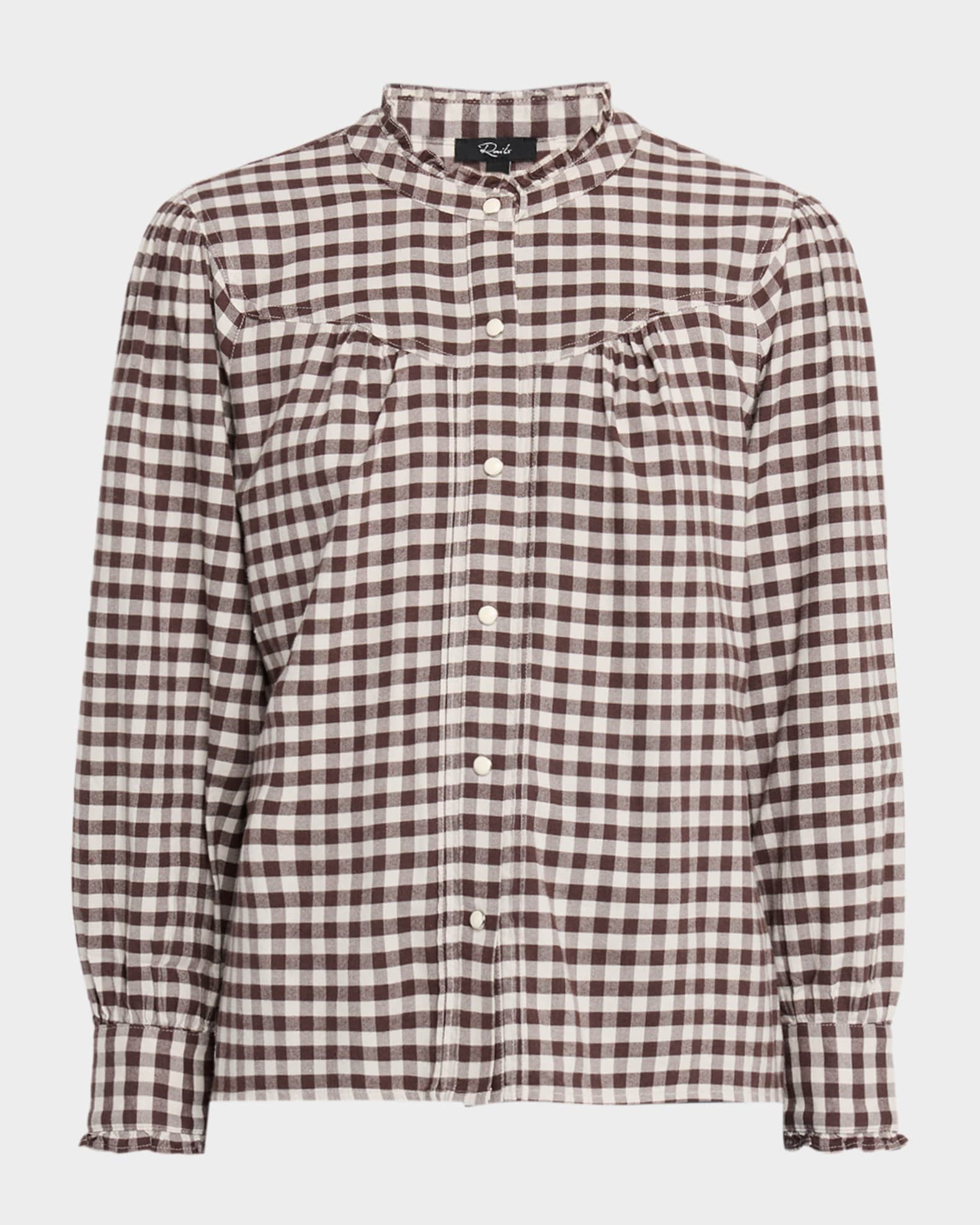
Rails – Alanna Check Long-Sleeve Blouse ($198)
The Alanna Check Long-Sleeve Blouse by Rails, priced at $198, is a modern reinterpretation of the timeless check pattern. It brings together comfort, versatility, and charm, embodying the brand’s relaxed yet elevated aesthetic.
Made from a lightweight cotton blend, the blouse feels soft and breathable while maintaining its structure. The chocolate and cream check pattern evokes the warmth of fall, creating a look that feels familiar yet distinctly refined. Delicate details such as a ruffled stand collar, seamed yoke, and button cuffs add an air of subtle romance.
The blouse drapes beautifully, making it easy to style for different occasions. Pair it with denim for casual weekends, or tuck it into tailored pants or a pencil skirt for a work-ready ensemble. Its versatility lies in its simplicity, an everyday piece that feels luxurious in both design and construction.
Rails has built its reputation on creating wardrobe essentials that bridge comfort and sophistication, and the Alanna blouse is no exception. It captures the effortless charm of the modern woman, natural, poised, and quietly confident.
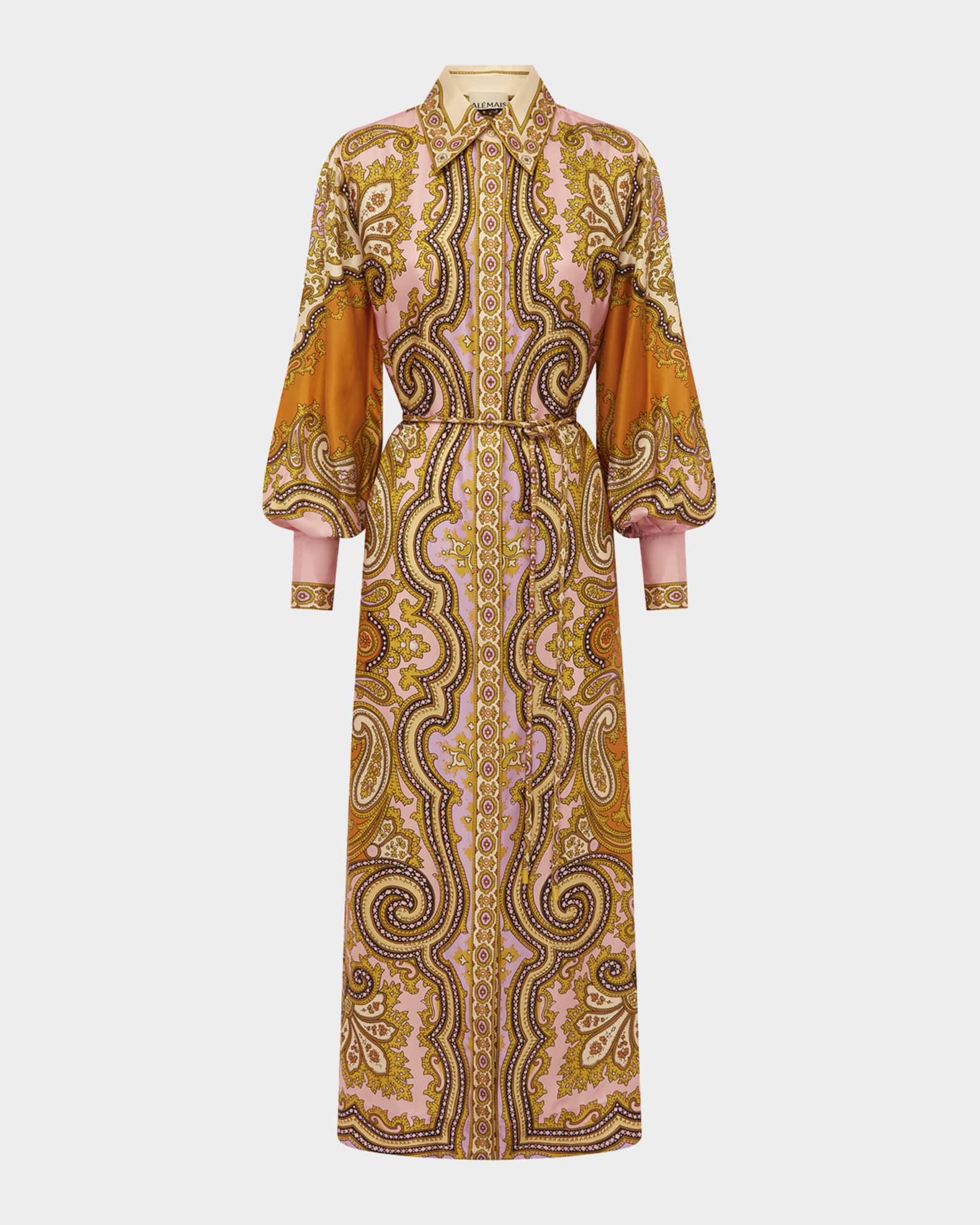
ALEMAIS – Clemenza Silk Midi Shirtdress ($790)
The Clemenza Silk Midi Shirtdress from ALEMAIS, priced at $790, is a true statement of artistry and craftsmanship. Crafted from 100 percent silk, it exudes movement, lightness, and elegance. The design is an homage to vintage bohemian glamour, brought to life through a contemporary lens.
Its paisley print is bold and mesmerizing, featuring golden ochre, rose pink, and olive green hues that create a visual rhythm across the flowing silk. The classic shirtdress silhouette provides structure through a button-down front and shirt collar, while balloon sleeves and a self-tie belt add softness and definition.
The midi length strikes a perfect balance between sophistication and ease. Worn with ankle boots and a crossbody bag, it channels relaxed daytime elegance. Paired with heels and statement jewelry, it transforms into evening-ready refinement.
ALEMAIS is known for infusing storytelling into design, and the Clemenza dress tells a story of artistry and freedom. It appeals to women who see fashion as an extension of creativity, those who seek clothing that expresses identity, history, and beauty in every thread.
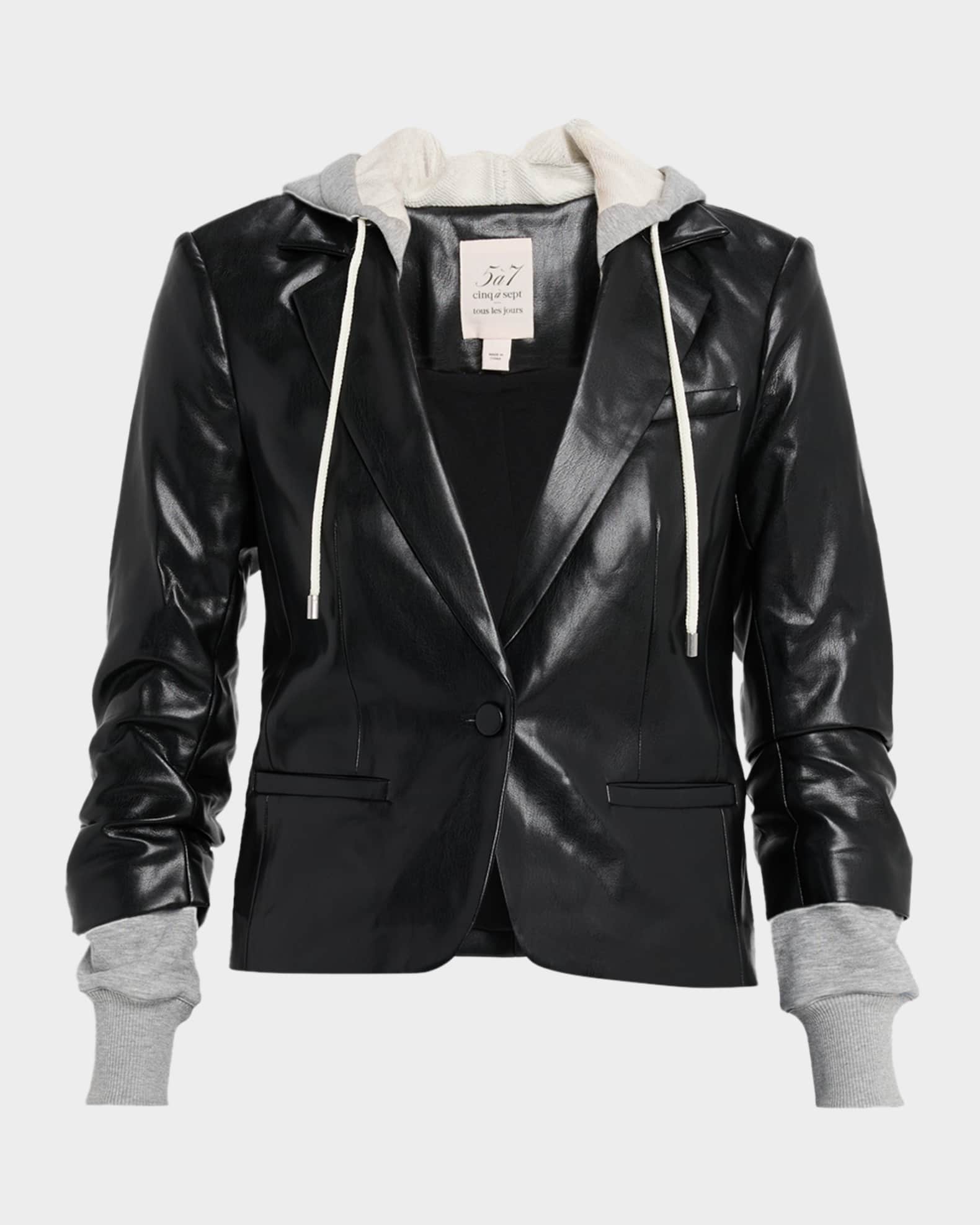
Cinq à Sept – Hooded Vegan Leather Combo Blazer ($495)
Modern, versatile, and effortlessly cool, the Hooded Vegan Leather Combo Blazer by Cinq à Sept redefines contemporary tailoring. Priced at $495, it merges sleek sophistication with urban sensibility.
The exterior is made from high-quality vegan leather (polyurethane) that mimics the texture and luster of genuine leather while aligning with sustainable, cruelty-free values. What sets this piece apart is its innovative design: a drawstring knit hood and matching cuffs are seamlessly integrated into the blazer’s structure, creating a perfect fusion of streetwear and tailoring.
The design includes a notched collar, single-breasted front, and slim fit that contours the body. The combination of textures, smooth leather and soft knit, adds contrast and versatility. It can be styled with jeans and sneakers for a casual city look or paired with tailored trousers and heels for a bold, modern take on professional dressing.
Cinq à Sept is celebrated for its ability to blend femininity with strength, and this blazer exemplifies that vision. It is designed for the woman who is confident in her individuality, dynamic, adaptable, and effortlessly sophisticated.
The Neiman Marcus Woman: Style Redefined
Each of these pieces captures a facet of who the Neiman Marcus woman is today. She is multifaceted, confident, and deeply attuned to the language of luxury. Her wardrobe is not about trends; it is about authenticity. She dresses to express, not impress.
The Johnny Was Natalie Tee mirrors her creativity and love for color. The L’Agence Una Cardigan speaks to her appreciation for structure and timeless craftsmanship. The Rebecca Vallance Mischa Gown embodies her quiet confidence and poise. The Rails Alanna Blouse reflects her effortless sophistication. The ALEMAIS Clemenza Dress reveals her artistic spirit, while the Cinq à Sept Blazer captures her modern edge and independence.
Together, these designs form a tapestry of style that is elegant, expressive, and enduring. From luxurious fabrics to intricate details, each garment showcases the Neiman Marcus commitment to quality and individuality. Whether priced at $148 or $795, every piece offers a distinct voice within the same symphony of refined design.
This season, Neiman Marcus reminds us that true style is not about extravagance, it is about presence. It is the confidence that comes from wearing something beautifully made, the ease of feeling both powerful and comfortable, and the joy of dressing for oneself.
Fall 2025 is a celebration of the art of dressing well. These new arrivals are more than clothing; they are expressions of identity, craftsmanship, and timeless grace. In every thread, color, and cut lies the promise of elegance, modern, meaningful, and unmistakably Neiman Marcus.
Disclaimer: This article may contain affiliate links, and we may earn a commission if you make a purchase through these links.
International travel can be both exciting and enlightening, but it can also be stressful and challenging. Travel forces you to face unfamiliar places and situations and make quick decisions, which isn’t always easy to deal with, but it’s certainly a part of why people love to travel so much.
Thankfully, there are ways to make things easier and avoid undue stress. The number one piece of advice experienced travelers can tell you is quite simple: be prepared. Packing the right things can save you a lot of headaches down the line.
On the flip side, bag space is at a premium whenever you’re travelling. Unless you’re traipsing around the world in a private jet, you’ll need to carefully pick and choose what to bring with you.
Here are 6 often forgotten travel items which you should consider bringing on your trip, based on the opinions of seasoned travelers.
To be clear, the list deals with overlooked essentials, which means we won’t be discussing the basics like toiletries and rain coats. Instead, we’ll focus on items that most people don’t even think about, but which can make almost any trip significantly easier.
1. Universal Power Adapter
Anyone with a bit of worldly experience can tell you that power plugs aren’t universal. Different countries often use different plugs, sockets, and even voltages in their power outlets. The further away you are from home, the more likely you are to run into this issue.
At best, this can leave you stranded without a way to charge your electronics, which is a major setback in this day and age. At worst, plugging your devices into outlets with mismatched voltages can damage them.
With that in mind, a universal power adapter can be a true lifesaver. This simple and relatively affordable gadget allows you to plug your electronic devices into different types of power outlets around the world by providing the correct physical plug shape and a universal voltage range.
Universal power adapters are small, convenient, and an excellent addition to any traveler’s kit.
2. Virtual SIM Card
The humble phone is likely the most useful and ubiquitous tool for modern travelers. However, going to different countries means that you have to consider whether you’ll be able to use your phone without incurring massive roaming charges.
For most people, the answer is simple: get a SIM card from a local carrier or provider. Better yet, there are companies out there that provide SIM cards specifically designed for international travel, such as OneSimCard and GigSky. These are especially useful for people who frequently pass through international borders without sticking to one place for too long.
Enter virtual SIM cards, also known as an eSIM. These ‘cards’ are essentially software that functions like a traditional physical SIM card, allowing you to connect to cellular networks for calls and data. However, they don’t require you to actually swap any physical cards.
Not only does this save you time because you don’t have to fumble around swapping cards in your phone, but it also means you don’t have to worry about losing any tiny Nano SIMs. It’s a win-win and an incredibly convenient option.
3. VPN
Travelers often have to rely on public networks for their internet access. Airports, hotels, coffee shops – they’re all very helpful in that regard, but these public networks leave you exposed to hackers and other dangers.
A VPN (Virtual Private Network) is a service that encrypts your data and protects it by routing it through a secure tunnel. It essentially masks your online activity.
Besides added safety, VPNs have other uses. For example, they can help you bypass geo-restrictions for specific online content. These restrictions sometimes exist due to censorship, but are often a matter of copyright issues.
Besides the obvious practical benefits, a VPN can also grant you access to entertainment from anywhere in the world. Services such as Netflix and Amazon Prime often offer different movies and shows in different countries due to licensing. VPNs allow you to sidestep these restrictions and enjoy these services’ entire libraries. They are also handy for other forms of geo-sensitive entertainment, such as using sites based offshore to play your favorite casino games seamlessly without any jurisdiction limitations.
4. Multitool
Multitools are versatile tools that combine multiple folding implements into one handy item. These typically include knives, can and bottle openers, scissors, screwdrivers, and a variety of other useful tools.
The most well-known example of a multitool is the famous Swiss Army Knife. It’s a perfect showcase of why you might want one: a large collection of handy things crammed into one tiny, foldable package.
While it seems like an obvious pick, most people these days don’t really consider that they might need a screwdriver or a can opener on the go. What are the chances that you’ll need any of this unless you’re hiking or camping?
Our answer? You’d be surprised. Most multitool implements fall into the category of “you don’t really need one until you really need one.”
However, keep in mind that you likely won’t be able to take a multitool into an aeroplane cabin. If you opt to pack one, leave it in your luggage while flying.
5. Water Bottle With a Filter
One of the first things people end up asking when they visit a new location is: Can I drink the tap water here?
The answer is sometimes ‘yes’, sometimes ‘no’, and sometimes ‘yes, but you probably shouldn’t.’
Either way, access to clean drinking water is absolutely crucial – we assume we don’t have to argue this point too much. That’s why a reusable water bottle is something no traveler should ever be without.
However, some reusable water bottles come with a built-in filter, and they can be a game-changer. These can filter most waterborne bacteria and parasites, letting you drink almost any water from almost any source without worry.
You’ll save a lot of energy, time, and money not having to worry about clean drinking water. Better yet, reusable bottles are great for the environment, so it’s another win-win situation.
6. Ziplock Bags
Ziplock bags can be incredibly useful for travel because they’re just so versatile, easy to pack, and can accomplish a lot of things. Let’s consider some possible travel use cases for ziplock bags.
For starters, they are handy for general packing purposes. They’re affordable, transparent, and come in different sizes, which can be used to categorize luggage.
Secondly, they are great for storing small, easily lost items such as jewellery or medicine. Not having to rummage through your luggage to find that little earring or vitamin pill will save you a lot of frustration.
Thirdly, ziplock bags are great for isolating certain items from others. For example, you can use them to prevent shampoos, lotions, and other liquids from leaking all over your clothes. You can also use them to separate dirty clothes from clean ones, or generally handle wet items.
We’re just getting started, too: you can also pack food and keep it fresh for longer; store liquids to comply with airport security; protect cameras and phones from moisture or dust, and a lot more.
In short, ziplocks are some of the handiest items to have in your travel bag.
Conclusion
Packing for international travel is all about efficiency: getting a lot of value while using as little space as possible.
Thankfully, travelling is literally a worldwide market, and many products have been developed specifically to cater to travelers, ranging from travel storage bags to collapsible furniture. Other times, common items such as ziplock bags or multitools stand out as being incredibly handy for travel.
Many overlooked essentials for travelers can help your next journey go a lot smoother. Hopefully, this article helped you pack smarter and plan better.
Ninja Gaiden 4 is just inches away from its official launch. This upcoming release also marks the comeback of the popular action title. It returns after more than 10 years without a new entry. The previous installment in the game series was back in 2012. Now, it is back to deliver the classic high-octane combat gameplay for fans. Plus, there will be modern innovations. So, long-time players and newbies can expect a thrilling experience.
Story and Characters
As announced by Team NINJA, this 4th entry takes place in a near-future Tokyo consumed by an ancient curse. Likewise, the story introduces a new protagonist — Yakumo. He is a young ninja prodigy who needs to fight cybernetic ninja soldiers and creatures to save the city. On top of that, he must confront his fate tied to the legendary Ryu Hayabusa.
Aside from Yakumo and Ryu, other characters also play crucial roles in this tale:
Kagachi – Supreme Commander of the Divine Dragon Order
Misaki – Chief Strategist of the Raven Clan
Seori – Priestess
Tyran – Martial Arts Master of the Raven Clan
Umi – Comms Specialist of the Raven Clan
Combat and Gameplay
Based on the official website, Ninja Gaiden 4 will bring an evolved take on the epic hack-and-slash combat. In particular, the key features include the Bloodraven Form of Yakumo and the Gleam State of Ryu. These basic actions result in powerful attacks. Similarly, players can find many other actions and techniques that elevate the fighting aspect.
At the same time, the game has an expansive weapon arsenal. It allows players to choose what matches their needs and preferences. Likewise, this feature helps them develop their own style in combat.
System Requirements
To play with the best gaming experience, the developers provided two sets of ideal PC requirements.
Processor: Intel Core i5-8400 or AMD Ryzen 5 3400G
Sound Card: 16-bit 48 kHz
Storage: 100 GB available space
Recommended PC specs:
DirectX: Version 12
Graphics: NVIDIA GeForce RTX 2060 Super (VRAM 8GB) or AMD Radeon RX 5700XT (VRAM 8GB)
Memory: 16 GB RAM
OS: Windows 10/11, 64-bit
Processor: Intel Core i5-10400 or AMD Ryzen 5 3600
Sound Card: 16-bit 48kHz
Storage: 100 GB available space
Note: A fast SSD is also required for installation.
Editions and Release Schedule
The game arrives in a Standard Edition and a Deluxe Edition. Specifically, players will get only the base game in the Standard, while the Deluxe comes with extra perks. In passing, these bonuses are as follows:
Future DLC
Skins
Weapon Set
In-game currency
In-game items
Ninja Gaiden 4 officially comes out on October 21. Meanwhile, the release times of the game may differ depending on the region. Some areas may have access to download the game as early as October 20. It will be available across the Microsoft Store, PS5, Steam, Xbox Game Pass, and Xbox Series X|S.