Home Blog Page 1612

Artist Spotlight: Foxanne

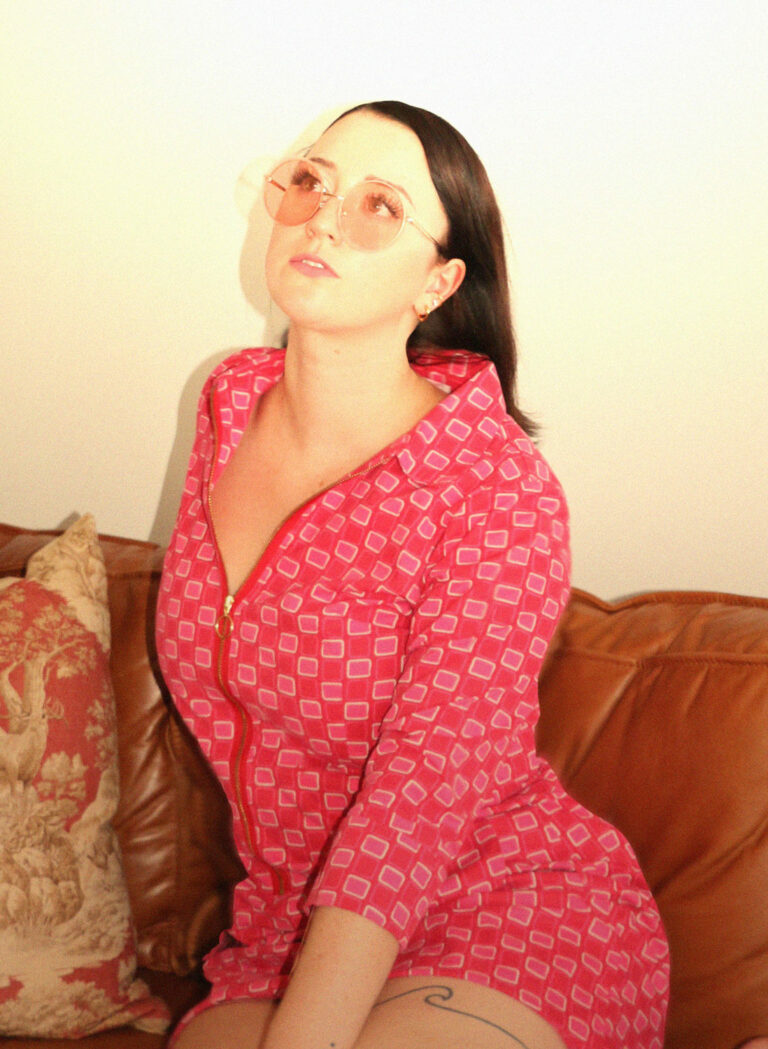
The first thing you’ll notice about Foxanne’s music is her stunningly dynamic voice, but what’s more impressive is the way she wields it. Throughout her debut album, titled It’s real (I knew it) and released last month, she pushes the limits of her voice with not just uncompromising ferocity but also a refreshing kind of playfulness. Follows her intimate 2018 EP halfling, the record opens with the sound of a rocket launch – the singer-songwriter, whose real name is Chelsea Gohd, is also a staff writer at Space.com, and her fascination with all things related to the cosmos finds a way of seeping into different corners of the album, infusing its otherwise conventional rock n’ roll backdrop with added texture and personality. ‘Opportunity’ is the most obvious example here, a cavernous ballad sung from the perspective of the lost Mars Rover that also happens to be the album’s emotional highlight.

But Foxanne doesn’t need to invoke the vastness of the void above for her musical ambition to shine through – ‘Youngest Man Alive’ builds to an explosive and ecstatic climax, while ‘I’m So Excited’ channels the kind of unbridled enthusiasm that so much of the album relishes in. Thinking about space on a daily basis does provide a much-needed sense of perspective, however: “Suddenly I’m looking down from space and I pause to breathe,” she sings on the raucous ‘Doing it All’, “A second in nothingness here is really all that I need.”

We caught up with Foxanne for this edition of our Artist Spotlight interview series, where we showcase up-and-coming artists and give them a chance to talk about their music.

Throughout the album, you’re using your voice in such a commanding and powerful way. How did your relationship to your voice develop over time?

I didn’t start performing and singing in public until I was like a teenager-college age. But it’s just been kind of self-practice over the years. I wish I could say I’m formally trained, but I am not. It’s been a lot of experimenting with tones and trying to push the boundaries of what my voice can do without hurting myself. [laughs] Which has actually been interesting, because I had chronic tonsillitis for years, up until this month I got my tonsils removed after years of a really bad sore throat. So it was a lot of just pushing through that and kind of stretching my voice.

Was there a specific moment where you decided you wanted to write and record your own music? Do you have any memories of that?

Yeah, I mean, I remember wanting to record the music that I was writing pretty much as soon as I started writing music, when I was around 16 or so. I’ve always wanted to capture it, and I started recording little things kind of around then and later on I made a demo and the EP and a couple of things. But it really wasn’t until this record that I was able to make a recording that sounded like what I wanted it to sound like going into it. So I’ve always had an interest in kind of finalizing and encapsulating the music in a formal recording, but this is the first time where I’m like, “Oh wow, this is really what it’s supposed to sound like.”

There’s also a lot of references to space, and I know that you’re also a science communicator. Could you talk about also where your fascination with space and science in general comes from, and whether you feel it relates to music in any way?

Definitely – I mean, I’ve been into science for as long as I can remember. You know, people are always like, “Is music your hobby or is science your hobby?” Like you have to pick one and the other is not really as important. But to me, they’re both just huge parts of my life, and they’re equal in different ways. I don’t think I could ever give up performing and making music, but at the same time, I could never see myself not loving science. To me, I think the thing that links them is just that curiosity, that want to explore. So with music it’s like exploring new melodies, new sounds, etc. And then obviously the exploration in science is self-explanatory, but I think that they just have that natural connection.

I’ve always thought about how to incorporate space and science into my music and I never wanted to do it, like, super obviously or intentionally, or, you know, kind of cheapening it. And so I just figured as I continued to do both in bigger and greater ways that they would eventually start blending in with each other, and with this record I think that’s starting to happen – you know, with ‘Opportunity’ and with some of the more spacey themes and elements throughout the album. So I’m just kind of letting it happen organically.

I was wondering if you could talk more about ‘Opportunity’ in particular, the process of making that song and the story behind it?

Sure. Actually, I rewrote the song like five times, hating it every time until the last version. But when NASA’s opportunity rover kind of died on Mars – even though, I mean, they only expected it to last 90 days, it lasted like five thousand days. So it really exceeded expectations on every level in terms of exploration and science, but it was still just so sad to see it kind of disappearing, losing, connection to Earth, and it’s just so surreal to think that something that we made, that we almost animated into reality, is sitting on another planet, and we’ll never see it again. You know, even if we have humans on Mars, the likelihood of them running into it are pretty slim. So it was just a devastating and bizarre science moment that I really wanted to kind of capture the emotional side of. I thought it would be neat to write the song from the perspective of the Rover itself, which is kind of silly, but, you know, people were really upset when it died.

I wrote the song vocally and on guitar kind of just how it is on the record, and I toyed with the idea of kind of building it up and making it a bigger thing, but I really just liked the sound of it kind of stripped back and bare like that. So the things that I added to it were pretty minimal. Though – I don’t know if you’ve heard the audio, but other probes on Mars have actually captured what Marsquakes, like earthquakes on Mars, what those sound like. And so I tried to recreate what that sound is using a synthesizer and buried that underneath, kind of like a textural thing.

That’s a really interesting detail. Are there any other kind of Easter eggs like that on the record, like the rocket launch on the opener?

That was actually audio I took from the first rocket launch I ever attended. So it’s just kind of, you know, special to me and no one else really. Because at least for me, the sound of the rocket launch was even more impactful than watching it. I mean, the ground was shaking, it was really crazy. And so obviously, the audio isn’t the best quality but I wanted to kind of have that sentimentality in there with that.

Could you talk about the process of making the album as a whole? How was your approach different compared to your 2018 EP?

I think the two main things that were really unique to making this album were: one, I think I had more confidence as a musician. I knew exactly what I wanted it to sound like, I knew the songs, I knew what I wanted to do with them. And then the other part of that was that I worked with people who I really trusted with the sound and really enjoyed working with; especially as a woman in music I’ve been in situations before where, you know, I’m working with a man producing it and they kind of steamroll what they think it should sound like, and it can be challenging to work with that dynamic. But the team I worked with at AGL studios – Doug and Kelly and Elaine who mastered it, and of course my bandmate, Andrew – everyone just really got the sound, they listened. And I was really able to have the creative control that you should as a musician. It was just a great experience in general, I had a lot of fun making it.

Did lockdown affect the process at all?

I got really lucky in that we finished recording right before the pandemic. And so it was a little bit challenging doing mixing and mastering over email and over the phone, going back and forth with different mixes, but it wasn’t too challenging and everyone was really communicative. I mean, the most challenging thing was, how do you release a record in a pandemic? I was like, “Oh my god, we finished it and now all we have to do is mix and master it,” but I’m thinking to myself, record labels are struggling, musicians are struggling, I can’t play a release show, I can’t do all of the normal things that you would normally do to release a record. I couldn’t do any of it. And so it took me a number of months to kind of figure out even how to release it.

Are there any songs that you feel like have taken on a new resonance since you wrote them because of the pandemic?

I think ‘Let it Ache’ definitely hit a little bit harder in quarantine. That song is about, you know, living in New York through the winter and it’s gray, it’s depressing, you’re trapped in your apartment. And just finally seeing the first signs of spring and it’s just like this overwhelming relief, there’s sun for the first time in months. And so I think that being stuck inside for quarantine, it really kind of paralleled those same feelings in a really major way. You know, it was the middle of the summer but I was stuck inside, I couldn’t see my friends, I couldn’t enjoy the beautiful outdoors.

Actually, I had a recent experience that also paralleled that in a unique way in terms of space. In November, I actually spent two weeks living as an analog astronaut in a mock Mars simulation, on a volcano. So I lived in this tiny little dome with five other women and we lived, ate, worked as if we were on Mars. But being trapped in this little dome, couldn’t go outside, couldn’t breathe the air, it was like quarantine all over again, times 100. So it’s really interesting how that song has kind of evolved in meaning through quarantine, through this weird Mars experience.

Oh, wow. That reminds me of The Martian, which I saw ages ago. I don’t know if it’s in any way accurate.

I love The Martian. There were some similarities, I’ll say that much. We ended up eating lots of dehydrated potatoes.

Is that something you feel like you might write a song about, or have already written a song about?

I’ve been working on some stuff. We’ll see if any of the songs ever see the light of day, but I definitely have some material written about that experience.

Do you have any idea of what direction you might want to go in musically going forward?

There’s things that I would like to try in terms of styles, instrumentation, arrangement. But I also want to let it kind of organically grow, because I’m sure the next record will have a whole different sound and I’ll look back on this and be like, Oh my God, why did I ever put this out. You know, like you do with every new thing. But I just want to continue to hone my sound and really understand better what my voice can do, what I can do in terms of music. I mean, now that, you know, I have no more tonsils, the vocals might even be crazier than before. We’ll see.

This interview has been edited and condensed for clarity and length. 

Foxanne’s It’s real (I knew it) is out now.
Watch the First Trailer for Lee Daniels’ ‘The United States vs. Billie Holiday’

0

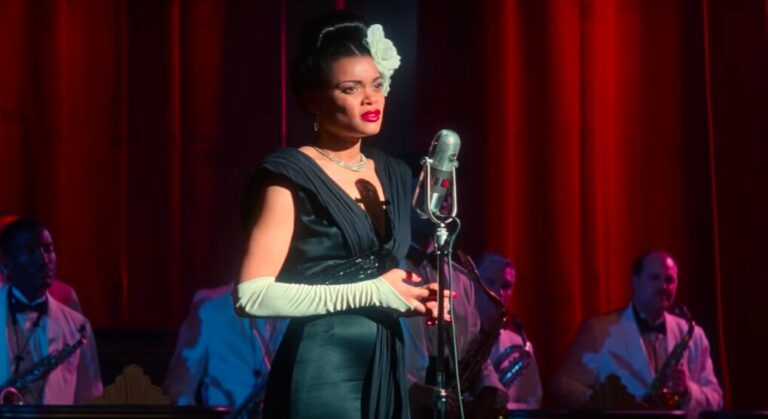
The United States vs. Billie Holiday, a new film chronicling the life of legendary singer Billie Holiday, has received its first trailer. Directed by Lee Daniels, the biopic stars R&B singer Andra Day in the titular role and was written by Pulitzer winner Suzan-Lori Parks. Watch the trailer below.

The film “unapologetically presents the icon’s complicated, irrepressible life,” according to a press release. Lee Daniels adds: “Whether you are new to the story and legacy of Billie Holiday or know every note she ever sang, I do hope our celebration of this complex woman does justice to a great musical legend and civil rights activist whose artistry resonates as well today, as it did 80 years ago. Hulu releasing this film and giving it a platform to be seen nationwide is a blessing, because as recent events reveal, our country has much work to do in fulfilling its promise of a more perfect union.”

The film, which is out February 26 on Hulu, also stars Trevante Rhodes, Natasha Lyonne, Garrett Hedlund, Miss Lawrence. It marks Daniels’ first film since 2013’s The Butler.

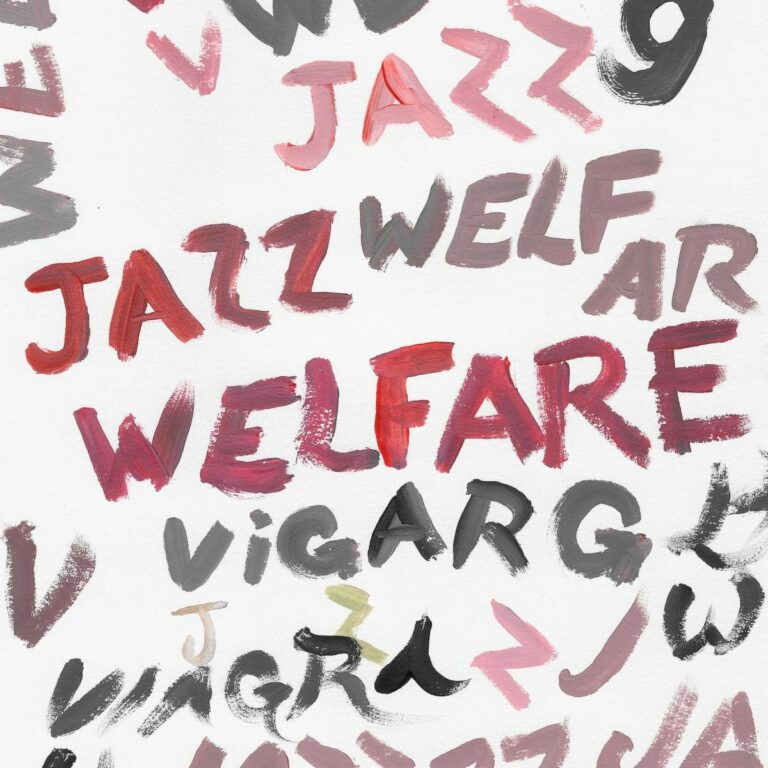
Album Review: Viagra Boys, ‘Welfare Jazz’

When Viagra Boys burst onto the scene half a decade ago, it was hard not to view their whole act as a bit of a joke. From their name to their over-the-top performances, however, the music world seemed to agree it was a pretty smart joke – a send-up of toxic masculinity and classism deftly buried in layers of sarcasm, post-punk filth, and even a hint of sincerity, all culminating in their blistering 2018 debut, Street Worms. To an extent, the Stockholm five-piece seemed to be feeding that narrative, too, describing their name as “a comment on the failed male role in today’s society.” That ambivalence hasn’t gone away on their follow-up, Welfare Jazz, though this time, frontman Sebastian Murphy gave a different explanation than one might have expected when asked about the album’s title: rather than an obvious dig at the elitism of the institutionalized arts world, he suggests it doesn’t really have any politics behind it beyond the fact that it just “sounded cool.”

Though absurdist imagery and wild humour still find a way of seeping into every corner of the album, Viagra Boys seem to be downplaying the undercurrent of irony that might have previously been overstated to instead focus on the real darkness that permeates these narratives. Welfare Jazz finds Murphy eschewing the political to zero in on a number of issues beginning with the prefix “self” – self-absorption, self-hatred, self-aggrandizement – depicting them less as endlessly recurring cycles than part of a kind of continuous descent into a drug-fuelled, bottomless pit of despair. The way the record kicks off is almost misleading: opener ‘Ain’t Nice’ channels the kind of fist-pumping energy that’s designed to get a crowd riled up, but despite its swaggering riffs and chirpy synths, it’s hard to overlook the song’s uneasy subtext, the pent-up frustration boiling underneath its playful admission of recklessness. On the strangely country-inflected ‘Toad’, the narrator’s commitment to a hedonistic lifestyle appears to almost be a bleak way of sealing his fate: “I’m never gonna be the man you want me to be/ I’m a rebel till I die,” Murphy proclaims. It’s the kind of song that would benefit from being stretched out in a live setting, as Viagra Boys are wont to do, but here, limited to a cruelly tight three-and-a-half-minute runtime, it loses some of its potential impact.

The album’s crucial turning point arrives on ‘Into the Sun’, a moment of self-actualization where the feelings of loneliness and regret begin to rise to the surface: “What kind of person have I become?/ The ghost of an outlaw who was captured and hung,” he laments before vowing to change for the better. But it’s a promise that rings hollow, partly because it’s delivered in the same scorching, manic wail that sizzles through tracks like the deceptively titled ‘I Feel Alive’, and partly because follow-up ‘Circles’ confirms the narrator has far from escaped the downward spiral of addiction, even if Murphy’s cleaner vocals hint at a more sobering perspective. At this point in its narrative progression, ‘6 Shooter’ is exactly the kind of instrumental break the album needs, its relentless cacophony the only way of really encapsulating the chaos that lurks underneath.

It’s in the latter half that Welfare Jazz starts to lose focus, even as it contains some of the album’s most musically compelling tracks. As the barroom blues cut ‘I Feel Alive’ vacillates between a sense of reclamation and self-parody, the song’s presentation seems to veer towards the latter, negating any real sense of catharsis; ‘Girls & Boys’ does a better job of accentuating the agony behind its oddly danceable melodies (“Something that I know nothing about,” Murphy quips when a distorted voice offers “love” as a prompt). If most of these songs were indeed intended as a half-joke, Murphy makes clear it’s not directed at the outside world any more than his own self. And while that may prevent the album from reaching greater heights of emotional resonance, it does allow him and the band to build something that feels uniquely their own, and ultimately, genuine. It’s a testament to Viagra Boys’ ingenuity that the two final tracks, the poignant ballad ‘To the Country’ and a Amy Taylor-featuring cover of John Prine’s ‘In Spite of Ourselves’, end up being surprisingly effective at painting a darkly funny yet affecting picture of domesticity. You’re just kind of left wondering if there’s something you missed along the way.

This Week’s Best New Songs: David Bowie, The Weather Station, shame, and More

Throughout the week, we update our Best New Songs playlist with the new releases that caught our attention the most, be it a single leading up to the release of an album or a newly unveiled deep cut. And each Monday, we round up the best new songs released over the past week (the eligibility period begins on Monday and ends Sunday night) in this segment.

In honour of what would’ve been David Bowie’s 74th birthday, everyone from Duran Duran to Sky Ferreira paid tribute to the late legend by covering his songs last week, but it’s Bowie’s own previously unreleased covers of John Lennon and Bob Dylan that stood out the most; his rendition of Dylan’s ‘Tryin’ to Get to Heaven’ feels especially resonant. We also got to hear another exciting single from shame’s soon-to-be-released second album, while Cassandra Jenkins and The Weather Station both offered stirringly wondrous and quietly uplifting indie folk tunes. “Thinking I should get all this dying off of my mind,” Tamara Lindeman contemplates on her latest, “I should really know better than to read the headlines.”

Best New Songs: January 11, 2021

David Bowie, ‘Tryin’ to Get to Heaven’ (Bob Dylan Cover)

Song of the Week: The Weather Station, ‘Atlantic’

Cassandra Jenkins, ‘Michelangelo’

shame, ‘Nigel Hitter’

Netflix Reveal Trailer for ‘Finding Ohana’

0

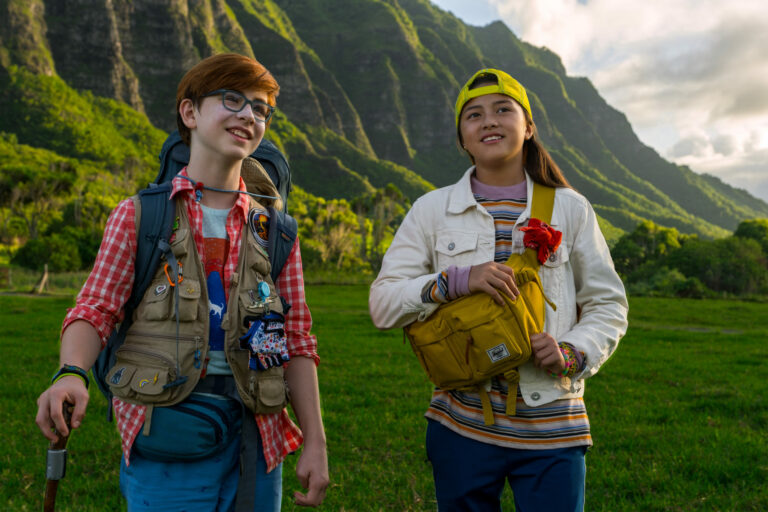
When a diary pointing toward a long-lost treasure sets two Brooklyn-raised siblings on a long expedition alongside new friends, they discover their Hawaiian heritage, bringing them back to their roots in rural O’ahu.

Netflix’s Finding Ohana is the latest project to join their wide catalogue of films and TV series. 

The film is directed by Jude Weng who also worked on projects such as iZombie, Shameless, and Young Sheldon — to name a few. Cast of the film include: Kea Peahu, Alex Aiono, Lindsay Watson, Owen Vaccaro, with Kelly Hu and Branscombe Richmond, Ke Huy Quan, Brad Kalilimoku, Chris Parnell, Marc Evan Jackson, Ricky Garcia.

The film will be available on Netflix from the 29th of January, 2021.

Artist Spotlight: Another Sky

Like many of Emily Dickinson’s poems, part of what makes ‘There is another sky’ so strikingly resonant is that its ambiguity never overshadows the message of hope that lies at its center. People might offer different interpretations as to what its titular promise alludes to – spiritual paradise, home, poetry itself – but what ultimately renders her words so affecting is the sense of warmth and comradery with which Dickinson addresses her brother, assuring him that not only is there a way out of the darkness, but that she will also happily be a part of it. It’s only fitting, then, that Another Sky – the London-based indie rock quartet consisting of vocalist Catrin Vincent, bassist Naomi Le Dune, guitarist Jack Gilbert, and drummer Max Doohan – decided to name their band after this particular poem; despite performing their first shows in total darkness, their music seems to illuminate the path ahead through sheer force of will, weathering life’s storms simply by creating their own.

Following their ambitious and intense debut LP I Slept on the Floor in August of last year, their new EP Music For Winter Vol. 1, as its Brian Eno-inspired title suggests, is more somber and minimal in its composition, but no less evocative as it recalls some of the band’s earlier efforts. While it may not always reach the soaring heights of their debut, the stirring atmosphere of ‘Sun Seeker’ or the heart-rending earnestness of ‘Was I Unkind?’ hint at the different ways in which the group may combine their strengths to create something even more honest and potent in the future. Like Dickinson’s poem, these songs don’t ignore one’s pain as much as they attempt to build something brighter out of it. By the time Catrin proclaims that “I will make my own/ paradise of peace” on the closing track, the how is pretty much right there in front of you.

We caught up with Catrin and Naomi for the latest edition of our Artist Spotlight interview series to talk about the process behind their new EP, their upcoming sophomore album, and more.

One of the things that caught my attention in the press release for your new EP was a reference to the Roger Robinson poem, ‘A Portable Paradise’. First of all – and I apologize if this is already a loaded question – but what is your definition of paradise? And more specifically, what does the idea of a “portable paradise” mean to you?

Catrin: I saw that poem on the Underground. At the beginning of the pandemic, I was working a bit of a crappy job. And I saw it, and it just it was one of those poems that just imprinted on my mind. And I reckon – I thought about it a lot for you, Naomi, I thought, if you can’t change the world around you to accept you, how do you find inner peace? [chuckles] Sounds so philosophical. But it was a shift in my thinking from the debut album where I was like, it was so politically charged, and I was like, “Yeah, I’m gonna change the world!” And it was a shift to, well, the world is out of my control. Personally, I’m still figuring that out. I don’t think I’ve found a personal paradise yet, but I’m getting closer. And I wonder what your answer to this question would be, Nae.

Naomi: [Laughs] I think the reason that everything around me is hell, without sounding cheesy, is because I’ve already found my personal paradise. So even if it doesn’t, like, I don’t know – even if it doesn’t end the hell around me, I’m still happy with who I am. I don’t know, it’s a tough question.

It’s interesting, because I immediately thought of the Emily Dickinson poem the band takes its name from. A lot of people interpret ‘There is another sky’ as being about a religious notion of paradise, something that almost exists outside of yourself. Whereas ‘portable paradise’ feels more like something you can create, something more human, and it’s a constant process. Is that something that resonates with you?

Naomi: The two things, I guess, coexist in music for me. Because I feel both – like, it’s a portable thing that you can use, music is everywhere. But also, it takes you out of real life, the present. So it’s kind of both for me. I think the two things can be together. But yeah, music is the only thing that I found that can do that for me.

Catrin: Yeah, anything creative, where you can almost remove your identity from it.

Is that something that’s kind of separate from any idea of religion for you, that definition of paradise?

Naomi: For me? Well, it’s different for me, just because I grew up – I learned music in a church. So that’s how I first experienced music, in a kind of otherworldly – like, performing for something other than yourself, not just for like a show. That’s how I was brought up. So I’ve taken that religion to the side, but that experience of it being something kind of creative, and it’s not about the performance, but it’s more – like I love small gigs, because they just feel so intimate, and it’s not about showing off. It’s just kind of an ethos I think we’ve integrated into a lot of stuff in the band. It’s about creating for something other than yourself, and that’s how I’ve taken that from religion, originally, to how I perform music now.

Catrin: Yeah, like, music as a service to the audience, which we do try and do in the band, I think. That’s really interesting. Me and Naomi have never spoken about the religious side of music.

Naomi: No, we haven’t, actually. But I’ve been in a lot of bands since leaving church, which is a long time ago now, where I never felt that spiritual kind of connection until I joined Another Sky. Which is weird to say, because it’s quite a personal thing. Like, I don’t know how anybody else feels in the band. Something to talk about next time, Catrin!

Catrin: That’s so interesting!

Naomi: But yeah, I think that’s why I know it’s an easy project to be in because it just flows. So yeah, it’s the closest thing I’ve gotten to as church since I left church.

Catrin: It’s the only project where ego doesn’t serve it. So we’ve all had to sort of get rid of our egos over the years.

I feel that relates to the first track on your new EP [‘Pieces’], which I read was an old song originally sung by Naomi. You wrote that together, and it’s about confronting the fear of going to hell for being in a same-sex relationship. Why did you feel the need to revisit that track at this point in time, and what was it like writing the lyrics for it together?

Catrin: We didn’t plan for it to be written this year, but it did feel kind of like fate. Because I think if we had revisited the song last year, I think I probably would have just been like, “Oh, I can’t speak for Naomi, I’ll just change lyrics into something else.” But there was this moment when we picked ‘Pieces’ to go on this EP, and me and Nae just looked at each other, and I knew – I knew in my heart that you can’t change the content of that song, or you’ll lose it. And part of me did want you to sing, Nae.

Naomi: [laughs] It would’ve been a shocker. But yeah, I think it was timely; I had like, my first total mental breakdown because of lockdown, when it first happened in March. And a lot of the stuff that I’d pushed to the side crept up and I had just gone mental, basically. But a lot of it had to do with, you know, my sexuality and stuff that I hadn’t spoken to my parents about. It was just kind of the elephant in the room for at least four years. And it was just slowly destroying me. So it made a lot of sense, although we didn’t actually plan it. When it arose, like the idea of doing ‘Pieces’, it was kind of like, yeah, I’m happy to speak about this now. Because the year that I had had led me to a good enough place to express how I felt to my parents. So yeah, I think it was just good timing.

And the lyrics are different. Because I wrote it at a time –  I was doing my final performance at uni and the band was basically just Another Sky with a few added extras. And my parents had come to the evening to watch me play, and I was talking about stuff, a lot of the topics in the songs that it was kind of a nudge to them. It was vague, but I didn’t exactly want to come out on stage because that would have been really awful for them.

So we changed – this is going on, sorry – but I started therapy last year. And one of the things that helped me was to kind of fantasize or think about what conversations I would have before I reacted to something. A friend of mine had said to me that, you know, you’re gonna go to hell if blah, blah, blah. And so I just imagined that conversation, what I would say to that person if I was in front of them. That’s how me and Catrin approached the song.

Catrin: One thing that really stood out was when Naomi kind of said, “Homophobia is the illness that’s in everyone else, not being queer.” I hadn’t thought of that before, and that just struck me. That has to be in the song, “the illnesses is in you.” It was a really interesting way of writing lyrics, I’d love to do it more with the whole band.

Could you talk more about that process? What sort of conversations did you have while you were writing the lyrics?

Catrin: We just sort of sat there. And we’d slowly started talking about it over the year, because obviously, you were going through it, Nae. We sat there and for the first time, we just had this really open conversation about it. I was really – obviously, as the vocalist, I’ve had to channel someone else’s story. It’s not mine. So I was just trying to be open to whatever lyrics came out.

Naomi: I can’t actually remember specifically what it was, but it was just kind of, “What would you change to make it more current?” Because the original lyrics were set in the past, so I wanted it to be more focused. It was a very cathartic process. It felt like she was my therapist.

Catrin: I kept telling myself, “Catrin, you’re not a therapist, don’t – write lyrics!” But it was really – usually when you write lyrics, you can get really stuck in a hole. So actually, writing lyrics from a conversation is an amazing way to get the truth out. Conversations are kind of the most kind of authentic form of speech.

Was that something that happened when you were making the debut album as well, where you kind of talked through the lyrics and discussed them with the band?

Catrin: No, I’ve never done that before. I was always kind of left to go away and write the lyrics, which is the way I prefer to do it, just because it can be so personal. But for the first time, I was like, well, this isn’t my song. This isn’t my story. This is Naomi. She has to be involved, she has to be there. And it’s something I’d like to do for album two. I’ve opened up a little bit. I’m trying to say, “Hey, everyone,” [chuckles awkwardly], “what do you think of these lyrics?” Everyone’s so great, everyone usually just says, “Oh, no, yeah, amazing.” But I’d love for us to sit down and have therapy sessions through lyric writing.

Naomi: The thing with Catrin is that we all know how good she is. So we never have to worry. And that sounds kind of like we’re not bothered, but she really is just that good. I think all of us have written songs before in the past, but none of us would ever even dream that we were better than Catrin. [laughs] Just because she is amazing, and there’s just, like, a confidence in her.

Catrin: I think as well, I view it as we’re all cogs in the machine. We all have the things we’re best at. So it’s never – I understand why you’d all feel that way, but for me we need each other. Sometimes you’ll write a song, and it’s amazing, but you’ll go “Oh, it’s just a song” and I know that some good lyrics can be put on top of it. And some amazing songs have come out of you all, and I guess it is just a confidence thing, isn’t it?

Naomi: Yeah, Catrin’s poetry – I mean, we will be more collaborative and things but Catrin will always have that, like, top spot in my opinion.

I know you’ve already been working on your second album for a while, and you’ve said that it’s quite different from your debut. And part of that shift is because you weren’t thinking so much about how the songs would sound in a live environment. Could you talk more about how that affected your approach to songwriting and the sound of the album as a whole?

Catrin: It’s completely opened up new horizons, I’d say. I think a large problem with songwriting is making sure it works live because you don’t want people to get bored and you’ve got to rework some songs, especially if you’ve written them in an electronic way, which for some of our songs we have. But for me, I’d be happy just endlessly writing songs and [hesitantly] never have to perform. I don’t know about everyone else.

So the lyrics are a lot more personal, because there’s been nothing – all I can see is myself every day. I never wanted the lyrics to be about myself, but there’s kind of no escape now. So that’s changed lyrically. And then I guess, for you, Nae, you could just have a moment to think, because you could just write a song from start to finish and kind of go to this otherworldly place. And I feel like it’s the same for the boys as well.

Naomi: Yeah, it definitely gave me a lot more time just to focus on not just playing bass, but actually starting to learn more stuff about production. And I just feel a bit more confident in my approach to writing now. But we did a lot of the new songs on the album just kind of passing around ideas, which was a nice experience.

So you have your second album, you have a tour planned. Is there anything else in the coming months that you’re looking forward to or that’s keeping you motivated? 

Naomi: I’m looking forward to seeing how our music is received and the way it’s found. Because everybody’s at a level playing field, really. We’re not at the mercy of festivals anymore; we can release those slow songs and people are going to listen to them without being bored at a festival. So I’m interested to see how that works, and to see the growth when we then return to a gig.

Catrin: I always thought, what a dream it would be to just have nothing but songwriting. And actually, now I’m finding that quite difficult. I think, in some ways, how we are approaching the band is evolving and changing. We’re getting older. We want it to be fun again. There was a point in all of our careers where it was very pressured. And it feels like we’re coming back into our old selves again and revisiting why we even started a band in the first place. But I’ve taken myself off social media, I just can’t look at how well things are doing or who likes it. I just can’t, because you get stuck, you become the band. There’s a James Blake song where he sings, “Music can’t be everything.” And it is so true, you have to have a life outside of it. And then that life informs the songwriting.

This interview has been edited and condensed for clarity and length. 

Another Sky’s I Slept on the Floor and Music for Winter Vol. I are out now via Fiction Records/Missing Piece Records.

Lago di Braies by Clement Merouani

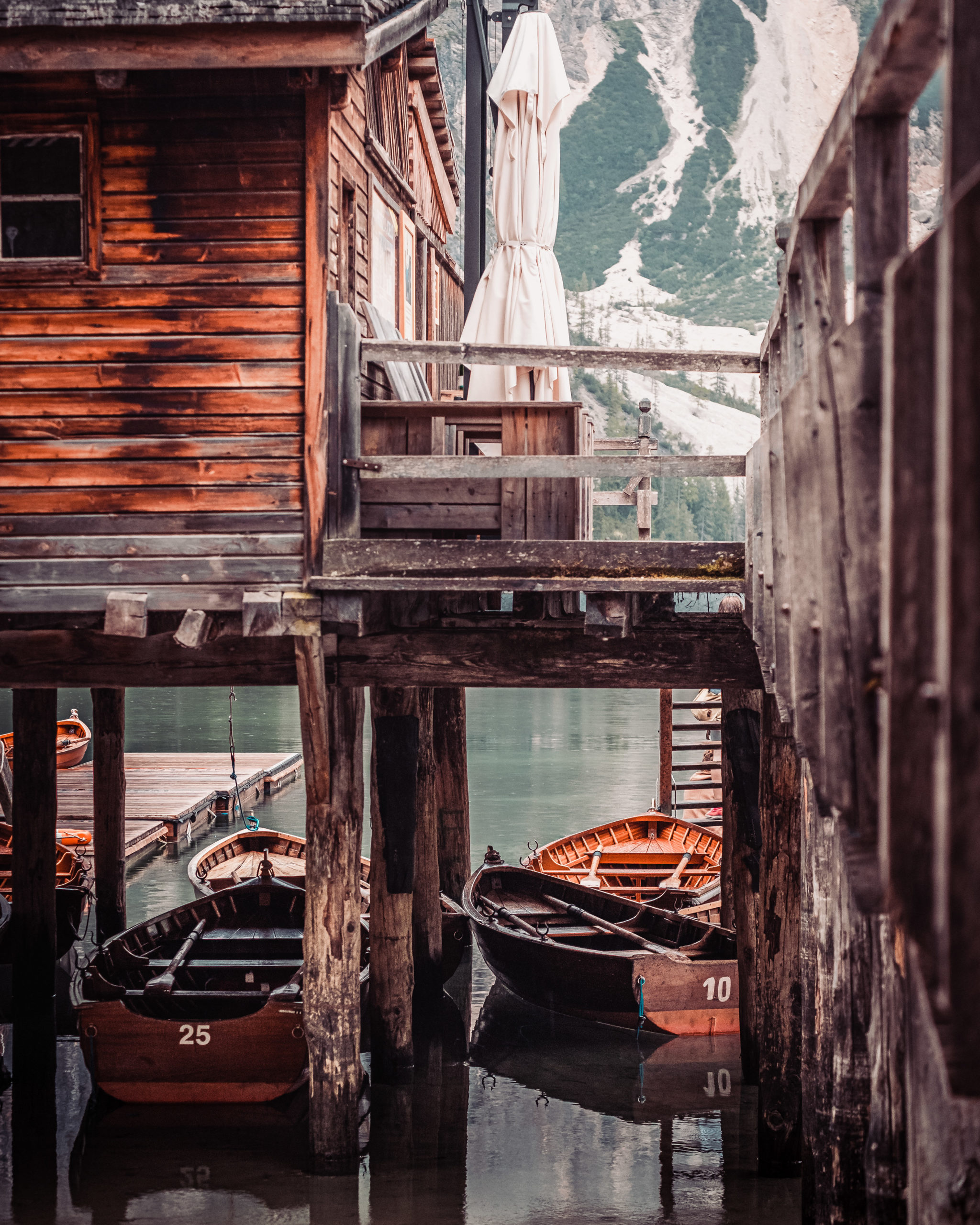
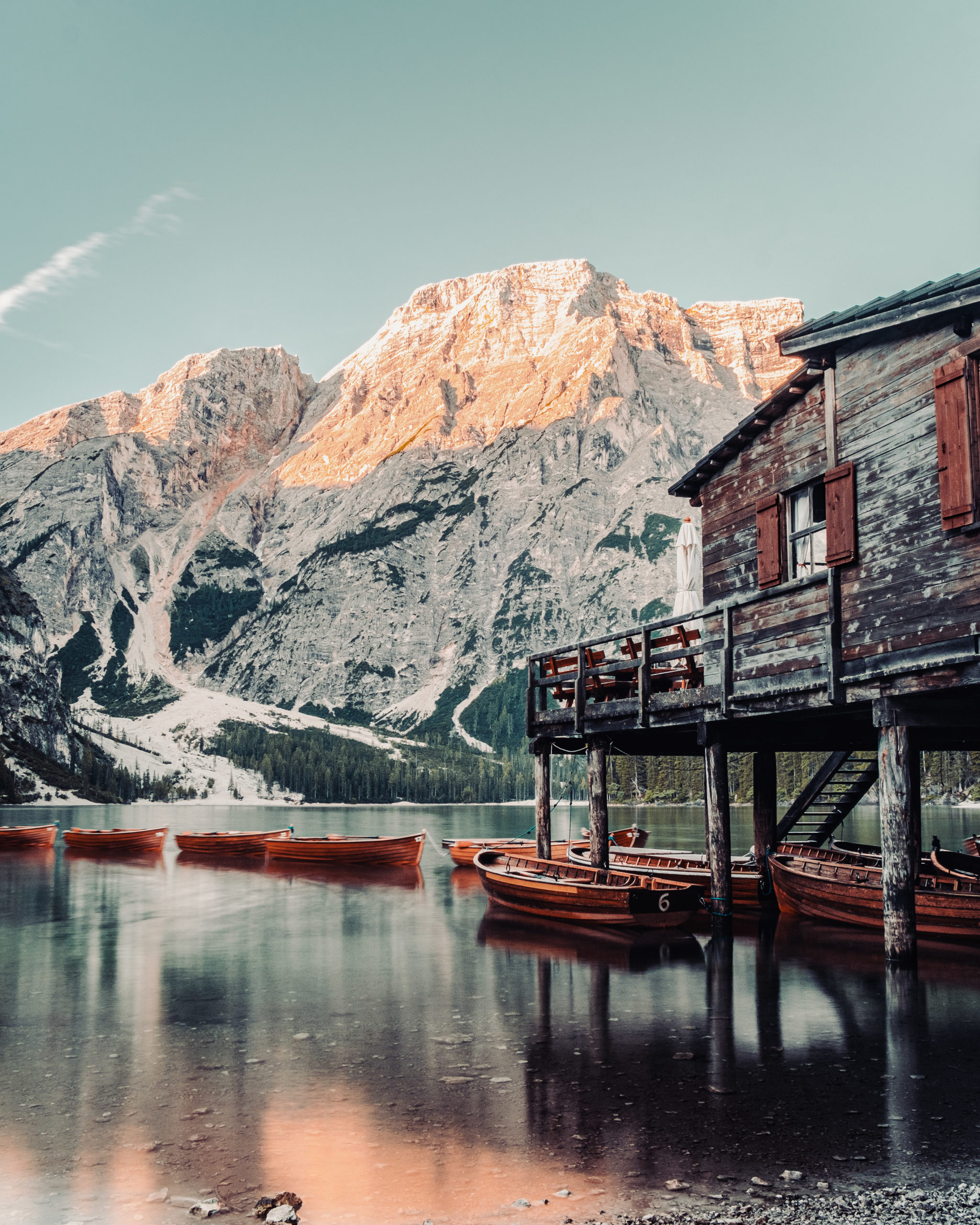
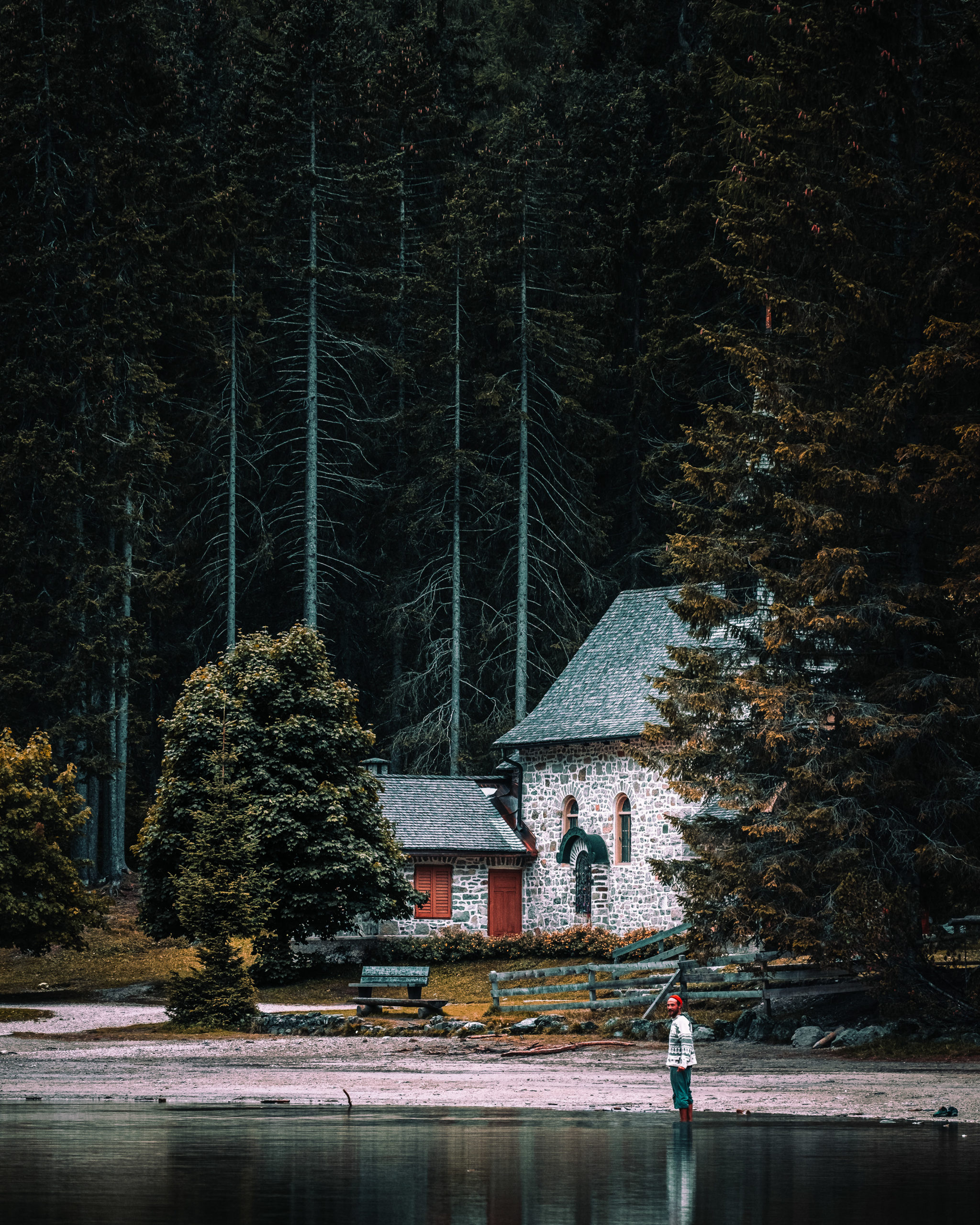
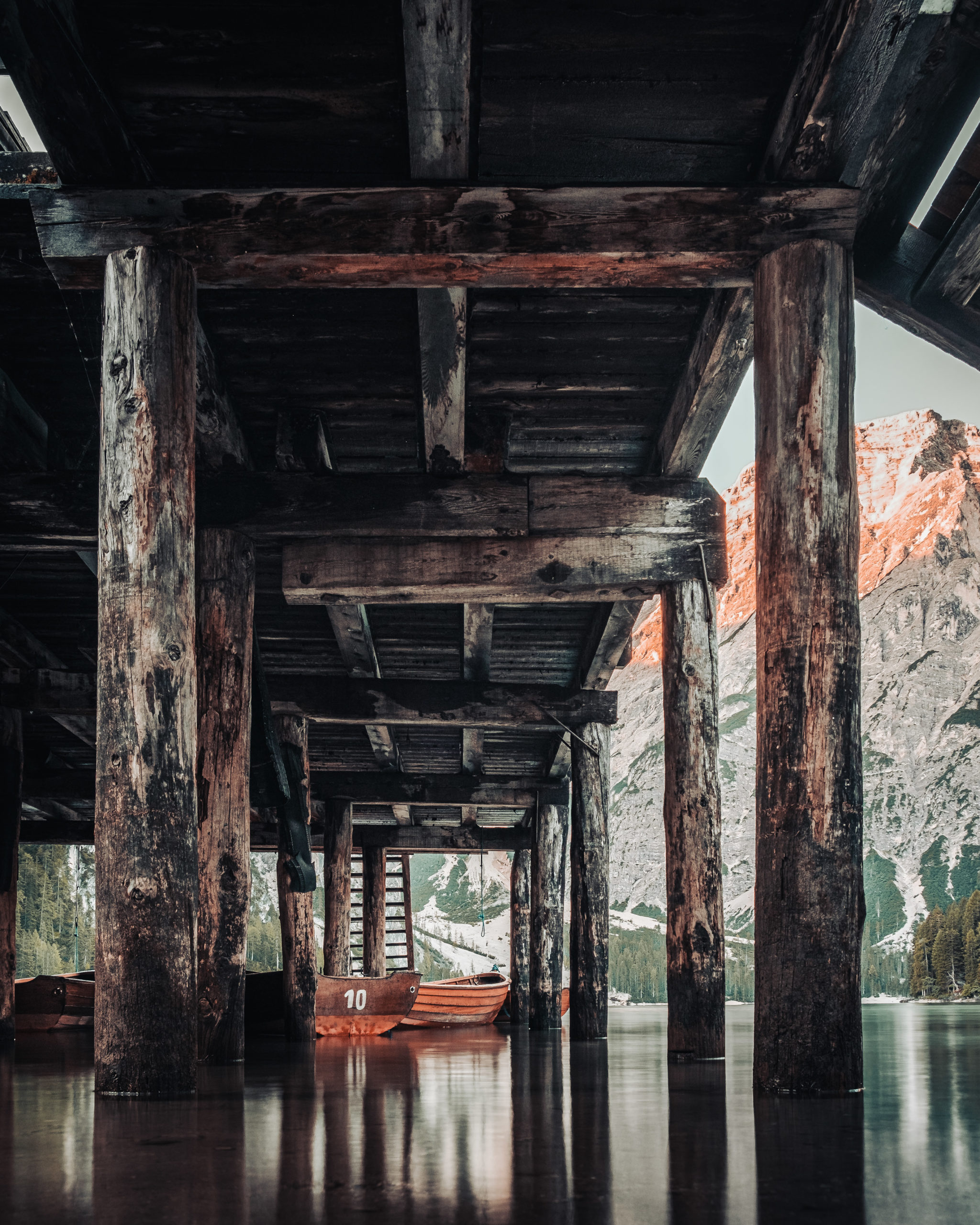
Lago di Braies is a marvellous series by Clement Merouani, a Paris-based art director who currently works in advertising agencies. This eye-catching photography series focuses on Lake Braies in South Tyral, Italy. Lake Braies, also known as Pragser Wildsee, provides a truly cinematic setting, and is undoubtedly the reason that the number of tourists travelling to this beautiful location has grown over the years.

In this series of landscape photos, Merouani applies filmic colour grading to enhance the intensity of the natural landscape. Merouani utilises the contrast between man-made structures and natural scenery to create impressive imagery.

Find more work by Clement Merouani here.

The Neighbor’s Wife and Mine: Sound, Music, and Artistry

While overseas on a business trip in the late 1920s, Japanese film producer Shiro Kido attended a screening of the Alan Crosland musical, The Jazz Singer (1927), one of the milestones in early sound cinema. Dazzled by its limited use of recorded lyrics and dialogue—and recognizing that full-on ‘talkies’ were just around the corner in Hollywood—Kido consulted engineer brothers Takeo and Haruo Dobashi [1] after returning to Japan, discussing plans to develop an original brand of sound-on-film equipment (as he couldn’t afford the Vitaphone disc system used in The Jazz Singer). Meantime, his employer, the film company Shochiku, opened a sound research laboratory [2] and began distributing more of its films with pre-recorded musical tracks. Despite reservations from directors such as Yasujiro Ozu, who viewed audio tracks as needless interruption in the development of cinematic storytelling, [3] it was clear that sound would soon impact and take over the Japanese film industry.

Filmmakers in Japan had been experimenting with sound since the early 1900s; however, a combination of unsophisticated equipment and less-than-ideal shooting locales (many studios at the time were situated near industrial complexes) meant audio tracks often became infested with poor playback and distracting background noise. [4] Theaters experienced difficulty keeping sound synchronized with images and were furthermore reluctant to invest in upgrading their facilities. (Whereas silent movies could be cranked through the projector by hand, full-on talkies required motor-driven equipment in order to maintain a consistent projection rate of twenty-four frames per second.) [5] Film companies also feared retaliation from unionized orchestras and benshi (live narrator-commentators who, for silent movie audiences, acted out dialogue and explained stories) when they realized they were no longer needed.

Despite these setbacks, Shochiku’s team purged ahead and in 1931 came through with the Dobashi recording system, which was showcased in one of that year’s biggest hits, The Neighbor’s Wife and Mine. Directed by veteran craftsman Heinosuke Gosho, it told the story of a playwright constantly distracted from finishing his latest script, namely by a jazz band rehearsing next door. In addition to scoring enormous profits, the picture topped Kinema Junpo magazine’s annual “Best Ten” list (an award described by film historians Joseph L. Anderson and Donald Richie as “relatively untouched by commercial considerations [and] highly respected”). [6] It was also something of a watershed achievement for director Gosho, fiscally reviving his career after a series of consecutive flops. [7] And while sound cinema wouldn’t completely proliferate for another few years, the success of The Neighbor’s Wife and Mine proved that Japanese moviemakers could produce talkies for mainstream distribution.

Besides its historical significance, The Neighbor’s Wife and Mine is noteworthy for how it uses sound not indulgently but cleverly: to establish mood, to accentuate comedy, to propel the narrative—rather than simply record endless gabbing as was the case with other early talkies. After a rousing musical track underscoring the opening credits, we fade into a wide shot of the Japanese countryside: a traveling musician strolls along a dirt path, banging on his drums; the camera slowly pans left, dissolving into a second moving shot as we come upon an artist painting one of the country homes; the musician’s drumming fades only when the artist stands up and delivers the first line of dialogue. (“Looks good. I think I’ll make the Imperial Exhibition again this year.”)

No sooner has he finished speaking when a new sound emerges: whistling, as the film’s hero, playwright Shinsaku Shibano (played by Atsushi Watanabe, later a regular in the films of Akira Kurosawa), enters the frame. [8] The two men end up hurling insults at one another (“Hack writer.” “Amateur painter.”) before running into a field, where they are scared off by a barking dog. The playwright accidentally flees into the women’s side of the public bathhouse; and at this point, director Gosho smartly keeps his camera outside the building, using audio to accentuate comic payoff, when a woman inside screams. In these first eight minutes alone, the filmmakers have used multiple forms of sound—music (diegetic and not), vocalisms (human and animal)—in rapid succession, showing off Shochiku’s recording technology while also enhancing the sequence.

Playwright meets painter in the opening scene.

The main drama—and the point where the film’s use of sound advances to the more impressive function of influencing the narrative—begins when Shibano sits down to work on his next play (titled The Pig and the Pearl). Mice in the ceiling start to distract him; to scare them off, he imitates a cat’s meowing, comically assuming a feline posture as he does; then, an actual alley cat starts groaning outside; immediately after this distraction’s taken care of, the couple’s newborn begins to cry. (“Why did you have to have a baby?” Shibano yells at his wife. To which she counters: “You’re responsible, too!”) Their slightly older daughter then asks to be taken to the bathroom. By the time the night’s over, Shibano has torn out six unfinished pages.

The following afternoon, the neighboring jazz band starts rehearsing, prompting the playwright to march next door to request silence. Standing in the foyer, he discovers his neighbor’s wife is, in fact, the same woman he intruded on at the bathhouse the other day. (What’s more, she’s the jazz band’s singer.) Shibano’s attempts to quiet down the rehearsals come up short, and he ends up being treated to a session of uplifting songs; which, to his delight, provide him with the inspiration he needs to finish his play.

In addition to using diegetic music as a narrative device, this last sequence triumphs cinematically. Heinosuke Gosho had already directed thirty-eight features before The Neighbor’s Wife and Mine and was known around the lot as a director who “uses three shots where others use one.” Like his colleague Yasujiro Ozu, he was a tremendous admirer of Western cinema—his heroes included Ernst Lubitsch and Charles Chaplin—and tended to favor Western concepts of montage over the early Japanese aesthetic of shooting entire scenes in unmoving wide shots. And so, even with the advent of sound, he stuck to his instincts, directing this picture with strong emphasis on the visuals. The song-and-dance scenes in The Neighbor’s Wife and Mine are filmed with multiple cameras running simultaneously, allowing Gosho to record music live and edit shots together without awkward breaks in continuity. [9] In what must’ve complicated production (but also adds to the immersive quality of these sequences), cameras move about the set, tracking in on the neighbor’s wife as she sings, following her from one side of the room to the other.

In a vein ostensibly similar to other Japanese films of the post-World War I era, the story features a clash between traditionalism and modernity—embodied in this case by the two female leads. Playing the eponymous neighbor’s wife was actress Satoko Date, best known for her roles as modan garu (postwar slang for Japanese women with Western habits). Date had played many such roles for Yasujiro Ozu, the most comic being 1932’s Where Now Are the Dreams of Youth?, wherein she donned ostentatious Western clothing, smoked at a matchmaking session, and proclaimed delinquency an “exciting” trait in a husband. Embodying westernization in a cartoonish fashion, her character was promptly humiliated for the audience’s delight. In another Ozu feature, The Lady and the Beard (1931), Date was a petty crook (still clad in Western clothes) on a mission to set up—and later seduce—the film’s noble hero. In the end, she lost the man of her dreams to a kimono-clad—read: traditional—Japanese girl.

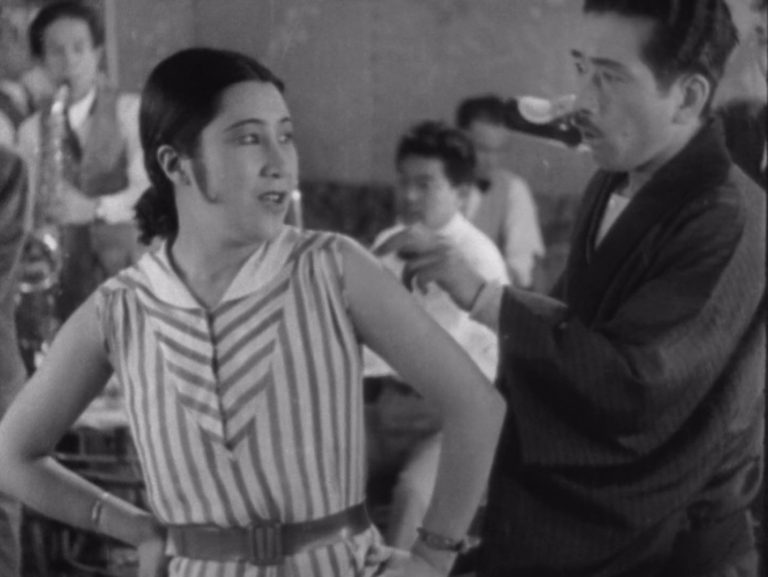
The character Satoko Date plays in The Neighbor’s Wife and Mine on the surface shares many traits with the roles described above. She wears a sleeveless dress, has her hair cut short, smokes and drinks, and when breaking into song enunciates such lyrics as: “I’m the kind of girl who’s very capricious.” However, this modan garu is presented in a significantly more positive light. Plainly devoted to her husband, she never comes onto Shibano, and her free-spiritedness proves inspirational to the playwright. He, in turn, stands up for her when negative attitudes toward modan garu manifest in the form of his own (very traditional) wife. Played by starlet Kinuyo Tanaka, Shibano’s wife is the mirror opposite of Date: dressed in kimono, her hair pinned up in a marumage (traditional hairstyle for married Japanese women). And after seeing her husband sitting next to the modan garu through their neighbor’s window, Tanaka assumes the worst, singing a song of her own: about a bride in kimono (like her) who is crying (again, like her, as she suspects her husband of adultery). Although the two women never meet, Tanaka is quick to put down Date, describing her as “that modern girl. […] I know the kind. […] A hundred percent erotic.”

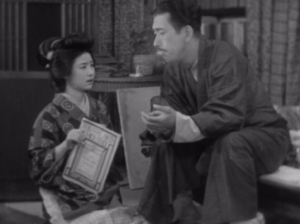
The protagonist and his wife. Notice that she wears a kimono, in contrast to the very Western clothing worn by the neighbor’s wife.

The Neighbor’s Wife and Mine uses this element of social perception to segue into further experimentation with sound. The playwright brushes off his wife’s concerns about the “erotic” woman next door. From off-screen comes the latest source of distraction: the rattling of a sewing machine, as Shibano’s wife angrily runs the machine with no thread in it. Despite her insecurity, he manages to finish his play, and the film ends with the couple strolling about the neighborhood, during which they hear the engine of a passing airplane and their jazz-loving neighbors playing My Blue Heaven. The wife, no longer jealous of the “madame” next door, chants along with her husband to the tune.

Despite its critical and commercial success, The Neighbor’s Wife and Mine failed to propel sound film into mainstream status in Japan. The country produced an approximate four hundred features in 1932; of that number, a mere forty-five were talkies. [10] And May of that year validated the fears that studio executives had of the live performers who traditionally accompanied silent films: after Nikkatsu produced a few talkies in 1932, its benshi and orchestra unions went on strike, using their political muscle to temporarily shut down the company’s studios. [11] Silent movies remained a while longer, but The Neighbor’s Wife and Mine had nonetheless demonstrated that Japan could use synchronized audio to both technological and artistic success. And Heinosuke Gosho’s picture remains an impressive piece of work, nine decades after its release. At less than an hour in length, The Neighbor’s Wife and Mine tells its story efficiently, its entertainment value built upon comic situations enhanced and propelled by clever use of sound and visuals together—and just enough social clash to service both.

Sources and further reading:

  1. Some translations romanize the Dobashi brothers’ family name as Tsuchihashi.
  2. Schilling, Mark. Shiro Kido: Cinema Shogun. E-book, 2012
  3. Anderson, Joseph L. and Donald Richie. The Japanese Film: Art and Industry (Expanded Edition). Princeton: Princeton University Press, 1982, p. 72
  4. Ibid., pp. 73-4
  5. High, Peter B. The Imperial Screen: Japanese Film Culture in the Fifteen Years’ War, 1931-1945. Madison: University of Wisconsin Press, 2003, p. 14
  6. Anderson and Richie, p. 52
  7. Nolletti Jr., Arthur. The Cinema of Gosho Heinosuke: Laughter Through Tears. Bloomington: Indiana University Press, 2005, p. 3
  8. Watanabe’s characters in Kurosawa films include the nihilistic patient in Ikiru (1952), whose descriptions of stomach cancer symptoms alert the protagonist, played by Takashi Shimura, that he’s fatally ill. Another memorable role was as the coffin-maker in Yojimbo (1961). Watanabe’s final screen appearance, for Kurosawa and for his career as a whole, was as the tinker in Dodesukaden (1970)
  9. Nolletti, p. 18
  10. Of those forty-five, thirty were produced by Shochiku. Anderson and Richie, p. 77
  11. Ibid, p. 78

Sanguine Typeface by Kenneth Vanoverbeke

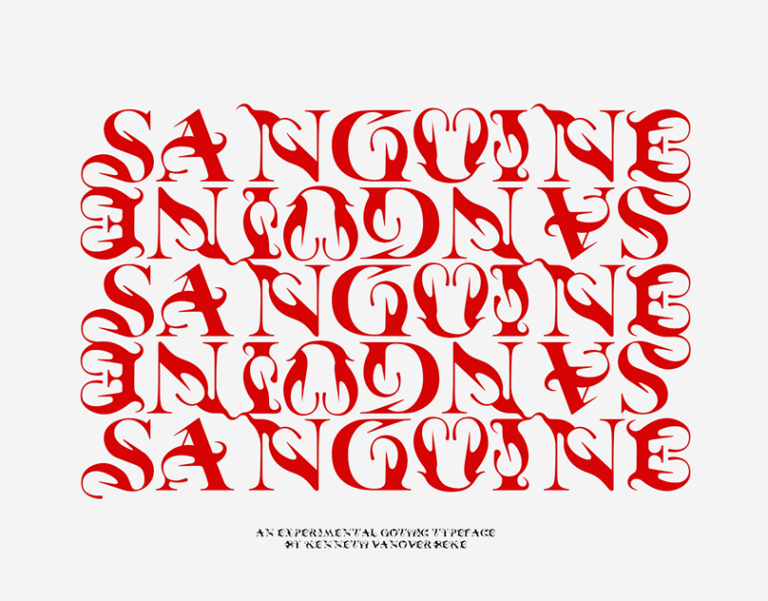
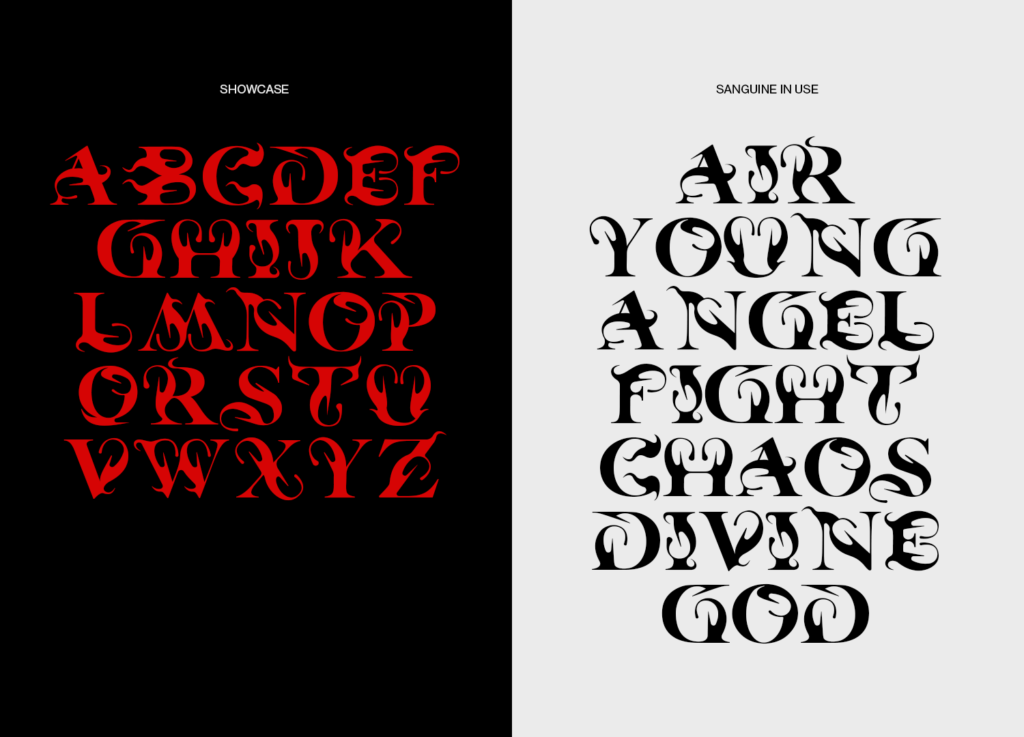
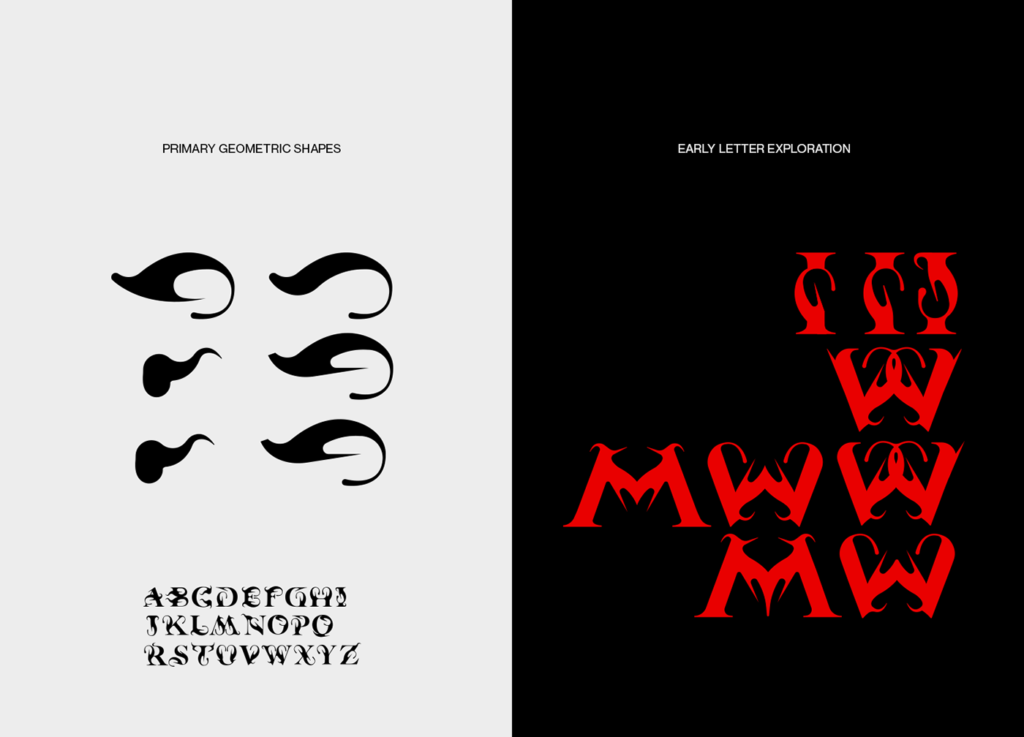
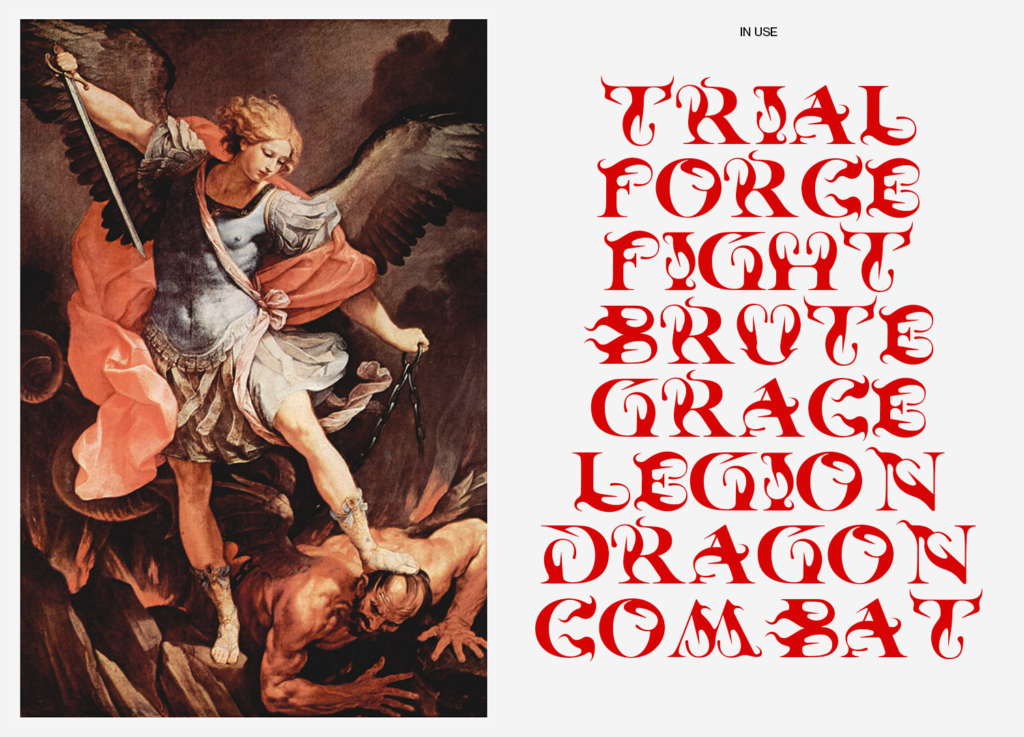
Kenneth Vanoverbeke is a visual artist & typographer from Belgium who creates strikingly mesmerizing typefaces. The Sanguine typeface is an experimental blackletter type and was inspired entirely by a single painting of Bruegel’s Fall of the Rebel Angels. Here, Vanoverbeke creates a fusion of old and contemporary by transcribing angels and demons’ themes with modern type, thus creating a unique union, a sort of nouveau gothic type.

You can see more of Kenneth’s work and experiments on Instagram.

Sanguine Typeface


11 Best Quotes From I, Tonya

0

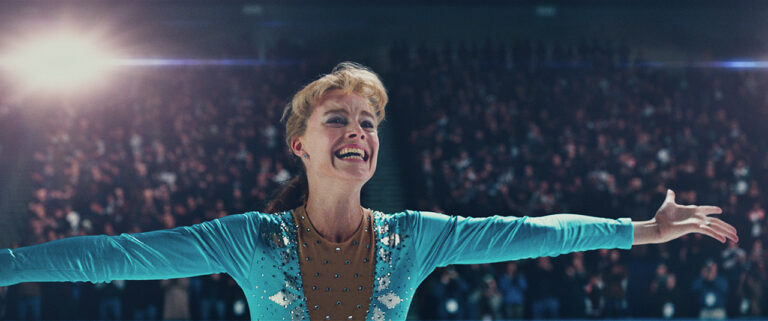
Based on the career of American figure skater Tonya Harding, I, Tonya is a 2017 sports drama starring Margot Robbie. Harding is best known for being the first American woman to complete a triple axel in competition, but that didn’t mean she was popular with the judges. The film is raw about showing the audience how rough Harding is around the edges.

She was raised by a single, abusive mother – portrayed here by Allison Janney in an Oscar-winning performance – and never fit the public’s image of what a figure skater should be. As a result, she missed out on winning all of the important competitions in her career and was ultimately banned from the sport for hindering police investigations relating to the injury of fellow skater Nancy Kerrigan.

The movie adds a good measure of dark comedy to Harding’s story, making it an enjoyable watch with Robbie’s voiceover narration keeping things lighthearted. Nevertheless, she gives an emotional performance as Harding’s dreams fall apart thanks largely to her husband Jeff Gillooly (Sebastian Stan).

Here are eleven memorable quotes from this vibrant dramatization of Tonya Harding’s career.

“Maybe you’re just not as good as you think.”

“There’s no such thing as truth … Everyone has their own truth.”

“All I know is skating … I’m no one if I can’t skate … It’s like you’re giving me a life sentence.”

“America, you know – they want someone to love, but they want someone to hate.”

“I don’t have a wholesome American family.”

“I made you a champion, knowing you’d hate me for it. That’s the sacrifice a mother makes! I wish I’d had a mother like me instead of nice … I didn’t like my mother, either – so, what? I f***ing gave you a gift!”

“I never apologized for growing up poor or being a redneck – which is what I am, you know … and it’s a sport where the friggin’ judges want you to be this old-timey version of what a woman is supposed to be … “

“Oh my God, It was totally the most awesomest thing. ‘Cause leading up it, you’re like, ‘I can’t do it! I can’t. I can’t!’ And then, bam, I can! And all those people who said I couldn’t make it, well f*** you! I did!”

“She just said, ‘Nancy Kerrigan trains at Tuna Can Arena’.”

“Nancy gets hit one time and the whole world sh**s. For me, it was an all-the-time occurrence.”

“Was anything I ever did good enough for you?”