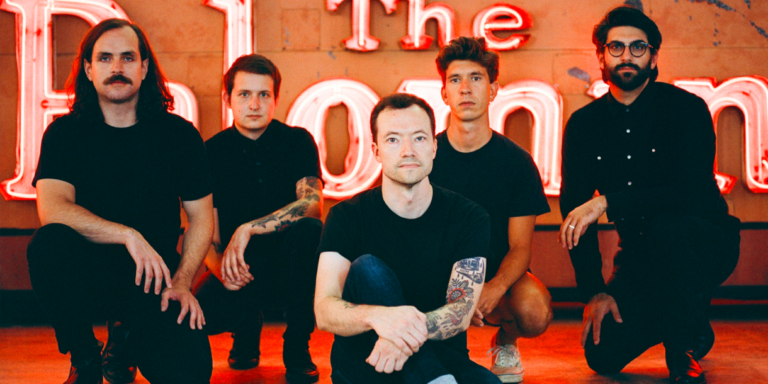
Touché Amoré have shared a new single from their upcoming album, Lament. It’s called ‘I’ll Be Your Host’, and you can listen to it below.
“‘I’ll Be Your Host’ is a song about the overwhelming nervousness I get when someone approaches me and talks to me about their dead loved ones,” singer Jeremy Bolm explained in a statement. “I feel horrible because I 100-percent understand why they’re sharing it with me. It’s hard having to stomach tragic story after tragic story while sometimes being asked advice when I absolutely don’t have the answers.”
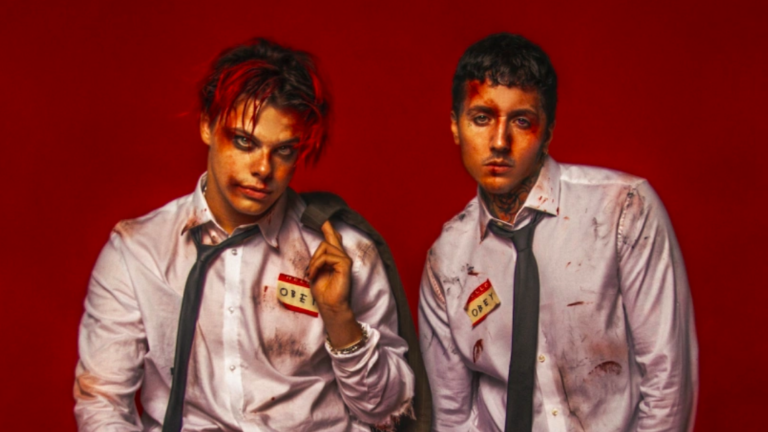
Bring Me the Horizon have released a new song featuring Yungblud called ‘Obey’. The single is taken from BMTH’s upcoming series of Posthuman EPs. Check it out below.
“‘Obey’ is a soaring ode about how, as a society, oppression has been so normalized in our DNA that we can’t even see it anymore,” frontman Oli Sykes said in a press release. “We consider ourselves free, but only because the chains are invisible, and we are controlled in ways we don’t even want to think about. They tell us how to live with a smile on their face, like shit ain’t f**ked up, inform us of tragic statistics like it’s nothing… it’s a weird world.”
Yungblud added: “We are being told to conform to a completely outdated idea that we don’t relate to or even understand. They teach us to turn against each other and to fight against our differences rather than embrace and celebrate them. They try to keep us divided because it makes us weaker. Robots follow robots, because they feel nothing at all. But what they don’t realize is that to us, to be different is to be free, and a world of f**king love and equality is a world we want to be part of. We will rise above the hate and the diversion. We will fight for the world we want to be a part of. We will not obey.”
Previously, Bring Me the Horizon shared the single ‘Parasite Eve’. No release date has yet been announced for the upcoming EPs.
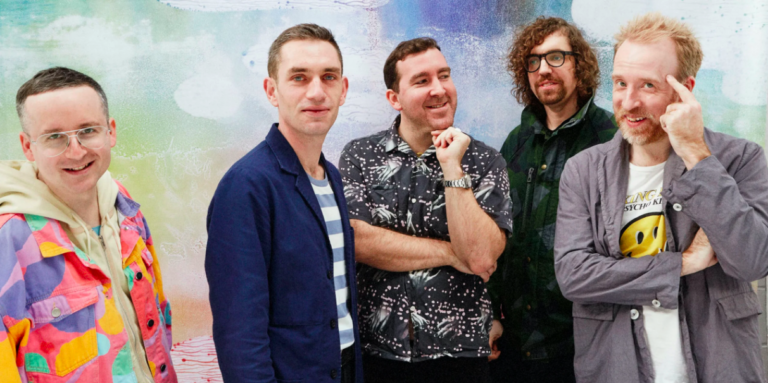
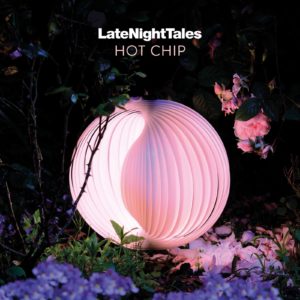
Hot Chip have announced they will be curating the latest entry in the Late Night Tales compilation series. The 19-track mix comes out October 2nd, and will feature four new songs from the group, as well as mixed tracks by Fever Ray, Nils Frahm, Kaitlyn Aurelia Smith, Suzanne Kraft, and more. The English electronic outfit have also now shared one of their cuts, a cover of the Velvet Underground’s ‘Candy Says’. Listen to it below, and scroll down for the album’s cover artwork, tracklist, and trailer.
“I think we all had slightly different understandings of what a Late Night Tales compilation might consist of; varying interpretations of the brief,” Hot Chip’s Alexis Taylor said in a statement. “For some the mix might be what you’d want to listen to as your late night continues, after a night out. For others maybe it suggested a selection of music for listening to as you drift off to sleep; then again it could just be music evocative of night time, or concerned with its traditionally “darker” moods.”
He continued: “We’ve put together a mix of music which ties all of these ideas together and represents some of our favourite music new and old, some of it directly influential on Hot Chip and some of it music we have discovered and loved, been surprised by and connected to. There are three new songs of ours which we’re really proud of, and which I think connect naturally with the nocturnal world the compilation speaks of, and a cover of “Candy Says” which is one of the first songs the very early version of Hot Chip played when we were still at school.”
Last year, Hot Chip released their seventh studio LP, A Bath Full of Ecstasy. The last instalment of Late Night Tales came out over a year ago, and was curated by Floating Points.
Late Night Tales: Hot Chip Cover Artwork:
Late Night Tales Tracklist:
1. Christina Vantzou – “At Dawn”
2. Hot Chip – “Nothing’s Changed” (Exclusive track)
3. Rhythm & Sound feat. Cornell Campbell – “King In My Empire”
4. Pale Blue – “Have You Passed Through This Night”
5. Suzanne Kraft – “Femme Cosmic”
6. Fever Ray – “To The Moon And Back”
7. PlanningToRock – “Much To Touch”
8. Charlotte Adigery – “1,618”
9. Mike Salta – “Hey Moloko”
0. Matthew Bourne – “Somewhere I Have Never Travelled”
11. Hot Chip – “Candy Says” (Velvet Underground cover version – Exclusive track)
12. Kaitlyn Aurelia Smith – “Who I Am & Why I Am Where”
13. About Group – “The Long Miles”
14. Beatrice Dillon –”Workaround Two”
15. Hot Chip – “Worlds Within Worlds” (Exclusive track)
16. Daniel Blumberg – “The Bomb”
17. Nils Frahm – “Ode”
18. Hot Chip – “None Of These Things” (Exclusive track)
19. Neil Taylor – “Finnegans Wake” excerpt (Exclusive track)
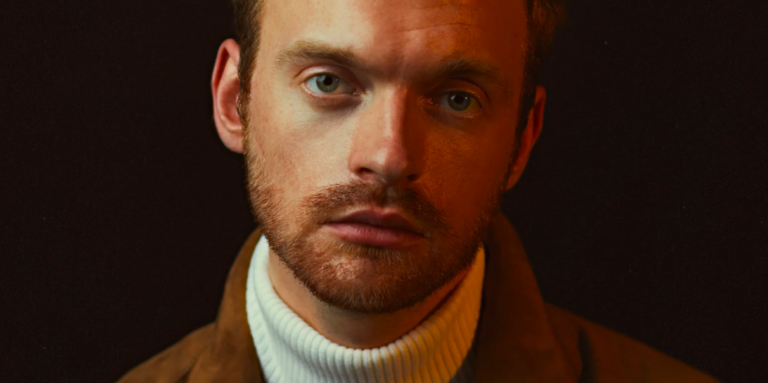
FINNEAS has shared a new song called ‘What They’ll Say About Us’. It arrives with an accompanying music video directed by Sam Bennett and centering on a close-up of FINNEAS. Watch it below.
According to a press release, the new track was written during quarantine. “I wrote this song in June after spending the day at a protest in Downtown L.A., filled with hope with the prospect that millions of people were coming together from all over the world to fight against institutionalized racism and inequality,” FINNEAS explained.
“During that time, I’d also been following Amanda Kloots as she documented her husband Nick Cordero’s time in the ICU while in a coma after being admitted for COVID-19,” he continued. “Imagining her sitting by his side, waiting, hopeful for him to wake up, it got me thinking about all the millions of people, all over the world, who also have loved ones, parents, children and extended family members going through the same thing. Fighting this horrific virus. Some will overcome and wake up again, while others, tragically may not. This song is dedicated to all who have had to endure this year. I hope this song can offer some sort of comfort to those who may need it.”
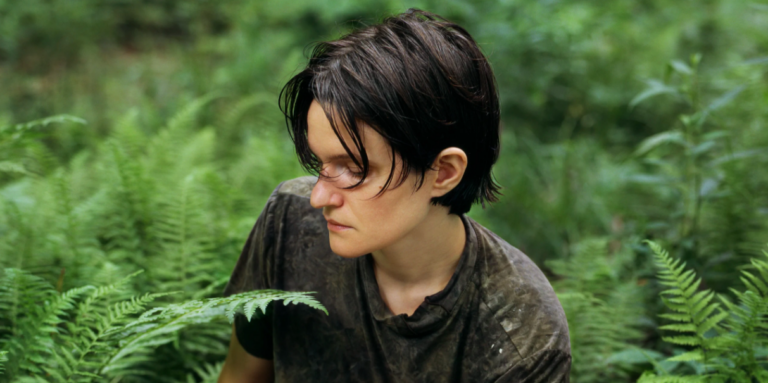
Big Thief’s Adrianne Lenker has announced two new albums: songs and instrumentals, both set for release on October 23 via 4AD. In addition to the album announcement, Lenker has also unveiled the the first single off songs, ‘anything’. Listen to it below, and scroll down for the albums’ cover artwork and tracklist.
Both albums were recorded in April after Big Thief’s tour was delayed due to the COVID-19 pandemic. They were recorded entirely in cabin-turned-studio in Massachusetts alongside engineer Philip Weinrobe. “I grew really connected to the space itself,” Lenker said in a statement. “The one room cabin felt like the inside of an acoustic guitar—it was such a joy to hear the notes reverberate in the space.”
“I had a handful of songs that I was planning on recording, but by the time Phil arrived I was on a whole new level of heartsick and the songs were flying through my ears,” Lenker continued. “I was basically lying in the dirt half the time. We went with the flow. A lot of the focus was on getting nourishment from our meals. We cooked directly on the woodstove, and we went on walks to the creek every day to bathe. I’m grateful that this music has come into existence. These songs have helped me heal. I hope that at least in some small way this music can be a friend to you.”
The new albums mark Lenker’s third and fourth solo LPs, following 2018’s Abysskiss.
songs Cover Artwork:
songs Tracklist:
1. two reverse
2. ingydar
3. anything
4. forwards beckon rebound
5. heavy focus
6. half return
7. come
8. zombie girl
9. not a lot, just forever
10. dragon eyes
11. my angel
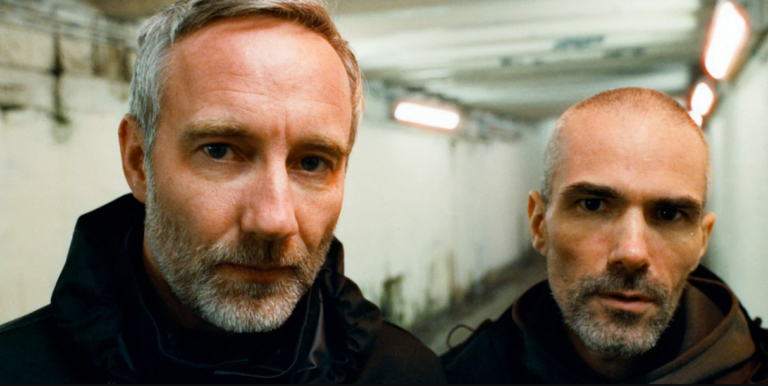
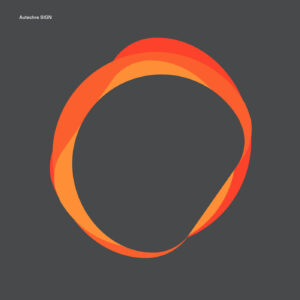
British electronic duo Autechre have announced a new album called SIGN. It arrives October 16 via Warp. Below, check out the album’s cover artwork and tracklist.
The 11-track LP follows on from a series of lengthy releases over the past few years. Their last proper full-length was 2013’s Exai. In 2016, the duo unveiled elseq 1-5, followed by the NTS Sessions two years later, and the AE_LIVE series earlier this year.
SIGN Cover Artwork:
SIGN Tracklist:
1. M4 Lema
2. F7
3. si00
4. esc desc
5. au14
6. Metaz form8
7. sch.mefd 2
8. gr4
9. th red a
10. psin AM
11. r cazt
For the Sake of Vicious, a collaboration between Canadian genre-benders Gabriel Carrer (The Demolisher, 2015) and Reese Eveneshen (Defective, 2017), is a brutally violent, riotously entertaining and utterly unpredictable exploration of vigilante justice and social power dynamics – albeit one with an ambiguous message. Our Culture reviews the film here for its selection as part of the 2020 Fantasia International Film Festival.
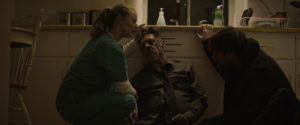
The film opens as nurse Romina (Lora Burke) leaves work on what should be a normal Halloween night – with no other plans than to pick up her son and take him trick or treating. But she arrives at her modest home to find it occupied by the frantic Chris (Nick Smyth), who is holed up there with a revolver and the badly beaten Alan (Colin Paradine) – Romina’s wealthy landlord and the man Chris believes is responsible for the rape of his young daughter some years before. As Chris tries to force a confession out of Alan by any means necessary, Romina attempts to keep him alive – but the situation is complicated when a group of masked men descend on the house, and soon things spiral completely out of control.
For the Sake of Vicious is very much a film of two halves; the first is a grippingly tense three-hander that takes place almost entirely in Romina’s claustrophobic kitchen, largely carried by three impressive central performances. Burke – best known as the star of Justin McConnell’s festival favourite Lifechanger (2018)– is excellent, deftly communicating Romina’s steadfast determination to stay calm in extreme circumstances; Smyth imbues Chris with a potent mixture of guilt, sadness and rage, a pressure cooker that might explode at any time; and Paradine – considering the nature of the crime Alan is being accused of – delivers a surprisingly sympathetic turn, ensuring that the line between heroes and villains in Carrer and Eveneshen’s scenario is constantly blurred.
This early section of the film recalls the likes of Big Bad Wolves (2013)and Prisoners (2013) as it asks difficult questions about the validity of vigilante justice in situations where proper forces of arbitration seem to have failed, and (for better or worse) refrains from offering any real answers. As accusations are thrown backwards and forwards between Chris and Alan, it’s never entirely clear where our sympathies should lie, nor exactly how we should feel when Chris’s threats escalate into violence. Romina is our central point of identification; her sole concern is with trying to negotiate some kind of resolution that doesn’t result in further bloodshed.
Bloody mayhem on Halloween night.
Unfortunately for Romina, though, the blood arrives in buckets in the film’s second half – a non-stop parade of pure genre thrills packed to the rafters with hammers, crowbars, knives, guns and toilet lids, all realised with sanguinary practical effects and set to a pulsating synth score composed by Carrer himself. It must be noted that the film switches gear with very little warning, and the tonal shift is admittedly jarring – but what follows is so riotously entertaining that it’s hard to care: a visceral explosion of utter mayhem with shades of Carpenter, Refn and Zahler, all the more impressive for the film’s limited budget.
Vicious doesn’t settle down again until its final minutes, when it is difficult not to return to the question of what it all means. In many ways, this is a film that remixes the themes of its directors’ best-known features. After all, Carrer’s The Demolisher is a throwback to the likes of Death Wish(1974), The Exterminator(1980), Fighting Back (1982)and Vigilante (1983), a morally ambiguous movie entirely concerned with the slippery distinction between righteous justice and self-destructive revenge. In fact, even more so than the earlier film, Vicious could conceivably be accused of endorsing vigilantism, especially as it gleefully revels in exceptionally graphic scenes.
However, it is interesting that the film’s violence is largely directed at men of considerable wealth and influence (or, in other words, those who can seemingly do whatever they please without ever facing retribution); a similar theme is also central to Eveneshen’s dystopian meditation on corporate corruption, Defective. Romina and Chris – ordinary working people who are primarily motivated by a desire to do right by their children – are juxtaposed with Alan, a clearly very powerful man who does business with some extremely unsavoury characters. The film seems to hint that both he and they need to be taught that they might not be quite as untouchable as they think they are – an all-too-relevant theme in 2020.
Thematically, then, this is ultimately a film about class and power dynamics that might frustrate some viewers in its refusal to definitively offer answers to the ethical questions it poses – but that frustration is likely to be undone by the fact that Vicious is nothing if not ridiculously entertaining: a nail-biting exercise in suspense that suddenly descends into skull-crunching chaos.
Worry Club is the musical project of Chase Walsh, a 21-year-old singer-songwriter and multi-instrumentalist hailing from Chicago. Having picked up the guitar at the age of five, Walsh soon taught himself how to play drums, piano, bass, and violin and dove headfirst into the world of self-producing. He released his first EP as Worry Club earlier this year, titledChase’s Hands, a collection of introverted bedroom pop recordings dealing with the artist’s struggles with mental health and the way it’s affected his day-to-day life. He continued dropping singles going into the year as he refined his approach, and his latest couple of songs, ‘Japenese’ and its B-side ‘A Whole Month of You’, are his catchiest yet; the first is a laid-back, breezy indie pop tune with hints of modern hip-hop production (it’s no surprise he lists BROCKHAMPTON as one of his influences) and more than a few memorable lines (“Couldnt’ hang last week, I was learning Japanese”) that even caught the attention of none other than Billie Eilish, while ‘A Whole Month of You’ is driven by a bright, colourful synth line that’s bound to get stuck in your head. With a penchant for tight hooks and self-effacing lyrics, it’ll be interesting to see how Worry Club will expand their sound going into the future.
We caught up with Chase Walsh of Worry Club for this edition of our Artist Spotlight series, where we showcase up-and-coming artists and give them a chance to talk about their music.
You started making music while you were still in high school – what drew you to songwriting?
When I was younger I mainly listened to instrumental/theatrical music like Sigur Rós, Explosions in the Sky, Mogwai, etc. but as I began to find other bands within the pop punk scene in Chicago I was like “oh shit people just like me are writing songs about things that I can relate to”. By no means were my songs GOOD in highschool, but they were a huge catalyst in my music career.
You’ve said that “music is the only way I can get some of the negative thoughts out of my head.” Is that what you hope to achieve for the listener, too?
Yes, 100%. I want the listener to be able to forget about their stress while they’re listening to the song. To be caught up in all that it is. To get in touch with what they’re feeling and forget about all the other bullshit that doesn’t matter. Like how I feel when I’m listening to my favorite songs.
Who are some of your influences, and have they changed over time?
My biggest influences of all time have to be The Maine, Thin Lizzy, Explosions in the sky, Say Anything, Microwave, Lil Peep and Modern Baseball. As of late, I’ve been listening to a lot of Arlo Parks, Brockhampton, Snail Mail. I just recently put a playlist FULL of our influences on our Spotify page if anyone wants to check some of those bands out.
Could you talk about the single ‘Japanese/ A Whole Month of You’? What was the inspiration for each track?
For ‘Japanese’ the general vibe was my tendency to be an introvert. I’m always calling off plans to stay at home and one time my actual excuse was “sorry I couldn’t hang last week, I was learning Japanese.” ‘A Whole Month Of You’ is about staying with someone who you know is bad for you. They’ll “keep your body bruised” – it’s about realizing your own self worth, saying “fuck you” to that person and breaking off to do your own thing.
What was the recording process like?
The recording process was fairly similar to other songs I’ve put out. I’ll usually finish tracking/writing the song in about 2 hours but then I find myself constantly tinkering with the song until I go crazy. Months will go by as I run from my studio to my car listening to it at different volumes just to get that perfect mix.
Where do you see yourself going from here?
I really hope to keep this momentum going, I’d love to collaborate with some artists that I love and just keep making the best music that I can. I know that while I grow as a person, I’ll continue to develop a new sound. I also would really love to be on a personal level with all of my fans so I can help them through tough times because I know their support keeps me going every single day.
David Byrne has apologized for wearing black and brown face in a 1984 promotional video for the Talking Heads’ 1984 concert film Stop Making Sense. In the clip, Byrne portrays a series of different characters interviewing himself, including some that are people of colour.
Byrne, who rarely uses social media for personal use, took to Twitter to address the video. “I’d just about forgotten about this skit and I’m grateful that it has been brought to my attention,” he wrote. “To watch myself in the various characters, including Black- and brownface, I acknowledge it was a major mistake in judgement that showed a lack of real understanding. It’s like looking in a mirror and seeing someone else—you’re not, or were not, the person you thought you were.”
“We have huge blind spots about ourselves – well, I certainly do,” he added. “I’d like to think I am beyond making mistakes like this, but clearly at the time I was not. Like I say at the end of our Broadway show American Utopia ‘I need to change too’..and I believe I have changed since then.”
Read David Byrne’s tweets below, and scroll down to watch the clip in question.
Recently a journalist pointed out something I did in a promo video skit in 1984 for the Talking Heads concert film Stop Making Sense. In the piece I appear as a number of different characters interviewing myself, and some of the characters portrayed are people of color.
To watch myself in the various characters, including black and brown face, I acknowledge it was a major mistake in judgement that showed a lack of real understanding. It’s like looking in a mirror and seeing someone else- you’re not, or were not, the person you thought you were.
One hopes that folks have the grace and understanding to allow that someone like me, anyone really, can grow and change, and that the past can be examined with honesty and accountability.
“this song means a whole lot to me, and it’s pretty unique in how it came together…” tyron said in a statement. “at the time it was recorded, i lived in this weird regal looking house (in LA) with a bunch of friends, including nicole and moses, who are on the song. we were making records for our own projects, but there was also a lot of loose stuff that was recorded for fun. i basically kept a mic rolling whenever there was meaningful sound occurring.”
“cul de sac comes from this vibe,” he continued. “it’s all improvised, everyone laying on the floor at 3 am in complete darkness, singing and having a good time. it’s sort of utopian in that sense .. in that it’s not “feigned utopia” practiced for the microphone, but actual lived-experience-at-its-best that somehow managed to be captured by the mic.”
He concluded: “the original recording was about two hours .. whereas this is a collage of it, different parts layered and micro-edited together over the course of a year. this process is usually very lonesome and meticulous, but it’s super soothing if the material i’m working with is communal and spontaneous. it’s funny cause i can not see people for days but feel like i’ve been hanging out bc i’ve been making music with their essences. the whole album plays off of this method .. loose unplanned improv recordings with people in special situations, that were later sampled and composed into legit composed music when i was off on my own.”