Home Blog Page 372

The Last Dinner Party Share New Single ‘The Scythe’

The Last Dinner Party have released ‘The Scythe’, the second preview of their forthcoming album From the Pyre. Following July’s ‘This Is The Killer Speaking’, the slow-burning, meditative track arrives with a music video directed by Fiona Jane Burgess. Check it out below.

“This song began 9 years ago, like a prophecy,” Abigail Morris explained in a statement. “I wrote it before I had known anything of grief or heartbreak, how a relationship ending feels exactly the same as that person dying. Once you know how it feels to lose someone you enter a new realm from which you can never return. You’re trying to reach them telepathically through psychics or song lyrics (sometimes those two become the same) and sometimes they give you a reply. It can take 9 years to realise you’re even grieving at all but once you do you see them everywhere – in a robin, in a street fox, in a Wim Wenders film. The Scythe comes for everyone and you shouldn’t be afraid about what’s on the other side.”

“The music video for ‘The Scythe’ is one of our proudest and most intimate,” Morris added. “From one angle it’s a celebration of all the relationships that make it so far you both feel like you can live forever, from another it’s the fantasy of imagining what it would look like if your parents had been able to grow old together.”

From The Pyre, the follow-up to 2023’s Prelude to Ecstasy, arrives October 17 via Island Records.

8 Albums Out Today to Listen To: Big Thief, La Dispute, David Byrne, and More

In this segment, we showcase the most notable albums out each week. Here are the albums out on September 5, 2025:


Big Thief, Double Infinity 

Double Infinity coverNow a trio following the recent departure of bassist Max Oleartchi, Big Thief switched up their approach going into their latest album, Double Infinity. With longtime collaborator Dom Monks on production, they gathered a group of 10 musicians, including three percussionists, three backing vocalists, an additional guitarist, a musician alternating between keys and live tape loops, and new-age legend Laraaji on zither and “intuitive vocal melodies.” The results are enchanting and hopeful in their curiosity, pushing the band’s sound in a more psychedelic direction that mirrors Adrianne Lenker’s mystical meditations.


La Dispute, No One Was Driving the Car

NoOneWasDrivingTheCarThe majority of La Dispute’s first album in six years, No One Was Driving the Car, was already out by the time of its official release. The Michigan group has been rolling out the cinematic, revelatory album in acts, with the title track and ‘End Times Sermon’ now bringing it to a close. In our interview, vocalist Jordan Dreyer explained that Gaspar Noé’s Vortex helped him articulate the sentiment at the end of the LP. “After the rapture moment, you fast-forward to a place in time in the future unknown, and the note of resignation,” he said, “if there is one, is the feeling of comfort in partnership. Having somebody asleep on your shoulder makes the uncertainty of what lies ahead less terrifying.”


David Byrne, Who Is the Sky?

 Who Is The Sky? album coverSeven years since his last solo album, American Utopia, David Byrne has returned with Who Is the Sky?, which manages to come off both extremely absurd and very accessible. He worked on the new album with producer Kid Harpoon (Miley Cyrus, Harry Styles, Shawn Mendes) and the 15-member chamber ensemble Ghost Train Orchestra, who wrap the songs in a spirit of vibrant positivity. The record also features St. Vincent, Hayley Williams, the Smile drummer Tom Skinner, and American Utopia percussionist Mauro Refosco. If nothing else, it will certainly put a wacky smile on your face.


Shame, Cutthroat

Cutthroat album coverShame have followed up 2023’s Food for Worms with a new album called Cutthroat. Vocalist Charlie Steen, guitarists Sean Coyle-Smith and Eddie Green, bassist Josh Finerty, and drummer Charlie Forbes laid down the record at Salvation Studios in Brighton, England. Produced by John Congleton, it’s both more unsparing in its experimentation and fiercely propulsive. “This is about who we are,” Steen remarked. “Our live shows aren’t performance art—they’re direct, confrontational, and raw. That’s always been the root of us. We live in crazy times. But it’s not about ‘Poor me.’ It’s about ‘Fuck you.’” He added: “It’s about the cowards, the cunts, the hypocrites. Let’s face it, there’s a lot of them around right now.”


Saint Etienne, International

International album coverInternational, which is billed as Saint Etienne’s final album, has arrived. Wanting to complete their ouvre on a high note, the British indie-pop trio have made a record that’s not bittersweet so much as celebratory and typically blissed-out. It features contributions from The Chemical Brothers’ Tom Rowlands, who appears on the excellent lead single and opener ‘Glad’, as well as Confidence Man, Erol Alkan, Vince Clarke, Nick Heyward, Orbital’s Paul Hartnoll, and Xenomania’s Tim Powell.


Shallowater, God’s Gonna Give You a Million Dollars

God's Gonna Give You A Million Dollars cover artGod’s Gonna Give You a Million Dollars is the kind of album you simply succumb to. Striking a similar magic as fellow Texans Teethe, Shallowater balance out their slowcore sound with post-hardcore heaviness and introspective alt-country, a fusion crystallized by Alex Farrar’s production. It was preceded by the singles ‘Sadie’ and ‘Highway’, and he song ‘All My Love’ is a collaboration with fingerstyle guitarist Hayden Pedigo.


Titanic, Hagen

Titanic Hagen album coverTitanic, the Mexico City-based duo of Mabe Fratti and Hector Tosta (aka I. la Católica), have unveiled a new LP called Hagen. Celestial and captivating, the record was produced by Tosa, with co-production from Fratti and Nate Salon. The follow-up to Titanic’s debut full-length Vidrio features Eli Keszler on drums, while Oneohtrix Point Never’s Daniel Lopatin contributes synthesizers on ‘Pájaro de fuego’.


Justin Bieber, Swag II

SWAG IILess than two months after the release of his surprise album Swag, Justin Bieber has dropped its sequel. Swag II was teased on Thursday with billboards in cities like New York, London, Seoul, Sydney, and Shanghai, though it arrived a little later than “tonight at midnight” as promised, hitting YouTube Music before other streaming services. Breezing through its 23 tracks is the same loose, low-key, lovelorn R&B hybrid that marked its predecessor, highly influenced by collaborators including Dijon (who’s since released the much better Baby) and Mk.gee. Guest appearances come from Tems, Lil B, Bakar, Hurricane Chris, and Eddie Benjamin.


Other albums out today:

Ivy, Traces of You; Suede, Antidepressants; Tchotchke, Playin’ Dumb; Various Artists, I Will Swim to You: A Tribute to Jason Molina; Lucrecia Dalt, A Danger to Ourselves; El Michels Affair, 24 Hr Sports; Akasha System, Heliocene; James K, Friend; Fleshwater, 2000: In Search Of the Endless Sky; SG Lewis, Anemoia; Cut Copy, Moments; Orcutt Shelley Miller, Orcutt Shelley Miller; Brian Dunne, Clams Casino; Flur, Plunge; Pickle Darling, Battlebots; Beauty School Dropout, WHERE DID ALL THE BUTTERFLIES GO?; JayWood, Leo Negro; Alexei Shishkin, Good Times; Will Orchard, Behind the Shadow Glass; BlankFor.ms, After The Town Was Swept Away; Etceteral, Kimatika; Tom Odell, A Wonderful Life; GHOSTWOMAN, Civilized World; Laura Cannell, The Visible Light of Other Worlds; Emil Friis, Moving Images.

Mura Masa Shares New Single ‘I’m Really Hot (For Myself)’

0

Mura Masa has returned with a new single, the rambunctious, bouncy ‘I’m Really Hot (For Myself)’. Interpolating Missy Elliott’s ‘I’m Really Hot’, the track comes paired with a Reids-directed video. Check it out below.

Mura Masa released his most recent LP, Curve 1, last month.

Marvel Rivals Rolls Out Season 4 Patch Notes

Marvel Rivals starts Season 4 with a fresh update full of new content, features, and gameplay improvements. Specifically, Heart of the Dragon will introduce new heroes, stories, game modes, and cosmetics. Marvel and NetEase want to keep all players engaged with the upcoming patch when the season kicks off.

New Heroes and Stories

The official Marvel announcement said that Angela and Daredevil are the newest additions to the list of superheroes in the game. Angela will join the roster with her Ichors that can turn into powerful weapons or shields. Meanwhile, the developers have not yet showed the abilities of Daredevil in the game. However, he is expected to be the ruler of the Eighth City, Dizang. Even so, players can expect their arrival in Marvel Rivals to add a unique tactical edge.

At the same time, GameRant mentioned that next season introduces several new storylines that grow the narrative. Heart of the Dragon will be the focus and will set the tone for the season. Likewise, the backstories of some key heroes may be expanded in their own lore. In particular, Her Sister’s Keeper will explore Angela. One True Champion revolves around the Iron Fist. Similarly, Destined For Doom will tackle the story of Loki.

Battle Pass and Seasonal Event

Based on the patch notes, the theme of Season 4 is the Fruit of Immortality. Players will have the chance to get a battle pass that comes with ten new costumes. Heart of the Dragon also invites fans to join the Scroll of the Immortal Beasts to unlock a free Ultron – Wasteland Robot costume.

Competitive Modes Updates

As part of the seasonal refresh in Marvel Rivals, players’ ranks will reset. Specifically, each user gets moved down by seven divisions. Also, players with Gold rank will receive rewards, including Angela-Siriana’s Silver costume and more.

Arcade Mode Hub Upgrades

Marvel announced that the Arcade Mode is expanding with new and returning game modes, including the following:

  • Conquest – Annihilation (New)
  • Free Fight (New)
  • Clone Rumble (Returning)
  • Giant-Size Brain Blast (Returning)

These additions are now permanent parts of the game along with the current modes, such as Conquest and Doom Match.

New Systems, Improvements, and Fixes

Season 4 features a redesigned emoji wheel, costume rotation, friend suggestion, and many more. The game also improved the hero selection UI, fixed clipping issues, and adjusted hero abilities.

Marvel Rivals Season 4: Heart of the Dragon drops on September 12. For full patch notes, visit the official Marvel Rivals website.

17 New Songs Out Today to Listen To: Sword II, Softcult, and More

There’s so much music coming out all the time that it’s hard to keep track. On those days when the influx of new tracks is particularly overwhelming, we sift through the noise to bring you a curated list of the most interesting new releases (the best of which will be added to our Best New Songs playlist). Below, check out our track roundup for September 4, 2025.


Sword II – ‘Even If It’s Just A Dream’

Sword II — the Atlanta trio Mari González, Certain Zuko, and Travis Arnold — have announced a new album, Electric Hour, arriving November 14 via section1. It’s led by the nightmarish, electrifying new single ‘Even If It’s Just A Dream’. “The title was inspired by the idea that we are in the era of surveillance technology, but also we imagined ‘electric hour’ as something powerful, a time for creativity, potency and revolution – ‘the time is now’ type situation,” the group said of the LP. “We imagined the ‘hour’ as the time a band gets to be on stage – one hour to make your point to the audience, to make sense of the situation facing humanity. One hour to bring into the physical world the music that resonates with people facing repression, increasing alienation, and violence. Basically, one shot to make the revolution. It’s very daunting because you only get one life, one hour. But our limitation is what shows us what is important, what is worthy of our time in this life.”

Softcult – ’16/25′

Softcult have announced their debut LP, When a Flower Doesn’t Grow, which doesn’t come out until the the beginning of next year. The riveting new single ’16/25′, though, is out now. “It points out the cognitive dissonance men perpetuate while trying to possess and control younger women,” Mercedes Arn-Horn said of the track.

Latto and Ice Spice – ‘Gyatt’

Having squashed their beef, Latto and Ice Spice have joined forces for a new song called ‘Gyatt’. It’s produced by Pooh Beatz, Go Grizzly, Cheeze Beatz, and SupaKaine.

Steve Gunn – ‘Nearly There’

Steve Gunn has announced a new album, Daylight Daylight, which opens with the ethereal and engrossing ‘Nearly There’. Instead of bringing together a band to flesh out the new songs, Gunn primarily worked with producer James Elkington.

Emily Yacina – ‘The Clearing’

No one writes about vulnerability, rather than just with it, quite like Emily Yacina, and her new single ‘The Clearing’ is further proof. “I think of ‘The Clearing’ as the arc of the album,” Yacina explained, referring to the upcoming Veilfall. “It’s an ode to the space that only intimacy with another person can take you. This song evolved a lot — I began writing it in 2022. The lyrics are minimal, and we wanted to honor that by exploring the different places the words can take you through sound and instrumentation.”

The Antlers – ‘Something in the Air’

The Antlers have shared a new single, ‘Something in the Air’, from their upcoming album Blight. It’s “about a looming threat that can take many forms,” Peter Silberman said in a statement. “Precautions that would have seemed strange a decade ago have become ordinary routines – a new normal set against a backdrop of creeping dread. Meanwhile, doom lies dormant, waiting to erupt.”

Guided by Voices – ‘(You Can’t Go Back To) Oxford Talawanda’

There’s a new Guided by Voices album on the way, which is hardly ever not the case. Thick, Rich And Delicious, the band’s 42nd studio album, is out October 31, previewed today by the roiling, naturally hooky new song ‘(You Can’t Go Back To) Oxford Talawanda’.

Robert Plant – ‘Chevrolet’

Robert Plant has released ‘Chevrolet,’ the opening track of his upcoming album Saving Grace. It’s an enticing rendition of Donovan’s 1965 ‘Hey Gyp (Dig the Slowness)’.

The Belair Lip Bombs – ‘Don’t Let Them Tell You (It’s Fair)’

The Belair Lip Bombs – the Australian quartet of Maisie Everett, Mike Bradvica, Jimmy Droughton, and Daniel “Dev” Devlin – have dropped a gripping new song, ‘Don’t Let Them Tell You (It’s Fair)’. “It’s about not letting anyone walk all over you,” Maisie explained. “Have confidence in what you’re doing and don’t let anyone tell you otherwise.” She added: “I was messing around on my guitar with the Keith Richards tuning when I came up with the intro riff. The line ‘you gotta make your own luck’ came from my friend Alex Lahey. I remember meeting up with her a couple of years ago for the first time. I had a really inspiring conversation with her that day. We talked about all things music – the different challenges that she’d had to overcome in her musical career. And I remember her saying to me, ‘You have to make your own luck.’  I don’t know why, but it really stuck with me. You have to believe in yourself and you have to always work hard, but the hard work only works if you believe in yourself at the same time.”

Georgia – ‘Get Over It’

Georgia has dropped ‘Get Over It’, a euphoric song she worked on with Frost Children. “Frost Children and I got together and on one grey London night in my studio pretty much wrote & produced this whole song,” she explained. “Angel & Lulu completely inspired me from there on and altered my whole musical writing landscape. I ended up spending time with them in New York and shared beautiful memories before bringing the track back to London to finish with my long term collaborator, Mark Ralph. This song is meant to make you just lose yourself & throw your hands up and let go of whatever you are going through, even if it is for just 3 minutes!”

hemlocke springs – ‘the beginning of the end’

hemlocke springs is back with a new single, ‘the beginning of the end’, which is whimsically shapeshifting yet emotive. “I wrote this song seven years ago, when I was meeting people in college who didn’t grow up religious,” she recalled. “I was meeting people of different sexualities for the first time and questioning the Christian rhetoric that being gay is an abhorrence. It was a very distinct switch from my upbringing, where I was banned from dating or having sleepovers. So this song is me trying to sort all my thoughts and feelings of once being restricted like, ‘Can’t I have some normalcy?’”

Matt Pryor – ‘The Salton Sea’

The Get Up Kids frontman Matt Pryor has announced a new solo album The Salton Sea, previewing it with the breathless title track. The record is set to arrive on November 14 via Nightshoes Syndicate.

Willie Nelson – ‘Workin’ Man Blues’ (Merle Haggard Cover)

Willie Nelson has announced his 155th (!) album, Workin’ Man: Willie Sings Merle, a tribute to Merle Haggard, with whom he released three collaborative albums. Today, he’s shared his cover ‘Workin’ Man Blues’, which Haggard took to No. 1 on the country charts in 1969.

knitting – ‘Fold’

Montreal’s knitting have unveiled a jittery track called ‘Fold’. “I wrote this song while I was experiencing a wave of social anxiety,” bandleader Mischa Dempsey explained. “I wanted to explore the suspicion that others will always be able to see something about you that you yourself cannot see and that thus their perception will always be more accurate. Consequently, in this state of mind I find myself turning into a bit of a people-pleaser (something I’m trying to grow out of). This song is my attempt to shake myself out of this way of thinking and demonstrate to myself how useless this mindset is.”

Jesca Hoop – ‘Animal Kingdom Chaotic’

Jesca Hoop has announced Selective Memory, a live, unplugged reworking of her 2017 album Memories Are Now. It’s an interesting concept, given that LP is pretty raw in its original recording. “Though I wrote these songs 12 years ago, strangely they feel so very relevant to me today,” Hoop commented. “And the album ends in one hell of a protest song… if I do say so myself.”

University – ‘Bee’

Following their debut LP, McCartney, It’ll Be OK, University have announced a three-track EP called YES, which is led by an off-kilter song called ‘Bee’. The project is out September 26 via Transgressive.

Penelope Trappes – ‘Home’

Australian artist Penelope Trappes is releasing Æternum, a collection of companion pieces to April’s A Requiem, on October 31. The wondrously minimal ‘Home’ comes with a video directed by Agnes Haus, who said: “We had 1 week to shoot and edit this video, so we wanted to keep it simple. To film the first nostalgic half, I used a 90’s Hi-8 video camera that someone threw out on the street in London. The lightning is from this majestic electrical storm that happened while Penelope and I were in Byron Bay, Australia. The black windmill is in East Sussex. The idea was to connect Penelope’s past home with her new home.”

Top 10 Online Casino Software Providers in 2025

0

The iGaming industry continues to evolve at breakneck speed, fueled by innovative technologies, regulatory shifts, and ever-rising player expectations. At the heart of this ecosystem are online casino software providers—the companies that design, power, and secure the platforms where millions of players around the globe engage daily. Choosing the right provider is crucial for operators looking to stand out in a highly competitive market.

Below we explore the top online casino software providers in 2025, with a spotlight on those delivering not just games, but full-scale solutions for sustainable growth and player satisfaction.

What Is a Casino Software Provider?

A casino software provider is a company that develops the technology behind online casinos. This includes game development, platform infrastructure, payment integrations, back-office management tools, and compliance mechanisms. While some providers specialize in content (slots, table games, live dealers), others offer end-to-end solutions covering everything from UX/UI design to regulatory licensing.

For operators, the provider they choose directly impacts game quality, security, compliance, player engagement, and profitability. In short: an online casino is only as good as the software powering it.

Why Casino Software Providers Matter

The success of any iGaming business depends on the player experience. A casino might offer attractive bonuses, but if the games are buggy, payment methods limited, or navigation clunky, users won’t stay long. Casino software providers are responsible for:

  • Security & Licensing – ensuring games are fair and data is protected.
  • User Experience (UX) – intuitive interfaces and seamless gameplay.
  • Innovation – adopting new technologies like VR, blockchain, and AI.
  • Scalability – platforms that grow with the business.
  • Retention Features – gamification, social elements, and personalized rewards.

Best Online Casino Software Providers

CrustLab

CrustLab has firmly established itself as one of the most trusted names in online casino software development. Founded in 2017, the company has quickly become the go-to partner for operators seeking scalable, custom-built solutions that combine innovation with regulatory compliance.

What sets CrustLab apart is its holistic approach: from turnkey casino platforms and crypto-enabled casinos to gamified sweepstakes, social gaming, and live dealer solutions. CrustLab covers every stage of development, from product workshops and UX/UI design to full-stack engineering and post-launch optimization.

Key strengths include:

  • Custom casino development tailored to brand identity and business goals.
  • Advanced gamification features like leaderboards, quests, and dynamic achievements to maximize retention.
  • Flexible architecture that supports both rapid market entry and long-term scalability.
  • Full IP transfer, ensuring clients maintain control and independence.

Trusted by operators such as KTO, Inspired, and BetMakers, CrustLab is leading the way in delivering feature-rich, innovative platforms that future-proof casino businesses.

NetEnt

A household name in online gaming, NetEnt has been shaping the iGaming landscape since 1996. Known for blockbuster titles like Starburst and Gonzo’s Quest, the Swedish provider blends high-quality graphics, innovative mechanics, and immersive storytelling.

NetEnt also invests heavily in responsible gaming practices and data-driven solutions, ensuring their platforms align with global regulatory standards. Their portfolio of over 200 games remains a staple for operators worldwide, especially those targeting European markets.

Playtech

Founded in 1999, Playtech is a pioneer in iGaming software and remains one of the largest providers globally. With a vast library of slots, table games, bingo, sports betting, and virtual sports, Playtech delivers all-in-one platforms that suit both established operators and new entrants.

Their strengths lie in their IMS (Information Management System) and Playtech Open Platform, which allow operators to integrate diverse content and manage players efficiently. The company also places emphasis on sustainable practices and responsible gaming initiatives.

Pragmatic Play

One of the fastest-growing providers, Pragmatic Play has made significant strides since its founding in 2015. Its portfolio now spans slots, live dealer games, bingo, and sportsbook content. With a focus on cross-platform compatibility, Pragmatic Play ensures seamless experiences across devices and currencies.

Certified in more than 40 jurisdictions, Pragmatic Play is a top choice for operators seeking reliability, innovation, and compliance at scale.

Evolution (Ezugi)

As the leader in live casino entertainment, Evolution continues to redefine the standard for immersive, interactive gaming. Through its subsidiary Ezugi, Evolution has expanded its live dealer offerings with fresh formats and innovative features.

With nine studios worldwide and partnerships with over 100 operators, Evolution is synonymous with premium live experiences, blending advanced streaming technology with professional dealers.

Novomatic

A veteran in both land-based and online gaming, Novomatic has been in operation since 1980. With more than 300 slot titles—including classics like Book of Ra and Sizzling Hot—Novomatic bridges traditional slot experiences with digital innovation.

Their strength lies in omnichannel solutions, allowing players to enjoy a consistent experience across physical terminals, online casinos, and mobile apps.

Hacksaw Gaming

Founded in 2017, Hacksaw Gaming has quickly climbed into the top tier of online casino software providers. Known for its creative approach to slots, scratchcards, and instant win games, the company also offers OpenRGS, a remote platform for seamless game creation and integration.

With over 120 titles and more than 300 partners, Hacksaw Gaming is widely recognized for combining bold designs with reliable technology.

Play’n GO

Since 2005, Play’n GO has been synonymous with high-quality slots featuring strong themes, music, and storytelling. Their catalog exceeds 300 games, with global distribution in more than 25 regulated markets.

What makes Play’n GO stand out is their focus on customization and player experience, ensuring operators receive not just content but tailored platforms aligned with brand identity.

BGaming

BGaming, launched in 2018, is driven by the philosophy of turning “gambling into gaming.” Their portfolio includes 100+ titles available across more than 900 operators worldwide. Known for supporting cryptocurrency payments and creating highly player-centric experiences, BGaming is particularly strong among next-generation players who prefer crypto casinos and socially driven platforms.

Push Gaming

London-based Push Gaming, established in 2010, is widely recognized for its mobile-first development philosophy. Their games, such as Jammin’ Jars, combine vibrant visuals with unique mechanics, earning them a strong following in European markets.

Licensed by both the UK Gambling Commission and Alderney, Push Gaming emphasizes quality over quantity, delivering fewer but highly polished titles designed for global audiences.

Criteria for Choosing the Right Casino Software Provider in 2025

When evaluating providers, operators should consider several key factors. First, licensing and certification are essential, as software should always be certified by independent testing agencies. The design of the user interface and experience is equally important—games and platforms must be intuitive, visually appealing, and mobile-friendly. Payment integration is another critical element, with support for fiat currencies, e-wallets, and cryptocurrency now a standard expectation. Security cannot be overlooked, as encryption, fraud prevention, and responsible gambling tools ensure trust and sustainability. Variety in the portfolio also matters; a strong mix of slots, table games, live dealers, and crash games attracts a wider audience. Providers that release new titles regularly keep the offering fresh and engaging. Finally, operators should look at reputation and testimonials, seeking proven track records with successful case studies, and they should weigh cost transparency and the availability of reliable post-launch support.

Cost of Casino Software Solutions

Building or licensing casino software involves multiple cost components. While prices vary widely depending on scope, complexity, and provider reputation, here are the typical elements:

  • Licensing & Certifications – securing approval in regulated markets can be costly.
  • Platform Development – turnkey solutions may start around $50,000–$100,000, while fully custom projects can exceed $250,000.
  • Game Content – either bundled from the provider or integrated via third-party aggregators.
  • Integrations – payment gateways, KYC/AML systems, CRM, and analytics.
  • Ongoing Maintenance – updates, hosting, compliance monitoring, and feature expansion.

Operators should balance time-to-market vs. customization: turnkey solutions allow rapid entry, while custom development provides brand uniqueness and long-term control.

Emerging Trends in Online Casino Software

The iGaming sector is highly dynamic, with new technologies shaping player expectations. In 2025, key trends include the rise of crypto casinos, where blockchain integration allows transparent and secure payments; the spread of gamification features such as leaderboards, quests, and social interactions to boost retention; the expansion of live casino formats with more interactive streaming; the popularity of crash and arcade games designed for fast-paced, mobile-first experiences; the use of AI and data analytics to personalize bonuses, content, and retention strategies; and the development of VR and immersive technologies that create next-level gaming experiences.

FAQs About Casino Software Providers

Do casino software providers also operate casinos?
Some do (e.g., NetEnt has operated its own platforms), but most license their games and technology to existing operators.

How long does it take to launch a casino platform?
Turnkey solutions can launch in 3–6 months. Fully custom platforms may take 12–18 months.

Are crypto casinos legal?
Legality depends on jurisdiction. Many regulated markets now recognize cryptocurrency payments, but licensing requirements vary.

What’s the difference between a white-label and custom solution?
White-label offers a ready-made platform for fast entry, while custom development provides unique branding, features, and full IP ownership.

Which provider offers the best RTP games?
It varies by game and provider. In general, operators should look for games with an RTP above 95% to ensure competitiveness and player trust.


What Types of Cases Do Beverly Hills Personal Injury Lawyers Handle?

Personal injury cases can happen in many ways. In a city like Beverly Hills, where residents and visitors alike experience busy streets, active lifestyles, and a variety of workplaces, accidents unfortunately do occur. These accidents can bring medical costs, money problems, and lasting stress for victims and their families. Personal injury lawyers in Beverly Hills focus on protecting the rights of individuals who have been harmed because of someone else’s negligence. The cases they handle are diverse, but all share the common goal of helping victims find stability after an accident. A personal injury attorney from Ellis Law Firm can guide clients through the process of pursuing fair compensation when life takes an unexpected turn. Understanding the kinds of cases handled helps clarify how victims can seek support. It also shows the many ways legal guidance can make recovery more manageable.

Motor Vehicle Accidents

Collisions are one of the most common reasons for personal injury claims in Beverly Hills. Accidents in heavy traffic or at busy intersections can involve any vehicle and often leave people with injuries that change their lives. Victims may also face the emotional impact of trauma that lingers long after the accident. Personal injury lawyers help by investigating the cause, gathering evidence, and pursuing compensation for medical expenses, lost wages, and emotional harm. Skilled guidance ensures that insurance companies do not undervalue claims.

Slip and Fall Injuries

Falls happen in a variety of places, from restaurants and shopping centers to private homes and workplaces. Uneven flooring, wet surfaces, and poor lighting are all factors that can contribute to these accidents. A fall might look small at first, but it can cause serious injuries like broken bones, back pain, or head trauma. Holding property owners accountable requires proof that negligence created unsafe conditions. Lawyers help gather evidence and build strong cases to support victims. This type of representation makes a significant difference when pursuing compensation for recovery.

Workplace and Construction Accidents

Beverly Hills has many businesses and construction projects where employees face risks on the job. Workplace accidents can include equipment failures, falls, or exposure to unsafe conditions. In construction zones, heavy machinery and hazardous materials increase the potential for severe injuries. Victims may qualify for workers’ compensation, but in some cases, additional claims against third parties are possible. Personal injury lawyers guide clients through these complex cases, ensuring all responsible parties are identified. This thorough approach provides the best chance for a fair resolution.

Medical Malpractice Cases

Mistakes in medical treatment can have serious consequences. Patients may experience complications from surgical errors, misdiagnosis, or medication mistakes. These cases require detailed evidence and expert testimony to prove negligence. Lawyers with experience in medical malpractice understand how to present these claims effectively. They work to ensure that patients and families receive justice for harm caused by medical professionals. Compensation in these cases often helps cover both medical costs and the emotional impact of the error.

Wrongful Death Claims

When negligence leads to the death of a loved one, the impact on families is profound. Wrongful death claims seek justice as well as financial support for surviving relatives. These cases may arise from car accidents, workplace incidents, medical mistakes, or dangerous property conditions. Compensation can include funeral costs, lost income, and recognition of the emotional loss suffered by the family. Lawyers handling wrongful death cases provide both legal guidance and compassionate support during a difficult time. Their role ensures that families have the resources needed to move forward while honoring their loved one’s memory.

Beverly Hills personal injury lawyers handle many kinds of cases, including traffic accidents, medical mistakes, and wrongful death. Each case reflects the need to hold negligent parties accountable while helping victims rebuild their lives. Legal representation ensures that claims are properly supported, evidence is gathered, and fair compensation is pursued. With the right guidance, victims and families can focus on healing rather than the stress of legal battles. Working with trusted professionals provides both the advocacy and reassurance needed during times of hardship.

Contemplation Between Stillness and Motion

0

In an age of fast-moving technology, we might ask a question with a quiet anxiety: how do we remember, how do we understand who we are when reality feels so fluid? Can photographic and moving image practices watch us not merely as a record, but as spaces to consider, to make us ask who we are when the physical and the digital seem increasingly indistinguishable?

These are questions at the heart of the work of London-based artist Tianyun Zhao whose practice crosses moving image, stills and aesthetics. Born in China in 1997, Tianyun was trained in both China and the UK. Her practice is rooted in Eastern philosophy and contemporary digital culture, and her works span AI imagery, fragmented memory and surreal narrative to create spaces of reflection that are poetic, rebellious and quietly unsettling

The Silent Labour

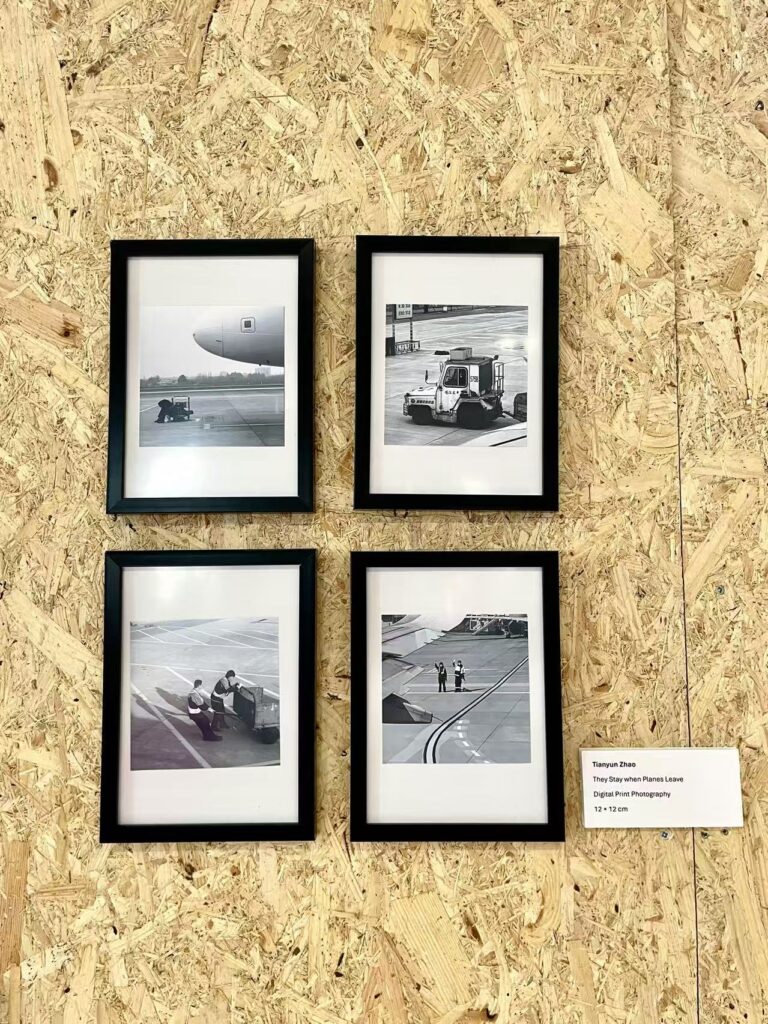
One of Tianyun’s key works is the photographic series They Stay When Planes Leave, in which she turns her lens not on the romanticised act of departure, but on those who stay behind.

Here, Tianyun asks us to reconsider what it means to move. If flight is seen as freedom, then here are the photographs that remind us that motion is sustained by those who never leave. The series is a visual elegy for forgotten labour. She insists that meaning cannot be found only in what is physically travelled, but also in the dignified stillness. In the other, we find meaning. The photographs are quiet, but insistent. They ask us to notice dignity in stillness. They ask us to see labour not as background, but as presence.

At the same time, the work exceeds the airport scene to allude to deeper histories of belonging. It is those who stay that the work does not depict, but to whom it is owed: they are the memory, the continuity, the place, in which everyday rhythms of making and maintaining, preparing food, holding a home together, keeping people with it, are discernible but rarely visible in the spectacle of leaving. Tianyun’s photographs unveil the building structure of stay, to remind us that every leave is supported by people who do not leave. What stays can be just as formative as what leaves. It is this elegy for the unsung hands on which we depend that reminds us how necessary it is to see what is in place.

Another significant photographic series, Pointed Away, expands this investigation of stillness further still by focusing on the often invisible presence of Shanghai’s streets at night. In these images, a scavenger collecting fragile foam on a bicycle and an old street vendor sit beneath massive directional arrows. Pointing in directions of the future they’re shut out of, pointing away from the city’s centre, its consideration, its concern. Here, Tianyun is interested in the visual grammar of power and how those on the margins of society are inscribed within it unseen. We are asked to dwell in the quiet dignity of those who are stationary, to notice the lives that cross paths with these invisible systems wordlessly and to see where they are unseen.

One of the Pointed Away Photographic Series

If They Stay When Planes Leave is a lament for all the unseen who keep things moving, then Pointed Away is a reminder that stillness itself can be an architecture of exclusion, a reminder to see what is unseen.

Expanding the Notion of Movement

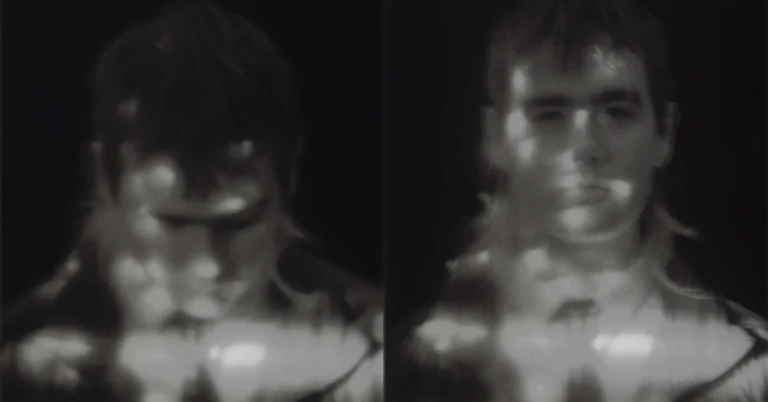
Tianyun’s They Stay When Planes Leave documents the labour of stillness, but Journey/2.0 broadens this scene of enquiry into the psychological and digital space. In this work, journeys are made, but there are no maps. Past and present collapse, digital bits split the body apart in space. But more than this, anchoring this work is a quiet radical gesture that is also an opportunity for artistic redress: through AI, the narrative voice (a male by default) has been recalibrated to female, an attempt to reclaim authorship over the absence of female agency in subject-telling. It rejects any form of linear narrative, instead, situating like memory itself: fractured, unstable, resonating with dissonant clocks and calendars. By confusing travel with perception and identity, Journey/2.0 is not only a work about movement, but also a work that is a reclaimation of voice in the digital age.

In these series, Tianyun translates gestures of personal emotions into something culturally resonant. Each resists the spectacle of narrative and instead dwells in gestures that feel familiar but estranged: gestures in which recognition is courted but not concluded. Tianyun also continues her inquiry into tradition and modernity. Whether obsessive or healing, become spaces of suspension in which the viewer is invited to dwell in gestures that resist commodification but resonate with deep cultural significance.

Mediums in Flux

Across her practice, Tianyun refuses to either fear or embrace technology. While her narrower practice moves fluidly between photography, moving image and experimental art, and often incorporates culture and technologies, her works tend to resist treating these as novelties or curios. She belongs naturally to a global dialogue on the moving image, but her roots in Eastern philosophy place her in a specific inquiry into impermanence, selfhood, and cultural fluidity. Her images are not declarations but questions. How do digital fragments reconfigure memory? How do ideas around Eastern philosophical thought adapt to a globalised, hyper-digital society? What happens when the self is split across the material and the immaterial?

Whether frozen on a camera screen or exhibited in a gallery, her works belong to a dialogue in which the imperative is to hold contradictions across scales without resolving them. To turn images into spaces in which to dwell. Her practice invites us to dwell in questions. To hold recognition without resolution. To court estrangement. To dwell in uncertainty. To recognise the unseen. To embrace the instability of identity as a space of possibility.

Across her photography and moving image, Tianyun builds what might be termed contemplative architectures. Rooms in which identity, memory, body and technology intersect. In a society in which immediacy and image saturation are dominant currencies, her works are an alternative. Tianyun’s strength as a maker of contemporary moving image is precisely this: her capacity to get us to slow down, to look, to dwell in those spaces in between. Inhabiting a space between the traditional and the modern, the material and the digital, her work resists easy classification. They are propositions, fragile and persistent, that prompt us to rethink not only the image, but ourselves.

In Conversation with Tetiana Udovychenko: The Art of Seeing the Soul

The photography of Tetiana Udovychenko? In a visual culture dominated by speed, her images are deliberate, quiet, and profound, asking the viewer to look beyond the surface and into the rich, inner world of her subjects. Her journey has been remarkable, taking her from a foundational photography school in Ukraine to the most respected platforms of the global art stage.

With a list of accolades that includes a nomination in the prestigious Fine Art Photography Awards and major exhibitions in Venice, Rome, London, and Miami, her work has garnered significant international attention. As an active member of both the Los Angeles Art Association (LAAA) and Ukraine’s Professional Association of Photographers (MIFART), Udovychenko bridges cultures and continents with her singular vision. Her recent feature in ELLE magazine for an evocative series on the ancient Turkish city of Mardin further solidified her status as a vital voice in contemporary photography. Our Culture Mag had the privilege of sitting down with the artist for an extensive conversation about the philosophy that guides her lens and the stories behind her powerful images.

Tetiana, thank you for joining us. Your passion for photography began with a fascination for old family photographs. What did those silent, black-and-white images teach you about storytelling that you couldn’t have learned in a formal school?

Tetiana Udovychenko: It’s my pleasure. Those old photographs were my first, and perhaps most important, teachers in the art of implication. A school can teach you composition, lighting, and technique, but those albums taught me about what is left unsaid. I remember one photograph of my great-grandfather, a man I never met. He was looking slightly away from the camera, caught in a moment of thought. From that single image-his posture, the expression in his eyes-I could imagine his personality, his life, his world. I learned that a photograph’s power often lies in the questions it raises, not the answers it provides. It’s a vessel for a moment, and by preserving that moment, it preserves the history and spirit of a person. That is a lesson I carry with me into every session.

Your feature in ELLE Turkey for the Mardin series is one of your recent outstanding achievements. How do you navigate bringing your deep, contemplative work to a platform often associated with fast-paced, commercial trends?

Tetiana Udovychenko: I was honored by the feature, and I believe it speaks to a growing desire for authenticity, even within the world of high fashion. The key was to stay true to my vision. I didn’t try to make Mardin look like a fashion editorial. I approached it with reverence, focusing on its soul and its history. The series was about light, time, and the human spirit that echoes in its ancient stones. I think the editors at ELLE recognized that a powerful story, beautifully told, has universal appeal. It suggests that a sincere, soulful image can be just as arresting and influential as a glossy commercial one. My goal is always to create a connection, and that principle remains the same, whether the image appears in a gallery or a magazine.

You were nominated in the Fine Art Photography Awards for your work “Serendipity.” It’s a title that suggests a fortunate, unplanned discovery. Was that the case with this photograph?

Tetiana Udovychenko: “Serendipity” is the perfect word for it. That photograph was a gift. It happened during a private shoot, in a quiet moment between the planned shots. The subject was lost in her own world, a look of profound introspection on her face, and the light caught her in a way that felt almost sacred. It was a fleeting instant of pure, unscripted honesty. I raised my camera and captured it. To have that specific image recognized by the FAPA jury was deeply meaningful. It reaffirmed my belief that the most powerful portraits are often not the ones we construct, but the ones we are open enough to receive. It is in these unposed, genuine moments that a person’s inner world truly becomes visible.

Your biography notes that you began as an amateur and studied at a foundational photography school. How did your passion evolve into a professional path?

Tetiana Udovychenko: Photography has always been a part of my life, starting with a simple film camera at home. For me, it has always been a powerful way to tell stories. I believe every person carries a unique experience and deserves to be heard.

I have been learning throughout my life: from a foundational photography school to private masterclasses with leading artists and industry experts. They gave me the technical language and tools of the craft, but I realized that the most important part of photography is not technique—it’s the story we want to tell.

I continue to grow constantly, because I see my true gift as the ability to speak for those who cannot speak for themselves, or to be a guide for those who have something to share. This, I believe, is essential for the wholeness of the world. We are all here to tell stories.

You’ve described your method as centered around soft lighting and a focus on details. Can you elaborate on your relationship with light? Do you see it as a technical tool, a subject in its own right, or something more?

Tetiana Udovychenko: For me, light is the other character in the photograph. It is never just a technical tool for illumination. Light is an emotional substance. Soft light, which I prefer, wraps itself around a subject. It forgives, it reveals gently, and it creates an atmosphere of intimacy and calm. It allows the subtle details-the texture of skin, a loose strand of hair, the faint glimmer in an eye-to emerge without harshness. In Mardin, the light was ancient and heavy. In Miami, it’s humid and playful. Each location, each person, has a unique dialogue with light, and my job is to listen to that conversation and capture it. Light sculpts the form, but more importantly, it shapes the feeling.

Your bio notes that street photography is a personal hobby. How does that practice-capturing candid, unplanned public life-inform your more intimate, curated portrait sessions?

Tetiana Udovychenko: Street photography is my training ground for seeing. It sharpens my instincts and forces me to find stories in motion, often in a fraction of a second. There are no second chances. That discipline has been invaluable for my portrait work. When I am in a session, even though the setting is controlled, I am still searching for that same kind of candid, authentic moment I hunt for on the street. It teaches me to anticipate-to see a smile forming before it breaks, to notice a flicker of doubt in someone’s eyes. It keeps me from over-directing my subjects and reminds me that the most beautiful moments are almost always the ones that are unplanned.

You often speak of capturing “true emotions” and “authenticity.” In a medium where the photographer is always an active participant, what does an “authentic” moment truly mean to you? Is it something you discover or something you help create?

Tetiana Udovychenko: That is an excellent and crucial question. I believe it is both. An authentic moment cannot be entirely manufactured, but it must be cultivated. My role is to create an environment of absolute trust and calm, a space where a person feels safe enough to let their guard down. The authenticity I seek is not about catching someone unaware; it’s about reaching a point of collaboration where the subject is free to simply be. The final image is an interpretation, of course, it is seen through my eyes, my lens. But my goal is for that interpretation to be an honest reflection of the emotion that was genuinely present. So, I don’t discover it like finding a lost object. I create the conditions for it to reveal itself.

Your membership in both the LAAA and Ukraine’s MIFART suggests an extraordinary ability to resonate with different artistic communities. How do you balance the connection to your Ukrainian heritage with your engagement in the contemporary American art scene?

Tetiana Udovychenko: I don’t see them as things to be balanced, but rather as two parts of my whole identity. My Ukrainian heritage is the root system of my art. The American art scene, particularly in Los Angeles, provides the energy, the forward-thinking dynamism, and the multicultural dialogue that helps my work grow and evolve. One informs the other. I can bring a Ukrainian perspective to an American audience, and I can take the lessons from the dynamic L.A. art world and integrate them into my practice. Being part of both communities is an immense privilege. It allows my work to live in a constant, fruitful conversation between the past and the present, between where I come from and where I am.

You are a member of both LAAA and Ukraine’s MIFART. How do you connect your Ukrainian roots with the American art scene?

Tetiana Udovychenko: I don’t see it as balancing, but as two parts of my identity. My Ukrainian roots give me a profound sense of history, resilience, and freedom of spirit. The influence of Ukrainian nature and the beauty I grew up with shaped the foundation of my aesthetic vision of the world—no matter where I am. The American art scene, on the other hand, offers energy, dynamism, and a multicultural dialogue. One nourishes the other. It is a true privilege to live between these two worlds.

Finally, when you look beyond your next project, what do you hope the legacy of your body of work will be? When viewers look at a Tetiana Udovychenko photograph in 50 years, what story do you hope it tells them, not just about the subject, but about the world you saw?

Tetiana Udovychenko: Finally, what do you hope the legacy of your work will be?

Tetiana Udovychenko: I want people to feel more deeply. I hope that in my photographs, they will see dignity, beauty, individuality, and at the same time the shared humanity that connects us all. I want my work to be a voice of the light that lives within each of us. To remind people that everyone carries a profound story, that vulnerability is a form of strength, and that true beauty lies in our shared humanity. If my images help someone feel that connection, then I have fulfilled my purpose.

Why community games are proving more popular

There was a time when video games were dismissed as solitary escapes, reserved for people who chose pixels over people. That perception feels outdated now. The rise of community-driven gaming has flipped the script, transforming what was once considered a private pastime into one of the most inclusive and social activities of our time. Whether through casual mobile games or large-scale multiplayer tournaments, the landscape has shifted toward experiences designed to bring people together, regardless of their background or location, rather than pull them apart.

What makes this shift so compelling is how naturally it has grown out of the way we connect online. The internet dissolved the old limitations of gathering around the same console in one room. Instead, players across the world can instantly meet up, collaborate, and compete. This global reach proved especially valuable during periods of widespread isolation, and its popularity has only accelerated since. Community games now stand as a counter-argument to the idea that digital spaces leave us disconnected. On the contrary, these titles show that players crave collective joy, shared wins, and even the occasional heated debate with teammates.

The formats themselves are as diverse as the audiences they attract. MMORPGs like World of Warcraft and Final Fantasy 14 create sprawling fantasy universes where friendships form in guilds and quests turn into social rituals. Team-based competitive titles such as League of Legends or Fortnite thrive on real-time communication, letting groups of friends coordinate seamlessly no matter where they live. Even the more casual end of the spectrum has proven its staying power. Social casino platforms recreate the energy of in-person tables, offering digital poker nights and blackjack sessions that feel every bit as interactive as their offline counterparts. This has been proven with the fact that online bingo games have been able to enhance their player experience, capturing the same thrill of collective play while broadening accessibility.

Technology has played a crucial role in shaping this environment. The accessibility of smartphones means that quick-fire, sociable games are always within reach, drawing in players who may never have picked up a controller before. Meanwhile, hardware like gaming headsets makes banter and collaboration effortless, breaking down barriers between the physical and digital. Social media integration has further boosted this trend, with games once tied to platforms like Facebook introducing entire generations to online play. What began as casual matches of Farmville or Words With Friends eventually became the gateway to richer and more immersive communities. The future of gaming is bright, with technology continually enhancing the gaming experience and bringing people together in new and exciting ways.

Streaming has added yet another layer of connectivity. Platforms like Twitch and YouTube have transformed gaming into a shared spectacle, allowing viewers to experience matches in real time and participate in a broader cultural conversation. Esports, once a niche interest, now fills stadiums and commands multimillion-dollar prize pools, cementing gaming as both an entertainment industry and a communal movement. Watching together, reacting in sync, and supporting favourite teams underscores how powerful these shared moments can be. Streaming has not only made gaming more accessible. Still, it has also created a sense of community and shared experience among gamers, making them feel more engaged and connected than ever before.

At the heart of it all lies something simple: the human need to connect. Community games succeed not just because they are entertaining, but because they create spaces where friendships can thrive and strangers can bond over common goals. Whether in sprawling virtual landscapes, on quick mobile breaks, or through live-streamed tournaments, these digital arenas are rewriting what it means to play together. And if the momentum is anything to go by, community gaming isn’t just a trend. It’s the future of how we come together, laugh, and compete in the digital age.