Home Blog Page 691

Shygirl and Kingdom Team Up for New Song ‘f@k€’

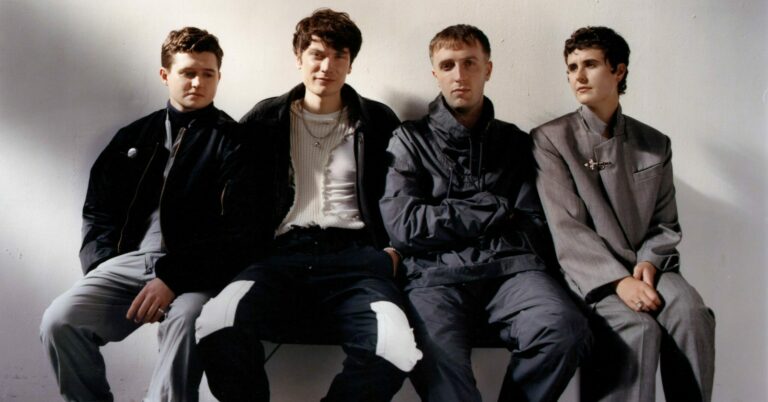
Shygirl has joined forces with Los Angeles-based DJ and producer Kingdom for a new song, ‘f@k€’. It follows the London artist’s November single ‘thicc’, which landed on our Best New Songs playlist. Shygirl described it as “fun and carefree and definitely a tease. All the classic traits of club shy.” Listen below.

Shygirl’s most recent album, Nymph, came out last year.

Daniel Johnston’s 1980s and 1990s Recordings Made Available in Lossless Audio for the First Time

0

Daniel Johnston’s recorded output from the ’80s and ’90s has been made available for the first time in 24-bit lossless audio. Daniel Johnston in the 20th Century features Johnston’s first 14 releases stretching from 1980 to 1998, with each recording remastered from the original source tapes by producer, longtime collaborator, and Shimmy-Disc founder Kramer. They’re available via Bandcamp, and you can get them as pay-what-you-want downloads until the end of the day (December 20).

Daniel Johnston in the 20th Century is part of an ongoing project to create a permanent and comprehensive archive of Johnston’s recordings, which will continue next year with Daniel Johnston in the 21st Century. 100% of the proceeds will go to the Daniel Johnston Estate “for the sole purpose of preserving Daniel’s musical and artistic legacy.”

Five reasons we love the PDC World Darts Championship

The PDC Darts World Championship, an annual spectacle of pinpoint precision, passion, and drama, has become a cherished tradition for fans of the sport and those looking for a festive night out with friends alike.

As we gear up for another exhilarating edition, in which Michael van Gerwen is fancied to win the tournament for a fourth time in the darts betting, here are five compelling reasons why the PDC Darts World Championship is a must-watch event.

Unrivalled drama at the Oche

At the heart of the PDC Darts World Championship lies the electrifying drama that unfolds on the oche.

The tension in the air, the strategic brilliance of players, and the sheer unpredictability of every dart thrown create a nail-biting experience for spectators.

From miraculous comebacks to sudden upsets, the championship delivers edge-of-the-seat moments that keep fans hooked from start to finish.

The ‘Ally Pally’ atmosphere

Step into the iconic Alexandra Palace, the hallowed ground where darting dreams are realised and shattered.

The atmosphere inside this historic venue is nothing short of magical.

The thud of arrows hitting the board and the roaring crowd, adorned in fanciful costumes and waving creative banners, transforms the championship into a carnival of energy and passion. 

The unique blend of music, cheers, and chants creates an ambiance that elevates the entire event.

Clash of titans

The PDC Darts World Championship serves as a melting pot of darting talent from around the world.

The best players converge on the oche, creating an enthralling clash of darting titans.

From the precision of Dutch players (like van Gerwen) to the resilience of English contenders (like Michael Smith) and the flair of Scottish stars (like Peter Wright), the championship showcases the rich diversity that makes darts a truly international sport.

A tapestry of rivalries

That leads us nicely to our penultimate point, as one of the most captivating aspects of the PDC World Darts Championship is the rich tapestry of rivalries that have unfolded over the years. 

From the legendary clashes between Phil “The Power” Taylor and Raymond van Barneveld to the contemporary duels featuring “Mighty Mike” van Gerwen and “Snakebite” Wright, each championship adds another chapter to the sport’s history.

A legacy of legends

As each championship concludes, it leaves behind a legacy of legends who have etched their names into darts history.

From the aforementioned Taylor’s unparalleled dominance to the emergence of new stars like Gerwyn Price, the tournament is a showcase of evolving talent and the passing of the darting torch.

This year could see the making of another legend, as the in-form Luke Humphries is the joint-favourite alongside van Gerwen in the PDC World Championship odds

Beyond the 180s and the checkouts, the PDC World Darts Championship is a celebration of the triumphs, the defeats, and the unyielding pursuit of excellence.

It is a reminder that in the seemingly simple act of throwing darts, there lies a world of drama, camaraderie, and the pursuit of perfection.

As fans eagerly await each year’s spectacle, the PDC World Darts Championship continues to be a beacon of sporting brilliance, where arrows of glory pierce through the ordinary to create moments that echo through the corridors of darts history.

The Flenser Announces Low Tribute Album ‘Your Voice Is Not Enough’ Featuring Planning for Burial, Have a Nice Life, Midwife, and More

The Flenser has announced a tribute album to Low called Your Voice Is Not Enough. It’s due for release next year. Today, the label has shared Allison Lorenzen’s cover of ‘Words’, a classic from Low’s 1994 debut I Could Live In Hope. Check it out below, along with the compilation’s tracklist.

Your Voice Is Not Enough took shape before the tragic passing of Low’s Mimi Parker, and is dedicated to her memory. The project was born out of a conversation with Thom Wasluck, whose band Planning for Burial appears on the record alongside Cremation Lily, Holy Water, Midwife and Amulets, Drowse featuring Lula Asplund, Kathryn Mohr, and Have a Nice Life.

Your Voice Is Not Enough Cover Artwork:

Your Voice Is Not Enough Tracklist:

1. Weight of Water by Cremation Lily
2. Sunflower by Holy Water
3. Do You Know How to Waltz by Midwife and Amulets
4. Hey Chicago by Drowse ft Lula Asplund
5. Cut by Kathryn Mohr
6. Words by Allison Lorenzen
7. Murderer by Planning for Burial
8. When I Go Deaf by Have a Nice Life

Watch Olivia Rodrigo Perform ‘vampire’ on ‘Colbert’

Last week, Olivia Rodrigo was the musical guest on The Late Show With Stephen Colbert, where she delivered a performance of ‘Can’t Catch Me Now’, her contribution to the soundtrack of the new Hunger Games movie. Last night, she returned to the show with a string-heavy rendition of ‘vampire’, which was presumably taped the same day. Watch it below.

Rodrigo’s Colbert appearance follows recent performance on Saturday Night Live and NPR’s Tiny Desk. In February, the singer will embark on an extensive world tour supporting her sophomore album, GUTS, with openers including Chappell Roan, PinkPantheress, Remi Wolf, and the Breeders.

Charlotte Adigéry and Bolis Pupul Share New Holiday Single ‘HOHO’

0

Charlotte Adigéry and Bolis Pupul have returned with a new Christmas single, ‘HOHO’. The duo reunited with Soulwax to co-produce the song, a festive version of their Topical Dancer track ‘HAHA’. Listen below.

“Hahahallelujah, we made a Christmas song!” the duo said in a statement. “From ‘HAHA’ to ‘HOHO’…What started off as a joke by Ollie (from Asa Moto) at Deewee, became a reality a day later. We reworked, ‘HAHA’ and added new depths to it (such as bells) so you can blast it during your cozy Christmas dinners. Your grandmother will love it. We just saw great commercial opportunity in this brilliant idea. The goal is to finally throw Mariah Carey off her throne and to annoy generations to come!”

Topical Dancer, Charlotte Adigéry and Bolis Pupul’s debut album, came out last year. Pupul recently announced his debut solo LP, Letter to Yu, which is set to arrive March 8.

Watch boygenius Cover Shania Twain’s ‘You’re Still the One’ for BBC Radio 1

boygenius performed a cover of Shania Twain’s ‘You’re Still the One’ for BBC Radio 1. Watch it below.

In March, boygenius released their debut album, the record, which was followed by the rest EP. The trio recently offered their take on Sinéad O’Connor’s ‘The Parting Glass’ as a charity single.

Earlier this year, Shania Twain returned with her sixth LP, Queen of Me.

In Memoriam: Kenpachiro Satsuma (1947-2023)

0

As a young man, Yasuaki Maeda—later known by the stage name Kenpachiro Satsuma—went to movies featuring singer/actor Yujiro Ishihara and resolved to follow in his footsteps by becoming a film star.1 But whereas Ishihara—known for pictures such as Ko Nakahira’s Crazed Fruit (1956)—reached the Japanese public through his boyish looks and melodious voice, Satsuma found wider (international) appeal without showing his face. He similarly performed before motion picture cameras on a set, but remained hidden inside the full-body costumes he wore. It was his manipulation of said costumes—and the monsters they represented—that made him an icon in his own right, as he brought fantastic creatures to life with menace, pathos, and occasional humor.

Best known for playing Godzilla in a seven-film stretch spanning 1984-1995, Kenpachiro Satsuma—who died on December 16 (age 76)—came to that character via a long route. Born in the southern Japanese city of Kagoshima, he started professional life as a steelworker, after an unsuccessful attempt to enter the New Face acting program at Nikkatsu (the studio which employed Ishihara). Proving himself a dependable worker in hazardous conditions, he received a transfer to a plant in Chiba (close to Tokyo) and was bitten by the acting bug again. Another New Face application resulted in various bit parts in Nikkatsu action movies until he moved on to Mifune Production.2 Known around the lot for his stamina and martial arts training, Satsuma was eventually asked to interview at Japan’s largest film company, Toho, for what he assumed to be a big action role.3

“When they told me I would be playing a monster, I became dejected,” the actor recalled, “because I knew I would be completely covered by the costume. No one would see my face. But I [accepted the part, because I] loved doing action scenes, and I thought it would be a unique experience.”4 The film in question was Yoshimitsu Banno’s Godzilla vs. Hedorah (1971), and the role was Godzilla’s titular adversary: a perpetually evolving blob-like creature that gorges on pollution. Right away, Satsuma was subjected to the hardships of suit acting. “The size [of the Hedorah suit] was, at first, completely measured according to the person who’d wear it. But after its completion, several problems cropped up—like this section is strange, or that is bad, or the artists are not satisfied with it. So, they later added urethane and then unrefined raw rubber.” What began as a lightweight costume eventually became an unwieldy mass weighing 330 lbs.5 Waiting inside the rubbery labyrinth for action to be called proved strenuous, and “the suit was so terribly heavy […] it was almost impossible to move accordingly as planned.”6

Largely because of a strong working relationship with special effects director Teruyoshi Nakano, Satsuma returned to play another adversary monster, in Jun Fukuda’s Godzilla vs. Gigan (1972). While his character this time—a cybernetic space monster—sported a more humanlike build, movement remained challenging. Suit maker Nobuyuki Yasumaru, Satsuma felt, prioritized design over functionality, and the actor struggled to wield claw-shaped appendages composed of solid resin. Even hollowing the talons provided little in the way of relief. “[T]he feet were so big that they easily caught on other objects or on my opponent, and I tripped a lot.”7

Setbacks notwithstanding, Satsuma both times imbued his roles with personality. On occasion, physical restrictions became part of the acting technique. Faced with Hedorah’s limited mobility, he opted to portray the monster as “spooky and grotesque. […] I just swung the arms quickly when Godzilla came at me, or walked slow as though crawling. I just moved this part of my body now, and that part next.”8 By contrast, his Gigan performance was nimble and vigorous (e.g., clapping the beast’s scythe-like appendages) and downright jocular when he reprised the role in Fukuda’s Godzilla vs. Megalon (1973). However, the career-defining part wouldn’t appear until 1984, when Godzilla returned to silver screens after a nine-year hiatus.

Having not produced a Godzilla movie since 1975’s Terror of MechaGodzilla (a picture released at the end of a phase in the series defined by anthropomorphic creatures), Toho elected to give their flagship character a straightforward reboot. Gone were the campy monster antics aimed predominately at children, replaced by a ravaging force of nature intended to dazzle mainstream viewers. Satsuma’s involvement in The Return of Godzilla (1984) began as a consultant. “The first time director Teruyoshi Nakano asked me to [play Godzilla], I turned him down. I thought I was too old for that sort of thing.” Unwilling to relive the rigors of his ‘70s work, he instead assisted in the search for a stuntman—one who matched criteria set for this particular film.

Because of the multiple skyscrapers erected in Tokyo by 1984, the staff anted Godzilla’s height from fifty to eighty meters: an illusion achieved through a larger monster costume and miniatures built at a reduced scale. The new suit’s projected size necessitated a taller actor, and so Satsuma introduced associate Hiroshi Yamawaki. Alas, Yamawaki backed out ahead of suit construction, supposedly objecting to both the job’s demands and (recalling Satsuma’s pre-shooting reservations on Hedorah) that his face wouldn’t be shown. In an interview published in The Making of Godzilla 1985, Satsuma remembered multiple candidates declining before he at last took the role out of respect for Nakano. “If it had been some other director, I probably wouldn’t have done it.”9

The decision was made to continue building a costume according to Yamawaki’s proportions. Filming cost Satsuma a considerable amount of weight (he averaged twenty minutes inside the suit) and put him through several perilous experiences. A rampage set in Yurakucho involved numerous fires that grew out of control; he was nearly poisoned by a CFC gas leak; and there was the strain inherent in operating a suit made for someone taller. Satsuma regarded his performance as hampered and restricted (“I felt that the […] costume controlled me”), though he remained proud of the movie’s finale, wherein Godzilla plummets into the volcanic crater of Mount Mihara. “That is where you can see the pathos of the monster.”10

The actor’s second round as Godzilla—in Kazuki Omori’s Godzilla vs. Biollante (1989)—proved easier (relatively speaking). Shorter periods inside a new, properly tailored suit allowed him to conserve energy and act with greater nuance. “[W]hatever Godzilla does [, …] I always try to add little movements that will show his emotional state, like moving his fingers.”11 New effects director Koichi Kawakita’s modus operandi was to provide basic instructions, allow the performers to work out the monsters’ movements, and then incorporate minor changes across each take. Satsuma remembered: “Even if he had a sequence shot OK, he made the camera roll again and again. Filming the same scene over and over, he made changes here and there every time. The scene had been shot OK, but he wondered if he could get something different out of the actors.”12

Satsuma continued playing Godzilla under Kawakita’s supervision into the 1990s, in shoots that remained arduous. Water scenes, filmed in a waist-deep tank, presented the greatest risks. Slipping forward on the algae-coated floor would practically guarantee drowning; and in one instance an underwater explosion opened a four-meter-deep storm drain from which Satsuma couldn’t have escaped had he fallen in. City scenes were only somewhat safer: he suffered a concussion on the set of Godzilla vs. King Ghidorah (1991) following a stunt wherein the monster crashed through an underground shopping center.13

The ‘90s Godzilla movies proved consistently successful at the Japanese box office—in particular, Takao Okawara’s Godzilla vs. Mothra (1992), which sold 4.2 million tickets and topped charts for the 1993 movie year. However, by the time of Godzilla vs. SpaceGodzilla (1994), certain staff members felt the series had run its course. Conversing with Cult Movies journalist David Milner, Satsuma recalled telling Kawakita: “I think it would be good for us to stop soon.”14 The market seemed to agree, as attendance for Godzilla, while still healthy, was on the decline. (SpaceGodzilla attracted 3.4 million spectators compared to Mothra’s 4.2.) In what likely constituted an attempt to rejuvenate box office, the staff proposed killing Godzilla in his next movie.15 That concept led to Godzilla vs. Destoroyah (1995), with the death of Toho’s monster serving as both a marketing stunt and an excuse to put the series on hiatus before the numbers fell again.16 (There was also pressure to make room for a still-developing Hollywood reboot.)17

“I have now done seven films as Godzilla,” Satsuma said when promoting Destoroyah, “and I believe I have achieved most everything I have wanted to do inside the costume. Most importantly, I have always felt Godzilla should express its emotions, which is very difficult given the range of movements and expressions the suit can make.” Conveying emotions is among the finest qualities of his final Godzilla outing; visually aided by a suit covered with translucent patches and venting gouts of steam, Satsuma enacts the monster’s pain with wrenching body and limb movements—most notably when witnessing his son’s death and expiring in a display of light and smoke. “He is very animalistic, always in motion. But I believe Godzilla is a very emotional creature.”18 This bravura act came through despite new filming hazards. “[The vapor emitting from the suit] is carbonic-acid gas. […] When they used the gas, I’d inhale that and faint. [I] nearly died six times.”19

Although Satsuma’s suit acting tenure ended with Destoroyah—and while he played other monsters in intervening years: an eight-headed dragon in Yamato Takeru (1994), a metal-consuming beast in the North Korean film Pulgasari (1985)—Godzilla remained the character most associated with him. In no small part because of personal enthusiasm. His book Inside Godzilla became a success in Japan,20 and his connection to the monster fueled a famously caustic response to the eventual Hollywood Godzilla (1998). After seeing his Occidental counterpart flee from rockets and machine gunfire, Satsuma walked out, commenting at the American convention G-CON: “It is not Godzilla. It doesn’t have his spirit.”21

Satsuma’s convention appearances in Japan and abroad were many. One of this writer’s most vivid memories is the actor’s entrance at a 2018 gathering in Chicago. In contrast to his fellow Japanese guests, who stood to the side and waited for fans to approach, Satsuma immediately marched across the room, shaking hands along the way. That same weekend saw him sharing set stories and giving impromptu acting lessons to costumed kids—delighting in the impact his work’s had worldwide. Kenpachiro Satsuma may have joined the film industry hoping to become the next Yujiro Ishihara, but he arguably—in some respects—surpassed his idol. “Godzilla has had a profound effect on my life,” he told Fangoria magazine in 1998. “I’m proud of having played him and enjoy talking about the experience.”22


  1. Kenpachiro Satsuma (Godzilla) Interview Panel at G-FEST 25
  2. Ibid
  3. Godziszewski, Ed. The Illustrated Encyclopedia of Godzilla. Published by Ed Godziszewski, 1996, p. 136
  4. Ryfle, Steve. Japan’s Favorite Mon-Star: The Unauthorized Biography of “The Big G.” Toronto: ECW Press, 1998, p. 261
  5. “Interview with Kenpachiro Satsuma: Godzilla’s Filming Witnessed by the Monster Himself” in Ragone, August and Bob Johnson (eds). Markalite 1 (Summer 1990), p. 52
  6. Godziszewski, p. 136
  7. Ibid, pp. 136-7
  8. Ibid, p. 136
  9. The Making of Godzilla 1985. Tokyo: Shogakukan, 1985, p. 101
  10. Ibid; Milner, David. Translated by Yoshihiko Shibata. “Kenpachiro Satsuma Interview I.” Accessed 17 December 2023
  11. Ryfle, pp. 263-4
  12. Godziszewski, p. 138
  13. Ibid, pp. 138-9
  14. Milner, David. Translated by Yoshihiko Shibata. “Kenpachiro Satsuma Interview III.” Accessed 17 December 2023
  15. Milner, David. Translated by Yoshihiko Shibata. “Koichi Kawakita Interview II.” Accessed 17 December 2023
  16. Ryfle, p. 306
  17. Cheng, Scarlet. “Godzilla Returns to His Japanese Stamping Ground.” Los Angeles Times, 18 August 2000
  18. Ryfle, pp. 263-4
  19. Ibid, p. 310
  20. Ibid, p. 263
  21. Ibid, p. 334
  22. England, Norman. Behind the Kaiju Curtain: A Journey Onto Japan’s Biggest Film Sets. New York and Tokyo: Awai Books, 2021, p. 11

This Week’s Best New Songs: J Mascis, Softcult, Liquid Mike, and More

Throughout the week, we update our Best New Songs playlist with the new releases that caught our attention the most, be it a single leading up to the release of an album or a newly unveiled deep cut. And each Monday, we round up the best new songs released over the past week (the eligibility period begins on Monday and ends Sunday night) in this best new music segment.

On this week’s list, we have J Mascis’ enjoyable, melodic ‘Set Me Down’, the latest single from his upcoming album What Do We Do Now; ‘Heaven’, the blissfully ethereal new track from Softcult, the duo of Canadian twins Mercedes and Phoenix Arn-Horn; PACKS’ mellow, country-inflected new single ‘Paige Machine’; and Liquid Mike’s driving new song ‘K2’, which leads the Marquette, Michigan-based band’s forthcoming LP Paul Bunyan’s Slingshot.

Best New Songs: December 18, 2023

J Mascis, ‘Set Me Down’

Song of the Week: Softcult, ‘Heaven’

PACKS, ‘Paige Machine’

Liquid Mike, ‘K2’

Understanding Your Dog’s Sweet Tooth: How Dogs Taste Sweetness

Dogs have been loyal companions to humans for centuries, sharing their joys and sorrows, and occasionally, human snacks too. One question that often arises is whether dogs have a sweet tooth like humans. Understanding how dogs perceive sweetness and their preferences can shed light on this delightful topic. However, while all dog breeds on the planet would no doubt prefer you to feed them all the candy you have access to, it’s important to know which should be restricted at all costs. This article will delve into the science of how dogs perceive sweetness, explore whether they are naturally drawn to sweet tastes, and discuss the safety of indulging them occasionally. Plus, it will answer the important question: Can dogs eat honey?

How Dogs Perceive Sweetness

Before diving into the world of a dog’s sweet tooth, it’s crucial to understand how their taste buds work. Dogs have taste buds, just like humans, but their taste perception differs. While humans have taste receptors for sweet tastes, dogs don’t have as many. In fact, dogs have fewer taste buds overall compared to us.

Research indicates that dogs have a limited ability to taste sweet flavors due to a lack of specific receptors for sweetness. However, this doesn’t mean they can’t detect sweetness at all. Their taste buds are more attuned to other flavors, such as salty and meaty tastes, which align with their carnivorous nature.

Are Dogs Naturally Drawn to Sweet Tastes?

Since dogs have a limited ability to perceive sweetness, they are not naturally drawn to sweet tastes like people are. Unlike humans, they don’t have a “sweet tooth” per se. This is an essential point to keep in mind when sharing your sweet treats with your furry friend.

It’s not uncommon for pet owners to offer their dogs a taste of their desserts or sweet snacks. While it’s done with good intentions, it’s essential to remember that dogs may not enjoy these sweet flavors as much as you do. Their preferences tend to lean toward savory and meaty flavors, so it’s better to stick to treats designed specifically for dogs. Likewise, you should also choose according to the breed (see this guide for dog food for french bulldogs, for example).

The Safety of Indulging Dogs Occasionally

Now that you know dogs don’t have a natural inclination towards sweet tastes, what about the safety of indulging them occasionally? Can dogs enjoy a small taste of sweetness without harm?

The key here is moderation. Occasional treats that contain small amounts of natural sweeteners like honey or fruits can be safe for dogs. However, it’s essential to be mindful of portion sizes and the ingredients used. Avoid giving your dog sugary snacks or desserts that contain artificial sweeteners like xylitol, which can be toxic to dogs.

If you decide to share a sweet treat with your dog, choose options that are specifically designed for canine consumption or recipes that use safe and dog-friendly ingredients. Always consult your veterinarian if you have any doubts about whether a particular food item is safe for your dog.

Can Dogs Eat Honey?

Honey is a natural sweetener enjoyed by humans for its taste and potential health benefits. But can dogs eat honey safely? The short answer is yes but with some important considerations.

Honey is generally safe for dogs in moderation due to its natural composition. It contains natural sugars, vitamins, and antioxidants. In fact, some dog owners use honey as a natural remedy for various canine health issues, such as soothing a sore throat or cough, or as a remedy for dog bad breath. However, it’s crucial to follow these guidelines:

Moderation: As with any treat, give honey to your dog in moderation. Excessive consumption can lead to weight gain and other health issues.

Pure Honey: Ensure that the honey you offer your dog is pure and free from additives, preservatives, or artificial sweeteners.

Avoid Raw Honey: While raw honey is popular among humans for its potential health benefits, it’s better to give your dog pasteurized honey to reduce the risk of bacterial contamination.

The Bottom Line

In conclusion, understanding your dog’s perception of sweetness is essential for responsible pet ownership. Dogs may not have a natural sweet tooth, but they can enjoy a small taste of sweetness in moderation, such as honey. Always prioritize their safety and well-being when offering them treats, and consult your veterinarian if you have any concerns about their diet. Your furry friend will appreciate your care and attention to their dietary needs.