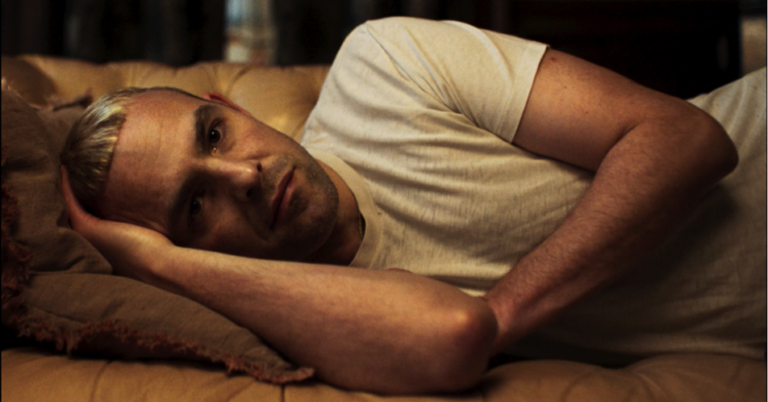
Amen Dunes has announced his first album since 2018’s Freedom. It’s called Death Jokes, and it arrives onMay 10 via Sub Pop. The first single, ‘Purple Land’, is out today alongside a music video. Check it out below, and scroll down to see the album cover, tracklist, and Amen Dunes’ upcoming tour dates.
“’Purple Land’ is one of the album’s interstitial character portraits: first of a child, then the narrator, and then of an empowered figure as they all navigate and find liberation from the disconnection and disenchantment of an uncertain world,” Damon McMahon explained in a statement. “It begins first as a song to my daughter about life on earth, offering platitudes, warnings, and guidance through its various stages, until it becomes a reflection on the narrator’s own uncertainties as he moves through the world, ending finally with a character Rhea Anne who exemplifies liberation from it all in a moment of simple reckless freedom, as the beat drops in the final minute of the song.”
As he worked on new music, McMahon fought intense illness for most of 2020, first with COVID and then with lingering respiratory issues, saw the birth of his first child, and moved from Los Angeles to Woodstock, NY. Death Jokes features contributions from Sam Wilkes, Christoffer Berg (Fever Ray), and Kwake Bass (Tirzah & Dean Blunt). Its array of samples includes an interview with J Dilla, recordings from Type O Negative and Coil, a lyre performance of the oldest written song in human history, protest chants, a grunting powerlifter, as well as bits of stand-up from Lenny Bruce, Richard Pryor, and others, used as “thought provocation and irritant.”
Death Jokes Cover Artwork:
Death Jokes Tracklist:
1. Death Jokes
2. Ian
3. Joyrider
4. What I Want
5. Rugby Child
6. Boys
7. Exodus
8. Predator
9. Solo Tape
10. Purple Land
11. I Don’t Mind
12. Mary Anne
13. Round the World
14. Poor Cops
Amen Dunes 2024 Tour Dates:
Wed May 8 – San Francisco, CA – The Fillmore
Fri May 10 – Los Angeles, CA – The Bellwether
Wed May 15 – Brooklyn, NY – Brooklyn Steel
Mon Jul 1 – Paris, FR – Trabendo
Wed Jul 3 – Berlin, DE – Gretchen
Fri Jul 5 – Roskilde, DK – Roskilde Festival
Sun Jul 7 – Amsterdam, NL – Paradiso
Tue Jul 9 – London, UK – KOKO
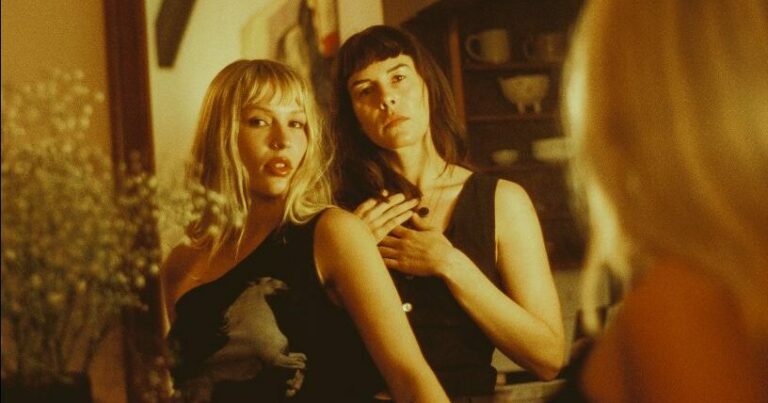
mui zyu has returned with a new song called ‘everything to die for’. Check out a visual for it below.
“This song arrived so fast, like a gift from somewhere else, the words and music poured out altogether and the final version is musically identical to the original sketch,” Eva Liu shared in a statement. “I’d never written a love song and had been listening to lots of romantic music and this just teleported in. I love chromatic melodies as they are hopeful and naive but can feel unnerving, all of which embody ideas of love to me.”
Adina is not a normal girl. She may grow up in a suburb of Philadelphia, go to school, make friends, graduate, and move to a city in a recognizable life path for a young creative, but all through her life, believing herself to be an alien, she faxes her overlords notes and descriptions on human life. This is what she believes her purpose on Earth is, and she spends her time writing about reality TV, mens’ egos, the etymology of phrases like ‘woah Nelly,’ and any other quirk of human behavior that, when you think about it, warrants further discussion. Eventually, she publishes her thoughts in a memoir titled Alien Opus, where she gains fans and detractors alike, skeptical of her alien claim. As she progresses through her life, friends and family leave, and when her superiors stop responding, Adina finds herself at a loss of life and what to do. Thoughtful, witty, and endlessly warm, Beautyland is an intelligent character study relatable for anyone who has wondered if they’re truly alone in the universe.
We sat down with Marie-Helene Bertino to chat about note-taking on humanity, New York City, and moving through loneliness.
Congratulations on another amazing book! How does it feel now that it’s been out for a bit?
Thank you! It feels good; the vibes have felt very positive. I’ve felt very grateful. I’m always grateful to have a book out, it feels like a miracle every time.
The heart of this story is Adina, the warm maybe-alien who is sent to Earth to report on human activity, and fax her findings back to her overlords. When did you start coming up with the idea for this character?
In 2012, I wrote a short story called “Sometimes You Break Their Hearts, Sometimes They Break Yours,” which was published in my first collection, Safe As Houses. In it, an unnamed girl who believes she’s an alien faxes notes on human beings. After I wrote that story and it was published, she wouldn’t let me go, and I kept taking notes on human beings even after that story was published. I wondered if it’d make for a good novel, so very slowly I started layering in her identity and location, and the identity of Adina took a few years to come into full effect, but it began so many years ago with that short story.
Very cool — did you always have the ending in mind? How did it change over the decade you wrote it?
I did not always have the ending in mind, which is actually different [for me]. Usually I can hear an ending and I’m just writing towards it. But in the case of Beautyland, I attempted to transfer the short story to the novel form, and the short story was written in the first person. And I had the novel in first person as well, but it wasn’t working. I tried various different things, but realized I wouldn’t be able to achieve the depth of character I was looking for from her point of view. To my horror, I realized the novel might need to be in third person. I mentally went through the first couple of pages to see what it’d be like, and I realized almost immediately, yes, that’s actually the right decision. So I had to retype the novel and recomb the new perspective throughout, and as soon as I started doing that, I had the ending. The ending is a really important part, and the fact that I got it as soon as I switched the voice, it felt very significant.
Adina’s musings are so clever and creative — they also range from banal to deeply sophisticated. Did you have to keep a little page of observations through the years and filter it to what Adina might think?
I did, yes, I kept a folder on my desktop called “Notes on Human Beings.” And I’d throw things in there, things my workout instructors would say, why ‘thaw’ and ‘dethaw’ are essentially the same, I took notes on Vanna White and Wheel of Fortune at one point. Any particular idiosyncratic detail I’d notice during the day I’d put into that folder. And funny enough, I’m still noticing things and I’m still taking notes. I don’t know what that means, but maybe there’ll be a sequel.
I wanted to ask about the title of the novel — “Beautyland” is taken from the department store in Adina’s hometown of the same name. It informs Adina about beauty and finances, but it seems to have a minor role in the book — what made you go towards it as a title?
The title becomes extremely significant after you’ve read the entirety of the book, like most good titles. So what I will say without ruining readers’ experiences of the book is that ‘Beautyland’ is a location in her neighborhood in addition to being a location for her, on Earth. It’s a way of locating her, and I think has greater significance the more you read and the more you understand her world, and as you read what happens to her.
I really enjoyed Adina’s journey in New York — it perfectly tracks with a raw experience of a creative person trying to find themselves, while working weird jobs, trying to get together with friends, and being yelled at by fitness instructors. What did you pull from in order to write this part?
Yes, at one point I was also a newcomer to New York City, and I used Adina’s particular perspective to explore certain things that were funny and interesting to me when I was learning New York like a language. The fact that there are beaches and caves in New York City… that was a surprise to me. I think that New York City is a place where a lot of people have opinions about it who have never even been here. It’s kind of rare in that way, where everyone feels like they know it. When you actually live here for quite a bit, the people seem a lot different from their stereotypes; they worked really hard to support their families, they had a lot of pride. I was trying to portray the New York that I found. The areas of New York I found have gone undocumented in literature, I was hoping to have fun articulating them.
Let’s talk about Adina’s relationships — the ones that are the most important to her aren’t romantic, but with her mother and best friend, Toni. What did you want to explore with these relationships that you follow to the very end?
With her mother, I wanted to write a single mother character who I hadn’t really read in fiction; one who was flawed and made mistakes but was earnest and hardworking and loved her daughter very much, and who invested in herself in small ways throughout Adina’s life that benefited greatly. When Adina reaches middle age and she gets to see her mother go back to school, get her degree and rise up the ranks at her company, in a way that surprises, even, her mother. I wanted to have her mother growing alongside her. And the literal representation of that is her mother beginning a garden of asphalt and rocks in the beginning of the book, which continues to grow throughout the novel. I liked the idea of a garden growing in the background of all the events in Beautyland.
With Toni, that was meant to represent female friendship, chosen family, and how important and formative these profoundly deep friendships can be in our lives and to the people we become, who we turn out to be.
With the help of friends, Adina eventually publishes some of her thoughts in Alien Opus: A Memoir In Stories. She gains a decent following, but some protestors interrupt her readings as they think she’s faking being an alien. What did you want to explore with this dynamic, especially as a writer yourself?
Yeah, you never know what’s going to trend and capture people’s imaginations. Yesterday, I was reading an article about a new trend on TikTok — mafia wife fashion. People were like, ‘Why is this popular now?’ You just never can tell. I was thinking about trends like that, when I was thinking how celebrities are sometimes created out of thin air. I loved the idea that the honest rendering of human beings would achieve that kind of vast, wild celebrity. With that, as I was building out that idea, I knew there’d be naysayers, non-believers, who would take the time to show up and say ‘I think you’re bullshit.’ I also was speaking for the cynical reader, who would read Beautyland and say, ‘I don’t believe this woman at all. She’s deranged.’ I thought it’d be interesting to bake in some of the opposing views into the book. Not only was it plain fun for me to write, but I felt like it’d be realistic, if it were actually happening in the world. So I put the naysayers in, and they were great fun to write too.
Adina’s life turns instantly, harrowingly sad with death — some of the passages where she’s faxing her supervisors, to no response, are really heartbreaking. The thing is that she was sent to report on human experience, all of it, which includes death and sorrow, but understandably, the moment she gets a taste of it, it’s all-encompassing. How did it feel to write so closely from this perspective?
There was something I really wanted to explore and say about depression, and how it moves and works. I wanted to speak about it directly. I moved Adina through the depression I felt like she’d be going through, during this part of her timeline. She encounters loss, and she is aging. Both of those things are sometimes accompanied by loneliness and depression, so I wanted to say a few things about it. For example, loneliness is a composite feeling, so ironically, it is a feeling that cannot exist alone. It normally has other emotions within it — if you tease out those emotions and work the tangle, you find things like anger, hunger, frustration, etc. Then the loneliness can very often disappear. I wanted to explore neat things like that, which I’ve either read about or experienced, because I thought it’d be unique and different, in addition to being accurate.
However, Adina moves through that depression. And it’s articulated literally in the book where she can no longer run, and she stays in bed. And as can also sometimes happen, she gets better, day by day. Grief moves through her and she doesn’t get over it, she’s just able to integrate it into her forward momentum. And then, when she’s through the worst part… what happens to her happens to her, and that’s the ending of the book. But she’s moved through the depression by the time the ending of the book arrives, which I thought would be interesting. It’s not that she falls back in love with the world, but she’s able to feel the world again.
Definitely. It was such an arc she went through. So finally, what are you working on next? Is Adina still in the back of your mind somewhere?
I think she’ll always be, for sure, just like all my protagonists, because they were always with me, to begin with. I’m going to have a collection published next year, also through FSG, so I’m finishing some of those stories. And I’m beginning another novel as well. Always moving forward, always writing something!
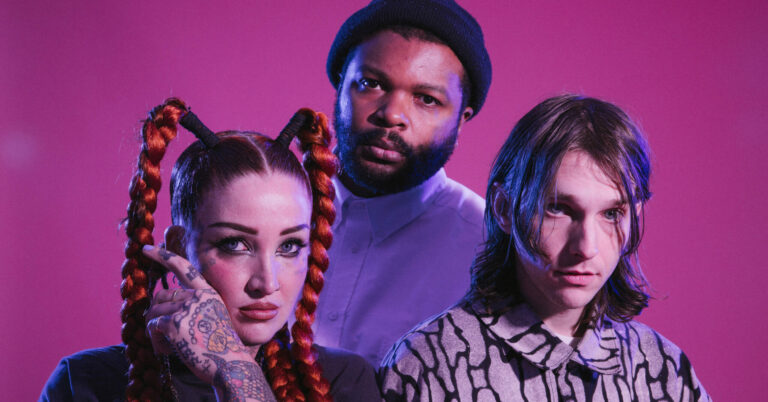
I. Jordan has announced their debut album: I Am Jordan arrives May 10 via Ninja Tune. Lead single ‘Real Hot n Naughty’, out now, features Sex Education actor and rapper Felix Mufti. Check out its accompanying video, directed by Elif Gonen, below.
“This album is about joy,” Jordan explained in a statement. “It’s about my joy as a trans person, and trans joy generally, working with trans people, making all this fun music together.”
Of collaborating with Mufti, Jordan said: “A large part of the reason why Felix and I instantly bonded is because of our queer working-class backgrounds, and our pride around that as well. Our aim with this track is to make a real queer northern dance anthem. A lot of working-class, northern humour is ‘things are a bit shit, but whatever. We’ll take the piss.”
“We had the idea of doing the video in a bingo hall as it connected to our upbringing and spaces we spent a lot of time in when we were growing up,” Jordan continued. “Sprucing them up and reclaiming them to be full of queer and trans joy felt important and symbolic to me as it connected two important parts of my identity that aren’t often merged together. We wanted to make something fun, cute and cheeky and fuck all the tories.”
Mufti added: “This celebration of our unhinged family is my proudest project to date. Told through a working-class lense that has defined so much of me and Jordan as artists, I couldn’t be happier to finally share this story with the world.”
I Am Jordan Cover Artwork:
I Am Jordan Tracklist:
1. When Lights Flash
2. Casino High
3. Real Hot n Naughty [feat. Felix Mufti]
4. The Countdown [feat. TAAHLIAH]
5. Butterlick [feat. Sister Zo]
6. Reification and Pathetic Fallacy
7. People Want Nice Things
8. Round n Round
9. The Woodpecker
10. 7 Degrees of Despondent
11. Close To You
12. Rapt Finis
Erika de Casier has unveiled a new single from her upcoming record Still. Following lead cut ‘Lucky’, ‘Ice’ features Tampa rap duo They Hate Change. Check it out via the accompanying visual below.
Rosali has released a new single, ‘On Tonight’, lifted from her upcoming album Bite Down – to be released March 22 on Merge Records. It follows lead single ‘Rewind’. Check it out below.
“Being ‘on’ is something akin to being in a flow state, where you’re zinging with divine inspiration, full of fire, and open to possibilities,” Rosali explained in a statement. “I kind of wrote the song from the P.O.V. of Eve seducing the snake and the narrative began to unfold as a lust for life: looking to know more and that in experiencing things, good and bad, that that knowledge will open your eyes revealing deeper understandings and meanings. So that your future can be lived in a bigger, more complete way through your own choices.”
Chicago singer-songwriter Liam Kazar has returned with a new single, ‘Next Time Around’. The track was recorded by Sam Evian and features Evian on bass guitar, Sean Mullins on drums, and Michael Prince Coleman on keys. Listen to it out below.
“‘Next Time Around’ came as songs rarely do, in a single vision. All I had to do was write it down,” Kazar said in a press release. “If I knew how to tap into those all the time, I would. We recorded ‘Next Time Around’ right after being on the road for a month in the fall of 2021. There’s a tour tightness to this recording that only comes from spending weeks in a van and onstage with another musician. I think you can hear that in the recording, the tiny bit of air between us while we’re playing packed close together — I feel like I’m right in the room every time I listen. Nod to Sam for capturing this moment so beautifully.”
Chelsea Wolfe has always found refuge in the darkness, but she’s never embraced it quite like she does on She Reaches Out to She Reaches Out to She. On her last solo album, 2019’s Birth of Violence, the genre-blending artist dialed back the distortion that pervaded her previous two records, 2015’s Abyss and 2017’s Hiss Spun, evoking the same ghostly wonder while highlighting the emotional strength of her songwriting and the ways it’d grown since her early acoustic offerings. Stripped of affectation, her music not only remained gloomy and ethereal but sounded just as heavy in its gentle vulnerability. What was new was not just the expression of dark beauty through a different set of parameters – Wolfe has done this her entire career, dabbling in neofolk, doom metal, drone, and electronica – but an almost relaxed intimacy, spurred from a need to stand still and burn off the exhaustion of spending eight years on the road, constantly in motion.
The title of her new album might point to the continuation of a infinite cycle, but it also marks what Wolfe has called a “rebirth.” Though once again cloaked in a storm of noise, sound effects, and electronics, Wolfe’s music comes across as a meditative practice rather than an effort to chart an enigmatic and fantastical journey around the self. “Guess I needed something to break me/ Guess I needed something to shake me up,” she sang on Birth of Violence’s ‘The Mother Road’, and if that album signified a breaking point, She Reaches Out to She Reaches Out to She is a breaking through. Rather than another resetting of musical boundaries or a simple regression to older, sludgier sounds, its aim is the reconciliation of “darkness and cosiness,” in her words, stepping toward the light in the converging paths of self-actualization and undoing. Having spent time working on less distinctly personal projects – soundtracking the 2022 horror film X and collaborating with Converge on 2021’s Bloodmoon: I – Wolfe has now found ways to separate the brooding, gothic nature of her past work from the perpetuity of toil and unrest, leading to her most spectrally cathartic and euphoric album to date.
Wolfe still reaches for the mythical and otherworldly in laying out about her experience, but right out of the gate, her language is also strikingly direct: “That shit does not define me anymore,” she declares on ‘Whispers of the Echo Chamber’, between references to shedding exoskeletons and “twisting the old self into poetry.” Her voice is hushed, but its intimate power is centered in rather than drifting through the foreboding landscape. If an older song like ‘American Darkness’ invoked comparisons to classic trip-hop, the genre’s influence here is refracted in ways that position it firmly within Wolfe’s universe: the industrial beat is punishing, and the instrumentation threatens to down the song’s minimal foundation without quite obliterating it – until the visceral outro, where the mix seems to absorb Wolfe’s harrowing screams of “more, more, more,” and finally, “done.” It’s not the dissonance that’s thrilling but what lurks in and out of the shadows; even on a more static song like ‘Salt’, the detailed production keeps things texturally engaging – you just have to lean in a little more.
The influence of ‘90s electronica is especially prominent on She Reaches Out to She Reaches Out to She, and though it can be traced back to Wolfe’s 2013 record Pain Is Beauty, what distinguishes it is a collaborative, deconstructive approach that goes beyond the genre fusion of Abyss. Wolfe wrote the songs with multi-instrumentalist Ben Chisholm, drummer Jess Gowrie, and guitarist Bryan Tulao, but you can hear how deeply the songs were reshaped in the production and mixing process between producer Dave Sitek and Shawn Everett, mirroring Wolfe’s own transformation. The clarity here is occasionally searing, like the guitar solo that blazes through the sparse closing track ‘Dusk’, and the songs feel fully realized, but they also give off the impression of traversing a liminal space between inception and completion, between pulling back and plunging into the unknown. The discombobulated, clattering pulse of ‘Eyes Like Nightshade’ seems to have arranged itself out of broken pieces; ‘Tunnel Lights’ both slows down the tempo and draws up the tension, and it’s almost a miracle that Wolfe’s voice doesn’t drown in the mysterious pull.
Wolfe began writing these songs in the spring of 2020 and was halfway through the process when she got sober from alcohol in early 2021. “During the process of getting sober, you have to enter that cave, because that’s where the treasure is,” she has said, and She Reaches Out finds her crawling through as well as out, treasuring her newfound presence instead of some faint light at the end of the tunnel. Even ‘Everything Turns Blue’, a song about ridding yourself of toxicity, stings with the enduring question: “What do I have to do to heal you out of me?” If Wolfe were to write the songs two years later, chances are they’d still loom large – getting out of it is an ongoing process. But you can feel it happening, and more than any of the singles, it’s the penultimate ‘Place in the Sun’ that represents a tidal shift, catharsis giving way to softness: “I am safe in this body/ Safe in this heart/ I have made it this far to live this life,” she sings, delicate and soaring. The sentiment is so overpowering in its simplicity that even as the song’s cold, mechanical rumble persists, her voice just sweeps it into the fold. Under her wing, the beauty is nothing short of breathtaking.
Mount Kimbie have announced The Sunset Violent, their first new album in nearly seven years. The follow-up to 2017’s Love What Survives arrives April 5 via Warp. The new single ‘Fishbrain’ is out today alongside a music video directed by Tegen Williams. Check it out and find the album’s details below.
The Sunset Violent was written in California’s Yucca Valley and completed in London. It features November’s ‘Dumb Guitar’ as well as two songs with King Krule, including the previously shared ‘Boxing’.
The Sunset Violent Cover Artwork:
The Sunset Violent Tracklist:
1. The Trail
2. Dumb Guitar
3. Shipwreck
4. Boxing [feat. King Krule]
5. Got Me
6. A Figure in the Surf
7. Fishbrain
8. Yukka Tree
9. Empty and Silent [feat. King Krule]
Nick Cave and Warren Ellis will score the upcoming Amy Winehouse biopic Back to Black, which received its first trailer last month. The studios behind the film, which stars Marisa Abela in the titular role, revealed the news today along with a photo of the musicians in the studio with director Sam Taylor-Johnson.
“Nick and Warren were the only musicians in my mind to score Back To Black,” Taylor-Johnson said in a statement. “Over the years I’ve listened to everything they’ve composed and longed to realize the dream of working together. Their sensibility as well as understanding of this story has led to a profoundly deep and moving film score.”
Last year, Cave and Ellis provided the soundtrack for the Netflix show Dahmer – Monster: The Jeffrey Dahmer Story and the Marilyn Monroe biopic Blonde.