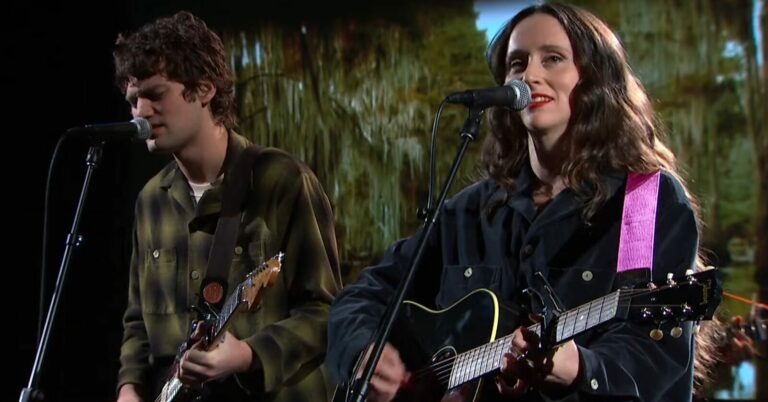
Waxahatchee was the musical guest on last night’s episode of The Late Show With Stephen Colbert, where she was joined by MJ Lenderman for a performance of ‘Right Back to It’. Watch it below.
‘Right Back to It’ is the lead single from Waxahatchee’s new album Tigers Blood, which came out on Friday. The Saint Cloud follow-up also includes the early tracks ‘Bored’ and ‘365’.
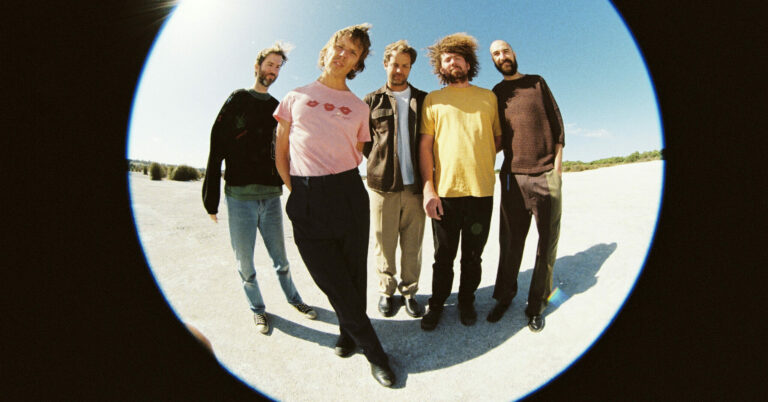
Pond have announced a new album called Stung!, which lands on June 21 via Spinning Top. The follow-up to 2021’s 9 will include the previously released single ‘Neon River’, as well as a new track, ‘(I’m) Stung’, which comes with a shot in Western Australia by Chris Adams. Check it out and find the album cover, tracklist, and Pond’s upcoming tour dates below.
“I wrote most of this while mowing someone’s lawn,” the band’s Nicholas Allbrook said of ‘(I’m) Stung’ in a statement. “I went home and put my fingers on the piano and pretty much played the base of it first go. This is a very rare and special treat and buoyed me for weeks. It’s funny because I had a mad crush on someone, and they dropped me like a sack of shit and this song just flew down and clocked me right in the forehead and I felt totally better. Then Gin and Gum added all their magic – cool sounds, passing chords.”
“It’s about being totally pathetically stung by someone and just having to be cool with it being unrequited,” he added. “Being resilient, accepting that you are a bit of a goose, but life goes on.”
Commenting on the visual, the band added: “We went to Lancelin, one of the most stereotypically Western Australian looking places in Western Australia, armed with a super 8 camera, 12 tubes of silver body paint and a rock eisteddfod wardrobe. Nothing but the blistering heat and dehydration and a battalion of legendary holidaymakers in ATVs stood between us and cinema history. Our friend Chris Adams also put on his little “filmic auteur” cap and carried our shit around while we cavorted among the dunes dressed like a knock off NSYNC. Omg and the bee!! The bee obviously makes it. Nick kind of lost his mind in the endless whiteness and started fearfully battling the beast in the sky. Probably all the paint fumes.”
Stung! Cover Artwork:
Stung! Tracklist:
1. Constant Picnic
2. (I’m) Stung
3. Neon River
4. So Lo
5. Black Lung
6. Sunrise For The Lonely
7. Elf Bar Blues
8. Edge of the World Pt. 3
9. Stars In Silken Sheets
10. Boys Don’t Crash
11. O, UV Ray
12. Last Elvis
13. Elephant Gun
14. Fell From Grace With The Sea
Pond 2024 Tour Dates:
May 1 – Nashville, TN – The Basement East
May 2 – Asheville, NC – The Orange Peel
May 3 – Atlanta, GA – Shaky Knees Festival
May 4 – Atlanta, GA – Terminal West
May 7 – Austin, TX W Mohawk
May 8 – Houston, TX – White Oak Music Hall
May 9 – Dallas, TX – Trees
May 11 – Denver, CO – Ogden Theatre
May 12 – Salt Lake City, UT – Kilby Court Block Party
May 15 – Oakland, CA – The New Parish
May 16 – Los Angeles, CA – Lodge Room
May 17 – San Diego, CA – The Observatory North Park
May 18 – Santa Ana, CA – The Observatory OC
Jun 14 – VIVID Sydney – Carriageworks
Jun 15 – Hobart, TAS – Altar
Jun 27 – Adelaide, SA – Lion Arts Factory
Jun 28 – Melbourne, VIC – Northcote Theatre
Jun 29 – Brisbane, QLD – Princess Theatre
Jul 06 – Fremantle, WA – Freo Social
Jul 20 – Byron Bay NSW – Splendour in the Gras
Sep 24 – Southampton, UK – Papillon
Sep 26 – Manchester, UK – Gorilla
Sep 27 – Leeds, UK – The Wardrobe
Sep 28 – Newcastle, UK – The Grove
Sep 29 – Glasgow, UK – King Tut’s Wah Wah
Oct 1 – Birmingham, UK – XOYO Birmingham
Oct 2 – Bristol, UK – Thekla
Oct 3 – London, UK – Scala
Oct 5 – Paris, FR – La Trabendo
Oct 6 – Brussels, BE – La Grand Salon, Botanique
Oct 7 – Amsterdam, NL – Paradiso
Oct 8 – Cologne, DE – Bürgerhaus Stollwerck
Oct 10 – Berlin, DE – Hole44
Oct 11 – Hamburg, DE – Fabrik
Oct 13 – Copenhagen, DK – Vega
In an always-evolving world of online casinos, attracting and keeping players are the two important factors of any platform’s success.
This, in turn, makes the E-Gaming market a highly competitive field that requires several measures, from catching the audience’s attention to guaranteeing that the players stay enthralled and entertained.
There are two important functions of an affiliate program. Firstly, it allows existing casino users to create a network of new players, and secondly, players are now connected with the casino for a long time. Casino operators may engage players in actively spreading the word, so a new link between a player and the company is forged, and both come emotionally closer. It considerably reinforces customer loyalty and, at the same time, favors the achievement of sustainable growth of the online casino.
Advertising and sponsorship strategies
Along with advertising is the sponsorship strategy, which is important for an organization to appear on different platforms. Besides digital marketing, they also look for ways such as branding in well-known sports events and associating their products with reputable celebrities and influencers to increase their visibility. Such alliances, while on the one hand allowing the brand to be seen as respectable and dependable, further and on the other hand, seek to increase the level of confidence among the stakeholders.
Attractive offers and promotions
Offering players temporary bonuses and promotional prizes are the little things online casinos use to achieve their main goal of attracting new players and keeping them on their websites. Application to any of these deals you can be given, such as deposit bonuses, free spins, no deposit deals, and loyalty programs, which give you gifts as you are a constant player. In addition, promotions and bonuses are always continuously adapted. That is why specialized bonus sites such as casinobonusca allow players to stay up to date. The user must register in the newsletter to learn about all the benefits, new bonuses, or unavailable bonuses of the best casinos in the digital market.
Adaptability and accessibility
The ability to adapt and on-demand access are the most important underpinnings in the virtual gaming world. Casinos not only work hard to offer the best out of optimization for mobile phones but also take into consideration creating the most intuitive and smooth interfaces to meet players’ needs. This unique sense of being able to play something anytime, anywhere, is among the key factors that enable players to stay longer and access a more widespread and global customer base.
Use of social media
Communication with customers can be made more personal in addition to that. Social media provides an environment where each customer becomes part of the process, apart from just getting information. Online casinos use these channels to stage tournaments, keep offering special content, and follow players’ directions immediately and successfully. It is not surprising that players relish situations when they can participate in a conversation directed at them personally and that further contributes to creating a vivid and interesting community of virtual players.
Variety and quality of games
An extensive catalog of superior games should be incorporated to meet the desires of various players from different walks of life and keep their passion for playing the game alive. Online casinos must deliver an array of possibilities, including slot games, classic table games, multiplayer adventures such as live poker, and other specialty entertainment. However, games must be produced by software developers of a good name, and by the rules of fair standards, players can have thrilling and fair gaming.
Special events and tournaments
The unbeatable approach of organizing special events and tournaments with exciting awards can boost the players’ enthusiasm and competition. Such events can be anything from slot tournaments to live poker games or luxury prizes. By creating chances enabling players to battle for exciting rewards, online casinos come in, a community is created, and social gaming becomes more interactive. Likewise, special events can make the team of players stay in the game and be exhilarated, ultimately leading to long-term retention.
On the other hand, speedy customer service that is accessible round the clock via live chat clients, email, and phone channels is also an essential feature that online casinos should offer. Expert staff members help achieve player satisfaction and grow the level of credibility.
Transparency and security are paramount: transparent terms of use, secure transaction facilitation, and data protection enhance consumer trust in the platform. Making the rules understandable and adding bonus terms, besides using encryption and identity verification for transactions, are crucial factors. These norms affirm integrity and Privacy, which improves casino solidity.
The mentioned casinos can draw and maintain players through all of the strategic set-up interventions, which are promotional offers, affiliate programs, and a strong presence on social media.
Have you ever wondered how some brands just stick in your mind, like a catchy tune you can’t shake off? There’s a good chance that their secret sauce is stellar graphic design. In the grand scheme of things, branding isn’t just about having a cool logo or a catchy slogan; it’s about telling your brand’s story in a way that resonates with people, making them remember and, more importantly, feel connected to your brand.
So, let’s dive into the fascinating world of graphic design and discover how it can utterly transform your brand identity, making your brand not just seen but felt and remembered.
What’s In A Brand?
Before we talk shop about graphic design, let’s chat about what a brand actually is. Imagine your brand as a person. Just like a person, a brand has a personality, a style, and a way of communicating that makes it unique. It’s what makes your brand relatable and memorable in the crowded marketplace of ideas and products. A strong brand architecture in Costa Mesa can help boost your brand presence and improve brand strategy.
Now, how do you ensure that this ‘person’ is putting their best foot forward? How do you make sure they’re dressed to impress, speaking eloquently, and truly connecting with people? That’s where graphic design comes into play.
The Magic of Graphic Design
Graphic design is much like the magic behind the curtain that brings your brand’s story to life. Imagine you’re at a party where everyone’s dressed to impress, but there’s one person whose outfit is not just stunning but tells a story, maybe with a vintage brooch that speaks of history or a modern, edgy cut that screams innovation. That’s what Electric Graphic Design in Bend does for your brand. It combines text, images, and colors to not just grab attention but also tell your brand’s unique story. And just like in fashion, trends in graphic design come and go, but the essence of conveying your brand’s identity remains constant. It’s about making sure that every visual element, from your business card to your social media posts, aligns perfectly with what your brand stands for.
But it’s not all about looking good. Effective graphic design communicates ideas in a way that’s easy to understand. It breaks down complex information into digestible visual bits, making it easier for your audience to grasp and remember your message. It’s the difference between a well-organized, visually appealing presentation and a cluttered, hard-to-follow one.
Branding Ideas Design Identitiy Marketing Concept
Logo Design: The Face of Your Brand
When it comes to branding, the logo is often the starting point—and for good reason. It’s like the handshake or the first impression you make on someone. A well-designed logo goes beyond being visually appealing; it encapsulates your brand’s essence, values, and personality. Take the Apple logo, for instance. Its simplicity and clean lines suggest innovation and elegance, qualities that Apple wants to be associated with. Or consider the Nike swoosh, a symbol of movement, speed, and athleticism. These logos transcend their markets and become recognizable symbols worldwide, carrying with them a weight of meaning and association.
Creating a logo that captures the essence of your brand is a critical step in building your brand identity. It’s not just about choosing something that looks cool or trendy. Your logo should be a timeless representation of what your brand stands for, capable of adapting and growing with your brand over time. It should be versatile enough to work across various mediums and applications—from your website to your product packaging—while still being distinctive and memorable. In essence, your logo is the foundation upon which your brand’s visual identity is built.
Color Psychology: Speaking Without Words
Color serves as a pivotal element in a graphic designer’s arsenal, adept at transmitting messages and eliciting emotions silently. Every hue carries distinct psychological effects that shape public perception of a brand. Blue, for example, symbolizes trust, serenity, and professionalism, rendering it a favorite among financial institutions and tech firms. Conversely, green signifies growth, wellness, and eco-friendliness, aligning perfectly with organic and environmentally conscious brands.
Choosing the right color palette for your brand is about more than just picking your favorite colors; it’s about understanding the emotions and behaviors you want to evoke in your audience. It’s also crucial for maintaining consistency across all your branding materials, creating a cohesive and recognizable brand identity. When your audience sees a particular shade of color, you want them to immediately think of your brand. That’s the power of color psychology in branding.
Typography: The Voice of Your Brand
Typography involves the skillful arrangement of text to ensure it’s clear, engaging, and visually appealing when presented. But it’s more than just choosing pretty fonts; it’s about finding the right voice for your brand. The typeface you choose carries with it an array of connotations and can dramatically alter how your message is perceived. A playful, whimsical font can convey creativity and fun, suitable for a brand that’s youthful and vibrant. Conversely, a strong, bold typeface might be used to project authority and reliability, ideal for a law firm or a financial institution.
The key is consistency and alignment with your brand’s personality. Your chosen typography should work seamlessly across all platforms, from your website to your packaging, ensuring that your brand’s voice is heard loud and clear. It’s not just what you say but how you say it that matters. Effective use of typography can elevate your brand, making it more memorable and engaging to your audience.
Packaging and Website Design: More Than Just Pretty Faces
In today’s digital age, your online presence is as important as your physical one, making your website and product packaging crucial components of your brand identity. They’re like the outfit your brand wears on a first date—they need to impress, communicate your brand’s personality, and leave a lasting impression. Your packaging and website should not only be visually appealing but also functional, offering a seamless and enjoyable experience for your customers. They should tell your brand’s story at a glance, inviting your audience to learn more.
Good design in packaging and website development speaks directly to your target audience, drawing them in with a compelling narrative and engaging visuals. For packaging, it’s about creating something that stands out on the shelf and communicates the quality and uniqueness of what’s inside. It’s your product’s first physical interaction with the customer, making it a critical touchpoint for establishing brand perception and loyalty. The design should reflect the essence of your brand, whether that’s luxury, simplicity, sustainability, or innovation. It’s not just about protecting the product; it’s about presenting it in a way that enhances the unboxing experience, making it memorable and shareable.
Bringing It All Together
Creating a cohesive brand identity through graphic design is like conducting an orchestra. Each element, from your logo to your color palette to your typography, needs to work in harmony to create a symphony that captivates your audience. It’s about creating a visual language that communicates who you are, what you stand for, and why you’re different from the rest.
But remember, graphic design is not just about making things look pretty; it’s about creating a connection with your audience. It’s about making your brand not just seen but also felt and remembered.
Final Thoughts
In the end, the art of branding through graphic design is about telling your brand’s story in the most compelling way possible. It’s about creating an identity that resonates with your audience, sets you apart from your competitors, and stands the test of time.
So, are you ready to transform your brand identity with the power of graphic design? Remember, it’s not just about the visual elements you choose but how they come together to tell your brand’s unique story. Dive deep into the world of graphic design, and let it be the magic wand that transforms your brand identity from ordinary to extraordinary.
Banner World stands at the forefront of banner print innovation, offering solutions that transform ideas into impactful marketing tools. The allure of banner printing lies in its simplicity and effectiveness. Printed banners serve as a vibrant canvas to broadcast your brand message loud and clear. In an era where brand visibility is paramount, the strategic use of vinyl banners and PVC banners can set a business apart.
The Power of PVC and Vinyl Banners
PVC banners and vinyl banners are the backbone of outdoor advertising. Resistant to weather conditions, durable, and visually appealing, they offer an unparalleled opportunity to showcase your brand in various settings. Banner World specializes in PVC banner printing and vinyl banner printing, ensuring every piece is crafted with precision, using high-quality materials for lasting impact.
Mesh Banners: The Choice for Versatile Display
Mesh banners bring a unique set of advantages, especially for outdoor use. Their perforated fabric allows wind to pass through, making them a perfect choice for high-wind areas. Whether it’s for construction sites or outdoor events, mesh banner options provide durability without compromising quality. Banner World’s expertise extends to creating custom-sized mesh banners, tailored to meet the specific needs of your project.
Emphasizing Quality in Banner Printing Services
The cornerstone of effective banner printing services lies in the quality of both the print and the material. Quality banners not only reflect your brand’s image but also withstand the test of time and outdoor conditions. Banner World prioritizes high-quality materials in every banner print job, from outdoor banners designed for indoor and outdoor use to custom banners that capture the essence of your marketing message.
Customization at Its Best: Custom Banner Printing
Custom banner printing opens up a world of possibilities for personalized advertising. With options ranging from double-sided banners to roller banners and advertising banners, the ability to tailor your message for your target audience is limitless. Banner World offers a free design service, allowing clients to bring their vision to life with custom signs and banners that make a bold statement.
Large Format Printing: Beyond Banners
Banner World’s expertise isn’t limited to banner prints. The realm of large-format printing encompasses a wide array of products, including large-format mesh banner printing and large-format sewn hems. These large-format printing products are ideal for making a significant impact at trade shows or outdoor events, where high-quality banners can draw attention from afar.
Expanding the Horizon with Outdoor and Indoor Banner Uses
Banner World’s expertise shines not just in the creation of outdoor banners but also in solutions designed for indoor and outdoor use. The versatility of banners, from vinyl banners suitable for trade shows to mesh banners ideal for outdoor advertising, ensures your message resonates in any context. Indoor and outdoor banners are engineered to meet the demands of varied environments, making them a staple in any comprehensive marketing strategy.
The Advantages of Online Banner Printing
In today’s fast-paced world, online banner printing services offer unparalleled convenience. Banner World simplifies the process, allowing businesses to easily design, order, and receive printed banners without leaving their office. This streamlined approach not only saves time but also opens up a huge range of options for customization, ensuring every banner reflects your brand’s unique identity.
Ensuring Durability with High-Quality Banner Materials
The durability of a banner greatly depends on the quality of materials used. High-quality materials extend the banner’s lifespan, ensuring that your investment continues to pay dividends, regardless of weather conditions. Banner World’s commitment to quality banners made from durable banners materials means that every banner print can withstand the rigors of outdoor use, maintaining its visual appeal over time.
Making a Statement with Large and Visually Appealing Banners
Big banners make a bold statement, instantly capturing attention. Whether it’s a grand opening or a major sale, large format vinyl banners and PVC banners serve as beacons that draw prospective customers. Banner World specializes in large format printing, crafting visually appealing banners that are not just big in size but also in impact.
The Impact of Personalized and Event Banners
Personalized banners and event banners add a personal touch to your marketing efforts, creating a direct connection with your audience. From fence banners at sporting events to custom banners for corporate gatherings, the ability to tailor your message enhances brand recognition and customer engagement. Banner World’s custom banner printing service allows for high levels of personalization, making every event memorable.
Enhancing Brand Visibility with Strategic Banner Placement
Effective banner placement is crucial for maximizing brand visibility. Banner World’s array of vinyl banners, PVC banners, and mesh banners are designed for optimal display in a variety of settings. Whether it’s strategic placement at busy intersections for outdoor banners or eye-catching custom banners at trade shows, positioning is key. Banner World advises on the best practices for banner placement, ensuring your banner captures the attention of your target audience.
The Significance of Quality in Outdoor Advertising
Outdoor advertising plays a pivotal role in a company’s marketing strategy, where the quality of your banner can make or break its effectiveness. High-quality banners withstand weather conditions, maintaining their vibrant colors and legibility over time. Banner World specializes in outdoor banners made from materials suited for outdoor use, guaranteeing that your advertising banners remain impactful, regardless of the environment.
Cost-Effective Marketing Solutions with Banner World
Cost-effective marketing is about achieving maximum impact with minimal investment. Banner World’s cheap banner printing options provide businesses with a great value proposition. Despite the reasonable price, there’s no compromising on quality. The company’s efficient printing process and streamlined operations allow for value for money in every order, making high-quality banner printing accessible to businesses of all sizes.
The Creative Process: From Free Design to Print-Ready Banners
Banner World’s free design service bridges the gap between concept and creation. With free design templates and assistance from a friendly and experienced team, clients can see their ideas come to life. Whether it’s bringing your own design or collaborating on a new concept, the path from a free design to a print-ready banner is seamless. Banner World ensures that every banner not only meets but exceeds print specifications, resulting in high-quality images that make your brand stand out.
Building Connections with Personalized Customer Service
At the heart of Banner World’s operations is a commitment to excellent service. The friendly and experienced team at Banner World goes above and beyond to meet customer needs, offering personalized guidance and support throughout the printing process. This dedication to service fosters strong relationships and repeat business, with customer feedback consistently highlighting the positive interactions with the team.
The Future of Banner Printing with Banner World
Banner World is not just about maintaining the status quo; it’s about pushing the boundaries of what’s possible in banner printing. With a keen eye on innovation and trends in large-format printing, the company continually upgrades its offerings. From durable banners for construction banners to custom signs for corporate identity, Banner World is dedicated to evolving with its clients, ensuring they always have access to the best in large-format printing products and services.
Conclusion
Banner World represents the pinnacle of banner printing excellence, combining quality, innovation, and customer-centric service. With a comprehensive range of products from vinyl banners to custom banner printing, alongside a dedication to cost-effectiveness and quality materials, Banner World stands as the go-to source for businesses looking to elevate their brand visibility. Whether you’re planning a major event or looking to enhance your outdoor advertising, Banner World ensures your message is seen and remembered.
Atlanta-based singer-songwriter Jordan Reynolds, aka Rose Hotel, has dropped a new single, ‘Drown’. It’s taken from her upcoming album A Pawn Surrender, which arrives on June 7 via Strolling Bones Records. Check it out below.
“‘Drown’ is about facing the reality of intergenerational trauma and mental illness,” Reynolds explained in a statement. “It’s about realizing that the only way to break the cycle is to address it head on and choose to heal instead of continuing the patterns of violence and abuse. It’s my attempt at claiming power and ownership over my own life by releasing familial relationships that may never heal. The slacker-rock energy feels like my inner rebellious and sardonic teenager finally getting to tell ‘em how I really feel.”
Reynolds co-produced the new album with Damon Moon and Graham Tavel before bringing in producer Drew Vandenberg to provide mixing and additional production. She worked with a group of studio musicians who have played with S.G. Goodman, Margo Price, Caitlin Rose, and more.
“I was playing a lot of chess when I wrote this album, so I started to think about these songs as if they were all different pieces on the board representing varying aspects of my songwriting, personality, and experience,” Reynolds said. “Each piece has its own specific purpose and its own strength to utilize, but you can’t play the game with only your queen or your knights, or whatever. That became such a comforting idea and ethos to operate within – not just accepting variety but finding its inherent value. I went into the studio without any fear of being all over the board. I wanted to be limitless in letting my influences shine through the music in different ways. The throughline of Rose Hotel is my lyricism and my voice, but musically, I wanted to stretch out.”
S. Raekwon has released ‘If There’s No God…’, the latest single from the New York City-based musician’s upcoming album Steven. It follows previous outings ‘Old Thing’ and ‘Steven’s Smile’. Check out a video for it below.
“If There’s No God…’ is the emotional and thematic centerpiece of the album,” Raekwon said in a statement. “It’s about questioning whether the ugliness inside of me defines who I am. Should I be judged by my worst? Am I being too hard on myself? For a while, I wasn’t sure how to finish the song. Religion and morality are big topics. But I love this song because it doesn’t try to answer any of that. It’s not judging anyone. It’s only concerned with me.”
POND Creative added of the video: “To achieve this New York-centric Groundhog Day-like narrative, we rode the Staten Island Ferry back and forth, again and again, from Manhattan to Staten Island. From regret to shame, rage, and chaos, at sunrise, sunset, morning, afternoon, dawn, and dusk, we watched as Steven experienced a range of emotions within the walls of the ferry.”
Blondshell has teamed up with Alicia Bognanno, aka Bully, for the new single ‘Docket’. Check it out below.
“For me this is a song about splitting off from yourself,” Sabrina Teitelbaum shared in a statement. “It’s about uncertainty when you’re in different environments all the time. In a way it’s about wanting to cope with distance and change but it’s also just a bit about being reckless.”
“I had space on this song for another person and I kept hearing Bully’s voice on it,” she continued. “I’m a huge fan of hers and when I was touring last summer I couldn’t stop listening to her album. Honestly when we were sitting in the studio and I heard her voice coming through I was just kind of shocked and in awe of her. I’m really happy she said yes to making the song with me.”
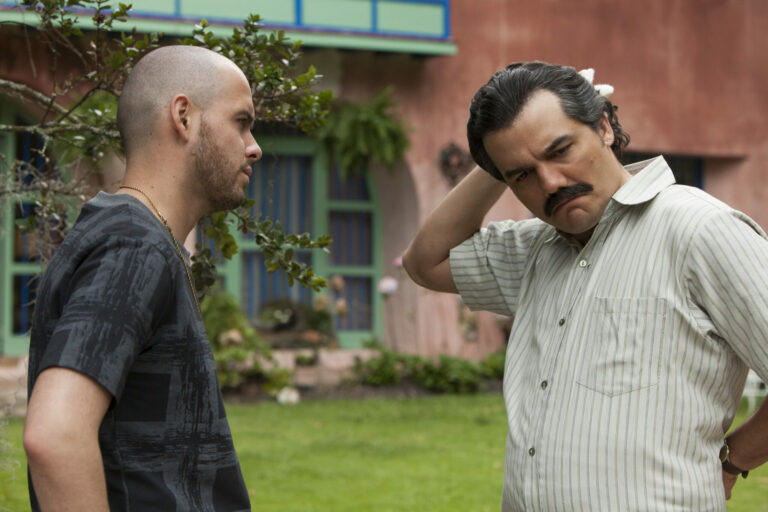
Are you a Narcos fan or fan of TV series focused on drugs and crime? If yes, this article is only for you as we cover the official announcements about the potential Narco’s Return in 2024, and other new series surrounding it.
Will Narcos Return in 2024?
Narco’s official account tweeted a statement: “The cage is open, and now the animals run free,” followed by news that it would be the final chapter of this series.
There are dozens of rumours on social media about Narco’s return in 2024, but these are all false, as there’s no official announcement. However, in an interview with Bernard exposing the possibilities of Narcos’ new season, he said, “There aren’t any plans; honestly, this is the sort of the end of the ride, for now at least.” So, it is confirmed that there’s no Narcos return in 2024.
The third season of Narcos: Mexico premiered on November 5 November 5, 2021, on Netflix as the the story’s final outing. In this season, a woman narrated the action for the first time in this history. Luisa Robino brings up the mantle of Pedro Pascal, Scoot McNairy, and Boyd Holbrook as journalist Andrea Nuñez, whose concentration on revealing corruption takes her to a huge scoop of her career. Narcos: Mexico started to discover the origins of the latest drug war and was continuing to Mexico City back in 1980 to graph the fall and rise of the Félix Gallardo and Guadalajara Cartel.
Why did Narcos end?
One of the co-creators of Narcos, Carlo Bernard, reported to a Hollywood reporter why Narcos was coming to warp. “I saw this season as an original story of the modern world where we live. For me, it felt like brining the show up to that spot where we now recognize, for better or for worse, made sense as a place to stop it. The show has been able to lift the curtains and show you how things began and how it evolved.”
New Project of Narcos: A Limited Series Griselda Blanco
In short, Netflix announced the latest project from the Narcos team titled “a limited series focused on Griselda Blanco,” released on January 25 January, 2024. Its story is based on a Colombian drug queen who was one of the most daring cocaine traffickers and was found to be a key personality in Miami’s drug war in the 1980s. And this queen character was played by Sofia Vergara.
Bernard, Newman, Doug Miro, Baiz, Ingrid Escajeda, and the other Narcos creative teams have worked on certain project sets. However, Netflix focuses on the fact that the show is not a spin-off of its factual drug cartel story.
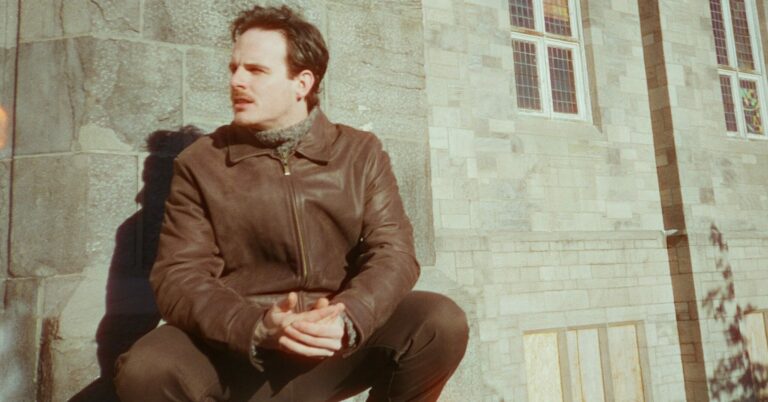
Molly Drag – the project of Montreal-based artist Michael Charles Hansford – has announced a new album called Mammoth. The follow-up to 2021’s Resemble Another lands on May 24 through I’m Into Life Records. Today’s announcement comes with the release of the new track ‘Dogfight’, which opens the LP. Give it a listen below.
“’Dogfight’ was originally a slow ballad I started writing a year before I even started recording it,” Hansford said in a statement. “One late night before early in the album sessions I decided to speed it up double time without changing the timing structure of the vocal melody. I was listening to a lot of The Smiths at the time so I think that had an influence. Lyrically this song is about two lovers drifting from each other but still remaining in each other’s thoughts through the course of their long lives.”
Mammoth Cover Artwork:
Mammoth Tracklist:
1. Dogfight
2. Wild Life
3. Turpentine
4. Mammoth
5. Hell Raiser
6. Shoplifter
7. Coming Back For More
8. Jump
9. Knife In The Mud