

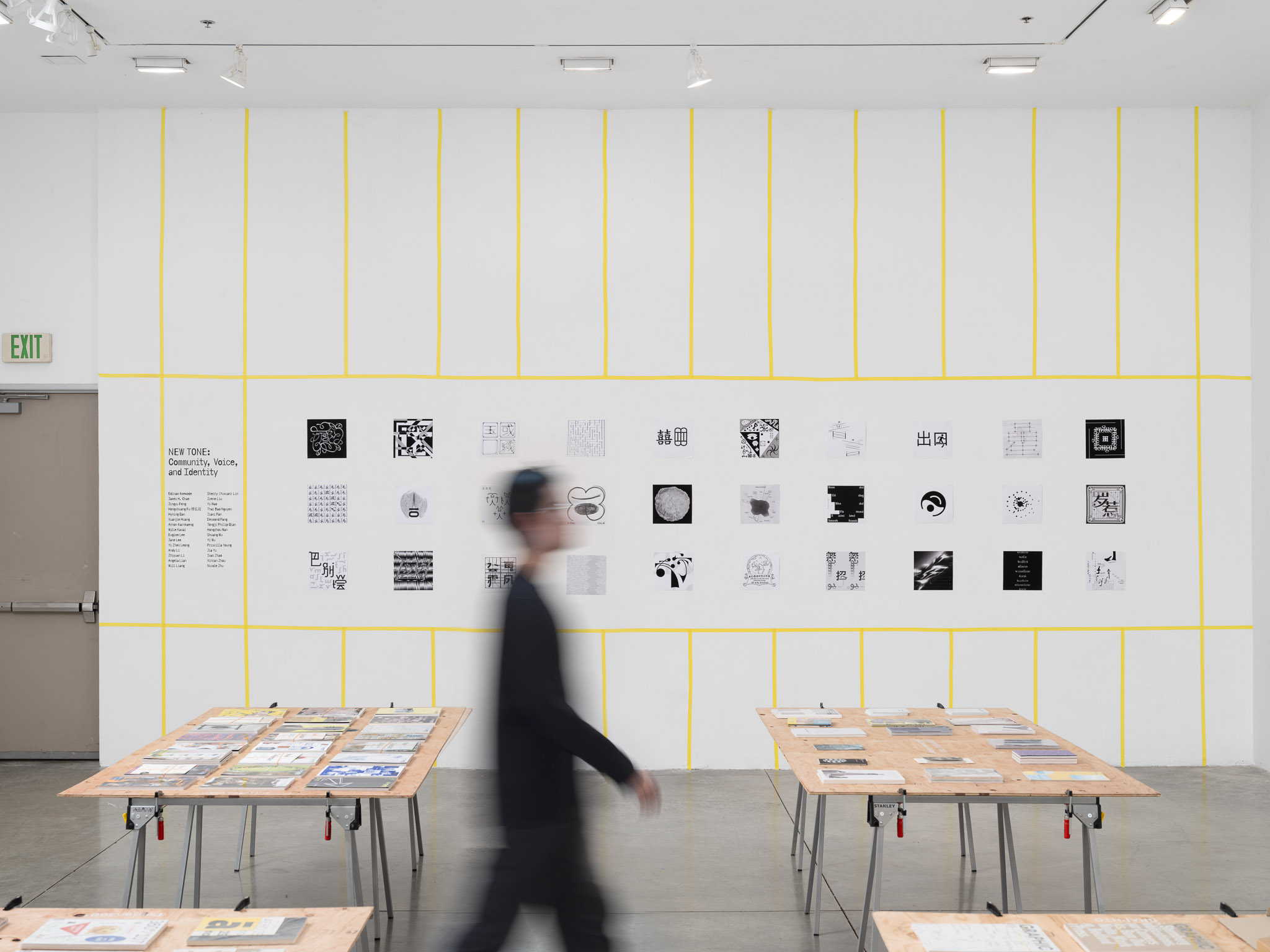
Tone in Tongue, a multi-venue international exhibition running from July 18 to November 14, 2025, hosted across Otis College of Art and Design, Maryland Institute College of Art (MICA), and the Shanghai Research Institute of Printing Technology.
July 18–November 14, 2025
Los Angeles, Baltimore, and Shanghai
Across the three sites of Tone in Tongue: Otis College of Art and Design in Los Angeles, the Shanghai Research Institute of Printing Technology in Shanghai, and the Maryland Institute College of Art in Baltimore, Jane Lee’s Glyphlora appears as an unexpected presence. The exhibition surveys the shifting terrain of East Asian visual culture through publications, typography, and graphic experimentation, yet Lee’s contribution insists on a different horizon: a language not bound to human articulation.
Lee, trained in Seoul as a graphic designer, has long been drawn to the architectures hidden within written form. Her early work in CJK typography, a field frequently sidelined in Western-centric design discourse, sharpened her attention to systems that operate simultaneously as image, symbol, and structure. Rather than treating typography as a medium of legibility, she approaches it as an interface, an unstable membrane where linguistic logic, cultural history, and computational process intersect.
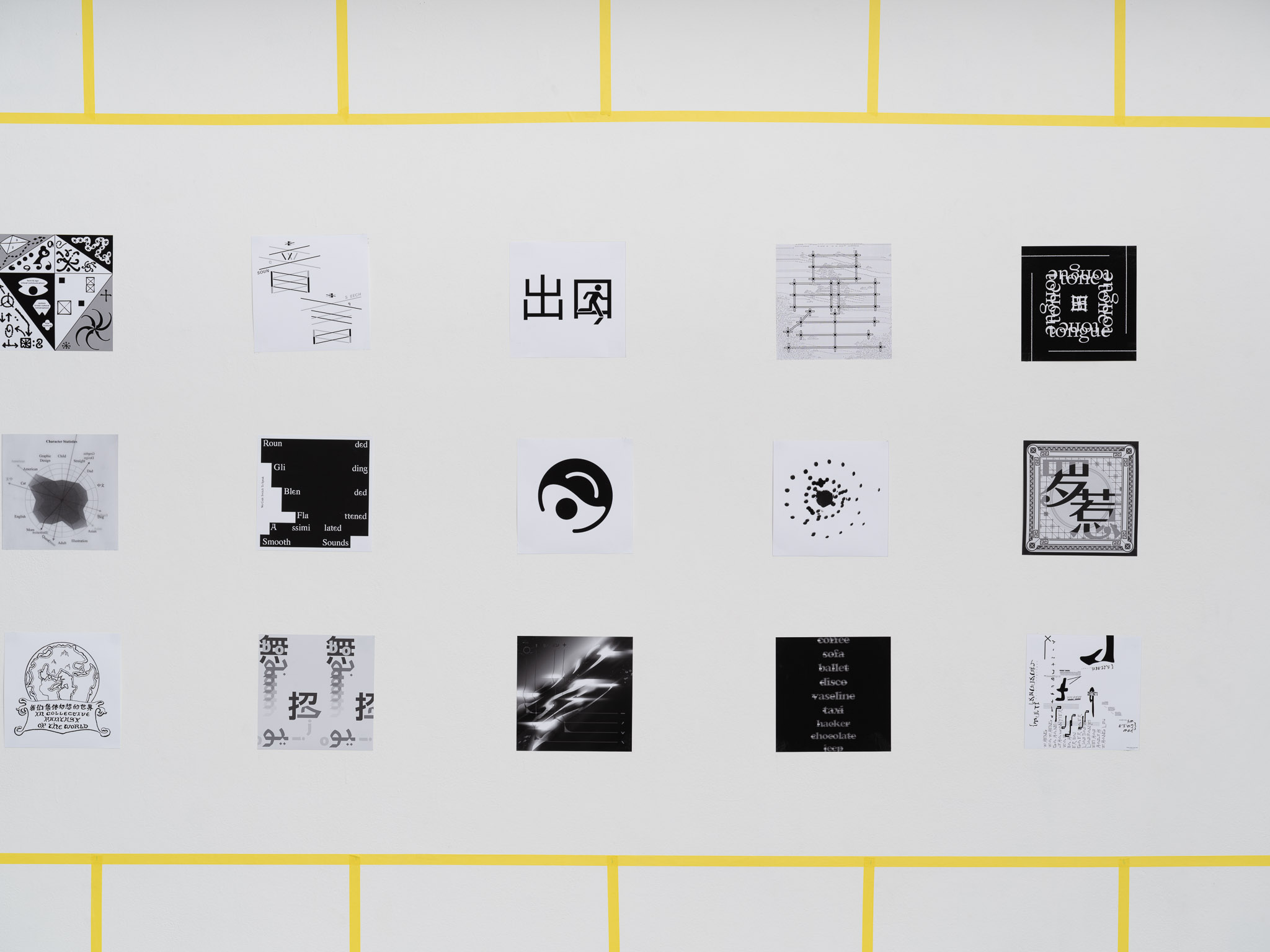
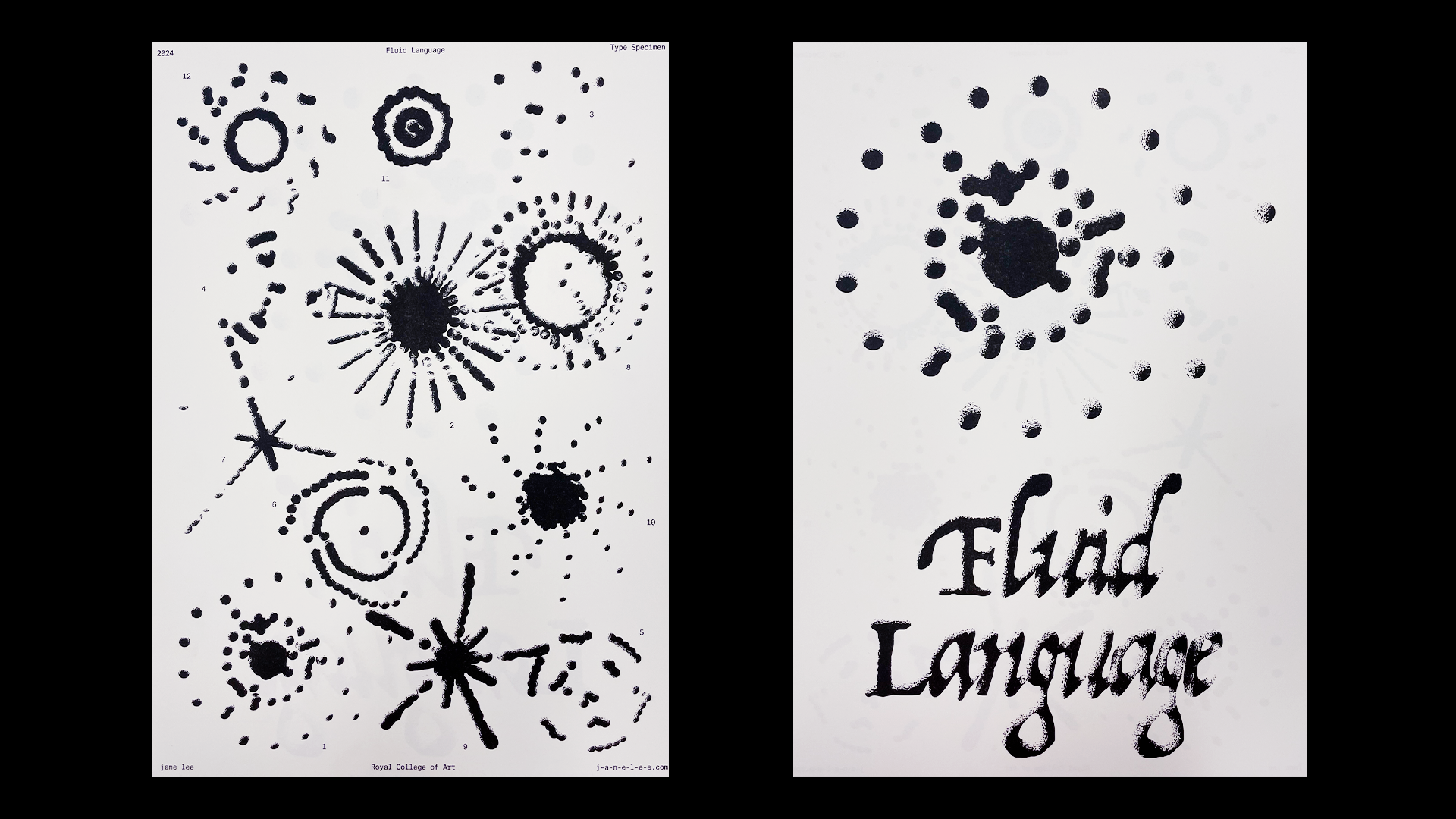
Glyphlora extends this inquiry by shifting the ground of language itself. The project begins not with the human voice but with a scientific observation: under stress, plants emit ultrasonic clicks, frequencies far above human hearing. In most contexts, these sounds register as mere biological data. For Lee, they constitute a latent lexicon, a mode of expression that persists unnoticed because humans lack the sensory apparatus to receive it.
Working with custom audio software, algorithmic mapping, and real-time signal processing, Lee translates these ultrasonic emissions into visual glyphs. The system listens to shifts in frequency and amplitude, then mutates them into graphic forms that pulse, bloom, or fracture in response. These symbols do not resolve into a stable alphabet. Instead, they behave like organisms, responsive and indeterminate. Typography becomes less a container for language and more a site where communication remains speculative, provisional, and interspecies.
This gesture sits in productive tension with the exhibition’s premise of a shared and shifting visual language across East Asia. Traditional scripts in the region, including Chinese, Korean, Japanese, and Vietnamese, operate through dense visual structures that blur the line between writing and drawing. Lee expands this lineage outward. If certain human languages have been historically marginalised, then the voices of non-human species have been systematically overlooked. The project asks what it means to listen to species that have never been considered communicative agents at all.
Lee’s methodology remains notably unsentimental. Despite its ecological undertones, Glyphlora is not a romantic return to nature. It foregrounds machines as translators, artificial interlocutors that reveal how communication might unfold when human perception is no longer the central measure. This techno-linguistic framing raises unresolved questions: When a machine mediates a plant’s distress signal, whose language emerges? And what politics are embedded in the act of converting biological noise into a legible graphic system?
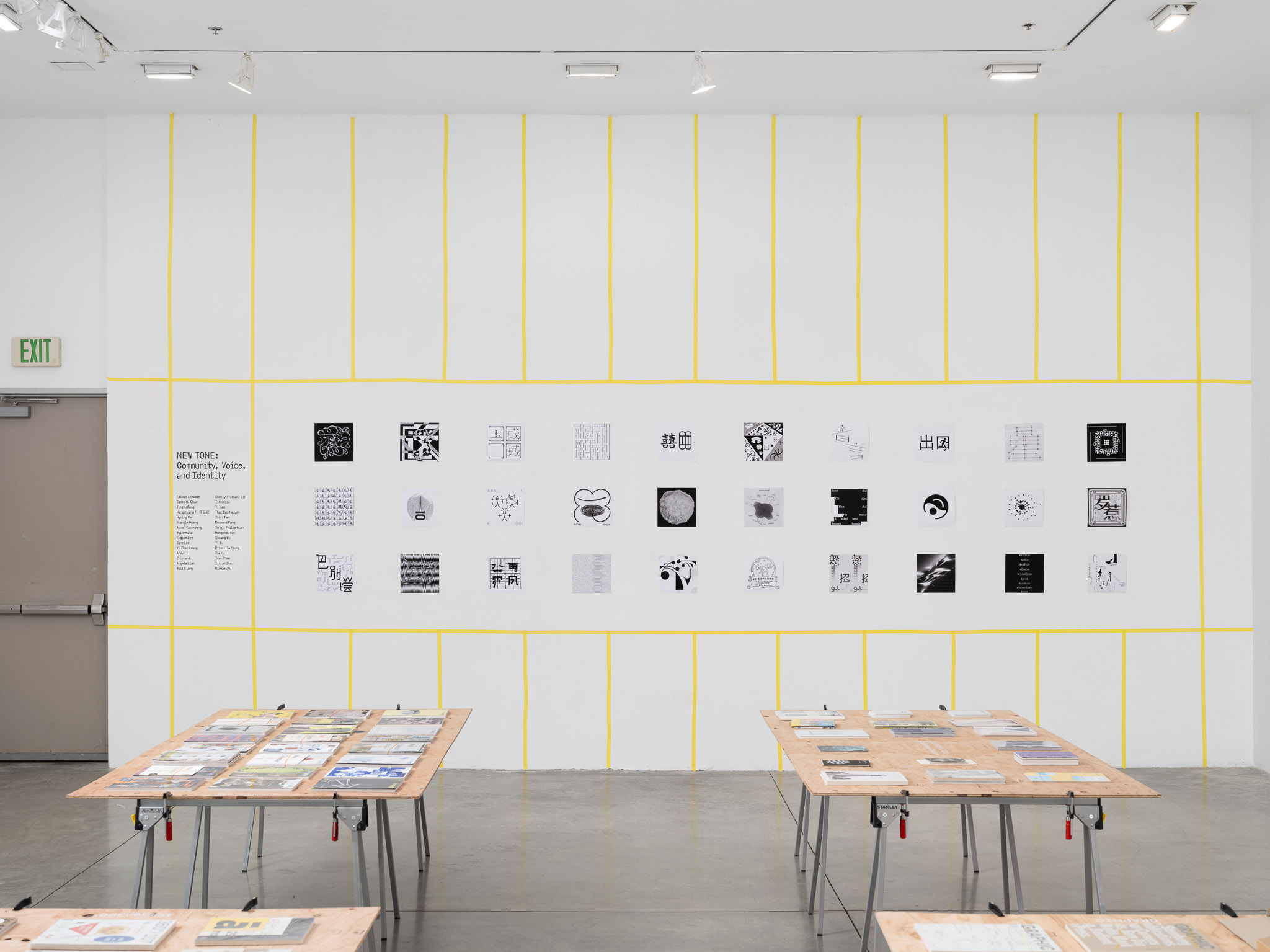
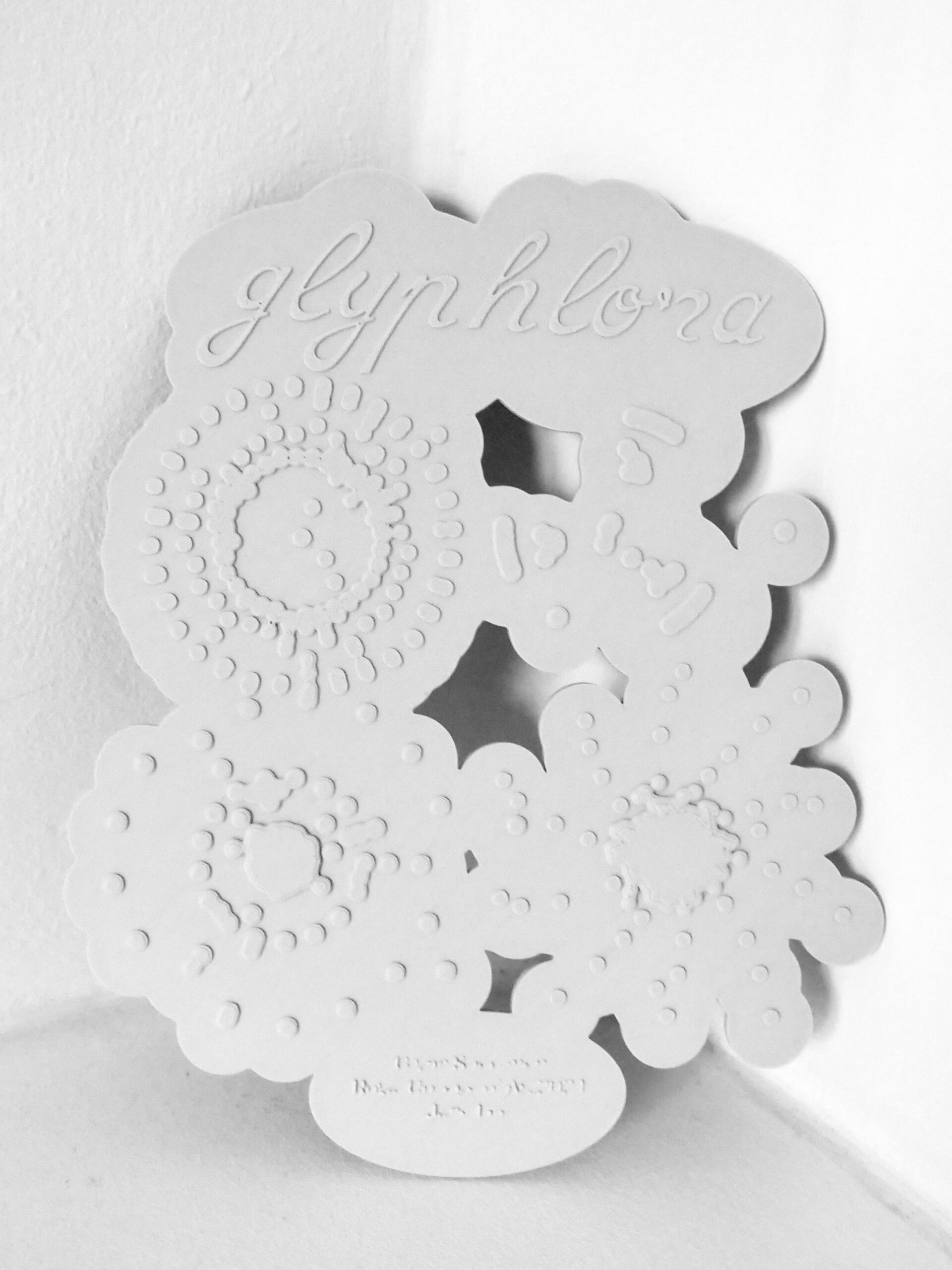
As Glyphlora evolves into visual languages and installations, its visual surface becomes inseparable from the sonic processes that animate it. Lee’s live works treat sound not as ambience but as structured information, modulating the glyphs in real time until they behave like living scripts: expressive yet fundamentally opaque. The opacity is essential. Rather than offering translation, Glyphlora stages the limits of comprehension and shows how language might exist without ever being oriented toward humans.
By positioning typography as a shared platform across species, Lee opens a conceptual breach in the discipline’s human-centred history. If Tone in Tongue maps the way East Asian scripts continue to transform across borders and generations, Glyphlora pushes further into an expanded field in which typographic form becomes a meeting point between ecologies, technologies, and lifeforms that speak beside human perception.
Exhibition Locations & Dates
Otis College of Art and Design
(July 18–August 13)
Bolsky Gallery
9045 Lincoln Blvd
Los Angeles, CA 90045
Shanghai Research Institute of Printing Technology
(August 10–October 10)
1209-60 Xinzha Road
Shanghai, China 200041
Maryland Institute College of Art
(October 20–November 14)
Bronze Gallery
Brown Center, 3rd Floor
1301 W Mt Royal Ave
Baltimore, MD 21217
Exhibition Team
Tone in Tongue is curated and organized by Mary Y. Yang and Zhongkai Li
Independent Tone is curated by Mac Naiqian Wang
Tone in Print are selected by Design360°’s editorial team, GRAPHIC’s editorial team, and Madoka Nishi (Former Editor-in-Chief of idea magazine)
Editing (Chinese) by Yao Meng
Exhibition design by Midnight Project (Weiyun Chen & Supatida Sutiratana), Jialun Wang, Shuang Wu, and Xinran Zhou
Exhibition photography by Zengyi Zhao, Sight Photography
Exhibition Participants
Common Tone: Risograph as Shared Ground
Risograph Posters by International Studios
Agata Yamaguchi, collé inc., BOWYER (Hwayoung Lee & Sangjoon Hwang), Can Yang, Hyunsun You, Jaemin Lee, Kenichi Kuromaru, Kotaro Mitsuhashi, LAVA Amsterdam, LAVA Beijing, LOW sek-vai (Shuowei Lao), Meat Studio, Ohara Daijiro, Ordinary People, Related Department, Studio Pianpian He and Max Harvey, Sulki & Min, Sun Yao 孙尧, Synoptic Office (Caspar Lam & YuJune Park), Yuan Wang 王远, and Yuki Kameguchi & Ian Lynam
New Tone: Community, Voice, and Identity
Emerging Designers & Artists
Edinam Amewode, James H. Chae, Jingyu Feng, Hongshuang Fu 傅弘双, Hyning Gan, Xuanjie Huang, Arnon Karnkaeng, Wylie Kasai, Eugime Lee, Jane Lee, Yi Zhen Leong, Andy Li, Zhiyuan Li, Angela Lian, Will Liang, Sherry (Yuxuan) Lin, Irene Liu, Yi Mao, Thai Bao Nguyen, Jiaxi Pan, Desmond Pang, Tongji Philip Qian, Hongzhou Wan, Shuang Wu, Yi Wu, Priscilla Young, Jia Yu, Ivan Zhao, Xinran Zhou, and Nicole Zhu
Independent Tone: Publishing as Dialogue
Independent Publications
1413 Magazine, Ah Thote Sone Foresight, dmp editions, How Many Books, KCL Publishing House Ltd, Lettel Books, National Culture and Arts Foundation, ori.studio, Page Bureau, Publication Studio Pearl River Delta, [soft] Magazine/openART Studio, te editions, Temporary Press, Untitled Folder, and yáo collaborative
Tone in Print: Evolving Graphic Design Perspectives in East Asia from 2005 to Present
Design Magazine Tour
Design360° (China), GRAPHIC (South Korea), and idea magazine (Japan)
Institutional Partners
Tone in Tongue is a collaborative initiative between Radical Characters, Otis College of Art and Design, Maryland Institute College of Art (MICA), Shanghai Research Institute of Printing Technology, and IS A Gallery, with additional support from Boston University College of Fine Arts, School of Visual Arts.

