

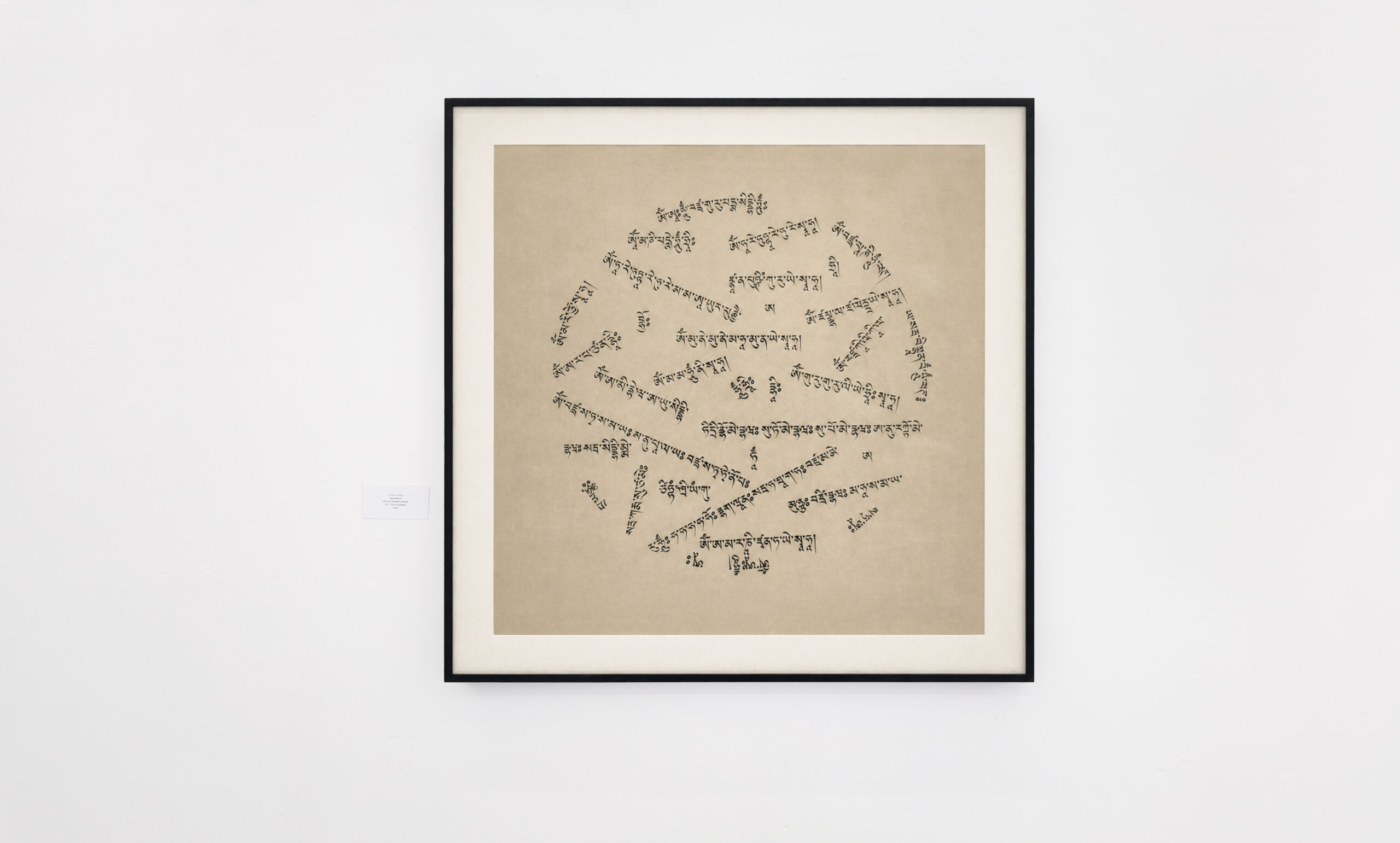
We refer to birth, life, and death before passing on to the next generation as the circle of life. Circles are seen as protection, and many early human settlements were built in a circular pattern, and even animals protect their young within a circle. In many religions, temples are built in circular shapes; Muslim pilgrims circle the Ka’aba; and circular mandalas are an inherent element of Hinduism and Buddhism.
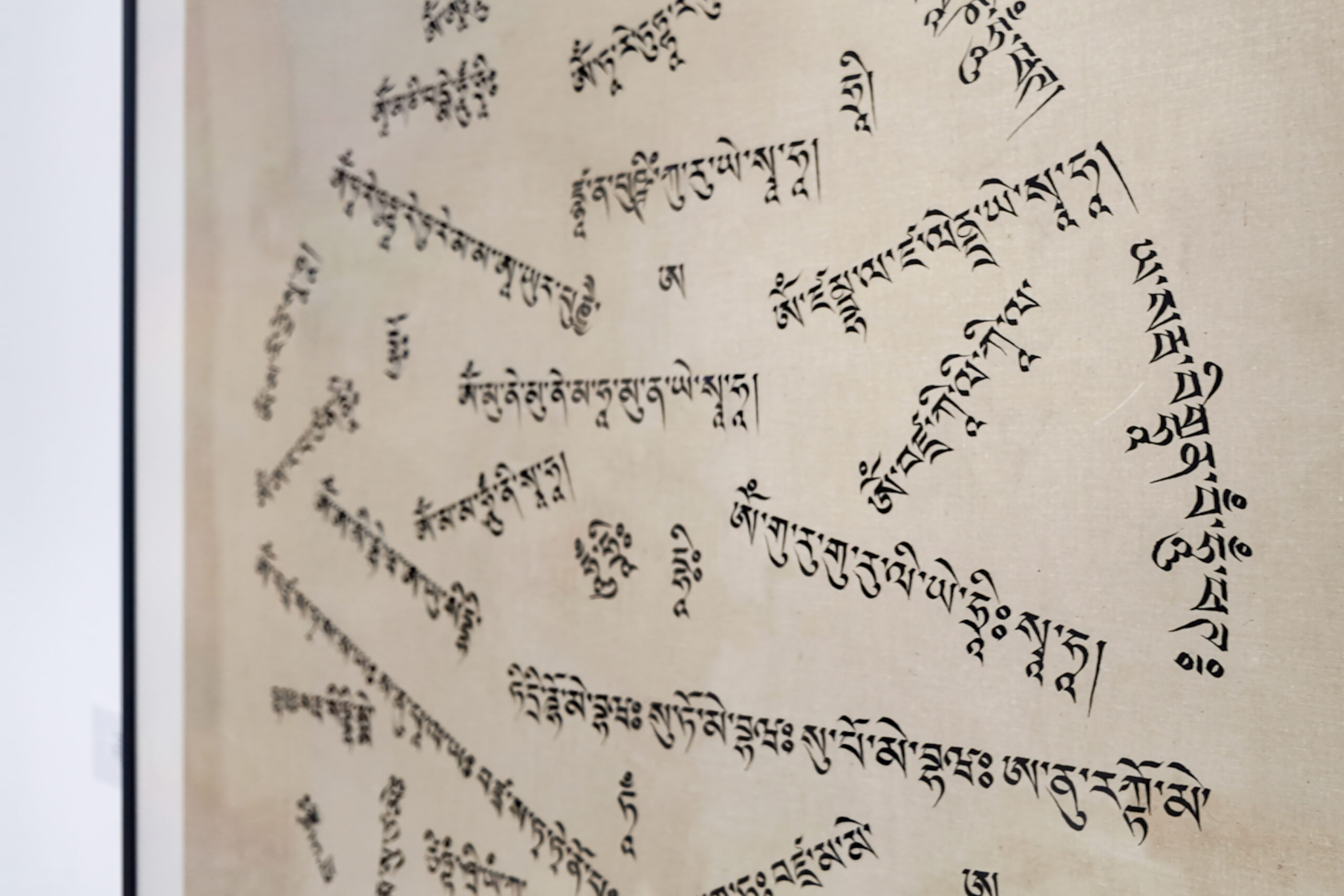
This is where the work of Xiaoming Ai comes in, as her circular piece centres on the Six-Syllable Mantra: Om Mani Padme Hum, a core element of Avalokiteśvara, the Buddhist Bodhisattva of Infinite Compassion. It evokes a meditative feeling even for those who cannot read the text, the circular shape itself emanating a calming sense, much as we feel when viewing the Yin Yang symbol, which represents the harmony of life forces.
The artist has created the work on a traditional Thangka canvas, a medium associated with traditional Tibetan Buddhist art, often featuring colourful mandalas. In this case, Xiaoming has stripped it back to simply the language to remove all distractions so we can focus on the meditative mantra.
While this work reflects cultural and religious history, the circular motif has been present throughout art history as a shape used to contain or channel. Think of Leonardo’s Vitruvian Man, who is contained within a circle, or Nancy Holt’s Sun Tunnels, which allow the sun to be seen through them. When it comes to the inclusion of text, we can see Jenny Holzer use them to encapsulate political statements.
Xiaoming Ai’s work may not come across as overtly political, but it almost feels like a political statement to be asking everyone to have infinite compassion in a world torn apart by war and one where politics and social media are driving us further apart from our fellow humans.
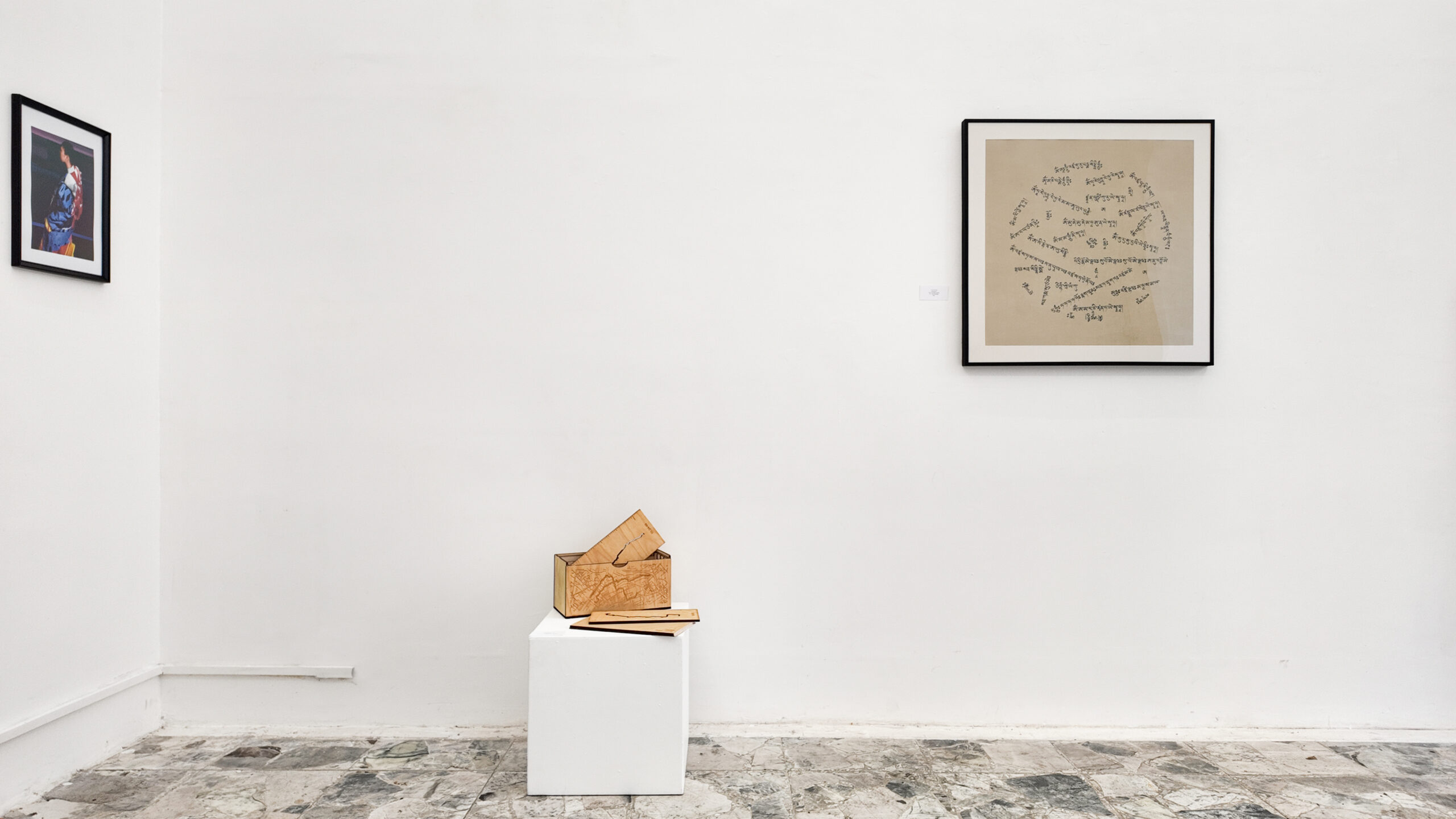
The work acts as escapism from the wider world around us, or a reminder to stay calm in a time when anger feels more natural. Just as some people use rosary beads, breathwork or deep meditation. Using her work as a meditative viewing process is a chance to relax and reassess at a time when we all desperately need to.
As her work develops, I would like to see more contemporary references enter it that mix traditional sayings with modern-day reflections and interpretations of the teachings. It would consider what relevance these teachings can still have in the fast-paced world we live in today, which is being re-shaped by social platforms and AI. This would ensure the work remains true to its roots while also resonating with a contemporary audience.

