

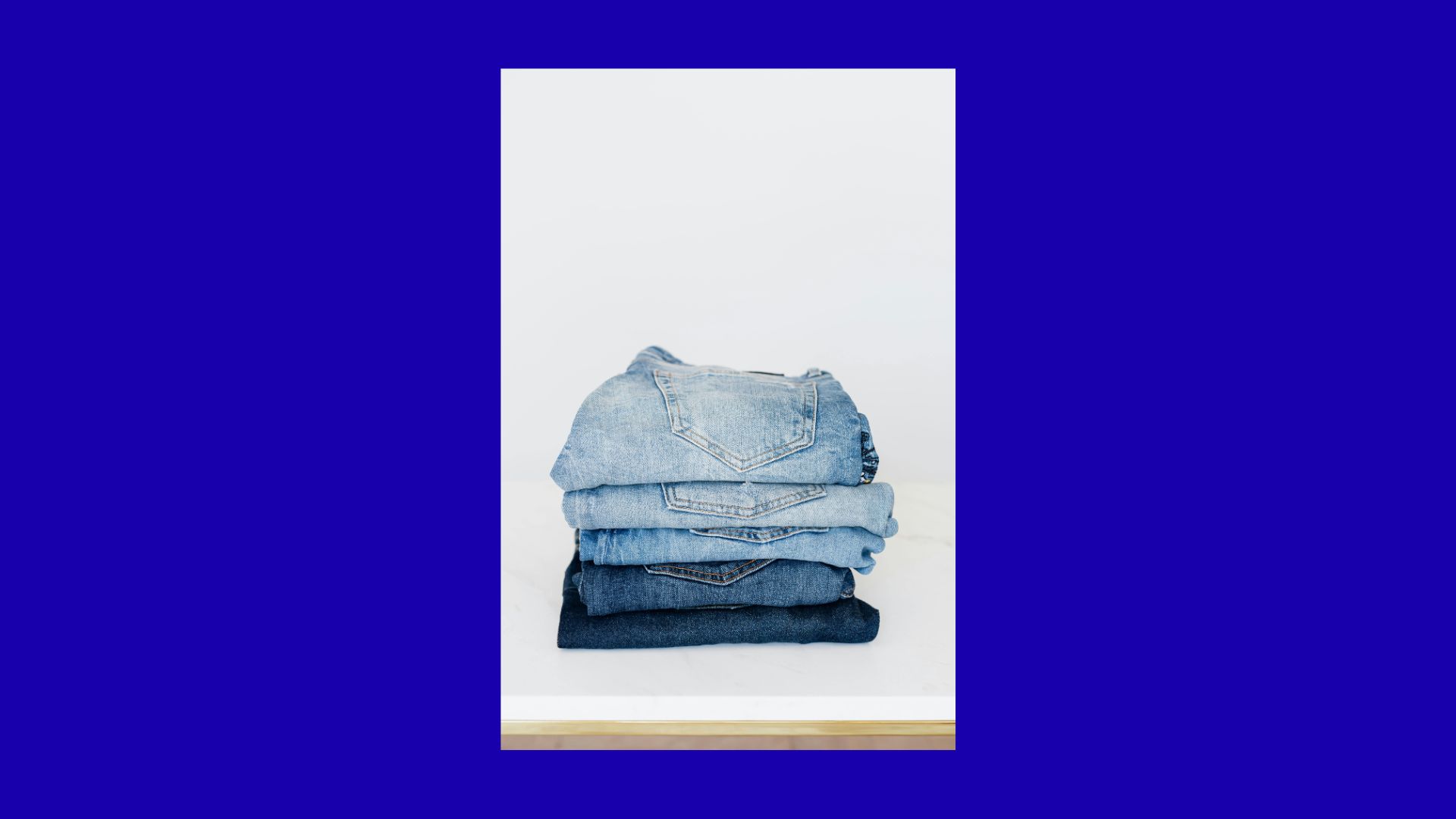
Look around your closet. Chances are, you’ll find a pair of jeans staring back at you. They’re classic, comfy, reliable, basically the uniform of adulthood. We all know how sacred the hunt for the perfect pair is, it could take years, but everyone ends up with it. That very pair might have guzzled more water than you drank in your entire life, bathed in chemicals you wouldn’t let near your coffee, and burned enough energy to make your electricity bill cry in a corner.
How Much Water Did Your Denim Drink?
A pair like that drinks roughly 3,800 to 7,500 liters of water in its life cycle. And most of it is actually virtual water, meaning it’s spent growing the cotton, long before the jeans exist. Those little white balls are basically hungover water addicts, drinking more than the garment itself will ever need.
Now, imagine if those cotton balls weren’t such water hogs. Planted in rain-fed fields, watered smarter, and treated with a little respect, a pair of jeans could sip half as much water, or less. Some factories even recycle most of what they use, closed-loop systems that turn yesterday’s dye bath into today’s denim. Rivers might even forgive us.
This Pair Runs on Energy… and CO₂
Your jeans aren’t just thirsty, they’re a walking bundle of carbon emissions. The washing, drying, distressing, and heat needed to get that “perfect lived-in look” leave a footprint of roughly 30–35 kg of CO₂ per pair. That’s about the same as driving 150 kilometers in a standard car or powering your laptop for 10 years. Every. Single. Pair. And that’s only the production and finishing, add your own laundry, and the numbers climb even higher.
But it doesn’t really have to be this way. Factories could run on renewable energy, and fancy finishing techniques like ozone or laser fading cut energy use dramatically. And for you? Cold washes, less frequent laundry, and air-drying can slash your jeans’ CO₂ footprint by a third, all while they still look perfectly destroyed.
Faded, Bleached, Poisoned
Almost everyone owns their perfect pair in shades of “slightly different blues”. That faded perfection is achieved by soaking the jeans in poison, literally. Synthetic indigo, bleach, softeners, all dumped in huge volumes, often untreated. In some production hubs, wastewater contains heavy metals and toxic dyes that could make local waterways and ecosystems be mistaken for tie-dye experiments. Then there’s the so-called gray water footprint, the water needed to neutralize all the chemicals our jeans soak in, and it can actually exceed the water used to make the fabric itself.
Factories could stop treating rivers like chemical dumping grounds. Low-impact dyes, enzyme washes, closed-loop treatment, and proper wastewater management could cut most of the pollution. We can’t personally clean a river, but we can buy from brands that disclose water treatment and chemical standards, and if you really crave that fading vintage look, just go second-hand. Jeans still perfect.
The Little Threads That Conquer Oceans
Every time we toss our jeans in the wash, they’re shedding tens of thousands of tiny fibers. Some studies put it at 50,000 per load. These little threads don’t just vanish, they go through sewage, end up in rivers and oceans, and carry along dyes, chemicals, and even pesticide traces. Fish eat them, snow in the Arctic eats them, tap water probably drinks them too.
But they don’t have to be global troublemakers. Factories could pre-wash the denim, use fiber-capturing filters, or coat the threads to stop shedding. Wash smart at home, cold, gentle, minimal detergent, microfiber-catching bag, and you cut their empire in half.
Maybe we slow down. Second-hand finds, a little respect for laundry day, and a curious glance at what our favorite brands are really up to. Or maybe even pay a little extra for something that actually lasts. Jeans already survive our roughest years, it would be nice if one survived our whole life. I want to swear on a pair like my mother swears on that 1996 one.

