

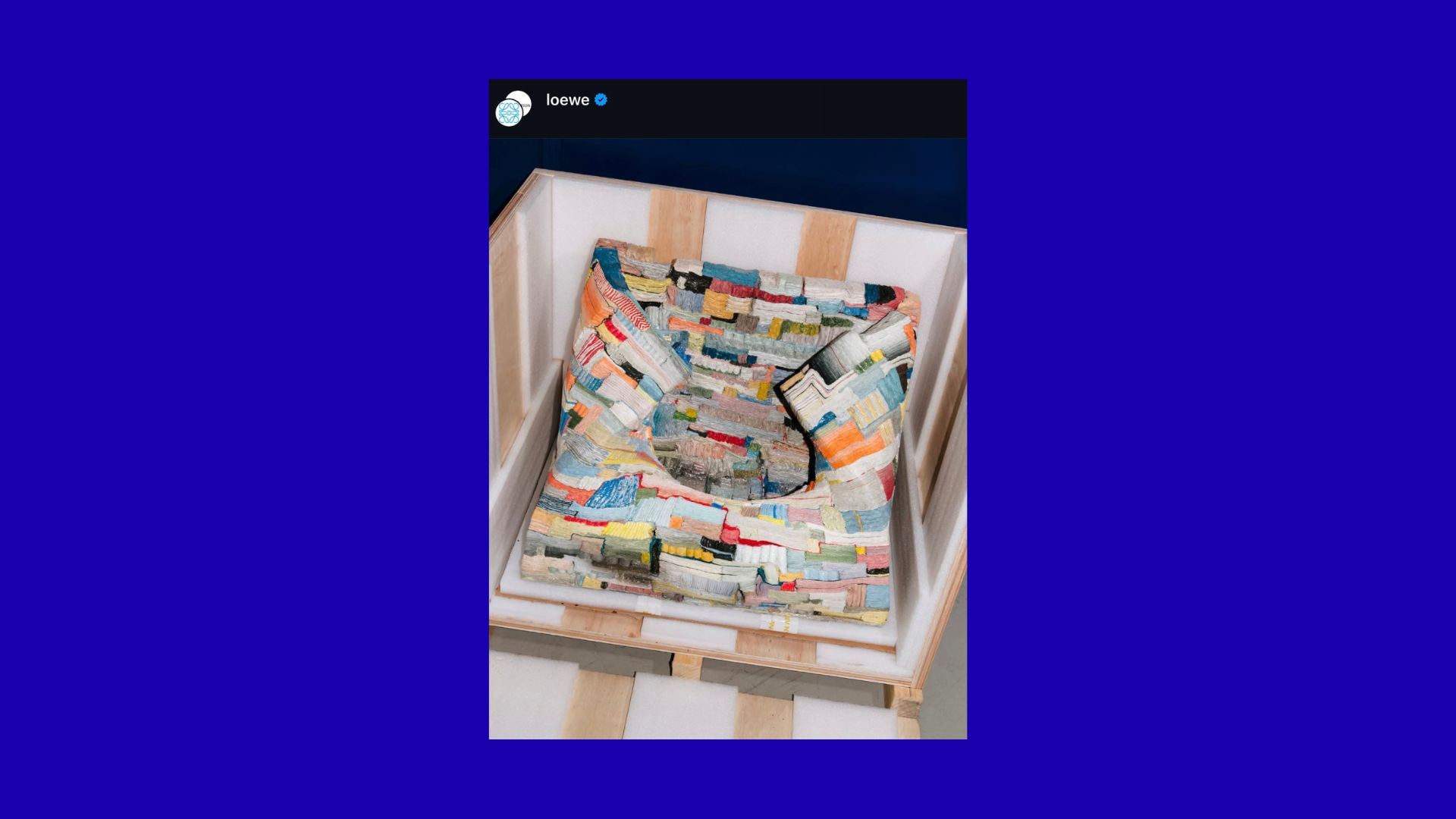
Nine years ago, the Loewe Foundation, the 180-year-old brand’s nonprofit alter ego emotionally attached to pottery, woodwork, weaving, and the concept of “human touch,” started gathering artists from around the world to prove that, in an AI-saturated, mass-produced world, the most valuable thing might simply be evidence of an actual human hand. The Loewe Foundation Craft Prize is a first-time traveler to Southeast Asia, landing at Singapore’s National Gallery, and celebrating 30 finalists from 19 countries selected from 5100 submissions by a roughly 14-people jury. It also brings in Jack McColough and Lazaro Hernandez (post-Jonathan Anderson era) sitting between Sheila Loewe, chairwoman of the foundation, Abraham Thomas, Met curator, Frida Escobedo, Met architect, Magdalene Odundo, leading ceramic artist, and the list goes on.
As the room carried on champagne-fuelled conversations about objects that arguably cost more time than money, a Seoul-based ceramicist received the €50,000 prize under a wave of applause. Jongjin Park’s months-in-the-making Strata of Illusion was declared the winner. A chair-like sculpture built through a slow, layered process, ending up as a dense ceramic block that still carries the ghost of paper. Sheets are coated in porcelain slip, lightly tinted with pigments, then folded, stacked, and pressed together by hand into a compact mass. After drying and firing, the paper disappears, or rather, survives in another form, fused into a single ceramic body like a memory that refuses to burn off completely.
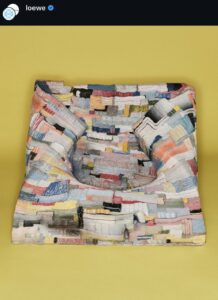
Two special mentions went to Italian jewelry designer, Graziano Visintin, whose Collier, a pair of necklaces built from strings of delicate gold cubes, formed from impossibly thin sheets of metal won a €5,000 prize alongside Baba Tree Weavers and Álvaro Catalán de Ocón’s Frafra Tapestry, positioned as a “living anthropological document,” translating Ghanaian craft into a large woven surface of elephant grass, later captured from above through drone imagery that maps its surface into pattern. That’s the real subject here. Not craft, but the stubborn visibility of the human behind it.

