

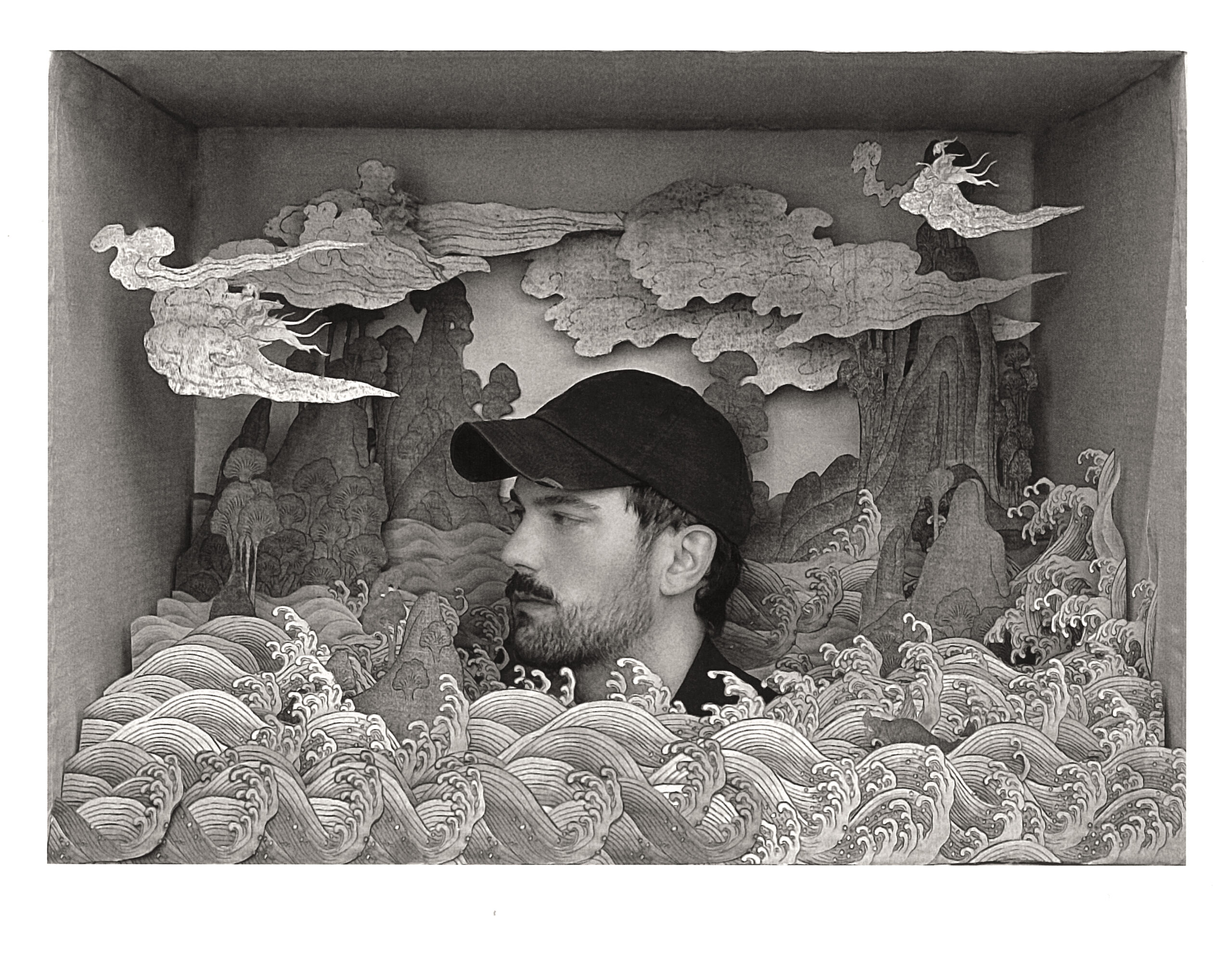
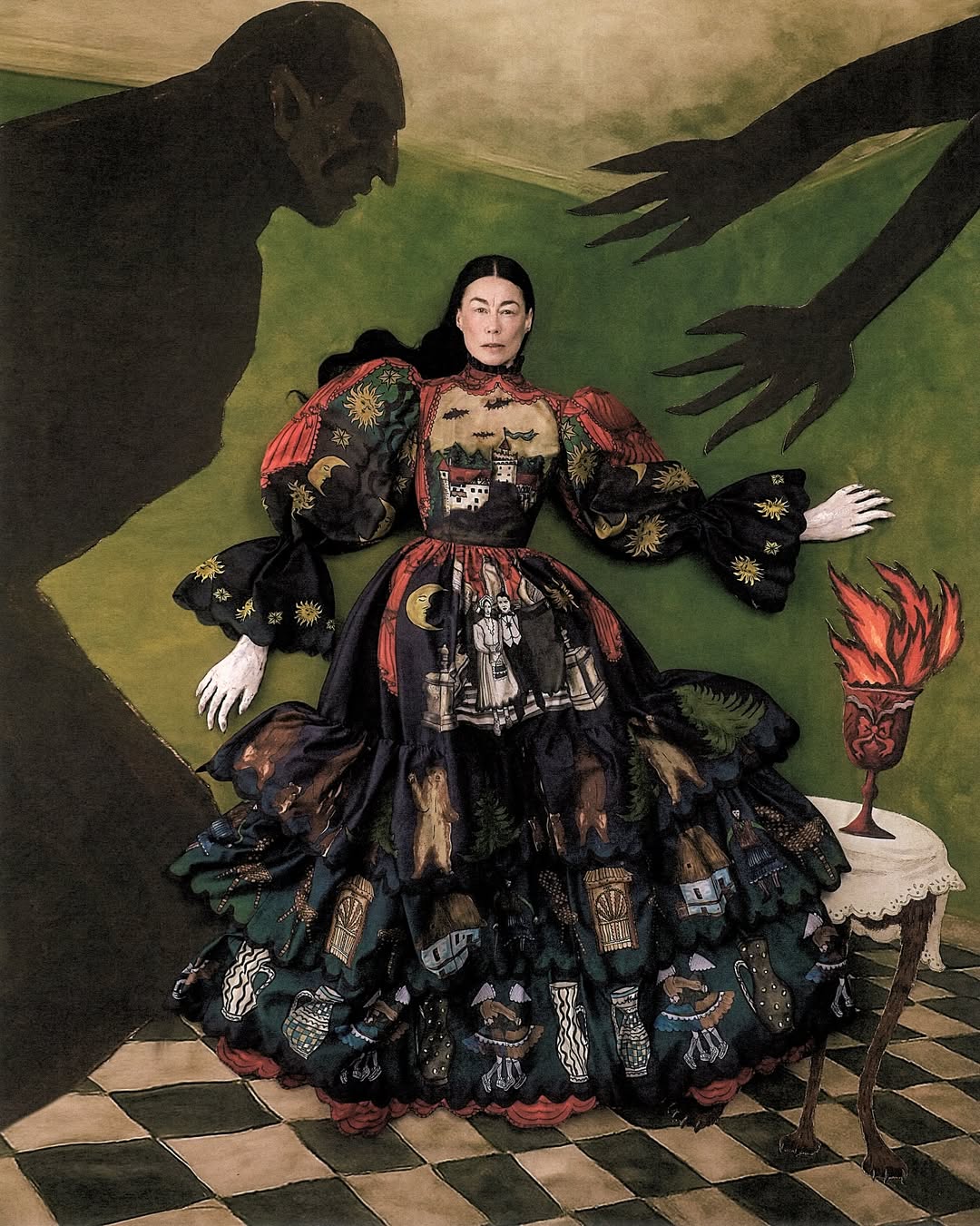
Discovering Szilveszter Makó’s work feels more like wandering into an art exhibition than scrolling through a contemporary photography portfolio. His images settle into earthy tones and analogue grain, shaped by sets built from recycled materials and handcrafted props that make each frame feel carefully composed and, above all, made. Though Milan-based Makó shoots for Vogue, Numéro Paris and GQ Italia, every image remains stubbornly his.
What anchors this unorthodox approach is what his photographs decline to do. There is a long tradition, mapped by John Berger decades ago, of the image as a mirror held up to show you what you lack. In its prevailing mode, fashion photography sharpens this into instruction: here is the body, the face, the garment. Consume the ideal and orient yourself toward it. Makó’s photography refuses to engage in this negotiation. His subjects exist in a sealed world, partitioned from the impulse to compare and covet. “My photographs,” Makó explains, “are closer to figures in a novel. You encounter them and then you leave them behind.”
Instead, his images build worlds that answer only to themselves. Coloured by his upbringing in Lillafüred, Hungary, his work carries what he describes as “the discipline and resilience of the elder generation of Eastern Europeans”, a set of rules he still lives by. “I grew up with conservative restrictions,” he shares. “I fight them, but they shape who I am and the art I produce.” Constraint, in Makó’s hands, transforms into a kind of play: a subject’s face emerging from inside a human-sized paper boat, a cardboard replica of his childhood home worn as a recurring headpiece, and, more recently, figures flattened into two-dimensional planes.
As Makó moves between fine art, fashion, portraiture and commercial work, it becomes obvious that no brief, however commercial, fully domesticates his creative presence. You may leave his characters behind. The feeling of having met them is less obliging.
How did you first discover your passion for photography, and what led you to the world of fashion photography?
My path to photography was nonlinear and heavily influenced by creative exploration. I moved through many forms of creative expression before finding balance and clarity in photography.
Tracing back, my clearest memory of capturing my first impactful photograph begins in Lillafüred, Hungary, the town where I grew up. Each year, Hungary would host a prestigious academic competition for secondary school students called the Országos Középiskolai Tanulmányi Verseny. At this point in my life, I was painting, but a classmate suggested I try photography instead. The theme was ‘the soul of the space,’ and I photographed a classmate in my school’s attic using long exposure. She appeared almost ghost-like, suspended between light and shadow. That image stayed with me as it was the first time I felt that something moving through my mind could be held inside a lens.
During that same period — around 2007, when I was 15 — I was experimenting with hairdressing, a craft I picked up from my mother. Her salon was no longer in use, but it remained attached to the back of our house. Immersed in the emo scene and its subcultures, I began dying leopard spots, bleaching blunt bangs and carving out irregular styles on my friends’ hair. After each finished look, I would take a picture and share it on MySpace. To this day, I am very proud of that work.
Through every creative medium I explored, photography was an ever-present undercurrent. Photography is a medium I can control — something important and instinctive to me. There’s a fleetingness to photography; a moment passes in a breath. Yet in that moment, I have complete creative sovereignty over how it is held, framed and remembered. Each element is shaped by my choices. I sit behind the lens as much as I create the image before you.
I don’t like to define myself strictly as a photographer. I orchestrate the entire tableau. I craft the image before it ever meets the lens, and I want that to be heard and known. Photography allows me to establish boundaries while expressing the freedom of my art within a single image.
I can’t pinpoint when or why it happened, but fashion photography seemed to hold my attention more than any other form. I was drawn to people and the stories they tell through clothing, posture, expression and presence.
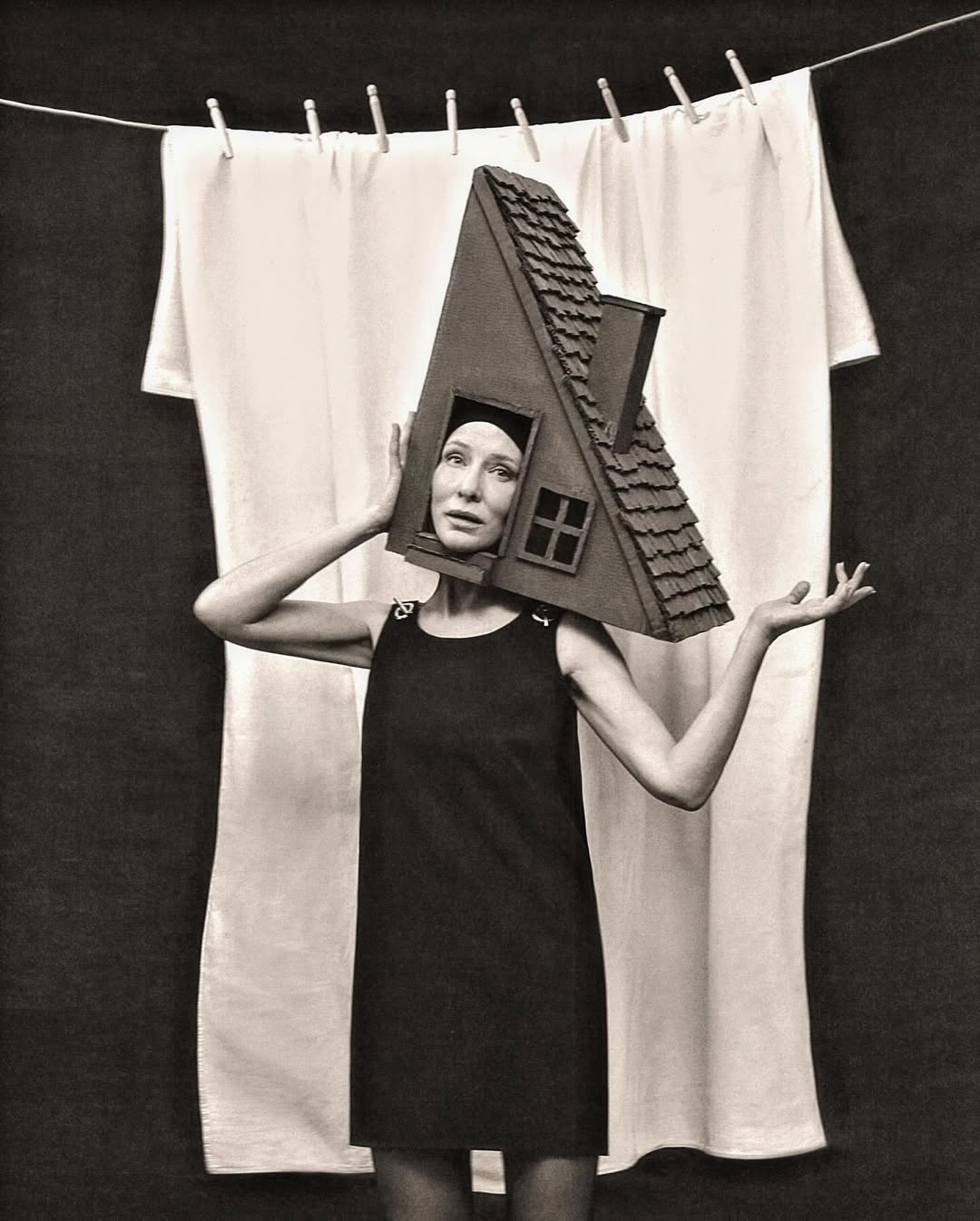
Your subjects are often framed in a box-like composition. Is this a deliberate technique in your storytelling, or does it emerge organically in your process?
The box is an era of mine, becoming a staple fixture two years ago. I invoke the word fixture as an amplification of my awe for it. It’s a very simple prop but it bears a certain longevity. There’s a mundane and ordinary straightforwardness I agree with, and it holds space to be explored further.
Many don’t know this, but I exist somewhere on the autism spectrum. My mind intertwines with the compulsions of OCD, cleanliness and the need for order. The box offers me this. The box is a boundaried perception, which allows me to enclose and frame something within a defined space.
Growing up in Hungary and witnessing the post-communist upheaval, it became second nature to need boundaries, follow rules and use order as a living mechanism. Structure was vital and defined the very fabric of daily life. I like restrictions and I like to be given rules, especially in the context of projects. Moreover, organisation, balance and precision act as both a mental refuge and a way of navigating my work.
You might notice in my recent work that I’ve moved to painting a box on the floor. It creates an entirely new feeling, something more spectral, airy and effortless. I will continue to use this technique until it exhausts itself within me — it hasn’t yet. A client will often suggest a different course, but if it still stirs something in me, it continues to live. Watch me reshape it, reframe it, reimagine it, and it will feel unfamiliar again, only renewed in its presence. The same applies to fashion. I have my pattern and style, but I will make the models scrunch, grab and pull the fabric into a new shape.
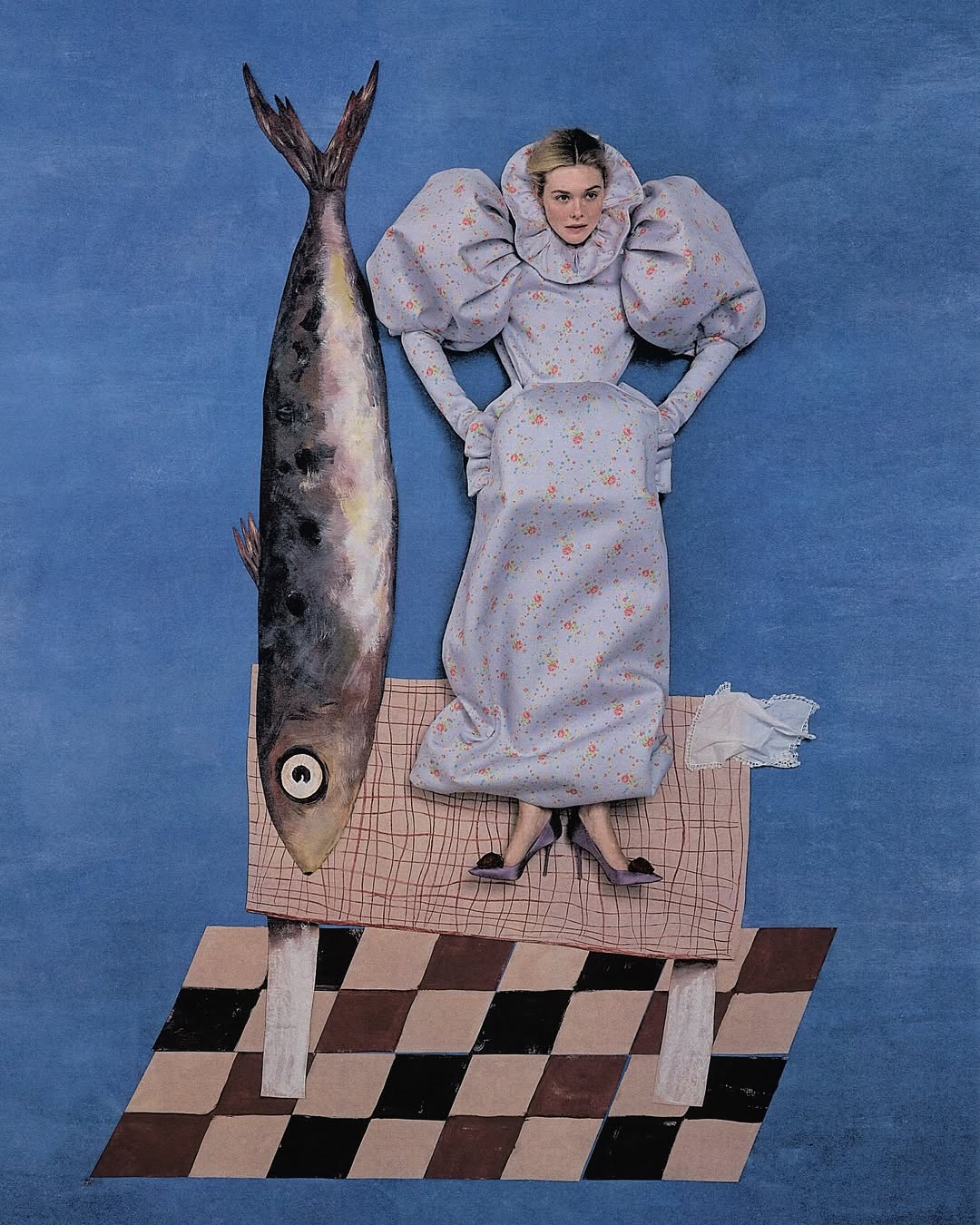
Some of your photographs feel like they’re holding their breath. Is unease something you’re drawn to?
Actually, I think they breathe. I always like an open lip and love when the shoulders and chest deflate, creating a quietly elegant and effortless anatomy. When I feel we are close to capturing the desired image, I usually ask the model or talent to take a big breath and exhale.
Do you ever imagine full stories behind your images, or do you prefer to let the viewer create their own interpretations?
That’s a really difficult question. I have passing thoughts, like fragments of details, or an obsession that’s captivating me at that very moment. These are spontaneous impulses that I want to weave into something resembling a story. But they do not exist as narratives yet. My images are built in balance with what is felt.
My autism and Eastern European background is tied in with this too. I become a difficult person because I still need restrictions. I only like a few things in this world, but once combined, this small bracket is powerful. Each detail has to be more than correct. It can come down to a strap on a heel or a fold in a coat. If I don’t like something, it’s dead to me.
Regarding the viewers, everyone has the freedom to voice their opinion, and I like to hear what people think of my work. Sometimes I digest their input and offer my own conclusion, while other times I don’t and just keep to myself. If I’m being told what to think, I retreat and continue to create at my free will.
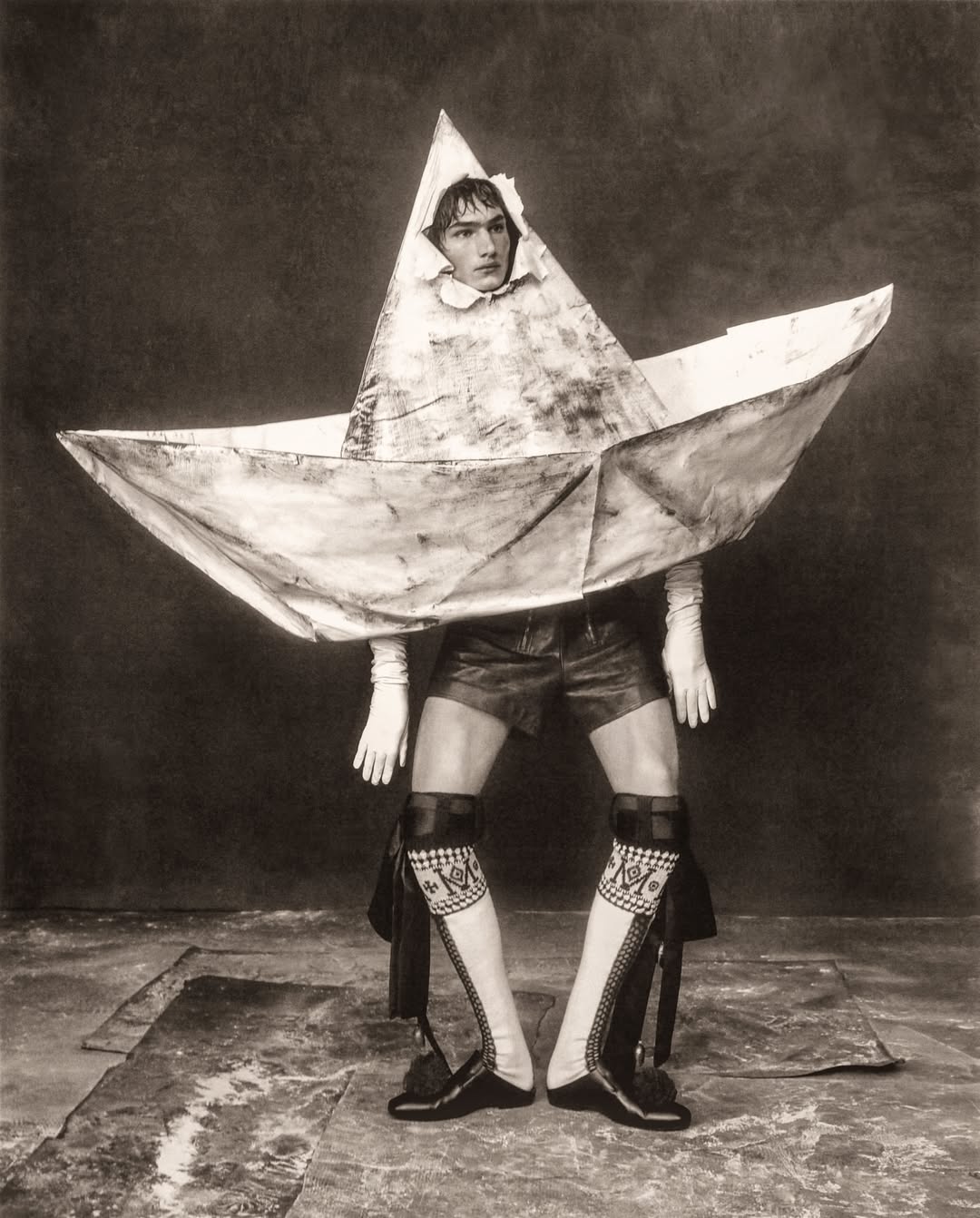
Have you watched or heard anything lately that has inspired you?
I recently spent 42 days in China, where I visited the southwestern province of Yunnan. This was a solo trip during which I wanted to spend time with ethnic minority communities and understand the layered architecture of these subcultures. That’s why I travelled to Yunnan, where they have an ethnic minority group called the Yizu.
I took my time in Yunnan, visiting the remote villages and embedding myself in their customs. I was able to see how they make their clothing, which is rich in colour. They wear silver, handmade jewellery. I saw elderly women dressed so elegantly and wrapped in bright scarves, complemented by headpieces — and that is how they dress every day. I was shocked, in the best of ways. It was amazing, I am still lost for the right words to share my experience with others.
Spending time in Yunnan was an awakening for me. Look at my work: I am very against the use of loud colours. Now that I’ve lived among the Yi people, it has shifted something within me. I can’t say yet what, because I’m still digesting it, but it will definitely have an effect.
Over the past two years, I have also been educating myself on folklore, absorbing the traditional wares and their culture. It may not show predominantly in my work, but there are elements and subtle styling choices which embody it. Whilst in China, I collected an array of old fabrics, handmade hats dating from before the Qing Dynasty and lotus shoes. Wherever I go I look to preserve these folklore elements, If I am fortunate enough to acquire them.
What piece of literature has expanded your artistic vision lately?
Lately I’ve been going back to my roots and reading a lot of Gorky, but I’m also re-reading my favorite novels and poems by Hungarian poet and writer János Arany.
What do you love most about what you do?
What doesn’t exist, I create.

