

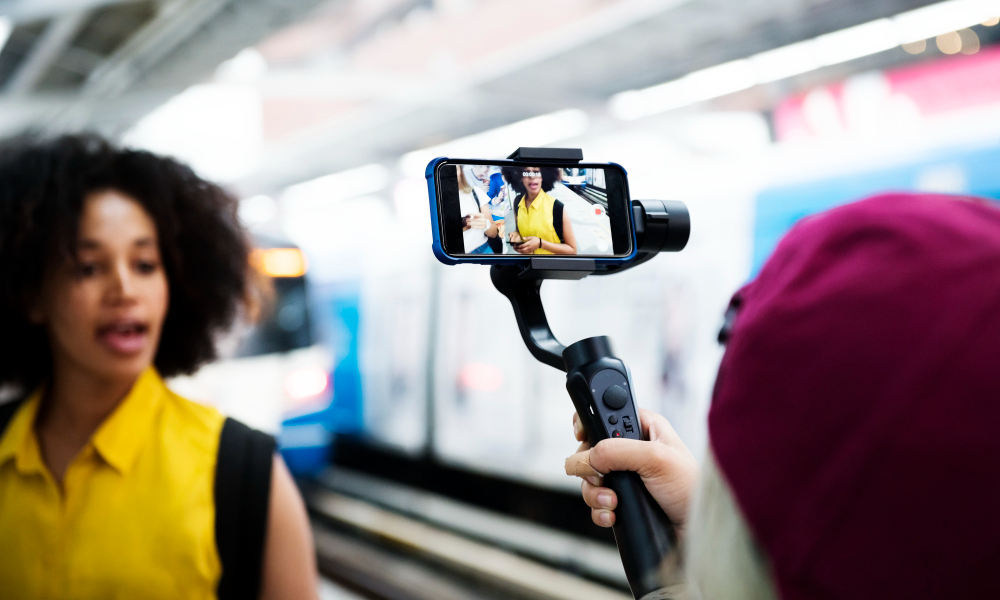
There’s something genuinely new happening in how people choose to interact socially online, and it’s not just about technology. The preference for video-first interaction represents a cultural shift, a change in what feels normal and expected in digital communication, that’s worth understanding on its own terms.
From Text to Voice to Video: The Direction of Travel
Digital communication has a clear historical direction: toward more information, more presence, more of what makes human interaction feel real. Text came first, and it was revolutionary. Then voice. Then video. Each step added more of the sensory and emotional information that humans naturally use to connect with each other.
We are now, fairly clearly, in a video-first moment. The generation that grew up with smartphones and broadband has normalised video as a communication medium in a way that previous generations didn’t. For many people under thirty, video messaging feels more natural than a voice call.
This is not just a preference. It reflects something about what people expect from communication. The bar for what counts as a real interaction is higher than it used to be.
What Video Does to Social Norms
The normalisation of video communication has had some subtle effects on social norms that are worth noticing. The expectation of visibility has grown. Interactions that were previously conducted through text or voice are increasingly expected to involve a visual element.
This changes the social contract of online interaction. Being seen is no longer as optional as it once was in some social contexts. The anonymity that was a defining characteristic of early internet culture is being eroded, not by policy, but by the social expectation that comes with video-first communication.
For some, this is experienced as pressure. For others, it’s liberating: video interaction is harder to fake, which means the people you’re connecting with are more likely to be who they present themselves as.
The Authenticity Premium
One of the most significant cultural effects of the shift toward video-first interaction is what you might call the authenticity premium. In video contexts, performance and curation are harder to maintain. The polished personal brand that works in a static post or carefully written bio doesn’t translate as smoothly to a live video interaction.
This is, arguably, a correction. Social media’s long period of optimising for curation and performance created an online culture that felt increasingly disconnected from real human experience. Video-first platforms are pulling in the opposite direction, toward messier, more honest, more spontaneous interaction.
Platforms like Tango.me have leaned into this cultural moment, building products where live, unfiltered interaction is the default rather than a special mode. The cultural response has been interesting: authenticity has become a value in itself.
Implications for Relationships and Community
The shift toward video-first socialising has implications for how relationships form and how communities function online. Relationships built through video interaction tend to be more robust because they’re based on more information. You know how someone sounds, how they express themselves, what their energy is like. That’s a much stronger foundation than a collection of posts and messages.
For communities, video creates a sense of shared physical presence that text communities can’t replicate. When you’re in a live video space with other people, you’re having an experience together in real time. The community exists in a moment, not just as a collection of content.
This changes the nature of online belonging. Being part of a video-first community feels more like being part of a real group than being a member of a forum or a follower of a page.
The Wellbeing Dimension
There’s a growing body of thought that the video-first shift in online socialising has wellbeing implications that are different from those associated with text and content-based social media. The passivity and comparison-driven dynamics that characterise feed-based social platforms are less present in live video interaction.
When you’re in an active live video conversation, you’re not scrolling. You’re not comparing your life to carefully curated images. You’re talking to people. The social experience is more active, more present, and more reciprocal. That’s a meaningfully different psychological experience.
None of this is straightforward. Screen time is screen time, and video interactions have their own potential downsides. But the emerging evidence suggests that active video-based social interaction produces different outcomes than passive consumption of social content, and many of those differences are positive.

