

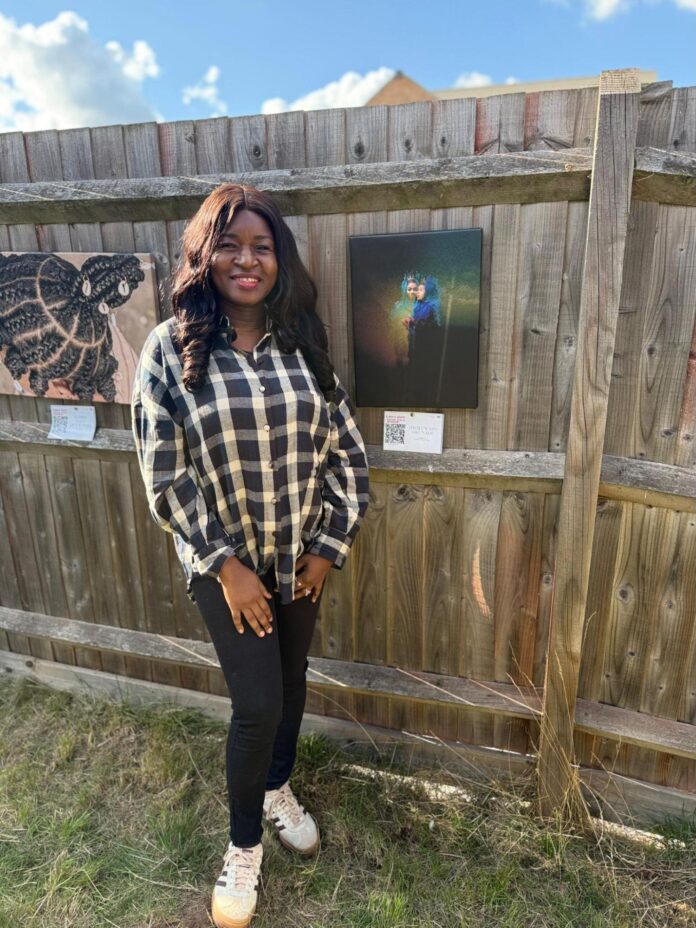
Every one of us is a master of code switching. We present a different face to the world, our work colleagues, our friends, our family, and in any other situation we find ourselves in. But, which one of those personas is really us, or is it all of them, but to different degrees? This constant evolution and reappraisal of who we are is what binds the many elements of Ifeoluwapo Rachael Okunade’s photography practice together.
In Portraits of Many Selves and Dual Identity, a woman is seen from two or three different angles. The way they fade and distort into one another suggests the subject is transforming from one to another, or is she all three persons at once, each one fulfilling different needs and addressing different audiences? However, she never looks disturbed, as if she’s at peace with the multiple elements to her personality that these three selves represent. It reminds me of the Greek maxim ‘know thyself’. We spend a lifetime trying to discover who we truly are, and it appears this woman is closer to it than many of us feel that we’ll ever be.
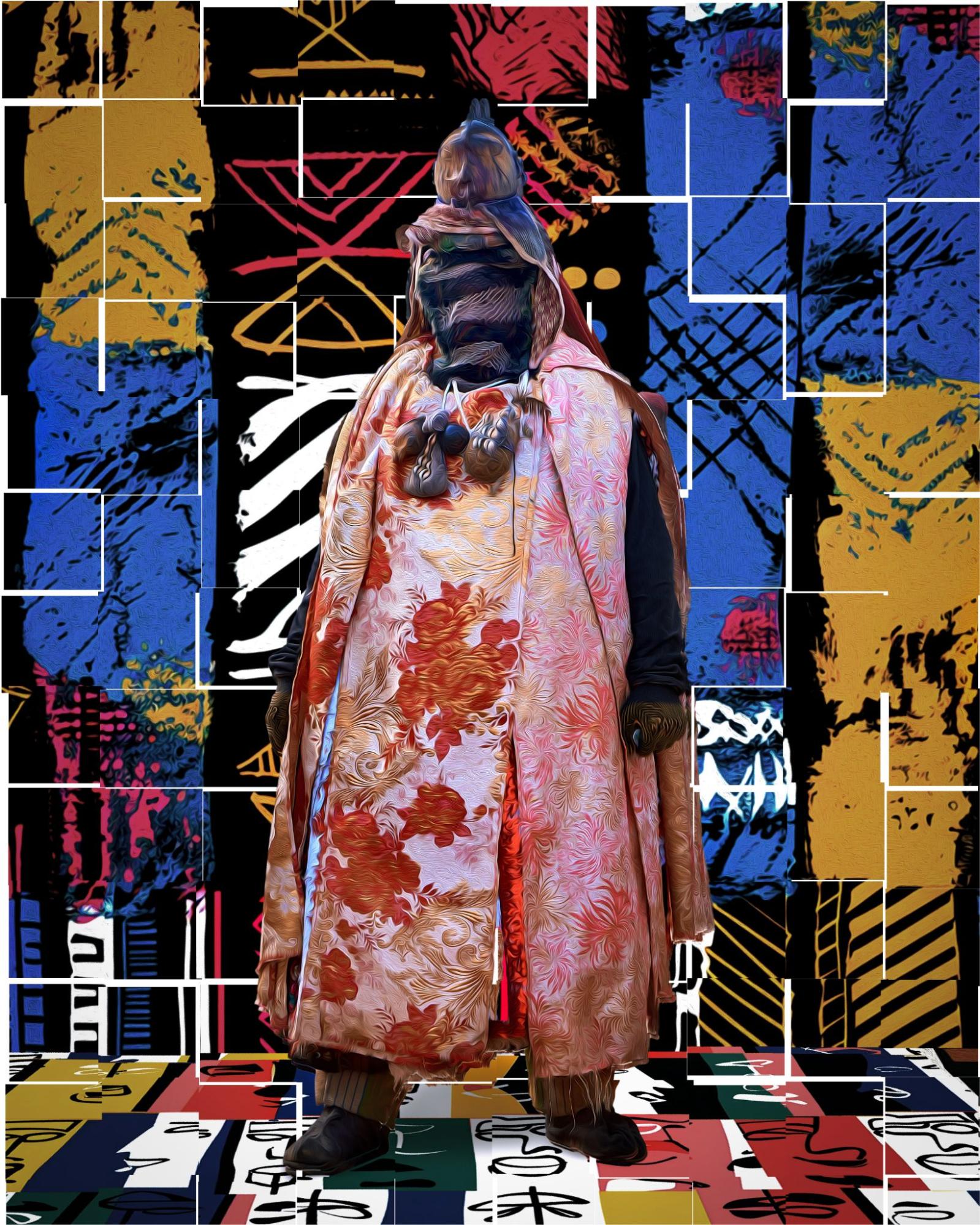
Okunade’s Whispers In Motion series is arguably her most significant departure from traditional photography techniques. The portrait appears to have every other line missing, the type of image you may get from a printer whose cartridge has nearly run out of ink. Yet, this is a deliberate choice to show a personality that’s fractured and not always visible, with the grainy texture, producing a grittier portrait that removes any glossy element. It’s as if we’re only seeing a portion of who this woman is, and the rest is for us to discover, or possibly never to find out. After all, we can spend decades with someone and only discover an element of their history or personality, many years down the line.
We see this inner strength captured more simply within Cultural Beauty on Black and White – Grace in Shadow, a diptych of two women standing proudly, wearing clothing that reflects their heritage and culture. It reminds me of how Zanele Muholi captures powerful portraits of black members of the LGBT+ community. While the subject matter here is very different, both works choose to immortalise these individuals through the timelessness of black-and-white photography. The light illuminating these women’s faces also employs the technique seen in Renaissance and Baroque paintings, drawing the viewer’s eye to the illuminated area of the painting, where their reverential awe should settle.
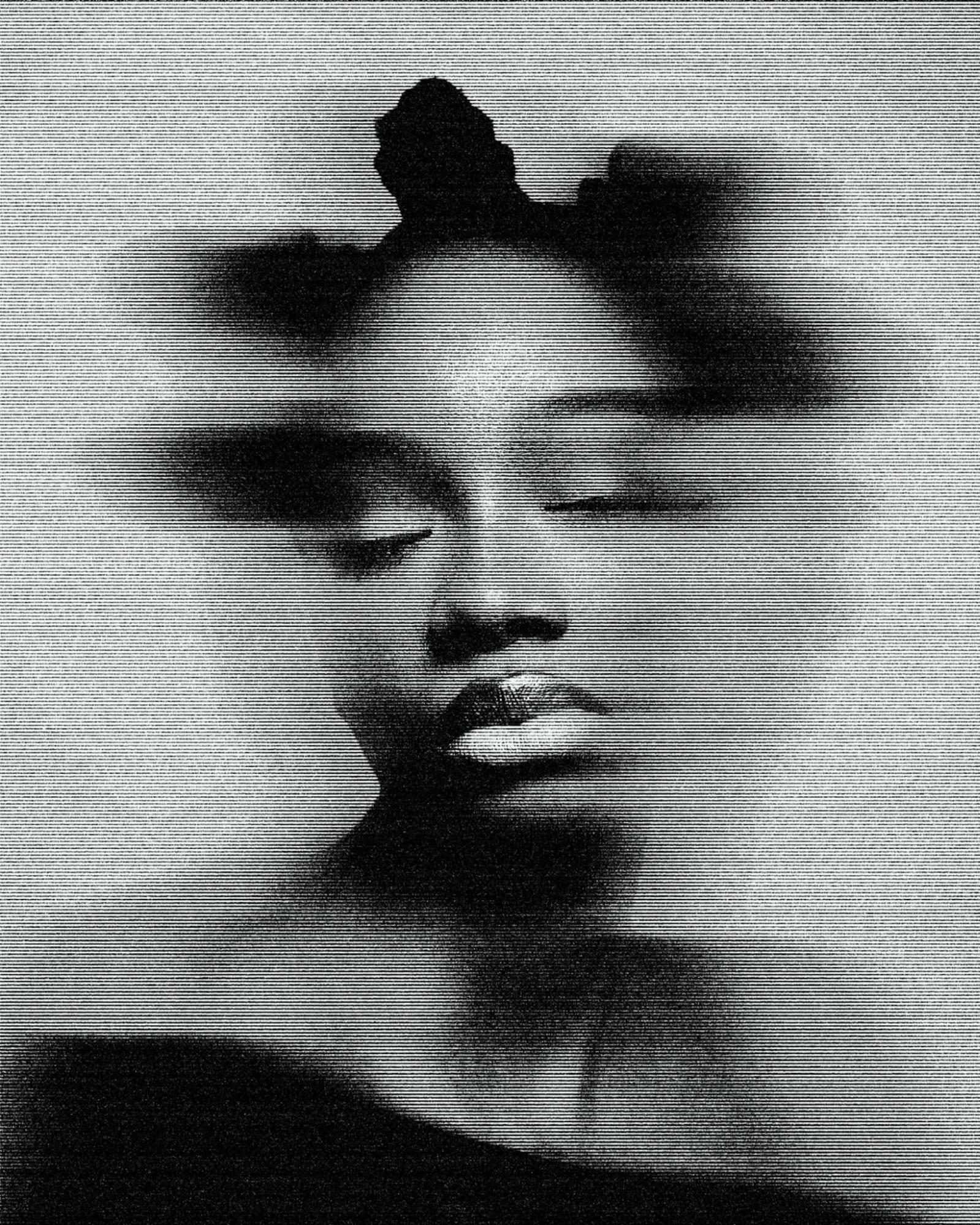
The world is far more vibrant in Beauty Wrapped In Colours – Lobanika, where a figure in a floral-patterned cloak stands before a colourful backdrop reminiscent of a Piet Mondrian painting. It feels fun and dynamic, reminding me of Hassan Hajjaj, who captures the contemporary characters and fashion trends in North Africa through his photography.
It’s not all portraiture, as seen in the artist’s Harmony In Nature series, which captures villages from an aerial view. The colourful houses and roofs are joyous, but they are dwarfed by the mountains looming overhead. It recognises humanity’s impact on the earth, but also how insignificant we can be within nature. A theme that we also see in the photography of greats such as Sebastiao Salgado and Edward Burtynsky.
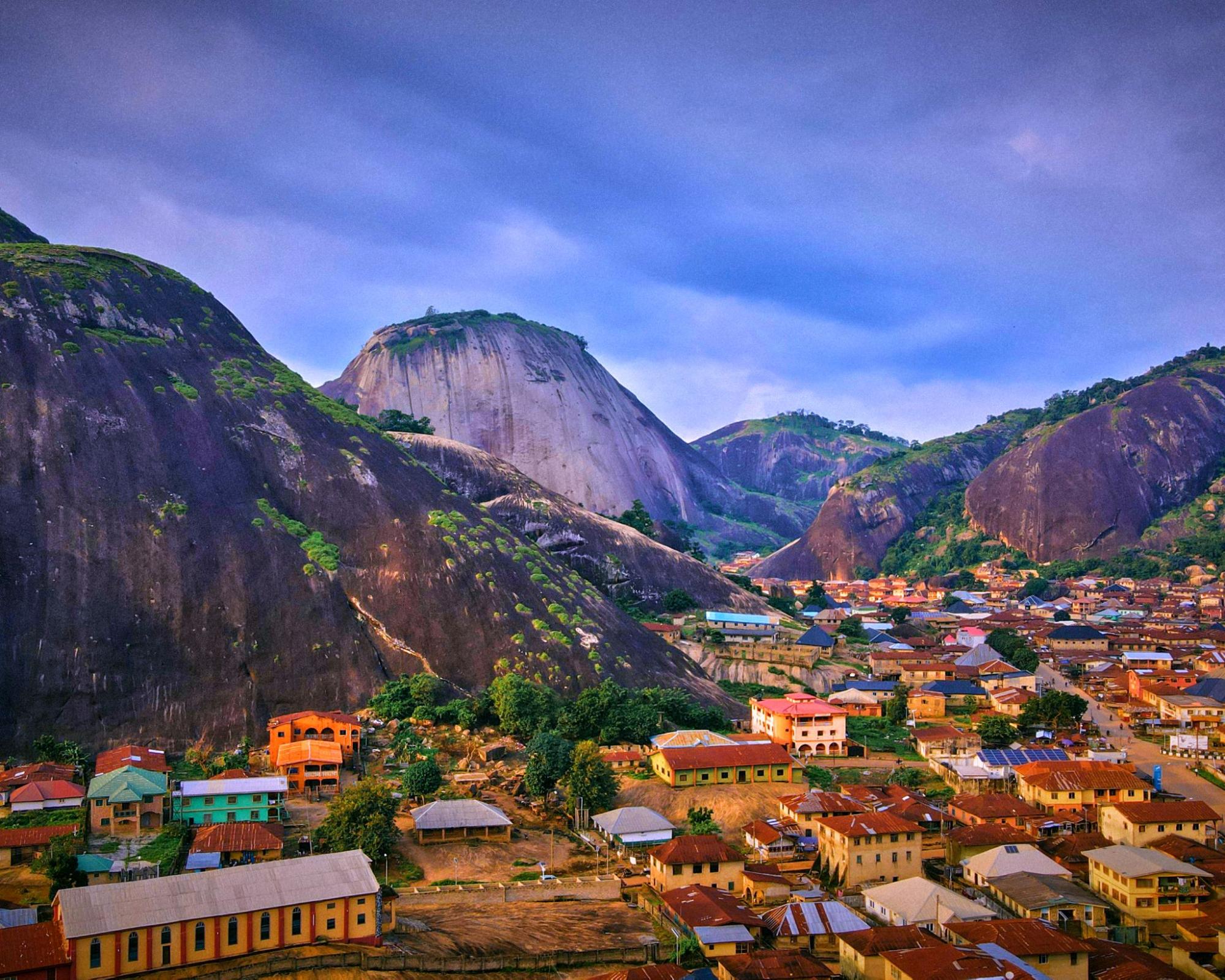
What ties Okunade’s practice together is the idea that identity is evolving, whether in people, architecture, or the natural landscape. The world never stops still for any of us, but what we can do is capture a slice of it, and that’s what her photographs do – people and places in transition, leaving us to decide where their stories will take them next.
More information about the artist may be found on her website and Instagram.

