

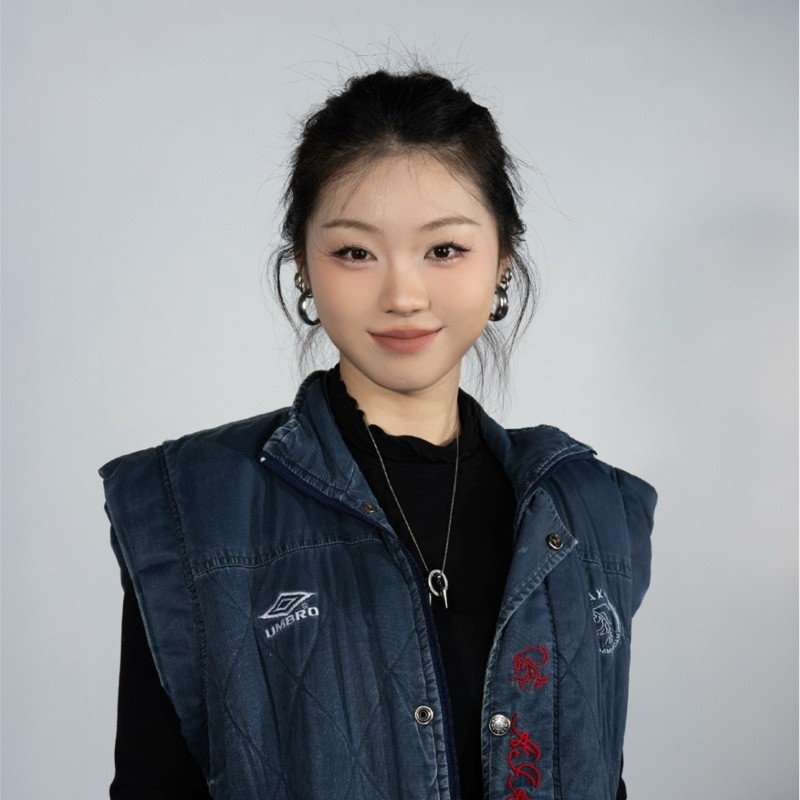
Producing for Cindy Kay Kang is not only about schedules, budgets, crews, logistics, client communication, assets, and handoffs. Those pieces matter, but the real work is shaping creative intention, technical feasibility, and human needs into one workable plan.
Her experience covers commercial, branded, short-form, virtual production, and entertainment work. With photography as a foundation, she brings a clear visual sensibility, paired with the on-set knowledge of how crews, clients, and creative teams work together.
That experience shaped her view of producing as decision-making rather than just execution.
Balancing Creative, Technical, and Human Needs
That idea is especially important in Kang’s virtual production work. One of her most significant professional experiences was with WLab, a New York-based virtual production studio, and later Madwell/WLab after WLab was acquired by Madwell in 2025.
The experiences provided her with a full understanding of virtual production and studio operations from LED volume production and real-time 3D environments to Unreal Engine workflows, camera tracking, and the daily work required to keep the creative, technical, and client teams aligned.
In these environments, a producer has to do more than organize production details. The producer must understand what each department needs in order to do its best work.
For Kang, that means protecting the client’s goals while ensuring the crew has the time, information, and support needed to deliver strong creative results.
“A good producer should not only manage budgets and logistics, but also understand what each department needs in order to do their best work,” Kang says.
It is where her work becomes a form of translation. Kang can explain the possibilities and limitations of LED walls, real-time 3D environments, Unreal Engine workflows, and on-set technical adjustments to clients and creative agencies.
She can also translate creative direction into demands for 3D artists, technicians, camera teams, directors, DPs, and ADs. Her strength is working with everyone on the same production language.
Experience as a Source of Judgment
Kang’s judgment comes from experience across producing, camera, lighting, grip, casting, and production support, giving her a practical view of how sets function beyond the producer’s table.
“What sets me apart as a producer is my ability to translate between different sides of production,” Kang says. “Because my experience spans producing, camera, lighting, grip, casting, and production support, I understand how a set functions from the inside, not only from the producer’s table.”
Kang’s project history gives context to her judgment. At WLab, she produced commercial, branded, and music video work for e.l.f. Cosmetics, Verizon, Fernet-Branca, and Sony Music. At Madwell/WLab, her role expanded into production operations, where she helped manage commercial, branded, and virtual production projects while strengthening internal workflows and coordination.
Her bilingual background also helps with the translation. On Have a Seat, a Taiwanese reality series, Kang supported the New York production side while working with the Taiwan-based team, helping connect Mandarin and English communication, cultural expectations, and production logistics.
“I am proud that I can help bridge language, culture, and production expectations while keeping projects organized and moving forward,” Kang says.
Technology With a Clear Creative Reason
Kang’s experience in virtual production has made her both open-minded and critical. She sees the creative flexibility new tools can offer, but believes their value depends on whether they serve the creative goal, client needs, budget, and schedule.
“One of the biggest challenges I have faced is learning how to work honestly with both the strengths and limitations of virtual production,” Kang says. “Virtual production can be powerful, visually exciting, and creatively flexible, but it is not always the best solution for every project.”
On smaller projects, virtual production is not always the easier path. It can mean higher costs, greater technical pressure, more planning, and more moving parts. Kang has to weigh those factors carefully. A tool is only worth using if it improves the final result.
For Kang, producing requires taste, planning, and the judgment to know when technology supports the work and when it adds unnecessary complexity.
A Producer’s View on AI and Responsibility
Kang sees AI as a serious shift in production. It may compete with both traditional production and virtual production because it can be faster and more cost-effective in some cases.
But it also raises questions about the future of real-life production and the people whose work makes it possible.
For Kang, the answer is neither to reject technology nor to accept it blindly. The producer’s responsibility is to evaluate it carefully.
“For me, the challenge is not simply whether to accept or reject new technology,” Kang says. “The real challenge is finding a thoughtful way forward as a producer.”
That means protecting what technology cannot replace: taste, judgment, storytelling, collaboration, and human sensitivity. New tools should be used only when there is a clear creative reason, thoughtful planning, and a stronger final outcome.
“I want to understand how new tools can be used responsibly, while still protecting the value of human creativity, collaboration, taste, and real production experience,” Kang says.
Protecting the Human Sensitivity Behind the Work
For Kang, a producer must judge each tool by its effect on the story, budget, schedule, and production team. Whether the project uses traditional, virtual, or AI production, or a hybrid workflow, the goal is to strengthen the final result without removing human judgment.
“I do not believe AI will completely replace human-made work, because audiences and clients still respond to work that carries human judgment, emotion, and intention,” Kang says.
New technology can expand what is possible, but it should be used only when it serves the story, supports the team, and improves the outcome.
Cindy Kay Kang believes that the larger question is how producers and filmmakers can continue to use new tools with intent, without losing touch with the humanity in their work.
At this point, producing becomes a process of transforming creative inspiration into technical possibilities, client desires into crew needs, and technology into choices that still carry judgment and meaning.
About the Author
Jason Brown is a U.S. writer covering film, corporate videos, production tech, and the artists behind modern media projects.

