


In an era driven by hyper-acceleration and instant gratification, visual artist Songer Yang offers a radical act of meditative slowness. Holding a BFA from the School of Visual Arts and an MFA from Cranbrook Academy of Art, Yang works fluidly across painting, fiber art, and
object-making. She approaches ordinary domestic items and textiles not as passive props, but through the framework of material culture–as active repositories of intergenerational memory, love, and unspoken emotional weight. Through slow, repetitive handcraft, Yang demonstrates that while lost familial intimacy can never be perfectly replicated, the somatic ritual of making becomes its own sanctuary. Ultimately, her work almost builds a spiritual homecoming away from home, inviting viewers to pause and sit within the quiet architectures of memory.
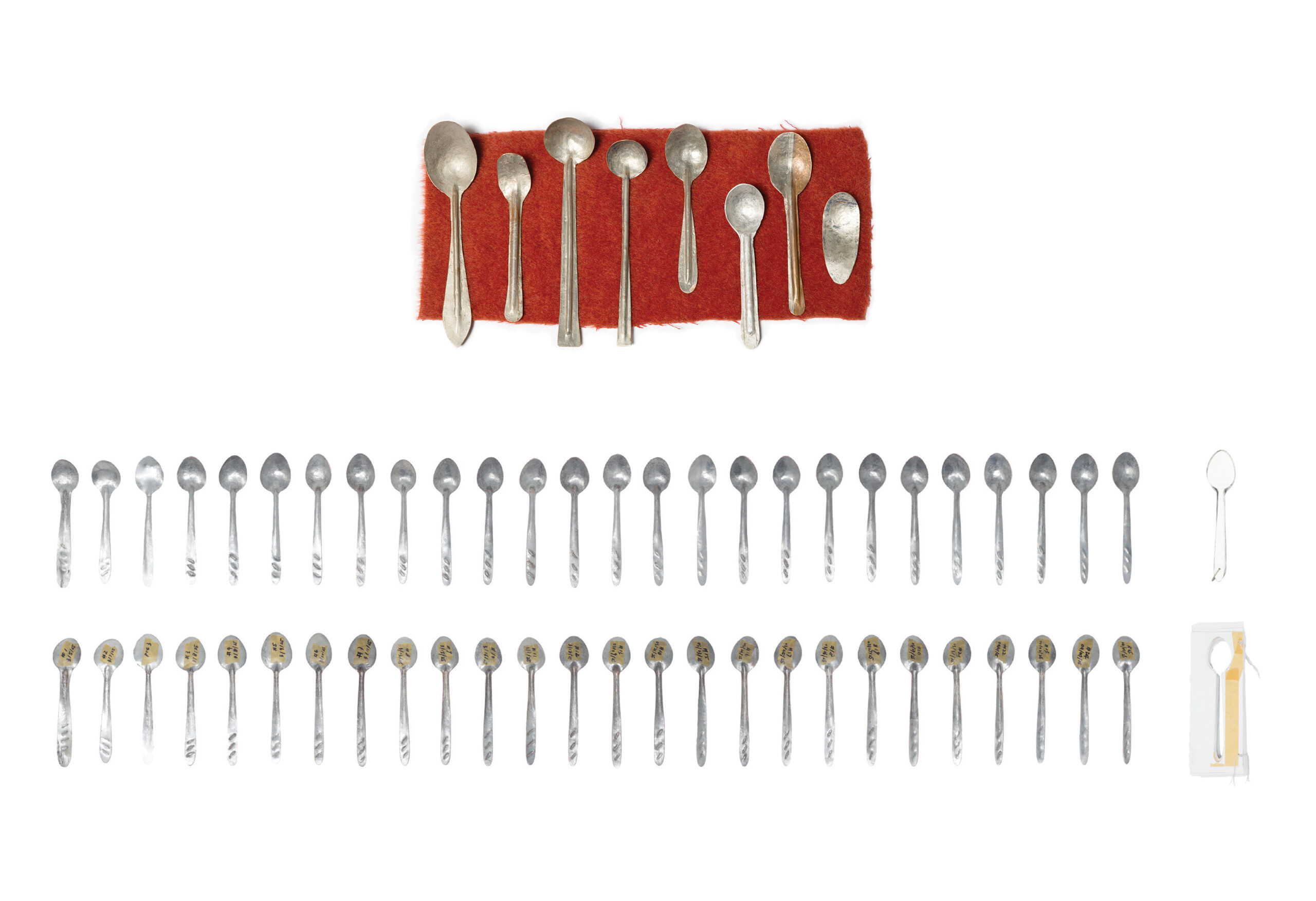
In Chinese culture, the dining table can be seen as the primary space where love and care are expressed through nourishment rather than explicitly verbal declaration. Thus, for Yang, when losing a childhood spoon–once used to eat her grandmother’s steamed egg–was not merely losing an everyday utensil, but losing a physical thread to her family history. This loss illustrates the profound agency objects hold over our lives. In Spoon (Part 1, 2024), Yang worked alongside her grandfather, hammering salvaged copper from broken rice cookers and household appliances to resurrect that missing object. She then expanded this into Spoon (Part 2, 2025), spending a month hammering one copper and tin spoon daily from memory. Interestingly, as the spoons multiplied and her memory blurred into abstraction, a poignant truth emerged: while physical form can be endlessly repeated, original sentimental value cannot be replicated.
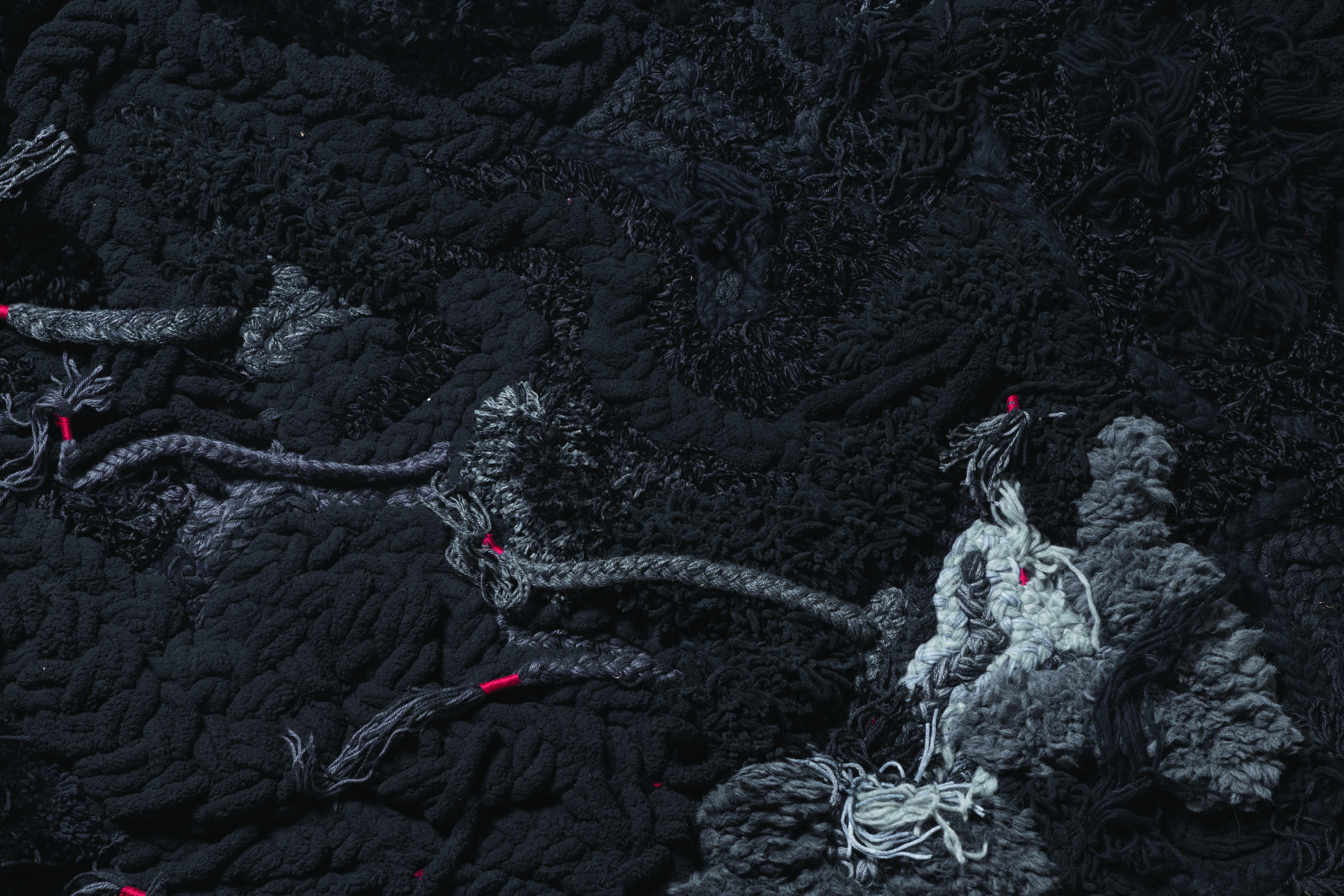
Yang’s soft sculptures further expand this material exploration into matrilineal inheritance. In Hair (2024) and Womb (2024), materials like yarn, foam, fabrics, and beads become corporeal archives of female ancestry. These textiles embody a tender yet complex dynamic, framing the domestic sphere as both a site of shelter and subtle generational repression. Similarly, in Pray (2025), weathered fabrics and patinated iron function as a personal ritual of endurance through grief and the invisible labor of care. In a fast paced world that demands instant results, Yang’s deliberate deceleration acts a counter-practice. By compelling viewers to slow down, her tactical work shows how repetitive labor constructs an internal architecture of “home”. Even while living far from her native home China, Yang creates a physical geography of return through every stitch and weave.
Ultimately, Songer Yang demonstrates that while the lost artifacts of our past cannot be truly recovered, the physical labor of remaking becomes a transformative sanctuary. Her practice stands as a gentle, counter-cultural refuge against modern speed, asking us to pause and feel the weight of memory. By transforming materials into living archives of matrilineal devotion, she proves that home is not merely a distant geographic location, but an internal space continuously built through touch and care. Songer Yang shows us how we, too, can embrace loss and create something new from what remains, leaving us with a body of work, and a warmth we will want to remember.

