

Summer asks more of a lawn than any other season. The days stretch longer, the sun sits higher, and the ground gives up moisture faster than the grass can replace it. A yard that looked full and green in spring can turn thin and patchy within a few weeks if the watering routine does not change with the weather.
Most homeowners notice the problem only after the color starts to fade, by which point the grass has already been under stress for some time.
The good news is that summer lawn care is not complicated. It comes down to giving the grass the right amount of water at the right time of day, keeping the soil in a condition that holds moisture, and paying attention to the small warning signs before they turn into bare ground.
A little consistency through the hottest weeks makes the difference between a lawn that struggles and one that stays comfortable all season.
When Your Watering Setup Stops Keeping Up
A yard that once received water evenly through a sprinkler system can start showing dry strips and soggy corners as the seasons pass. Underground lines shift, heads fall out of alignment, and valves wear down until the coverage can no longer be trusted.
What the lawn needs at that point is a proper service visit from technicians who specialize in lawn sprinkler system repair to work on these systems and restore even watering across the whole yard.
Water Deeply and Less Often
The most common summer mistake is watering a little bit every day. Light, frequent watering only wets the top layer of soil, and the grass responds by keeping its roots shallow, right where the heat does the most damage.
Deep watering does the opposite. When the soil is soaked several inches down, the roots follow the moisture downward and settle into cooler ground that dries out much more slowly.
In practice, this means running the system for a longer stretch two or three times a week rather than a short burst every morning. The grass may look slightly dry between waterings, and that is fine.
A lawn that has been trained to reach deep for moisture handles heat far better than one that has been given a daily sip and never had a reason to grow strong roots.
Water Early in the Morning
Timing matters as much as volume. Water applied in the middle of the afternoon evaporates before much of it reaches the root zone, so a good portion of it never does the lawn any good at all. Watering in the evening carries a different problem, because grass that stays wet through the night invites fungus and disease.
Early morning is the sweet spot. The air is still cool, the wind is usually calm, and the soil has hours to absorb the moisture before the sun climbs. By the time temperatures peak, the water is already down where the roots can use it, and the blades have dried enough to stay healthy.
Raise the Mower Blade
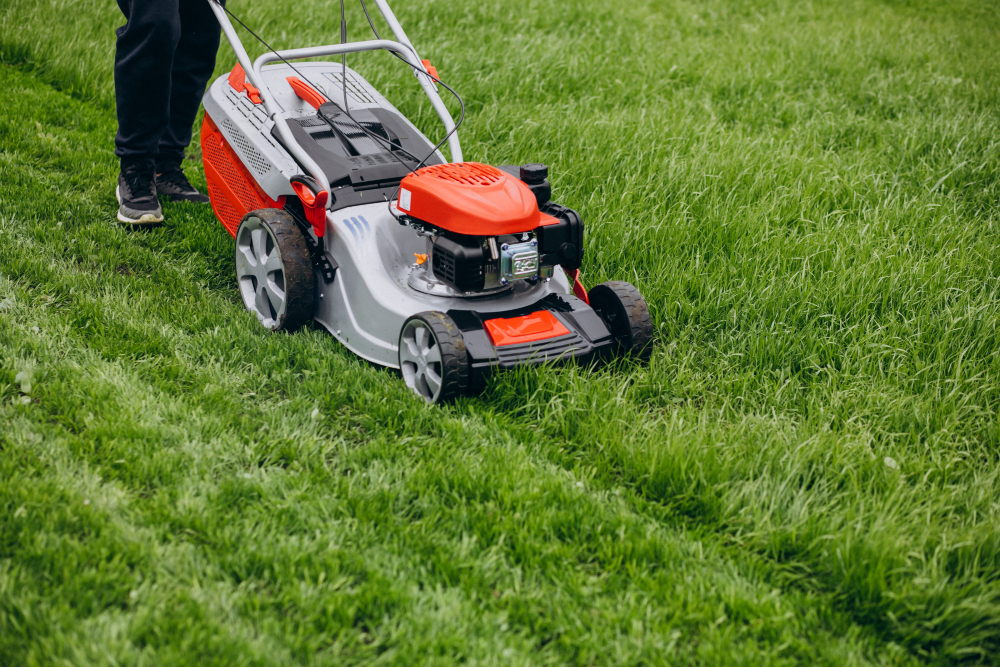
Cutting the grass short in summer feels tidy, but it works against the lawn. Taller blades shade the soil beneath them, which keeps the ground cooler and slows evaporation. They also support a larger root system, and a bigger root system means a plant that can pull moisture from a wider area.
Raising the mower a notch or two through the warm months is one of the easiest changes a homeowner can make. It also helps to remove no more than a third of the blade height in a single pass. Scalping the lawn in one cut shocks the grass at the exact moment it has the least energy to recover.
Sharp mower blades matter too. A dull blade tears the grass rather than slicing it cleanly, leaving ragged tips that turn brown and lose water quickly.
Watch for the Early Warning Signs
Grass gives clear signals long before it dies back. Blades that fold inward along their length are conserving moisture. Footprints that stay visible on the lawn several minutes after you walk across it mean the grass has lost the springiness that healthy, well-watered blades have. Color is another clue, as thirsty grass takes on a dull, gray-green cast before it goes properly brown.
Uneven color across the yard is worth a closer look as well. If one stretch stays green while a strip beside it fades, the issue is usually coverage rather than the weather.
Wet, spongy patches or a section of ground that never seems to dry point to a different problem in the same direction.
Take Care of the Soil
Water can only help if it can get into the ground. In yards with heavy foot traffic, the soil compacts over the years, and compacted soil sheds water instead of absorbing it. Aerating the lawn opens up passages for moisture and air to reach the roots, and it makes every watering more effective.
A layer of grass clippings left on the lawn after mowing also helps. The clippings break down quickly, return nutrients to the soil, and shade the surface in the meantime.
In garden beds bordering the lawn, a covering of mulch does the same job and keeps the edges from drying out and pulling moisture away from the grass.
Go Easy on Feeding and Foot Traffic
Grass under heat stress is not in a growing phase, and pushing it to grow with heavy feeding forces the plant to spend energy it does not have. Light feeding at the right moments supports the lawn, while heavy applications in the middle of a hot spell can burn it outright. If the lawn is already struggling, it is better to wait for cooler weather before feeding it again.
Traffic works the same way. A stressed lawn recovers slowly, so paths worn across the same route day after day will still be visible weeks later. Spreading out where people and pets walk, and keeping parked items off the grass, gives the thin spots a chance to fill back in.
Build a Routine and Stick to It
The lawns that come through summer in good shape are almost never the ones that received the most attention. They are the ones that received steady, sensible attention. A consistent watering schedule, a higher mowing height, healthy soil that absorbs what it is given, and a quick weekly walk around the yard will carry most lawns through the worst of the heat without drama.
Set the routine at the start of the season rather than waiting for the first brown patch to appear. Grass that goes into summer strong has reserves to draw on. Grass that goes in already stressed has nothing to fall back on when the temperature climbs and stays there. A little planning in late spring saves a great deal of repair work in fall.

