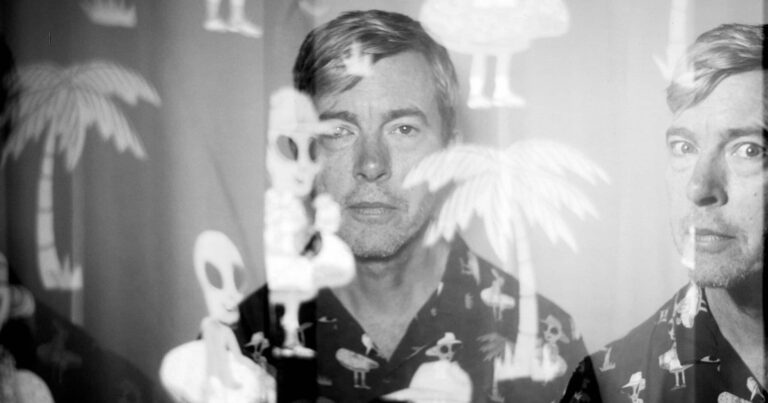
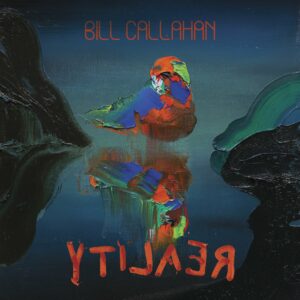
Bill Callahan has announced he has a new album on the way. YTI⅃AƎЯ (the word “reality” spelled backward) is slated to arrive digitally on October 14 via Drag City, with a vinyl release due in February. Check out the album’s cover artwork and tracklist below.
YTI⅃AƎЯ, which will follow 2020’s Gold Record, features Matt Kinsey on guitar, Emmett Kelly on bass and backing vocals, Sarah Ann Phillips on piano and backing vocals, and Jim White on drums. Callahan shared the following statement about the LP:
I wanted to make a record that addressed or reflected the current climate. It felt like it was necessary to rouse people — rouse their love, their kindness, their anger, rouse anything in them. Get their senses working again. I guess there was already plenty of anger! But we needed a better anger. To get out of this hypnagogic state. Hypnagogic rage. Disassociated rage that destroys the community and leaves only the individual eating themselves alive instead of feeding others. We were born to feed others. We have milk, breasts. We have language, tongues. We have music, ears. All to feed.
At the time it felt like we were coming out of something, getting clear of it. So I was picturing songs that would make sense to take before an audience at this crucial juncture — venturing out — where things could go either way. A reintroduction to the basics of life. Of human interaction. Face to face. A new clear vision. A new way. Which is probably just an old way we’d abandoned somewhere back there as we retreated into our screened, blindered existence.
Sometimes you forget the most basic things. The biggest things! And it just takes a little nudge to get your head back on track. I wanted sounds and words that made you feel and that lifted you up. But first there was a need to bond, to clear the air. Or to just acknowledge the air. So there is some of that on the record. I went for horns because horns are heralds, triumphs, second line funerals and just breath forced through a metal maze or amusement park slide. And I wanted voices, I wanted multiple voices, not just mine. There is too much of just mine right now. So there are 6 or 7 people singing on this record.
Listening to this record takes one hour. Ah hour sounds like a year to me these days. Taking an hour of someone’s life. I fault the internet. I fault ourselves for falling for the internet. An hour is actually lovely, nothing, a lifetime. You have to live that lifetime though in order to appreciate the hour. I’m not suggesting people must listen to this record all the way through in one sitting. It IS sequenced for that particular purpose, though, in case anyone wants to.
YTI⅃AƎЯ Cover Artwork:
YTI⅃AƎЯ Tracklist:
1. First Bird
2. Everyway
3. Bowevil
4. Partition
5. Lily
6. Naked Souls
7. Coyotes
8. Drainface
9. Natural Information
10. The Horse
11. Planets
12. Last One at the Party
The Soft Moon – the project of multi-instrumentalist Luis Vasquez – has released a new single, ‘Unforgiven’, which features Special Interest’s Alli Logout. It’s the latest single off his incoming album Exister, following earlier cuts ‘Become the Lies’ and ‘Him’ (with fish narc). Check out a visual for it below.
“I had a great time feeding off of his energy,” Alli Logout said of the collaboration in a statement. “Sonically the song hits on our most depraved and deepest griefs.”
Teen Suicide has unveiled two new songs from his forthcoming LP honeybee table at the butterfly feast. They’re called ‘i will always be in love you (final)’ and ‘new strategies for telemarketing through precognitive dreams’, and you can listen to them below.
Rat Tally is the project of singer-songwriter Addy Harris, who is based in Chicago but also has roots in Boston and Los Angeles. After emerging in 2019 with her self-released When You Wake Up EP, Harris returned in January 2021 with the single ‘Shrug’ and the announcement of her signing to 6131 Records, which has launched artists such as Julien Baker and Katie Malco. On Friday, the label released Rat Tally’s debut full-length, In My Car, which exists in a similar lane of pensive indie rock but also highlights Harris’ unique knack for melody and evocative lyricism. Produced by Max Grazier, the album feels equally lived-in and reflective, speaking in metaphor as much as it addresses its subjects directly. The person Harris confronts more than anyone is herself: ‘Longshot’ opens the record with the image of her returning from a show, only to stare at the wall and “catch my thoughts but they’re all multiplying/ Like dust kicked off from the floor/ They spiral out and under the door/ Then float up and start to stick to the ceiling.” They never really stop spinning, but Harris’ vision is both sharp and wide-reaching as she untangles them.
We caught up with Addy Harris for this edition of our Artist Spotlight interview series to talk about the places she’s lived, her relationship to songwriting, the experiences that informed In My Car, and more.
You reference many of the cities you’ve lived in on the album: Chicago, Boston, LA, Colorado. Can you talk about what each of these places means to you, and how they all relate to your idea of home?
I moved around a lot growing up, so I lived in a lot of those places with my family. Boston, that’s where I went to school and met the majority of my friends and the people that I love. And Colorado, I went to high school in Denver. And LA is where I moved after school. I lived there for a couple years, and I hated it. But in general, the places that I’ve lived and the people that I’ve met there have really shaped me. I’ve done a lot of growing in each of those places and growing in different ways, and they’re all special to me.
I think I really built myself and built my life in Boston, and moving to LA was a really big life decision. I wasn’t prepared, I think, for being so far away from my support system – not just friends, but family. And while I was living there, COVID happened. I had only been there for like a year and a half and then the pandemic hit, so it was a very solitary experience. I was really depressed. From moving around so much, I’d say that home is wherever my family is, wherever my friends are. And it was really hard for me in LA to create a home for myself when those people weren’t around.
‘Mount Auburn Cemetery’, at first, seems more purely descriptive than some of the other songs, but then it naturally turns into something deeply personal. What time in your life are you referring to there?
I wrote that song while I was in LA. I’m kind of referring to just my time in Boston, and that time in your life where you’re a young adult, and there’s this hope that even if you’re not your happiest now, you have your whole life ahead of you. And you’re still kind of holding on to that hope, and you still have this freedom to choose who you want to be. I love that song. Like you said, it’s very purely descriptive. I feel like I’m really trying to highlight the place and not just reference it. I’m kind of paying my respects to it, I think, in a way.
I already knew I wanted to ask you about this song, and then I went on Twitter and I saw that the official account for Mount Auburn Cemetery shared it?
I know! [laughs] They just tweeted about it. I was like, “How would they even know?” It was just great. Like, who works there who could possibly know that this song exists? But that was really special. It felt better than getting a Pitchfork review.
I was really struck by the line, “We’d climb the tower and look from the top/ Just like how I still feel myself at twenty climbing through me.” I don’t think this feeling of climbing through yourself ever goes away as you grow up, but that’s quite a romantic and poetic way of putting it.
Yeah, I love that. That’s one of my favourite lines on the whole album. Before you’re really an adult, I thought getting older was going to be sort of this natural process where I just suddenly feel like an adult at a certain point. And that’s just not the way it is. We’re still ourselves, all those different ages.
I feel like there’s a misconception that our generation tends to romanticize sadness or this searching for self, but there are moments on this album that are just raw in their honesty, like ‘Prettier’ and ‘Phone’. You’re just portraying your experience – there’s nothing romantic about it, necessarily. But listening to ‘Prettier’, I wonder if it’s maybe ingrained in us to aestheticize melancholy as something that can be not just beautiful, but beautifying.
Yeah. I hope that the songs came off honest, very much about the experience. I’m really constantly concerned about romanticizing those kinds of things and romanticizing depression. I think it can be exploitative and it can become dangerous to do those things. But just from my experience, you find yourself more comfortable being depressed than to push through it. I think it does really become a part of you, and romanticizing that makes it easier sometimes. But I really tried to be careful, and make it more nostalgic and melancholy than romanticizing being depressed.
Do you think that’s what drew you to songwriting in the first place, this desire to lay those feelings down? What has the relationship between writing and mental health been like for you?
I feel like it’s the only place that I can be completely honest, both to whoever’s listening and to myself. I think that especially through writing this album, I’ve worked through a lot of shit. [laughs] It’s my way of looking back on things and reflecting and trying to make sense of it. And for whatever reason, sometimes saying things through a song is easier than saying them outright to someone, or even your therapist. I mean, I’d say the reason I started and the reason I do it is for mental health purposes.
Over time, have you found that it’s sometimes important to separate those things?
I think it’s a balance now. Because as I got older, and especially over the past few years, songwriting, the art of it, is something that fascinates me and something that I’m really passionate about. I think there needs to be a healthy distance, but for now, I am sort of just writing about my own experience.
When did you realize songwriting was something you were passionate about?
I think in college, probably – I just was exposed to a lot more music than I had ever listened to, different genres. And just seeing the ways that other people and my friends were passionate about music and their crafts, I really started to dig into what I thought made a good song and the songs that I love, all the parts of it. Especially with lyric writing and melody writing – I could talk about that all day. But I definitely feel like I became more of a writer then.
What kind of things excite you about lyric writing and melody writing right now?
I’m really into literary devices. I’m really into alliteration, I think it’s very present on the album. I’m really into different kinds of rhyme, I really love internal rhyme and manipulating those things to kind of stray a little bit away from traditional rhyme schemes. But those things are the things that make people remember a song or remember lyrics, and they don’t even know it, you know? I just think it’s cool.
When you’re listening to music, do you tend to pay close attention and analyze those elements?
Yeah, I’m a repeat listener. I’ll listen to a song a million times if I like it. And through that, through listening to a song over and over again, I’ll start to analyze lyrics. I mean, I’m not highlighting stuff. [laughs] But there are songs and lines and the way that people rhyme that I try to make note of, to see if I could use it in something.
There are a lot of songs on In My Car that touch on mental health and how it can complicate romantic relationships, but you also mention your friends and your family, your sister specifically. I feel like those people are kind of at the periphery of the album, but you can feel their presence. Do you know how they feel about the album? Did you feel the need to reach out to anyone before including them?
Yeah, a lot of my friends, especially my sister, have heard a lot of those songs before they came out. I don’t know, they seem to like it, I think. [laughs] My sister really loves ‘Prettier’, and she loves ‘Phone’, obviously, because she’s in it. But there are people who I’ve written those songs about that, you know, aren’t the nicest songs, but we’ve had conversations about it. And I think, to them, it’s still special, that we had a friendship or a relationship and parts of it are encapsulated in certain songs. It’s nice to get those blessings from people.
Was that a new thing for you, to have those conversations?
Yeah. It was new. It’s always nerve-racking, you know? Because obviously, when you’re writing from your own experience, I think other people are always involved. But the same way that I wrote those songs to reflect, I think other people might relate to them too. But overall, it went well. There’s no hard feelings.
The song ‘Phone’ relates to what you were saying earlier about your experience being in LA during the pandemic. If you’re comfortable sharing, how do personally stay close to the people care about that may be physically distant – or if there’s any kind of barrier, be it physical or not?
I mean, so many of my friendships are long-distance now. And obviously, just utilizing the tools that we do have, like FaceTime and texting or whatever. But I think the biggest thing that I learned was sometimes, like in ‘Phone’, for example, it feels like you’re kind of just sitting there and nobody is contacting you, and it feels like nobody cares. And that people are so far away that you’re not really part of each other’s lives anymore. And your first instinct is to just feel like shit about yourself, you know? But if I’ve learned anything, it’s that if you’re feeling that way, you can be the one to reach out. You don’t have to wait for people. Because there’s a good chance they’re feeling the same thing. I think everyone over the past couple years has experienced some really intense isolation, and sometimes it’s hard to get past that first feeling of anxiety to reach out to people. But I try to do the best I can. Sometimes there’s also friends that you don’t speak to for a really long time, but it doesn’t matter and you can talk a year later and it’s totally normal. But you have to put in an effort into relationships, especially the long distance ones – try to reach out.
The production on the album is generally pretty spare, but there are these beautiful flourishes that stood out to me, like the strings that rush in when you sing “It reminds me of a fever” on the title track or the spacey synth sound on ‘Looking for You’. Even the guest vocals on the album feel very deliberate in their placement. How intentional were you about these kinds of choices?
For certain songs, it was more deliberate. ‘Looking for You’ was an interesting song, because it was the only song that we recorded that we didn’t have a demo of any production and kind of built it while we’re recording it. But the strings, for example – I play the cello, so I was able to write all the string parts, and those were very deliberate. I really tried, especially with ‘In My Car’, I tried to highlight a lot of those lines with strings. And in ‘Prettier’, too. I love those string parts, I’m really proud of that. And Max, my producer, does so much on the record. But it’s all pretty calculated. I’d say we do use it sparingly, only to really highlight lines in a song. I didn’t want it to sound overproduced. I was really worried about ‘Mount Auburn Cemetary’, actually, the balance of having nature sounds and the fact that there’s no drums – it is kind of stripped-down, I didn’t want it to be overproduced, but I wanted there to be other elements to kind of put you in that world.
What’s the most valuable lesson you feel you’ve learned over the past couple of years?
It’s okay to fail, in whatever way that may be. Failing in terms of showing up for yourself or for other people. It’s okay to feel like you made the wrong decision, and to change it. And also, to take accountability for any shitty behaviour or the way that you treated people – the way that I treated people. I keep saying that writing this album and reflecting on everything kind of made me a better person. But yeah, it’s okay to fail. You can try again – or do something different.
This interview has been edited and condensed for clarity and length.
Caribou’s Dan Snaith has shared his latest single under the Daphni alias, ‘Mania’. It’s taken from the upcoming album Cherry, which includes the previously released singles ‘Cherry’, ‘Cloudy’, and ‘Clavicle’. Check out a video for it below.
Cherry, the first Daphni album in five years, is set to arrive on October 7 via Snaith’s own Jiaolong label.
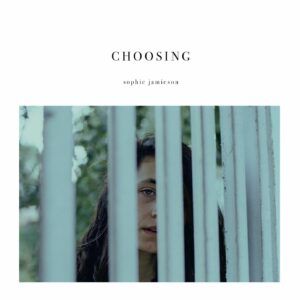
Sophie Jamieson has announced her debut album, Choosing, which will arrive on December 2 via Bella Union, her new label home. To mark the announcement, the London-based singer-songwriter has shared a video for the lead single ‘Sink’. Check it out below and scroll down for the album cover, tracklist, and Jamieson’s upcoming tour dates.
“This song began as a love letter to alcohol, written from the cusp of falling into addiction,” Jamieson said of ‘Sink’ in a press release. “I had begun to trust this tool but I could feel it turning on me, like a bad friend. I knew I was close to losing control over it, and realised that I had to choose whether to fall in or not. This song exists at the brink of choice: whether to abandon yourself, or whether to make the colossal effort to rescue yourself. The video, like the song, approaches the edge – the tantalising mystery and comfort of it, the openness of possibility and also the quiet knowledge of the dead end. The shoreline is that edge: beautiful, eerie, infinite, and empty.”
Produced by longtime collaborator Steph Marziano, Choosing follows Jamieson’s 2020 EPs Hammer and Release. “The title of this album is so important,” she explained. “Without it, this might sound like another record about self-destruction and pain, but at heart, it’s about hope, and finding strength. It’s about finding the light at the end of the tunnel, and crawling towards it.”
1. Addition
2. Crystal
3. Downpour
4. Sink
5. Fill
6. Empties
7. Runner
8. Violence
9. Boundary
10. Who Will I Be
11. Long Play
Sophie Jamieson 2022 Tour Dates:
Aug 17 – Eat Your Own Ears Recommends – Shacklewell Arms, London
Aug 20 – Green Man Festival
Aug 24 – Brudenell Social Club, Leeds
Aug 25 – Cyprus Avenue, Cork ^
Aug 26 – Roisin Dubh, Galway ^
Aug 27 – Dolans Warehouse, Limerick ^
Aug 28 – Workmans Club, Dublin ^
Aug 29 – Bangor Castle Walled Garden, Bangor ^
Aug 31 – Brewery Arts, Kendal ^
Sep 1 – The District, Liverpool ^
Sep 2 – End Of The Road Festival
Sep 6 – Glee Club, Birmingham ^
Sep 7 – The Horn, St Albans ^
Sep 8 – St Pancras Old Church, London @
Sep 9 – The Goods Shed, Stroud ^
Sep 10 – Brighton & Hove Folk Festival, Brighton
Sep 11 – Clwb Ifor Bach, Cardiff ^
Sep 13 – The Exchange, Bristol ^
Sep 14 – The Joiners, Southampton ^
*with Ezra Furman
^ with Willy Mason
@ with Jana Horn
Bedford four-piece Dog Race have released their debut single, ‘Terror’. Jessica Winter (Pregoblin, Jazmin Bean) produced the track, which was mixed by Jon McMullen (Wet Leg, The Comet Is Coming). Listen to it below.
“‘Terror’ was written during a time of DPDR and anxiety episodes where I would frequently wake up screaming in the night due to night terrors,” vocalist Katie Healy explained in a statement. “I tried to encapsulate something that spoke of a period of turmoil but important growth in my early 20’s, an experimental experience where I thought if I’d embrace these night terrors instead of hiding from them in the hope I could put them to rest completely.”
Throughout the week, we update our Best New Songs playlist with the new releases that caught our attention the most, be it a single leading up to the release of an album or a newly unveiled deep cut. And each Monday, we round up the best new songs released over the past week (the eligibility period begins on Monday and ends Sunday night) in this best new music segment.
On this week’s list, we have the Yeah Yeah Yeahs’ cinematic, slightly ominous, and altogether captivating ‘Burning’, the second preview of their forthcoming album Cool It Down; Alvvays’ ‘Easy on Your Own?’, a swirling, infectious song that packs a whole lot of emotion in just a few minutes; ‘Dance Now’, the catchy yet intricate lead single from JID’s upcoming album, with guest appearances from Kenny Mason and Foushée; High Vis’ latest single, the driving and anthemic ‘Trauma Bonds’; Claude’s ‘meet me’, an entrancing highlight off her debut album a lot’s gonna change; a stirringly potent spoken-word track from Death Cab for Cutie titled ‘Foxglove Through the Clearcut’; and Rat Tally’s ‘In My Car’, the stunning, evocative title track from her debut LP, which features Madeline Kenney.
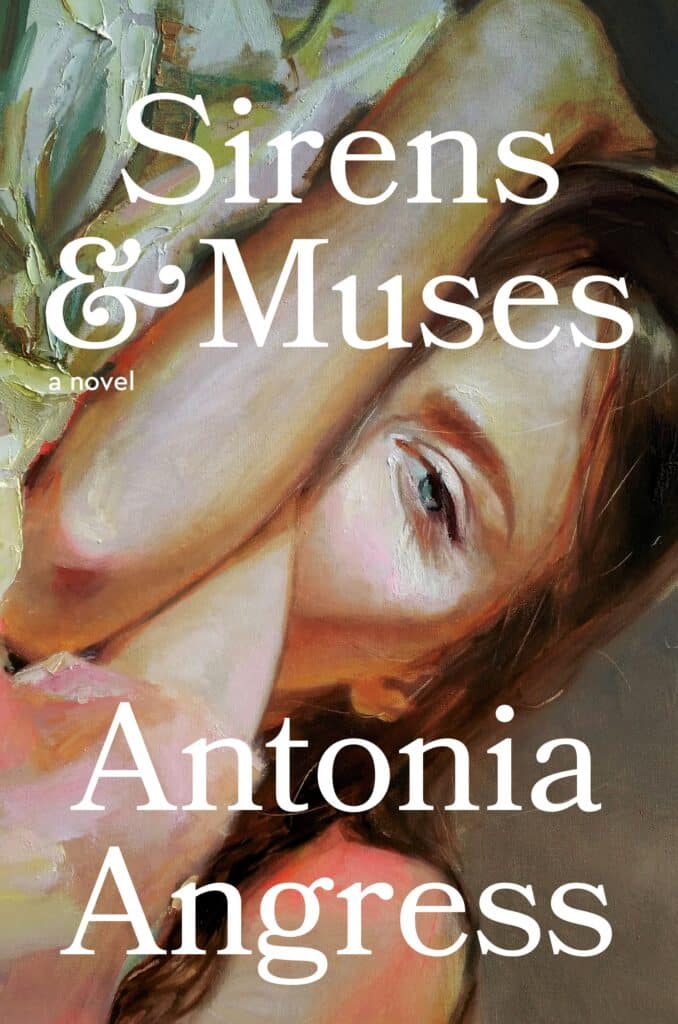
College on its own is stressful, but debut author Antonia Angress wanted to take it up a notch — an elite art school, where pretentiousness and unflappability run amok in its students. Louisa, Karina, and Preston are all enrolled in Wrynn College of Art, but with vastly different personalities and dynamics — Preston wants to break free of his class upbringing, and Louisa and Karina, roommates, are entwined in lust and competition within their art. A third point of view comes with professor and semi-retired artist Robert Berger, who is unsettled by and familiar with Preston’s ambition.
In this debut, the lives of all four collide, break apart, and find each other after long stretches of time and places, giving the reader a journey through art, capitalism, and finding yourself out at such a young age.
We sat down with Angress to discuss her debut, her writing process, and the messiness that comes with college that no one prepares you for.
Congratulations on your debut novel! How does it feel for it to finally be out?
Kind of surreal. I worked on it for such a long time without knowing it’d actually be published, so hearing from people who read it and connected with it has absolutely been a highlight.
What I was most impressed with was how well-crafted it was: every chapter seemed purposeful and in the right place to advance the story. I imagine actually putting it together was a lot harder than you made it seem.
[Laughs] Yes, it was a lot harder! I mean, I’m always thinking about whenever I read a book I’m impressed by, where it just seemed like it appeared out of thin air, I always have to tell myself, if it feels incredibly natural, like it poured out of someone, it probably took a lot of work and frustration to get it right.
I wrote this book over the course of seven years, so there was a lot of throwing drafts away, trying again, making Excel spreadsheets, mapping out the book beat by beat, chapter by chapter and character by character. So it wasn’t an easy feat, but I also didn’t make it easy for myself by deciding to write a four-POV novel for my first book. My next book is one-POV. It took so much out of me to make it work.
The novel is about the art world in college, but also the outside world, with some of the characters dropping out. What made you want to combine the two?
A lot of that came from my own experience leaving college, and going out into the real world. I began writing this book when I was just out of college, 22 or 23, and I was teaching elementary school at the time. That was a very jarring transition, to go from a college environment, a really intellectually vibrant college environment, to being around little kids all day and not having any adult conversations until I went home at the end of the day.
I went through this period of mourning, I think, where I really missed being an undergrad, even though in many ways it had been really hard for me. I certainly don’t think back to college as the best years of my life; I think I was a mess back then. But I began writing this book almost as a way to will myself back into this environment.
The very first seed that emerged was a short story about a young painter who has just dropped out of school, who deals with the aftermath of that decision. And that was a very real reflection of the sort of loss I felt — not only the loss of this environment and all the friends I had made there, but also of the person I had been and no longer was. Over the years I worked on this book, and I got older, and the gap between my age and the age of many of the characters I was writing about widened, I became interested in exploring that transition from an insular bubble of school — art school, in particular — into the real world. And especially when you have a very idealized or romanticized idea of what your life is gonna look like after college and how that collides with reality.
Totally. I just graduated from college —
Congratulations!
Thank you! But I’m at my parents’ place, waiting to move. So I was reading the book, noticing our similarities. But that transitioned into something I wanted to ask — I appreciate how you didn’t frame the college experience as this perfect thing, that sometimes people drop out for a multitude of reasons. It really enhanced the story.
Yeah, and I think part of that came from my own experience. It certainly was not perfect, and I wasn’t happy all the time. Certain parts of that experience were categorized by a lot of despair and self-doubt and feeling like I didn’t fit in, and really struggling. I think that’s true in particular of really elite colleges. You’re told that you’re really lucky to be there, and you’re special because you’re there, and you’re human, right, so you’re gonna get bad grades and have conflict with your friends and shit at home is gonna drag you back to the person you used to be. So I was interested in exploring how soul-crushing and lonely those really elite environments can be sometimes.
There’s all this pressure to be happy, but you’re not fully formed yet. You’re still figuring yourself out. That involves a lot of growing pains and being full of self-doubt. All this to say, good years are ahead.
I love all how all the characters are so different in personality and their approach to art. Namely with the kids, Preston is pretentious and disruptive, Karina is a little rude, and Louisa is insecure with being from a smaller place. How did the ideas for them start to take shape?
So I started with Louisa. She was the first character that I wrote. She’s from Louisiana, which is not a place that I’m from, but it’s a place where I’ve lived. My partner’s from there, I’ve spent a lot of time there, and I have a lot of love for Louisiana. It’s a really unique region in America.
I sort of began with a character who was in many ways, quite passive. And I think that remains true even in the final draft. Louisa is not a particularly active character — she has a lot of fear, self-doubt. She’s very inward-facing and introverted. You know, you can have a passive character driving a story, but it’s really difficult. Some of the advice I got from early drafts said that, you have this passive character, but all these really intriguing characters surrounding her, like Preston and Karina and Robert. One reader in particular said, ‘What if you gave these characters points of view? What if you got in their heads?’ Because they’re really interesting, but there’s a limit to how much the reader can access when they’re being perceived from the perspective of a passive character. So I wrote some exploratory chapters from their points of view, and I really liked them. It really worked. It unlocked this part of the novel I hadn’t been able to access before. So I decided to have four points of view, not to write them in first person, but stick to a close third POV. Even though I was writing in third person, which allows me some narrative distance, it was still important that their voices and interiorities be distinctive, so as not to read as the same consciousness filtered through slightly different shades of glass.
I love that Louisa is connected to her Southern upbringing and uses it in her art, which I feel was an opportunity for you to have some fun. What inspired the bird women series of paintings?
That was inspired by a Louisiana artist named Cayla Zeek, who I actually know personally. My partner is also a painter, and they grew up together in Lafayette, Louisiana. So when I was living in New Orleans right out of college, she was someone sort of in my social circle, but I didn’t know her very well. I was working on the novel, at this point for a couple of years, and I had this character, Louisa, who I had mostly figured out, but there was this giant piece missing, and it was what her art looked like. I just couldn’t figure it out. One night, I went to White Linen Night, an arts festival in New Orleans, and Cayla had a solo show. I walked in, and I had this very immediate reaction to her work, which I loved. It’s very much inspired by the flora and fauna of Southern Louisiana, and also mythology. I had this very visceral reaction, which was ‘This is what Louisa’s art looks like. I found it.’ Again, this was sort of a moment that unlocked a bunch of stuff for me in the book. In many ways, it directly inspired storylines in the novel. For example, [Louisa’s] bird woman painting in the novel was based on a real painting by Cayla Zeek called She Sits, She Waits, and that painting inspired a whole storyline that’s pretty pivotal to the novel.
So I felt really grateful to Cayla, and after I sold the book, I wrote her a long letter about how much her work meant to me. She ended up collaborating with a publicity campaign, which was really cool, getting a real artist involved with the promotion of the book.
That’s so cool! Did she design the cover art?
No, she didn’t, that was somebody else. But we did a preorder campaign that involved giving away a print of that painting.
I loved the rivalry between Preston and Robert, old school and new school clashing. Why do you think Preston got on Robert’s nerves so much, resulting in a battle of the thinkpieces?
I think in many ways, they’re the same person, but several decades apart. Obviously not the same exact person, but I think Preston is in many ways, who Robert would have been had he come of age in the Obama years, rather than the 60s. For Robert, that recognition is really disturbing. His animosity is marbled with admiration, which is disturbing to him, too. He has this begrudging admiration towards this person he can’t stand, but he sees glimmers of himself in. He can’t quite admit it to himself, but his feeling of being drawn to Preston is, in many ways, animated by that recognition, and I think the same is true of Preston. His need to antagonize this older man is driven by a sense of grudging admiration, but also deep frustration with the decisions that Robert has made in his life and career. I think on a subconscious level, Preston is maybe afraid that he’s seeing a future version of himself.
Karina and Louisa’s relationship was stressful because a lot of it was based on misunderstandings, but the reader has the benefit of knowing everyone’s mindset. Do you think that everything was made infinitely more stressful just by the fact of being at school, and suddenly moving to New York?
Yeah, that’s part of it. I think what they feel towards each other is complicated. Obviously, they’re attracted to each other and they feel admiration towards each other, but at the same time, each feels envious of and threatened by the other in different ways. That is a particularly fraught dynamic, that I think sometimes, in my own experience as a queer women, between queer women who want to be together, but in some sense, want to be each other. I think there’s a lot of that going on between Louisa and Karina, where they’re drawn to each other, but there’s a sense in which one wants to be the other, which makes things really complicated for them.
I did some snooping and saw you were detailing the timelines of your second novel, which seems much more complicated. How is that going, and is this the main project you’re working on right now?
Yeah, I am. I’m working on a second novel about an elementary school Spanish teacher in New Orleans. It’s still sort of in flux, it’s still very early stages, but it’s a love story about language and untranslatability.
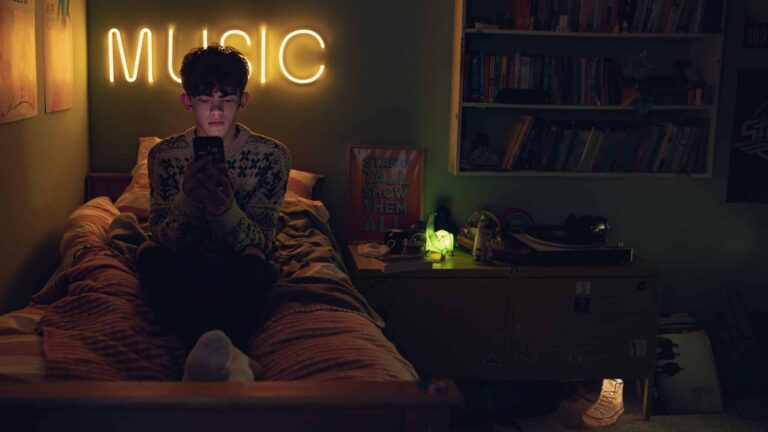
Netflix’s Heartstopperis a wholesome, uplifting series based on the comic books by English author Alice Oseman. Oseman is also the writer behind YA novels Solitaire, Loveless, Radio Silence, and I Was Born for This. Heartstopper‘s main characters find their origins in Solitaire, and the TV adaptation expands on the story even more. Nick (Kit Connor) and Charlie (Joe Locke) are students at Truham Grammar School for Boys who meet when they’re put in the same form class. Openly gay Charlie is shy and anxious, while Nick is a popular rugby player whose friends are always trying to set him up with a girl.
When Charlie gushes about Nick to his friends, he insists that Nick isn’t like the other rugby players; he’s nice. Nevertheless, Charlie’s skeptical best friend Tao (William Gao) is unhappy when Charlie joins the rugby team and befriends Nick. Even though it strains Nick and Charlie’s relationship, Tao stands up to the bullies, while Charlie prefers to avoid aggravating people. Meanwhile, Tao and Charlie’s friend Elle (Yasmin Finney) is settling in at Higgs, the girls’ school across the road. After struggling to put herself out there, she eventually befriends Tara (Corinna Brown) and Darcy (Kizzy Edgell), who have just come out as a couple. Tara has been finding the new attention difficult to deal with, especially when her peers are expecting her to get together with Nick, who she once kissed at a party.
Despite dealing with some dark character traumas and insecurities, Heartstopper is a joyful and optimistic celebration of queer youth. The characters’ chemistry is palpable and infectious thanks to their teasing rapport, as evident in these great quotes from season 1.
Charlie: How do I stop liking someone? Specifically a straight guy. Mr Ajayi: Ah, a question for the ages. I thought you had a boyfriend. Charlie: No. No, he was horrible; this is someone else. Mr Ajayi: Wow. Being a teenager is terrible.
Tao: As your token straight friend, it’s my duty to remind you that sometimes people are straight. It’s an unfortunate fact of life. Isaac: But we don’t know if [Tara] actually likes Nick back. Tao: Isaac! I’ve already warned you about encouraging Charlie’s crushes on straight boys. Isaac: But I want to believe in romance!
Tao: Can we promise that, like … no matter what changes, we always, always put our friendship first? We’ll still go bowling and watch creepy documentaries and we’ll always stay up to watch the Oscars, and we’ll always be able to talk about deep stuff, like this.
Charlie: So you don’t have a crush on anyone at the moment? Nick: Well, I didn’t say that. Charlie: What’s she like, then? Nick: You’re just gonna assume they’re a she? Charlie: Are they not a girl … Would you kiss someone who wasn’t a girl? Nick: I don’t know. Charlie: Would you kiss me? Nick: Yeah.
Darcy: Tara literally kisses her girlfriend at a crowded party and people are still asking her if she’s dating a guy she kissed once when she was thirteen? Imogen: So that girl is her girlfriend? Darcy: ‘That girl’? I’m right here!
Imogen: I’m not, like, homophobic. I’m an ally. Tara: Congratulations? Darcy: We thank you for your service.
Tao: Is Harry Greene picking on Charlie? Elle: Maybe they’re friends. Tao: That’s even worse. Next thing you know, Charlie will be bringing the whole rugby team to our film night and making us watch—Avengers or something. Elle: Is that your nightmare scenario? Watching a movie you hate with people you don’t like very much?
Nick: I said I’d go on a date with this girl… Sarah Nelson: Oh, do you like this girl? Nick: Well, uh, her dog died. Sarah: Ah, not following.
Tao: But if [Nick] is even slightly mean to you— Charlie: Yeah, you’ll murder him, I know. Tao: I was gonna say I’d send him a strongly-worded DM, but murder’s fine, too.
Nick: Do you ever feel like you’re only doing things because everyone else is? And you’re scared to change or do something that might confuse or surprise people? Your real personality has been buried inside you for a really long time. I guess that’s how I’ve been feeling recently.
Tara: Everything’s changed. Darcy: Since we came out? Tara: Yeah…I just wasn’t prepared for things to change. I didn’t think so many people would suddenly think I’m a completely different person … I’m not loud and confident about being a lesbian. I could barely say the word ‘lesbian’ when we started going out … You’re so confident about your sexuality and I still feel like I know nothing. Darcy: I don’t know anything, either. I don’t know anything about anything. Tara: I just want to live my life. Darcy: We can do that.
Mr Ajayi: Don’t let anyone make you disappear, Charlie.
Charlie: You don’t get to have an opinion about anything I do. Ben: Do you want me to go around telling people about you and Nick? Charlie: Do you want me to go around telling people about me and you? That’s what I thought. Except, I wouldn’t do that, because I’m a decent person. I understand that you’re figuring out your sexuality, but you don’t get to make me feel like crap anymore just because you hate yourself. So leave me alone. Just leave mealone.
Nick: You’re my boyfriend! I’m your boyfriend! We’re boyfriends!
Nick: He’s my boyfriend. Charlie’s my boyfriend. I still like girls, but I like boys, too. And me and Charlie—we’re going out. And I just wanted you to know.