The White Stripes were inducted into the Rock & Roll Hall of Fame on Saturday in Los Angeles. Iggy Pop gave the induction speech, beginning by singing the guitar riff to ‘Seven Nation Army’ just to “get that out of the way.” Praising drummer Meg White, he said, “Meg White had the most genuine and charming smile. She played the drums for the benefit of her band. She gave the drum kit a good whack. I think it was Meg’s support that helped launch the rocket of racket that was Jack White.”
He then paid tribute to to Jack White, saying, “Jack could screech like an owl. He could twang like a hillbilly. But he could also write. I hear the echoes of The Who, The Small Faces, The Beatles… in Jack’s playing. The writing he was capable of was not typical of of the great Detroit bands of the 60s and 70s.”
Meg, having completely left the music industry since the White Stripes broke up in 2011, did not attend the ceremony. Upon taking the mic, however, Jack said she helped him write his speech in recent days. “I spoke with Meg White the other day; she said she’s very sorry she couldn’t make it tonight, but she’s very grateful for the folks who have supported her throughout all the years, it really means a lot to her tonight,” he said.
He also gave a shout out to over 30 bands that inspired the White Stripes – none of which have been inducted – including Loretta Lynn, Fugazi, the Misfits, Emerson, Lake, and Palmer, The Strokes, Black Flag, and more.
Following White’s speech, Olivia Rodrigo and Feist teamed up for an acoustic rendition of ‘We’re Going To Be Friends’, a song from 2001’s White Blood Cells that the White Stripes played in their final performance on Late Night With Conan O’Brien in 2009.
Twenty One Pilots then delivered a performance of ‘Seven Nation Army’. Flea, who helped open the ceremony with an all-star tribute to Sly Stone, gave it a standing ovation. Check out the performances and speeches from the induction below.
The Rock Hall’s 2025 class also includes Soundgarden, Bad Company, OutKast, Cyndi Lauper, Chubby Checker, and Joe Cocker in the performer category.
Today we’ll be sharing our little secret, this is a gatekeeping-free zone. Truth is, when you see us strutting down the streets, looking polished and runway-approved, we’ve often just thrown on a faux fur coat over whatever we blindly picked from our wardrobe shelves. Oops, how could anyone resist? I can’t think of a better way of elevating a boring outfit, some days just call for a good big coat that’s going to hide everything beneath it, bonus points if it’s furry too. Here’s everything you need to know.
Our obsession started growing bigger back in 2024, with the rise of the mob-wife aesthetic. A movement that tells us, people no matter the time or year, will always reach for a piece closely connected to wealth, the kind that looks like a million bucks. Not necessarily for the status and the showing off of it all, but for the “I’ve got this” feeling of ease. And honestly, we get that, we like slipping into luxury without even trying, and we figured out, the best way to do that is the long-beloved faux fur coat.
But faux fur has grown on us, big time. We’ve now carved out a section in our wardrobes just for the coats, beige and brown, grey and black, colorful and vibrant, in countless animal prints, never skins. And the rest of the space seems to be filled up with other faux fur pieces too. Vests, pants, hoodies, boots, all the faux fur pieces we leaned on this winter.
Three decades of fashion obsessions, countless winter trends, and still faux fur never lets us down. We let everything hairy do the heavy lifting for our outfits. Cold, hard, chaotic days? Consider them conquered.
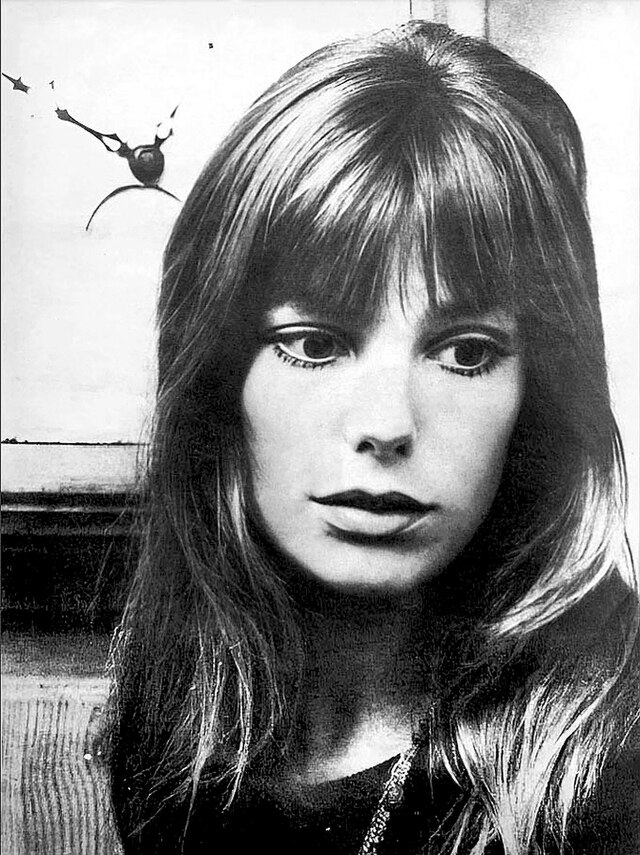
The name Birkin might be stitched forever into the story of the Hermès bag but before the legend there was the woman, and today we’re turning our gaze to her. Jane Birkin. English, outspoken and magnetic. She was an actress, a singer, a muse, but she also was a voice of compassion, philanthropy and authenticity. In fashion and culture, in a tilted basket, a slip dress and a song that won’t quit, her name refuses to fade, part tribute, part evidence that legends often outgrow the lives before them.
Photo by Umberto Pizzi, Rome 1976, via Wikimedia Commons
Behind the Name
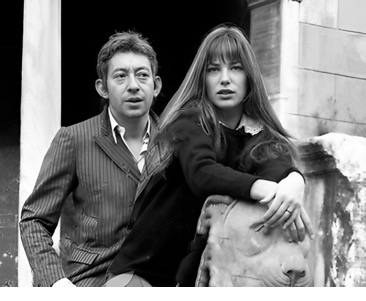
Born in London on 14 December 1946, Jane Birkin drifted into cinema and music, and somehow, as if by accident, ended up a fashion icon. She moved to Paris at 18, dove into film and theatre, and met Serge Gainsbourg, a creative force in his own right, known for his lyrics and melodies that carried them. Together, they made some of the most iconic music of the era, like Je t’aime… moi non plus, originally written for Brigitte Bardot, Comic Strip, Ex-fan des sixties, and countless more that make you pause and feel like they never really aged. Birkin’s talent extended beyond music into film. She appeared in classics such as Blow-Up, La Piscine, La Belle Noiseuse, the Agatha Christie adaptation Death on the Nile, and even later works like Daddy Nostalgia.
Even as a kid, Birkin had a sense of justice. She spoke out against capital punishment, stood up for women, quietly helped immigrants, and backed HIV/AIDS causes. Her life was a blend of art, activism, and a kind of style that couldn’t be staged, the kind that comes from within. We’ve always believed the best look is one built on kindness.
From Basket to Birkin: How a Flight Inspired Fashion’s Most Famous Bag
Still, fashion has its language, so let’s shift from the spirit to the seams. Birkin’s style was effortless, entirely her own. She made the undone Parisian look famous, long before it hit our feeds. T- shirts tucked into high-waisted jeans. Translucent slip dresses. Mini skirts and menswear touches. The subtle audacity of skipping a bra. Casual met chic as masculine met feminine. Her approach helped define what we now think of as the French girl aesthetic, inspiring designers like Chloè and Céline, her influence still flows through generations of fashion devotees.
She used to carry a wicker basket as her bag almost everywhere, until her encounter with Jean-Louis Dumas, then CEO of Hermès, changed everything. On a flight from Paris to London, Birkin’s belongings tumbled to the floor as they sat side by side. In a CNN interview Birkin recalled telling Dumas “Why don’t you make a bag that’s sort of four times the Kelly, that you can leave open, and half the size of my suitcase? Because girls like to have things on the end of their arm to put all of their stuff in. He said, well draw it for me and so I drew it on one of those sick-bags, the vomit-bags in the airplane. He was true to his word”.
On July 10, 2025, the prototype Birkin bag, the one made for Jane Birkin herself, was sold to a Japanese collector at Sotheby’s iconic Paris auction for around $10.1 million, fees included. The sale quickly took over the internet, no one could look away, a reminder that myth and market still feed each other. But this wasn’t the first time one of Jane’s bags went under the hammer. Birkin herself auctioned this very same bag in 1994, after nearly nine years of use, in support of Association Solidaire Sida, a charity fighting for HIV/AIDS causes. In 2000, the bag resurfaced at auction and found a home with French collector Catherine Benier, who kept it for almost 25 years.
This time, Le Birkin Voyageur, personally owned and carried by Jane, is set to be auctioned during Abu Dhabi Collectors’ Week, on December 5 2025, following a public viewing from December 2-5 at the St. Regis Saadiyat Island Resort. Estimated between $240,000 and $440,000, the bag bears Jane’s handwritten note: “Mon Birkin bag qui m’a accompagné dans le monde entier”, “My Birkin bag that has accompanied me around the whole world.”
One of the few Birkins she held onto, long after the 1994 prototype was gone. Intimate and heavy with history. We hope those who carry her legacy feel more than the stitching in their hands, the pulse of her humanity, still alive in the spaces she once walked.
More than a bag, more than a sale, these Birkins carry traces of a life lived out loud, curious, kind. Beyond fashion and history, each bag holds Jane’s spirit, her art and activism, folded into leather and hardware. Her legacy isn’t measured in price tags, but in the footprints she left in the world, still echoing long after the auctioneer’s hammer falls.
CS2 has completely reshaped the skin economy for players, making cosmetic items highly desirable yet often costly. For avid players, building a premium inventory without spending money is a common challenge. Fortunately, there are reliable ways to acquire skins for free. This guide covers everything from daily bonuses to trade-up contracts and community events, giving players a comprehensive roadmap to expand their CS2 collection safely.
Whether you are a competitive player or enjoy casual matches, understanding the mechanics behind drops and rewards is essential for optimizing your free skin gains.
1. Daily Bonuses and Free Case Platforms
One of the most consistent ways to get CS2 skins without paying is through daily reward platforms. Sites like BloodyCase provide daily bonuses that can include balance credits, cases, or directly usable skins.
The process is straightforward:
Sign in with your Steam account.
Claim the daily free reward.
Open the case or use credits to receive your skin.
Daily reward platforms often include randomized items, which encourages regular visits. With persistence, even low-tier skins can accumulate, later becoming components for trade-ups. Players report that logging in every day for a month can yield multiple mid-tier skins suitable for upgrading.
Key tip: Avoid platforms that ask for excessive permissions or disable Steam security features. Trusted sites never request Steam passwords or recovery codes.
2. In-Game Drops: Maximizing Playtime Rewards
CS2 continues Valve’s tradition of awarding players with item drops. After matches, there’s a chance to receive skins, cases, or graffiti. Drops are affected by:
Match type: Competitive and Premier matches yield better drops.
Playtime: Weekly caps exist, so active players maximize rewards.
Account status: Public profiles with a decent Steam level are more likely to receive drops.
Strategies to Increase Drops:
Play multiple matches in drop weeks.
Focus on modes with higher drop frequency.
Keep the account level and profile status in mind.
Players aiming to farm skins should maintain a consistent schedule. Even lower-tier items contribute to trade-ups and gradually improve your inventory.
3. Trade-Up Contracts: Turning Common Skins Into Rares
The trade-up system allows players to combine ten skins of the same rarity to receive a higher-tier skin. While there’s an element of randomness, it’s a reliable long-term method.
Rarity
Items Needed
Potential Output
Consumer
10
Industrial
Industrial
10
Mil-Spec
Mil-Spec
10
Restricted
Restricted
10
Classified
Classified
10
Covert
Practical approach:
Collect duplicate drops and low-value skins.
Use them for trade-ups to aim for Restricted or Classified skins.
Keep track of trade-up probabilities; community tools can calculate expected outcomes.
This method encourages a strategic approach: even free daily rewards can be transformed into high-value items with patience and planning.
4. Community Events and Giveaways
CS2’s player community frequently hosts events offering skins. These include:
Discord giveaways by content creators.
Tournament participation rewards.
Seasonal promotions from community hubs.
Tips for safe participation:
Verify the legitimacy of Discord servers or social media pages.
Prefer official tournament events over third-party claims.
Avoid sharing private Steam information.
Community events often reward unique or limited skins that are otherwise unavailable, making them highly valuable. Tracking them is a key strategy for building an impressive inventory without spending money.
5. Steam Features and Market Awareness
Although Steam Points cannot be directly used to buy skins, they influence trading opportunities. Profiles with higher levels attract better trade offers, and being active in the market can help you identify free or low-cost skins suitable for trade-ups.
Monitor Steam Market for temporary giveaways or sales.
Trade low-tier skins with other players to acquire desired items.
Participate in community discussions to learn about hidden opportunities.
Combining these approaches can lead to a sustainable, growing collection.
6. Best Practices for Safe Free Skin Acquisition
Security is essential. Many platforms advertise free CS2 skins but aim to compromise accounts. Follow these principles:
Only use HTTPS and verified URLs.
Never share your Steam password or disable Steam Guard.
Read community reviews before interacting with new platforms.
Remaining cautious ensures your inventory and account remain secure while still benefiting from legitimate free sources.
7. Combining Strategies for Maximum Benefit
The most effective approach to building a free CS2 inventory is combining multiple methods:
Claim daily bonuses on trusted sites like BloodyCase.
Engage in regular competitive matches to collect drops.
Apply trade-ups systematically.
Participate in verified community giveaways.
Consistency is key: small rewards accumulate, and low-tier items eventually become high-value skins. With patience and careful strategy, any player can significantly grow their collection for free.
Can You Really Get CS2 Skins for Free?
Getting CS2 skins for free is absolutely possible with the right balance of patience and consistency. Daily cases, game drops, and community activities form a realistic path toward a rich inventory without spending a cent.
Start small—log in daily on trusted sites like BloodyCase and keep playing matches regularly. Over time, your inventory will grow naturally, and some skins might even become highly valuable collectibles.
With a careful approach, persistence, and a bit of luck, you can build an impressive CS2 collection — completely for free.
During a microneedling session, your skin becomes especially receptive to skincare ingredients. This means the serum you choose matters just as much as the device itself. Selecting the right serum can support healing, enhance results, and minimize downtime. The key is to opt for formulas that deliver hydration, support barrier recovery, and avoid harsh actives that may irritate.
Why the Right Serum Matters
Microneedling creates tiny, controlled micro-channels in the skin, which do two things: it stimulates the skin’s natural repair processes (such as collagen production), and it opens the door for topically applied ingredients to penetrate more deeply than usual.
Because of this increased absorption, the serum you apply should be gentle, supportive of healing, and free of strong irritants. For instance, usingmicroneedling serums from Meamo Shop can help achieve the perfect balance between hydration and repair.
These Korean skincare formulations are developed to calm the skin, replenish moisture, and support healing without irritation. Using gentle yet effective serums like these helps maximize the results of microneedling, encouraging smoother, more radiant, and healthier-looking skin.
What Serums You Should Consider for Microneedling
Here are several serum types commonly recommended for use in conjunction with microneedling, along with their benefits and considerations.
Hyaluronic Acid Serums
Benefits: As a powerful humectant, hyaluronic acid attracts and retains moisture within the skin, promoting post-treatment hydration, elasticity, and comfort.
Considerations: Choose a fragrance-free, alcohol-free formula. Because the skin is more absorbent after microneedling, you want to minimize the risk of irritation.
Best for: Almost all skin types after microneedling, particularly for calming the “thirsty” feeling post-treatment.
Peptide & Growth Factor Serums
Benefits: Peptides and growth factors signal the skin to rebuild and generate collagen and elastin. A key benefit of microneedling is that the channels allow these actives to reach deeper layers.
Considerations: These formulas can be more expensive and may require professional-grade sourcing or supervision. Always ensure the formula is suitable for post-procedure skin with open micro-channels.
Best for: Skin concerned with fine lines and texture irregularities, or for long-term regeneration rather than immediate soothing.
Niacinamide & Barrier-Supporting Serums
Benefits: Niacinamide (vitamin B3) supports skin barrier recovery, helps reduce redness, and supports even tone. After microneedling, your barrier is temporarily compromised, and this makes sense.
Considerations: While gentler than some actives, ensure the formula remains simple and free of irritating extras, such as strong fragrance or high-strength acids.
Best for: Sensitive skin, post-treatment redness, or skin prone to breakouts that needs barrier support.
How to Choose the Best Serum for You
Assess your skin concern: If your primary goal is hydration and calming, a hyaluronic acid serum is a strong choice. If your focus is texture or fine lines, consider peptides or growth factors.
Check formula purity: Fragrance-free, minimal additives, no irritating acids or exfoliants.
Confirm compatibility with treatment: If you’ve done more aggressive microneedling (longer needles), your skin may need gentler serums for a few days before introducing the stronger actives.
Follow timing guidance: Immediately after the procedure, your skin needs soothing and hydration. More active serums (such as those targeting pigmentation or deep wrinkles) may require 48–72 hours or as instructed by your practitioner.
The End Note
Choosing the right serum for microneedling isn’t about finding the most exotic or trendy formula — it’s about matching your skin’s post-treatment state with ingredients that genuinely support healing, barrier recovery, and collagen-building.
Hydration (via hyaluronic acid), signalling (via peptides/growth factors), and barrier support (via niacinamide or ceramides) are the key pillars. Avoiding harsh actives too early, and giving your skin the right ingredients at the right time, will help you optimise the benefits of the microneedling procedure.
Always consult with your skincare provider or practitioner to tailor the serum choice to your unique skin type and treatment intensity.
If you’re the sniping type, our list for the best sniper rifles in Battlefield 6: RedSec may feel surprisingly short, especially since the game currently only gives you four sniper rifles to work with. However, there’s still plenty of sniper action to be had, as RedSec’s Fort Lyndon map contains plenty of rooftops and wide-open areas for long-range action, as well as some of the game’s best vantage points. So if you prefer landing headshots, controlling sightlines, and making map rotations all the more challenging, these are the best sniper rifles in Battlefield 6: RedSec.
Best Sniper Rifles in Battlefield 6 RedSec
M2010 ESR
The M2010 ESR is a fresh take on the classic M24 and easily takes the crown as the best sniper rifle in Battlefield 6: Redsec right now, thanks to its 300 m/s ADS speed, astounding bullet velocity, and incredible range. It comes unlocked by default in RedSec, which only adds to its appeal, and can take down enemies with a single bullet if you manage to land clean headshots. The M2010 ESR additionally has a damage multiplier of 1.75x for headshots and 1.0x for chest and leg shots. However, its only real drawback is the small magazine size, which only holds five bullets before needing to be reloaded.
SV-98
If the M2010 ESR isn’t quite cutting it and you need something with a bigger magazine and better overall control than that M2010 ESR, then look no further than the SV-98 sniper rifle in RedSec. It has the tightest hip-fire spread of any sniper rifle and also benefits from the fastest bullet drop and a larger magazine size of 10 rounds per reload. Despite having a shorter range than the M2010 ESR, the SV-98 can still land rounds from up to 90 meters away and is steady and responsive in close-to mid-range combat. That said, you will need steady aim and precise timing to fully exploit its one-shot capability and sadly, enough, the SV-98’s RPM, velocity, maximum range, and reload speed are all very subpar, so don’t expect too much from it.
The other two sniper rifles in Battlefield 6: RedSec aren’t what we would call the “best in the business”, but they definitely aren’t to be slept on either. First up is the Barrett MRAD, aka the PSR, which takes its inspiration from the M98B but adds quality of life upgrades such as a folding stock and the ability to swap barrels and chambers in the field.
With its 150-meter effective range, 937 m/s bullet velocity, and heavy stopping power, the PSR is designed to dominate long-distance fights and can be unlocked after completing the Deadeye 2 challenge in Battlefield 6 multiplayer. The sniper rifle also packs double the magazine capacity of the M2010 ESR and somewhat higher ADS speeds, but the same damage multipliers as those on the M2010 ESR.
As for the other, the recent Battlefield 6 Season 1 update introduced the Mini Scout sniper rifle to the mix, which is based on the actual Q Mini Fix and can be unlocked at Tier 21 via the Soldiers of Fortune Battle Pass. Great for more aggressive, close-range sniping, this bolt-action rifle sits somewhere between a traditional sniper and a DMR; however, its lower damage and shorter range make it less powerful and not so great for “traditional” long-range sniping when compared to other heavier rifles.
After you’ve managed to get your hands on the best snipers in Battlefield 6: RedSec, you can go on to unlock powerful attachments via the Battlefield 6 Season 1 battle pass, along with skins, XP and other rewards.
For people who enjoy family and lifestyle blogging, the internet is their best place to share with others. Readers reach these places looking for trusted advice, inspiration, or at least sharing personal experiences in order to give these experiences something of the value of authenticity and genuineness. Whether you are a highly developed creator who has been around for some time or simply learning, fresh inspiration is what gives your content calendar life. It makes it easier for audiences to pay attention. The following are five broad blog post ideas that family and lifestyle writers could execute with simplicity while still conveying some value.
1. Eco-Friendly Swaps on a Budget
Eco-products are one of the buzzwords today, but where the family has concerns is in the area of these supplies being costly. A practical guide can showcase some cheaper swaps for families with toddlers. Reusable cloth napkins, bamboo toothbrushes, or energy-efficient light bulbs would be examples. But it’s the low-cost, saving over the years swap that might move families.
For further action with your post, add some links to local community bulk buying programs, discount eco-stores, and/or DIY instructions. A real comparison of prices would give readers a sense of empowerment that, indeed, sustainability is doable and not impossible.
2. Decoding Baby Product Labels
Parents are probably harried with making choices for their little ones, such as on baby nutrition and products related to skincare. A blog post dedicated to the nitty-gritty of interpreting baby product labels, from baby formula to wipes and creams, comes in very handy. Some of these may include the definitions of certain regular ingredients, those that should be avoided, and how alternative products can be weighed against one another.
For example, when dealing with formula choices for infants, mention those brands that apparently mention the transparency of their ingredients. Parents choose Kendamil Goat stage 1 for infant feeding, as it encourages ingredient transparency by stating “no soy, no maltodextrin, and no palm oil”. This educates but also empowers consumers to make informed decisions.
3. A Day-in-the-Life Routine
They say such write-ups never grow old, as this is real life, into which the readers can peer into the daily lives of real families. Such events could be picking children up from school, preparing meals, working from home, or winding down at night. This kind of story can motivate the parents to inspire simplification in their lives.
However, create more exciting content by using pictures, short video-form clips, or printable checklists to show your routine. For instance, a morning rush survival guide could share speedy breakfast ideas and time-saving prep hacks. These real-life insights deepen your bond with your audience, as they showcase the human aspect of family living.
4. Expert Q&A on Family Topics
To bring in an air of freshness and credibility to your blog, have an expert voice in it. This could be a pediatrician on childhood nutrition, a family therapist on sibling rivalry, or an interior designer on exquisite yet functional playrooms. The direct insights from professionals offered to the readers primarily appeal, especially in a conversational blog arrangement.
Arrange the article with “Top 5 Questions Answered” so that they may fish their own questions without being followed. This style of Q&As can also create snippets for social media, therefore extending the reach of your blog entries.
5. Community Resource Round-Ups
Many families will rely on local resources and even some online sources without knowing how to locate them. Centering your blog on gathering relevant resources from free parenting workshops to family-travel groups to childcare co-ops will be an incredible value enhancer to read. New parents wanting reliable forums and budget apps would find these lists to be useful.
Include seasonal titles too, such as “Best Summer Camps in [Your City]” or “Winter Indoor Activities for Families.” Being evergreen reference manuals, such posts would keep pushing search traffic as families looked for fresh suggestions.
Endnote
Authenticity and practicality are what family and lifestyle blogging thrives on. Writing about topics that have to do with understanding baby product labels, eco-friendly exchanges, real-life routines, expert tips, and community resource round-ups keeps you generating helpful and relatable posts. This top blog idea list earns readers’ trust as well as creates space within which to morph them into videos, social media snippets, or printable guides. Your creative ideas and that content calendar will always be brimming, and the audience will keep flocking back for more.
Despite suffering a drop in viewership following Henry Cavill’s departure, The Witcher is still going strong as one of Netflix’s sought-after titles. With the release of season 4, it’s currently the second most-watched English series on the platform, scoring 7.4 million views this week.
While the fantasy didn’t dethrone hit Nobody Wants This, it’s also the #1 show in seven countries where Netflix is available. That would mean it’s definitely coming back for more, right? Thankfully, we have wonderful news.
The Witcher Season 5 Release Date
Netflix renewed the show for a fifth season a while back, so fans are definitely getting more episodes. The only bummer is that The Witcher season 5 will also be the show’s last. In other words, you might want to mentally prepare your goodbyes to Geralt, Ciri, and Yennefer.
In fact, it might be even sooner than you expect. The fourth and fifth seasons were filmed back-to-back, and production on the final installment has already wrapped. “There’s a really good payoff to the series,” Liam Hemsworth, who currently plays Geralt, told IGN. “And it feels complete.”
Given this update, we estimate the fifth season of The Witcher to arrive sometime during fall 2026.
The Witcher Cast
Liam Hemsworth as Geralt of Rivia (seasons 4-5)
Henry Cavill as Geralt of Rivia (seasons 1-3)
Anya Chalotra as Yennefer of Vengerberg
Freya Allan as Ciri
Joey Batey as Jaskier
Eamon Farren as Cahir Mawr Dyffryn aep Ceallach
MyAnna Buring as Tissaia de Vries
Mimî M. Khayisa as Fringilla Vigo
What Could Happen in The Witcher Season 5?
The Witcher follows Geralt of Rivia, a monster-hunter for hire, as he navigates a morally grey Continent where humans often prove more dangerous than beasts. He crosses paths with the sorceress Yennefer of Vengerberg and the young royal Ciri of Cintra, each bound by prophecy and destiny.
As war looms, the trio tries to protect each other and find their place in a fractured world.
In season 4, Geralt once again sets off a journey to find Ciri. He travels with new allies and, together, they battle monsters and Nilfgaardian forces. At the same time, Yennefer takes on a new role among the mages, while Ciri falls in with the gang known as the Rats.
Season 4 ends on several cliffhangers. Ciri is in crisis, and the trio is still separated ahead of the final batch of episodes. We can’t wait for them to reunite in The Witcher season 5, as their perilous journey will likely come to an explosive end.
Are There Other Shows Like The Witcher?
The Witcher is based on a book series by Andrzej Sapkowski, which also inspired a popular series of video games. If you’re looking for more Witcher, you can always check out the source material to get your fix.
One of Netflix’s biggest reality hits is back. Season 9 of Selling Sunset amassed 4.2 million views this week, which puts the show at number 3 in the platform’s global English charts. It’s also currently a top 10 show in 43 countries, proving that glossy drama will probably never go out of style.
With an appealing cast and enough intrigue to keep viewers coming back, Selling Sunset shows no signs of slowing down. Does that mean we should expect more seasons? Here’s what we know so far.
Selling Sunset Season 10 Release Date
At the time of writing, Netflix hasn’t renewed the reality series for more episodes.
However, the service often waits a bit before giving an update either way, and viewership numbers for the new season are solid. It might all come down to whether the cast wants to continue. So far, Chrishell Stause has already announced her exit from the series, following the end of season 9.
“I’ve gotten to a place where I don’t need the show financially,” Stause said. “I’m lucky to have other forms of employment because it’s no longer good for my mental health.”
As long as the reality series returns, Selling Sunset season 10 will likely drop sometime during the summer or fall of 2026.
Selling Sunset Cast
Brett Oppenheim
Jason Oppenheim
Mary Bonnet
Amanza Smith
Emma Hernan
Bre Tiesi
Sandra Vergara
What Is Selling Sunset About?
Selling Sunset is part real-estate show, part reality-TV soap opera. It follows the elite real-estate brokerage firm The Oppenheim Group, based in Los Angeles.
In short, viewers can keep up with high-performing agents who handle luxury property listings, celebrity clients, and multi-million-dollar deals. At the same time, you see them navigate personal relationships and (copious amounts of) drama.
What makes Selling Sunset particularly appealing is the mix of real estate porn, high business stakes, and interpersonal conflict. Still, the agents are what keep things interesting, even nine seasons in. Tensions in the office and unexpected developments in their personal lives are the show’s bread and butter.
Season 9, for instance, included plenty of juicy tidbits for fans to chew on. As long as the series continues in this fashion, we’re sure a potential Selling Sunset season 10 will draw in new and returning viewers alike.
A ferry ride away from the Greek capital of Athens is the island of Hydra, where no wheels are allowed. When Leonard Cohen arrived there in 1960, he discovered an already established international community of artists and writers; Henry Miller once praised it for its “purity, this wild and naked perfection.” It’s no surprise these qualities ripple through Westerman’s magnificent new album, A Jackal’s Wedding, which was recorded at Hydra’s Old Carpet Factory, a 17th-century mansion repurposed as an arts studio. Like many of those artists, the London-born, now Milan-based singer-songwriter was hungry for escape when he moved to Athens, finding ways to distance himself from the bustling noise of the city center, asreferenced on his previous album, An Inbuilt Fault. There was one thing he and producer Marta Salogni could not escape during their five-week residency in Hydra: the searing heat, which forced them to work through the night. There’s a dazed, liminal spontaneity to the record that offsets its conversational tendencies, much like its unadorned moments are balanced out by the sweltering light of ‘Adriatic’ or ‘Weak Hands’. In the dark, sleepless hours between recording and not, you can imagine the artist gazing up at the sky: “Home found/ Then forgotten/The gamble,” he sings on ‘About Leaving’, “Awake, and looking starward.”
We caught up with Westerman to talk about the Athens heat, Robby Müller’s cinematography, the piano, and other inspirations behind his new album A Jackal’s Wedding.
The heat
There is an essay by Andreas Embirikos called ‘In the Philhellenes Street’, in which he talks about the heat in Athens in the middle of July. He writes, “This searing heat is necessary to produce such light.”
I think the record wouldn’t sound like it sounds if it weren’t for those climatic conditions, because we made the record in July at the studio. Well, July and August are equally intensely hot, as you know. And because of the heat, we ended up making the record at night. We did almost all of the recording between about 11pm and 5am. For two reasons: one, the room that we were tracking in, we had to keep the windows closed to insulate the sound, and because of the cicadas. And the room itself was about 46 degrees if we were recording during the day, which was dangerously hot to be doing anything. So we made the record at night, and I think there’s a haze to some of the recordings, which comes from the necessity of making it in the middle of the night.
In that period in Greece, the air is almost thick with how hot it is. There’s a heaviness to it, just because of the sheer intensity of the heat, and I think that has bled into the recordings, which was something I was hoping to do anyway, because it’s authentic to what I was trying to capture, both in the writing and when we ended up recording it. As a starting point for what animated this set of recordings, the heat is pretty much at the center of a lot of that.
I’m sure you also did a lot of the writing during the day, which I can hear in a song like ‘Mosquito’.
Not all of the writing was done in Greece, but there are certain pieces of music, like ‘Mosquito’ or ‘Nevermind’, which were written around the time when we were recording or just before, earlier in the summer. Again, your mind works in a different way when it’s that hot, and there’s almost a sort of lethargy, a film over the way that you are processing things.
The light
You’ve mentioned wanting to almost emulate the way light works in Athens on this album, both in individual songs and the overall structure of the record. I wonder if there was a moment or a period of time when that inspiration became tangible to you as something you would like to mimic.
I think quite early on, from when I moved to Athens in September 2021 and I was finishing up An Inbuilt Fault, I still had a couple of songs which were not finished when I moved there. I was going around and walking, but I wasn’t really thinking about where I was in terms of that record, because I already had a clear set of touch points. I didn’t really know many people when I moved to Athens, but I really like to just walk around on my own, and quite early on started walking up Filopappou, Strefi, just to get above the urbanity of the environment. It’s really hard to describe, but the light is different in Greece. It’s certainly very different from where I am now, for example, where the light is more similar to where I come from. The UK and Ireland have kind of a similar light, which can be beautiful in its own way if the clouds lift. But I think there’s a kind of oversaturation to the light as it’s changing in Greece, as if you’ve pushed the saturation up to the limit on a kind of camera lens. The colours almost look unreal in terms of how vivid they are.
I think the heat has a lot to do with that, so the two things do interlock. But then the weather is also extremely intense. When it rains in Athens, it really rains. It doesn’t happen very often, but when it does, there are rivers going down the streets. I wanted to play around, aesthetically, with heaviness and lightness at the same time. The final track on the record, ‘You Are Indelibly Where I Sleep’ – it’s not that it’s foreboding, there’s heaviness to the atmosphere, and the impression that the light gives. I wanted to balance that with moments of light relief, like ‘Spring’ is supposed to be this piece of levity. I just wanted the record to feel aesthetically, and for the felt experience to mimic the feeling that I had in the place that I was living, where the songs were born from.
That’s how I got the title for the record as well. It was a friend of mine who put me onto this idea of a jackal’s wedding, this diametrically opposed idea of brilliant sunshine in the middle of a storm. In folklore, people all over the world have come up with different idioms to explain these two things that shouldn’t be able to coexist together. The record would not have happened, I don’t think, if I wasn’t captivated by the way the light works. I would have done something very different.
Filopappou Hill
What kind of memories do you associate with that place? Did you make a habit of going there?
Yeah, I used to go whenever I could. I can’t really run anymore because I tore my knee up in Epirus a few years ago, but I used to go running up there. I just started walking up there, and I like walking down the old street that used to go down to Piraeus. I started very early going up there and tried to make a habit of it, particularly at that time of day, because it’s sort of peaceful as well. I love Athens, but it’s a pretty urban place and can get kind of dirty and loud, and you can get away from all of that. There are some stones there where you can go and watch the sun go down over the mountains behind Piraeus; there are always people doing that, not a huge amount of people, but that’s nice to do. If you go and walk down into Petralona, you can forget that you’re in the city at all. As a ritual, I always was drawn to going there.
I find walking very helpful for uncluttering my mind and trying to organize thoughts, particularly with songwriting. It’s something that I like to do, particularly in a place where you can kind of cheat your senses to you feel like you’re in a completely different place. When I think of Athens, that’s probably the first thing that I think about. Sometimes I would go with friends, but I would also go a lot on my own, and it has a place very close to my heart.
Brian Eno and John Cale’s Wrong Way Up
As we’ve been speaking about before, I wanted to balance this heaviness and darkness at certain points with these brilliant elements. There’s a song called ‘Spinning Away’ on that record, which became a big reference point for the song ‘PSFN’, and ‘Adriatic’ to an extent as well. Trying to find something which feels almost slightly artificial to an extent, but has a breathing core to it, is always a very difficult thing to do. Necessarily, because you’re blending something, you’re taking the organic away. But I think that record is very much synthetic in the way that the sound is treated, but the way that John Cale writes melody and lyric is so deeply rooted in being an organic being. It wasn’t for every song, but I was trying to get that almost hyper-brilliant aesthetic to cut through these heavier and darker things, but keeping the core being ultimately a human voice. That became, not a template, but certainly something to refer back to when trying to actualise that on a couple of songs.
What were those songs like in execution? Did you find the process more challenging than the more unadorned songs?
There are different kinds of difficulty. The technical elements of construction are more difficult, but the less adorned pieces of music are more difficult because you have to be really present to be able to deliver them properly, in a way which is affecting and actually has a grain of truth to it. I don’t think that’s something that you can do necessarily every day. To do justice to the things in their barest form is difficult in a different way, but certainly the technical elements – well, that’s why I have Marta. I would have no idea how to balance all of those elements on my own. Marta is a genius.
There’s a song by Mike Oldfield called ‘In High Places’, which is one of my favorite songs ever. I think even if they had kind of rudimentary electronic instruments and drum machines in that period of time, late ‘70s, early ‘80s, they weren’t working to a grid. They didn’t have a computer screen and a grid, so even if the sounds are synthetic, there’s still a played element. There’s a huge amount of imperfection because nothing’s been quantized. I think that’s a good way of retaining that thing. Increasingly at the moment, I’m more interested in hearing the things which are not correct, and that only kind of gets stronger the more technically perfect things continue to sound with the use of computers and AI. That’s where the meat and drink is gonna be going forward, that line to something that’s actually tangibly understandable and relatable.
Robby Müller’s cinematography
In our previous interview, you talked about film as a more existential inspiration, mentioning The Seventh Seal and Ikiru, so it’s interesting to hear you bring it up from a more visual standpoint.
I watched this documentary about Robby Müller [Robby Müller: Living the Light]. There’s this scene, and I can’t remember what the film is, but he’s filming – it’s in a high-rise building, it may be in New York City or some city center, and he’s high up. The shot is supposed to be looking down at the street, but a bird crosses the camera, so he instinctively started following the bird instead, which was not at all part of the script. But it’s beautiful, and I think it might even be Wim Wenders saying that was not supposed to be in the film, but in the end, it became one of the most enduring images. To be alive to what’s actually happening, even within the context of what you’re supposed to be doing. You have to have a framework within which to be creative, but to allow for things to develop in ways which you hadn’t planned, that’s where the music is, in a way. You can conceptualize things all you like, but you don’t really know until you get there, being present and alive to the things which are happening in real time.
‘Nature of a Language’ was not a song that was supposed to be on the record. I wrote that in the middle of the night, and then we just recorded it, and it became one of our favorite pieces. ‘Spring’ I originally wrote on the guitar, and there was an amazing piano there, and I transposed it one morning and recorded it on the same day. Allowing for these things to happen – it’s to do with a certain confidence and finding the joy in the act of creation again. This scene from that documentary really resonated with me, in terms of the idea of how you will really give yourself to an artistic undertaking, and keep it something that’s breathing and alive without stifling it.
I watched that documentary in the first place, I must say, because Robby Müller is just an unbelievable cinematographer. The cinematography in the desert in Paris, Texas, at the beginning of the film where the light is ridiculous – a lot of the time in his films, if you just stop the film, it would look like a kind of a painting. It’s so beautifully shot. I remember Jim Jarmusch said that his favourite part of that film is basically when it’s supposed to be a shot of a train going past, but you’ve basically taken the camera and put it down to be able to just see the grass in front of the train. You’re basically telling the story, but in a completely unique and different way. Not that I would say that’s what I’ve done with all of this record, but I think the spirit of that is something that was very important for how we ended up making this, being non-rigid with how things were supposed to go.
Nick Cave’s The Boatman’s Call
I think that’s my favorite era of Nick Cave, because he hadn’t become Jesus yet, but he wasn’t a sort of demonic person either. He was somewhere in the middle. There’s a strength to allowing the songs to be at the forefront. I think ultimately, however I end up dressing up some of the music, I’m principally a songwriter. That’s how I classify myself. With this record, I enjoy messing around and having fun with how to put things together; I don’t think it necessarily displays a lack of confidence in the song. But what I wanted to do on this record is to present some of the songs in a more distilled and less fucked-around-with way, of how I actually start writing them in the first place. That’s not something I’ve done for years. I started off doing that, and then I stopped, because it was exciting to me to learn how to dress things up. But what I wanted to do with this record, and going into where I’m at at the moment, is to present the songs in their barest form.
There’s a certain strength even in the vulnerability of allowing that to be the way that people interact with them. It’s not an honesty thing, but it’s certainly more exposed, and there’s less adornment for people to critique. All there is really to connect with or not connect with, is the thing. I think that record by Nick Cave – it’s not necessarily that spiritually this record is similar to that record, but in terms of just the lack of adornment, of just allowing a person and a piano to say what they’re saying – there are plenty of other records that do that, but that record is unique in the oeuvre of this artist who has an enormous body of work in that regard. There are other songs that do it at certain points, but that record in particular it almost feels like it’s only that.
The piano
I saw the piano that’s in The Old Carpet Factory in Hydra, where you tracked the album. I suppose that’s where ‘Spring’ took shape.
I’m no piano player, but in a way, I think I wrote a lot of this record on the piano almost because I can’t play it. I can’t get stuck in the same traps of my muscle memory doing things that it already knows how to do. I transposed ‘Spring’; it’s a radically different feeling to how I wrote it on the guitar. And I did it on that piano, yeah. I wasn’t really thinking about it, which is normally the best way. We’d already started tracking this guitar version, but it was sort of heavy. There’s a purity and a freshness to the piano, which I felt was pretty important for the balance of this record. And the song sings better, to be honest. Sometimes ideas come up in the wrong way, and they find their way eventually, completely outside of your tinkering with them.
That was one morning – I basically didn’t sleep when we were making this record. I was staying in quite a small room, and it was boiling hot. I had the window open, there was no air conditioner, and we finished recording at about 5:00. And then at 8 o’clock every morning, the guy who takes all the stuff out of the bins would come from under this window – all of the bins for the top half of Hydra were under this window. So I would get woken up at 8 o’clock every morning, I’d go to bed at 5:00, and I would normally go and just sit at the piano until people woke up. Somewhere in there, I made ‘Spring’, but I can’t really remember.
That weariness is a unique headspace to be creative in.
It is a very particular headspace, being chronically tired. I don’t think it’s necessarily a good place to live in for very long. I did almost die at the end of the recording process. No, really, I’m not joking. I went into anaphylactic shock. So I don’t think it’s necessarily a good space to be living in for that long, but I think when you’re extremely tired, you’re free from anxiety to an extent, because you just don’t have the capacity to function properly. You’re sort of separated and almost cloistered from a lot of the concerns of somebody who’s not deliriously tired, because your brain just doesn’t have the capacity to be worrying in the same way. It kind of puts you into a strangely unique and often creatively fertile headspace. It’s not something that I would recommend people.
Having made this record, are you curious about ways to access that creative freedom and fertility without that sense of exhaustion?
I think the phone is the worst thing ever for this, basically. The adult pacifier is the worst thing ever, because it doesn’t allow for the mind to unwind. It’s constantly feeding very low-level dopamine satisfaction, but it keeps the mind locked in a certain way. To be honest, I think the best way of getting to the place where you can allow for ideas to breathe is if you can discipline yourself.to just not looking at any screens for some hours. And the easiest time to do that, I think, is probably in the morning. When I’m in a good rhythm and I’m not as busy as I am at the moment, what I like to do is to wake up quite early – my wife doesn’t wake up particularly early, unless she has to – and either start playing guitar or write – I do a Substack – before I’ve looked at anything.
The mind is sort of reborn after that period of sleep. I think you could also manufacture it at any point of the day, but it becomes more and more difficult as the demands of the day keep stacking up on you. But that morning time is really good. Evening is also good – basically times where people leave you alone. That’s how to get to that place: uninterrupted times of aloneness, where your mind is able to unravel and untangle itself in ways that might be of interest.
This interview has been edited and condensed for clarity and length.