Home Blog Page 22

WoW Boosting Explained: Which Services Players Use for Raids, PvP, Mythic+, and Leveling

0

World of Warcraft has been running since 2004. Eleven expansions deep. Midnight just dropped, Season 1 is live, and the endgame grind is as real as ever. Some players love that. Others just want the loot without the 47th wipe on a boss their PUG refuses to learn.

That is where boosting comes in. A booster is a skilled player (or group) who carries you through content you cannot or do not want to grind yourself. Boosting culture has existed since Molten Core was endgame. But the market grew up. Platforms now vet players, offer self-play options, and let you compare prices.

What Boosting Actually Covers

WoW boosting is not one service. It is an umbrella term for a bunch of different carries, and each one solves a specific problem. Here is the short version.

  • Raid carries get you Normal, Heroic, or Mythic boss kills for gear and achievements like Ahead of the Curve
  • Mythic+ carries push your keystone level for rating, vault slots, and seasonal mount rewards
  • PvP boosting covers arena rating, Battleground Blitz, and title pushes like Gladiator or Elite
  • Leveling boosts take a fresh character from 1 to 90 so you skip the story you have seen eight times
  • Gear funneling runs stack armor-type priority so every relevant drop goes straight to your bags

Most platforms offer piloted mode (someone plays your account) or self-play (you stay logged in alongside the booster). Self-play is slower but safer.

The Midnight Season 1 Meta and Why It Matters for Boosting

Midnight Season 1 kicked off March 17, 2026. Three raids, three locations, nine bosses. The Voidspire has six encounters, the Dreamrift has one (Chimaerus), and March on Quel’Danas closes the tier with two fights including the final boss Midnight Falls. Want Ahead of the Curve? Kill Midnight Falls on Heroic before next tier. Clock is ticking.

The Mythic+ pool runs eight dungeons. Four are new Midnight instances (Magister’s Terrace remake, Windrunner Spire, Nexus Point Xenas, and one from Eversong), four are returning classics like Pit of Saron, Seat of the Triumvirate, Algeth’ar Academy, and Skyreach. Each has a fixed timer, and beating it earns your key upgrade and rating.

PUGs, MDT Routes, and Why Groups Fall Apart

If you have ever queued into a PUG for a +10, you know the pain. The tank pulls three packs with no plan. The healer is out of mana. Nobody kicks the Void Emissary cast that one-shots the group. Key depleted. Thirty minutes gone.

Good Mythic+ runs live and die on routing. MDT (Mythic Dungeon Tools) lets you pre-plan every pull. A solid route hits enemy forces percentage without a single extra mob. It factors in instance dungeon timer thresholds, cooldown windows, and skip opportunities. In PUGs, nobody checks the route. In a boosted run, the team already has it mapped.

Interrupts are the other silent killer. Midnight dungeons are cast-heavy. Mobs in Magister’s Terrace chain shadow bolts that melt health bars if left unchecked. Seat of the Triumvirate punishes sloppy kick rotations. A coordinated group assigns kick orders. A PUG just hopes someone presses the button. Meta right now means tight interrupt rotations, proper defensive cooldown usage, and knowing which trash packs to burn hero on.

What Boosting Costs in Midnight Season 1

Prices shift constantly. Early season is always more expensive because demand is insane and supply of geared boosters is low. The table below shows typical 2026 market ranges in USD. For live price comparisons, check WoW boosting listings on platforms that aggregate multiple providers.

Gold-based runs exist too. The WoW token floats above 400k gold, so in-game currency can cover most casual carries without spending real money.

Seasonal Milestones Worth Boosting

Midnight Season 1 has time-limited rewards. Miss the window and they vanish. Here are the ones most players chase through boost services.

  • Keystone Master at 2,000 M+ rating rewards the Calamitous Carrion mount
  • Ahead of the Curve requires a Heroic Midnight Falls kill before the next raid tier
  • Cutting Edge demands Mythic Midnight Falls and vanishes the moment next tier drops
  • Gladiator title needs sustained high arena rating across dozens of games in 3v3
  • Keystone Hero at 2,500 rating unlocks the Gleaming Sunmote for bonus tier armor visuals

Each of those rewards is a flex. And each one disappears when the season rotates. That is why boosting demand spikes mid-season when players realize they are running out of time.

How to Pick a Platform That Will Not Get You Banned

Not all boosting platforms are equal. Good ones vet their roster, use region-matched VPNs, and offer escrow payment. Bad ones take your login and vanish. Look for self-play options, live chat support, and published refund policies.

Blizzard’s stance is simple. Real-money boosts through third-party sites break ToS. Gold-based community runs sit in a gray area Blizzard tolerates but occasionally cracks down on. Know the risk.

Bottom Line

WoW boosting exists because the game demands more time than most adults have. Raids need 20 coordinated players. Mythic+ needs five people who know the MDT route, kick on rotation, and play at a high level. PvP needs hundreds of games against people who treat arena like a job. Boosting does not replace skill. It replaces the time you do not have.

Whether you are chasing Keystone Master, Ahead of the Curve, or just trying to fill vault slots before Tuesday reset, the boost market covers every goal and budget. Shop around, check the platform, and never hand over more than you are comfortable losing.
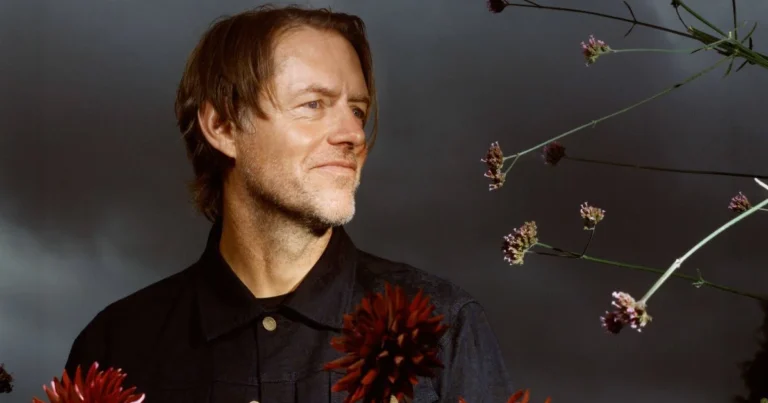
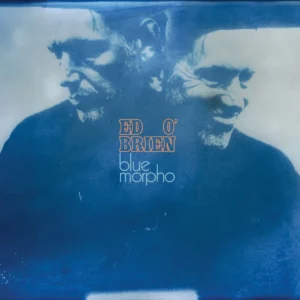
Radiohead’s Ed O’Brien Announces New Album ‘Blue Morpho’, Shares New Single

Ed O’Brien has announced his second solo album, Blue Morpho. The follow-up to 2020’s Earth will arrive on May 22 via his new label home, Transgressive. It’s led by the title track, which you can hear below.

The Radiohead guitarist worked with producer Paul Epworth on the new album following a chance meeting through their children’s school. In Wales, engineer Riley MacIntyre helped lay the album’s foundations while composer Shabaka Hutchings contributed flutes. In Estonia, O’Brien collaborated with composer Tõnu Kõrvits, who arranged strings performed by the Tallinn Chamber Orchestra. The record was completed between O’Brien’s studio in Wales and the Church Studios in London. Flood, known for his work with U2, PJ Harvey, and Nine Inch Nails, provided sequencing assistance, and Ben Baptie handled mixing.

After releasing Earth in April 2020, O’Brien entered “the deepest depression of his life,” according to a press release. “Encouraged by his wife to sit in the fire of his emotions, he began a daily ritual, immersing himself in the breathing and cold-exposure teachings of Wim Hof, then retreating into his small London studio, playing guitar for hours until his brain began to fray. ” The resulting record is framed as his first “fully detached from past regrets.”

An accompanying short film, Blue Morpho: The Three Act Play, premiered at SXSW yesterday and will be released alongside the album.

Blue Morpho Cover Artwork:

Blue Morpho cover

Blue Morpho Tracklist:

1. Incantations
2. Blue Morpho
3. Sweet Spot
4. Teachers
5. Solfeggio
6. Thin Places
7. Obrigado

At Matthieu Blazy’s Chanel Fall 2026, First You Crawl, Then You Fly

0

Backstage at Paris fashion week, the script is rarely the same. Some designers smile. Some talk a great deal without revealing much. And every now and then, someone reaches for a Coco Chanel quote from a 1950s Le Figaro interview. Matthieu Blazy, at least, did. “Fashion is both caterpillar and butterfly. Be a caterpillar by day and a butterfly by night. There is nothing more comfortable than a caterpillar and nothing more made for love than a butterfly. We need dresses that crawl and dresses that fly. The butterfly doesn’t go to the market, and the caterpillar doesn’t go to the ball.”

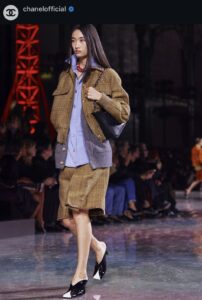
Chanel Fall 2026 show at Paris fashion week
@chanel via Instagram

We’ve been to Mars, the New York subway, and a mushroom patch, all in Matthieu Blazy’s world (although Karl Lagerfeld does come to mind). For Fall 2026, the stop was a construction zone, lit up by red, green, blue, and yellow industrial skeletons scattered across an iridescent runway. “I was interested in the idea of building a dream…” Blazy told Vogue. Of course, I immediately pictured the front row. All the people who might nod along while imagining lending a hand to the maintenance crew of the Eiffel Tower in their dreams. “…a work in progress,” he continued, and I quickly snapped out of it. Gabrielle Chanel was the one to take inspiration from the working class and build a luxury empire on it, after all.

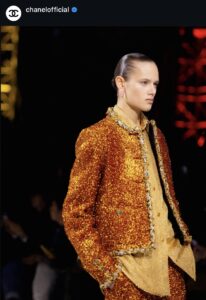
Chanel Fall 2026 show at Paris fashion week
@chanel via Instagram

Naturally, a caterpillar was the first to walk out, a black skirt suit in a ribbed merino-silk knit, dotted with gold buttons. Second came Bhavitha Mandava in a long zip-up in beige, which instantly transported us to her Métiers d’Art opening. At some point, the butterflies started to appear in what Blazy likes to call “the central canvas,” the classic tweed suits, of course, though not so classic anymore. What followed were drop-waist skirts, slip dresses, 3D floral appliqués, a clash of patterns and sparkle.

Blazy’s first collection for the maison dropped in stores only days ago, yet many of them have already been emptied. The ones that haven’t are now dealing with fashion fanatics willing to wait hours outside just to get their hands on pairs, plural, of shoes, at the very least. If anyone is stressed about this collection, it’s probably a Chanel sales assistant at Rue Cambon, who has surely had a front-row seat to the madness.

Meet Madame Masculinity at Duran Lantink’s Jean Paul Gaultier Fall 2026

0

After a very noisy first showing at Paris Fashion Week, Duran Lantink made sure nobody left indifferent. A few were horrified, most screamed into the void of the internet, and the brave few clapped in peace. One of them being Jean Paul Gaultier himself, who got misty-eyed, seeing his enfant terrible younger self staring back at him. JPG has always stitched his provocative spirit into his work. Lantink just seems to have a louder concept of that spirit, carrying the torch, or maybe two.

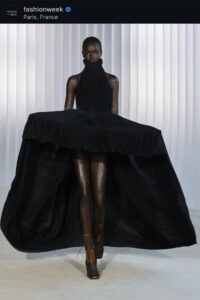
Jean Paul Gaultier Fall 2026 show at Paris fashion week
@fashionweek via Instagram

What’s a strong starting point for Lantink’s second collection for the maison? An image of Marlene Dietrich. What’s an even stronger one? An image of Marlene Dietrich with a whip in hand. And just like that, the concept of ‘Madame Masculinity’ was born, a mix of gender fluidity, creative tailoring, Wild-West references, sportswear nods, and a dash of intimates.

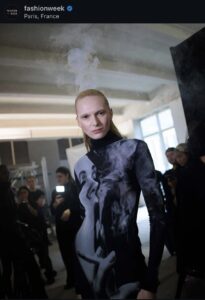
Jean Paul Gaultier Fall 2026 show at Paris fashion week
@fashionweek via Instagram

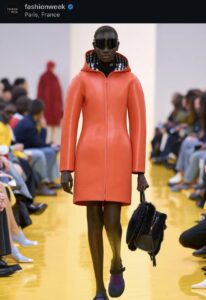
The show opened with pitch black tailoring, cinched waists, bombers that met skirts halfway, only to reveal they were some gentleman’s coat all along. Then came pleats, exaggerated volumes, and some conic shapes here and there, alongside cowboy hats that sometimes doubled as hoods. Somewhere between the ski-gear of it all, came a lineup of wooden playthings, mannequins perhaps, wearing really sporty-looking waist garters. It might’ve been last season’s full-body ‘hairy bits’ illusions, that made this nod to Gaultier’s Marionette collection as easily digestible as a grape. A few basques, prints, and confused looks later, Alex Consani walked out fuming, literally. She wore a dress with Marlene Dietrich puffing on a cigarette across the fabric, and somehow, the smoke continued straight out of Consani’s own hair. See it through reason, and you might hit a wall. See it as it comes, and it might take you anywhere.

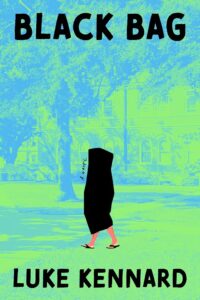
Author Spotlight: Luke Kennard, ‘Black Bag’

0

When an unnamed, out of work actor gets offered a job to walk around a campus in a black bag, he shrugs and accepts. It’s not the most humiliating thing he’s done, the pay is good, and it would be good to get out of dinner theater after a while—but he doesn’t expect that the anonymity of the bag grants him a new relationship with a woman who prefers his powerless, a friend who clamors to obtain a way to monetize the “art project,” and a renewed sense of self. Irreverent and honest, Black Bag is an answer to the ‘masculinity crisis’ that suggests the solution is a lot easier than it appears.

Luke Kennard sat down with Our Culture to talk about the real black bag study, sublimation and self-help.

Tell me about the real black bag psychological study, which took place in 1967, and why you gravitated toward it. 

I chanced upon it as a study; I was looking for various theories around attraction, social psychology. I came across the mere exposure effect, which is partly used in advertising and politics, but originally it was about why we come to like each other—we just get used to each other. The black bag experiment took place at the University of Oregon, by a professor named Goetzinger. The black bag would sit in silence in a lecture theater in classes and not say anything, not interact with anyone, not respond when anyone spoke to him. At first the students found his presence unpleasant, really abject, they didn’t like this ominous, unresponsive figure. They reacted with hostility and complained about it. But as the weeks went by, they became defensive of the black bag. If anyone criticized him, they’d stick up for him: “Leave him alone, let him do what he wants to do.” And became quite affectionate towards him, invited him for a drink at the end of the term. And he never said a thing. Very visible, but a semi-erased figure. To Goetzinger, this proved the mere exposure effect. I’m more interested in the person who was the black bag. I liked the idea of him being a struggling actor—for this to be a role, but one they find they like, and want to carry on wearing the black bag. 

The juxtaposition between this person who lives to be on stage accepting a role in which he’s anonymous is so funny. Why does he feel like he’s closer to his true self in the bag?

Actors are sort of a canary in a coalmine for the arts, in a way. If things are going badly for actors, then they’re about to be really bad for anyone who does anything creative. They’re out there all day every day, auditioning, whereas a lot of the other arts are much slower. There’s maybe something in that sense of egolessness. You want people to enjoy your work, want to be known for it, have people say nice things about it—that’s not a good impulse or instinct. The narrator is in his late thirties, he’s been trying and failing to make much of a living, he’s jaded and embittered, yet still believes in his talent. There’s not that much time left for him to prove himself. That, for me, is quite close to writing. A lot of the writers I love maybe had a modest high point in their careers and then just carried on doing it in obscurity for the rest of their life. I was obsessed with Gilbert Sorrentino, the Brooklyn novelist, a couple years ago, and collected all of his books. They’re not even printed in the UK, so I was ordering copies online, arriving from the Wyoming Public Library or something. I devoured everything he’d written; a lot of his work is about being an angry, slightly failed writer. But he was a genius, and did deserve a reputation. 

At the same time, the narrator feels the need to conceal the black bag from his parents. Is there a hidden shame he’s not letting us in on?

He also refuses to describe his parents—he just says they’re two stone columns. Writers are awful, and the moment a writer describes somebody, they come across as horrendous. So he didn’t want to subject them to that. I think this was around the time the discourse was all around ‘likable characters.’ If you describe someone for the length of a novel, that’s gonna include their flaws. Sometimes there’s an arrogance that goes with writing and narration. You’re just trying to make yourself look as good as possible and everyone else is kind of a jerk. I think that’s one of the worst impulses in writing, especially in the age of autofiction. There’s such a profound responsibility to do right by the people you’re writing about, so you won’t mention them at all. And it is a shame! The narrator doesn’t want his parents to know what he’s doing, which may be like publishing as well. You work on it so privately, then it turns into this life separate from. You don’t necessarily want your family involved.

He is quite a cheeky guy, upfront about being a narrator in a novel. 

Yeah, he knows he’s the narrator, but he’s also quite real. It’s a book he’s writing in his head. He’s quite pedantic, and snobbish about a lot of things, but he’s also honest about how much of a person he feels like, or how weird his attitude toward his own maleness is. Part of it’s how he tries to deal with being a certain kind of man, and the discomfort he feels about that, which comes into his desire to disappear into the black bag. He says to his friend, ‘Maybe this is the only way of being a man,’ like, trying to apologize for it.

His friend, Claudio, is desperate to monetize the study, whether it’s through crypto, art, or gesturing at some commentary. Do you think the narrator goes along with it because he’s unsure of what the black bag means himself?

I think he just likes Claudio, who is sort of a Twitch streamer. I have a lot of respect for that form, I think it’s quite difficult and punishing. I wanted it to be a contrast with someone who wants to be an old-school stage actor, wants to be in Chekhov. There’s the line of thinking of, well, turn your skills to what is actually available in your age. He has a conversation with a tech bro later who says, “If Dostoyevsky were alive now, what would he be doing? He wouldn’t be writing novels.” The narrator’s desperate, and wants to make money as well. If Claudio can make something out of this, then fine; he’s cynical enough to see where it goes.

He gets into a strange but fulfilling relationship with another professor, Justine, whose kink involves his anonymity and powerlessness. Why does this situation work?

He’s had a string of mutually unsatisfying relationships. He feels he’s been doing something wrong his entire life. But this is something completely different—this anonymity and submissiveness is something he really likes, and he enjoys her telling him stories about her escapades, her being sexually and domestically dominant. Towards the end, he tries to break up with her, and she refuses—it can’t go the other way. He finds a kind of pleasure and meaning in that. It takes any pressure off him to be any particular kind of man in the relationship. I don’t think he knows why he likes it, but he enjoys the passivity, and relinquishing his responsibilities. 

In your fiction, you seem to offer solutions for a way out for helpless people. In Black Bag, it’s a new identity, and in The Transition, it’s a housing experiment. What do you think interests you about these themes?

We’re just so replete with that as a culture. There’s so many people who will tell you why you’re unhappy, what you can do to change that, and for the most part, it’s snake oil. But there’s always going to be a massive market for that. We’re always going to feel insecure about how we’re doing and what we’re doing wrong. It’s part of the contemporary mode of being spoken or sold to. “You’re fucking up, but here’s how to do better.” My knee-jerk reaction to that is, “Absolutely shut the hell up. How dare you!” [laughs] What the focus-on-the-self stuff does is deny the potential for community and collective action—it turns the focus purely onto the individual. It makes us self-absorbed. In Black Bag, there’s a crisis of meaning. There’s not a crisis of masculinity, there’s a horrible, regressive version of masculinity that’s in its death throes, and is particularly violent and visible at the moment. But it’s more about the ancient question of how to live a meaningful life. The solutions we’re offered are either bogus or self-serving. 

Finally, what are you working on next?

I’m going to do a selected poems collection, which is the opposite of writing, sort of like a palette cleanser. It’s twenty years of work, and there’s a lot to get rid of, but it’s nice to go back to things from 2005 and ask what I want to keep. I’m working on a novel that’s vaguely about that Robert W. Chambers [story], “The King in Yellow,” where there’s a cursed play script and everyone reads it and loses their mind and it ruins their lives. I love the idea of a cursed manuscript. I’m making it into a PhD thesis, and when you try to examine it, it gets destroyed.

I’m working on a new novel, it’s early-stages, but I have it outlined and it’s gonna be different. I’m trying to create a continuity between the works. I’ve written like four other manuscripts that I have no intention of publishing, so I now have a pretty good sense of how to approach writing books in a professional way. I don’t want to say too much, because I get more freedom out of it when I don’t tell you much, but yes, I am going to write more novels.


Black Bag is out now.

The Architecture of the Wig: How Inclusive Design is Reshaping Our Beauty Standards

In the realm of contemporary fashion, we often discuss the silhouette of a couture gown or the structural integrity of a bespoke heel. Yet, one of the most intimate forms of personal architecture is often overlooked: the wig. For decades, the wig industry operated on a “one size fits all” philosophy—a reductive approach that ignored the diverse anatomical realities of the people wearing them. Today, however, we are witnessing a quiet revolution. High-end hair design is shifting toward inclusive architecture, proving that true beauty standards are not about conformity, but about a precision fit.

The Foundation: The Ritual of Preparation

Every great architectural feat begins with a solid foundation. In the world of hair transformation, that foundation isn’t the hair itself, but the canvas beneath it. For the modern enthusiast, the process of transformation is a ritual that requires both patience and technique.

Achieving a seamless, editorial-ready look starts with the basics: putting on a wig cap. While it may seem like a minor step, the way one secures their natural hair and flattens the surface of the scalp determines the success of the entire silhouette. A properly applied cap isn’t just about containment; it’s about creating a smooth, aerodynamic base that allows the lace to melt into the skin. In our high-definition world, where every detail is scrutinized under a 4K lens, this “behind-the-scenes” preparation is the difference between a costume and a masterpiece. It is the invisible scaffolding that supports the final aesthetic.

The Challenge of the “Standard” Size

For too long, the industry’s reliance on “average” cap sizes left a significant portion of the population in the dark. For those with smaller head circumferences, wearing a standard wig often felt like wearing a hat two sizes too big. The excess material would bunch at the crown, the ear tabs would overlap the ears, and the overall security of the piece was constantly in question.

This wasn’t just a matter of discomfort; it was a matter of representation. When the market fails to provide for diverse head shapes, it subtly suggests that those individuals fall outside the “standard” of beauty. Fortunately, the rise of “micro-inclusivity” has changed the narrative. Boutique brands and specialized manufacturers are now engineering pieces specifically for these niche requirements. For instance, the demand for UNice wigs for small heads has surged as consumers seek out designs that respect their unique proportions. These pieces aren’t just scaled-down versions of larger wigs; they are re-engineered from the ground up to ensure the tension points, lace placement, and density are perfectly balanced for a smaller frame.

Engineering Confidence Through Fit

The “Architecture of the Wig” is ultimately about the psychology of security. When a hairpiece fits perfectly, the wearer’s body language changes. The constant checking in mirrors and the subconscious hand movements to adjust a sliding cap disappear, replaced by a fluid, natural confidence.

Inclusive design in this space means acknowledging that beauty is a 360-degree experience. It’s about how the hair moves when you turn your head, how the nape of the wig sits against the neck, and how the weight is distributed across the scalp. By focusing on specialized silhouettes and refined base techniques, the industry is moving away from the “wiggy” look of the past and toward a future of hyper-realism.

A Cultural Shift Toward Personalization

This shift mirrors a broader cultural movement we see across Our Culture—from customizable skincare to gender-neutral tailoring. We are living in the age of the individual. The modern consumer is no longer interested in adapting themselves to fit a product; they expect the product to be engineered to fit them.

The wig has become the ultimate tool for this self-reinvention. It allows a person to shift their identity with the seasons, but the success of that shift relies entirely on the technical specs of the piece. As we continue to redefine what beauty looks like, inclusivity must remain at the forefront. Whether it is through the meticulous act of putting on a wig cap to achieve a flat lay or the hunt for specialized wigs for small heads, we are seeing a return to craft.

Final Thoughts

The architecture of a wig is a testament to the fact that fashion is most powerful when it is functional. As designers continue to push the boundaries of lace technology, fiber realism, and cap construction, the “standard” is being dismantled in favor of the “bespoke.” In this new era, beauty is no longer a mold you have to fit into—it is a structure built specifically for you, starting from the very first layer and ending with a silhouette that is as unique as your own fingerprint.

Best Tape-In Hair Extensions UK 2026: Top 10 Brands Reviewed

Tape-in extensions continue to be the UK’s most popular semi-permanent hair pieces during 2026. This status has been attributed to these extensions’ speed, comfort, and convincingly natural finish. Unlike traditional methods that can be heavy or visible, tape-ins lie completely flat against the scalp. This makes them virtually undetectable, even in fine hair.

However, this still leaves the question of which brand offers the best tape-in hair extensions in the UK right now. So, to provide an answer, our experts decided to extensively test 10 of the leading brands offering this type of hair piece to UK buyers.

This rundown encompasses such major brands as Cliphair, Beauty Works, and Foxy Locks. Big names like these make available tape-ins priced from around £80 to £300 per full head set.

Why Choose Tape-In Extensions?

There are various reasons why tape-in extensions can make a lot of sense for discerning women up and down the UK:

  • Quick salon application. A full-head fitting of tape-ins only usually takes about one to two hours in a professional setting, using the sandwich method (with no heat or glue required beyond the pre-taped wefts).
  • Natural, flat-sitting result. Ultra-thin adhesive strips lie flush against the scalp, achieving a blend that can barely be detected – even in updos or ponytails.
  • Reusability. Quality tape-in sets can usually last for two or three applications, or more than this with careful retaping.
  • Less damage than keratin bonds or micro-rings, due to their even weight distribution and the minimal tension they cause to natural hair.
  • Versatile styling options. It’s easy with tape-in extensions to add volume, length, or custom colour blends like balayage.

Top 10 Best Tape-In Extensions UK

Here, then, is our definitive ranking of the brands making available the best tape-in hair extensions in the UK right now, as judged by our knowledgeable and seasoned professionals.

In arriving at this “league table”, we evaluated such aspects as quality consistency, UK availability, shade matching for British hair tones, and all-round value for money.

1. Cliphair

Our extensive evaluation process has resulted in us declaring Cliphair’s tape-in hair extensions our “number one”. This is largely thanks to the exceptional range and accessibility of this UK-based brand’s tape-ins.

Made from 100% Remy human hair, with premium AAAAA grade Remy Royale options, tape-ins are available from Cliphair in more than 60 colour shades, encompassing balayage, rooted, and fashion tones. Prices run from approximately £80 to £180 for a full set.

Cliphair uses an invisible tape design that ensures a seamless, flat fit. With all this brand’s items being shipped from its UK warehouse, purchasers of its tape-ins in Britain can also look forward to dependable next-day delivery.

Our experts loved the thickness and silkiness of Cliphair’s tape-in hair extensions in the UK, as well as their effectiveness at holding style. Such qualities help make Cliphair tape-ins a fine choice for everyday wear, particularly on thin-to-medium hair.

2. Beauty Works

The celebrity-endorsed Beauty Works is a luxury staple in the world of tape hair extensions. This brand is rightly renowned for its Slimline tape-ins, which use a matte-finish polyurethane (PU) material for a flat, comfortable, and discreet application. The hand-processed Remy hair, meanwhile, can be depended on to remain soft for months.

This tape hair extensions brand is probably best suited for those seeking a high-end salon finish with the greatest possible durability. The pricing is predictably high-end too, although the range of around £114 to more than £224 is still very attractive for what the buyer receives.

3. Remi Cachet

Remi Cachet has a well-deserved reputation as a high-quality, professional-grade brand for tape-in extensions. This is largely due to its use of 100% human, ethically sourced hair.

This brand can be regarded as being in the mid-to-high price bracket, with a typical cost per 10-piece pack of about £70 to £120. Remi Cachet’s tape-ins, especially its Elegance and Deluxe ranges, offer comfort, durability, and longevity of up to nine to 12 months with proper care.

4. Foxy Locks

Known for its use of double drawn hair that is thick from root to tip, Foxy Locks can be a particularly alluring brand for women seeking to emphasise volume with their chosen tape-ins.

Another signature of Foxy Locks is its LiteTape technology, which is designed to be ultra-thin and lightweight.

Prices for this brand’s tape-in extensions vary from around £100 to £220. Overall, Foxy Locks’ tape-ins are versatile, reusable, and great for adding thickness without heaviness.

5. Bellami

For women who don’t want anything less than consistent, stylist-approved quality from their choice of tape-in extensions, Bellami is likely to hold considerable appeal.

Such demanding customers can expect to pay higher than the typical entry-level price points when they choose Bellami tape-ins; around £150 to £280 is a good “rule of thumb”.

In return for their outlay, however, these buyers will get 100% Remy human hair tape-ins that incorporate ultra-thin bonds for comfort and longevity. These hair pieces can be a particularly excellent choice for thick or coarse hair.

6. Glam Seamless

People with all hair types can potentially benefit from Glam Seamless tape-ins, which combine custom colours with natural movement. Premium Remy human hair is used, alongside ultra-thin ¼” bonds that lend themselves to discreet placement.

With typical prices ranging from around £140 to £260, tape-in hair pieces from Glam Seamless are particularly ideal for those prioritising invisibility and salon-professional results.

7. LullaBellz

Of all the tape-in extensions brands featured in this list, LullaBellz might be the best for achieving “glam on a budget”. This brand’s human hair packs start at about £170.

Such keen pricing doesn’t mean unacceptable corners are cut on quality. Both luxury human hair and well-made synthetic options are available, while “invisible” tape technology goes a long way to ensuring a seamless, natural, and comfortable blend.

8. Great Lengths

Great Lengths’ status as a high-end benchmark helps explain the heftier typical prices for its tape-ins, of approximately £200 to more than £300.

Such expenditure, however, gives the purchaser the benefit of medical-grade adhesive tapes that sit completely flat, with zero tension. Meanwhile, the ethically sourced Remy hair provides premium shine and durability. For those on the lookout for the highest-end, long-wear option with minimal scalp stress, Great Lengths might fit the bill very nicely.

9. SWAY Hair Extensions

Particularly highly regarded as a source of cool-toned blondes and ash-brown balayage, SWAY has solid credentials in the world of tape-in extensions. This brand uses 100% Remy human hair that is double drawn for thickness, paired with durable, ultra-thin, and comfortable tape-in adhesive.

The typical per-set prices for SWAY tape-ins are relatively wide-ranging, from £150 to over £300. A further £150 is often charged for professional installation.

10. Milk + Blush

A signature of Milk + Blush’s approach to this type of hair piece is its Slim Tape-in design, which is 4cm wide and designed to be lightweight and discreet. The use of this design along with 100% Remy human hair, means women can depend on Milk + Blush’s tape-ins for comfortable and natural-looking results.

The prices for tape-ins from this brand broadly range from £45 to £124 per set, depending on length and style.

How To Choose the Right Tape-Ins

Following these tips will help ensure you select the appropriate tape-in hair extensions for your preferences and needs:

  • Think about your hair type. Fine or thin hair, for instance, suits lighter and narrower tapes. If, on the other hand, you have relatively thick hair, this will probably handle heavier sets well.
  • Account for length and weight. A standard full-head set typically requires about 100g to 150g of hair. As for length, around 16” to 20” works for natural enhancement, whereas 22” upwards creates more dramatic length.
  • Be savvy with your colour matching. Always match to your ends, rather than your roots, to achieve a seamless blend.

Tape-In Aftercare Essentials

Maximise the lifespan of your tape hair extensions with these proven practices:

  • Use sulphate-free shampoo and conditioner, washing two to three times weekly.
  • To ensure trouble-free sleeping, have your hair braided loosely and completely dry it before bed to guard against matting.
  • Establish a refit schedule of visiting your stylist every six to eight weeks to have the tapes moved up.

Conclusion

In the final analysis, our experts have judged the following three brands to offer the best tape-in hair extensions in the UK: Cliphair, Beauty Works, and Remi Cachet.

LullaBellz is our professionals’ pick for the finest-value option. For those who want no less than the very best premium option, meanwhile, we recommend Great Lengths.

For most people, however, it will probably make most sense to begin with Cliphair or Bellami for their initial experimentations with their look. Happy extending!

Understanding Premises Liability Cases in Houston

Premises liability cases arise when an individual suffers an injury due to unsafe or hazardous conditions on someone else’s property. In Houston, these cases can occur in a variety of settings, including commercial properties, private homes, apartment complexes, retail stores, and public spaces. Injuries can range from slips and falls to more serious accidents involving defective stairs, uneven flooring, broken handrails, or inadequate security measures. Victims of premises accidents often face extensive medical bills, lost wages, and emotional trauma, which can make recovery overwhelming without proper legal guidance. Hiring a Premises Liability Lawyer in Houston ensures that victims have experienced professionals to navigate the complex legal process, gather evidence, and pursue the full compensation they deserve.

Common Types of Premises Liability Cases

Premises liability encompasses a wide range of accidents. Slip and fall accidents are the most common, often caused by wet floors, spilled liquids, icy walkways, or loose carpets. Trip and fall injuries can result from uneven sidewalks, broken steps, or unsecured rugs. Other examples include injuries caused by inadequate lighting, malfunctioning elevators or escalators, unsafe swimming pools, or unsecured construction zones. In some cases, violent crimes occurring on poorly secured properties may also fall under premises liability, especially if the property owner failed to provide adequate security. Each type of case has unique legal considerations, and determining liability often involves examining property maintenance records, warning signs, and whether the owner followed reasonable safety precautions. A knowledgeable premises liability lawyer in Houston can thoroughly investigate these factors to ensure that victims have a strong case.

The Legal Responsibility of Property Owners

Property owners have a legal obligation to maintain their premises in a reasonably safe condition and to warn visitors of any known hazards. The extent of this duty varies depending on the status of the visitor. For instance, business invitees, such as customers in a store, are owed the highest duty of care, meaning property owners must regularly inspect the property and address potential dangers. Licensees, such as social guests, are owed a slightly lower standard of care, while trespassers are generally owed minimal duty, except in certain situations involving deliberate harm. Establishing the property owner’s legal responsibility is a critical part of a premises liability case, and a Houston premises liability lawyer can help evaluate whether negligence contributed to your injuries and if the property owner breached their duty of care.

Steps to Take After a Premises Accident

If you are injured on someone else’s property, taking the proper steps immediately can strengthen your case. First, seek medical attention to address any injuries, even if they seem minor. Document the accident by taking photographs of the hazard, the surrounding area, and any visible injuries. Obtain contact information from witnesses and keep copies of medical bills, pay stubs, and any communications with the property owner or their insurance company. It is important to avoid making statements about fault or accepting settlements without legal guidance, as premature agreements can limit your compensation. Contacting a premises liability lawyer in Houston as soon as possible ensures that evidence is preserved, deadlines are met, and your legal rights are fully protected.

How a Houston Premises Liability Lawyer Can Help

A skilled premises liability lawyer in Houston provides critical support throughout the legal process. Attorneys investigate the circumstances of the accident, review property maintenance and inspection records, interview witnesses, and consult experts if necessary to establish liability. They handle all communication with insurance companies to prevent victims from being pressured into accepting inadequate settlements. Lawyers also calculate the full extent of damages, which may include medical expenses, lost wages, ongoing rehabilitation costs, pain and suffering, and emotional distress. In cases where a fair settlement cannot be reached, a premises liability attorney is prepared to represent clients in court, advocating for their rights and maximizing potential recovery.

Recovering Compensation for Premises Liability Injuries

Victims of premises liability accidents may be entitled to a wide range of compensation depending on the severity of their injuries and the circumstances of the accident. Economic damages can include hospital bills, surgical costs, physical therapy, prescription medications, and lost income. Non-economic damages may cover pain and suffering, emotional trauma, and reduced quality of life. In severe cases, punitive damages may be awarded if the property owner’s negligence was particularly egregious. A Houston premises liability lawyer ensures that all damages, both present and future, are accounted for in your claim, providing victims with the best chance for fair compensation.

Choosing the Right Premises Liability Lawyer in Houston

Selecting the right attorney is crucial for a successful outcome in premises liability cases. Experience, a proven track record, and a deep understanding of Texas premises liability laws are key factors to consider. At Fibich Law, our team combines legal expertise with personalized attention, guiding clients through every step of the process. From investigating accidents and negotiating with insurance companies to representing clients in court, we provide thorough and compassionate legal advocacy. Choosing a knowledgeable Premises Liability Lawyer in Houston allows victims to focus on recovery while their legal team works to secure justice and financial relief.

Conclusion

Premises accidents can be life-altering, leaving victims to face medical, financial, and emotional challenges. Handling these cases without professional guidance can result in reduced compensation or legal mistakes that harm your claim. A premises liability lawyer in Houston provides the expertise, advocacy, and support needed to hold negligent property owners accountable and recover full compensation. If you or a loved one has been injured on someone else’s property

6 New Songs Out Today to Listen To: Death Cab for Cutie, Lily Seabird, and More

There’s so much music coming out all the time that it’s hard to keep track. On those days when the influx of new tracks is particularly overwhelming, we sift through the noise to bring you a curated list of the most interesting new releases (the best of which will be added to our Best New Songs playlist). Below, check out our track roundup for Monday, March 16, 2026.


Death Cab for Cutie – ‘Riptides’

“‘Riptides’ is about the challenge of dealing with personal struggles as the world around us experiences tragedy and loss on an unfathomable scale,” Ben Gibbard said in a statement about Death Cab for Cutie’s new single, which leads their upcoming album, I Built You a Tower. “And how when these two elements intertwine themselves in our psyches, it feels utterly paralyzing.” It’s driving and progressively disorienting, with Gibbard singing, “I’m too tired to stop/ I can’t bring you up to speed/ There’s too many riptides in this ocean to proceed.”

Lily Seabird – ‘Demon in Me’

Lily Seabird has shared her first single of 2026, ‘Demon in Me’. It arrives on the heels of the singer-songwriter’s excellent 2025 album Trash Mountain, and it suggests that whatever Seabird has on the horizon is lusher and more exuberant, even as the new single leans on “the dark side, probably a symptom of anxiety or depression.” Seabird went on, “The beginning of the song I talk about this longing for freedom. Whether it’s freedom from the demon or letting the demon be free, I’m not really sure, but by the end the music is supposed to embody that.”

Gladie – ‘I Want That for You’

Gladie’s killer new album No Need to Be Lonely is out this Friday, and today they’ve dropped another single from it. ‘I Wnat That for You’ gives the record its title; “It’s the last song we wrote for the record and kind of encapsulates to me the whole message of No Need to Be Lonely,” Augusta Koch explained. “It came from a conversation with a beloved friend that was having a hard time. We were talking about how it’s strange and difficult to be a human sometimes. I often think about how easy it is to see the beauty and wonderful qualities in someone else but how hard it is to apply that same love to yourself. ‘I Want That for You’ is basically about encouragement and wanting everyone to stick around, even when it’s really hard, including ourselves.”

Anna Calvi – ‘Is This All There Is?’ [feat. Matt Berninger]

Ahead of the release of her new duets EP Is This All There Is? on Friday, Anna Calvi has unveiled the title track. Following collabs with Perfume Genius and Iggy Pop, she’s teamed up with the National leader Matt Berninger for an expansive ballad that’s “about the bravery it takes to hope,” in Calvi’s words. “It’s the willingness to ask questions, even when knowing you’ll never get a definitive answer…The tone of Matt’s voice has such an epic, almost ancient quality to it, which felt perfect for a song asking such a big existential question. We’re both searching for answers — together and yet somehow always apart, which I find beautiful. He brings an intimacy to the song that I couldn’t have imagined.”

Bloodworm – ‘Alone In Your Garden’

Nottingham’s Bloodworm have shared a brooding, frosty new track, ‘Alone In Your Garden’. “This song was written during Autumn over a particularly cold couple of days,” frontman George Curtis explained. “I was inspired by the very unique feeling of that time of year, the smell of the air, the falling leaves, the damp stillness that all feels so specifically English. I was trying to invoke those feelings within a song. The song was an attempt at mixing old English folk, with all its folklore and emphasis on tales, with the gothic sound that I am drawn to.”

Truthpaste – ‘Bus Song’

Truthpaste, a group of five multi-instrumentalists, have shared the mesmerizing ‘Bus Song’ via Dirty Hit/Memorials of Distinction. The band’s Esme described it as our emo rock song. It’s another side to Truthpaste that its time people heard outside our live set. We don’t stick to one thing, if it sounds good we’ll do it.” Euan added: “This song was knocking around my head for a couple of weeks, it wasn’t until we got together as a band and decided to make it a duet that it really started to feel like it has come to be.”

The First Thing I Saw at Loewe AW26 Was A Giant Plush Dolphin

0

Paris fashion week is a strange place. For Loewe’s Fall 2026 show, Lazaro Hernandez and Jack McCollough dragged us to Château de Vincennes, once a royal playground for plotting and sword-swinging, now a gothic playground for tourist selfies and Tim Burton poses. For a collection built on playfulness and experimentation, those medieval walls couldn’t have been more misleading. Successful mismatch, if there ever was one.

Loewe Fall 2026 show at Paris fashion week
@loewe via Instagram

“As we began conceptualizing our second collection for Loewe, we were struck by a simple truth: for us, the act of making is, at its core, an expression of joy – an intellectual, process driven pursuit charged with playfulness. The path taken matters as much as the end result… Humor, levity, and a bright, inclusive spirit – qualities we recognize as intrinsic to Loewe’s Spanish heritage – led us to the work of Cosima von Bonin, an artist we have long admired and with whom were fortunate to spend time recently,” the brand’s notes insisted, in all their pressy glory. Which, to be honest, explains a lot.

Loewe Fall 2026 show at Paris fashion week
@fashionweek via Instagram

For starters, the set. Walk in and you’re greeted by a glossy yellow floor so banana-bright it hurts your eyes, and instantly, the thought of slipping and landing face-first becomes even more toe-curling. Though if you were one of the lucky ones the PR team favored, your seat came with a three-foot fuzzy dog, a lobster, maybe even a clam, Bonin’s creatures ensuring the softest seat neighbor of your life.

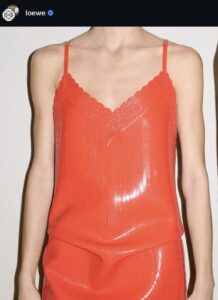
And if the environment wasn’t doing it for you, the palette, textures, and shapes made sure you were in on the fun. Latex, pretending to be lace after a bit of moulding, strutted out first to announce the show had officially begun. Next up, a gradient fur with matching mittens that, from afar, looked like paws, and suddenly, all I could think of was a bear. I quickly snapped out of it and locked eyes with inflatable-looking parkas and scarves, just in case you needed to take off mid-show, looped leather bouclé coats, plaid sweaters knitted from impossibly thin leather yarn, and those very familiar Loewe-meets-Polly-Pocket pieces, now in zip-up dresses, for when your inner kid insists on attending. The guests were thrilled, the dolphin was hard to read.