Home Blog Page 23

One Art Advisor’s Conviction. Before It Became Consensus

A Mexico City born art advisor commissioned Alma Allen for a luxury residential development years before the US government appointed him the country’s Venice Biennale representative. In the art world, that gap is the whole story.

When the United States Department of State announced in November 2025 that Alma Allen would represent the country at the 61st Venice Biennale — the world’s most prestigious contemporary art event — the art world reacted with a mixture of surprise and recognition. Allen, a self-taught American sculptor who left home at 16, sold hand-carved marble sculptures on the streets of SoHo, and eventually built a studio in Tepoztlán, Mexico, was not an obvious institutional choice. He had never had a major US museum survey. He was, by most accounts, an artist whose reputation had been built quietly, through a network of collectors and curators who knew his work before the institutions did.

Myrtha Herrera was one of them.

“I had been following Alma’s practice for some time before the Cero5Cien commission,” says Myrtha, a Mexico City-born, New York-based art advisor who founded Collēctum Art Advisory eight years ago. “The biomorphic language of his sculptures — the way they seem to be in the middle of doing something, in movement even when they’re completely still — felt exactly right for the architectural context we were working with. And his relationship to materials: stone, onyx, bronze, things that come from the earth. That mattered for the development.”

The development in question was Cero5Cien — a 65,000-square-meter luxury residential project in one of Mexico City’s most prestigious neighborhoods, developed by GICSA S.A.B. de C.V., one of Mexico’s largest publicly traded real estate companies, and designed by Grupo Arquitectura, the firm led by Daniel Álvarez that would go on to win the Black and Gold Medal — the absolute grand prize — at the XI Bienal Iberoamericana CIDI in 2021, the highest-prestige architecture and interior design competition in the Iberoamerican world.

Herrera was brought in to develop the art program from scratch. She produced a longlist of candidate artists, evaluated them against the specific architectural language of Grupo Arquitectura’s design, presented her recommendation to the development’s owners in a formal pitch, and secured approval to commission Allen. She then worked closely alongside Allen through the design process — bringing the spatial plans and dimensional constraints of the development into direct conversation with his practice, and guiding the sculpture’s scale, orientation, and relationship to the lobby environment. She also designed the water mirror base on which the sculpture sits, a site-specific architectural element that frames the works within the building’s material palette.

“The whole process took months,” she says. “Site visits, meetings with the architects, back and forth with Alma about what the space needed and what the work could be. You have to be present, and you have to know the work well enough to have a real conversation about it.”

The Cero5Cien installation was completed. The development won its CIDI Gold Medal. And Alma Allen continued building his practice in Tepoztlán, steadily and on his own terms.

Then, in November 2025, the State Department called.

Allen’s appointment as the US representative to the 61st Venice Biennale — with an exhibition titled “Call Me the Breeze,” curated by Jeffrey Uslip, formerly Chief Curator at the Contemporary Art Museum St. Louis, and organized by commissioner Jenni Parido of the American Arts Conservancy — was widely covered as a story about an unconventional choice: a self-taught artist, a slow-burn career, a practice built outside the mainstream. That story had a quieter prequel.

“I found out about the Venice appointment the way everyone did,” Myrtha says. “I remembered our site visits, the conversations about scale and material. And I thought — yes.”

Private curatorial judgment tends to move ahead of institutional recognition — that’s largely how the art world works. In Herrera Almanza’s case, the timeline is documented: a signed contract, floor plans, correspondence with the artist, a formal presentation recommending Allen to the owners of a publicly traded real estate company, before he was the USA’s official choice.

“I think one of the most interesting things about Alma’s practice has always been that it operates outside the normal systems,” she says. “He built his studio himself. He sources his materials himself. He developed his fabrication process himself. That kind of independence produces a very specific kind of work — work that earns its place in a room immediately. That’s what drew me to it.”

Allen’s Venice Biennale exhibition opens May 9, 2026. The US Pavilion’s previous representatives include Simone Leigh, who won the Golden Lion in 2022 and went on to a major Guggenheim retrospective in 2023; Martin Puryear, who preceded his 2019 Venice appearance with a major MoMA retrospective; and Bruce Nauman, who represented the country in 2009. Allen is now represented by Galerie Perrotin, with nine global locations.

In Mexico City, a bronze sculpture sits on a water mirror base at Cero5Cien. The building won a Gold Medal. The artist is going to Venice. The advisor who put them together is already working on the next one.

Myrtha Herrera Almanza is a New York–based art advisor and the founder of collēctum. She holds an MA in Art Business from Sotheby’s Institute of Art.

How to Choose Flowers by Music Taste

We’ve all done the last-minute flower order. You pick something that looks nice, hope it lands well, and call it a day.

But flowers can actually feel way more personal than that. The colors, the shape, even how structured or loose the arrangement is—it all gives off a certain vibe. Kind of like music.

If you’re already thinking about sending something thoughtful, it helps to start with what the person actually likes. That’s usually where things click.

Start With the Overall Vibe

Before you think about specific flowers, think about the feel.

Are they into something soft and acoustic? Loud and high-energy? Clean and modern?

That matters more than the exact genre sometimes. It also helps narrow things down if you’re browsing birthday flower delivery options and trying to find something that actually fits their style.

You’re basically translating mood into something visual.

Indie Folk Is Light, Airy, A Little Wild

Think loose arrangements. Nothing too structured.

Wildflowers, soft greens, small blooms that don’t feel overly arranged. It should look a little imperfect, in a good way.

Muted tones work well here—creams, pale yellows, soft purples.

Pop or Synth-Pop Is Bright and Structured

This is where color comes in.

Bold pinks, oranges, even neon tones if you can find them. Cleaner shapes, more intentional design. Less “wild,” more put together.

Roses, gerbera daisies, anything that holds shape works here.

Rock or Alternative Is for Darker, Moodier Tones

You don’t have to go full gothic, but deeper colors make sense.

Dark reds, purples, maybe even some black accents if the florist offers it. Textured arrangements work better than overly polished ones.

Something with a little edge.

R&B or Soul Is Smooth and Balanced

These tend to feel more classic.

Soft roses, warm tones, nothing too chaotic. Think balance. The kind of arrangement that feels intentional but not stiff.

Peach, cream, soft red—colors that feel warm without being loud.

Electronic or EDM Offers High Contrast, Clean Lines

Sharper contrast works here.

Bright against dark, or bold single-color arrangements. Less clutter, more impact. You want something that feels modern, not busy.

Choose a Focal Flower

Once you have the vibe, pick one main flower to build around.

This keeps things from feeling random. Everything else should support that main choice. It doesn’t have to be complicated—just one anchor point.

Add Something Personal

This is what actually makes it land.

A note referencing a favorite artist. A color tied to a memory. Even just acknowledging why you picked that style.

It doesn’t have to be long—just something that shows you put thought into it. Even a small detail can make it feel more intentional.

Otherwise it can feel like a guess.

Think About Timing

Delivery timing matters more than people expect.

Same-day works in a pinch, but if you can plan ahead, you’ll usually get better options. This is especially true for birthdays or events where the timing is part of the experience.

Match the Season to the Sound

Seasonality actually helps narrow things down.

Spring works well with lighter genres—indie, acoustic, anything that feels fresh. Summer can handle brighter, louder palettes.

Fall leans warmer and more muted, which fits moodier or slower music. Winter arrangements tend to feel more structured and minimal.

It’s not a strict rule, but it helps everything feel more cohesive. You’re not just matching music—you’re matching the moment too.

Pay Attention to Texture

Color gets most of the attention, but texture changes how an arrangement feels.

Soft, delicate petals give off a calmer vibe. Spiky or structured flowers feel sharper and more energetic. Mixing textures can make something feel layered instead of flat.

If you’re unsure, think about how it would feel next to what they’re listening to lately—even something like new songs out today. Does it feel relaxed, or more styled? That usually lines up with the kind of music you’re trying to match.

Don’t Overthink Your Perfect Flowers

It’s easy to get stuck trying to match everything perfectly.

But most people won’t break it down that far. If the overall feel matches their taste, it works. That’s really it.

If you enjoy finding simple ways to make gifts feel more personal, there’s plenty more to explore on our site.


Minecraft: All Tiny Takeover Twitch Drops and How to Claim Them

0

Minecraft’s Tiny Takeover has landed on Twitch! This limited-time crossover lets you snag exclusive drops, aka rewards, by simply watching streams or, fittingly, jumping in and streaming Minecraft yourself.

You can either watch a few minutes of Minecraft streams on Twitch to start unlocking drops like in-game cosmetics or opt into the campaign and stream your gameplay for at least an hour to earn additional incentives. Once you qualify, rewards will be sent straight to your Twitch inbox and can be redeemed on Minecraft’s official page for use in-game. Moreover, creators who take part will also gain extra visibility and potential earnings as part of the event. So if you are ready to jump in, here are all the Minecraft Tiny Takeover Twitch drops and how to get them.

Minecraft: All Tiny Takeover Twitch Drops

The Minecraft Tiny Takeover Twitch drops event is already live, running from April 6 through April 15, 2027, so you have plenty of time to jump in and grab all the rewards. If you are planning to stream, you will need to opt into the campaign through your Streamer Dashboard on Twitch and go live with Minecraft for at least an hour to become eligible for rewards, along with added visibility and potential earnings.

However, streamer spots are limited and available on a first-come, first-served basis, so it is best to jump in as soon as possible. You can head over to Twitch’s campaign page to get started. If streaming is not your thing and you would rather just watch, simply tune into any live Minecraft stream and stick around for about five minutes to qualify for drops. With that out of the way, here are all the Minecraft Tiny Takeover Twitch drops:

All Minecraft Tiny Takeover Twitch Drops

There are three main viewer rewards available during the event, all of which you can pick up by watching Minecraft Twitch streams for around five minutes:

  1. Hatchling Hat
  2. Bunny Beanie
  3. Turtle Tunes
Minecraft-Tiny-Takeover-Twitch-Drops
Image Credit: Minecraft

Alongside these, there is also the Baby Chick Chat Badge, which is earned separately. To get it, you will need to purchase or gift a subscription to a channel streaming Minecraft during the event.

If you are streaming, the rewards look a little different. Once you opt into the campaign through your Streamer Dashboard and stream Minecraft for at least an hour, you become eligible for additional incentives, including potential payouts of up to $1,000. Your stream will also feature a special campaign overlay, and some creators may even get featured on Twitch’s front page for extra visibility.

It’s open to both Affiliates and Partners, though you will need to be in the Affiliate Program to earn payouts, which are processed through the Sponsorship Portal after moderation.

How to Claim Minecraft Tiny Takeover Twitch Drops

To get the viewer rewards, simply watch any live Minecraft stream on Twitch for around five minutes during the event. Once you qualify, the drops will be sent straight to your Twitch inbox, where you can redeem them on Minecraft.net and add them to your account. After redeeming your rewards, you can equip them through Minecraft’s character customization screen and start using them in-game right away.

And that does it for our Minecraft Tiny Takeover Twitch drops guide. For more gaming news and guides, be sure to check out our gaming page!

10 New Songs Out Today to Listen To: American Football, Otoboke Beaver, and More

There’s so much music coming out all the time that it’s hard to keep track. On those days when the influx of new tracks is particularly overwhelming, we sift through the noise to bring you a curated list of the most interesting new releases (the best of which will be added to our Best New Songs playlist). Below, check out our track roundup for Wednesday, April 8, 2026.


American Football – ‘No Feeling’ [feat. Turnstile’s Brendan Yates]

American Football lean into wistful post-rock on ‘No Feeling’, their new single featuring Turnstile’s Brendan Yates. ​​”Brendan came into the studio to sing along to a ‘gang vocal’ call-and-response part I’d written for the chorus of ‘No Feeling’,” Mike Kinsella recalled. “I had imagined his voice would be one of many voices scream-singing it, and was excited for it to be a sort of Easter Egg on the album. But after tracking the original parts, he asked if he could try a higher harmony that he was hearing. As soon as he started singing it, all of our jaws dropped, and we all were looking at each other like ‘Oh shit! THAT’S the dude from Turnstile!’ His voice is so singular, and once he sang the part in *his* range, it was clear that the part now belonged to him and him alone…”

Otoboke Beaver – ‘I Don’t Need to Be in Your Strike Zone’

Japanese garage-punk band Otoboke Beaver have returned with a frantically furious new song, ”I Don’t Need to Be in Your Strike Zone’. It’s part of a new maxi single that will also include ‘Hey, Where’s the Thank You’ (out digitally on April 10) and ‘Is The New Album Out Yet’ (out digitally on April 15). They were tracked with engineer Ippei Suda at LM Studio in Osakaʼs Yotsubashi neighborhood.

Kelela – ‘idea 1’

After premiering it in New York on Monday, Kelela has returned with a new single, the aqueous, hypnotic ‘idea 1’. According to the artist, it’s about “what it feels like to exist in this climate—the weight of being expected to witness, absorb, and speak truth at a time when the world feels like it’s unraveling. That’s a particular kind of burden Black women know intimately. This song doesn’t offer answers, it just refuses to look away. Co-writing it with my best friend Janiva Ellis, hearing Oscar’s production give it shape, and then watching 91 Rules bring that tension to life visually feels like the beginning of a much larger conversation I’m ready to have.”

Pond – ‘Two Hands’

Pond have announced a new album, Terrestrials, landing June 19 on their own imprint Mangovision via Secretly Distribution. Accompanying the announcement is the dancey yet righteous new single ‘Two Hands’. Nicholas Allbrook shared: “This song is about when mining company Rio Tinto blew up Juukun Gorge in the Hammersley Range in Western Australia. They destroyed sacred rock shelters that were of the highest archaeological, cultural and spiritual significance. The rock shelters contained a cultural sequence spanning 46,000 years that had been taken care of by the local Indigenous communities. I was wondering how the commentators around this country would’ve reacted if the shoe was on the other foot and someone had demolished the Vatican or Notre Dame or St. Paul’s because it was in the way of their corporate expansion. Anyway, its a little word of encouragement that you’ve got every right to be very fucking angry about this injustice.”

Lykke Li – ‘Sick of Love’

Lykke Li has shared ‘Sick of Love’, the latest offering from her upcoming album The Afterparty. “It’s this moment of complete humiliation, and you’re trying to be strong,” she remarked. “I had a lot of fun writing these lyrics. I laughed a lot.”

Body Type – ‘And What Else?’

Artist Spotlight alumni Body Type have signed to King Gizzard & the Lizard Wizard’s p(doom) records, marking the news with the cheekily propulsive and anthemic ‘And What Else?’. “The big chorus is a cathartic cry out against feeling insecure in a relationship, those mental twists your brain makes when statements of adoration make you feel sceptical and unworthy, but simultaneously hungry for more of that sweet stuff,” Annabel Blackman said in a statement.

The Lemon Twigs – ‘2 or 3’

The Lemon Twigs have shared another earworm, ‘2 or 3’, ahead of the release of their latest album Look For Your Mind!. “We played for the first time in Buenos Aires last year and I woke up the next morning having dreamt the chorus,” Brian D’Addario said in a statement. “It’s a rare thing for me and even rarer that I end up remembering the words. I had to interpret what ‘she’s lived 2 or 3 as many lives as me’ meant. It made me think of a guy who wasn’t cultured or worldly enough for his girlfriend and had to pretend to be interested in fine art and history.”

Fightmaster – ‘All or Nothing’

Fightmaster has announced their debut full-length album, Tolerance, out June 5, and the driving lead single, ‘All Or Nothing’, is out now. “It’s such a dramatic bluff,” Fightmaster said of the track. “When I wrote it, I wanted this bravado attack. Like, here’s the fucking synth, here’s the beat. I love this one because we really went hard.

Nara’s Room – ‘Lizzie McGuire’

“I grew up thinking that my world of Lizzie McGuire, Michelle Branch, and frosted eye shadow would be that way forever, and I couldn’t wait to be an adult in that world.” Nara Avakian recalled. “But then everything changed.” The brisky, vibrant new single arrives ahead of the release of Nara’s Room’s sophomore effort, Tearless, thoughtless, on May 15.

Fink – ‘Wishing for Blue Sky’

Fink – the British folk trio led by Cornwall-born, Berlin-based songwriter Fin Greenall – have unveiled ‘Wishing for Blue Sky’, the reflective second single from the upcoming The City Is Coming to Erase It All. “This track is track one on the record and pretty much defined what we were going for,” Greenall explained. “A polaroid of the moment in life when you awake, when you want more, when you realise that getting away is the first step to the unknown future. For me, this moment was deciding in my suburban bedroom that I was going to travel – saving my tips from my after-school and weekend jobs so the moment I finished I could just get on a plane and go. I chose America and Canada and got as far as British Columbia, catching Greyhound buses around the USA and stopping off wherever the bus stopped at the end of the night.

The Final Edit: Prashanna Subedi on Splicing Together Visual Meaning in the 9:16 Era

0

We live in a video-dependent era dominated by our smartphone use. Everyone has caught on by now. According to a recent report from Consumer Affairs, Americans spend roughly 5 hours a day on their smartphones in 2026, which means we are checking our phones roughly 200 times a day. This ranges from email to social media (which is now dominated by video), and texting, with an estimated 15% of adults considered themselves dependent on their phones.

Since vertical videos are an insatiable demand for immediate engagement, the role of a skilled film and video editor has never been more critical. 

Prashanna Subedi, an internationally-recognized film editor,  is part of this ever-growing landscape, navigating the nuanced demands of documentary, narrative film, music videos and commercial content.  

Subedi’s film editing portfolio includes short form commercial campaigns with over 40 million total views, music videos with over 3 million views on YouTube, and feature film trailers on Amazon Prime. His work as lead editor for the VR documentary “A Voice from the Hut” premiered at the Academy Award–qualifying Slamdance Film Festival (2026), while his trailer editing on “The Dish and the Spoon,” starring Greta Gerwig, showcases his narrative power, which lies in simplicity of the edit.

Subedi’s approach to music video editing is part of his versatility. Take, for instance, “Soch” by Pakku Panda, a rap song boasting over 2.9 million views. Its bold, in-your-face style is a deliberate choice, according to Subedi. “‘Soch’ is a deeply personal, coming-of-age reflection with a strong sense of resistance,” he explains. “Pakku Panda has a very distinct voice and presence; the fast-paced, in-your-face editing style was intentional; it matched the rhythm, the attitude, and the honesty of the artist. The goal was to amplify his voice, not soften it.” 

Subedi emphasizes that for music videos, “sound is half the picture.” His meticulous attention to detail ensures that “every beat, pause, or shift in energy can motivate a cut or a moment in the story.” 

The objective is to find a pacing that is neither rushed nor dragging, achieved often by stepping away and returning with a fresh perspective. “At the end of the day, I try to create something I would genuinely enjoy watching,” he said. “When that happens, the views and likes usually follow.”

While music videos are instinct-driven and fast-paced, Subedi’s work on long-form projects like documentaries and feature film trailers demands a different kind of patience and structure. “With documentaries or narrative work, I spend more time understanding the director’s vision and the larger arc of the story,” he explains. “I try to think like the director—what they want the audience to feel at each moment.” 

He often watches long sections continuously to grasp the contextual pacing, acknowledging that while short-form content offers quicker feedback, long-form delivers a deeper, more lasting impact.

This distinction becomes even more pronounced when editing for social media. Subedi’s work on a DilMil app campaign, which garnered over 1 million views, with above-average watch time and retention, becoming the brand’s highest-performing campaign, highlights a strategic departure from typical trends. 

“The DilMil campaign performed really well because of its simplicity and strong viewer watch time,” he said. “Instead of following typical front-camera footage trends, we approached it more like a cinematic scene.” 

This performance-driven approach extends into Subedi’s creative direction and editing work for promotional campaigns with Slipstream Swim Machine, where he generated over 40 million collective views across platforms. Beyond reach, the campaigns delivered measurable business results, significantly improving return on ad spend (ROAS) across Meta ad campaigns. By refining pacing, clarity, and audience hooks, Subedi ensured the creatives were not only engaging but directly optimized for conversion and revenue impact.

His focus here is on retention and clarity. Subedi asked himself: “How quickly can I hook someone, and how smoothly can I keep them watching?” In a crowded digital space, doing something slightly different makes a big impact.

In today’s reel-based 9:16 era, editors are more indispensable than ever, primarily because retention is the main metric. However, Subedi offers a thoughtful caveat. “I don’t think high retention automatically means something is meaningful,” he reflects. “Some of the most impactful films I’ve seen are slower and require more effort from the audience.” 

He stresses the need for editors to balance understanding fast-scroll attention spans with not “losing sight of deeper storytelling.” The challenge lies in creating work that is not just engaging but “actually stays with people, not just superficial polished stuff that people watch today and forget tomorrow.”

Subedi’s adaptation to the evolving digital and film landscape is rooted in informed originality. He meticulously observes audience behavior and platform metrics but refuses to blindly follow trends. Instead, he dissects why something works and then crafts his own unique approach. 

“Retention and clarity matter, but originality matters just as much,” he said. To stay creatively grounded amidst the rapid pace of digital content, he intentionally dedicates time to long-form projects, ensuring his identity as an editor remains robust.

His ability to consistently deliver impactful content across diverse mediums stems from a profound well of experience. “A big part of it is the number of years I’ve put into this,” Subedi said, having edited films since seventh grade. 

“I’ve experienced what works and what doesn’t firsthand,” he explains. “Over time, I’ve learned how audiences respond, how platforms work, and what makes something last beyond just views.” It’s a synthesis of experience, meticulous attention to detail, and collaborative mentorship. 

Ultimately, Subedi’s enduring success is built on a simple yet powerful principle. 

“I focus on making something I genuinely believe in, and that consistency has helped me create work that connects with people, followed by views and big numbers,” he said.

With a body of work spanning film festivals, streaming platforms, and viral digital campaigns, Subedi continues to shape how stories are experienced across both cinematic and mobile-first formats.

For more information, visit prash.work

Key Features To Look for in High-Quality Digital Gaming Platforms

0

A digital gaming platform can look polished at first glance, and yet still disappoint once you start using it. This may be for any number of reasons: perhaps the menus are cluttered, the search results don’t give you what you want, the site looks bad on mobile, or what looked like a strong library turns out to be badly organized. In a competitive market, these small user frustrations have more impact than any slogan on a homepage.

Quality is no longer about the volume of titles alone. A platform earns its reputation through the way it handles the simplest tasks: how easily you can find a game, how smoothly it works across devices, and whether the user is prioritized in even the most basic aspects.

A Clean Interface Does More Than Look Good

First impressions still matter, but not in the old sense of glossy design for its own sake. What people remember is whether a platform is easy and sensible to use. Clear categories, useful filters, readable labels, and a search bar that actually returns what was typed all make a bigger difference than oversized banners or constant prompts. There’s also a difference between a platform with a lot going on and one that simply lacks focus. Strong navigation helps users move quickly, whether they know exactly what they want or are just browsing. Filters should narrow options in a useful way, not send people into endless scrolling with slightly different versions of the same category. And if the route to a game feels longer than it should, even a large library can start to feel oddly limited.

That becomes more obvious on mobile. Someone opening a platform during a commute or between tasks is not going to spend long decoding a messy layout. They want large tap targets, sensible menus, and a path that feels short. Good design often goes unnoticed, which is usually a sign that it is doing its job. Someone browsing BetMGM casino games or any similar library is likely to judge the whole platform within minutes based on how quickly they can move from the homepage to something relevant.

Game Selection Matters, But So Does Balance

A huge game count can sound impressive, though it has less of a wow factor when the library feels repetitive or badly arranged. Stronger platforms tend to be well-organized: you’ll see familiar titles sitting alongside newer releases, different genres that are easy to browse, and enough variety to suit both quick sessions and longer stretches of play. Range matters, but structure matters just as much.

A balanced library also says something about how well a platform understands its audience. Some users want short, low-commitment play, while others are looking for live formats, recognizable franchises, or games with more interaction built into them.

Presentation Should Feel Current

Many platforms now borrow visual ideas from video game culture, especially in the way games are themed, structured, and introduced. Bonus rounds can seem more like mini-games, menus may share design cues with familiar franchises, and progression systems can sometimes be used to make the experience feel more active than static.

When that works, the connection will feel natural. When it doesn’t, it can look like the platform is trying too hard.

There’s also the fact that even when game libraries look impressive on paper, that variety loses its effect if the platform is slow or awkward to navigate. This is usually where quality (or the lack of it) becomes obvious. Pages should load quickly, logins should work without fuss, and transitions between sections should feel smooth on both desktop and mobile. Users may not describe these things in technical terms, but they’ll notice their absence straight away.

In addition, a lot of people now switch devices without thinking much about it. They might browse on a laptop, return later on a phone, then check account settings on a tablet. A high-quality platform should make that transition feel seamless. If, on the new device, preferences aren’t saved, payment options malfunction, or mobile pages suddenly become harder to use, user confidence in the platform will drop quickly.

But people rarely leave because of one flaw. More often than not, they leave because of a pattern of smaller irritations. It may be that the search results are too broad, or that a page takes too long to open. Perhaps the live chat replies slowly or gives a vague answer. A withdrawal takes longer than expected and there’s no one to explain why. None of those issues sounds huge in isolation, but together they create the sense that the platform is unreliable.

Trust Comes From Clear Information

Security matters, but what often shapes a reader’s impression first is being familiar with the rules and regulations to some extent. Can they understand how payments work? Are withdrawal terms explained properly? Is account verification straightforward, or buried under vague language and extra steps that only appear halfway through the process? Clear information reduces user friction and makes the platform feel more confident in what it offers.

Strong platforms make these details visible. They don’t hide key information in awkward footers or pages full of padded legal copy. Secure payments, clear account controls, fair-play standards, and responsible gaming tools should all be easy to find and easy to understand.

Support Should Feel Like Part of the Product

Customer support is often treated as an afterthought until something goes wrong. Then it becomes one of the most important parts of the platform. A fast reply matters, but a useful reply matters more. People want answers that make sense, not canned responses that push them into another queue. This is one of the clearest differences between average platforms and strong ones. When support is properly integrated into the experience, the platform comes across as well-run. But when that support is slow, distant, or hard to reach, trust will fade surprisingly quickly.

The Platforms Worth Trusting

A high-quality digital gaming platform is usually judged in seconds by the way it works once someone starts using it. Clear navigation, relevant game selection, reliable performance, visible security, and competent support still do most of the heavy lifting.

That’s also what users tend to remember. Not how well a platform markets itself, but whether it feels easy to use, current without trying too hard, and reliable enough to return to.

Xo, Kitty Season 4: Cast, Rumours & Release Date

Beloved Netflix series Xo, Kitty is back, and the new episodes are already making a splash. With 12.9 million views this week, the teen rom-com is the most watched title on the platform, as well as the #1 show in 54 countries.

Season 3 sees the return of Lana Condor, reprising her role as Lara Jean, plus a whole bunch of exciting developments for Kitty herself. But is her story over, or can we expect more episodes somewhere down the line? Here’s what we know so far.

Xo, Kitty Season 4 Release Date

The third season of Xo, Kitty premiered on April 2. Netflix hasn’t renewed the series yet, but there’s still time. The platform often waits a while to assess viewership before giving the green light. With numbers so strong, we’re cautiously optimistic.

As for when new episodes might drop, it’s tough to say just yet. The gap between seasons was short this time around, so Xo, Kitty season 4 could arrive in 2027.

Xo, Kitty Cast

  • Anna Cathcart as Katherine “Kitty” Song-Covey
  • Gia Kim as Yuri Han
  • Sang Heon Lee as Min-ho Moon
  • Choi Min-yeong as Dae-heon “Dae” Kim
  • Anthony Keyvan as Quincy “Q” Shabazian
  • Peter Thurnwald as Professor Alex Finnerty Lee
  • Lana Condor as Lara Jean Song-Covey

What Could Happen in Xo, Kitty Season 4?

A spin-off of the To All the Boys I’ve Loved Before, Xo, Kitty centres on Kitty Song Covey, Lara Jean’s younger sister. She travels from the US to Seoul to attend the Korean Independent School of Seoul (KISS), which her late mother once went to.

Initially, Kitty’s goal is to reunite with her long-distance boyfriend and live out her own love story. Once she arrives, however, things spiral. Relationships unravel, secrets surface, and Kitty finds herself questioning everything she thought she knew about herself and love in general.

Season 3 catches up with Kitty as she tries to finally get it together. As expected, things don’t exactly go her way. Her self-discovery journey continues to be bumpy, and her love life eventful. By the time the finale rolls around, though, Kitty is in a good place. She’s heading back home to Portland to see her family ahead of the next chapter in her life, and she’s not alone.

While this wouldn’t be the worst way to end the series, a potential Xo, Kitty season 4 will likely pick up from there. We would love to see the happy couple spend some quality time in the US before heading back to Seoul.

Are There Other Shows Like Xo, Kitty?

If you love Xo, Kitty, we recommend catching up with the other romance series making waves on Netflix. The list includes Boyfriend on Demand, Virgin River, Bridgerton, Nobody Wants ThisFinding Her EdgeEmily in Paris and Forever.

Zoh Amba Announces New Album ‘Eyes Full’, Shares New Single

Zoh Amba recently announced their signing to Matador as a singer-songwriter after performing as a saxophonist in NYC’s avant-garde scene for years. Now, Amba has detailed their debut for the label, Eyes Full, arriving June 5, with the stirring lead single ‘Another Time’. Check it out below.

Eyes Full was recorded live at Asheville’s Drop of Sun Studios and features Kevin Hyland on electric guitar and Jim White on drums. “I hope these songs touch people’s hearts,” Amba said in a statement. “They’re about people who really need to be seen and heard.”

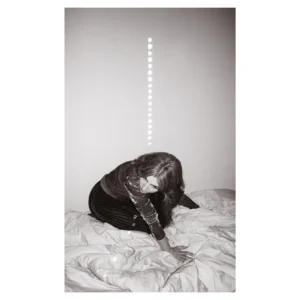
Eyes Full Cover Artwork:

Eyes Full cover

Eyes Full Tracklist:

1. OCD
2. Another Time
3. Dead End Street
4. Thousand Years
5. Southern Soil
6. Eyes Full
7. Blueberry Thorn
8. Emahoy
9. Weed Eating
10. Odd Jobs
11. Child You’ll See
12. PG Tips
13. Smile With Your Eyes

Kelela Returns With New Song ‘idea 1’

Kelela is back. Produced by Oscar Scheller, the polymath’s transfixing new single ‘idea 1’ arrives with a music video directed by 91 Rules (Erik Saltzman and Cameron Tidball-Sciullo). Check it out below.

“‘idea 1’ is about what it feels like to exist in this climate — the weight of being expected to witness, absorb, and speak truth at a time when the world feels like it’s unraveling,” Kelela explained in a press release. “That’s a particular kind of burden Black women know intimately. This song doesn’t offer answers, it just refuses to look away. Co-writing it with my best friend Janiva Ellis, hearing Oscar’s production give it shape, and then watching 91 Rules bring that tension to life visually feels like the beginning of a much larger conversation I’m ready to have.”

Kelela’s second album, Raven, arrived in 2023. It was followed by a remix collection in 2024 and a jazz reimagining of her catalog, In the Blue Light, last year.

American Football Recruit Turnstile’s Brendan Yates for New Single ‘No Feeling’

American Football have teamed up with Turnstile’s Brendan Yates for ‘No Feeling’, the latest single from LP4. Following February’s ‘Bad Moons’, the foggy, wistful tune, produced by Sonny DiPerri, comes paired with a video by Unlimited Time Only’s Cady Buche and Travis Barron. Check it out below.

​​”Brendan came into the studio to sing along to a ‘gang vocal’ call-and-response part I’d written for the chorus of ‘No Feeling’,” Mike Kinsella shared. “I had imagined his voice would be one of many voices scream-singing it, and was excited for it to be a sort of Easter Egg on the album. But after tracking the original parts, he asked if he could try a higher harmony that he was hearing. As soon as he started singing it, all of our jaws dropped, and we all were looking at each other like ‘Oh shit! THAT’S the dude from Turnstile!’ His voice is so singular, and once he sang the part in *his* range, it was clear that the part now belonged to him and him alone…”

Buche and Barron added: “Our goal with music videos is to tell a story that captures what we think and feel while listening to the song. When we listened to ‘No Feeling’ for the first time, we thought a lot about mysterious places like outer space and the bottom of the ocean—they’re beautiful and they also kind of freak you out. The music also brought to mind the idea of going down with the ship or a sense of crushing inevitability. Then we thought, what if you flipped that? What if you opened on a sunken ship and that was the beginning? What if this sunken ship were a thriving habitat for ghosts who live there? What if something came along that jeopardized their beautiful afterlife?”

American Football’s LP4 comes out May 1 via Polyvinyl. Last week, Turnstile responded to a horrific incident allegedly carried out last week by former guitarist Brady Ebert, who was arrested on attempted murder charges after hitting Yates’ father with his car. “We have no language left for Brady,” the band stated.