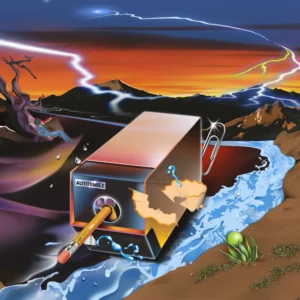
@, the duo of Victoria Rose and Stone Filipczak, have announced a new album called Autosmile. The follow-up to 2021’s Mind Palace Music and 2024’s Are You There, God? It’s Me, @ EP arrives October 16 via 4AD. The strikingly intimate title track, which leads the LP, stretches out to seven minutes. “Really excited to have this song out; it took a while and a few tries to capture in the way we wanted, and we hope you enjoy it,” the band said. Check it out below, and scroll down for the album cover and tracklist.
1. Bird
2. Love In The Dark
3. I Know You Are (But What Am I Thinking)
4. Earthly Love
5. Your Dog
6. Untitled
7. I’m Not In Pain
8. Punish My Mind
9. Judgement Farmer
10. Autosmile
11. Amity
Phoebe Bridgers has announced her highly anticipated third album. It’s called Lost Weekend, and it’s out August 14 via Dead Oceans. What seems to be the title song will be out June 25 at 7pm ET. Check out the album cover – no tracklist yet, but we do know the LP spans 16 tracks – below.
Bridgers hasn’t shared any singles from the album so far, but she has performed unreleased material in a series of surprise pop-up shows across the US, which culminated with a sold-out show at New York City’s Madison Square Garden earlier this month. Today’s press release doesn’t reveal much about the Punisher follow-up, except that it finds Bridgers refining “many of the motifs that distinguished her work previously on this new album that’s otherwise, everywhere, full of surprises.”
At only 30, Timothée Chalamet has the kind of diverse filmography that proves he takes his craft seriously. Starring in both indie films and blockbusters, he has become a sought-after name in Hollywood.
Naturally, his earnings reflect that. Not only did Chalamet begin acting at a young age, but he has a tendency to pick his projects carefully. He made it no secret that he wants to be one of the greats.
So, how much wealth has the actor accumulated so far? Here’s what we know about his fortune.
Timothée Chalamet Net Worth
In 2026, Timothée Chalamet’s net worth is estimated to be $25 million. The bulk of his earnings comes from his movie roles.
Chalamet started acting when he was a child. He appeared in commercials, short horror films, and TV shows. In 2014, he had a small role in Christopher Nolan’s Interstellar, which became a hit.
The actor’s big break, however, came with Luca Guadagnino’s Call Me by Your Name in 2017. Based on the novel of the same name by André Aciman, it revolves around a young man who falls for a university student who comes to stay with his family. The movie was critically acclaimed, with many highlighting Chalamet’s performance.
His career has only become more impressive since. You might remember his appearances in Lady Bird, Little Women, or Don’t Look Up. Another role that brought him acclaim was in drama Beautiful Boy, where he plays a teenager addicted to methamphetamine.
Switching to blockbusters Chalamet stars in the Dune franchise as Paul Atreides. He also played Bob Dylan in A Complete Unknown, Marty Mauser in Marty Supreme, and Willy Wonka in Wonka. If you like romantic horror, you might know him from Bones and All.
Next up, the actor will star in Dune: Part Three. He will also voice a character in animated movie Not Alone, which will premiere in 2027.
Besides his movie career, Chalamet is considered by many to be a fashion icon. He has brand partnerships with big companies including Adidas, Chanel, and Cartier.
Timothée Chalamet Salary
Actor salaries are generally kept under wraps. Still, details come out every once in a while, especially if the pay is massive. Chalamet is no exception.
Last year, The New York Times mentioned that Chalamet is likely to earn $25 million for an upcoming heist movie that would reunite him with James Mangold, the A Complete Unknown director.
While Chalamet’s salary keeps growing, his films also do well at the box office. Technically, his highest-grossing movie is Interstellar, which made $774.7 million worldwide.
There’s something genuinely new happening in how people choose to interact socially online, and it’s not just about technology. The preference for video-first interaction represents a cultural shift, a change in what feels normal and expected in digital communication, that’s worth understanding on its own terms.
From Text to Voice to Video: The Direction of Travel
Digital communication has a clear historical direction: toward more information, more presence, more of what makes human interaction feel real. Text came first, and it was revolutionary. Then voice. Then video. Each step added more of the sensory and emotional information that humans naturally use to connect with each other.
We are now, fairly clearly, in a video-first moment. The generation that grew up with smartphones and broadband has normalised video as a communication medium in a way that previous generations didn’t. For many people under thirty, video messaging feels more natural than a voice call.
This is not just a preference. It reflects something about what people expect from communication. The bar for what counts as a real interaction is higher than it used to be.
What Video Does to Social Norms
The normalisation of video communication has had some subtle effects on social norms that are worth noticing. The expectation of visibility has grown. Interactions that were previously conducted through text or voice are increasingly expected to involve a visual element.
This changes the social contract of online interaction. Being seen is no longer as optional as it once was in some social contexts. The anonymity that was a defining characteristic of early internet culture is being eroded, not by policy, but by the social expectation that comes with video-first communication.
For some, this is experienced as pressure. For others, it’s liberating: video interaction is harder to fake, which means the people you’re connecting with are more likely to be who they present themselves as.
The Authenticity Premium
One of the most significant cultural effects of the shift toward video-first interaction is what you might call the authenticity premium. In video contexts, performance and curation are harder to maintain. The polished personal brand that works in a static post or carefully written bio doesn’t translate as smoothly to a live video interaction.
This is, arguably, a correction. Social media’s long period of optimising for curation and performance created an online culture that felt increasingly disconnected from real human experience. Video-first platforms are pulling in the opposite direction, toward messier, more honest, more spontaneous interaction.
Platforms like Tango.me have leaned into this cultural moment, building products where live, unfiltered interaction is the default rather than a special mode. The cultural response has been interesting: authenticity has become a value in itself.
Implications for Relationships and Community
The shift toward video-first socialising has implications for how relationships form and how communities function online. Relationships built through video interaction tend to be more robust because they’re based on more information. You know how someone sounds, how they express themselves, what their energy is like. That’s a much stronger foundation than a collection of posts and messages.
For communities, video creates a sense of shared physical presence that text communities can’t replicate. When you’re in a live video space with other people, you’re having an experience together in real time. The community exists in a moment, not just as a collection of content.
This changes the nature of online belonging. Being part of a video-first community feels more like being part of a real group than being a member of a forum or a follower of a page.
The Wellbeing Dimension
There’s a growing body of thought that the video-first shift in online socialising has wellbeing implications that are different from those associated with text and content-based social media. The passivity and comparison-driven dynamics that characterise feed-based social platforms are less present in live video interaction.
When you’re in an active live video conversation, you’re not scrolling. You’re not comparing your life to carefully curated images. You’re talking to people. The social experience is more active, more present, and more reciprocal. That’s a meaningfully different psychological experience.
None of this is straightforward. Screen time is screen time, and video interactions have their own potential downsides. But the emerging evidence suggests that active video-based social interaction produces different outcomes than passive consumption of social content, and many of those differences are positive.
Every one of us is a master of code switching. We present a different face to the world, our work colleagues, our friends, our family, and in any other situation we find ourselves in. But, which one of those personas is really us, or is it all of them, but to different degrees? This constant evolution and reappraisal of who we are is what binds the many elements of Ifeoluwapo Rachael Okunade’s photography practice together.
In Portraits of Many Selves and Dual Identity, a woman is seen from two or three different angles. The way they fade and distort into one another suggests the subject is transforming from one to another, or is she all three persons at once, each one fulfilling different needs and addressing different audiences? However, she never looks disturbed, as if she’s at peace with the multiple elements to her personality that these three selves represent. It reminds me of the Greek maxim ‘know thyself’. We spend a lifetime trying to discover who we truly are, and it appears this woman is closer to it than many of us feel that we’ll ever be.
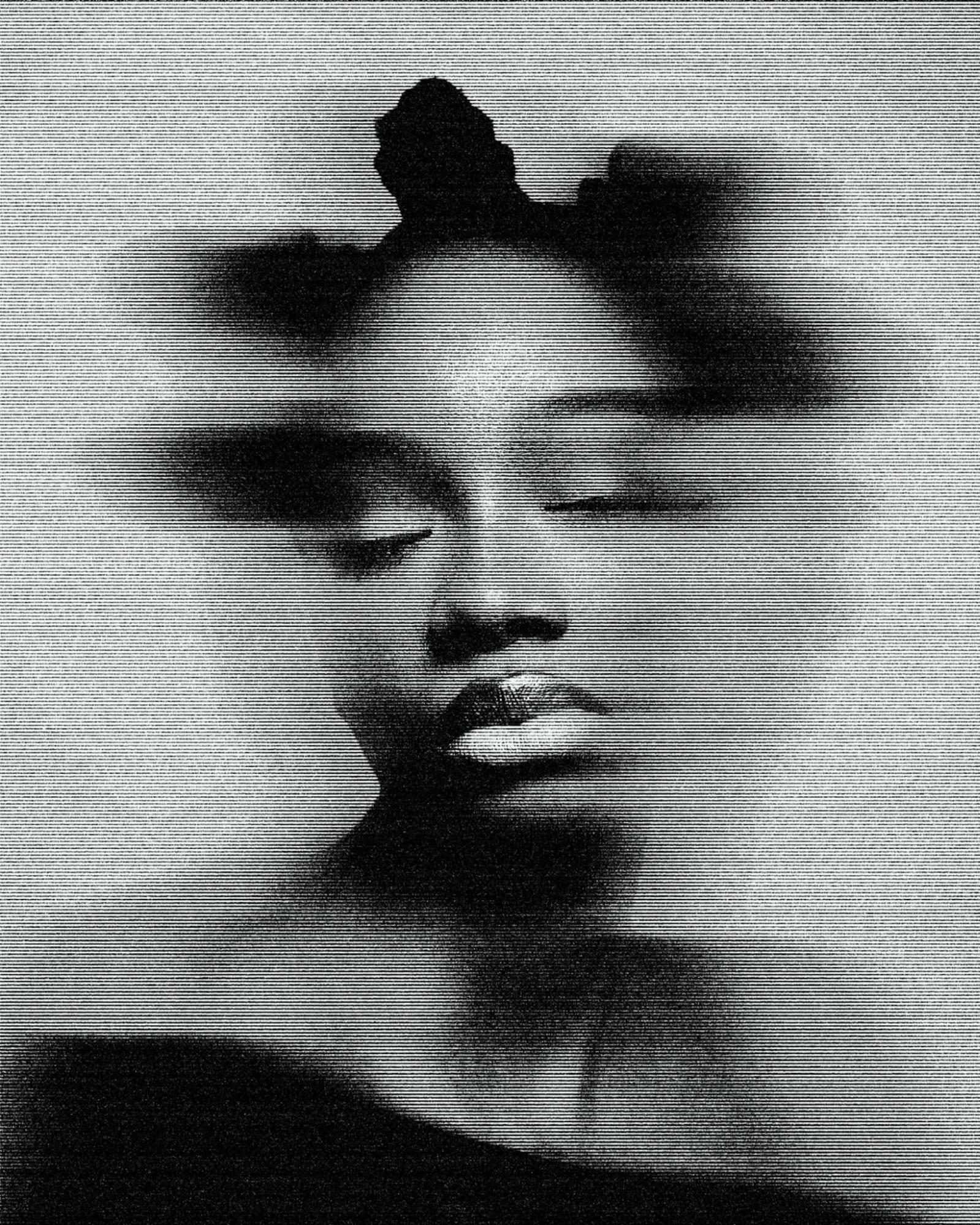
Okunade’s Whispers In Motion series is arguably her most significant departure from traditional photography techniques. The portrait appears to have every other line missing, the type of image you may get from a printer whose cartridge has nearly run out of ink. Yet, this is a deliberate choice to show a personality that’s fractured and not always visible, with the grainy texture, producing a grittier portrait that removes any glossy element. It’s as if we’re only seeing a portion of who this woman is, and the rest is for us to discover, or possibly never to find out. After all, we can spend decades with someone and only discover an element of their history or personality, many years down the line.
We see this inner strength captured more simply within Cultural Beauty on Black and White – Grace in Shadow, a diptych of two women standing proudly, wearing clothing that reflects their heritage and culture. It reminds me of how Zanele Muholi captures powerful portraits of black members of the LGBT+ community. While the subject matter here is very different, both works choose to immortalise these individuals through the timelessness of black-and-white photography. The light illuminating these women’s faces also employs the technique seen in Renaissance and Baroque paintings, drawing the viewer’s eye to the illuminated area of the painting, where their reverential awe should settle.
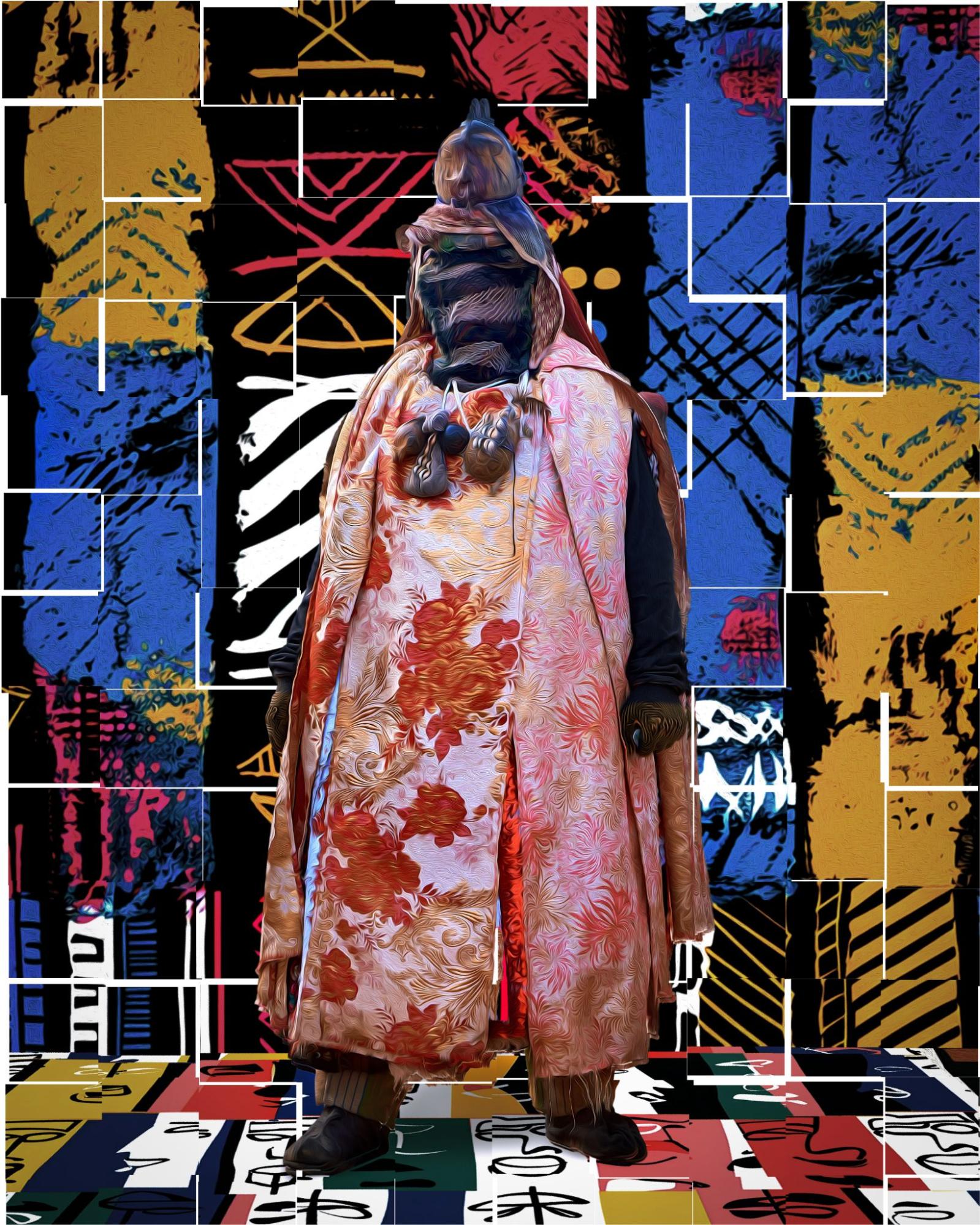
The world is far more vibrant in Beauty Wrapped In Colours – Lobanika, where a figure in a floral-patterned cloak stands before a colourful backdrop reminiscent of a Piet Mondrian painting. It feels fun and dynamic, reminding me of Hassan Hajjaj, who captures the contemporary characters and fashion trends in North Africa through his photography.
It’s not all portraiture, as seen in the artist’s Harmony In Nature series, which captures villages from an aerial view. The colourful houses and roofs are joyous, but they are dwarfed by the mountains looming overhead. It recognises humanity’s impact on the earth, but also how insignificant we can be within nature. A theme that we also see in the photography of greats such as Sebastiao Salgado and Edward Burtynsky.
What ties Okunade’s practice together is the idea that identity is evolving, whether in people, architecture, or the natural landscape. The world never stops still for any of us, but what we can do is capture a slice of it, and that’s what her photographs do – people and places in transition, leaving us to decide where their stories will take them next.
Sari Lightman’s musical output has evolved through various incarnations. With her twin sister Romy, she’s maintained a presence in the Canadian music scene under the monikers Tasseomancy, Lightman & Lightman, and most recently Lightman Sisters, while their striking harmonies have provided backing for the likes of Austra and Jennifer Castle. Since their last joint effort, Lightman has relocated to Los Angeles, sharing a neighborhood with her close friend Meg Duffy (Hand Habits, Perfume Genius), who produced her debut solo album, The Way I Saw You. Mixed by Philip Weinrobe, the record features bassist Pat Kelly, synthesist Aaron Otheim, percussionist Jesse Quebbeman-Turley, and drummer Evan Cartwright, an ensemble that only helps Lightman heighten the songs’ conversational intimacy. While maintaining a voyeuristic approach to songwriting, they loosen the stranglehold of reality by imagining dialogues between contemporary writers, female mystics, and, of course, sisters, joining their voices like a Greek chorus. For all its preponderance of characters, it’s nothing if not an internal reckoning: “The road inside me folds and I’m warm again,” Lightman sings on the final track, ‘Soon Came the Evening’. Like a sunset, you can feel the light’s affection comforting you a little while after the record’s over.
We caught up with Sari Lightman for the latest edition of our Artist Spotlight series to talk about her relationship to place, working with Meg Duffy, family, and more.
I’m speaking to you from Greece, so I wanted to begin by asking you about ‘Rose is in Greece’ and your relationship to the country.
Greece is in the trilogy of my most revered places I’ve ever been to. The first time I ever went to Greece, I just felt so blown away. There’s so many cities and countries that one can travel to at this point, and they feel more homogenized – maybe you have really high expectations, and then you get somewhere, and you’re a little bit let down. Just the amount of life that is existing every day, especially in Athens – I don’t even know how to describe it, it feels like you’re multiple people all at once. There’s so much contemporary art and culture, there’s beautiful cafes, and everyone’s lounging and talking, and then you just come upon this incredible, eroding ruin that’s been there for thousands of years. I don’t really feel like there’s a lot of cities that are able to integrate that kind of ancient past and also display such a vision for the future as well. Obviously, there’s a lot of intention and planning in the way that tourists maybe navigate the city, but if you’re just wandering around, it’s just breathtaking to come upon all these ruins and evidence of humanity. There’s this book that I really like, have you heard of the Outline trilogy?
I’ve read the first one, yeah.
I remember the way she describes walking around Athens in the summer really resonated with me. I’ve been to some of the islands – I was actually supposed to play on one of them this summer, in Sifnos. It was a tour planned with my sister who, unfortunately, is stuck in the States at the moment with visa issues. Rose is my sister Romy, and she spent many months on the island of Folegandros. We have a Greek friend who lives there seasonally for work, and she introduced my sister to the islands. I remember Romy calling me on the phone before I’d ever been to Greece, and she said, “My DNA is changing, being here.” [laughs] She existed a little bit differently than most tourists do; she’s not so into the sun, so she would rise in the evening and go out walking with her guitar. People thought she was either vampiric or unwell, but we’ve been there together a few times now.
I wanted to bring up that line in particular. Do you think a place can have that deep an effect on you personally? Has California done that to you in some way?
Absolutely. I don’t know what’s happening to literal DNA in your body, but I do think that as human beings, we are so malleable. We change so much with the climate, who we’re around, and wherever we are inevitably ends up shaping us and our experience profoundly. Being in California, particularly where I am right now, it’s a really quiet, spacious mountain town. When people think about Los Angeles, they think about the hot concrete, the city, and the parties. For me, I think a lot about how it’s a city where people are really mired in solitude. Even if you live in the city, it’s so spread out and inaccessible in a lot of ways, and it does feel like when people congregate, instead of meeting in a center, they kind of go outwards to a hike or the mountains. That kind of daily interaction with the same tree you see every day on your walk, the same crows hanging out – it really changes the way time moves. It is a seasonal place, but we don’t have the same conventional deep winter of being inside and introspective. This is how people gain their introspectiveness in LA, by accessing nature. It’s really needed here, and it has shaped the way I exist day-to-day.
When I was living in Montreal, my existence was far more nocturnal. I always thought about that Leonard Cohen quote where he said that the first act of rebellion is turning the night into day, which is very evident in a city like Montreal: you have this really vibrant, 24-hour life, people are going to the diners, people are going to after-parties at 3am. Here, because of the strong solar connection of needing to be outside, people are in bed by 9pm. If you’re existing more with the sun and living this solar reality, it profoundly changes your perspective. It’s not a binary thing of optimism versus pessimism – I was very happy in Montreal and loved that kind of existence – but it just doesn’t exist here as much. The person I am now, versus the person I was before I moved to California – different guy. I also had the transformation of motherhood, which I think actually does physically change your DNA, living life looking through somebody else’s perspective all the time. There are many ways that our physical and relational realities really change us.
You were talking about the summer, and I remember Meg telling me about the spring in LA, and how there’s this magical window where everything comes alive in a unique way. I’m curious if you can speak to that and how it’s affected you.
I do think there is something, because we don’t have a traditional four-season climate – we do, but it’s less overt than in other places. So the spring really brings about this respite because of the rains. We go from being in a panicked drought to, all of a sudden, the return of the water. I think about T.S. Eliot’s The Waste Land and the return of the Fisher King when I first moved here – this return of fertility and lushness that makes this collective sigh of relief. The springtime here is very euphoric because the green is what everybody covets; everybody goes wild for these green pastures. It brings these days where you can really be outside all day, and it’s a very unique season that feels nostalgic because it’s such a special time.
Meg and I would go for lots of long walks. We used to live in the same neighborhood, and that was the seed of our friendship and working together – going on these daily long morning walks and talking about life, particularly walks in the springtime. Being in LA in the spring is something that, even right now as we’re entering into the summer, I’m already feeling a grief for that time. Everyone’s got different constitutions, but summer feels more like a lizard existence. You have to be a lot more stationary because there are many times of the day where it’s simply unpleasant, or not even safe, to be out in the sun. So the spring provides so much freedom because of this euphoric, glorious weather.
You have to surrender to it.
Yeah, you have to surrender to it here. And the interesting thing, not to get too deep into the geopolitical situation, but I do feel like right now, California is at the peak of its infamy – who knows what’s gonna happen after this, with climate change? Everyone’s driving around in their cars and acting like nothing is changing, but with the fires we’ve seen in the past few years – I had a lot of friends who lost their homes last year to the fires – we are seeing this change and we have to accept it. It’s also not just conditional to being in LA. When I go back to Canada in the summer, there’s smoke coming from the fires in the north. Right now, more than any other time, you can really feel how temporary this relief is, and that makes it even more special.
Was it clear from the beginning that Meg would come on board as a producer on the record?
I think I always had it in my mind that I wanted to just make this record with Meg. Meg is such an incredible guitar player, of course, but over the years, they’ve also really honed this intuitive and now very learned set of skills as a producer. I think when we initially started doing this record, it was one of their first forays into production and they learned a lot, but they’re just such a focused, intense worker that I knew they would thrive in a producer’s role. Because I trust Meg so much, I also wanted my voice to come across. I felt like if it was just the two of us going back and forth, my voice would ring out really clearly. As my friend, and also just as a producer, I knew they were just a sensitive and really thoughtful musician. I wanted it to be this flow back and forth between us, like when we go on our walks, or even the way our friendship is – it’s very easygoing. There was no strife. We have a very soft and easygoing rapport, and I wanted that to come out on the record.
In the statement about ‘Give it all Up’, which is a new version of a track from Sister Smile, you said that Meg had suggested stripping it back. I’m curious if that was in the earlier stages of the process and maybe influenced the direction you took with other songs.
I feel like my intention for the record was to keep things as sparse as possible. My influences for the record were these older folk records, like Bridget St. John. The way that I play involves a lot of finger-picking, and it’s funny because even strumming isn’t something that I necessarily would intuitively do – that was definitely Meg’s influence. For this particular song, I think this came later, and I think it really works. It’s a a very meditative song, and when I wrote it, I never envisioned it being played like this. But now when I perform it with my sister in our ensemble, we do it the way that I did it on the record, and it’s really effective. The song is supposed to be an interview, this back-and-forth rapport, and it allows so much more space to make sense of the lyrical intention. By removing a lot of the layers that could potentially be involved with the composition, it feels like you can really focus on the play, and the song feels a bit like a play to me.
Did that approach lead you to discovering an aspect of your songwriting that you felt was obscured or harder to access before?
The way these songs came out is more revealing of the way that I write, because when I do write, I just write on an acoustic nylon-string guitar. I’m used to being with my sister and my other bandmate, Evan [Cartwright], in various other projects that I’ve done, where I’ve written a song and the end result is something very unrecognizable – not in a horrifying way, just that it’s so collaborative it becomes its own entity, and I see it as something that’s not necessarily mine anymore. It becomes something else by the end. Whereas I felt these songs with Meg felt so much more of my interior, because Meg was really leaning into my arrangements. These songs weren’t necessarily hyper-polished; they were left in a more rough, unobscured form. Of course, I hear Meg’s influence, and their beautiful musicality and compositions have merged with mine, but the pipeline from the beginning and the intention of the song to the end result feels a lot more reflective of what I was thinking about at the beginning.
Because there is a cast of players aside from Meg and yourself that play on the record, including Evan, how did you go about guiding the arrangements in a way that preserved that subtlety?
I think that’s really where Meg’s role came in. Going back to Leonard Cohen, because I was leaning into these traditional folk records; there’s one Leonard Cohen record that I really love called New Skin for the Old Ceremony. I love how the arrangements come in and out in such subtle ways, just adding a color here and there. I think Meg understood that it wasn’t going to be like, “This song’s gonna be recorded with a band.” It felt like the songs were already more or less completed, and then we had additional players coming in and out. Meg did those arrangements and let the other players know what we were going for. Because the record is so sparse, when there’s a touch of a bass or somebody playing a bongo, it feels really thrilling and exciting even though it’s quiet. This was a very different method than how I’ve usually worked, which is from the ground up, beginning with the percussion or traditional elements of composition.
It’s interesting to me how ‘Give it all Up’, along with ‘Etty’, are not just reshaped but recontextualized on the record. They serve to extend this imagined conversation between Etty Hillesum and Jeanine Deckers that was a thread on Sister Smile. Etty Hillesum and Jeanine Deckers. How have these figures lingered in your mind?
The messages of those songs and those ideas feel more relevant now than ever before. With all the turmoil of our governments, reading Etty Hillesum was like a balm – I read her diary and her writing from the 1940s, and it was ominous because she was talking about regimes and people losing their freedoms, their lives. But it was also inspiring to read the work of a brilliant friend; her ideas felt so contemporary and bending towards love. She was really talking a lot about her own relationships and her existence as this figure that wanted to emanate love and be “the thinking heart” of the concentration camp she was living in. It was moving to see these singular artists – and Jeanine Deckers, the Singing Nun, was also a creative person whose ideas were forged in faith and devotion.
Neither of them were incredibly celebrated, but it was beautiful to look back and see what these singular artists did at that time, how they were reacting to these systems of evil. That is an ongoing conversation I want to keep looking back on and writing songs about. I wanted to bring them into this different context because the messages of their work feel so pertinent. I don’t think I’m quite done with it all yet. We are existing in a time where the general population is so distraught, with great reason, because we are living in such dire, chaotic times. But this isn’t an exceptional time of violence and systems of evil taking away people’s liberties, and ;ooking back into history offers a kind of salvation and a bit of a guidebook on how to be. I found it comforting for these voices and spiritual people to be women, especially in a period of time when women’s voices and thoughts weren’t necessarily revered or even considered.
Those songs are also paired together in the tracklist, following another pair of songs linked through the theme of sisterhood, ‘The Day of the Just Cause’ and ‘Girl Bitten by a Lizard’. Why was it important to have them sit together in the tracklist?
On this record, I was trying to explore different interior themes – some are lived experiences and relationships, and some are imagined relationships with characters or people whose work I’ve been deep into. In this case, it was very personal. I named ‘The Day of the Just Cause’ after a funny book my sister really likes called The Secret Language of Birthdays. It’s like, you look at your day and it tells you all about your noble traits and the things you need to work on. Our day was the Day of the Just Cause, which is all about speaking your truth. The song is about us trying to forge our own identities and paths as very conjoined people. We’ve been intertwined our whole lives and we’re very close. People always ask what it’s like to be a twin, and I don’t know anything else,but it is an intensely beautiful and at times fraught relationship that is so interconnected. It’s finding our way apart and together, and apart and together. My sister and I are very close – she lives here, and our children were actually born on the same day, three years apart. So we have the Day of the Just Cause, the next generation.
The other song, ‘Girl Bitten by a Lizard’, was about my sister-in-law who was in and out of our lives a lot at the time. She really struggled with her mental health and addiction. That song was supposed to be from my perspective; I was simultaneously horrified, concerned, and really curious about what her interior world looked like at the time. Unfortunately, she passed away recently, a few months ago this year. I had changed her name in the song because I was so convinced she would recover, hear the song, and be pissed off that I wrote a song about her. [laughs] She didn’t make it, but I would have really loved for her to hear it. Listening back retrospectively, it is a song that honors her spirit. I talk about how she would always tell me that as a kid growing up by the ocean, she was part of the water and would fly down to it. She had all these fantastical ideas of herself being connected to the water, so it’s nice to think about that now when I go to the ocean and think about her.
You were talking about motherhood earlier, and a line that stuck out to me as a brief glimpse of that in ‘The Prize’, which has this verse about “deep longing.” It connects to the idea of voyeurism that you’ve talked about pervading the record, but it also feels twofold – recognizing a longing for motherhood, but also for being a kid.
That song is about life and all the potential paths you can take; I almost envision that song as being on an epic road trip where you can turn off here or turn off there. The idea of collecting your prize wasn’t meant to be cynical, but it’s about what you choose to do with your life, or what consequences, choices, and circumstances will fall on you. I was being a little cheeky about it, but the part in the song about deep longing was very sincere. I would glance at these fleeting, intimate moments of motherhood and childhood as an observer and be like, “Is that somewhere I could fit? Is that what I want to do?”
I don’t think motherhood is a prize at all, but there are these foundational elements of being alive – do you want to be a parent, do you want to fall in love and have a beautiful love affair, what do you want to do in your life? What is going to come to you? When you are thinking about it as an observer, a voyeur, and ruminating on everything, it’s a very different experience from actually existing within it. Something like motherhood is very conceptual until you are in it. At the time I wrote the song, I wasn’t a mother, so I wondered what it would be like. I saw this beautiful moment of a mother and child and wondered: Is she tired? Is she happy? Is she satisfied? Am I gonna be happy or satisfied in this decision or this path? All of it is so conceptual because you can never feel the somatic feeling of something until you’re really living it. This song is less about being in something and more about the conception of what things could be.
A lot of times, when it comes to other people in our lives, even siblings, it feels like what they want in life is concrete compared to our abstract, internal questioning. I’m thinking of the line, “You want a house in nature, I want our natures to agree.”
Yeah, absolutely. Even what you think somebody wants, or what you think you want, isn’t even necessarily how it is. The role of the voyeur, even with these songs, it doesn’t leave room for the other person to speak or say what they want like they would in a novel or a play. The songs are about being interrelational and being in these personal dynamics, but the role of the voyeur is to make assumptions, and it’s not necessarily a truth. These songs aren’t necessarily embedded in deep truths; they are ideas, thoughts, and questions more than they are about finding solace in some sort of foundational reality where I’m a part of it. It’s more about being outside of it and what it looks like to write from the outside.
I wanted to tie that into the vocals and multitracking them on this record. How was thinking about harmonies different this time around?
For me, making songs is so much about harmony because I’ve sung with my sister since forever, so when I write songs, I’m always writing counter-melodies to go with the main melody. I like using the voice as an instrument; it’s the instrument I feel the most at ease, playful, and fluid with. Instead of being like, “I want to rip a bassoon solo here,” it’s exciting to say, “Okay, this song is going to be mostly voice and acoustic guitar.” There will be some flourishes, but what can I do just with my voice to make it feel like another instrumental line in the composition? It was really fun to do this record and add in parts using my voice as a little walking melody that I heard. The counter-melodies and the harmonies are just as crucial to lift the main melody line. This is just how my brain works as an ensemble player. Speaking of Greece, it felt sometimes like being part of the Greek chorus, and I liked that. I sometimes envisioned the different voicings telling different parts of the story. Because there were these layers, it felt like the other voice was reiterating and strengthening the character’s main idea.
This interview has been edited and condensed for clarity and length.
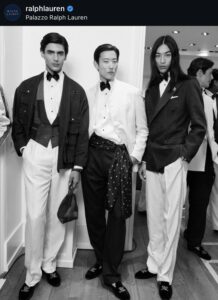
Ralph Lauren returned to its old-world Milan headquarters for its Men’s Spring 2027 show, but the brand still seems mentally stuck somewhere near Lake Como. At least that’s what the mahogany speedboat parked on dry ground suggests. The design team appears to have stumbled across a book on 1920s Lake Como and its fondness for Italian businessmen and their racing rituals, a reference that sits in one half of the show. In the world of Ralph Lauren, a menswear runway seems bored when it only has one collection to deal with. Meet Purple Label, an established European man who treats wealth as something best expressed through fashion restraint, disappearing into it from time to time. Polo, his younger cousin, still at an Ivy League university somewhere in the States, looks up to him, yet insists on being more social. Or so his palette and layers suggest.
“When I began designing menswear, my inspiration came from the ease and traditions of collegiate style and the gentleman athlete. It was about character and camaraderie, a timeless style they made their own. I loved the oldness, the craftsmanship, the utility that wove together an individuality of ease, eclectic mystique, and a romantic sophistication,” said Lauren’s purple-inked show notes, placed on benches across the courtyard, easy for guests like Colman Domingo, Lewis Hamilton, and Tom Hiddlestone to spot. Also in dialogue with him is John Wrasej, senior brand creative director of men’s Polo, Purple Label, RLX and children’s Polo.
That dialogue looks very different for the two lines. As polished as the Purple Label man is, he still finds ways to disrupt his tailoring. Sometimes it’s something small, like fisherman sandals or a bandana tied loosely around the neck. Other times it’s more deliberate, a utility jacket, perhaps even one with sashiko hand-stitching, which travelled to Japan to meet the Sashiko Gals, and back to Italy to settle into its final form. The jackets, in particular, seem to be having fun on the runway. One of them is embroidered with Ralph Lauren’s Como Speed Club, a fictional society built from research into 1920s Lake Como boat racing and its very well-dressed participants.
Polo, on the other hand, leans much more into securing its sense of fun on the runway. It starts with colour, loud, insistent, and often paired with what passes for neutral, even when it clearly isn’t. Take the orange puffer that could blind you if you stared at it for too long, sitting over camouflage trousers, a reinterpretation of what Lauren wore in Montauk a few decades ago. Elsewhere, madras refuses to settle in one place. When it isn’t occupying full looks, it peeks through blazers, slips under jackets, over jackets, or turns into windbreakers, collars, even bags. Roomy trousers, cricket jackets, rugby shirts, Edwardian neckwear, patchwork details and gingham keep the line-up constantly busy. The cousins keep their distance, but the runway doesn’t seem to notice.
PJ Harvey is back with a new single. ‘Voyager’ marks her first new music since 2023’s I Inside the Old Year Dying and serves as “a glimpse into her next artistic chapter.” Check out the celestial track below.
Recorded with a full orchestra at Miraval Studios in Provence, ‘Voyager’ is named after NASA probes launched in 1977. Harvey had already been working on it as part of her next album when physicist Professor Brian Cox invited her to write a song for his ‘Emergence’ tour. “I was excited for the challenge to compose a song in the ‘voice’ of Voyager 2,” she explained in a statement. “I have long been fascinated by the spacecraft and its journey, and asked myself what it might say to us if it could? This was an inspiring route to take to develop the song.”
“The song had already started life as part of the ongoing work towards my new album, so when Professor Brian Cox invited me to write a piece for his new show, I sent him the voice memo of this song to see if it resonated,” she continued. “It immediately made him think of the Voyager craft and the sound of its signal being sent back to Earth. With these ideas as my starting point I let the song develop, and discussed an orchestral accompaniment with Dario Marianelli.”
“I’m very happy with the end result, and it’s wonderful to hear the orchestral score bring such expansiveness to my music,” Harvey concluded. “I thoroughly enjoyed researching the history and journey of Voyager 1 & 2, and was glad to be able to quote the great Carl Sagan within the song, and his famous description of our fragile and beautiful ‘pale blue dot’.”
Background removal is a task that’s often underestimated. People are quick to advise others to justPhotoshop it. But it’s not exactly that straightforward. Using the background eraser means extensive manual effort. Clicking the magic eraser only works well with solid colors. Relying on the quick action leaves jagged edges. While the latest version includes AI features, using Photoshop still entails technical expertise. But not everyone knows how. That’s why AI tools for background removal are truly vital.
They’re more than just convenience features. Design teams.Photographers. Marketers. Online sellers. Every content creator now includes AI tools for background removal as part of everyday workflows. But not all options approach background removal and what comes after the same way.
Taking this into consideration, this guide lists the top picks that throw bad cutouts and hours of editing out the window.
Top Five Best AI Tools for Background Removal
Simfa
Simfa treats background removal as part of a broader visual editing workflow. Not just a standalone utility. Rather than just cutting subjects from an image, this tool helps users quickly transform visuals. With its background-removal feature, users can achieve a clean, professional image in a few clicks. But Simfa takes it one step further. It offers multiple staging presets for electronics, fashion, food and beverage, furniture, and jewelry. It features over 10 dynamic backgrounds. This prepares content for reuse across campaigns and formats.
Key Features:
Subject isolation and image cleanup at speed
Efficient for creative repurposing workflows
Producing visual variations through batch generation and templates
Pricing:
Free Package
Starter Package – $15 per month
Plus Package – $23 per month
Simfa+ Package – $99 per month
Real Use Case:
Fashion teams can use Simfa to remove studio backgrounds from apparel photography. Then they can place the subject on an urban night scene, a jungle retreat, or a minimalist concrete room to create seasonal mockups without organizing additional shoots.
Pixelbin
Within this list of AI tools for background removal, Pixelbin focuses heavily on automation and image optimization at scale. This option can accurately and consistently detect objects and cleanly cut them from the background. Using smart AI, it’s able to maintain actual edges, lighting, and shadows. Aside from removing the background, creators can also change it using basic presets or custom images and can enter prompts to render themed backdrops. Pixelbin is a trouble-free solution that helps creatives seeking polished visuals for ads, presentations, websites, or social media.
Key Features:
Bulk background removal workflows
Multiple file format support
Masking and retouching
Pricing:
Free Package
Creator Package – $10 per month
Lite Package – $20 per month
Pro Package – $60 per month
Real Use Case:
Pixelbin helps e-commerce teams to process tons of product images for onlinelistings. Like a clothing retailer using it to automatically remove inconsistent studio backgrounds before publishing on marketplaces.
Adobe Express
Image Credit: Adobe Express
Adobe Express shines where Photoshop falls apart. It brings background removal into a more accessible environment. All without requiring professional editing experience. Its offering for what users can do immediately afterward is also promising. After cutting the background, creators can use it to add graphic elements or filters using Adobe templates and stock design assets. Adobe Express helps users of all skill levels produce impactful content. Compared to Photoshop, it’s the quick and easy create-anything option.
Key Features:
Quick editing and customizable add-ons with a minimal learning curve
Strong for social posts, flyers, and presentations
Easy transition from cutout to finished design
Pricing:
Free Package
Premium Package – $9.99 per month
Real Use Case:
Event organizers can build posters and branded announcements instantly with Adobe Express. This tool lets them isolate subjects or products and paste them onto campaign graphics.
Remove BG
One of the most notable AI tools for background removal is Remove BG. Its strength lies in simplicity and speed. With a single click, this tool removes the background with impeccable accuracy. It works well with products, people, animals, cars, and digital graphics. And without writing any prompts, users can also generate custom backdrops. Remove BG delivers top-tier results for car listings, e-commerce catalogs, and professional headshots.
Key Features:
Reliable subject detection for common image types
Integration or plug-in use with Zapier, Figma, and Photoshop
Bulk editing of up to 500 images
Pricing:
Free Package
Pay-as-you-go Package – $3 to $1,699 per month
Lite Package – $9 per month
Pro Package – $39 per month
Volume+ Package – $89 to $5,450 per month
Real Use Case:
Remove BG allows Amazon orEtsy sellers to prepare product photos for platforms that require white backgrounds. It makes workflows more efficient for those who market on different platforms.
Claid AI
Image Credit: Claid AI
Claid AI specializes in removing product backgrounds. Using its advanced AI technology, it preserves details. Like product edges and hair strands. Its smart workflow also ensures that no problems are encountered, even with complex shapes and fuzzy textures. While Claid focuses on products, this tool also works for portraits, fashion, cars, and marketing assets. Plus, this option allows resizing and repositioning to meet platform requirements, making it perfect for conversion-focused content.
Key Features:
Product-focused image enhancement
Hands-on control of every detail
Customizable editing for varied looks
Pricing:
Free Trial
Essentials Package – $15 per month
Pro Package – $49 per month
Business Package – Customizable
Real Use Case:
Claid AI can help online retailers convert casual product photos into polished storefront assets. It produces images that directly impact sales.
Choosing the Top AI Tools for Background Removal in 2026
When selecting among the leading AI tools for background removal, don’t just focus on which saves time. Because they all do. All five on the list help creators move faster, support high-volume production, and deliver accessibility.
Focus your criteria on how the tool reshapes the process of visual content creation. The best AI background removal tool offers AI-powered accuracy and creativity, as well as a cost-effective solution. In other words, the right choice depends on what happens after the background disappears.
Some of the simplest drawings are often the most powerful. Think of the cartoons in newspapers, and you’ll find artists who satirise the most prominent leaders and celebrities. It can result in their deaths, as we saw in the attacks on the Charlie Hebdo offices in 2015, and the film The Sniper Artists tells us of the artists who risked their lives during the Yugoslav Wars to ensure their drawings went to print.
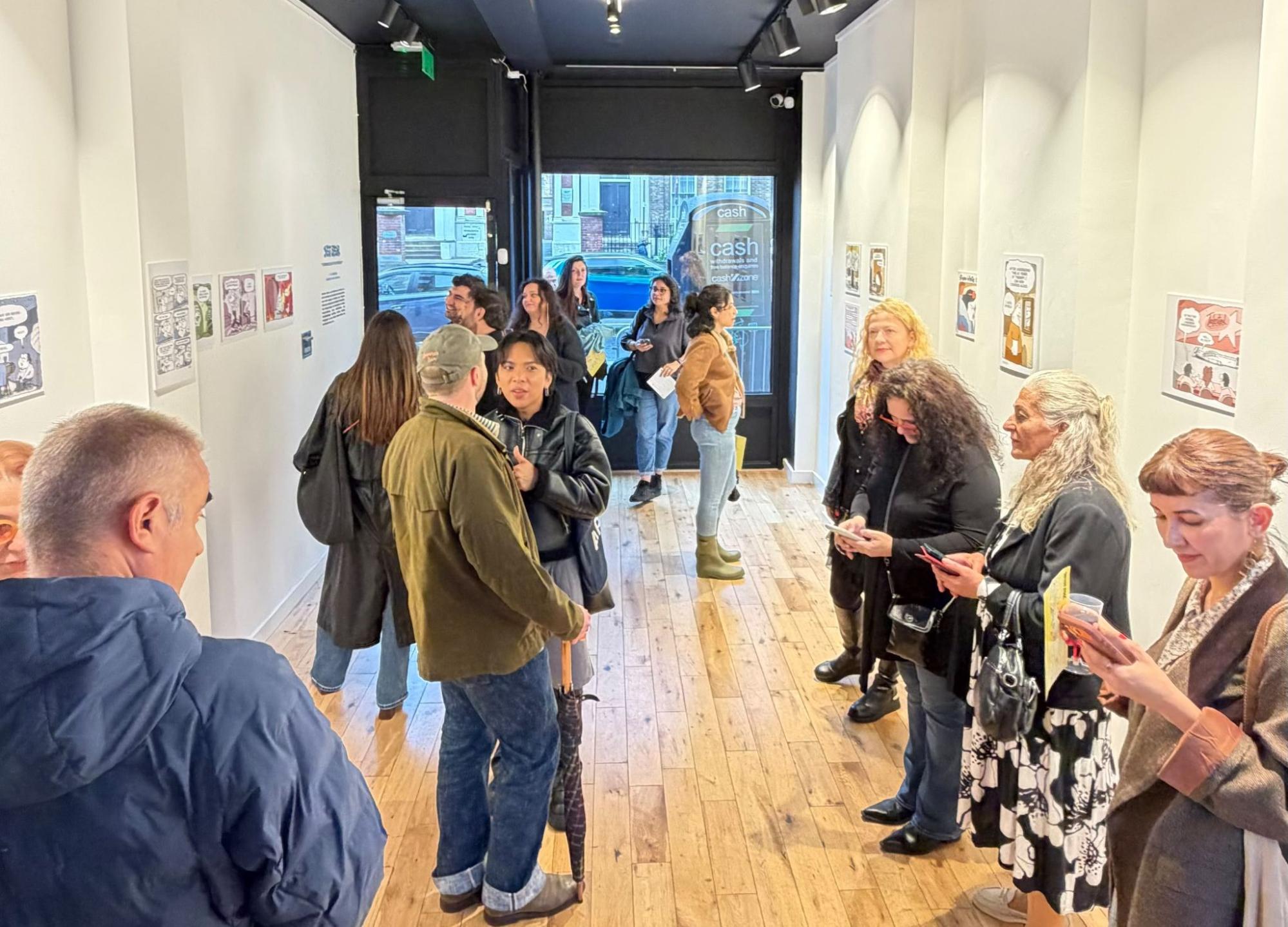
The drawings of Yiğit Özgür feature a heavy dose of satire, and this was on show in his exhibition at Versus Arts in East London, curated by İlayda Uzunarslan. It mixed the biting with the bawdy, and the humorous with the surreal.
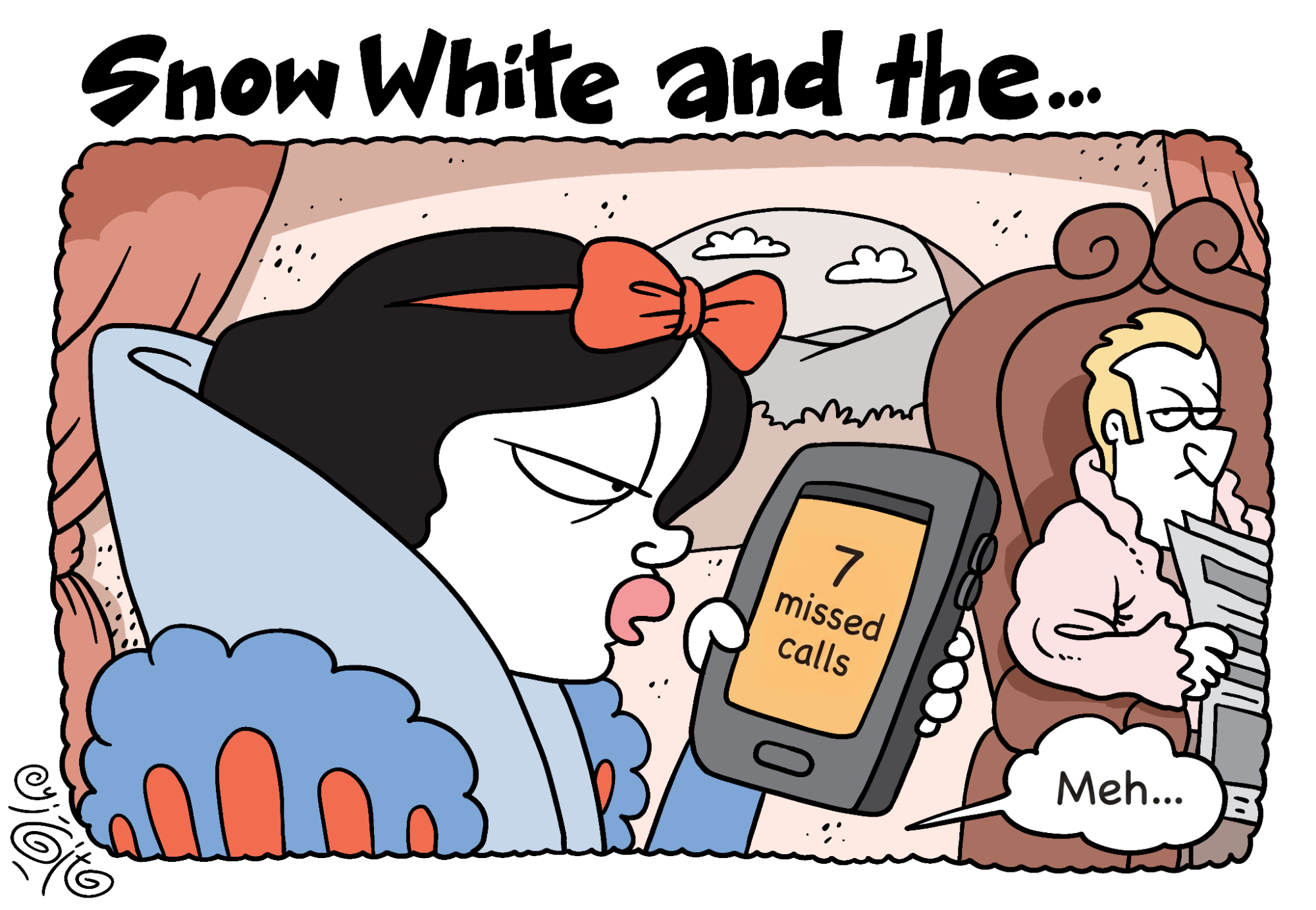
The work lampoons modern society as a man confesses that he hates himself after performing the latest dance craze, and the tale of Snow White takes a contemporary turn as she receives seven missed calls instead of from dwarves. These works highlight how absurd modern society can be when a satirist like Özgür turns the lens on it.
At times, there is an absurdist, surreal streak running through his works, such as a man entering hell and asking whether he should leave the door open or closed. Or in the case of a Michael Jackson impersonator at a talent show, he simply lies down because Jackson is now dead. It brings to mind the similar humour found in The Far Side by Gary Larson and the artworks of Glen Baxter, who uses it, though in his case, to take aim at American culture and art history.
There’s a bawdy streak running through his work as a man agrees with the sound a water cooler makes, when an attractive woman walks past, or when a lap dance turns out to be an excuse to defecate in a man’s lap.
While many cartoonists work in newspapers, there’s always been a close link between the medium and the fine art we see in galleries and institutions. Roy Lichtenstein often created large-scale reproductions of comic strip images, including his famous ‘Whaam’ piece, and Keith Haring also populated his works with crudely drawn characters. The trend continues today with artists such as Takashi Murakami and KAWS.
It’s clear that Özgür is always willing to take on a sensitive target, including one mocking the usefulness of therapy for certain individuals, featuring a man who suggests it takes many years of therapy just so he can say he hates himself out loud.
With stories of political corruption in the world, greater wealth concentration and new inane online trends, there’s clearly still a need for artists with satirical bite, and their potential inspirations seem endless. However, the world evolves, I’m sure Yiğit Özgür will be ready to send it up with his playful, incisive drawings.