HR looks simple from the outside. People assume it’s just hiring, contracts, and maybe planning the Christmas party. Then you actually work in HR and realise you’re dealing with humans at their best and worst, sometimes in the same day. The truth is, HR is a proper career. It takes skill, confidence, and a good mix of people smarts and business thinking. If you’re working in HR already, or trying to break in, these are the skills that matter most.
Clear communication (without sounding like a robot)
This is the big one. HR is basically communication all day, every day. You’re explaining policies, handling questions, writing emails, and dealing with sensitive conversations. You also have to adjust how you speak depending on who you’re talking to.
A casual chat with an employee is very different to briefing a manager. And both are different again in reporting to executives. Good HR people don’t just talk well. They make people feel heard, even when the answer is “no.”
Strong admin skills (because details matter)
Admin might not sound exciting, but it’s what keeps HR running. Leave, payroll, onboarding, contracts, performance records, and compliance paperwork all sit in this space. If your admin is sloppy, you end up with mistakes that can cost money, or worse, mistakes that turn into legal problems. The best HR people are organised, consistent, and good with systems. They don’t “wing it” with documentation.
Knowing the basics of HR and employment law
You don’t need to be a lawyer, but you do need to know the rules. Especially in Australia, where Fair Work and workplace obligations can get complicated fast. HR staff need a solid understanding of things like workplace rights, awards, leave entitlements, termination processes, and how to handle complaints properly. Even if you’re not the final decision-maker, you’re often the person making sure decisions don’t create risk.
Being able to handle conflict without making it worse
Conflict is unavoidable in workplaces. People get stressed. Managers make mistakes. Employees misread situations. Sometimes it’s serious, and sometimes it’s just poor communication. HR needs to stay calm, neutral, and practical.
You have to gather facts, listen properly, and guide people toward solutions. If you can’t manage conflict, HR will burn you out fast. But if you can, you become one of the most valuable people in the business.
Coaching and advising managers
A huge part of HR isn’t dealing with employees. It’s dealing with managers. Managers come to HR when they’re unsure what to do, or when they’ve left things too late. They might need help with performance issues, difficult conversations, or how to support a team properly.
Recruitment and selection skills
Hiring is one of the biggest ways HR shapes a business. Bad hiring decisions create stress, high turnover, and team culture issues. Good hiring builds a workplace that runs more smoothly. HR needs to know how to write job ads, screen applicants, run interviews, and spot red flags.
You also need to hire fairly, without bias or dodgy shortcuts. And once someone is hired, onboarding matters just as much. A bad onboarding process can lose a good employee quickly.
Employee experience and culture awareness
This is where HR has changed a lot in recent years. HR isn’t just policies and paperwork anymore. It’s also the experience people have at work. That includes how they’re treated, how they’re developed, how they’re recognised, and whether they feel safe speaking up. If you want to work in modern HR, you need to understand culture. You also need to know how to improve it in practical ways, not just with posters and buzzwords.
Why these skills matter more than ever
HR is changing. Workplaces are more flexible, teams are more spread out, and people are more vocal about what they expect from employers. That means HR needs to keep up. The job is no longer just about compliance. It’s about building workplaces people actually want to stay in. If you build these skills, you become the kind of HR professional businesses rely on. Not just when something goes wrong, but when they want to grow.
Study HR and culture skills here
If you want to work in modern HR, you need more than the basics; you need the skills that help you shape culture, support leaders, and create better employee experiences. Build modern HR and culture skills through studying HR at Edith Cowan University. Their postgraduate course will cover all the fundamentals of HR, equipping you with what you need to make a difference in your company.
Final thoughts
HR isn’t a “soft” job. It’s one of the most demanding roles in any organisation, because you’re dealing with people, pressure, and risk all at once. If you can communicate well, stay organised, understand the business, and handle people fairly, you’ll do well in HR. And you’ll be the kind of professional every workplace needs.
Anyone who’s done real touring knows how the night ends. The show’s over, you’re breaking down gear, someone’s hunting for a drive-through that’s still open, and by the time the van actually pulls out it’s past 2 a.m. and you’ve got four hours to the next city. Sound familiar?
That’s just how it goes. Has been for decades. But “that’s just how it goes” has also put a lot of musicians in bad situations on the road — and more touring artists are starting to treat safety like something worth actually planning for, not just hoping it works out.
Small changes make a real difference.
The Van Itself
Before anything else, the vehicle.
Most independent touring acts are still in a passenger van or a small cargo van packed with gear. Which is fine — but those vehicles need to be checked before the tour leaves, not after something goes wrong on I-40 at midnight.
Tires, brakes, fluids, lights. Basic stuff that’s easy to skip when you’re scrambling to get out of town. Don’t skip it.
The inside of the van matters too, and this one catches people off guard. Loose gear — cases, amps, lighting equipment, a random bag of merch someone tossed in last minute — can turn into a projectile during a sudden stop.
Strap things down. Pack tightly. Nothing should be sliding around the floor while you’re moving.
Problems from crashes like this can become legally complicated later, especially when touring vans share the road with large commercial trucks on busy routes like I-5 or I-10. In those cases, some people end up consulting a truck accident lawyer in Los Angeles County to understand liability and insurance issues.
Fatigue Is the Actual Enemy
This is the big one. Bigger than weather, bigger than route choices, bigger than almost anything else on this list.
Late shows mean late departures. You finish at 11, load out until 1, and now you’ve got a five-hour drive with one person behind the wheel who’s already been up since 9 a.m.
That’s not a minor inconvenience. That’s genuinely dangerous.
Rotating drivers helps enormously. Even in a three-piece band, you can set up a schedule where no one drives more than two or three hours at a stretch. It takes coordination but it’s not complicated.
Coffee works for about an hour. Movement works better.
For bands trying to keep up with touring schedules and promote new songs out today, staying alert on the road matters just as much as everything happening on stage.
Route Planning Has Gotten Smarter
For a long time, tour routing was just: what’s the shortest drive? That’s still part of it. But more tour managers now build in weather checks, look at construction zones, think about whether a slightly longer drive earlier in the day beats a faster drive at 3 a.m. through a mountain pass.
Apps help. Real-time navigation has made it genuinely easier to route around problems that didn’t exist when you were planning two weeks ago. Use them.
Sometimes the right call is just taking the slower road. That’s not a failure of planning. That’s planning.
Insurance — The Part Everyone Ignores Until They Need It
Independent artists especially tend to skip past this stuff. It’s not glamorous. It doesn’t come up in conversations about the set list or the merch design.
But tour insurance is worth understanding before you leave, not after something goes wrong. Basic coverage usually includes the vehicle, equipment, and some liability protection tied to performances.
Know what your policy actually says. Know what it doesn’t cover.
Keep the physical documents in the van — registration, insurance cards, emergency contacts. Somewhere you can actually find them at 2 a.m. in an unfamiliar state.
If You’re Actually in a Crash
Nobody wants to walk through this. Do it anyway.
Get out of traffic if you can. Check everyone for injuries. Call emergency services if needed — don’t try to assess that yourself and get it wrong.
Once the immediate situation is handled, document everything: photos of both vehicles, the road, any relevant surroundings. Get contact info from witnesses.
Contact the next venue as soon as you’re able. Promoters and talent buyers can usually work with delays if they know early. Silence is harder to work with than bad news.
If the crash happens somewhere like Los Angeles, local rules and insurance dynamics can get complicated fast. Some musicians in those situations are advised to hold off on detailed conversations with insurers until they’ve actually talked to someone who knows the landscape there. It’s worth knowing that’s an option before you’re in the middle of it.
What Actually Keeps Tours Safer
Touring is always going to mean long drives and weird hours and situations you didn’t plan for. That part doesn’t change.
But a van that’s actually been checked, gear that’s strapped down, drivers who aren’t running on four hours of sleep and adrenaline — it all adds up. The road gets a lot less risky when the people on it have thought about it in advance.
Take care of each other out there.
For more insights on music culture, touring life, and creative careers, check out more articles on our site.
Three hours under hot lights is not just a gig. It is an athletic event. If you would not run a half marathon without training, you should not play a full set without preparing your body the same way.
Touring musicians deal with cramped vans, late nights, and whatever gym happens to be near the venue. Staying fit on the road is less about perfection and more about smart, repeatable habits that travel well.
The Real Physical Demands Of Touring Musicians
According to research highlighted by Johns Hopkins Medicine, musicians experience injury rates ranging from 36% to 92% during their careers. That is not a small niche issue. If you are on tour, those odds are sitting in the van with you.
Guitarists battle shoulder and wrist strain. Drummers absorb repeated impact through elbows and lower backs. Vocalists push respiratory muscles and neck posture night after night.
The key shift is simple. Stop thinking like an artist who occasionally moves and start thinking like a performing athlete who happens to play music.
Compact Routines That Fit In A Backpack
You do not need racks and barbells to stay strong on tour. You need consistency and the right tools.
Bands, a mini massage ball, and your own bodyweight can cover most of what you need. A 20 minute hotel room session can reset your posture and protect your joints before load-in.
Focus on these three movement pillars:
Pulling work with resistance bands for upper back strength
Core stability drills like dead bugs and side planks
Hip mobility flows to counter hours of sitting
For guitarists, prioritize scapular control and wrist mobility. For drummers, add glute activation and thoracic rotation. Vocalists should include breath-control drills paired with gentle neck stability work.
This is not about crushing yourself. It is about preparing tissues for the stress they are about to handle.
Smart Pre-Show Warmups And Energy Strategy
A warmup should raise your heart rate, activate key muscle groups, and also rehearse the movements you are about to perform. Five minutes of brisk walking, band rows, and light dynamic stretches can make a noticeable difference in how your first song feels.
Energy is another piece musicians often mishandle. High dose stimulants can spike focus, then leave you flat mid set.
Many performers have found that adding a nootropic-enhanced pre-workout formula with low dose caffeine, L-theanine, beetroot, and electrolytes supports smoother focus and endurance compared to relying on coffee alone. When paired with hydration and proper fueling, balanced formulations can help sustain clarity without the jittery crash that shows up halfway through the encore.
The goal is steady output, not a nervous system rollercoaster.
Sleep Hygiene When The Show Ends At Midnight
Late shows shift your entire rhythm. Research summarized in 2024 sleep findings shows that consistently staying up late reduces deep sleep and increases the time it takes to fall asleep. If you are stacking shows back to back, that sleep debt compounds quickly.
You cannot always control call times, but you can control wind down habits. Dim lights after the show. Limit screens in the bunk. Keep caffeine earlier in the day when possible.
Even adding 30 extra minutes of quality sleep per night across a weeklong run can change how your body feels by the final city.
Injury Prevention For Guitarists Drummers And Vocalists
Prevention is less dramatic than rehab, but far more effective. Small adjustments made early keep you from missing dates later.
Here is what I tell touring players:
Rotate set lists to vary repetitive strain when possible
Use lighter sticks or optimized strap height to reduce joint load
Schedule brief mobility breaks during long travel days
Pain that lingers longer than a few days is information, not something to push through. Address it early with mobility, load reduction, and targeted strength work.
Your instrument should challenge your creativity, not your connective tissue.
Staying Tour-Ready Without Burning Out
Touring musicians can stay fit by stacking small, repeatable habits. Brief workouts, intentional fueling, steady energy support, and consistent sleep build durability across an entire tour, not just one night on stage.
Perfection is not required, preparation is. Share your strategies in the Our Culture Mag comments and keep the conversation moving.
In the landscape of mobile-based entertainment, vertical dramas have emerged as a global phenomenon, captivating audiences with their bite-sized narratives and engaging emotional arcs. Leading the charge at GoodShort, one of the industry’s frontrunners, is Executive Producer Hao Chen, who recently shed light on the unique production challenges and strategic insights behind delivering these high-performing series at breakneck speed.
With a decade of experience spanning production and post-production, Chen now serves as GoodShort’s Head of Studio and Executive Producer, overseeing the English-language content slate across key international territories including the US, Canada, UK, Turkey, and Ukraine. His journey into vertical storytelling was uniquely shaped by early work in influencer marketing and a keen observation of the microdrama industry’s explosive growth in China, which surged from $500 million in 2021 to over $7 billion by 2024. This background instilled in him an innate understanding of mobile-first content engagement and performance-driven storytelling.
Under Chen’s leadership, GoodShort has rapidly scaled its production ecosystem, rising to become the #3 vertical drama app in the U.S. by 2025 and generating approximately $220 million in annual revenue globally, according to company data and industry estimates. The series he has overseen have collectively garnered hundreds of millions of views worldwide. As vertical drama continues expanding globally, producers developing scalable production systems, including Chen, are increasingly viewed as helping define the operational blueprint for the format.
Blockbuster Vertical Hits and the Power of Emotion
“What these series have in common is strong emotional payoff, clear character stakes, and narratives where good ultimately prevails,” Chen explained. “These elements resonate particularly well with mobile audiences and helped set early benchmarks for viewer engagement, influencing pacing, cliffhanger construction, and character development across our slate.”
The Showrunner’s Vision: Blending Leadership and Storytelling
Having worn many hats across writing, production, and post-production, Chen identifies his favorite role as that of a showrunner and executive producer. “That position sits at the center of everything; creative vision, production execution, and audience impact,” he stated. “As a showrunner/EP in the vertical space, I’m not just overseeing logistics; I’m shaping the tone, pacing, and emotional arc of the series from the very beginning.”
He particularly enjoys owning the full journey of a project, from defining the “emotional engine” in development to ensuring creative intent survives budget realities, and finally shaping the rhythm and cliffhangers in post-production. “Ultimately, I like the showrunner/EP role because it combines leadership and storytelling. You’re responsible for the vision, the system, and the outcome,” Chen added.
Precision Under Compression: Budgeting for Speed
One of the biggest hurdles in vertical drama production, according to Chen, is achieving “precision under compression” when budgeting. GoodShort operates on an incredibly tight turnaround, with the entire process from development to release typically spanning just three months. Within this window, pre-production takes three to five weeks, and shooting is completed in a mere seven to ten days, covering 70-100 script pages – comparable to a feature-length screenplay – on a budget ranging from $160,000 to $200,000 per series.
“The key challenge is allocating resources where emotional impact matters most,” Chen emphasized. “In vertical drama, pacing and performance carry enormous weight. If a critical emotional beat feels underproduced, the audience disengages quickly. So budgeting isn’t about minimizing cost — it’s about strategic concentration. We prioritize casting, key emotional scenes, efficient location planning, and strong post-production pacing.”
An Efficient Model: Designed for Speed and Impact
GoodShort’s ability to maintain this pace is rooted in a meticulously designed system. “Efficiency starts in development. We lock core emotional arcs, major turning points, and structural cliffhangers early. That prevents expensive rewrites during production,” Chen explained.
In pre-production, intelligent consolidation is key. Locations are clustered, schedules are built around performance-heavy days, and departments align on a clear visual and tonal language suited for vertical framing. “Because vertical drama prioritizes emotional payoff over spectacle, we design coverage to support performance rather than over-shooting for safety,” he noted.
The “Secret” to Global Performance
Chen believes the “secret” to delivering high-performing series for global audiences lies in the fundamentals: “a good story, good performances, and good visual presentation.” Given the format’s reliance on close framing and intimate moments, actors shoulder much of the emotional weight. “Casting and performance direction often have a greater impact than scale or spectacle,” he said.
Crucially, execution must align with mobile behavior. “Audiences decide within seconds whether to continue watching, so pacing, cliffhangers, and emotional beats must land quickly and clearly,” Chen stressed. “High-performing series are designed with retention in mind from the script stage, not adjusted afterward.”
Advice for Aspiring Vertical Drama Producers
For those looking to enter this dynamic space, Chen offers three pieces of advice: First, understand the medium’s grammar: “Vertical drama is not shortened television. It has its own storytelling grammar — faster emotional beats, earlier hooks, and clear structural payoffs. Study how audiences engage on mobile,” he advised. He also says to Build Strong Fundamentals: “No matter the format, good story, good performance, and good visual presentation still matter most. Vertical budgets and timelines are compressed, but that doesn’t mean standards should be lower. Precision becomes even more important.” Chen also says to Think Operationally: Producers must be comfortable balancing creative ambition with logistical discipline to navigate the rapid development-to-release cycles, feature-length scripts, and tight shooting schedules.
Chen’s motivation remains deeply rooted in the unique audience connection fostered by vertical dramas. The emotionally affirming structures — where good triumphs over evil — resonate deeply, providing viewers with comfort and escape. His work reflects an ongoing commitment to shaping vertical drama into a sustainable global storytelling ecosystem, balancing scale with creative integrity while meeting audiences precisely where they are.
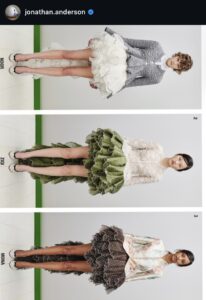
Believe it or not, Jonathan Anderson has finally run out of Dior firsts to debut. This time, he took us to the Tuileries Garden, sun shining suspiciously bright between the Louvre and Place de la Concorde in Paris’ 1st arrondissement. Turns out even the French weather’s rooting for Anderson’s Dior. For anyone who actually opened the show’s invitation, it all made sense, that little grey box held miniatures of the Tuileries’ signature green chairs, somehow stealing the spotlight from their full-sized counterparts.
@jonathan.anderson via Instagram
Anderson took the flower thing seriously, but who doesn’t love flowers? (If you’re the odd one out, zip it, I fear his reaction.) The maison’s usual white tent in the Tuileries was not an option this season. Building a bridge over a pond full of fake water lilies, then a loop around the audience’s very own glasshouse, though, was. And it became the runway, giving the impression that Monet’s water lilies at the nearby Musée de l’Orangerie had risen from their frames for a Dior cameo.
“I think that’s what’s quite interesting about parks somehow. Historically, Dior has always shown here. I always think of Pleasure Gardens, or even in Britain you have this idea of the promenade, people used to dress to go somewhere,” Anderson told Bella Freud from one of those green chairs, just minutes before the show. And what does one wear to go to the park, you ask? A Dior bar jacket, for starters. One reinterpreted as a tiny gray cardigan with peplum flair, teamed with a white tutu that looks like it borrowed a few layers from a wedding cake, somehow thinking it’s a skirt and a cloud, complete with a train waving hello in the wind. Now picture it in a trio of looks that could be distant cousins.
Poiret-inspired balloon pants and frock coats lined in shearing followed. Alongside, Mnsr. Dior’s 1949 “Junon” gown details, embellished jeans, asymmetrical skirts, scarf-wrapped shirts, dots, tulle, feathers, furry hems, lilies on pumps, and a whole lot of light drapes and floaty volumes to make your head spin. And somewhere between the ateliers and the pond, I remembered why we watch these shows, for the outfits, yes, but mostly for the existential questions they sneak in. Are we dressing bodies, or ideas? Who really inhabits the space, us or the garden? And right now, I’m just left wondering if I need a tutu for my next stroll.
There’s so much music coming out all the time that it’s hard to keep track. On those days when the influx of new tracks is particularly overwhelming, we sift through the noise to bring you a curated list of the most interesting new releases (the best of which will be added to our Best New Songs playlist). Below, check out our track roundup for Tuesday, March 10, 2026.
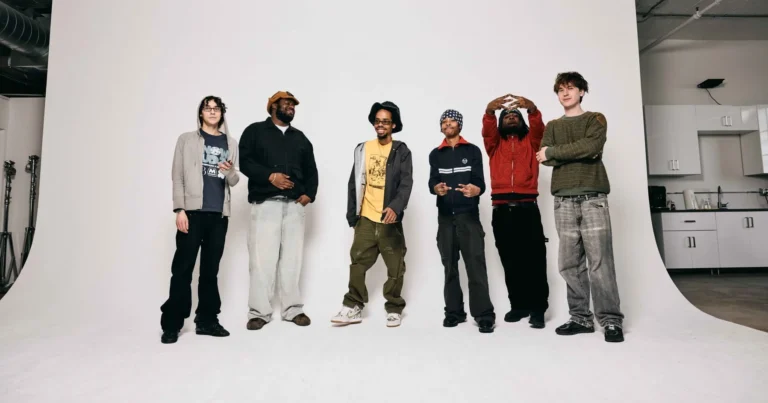
Earl Sweatshirt, MIKE, Surf Gang – ‘Minty’ and ‘Earth’
Earl Sweatshirt, MIKE, and Surf Gang have joined forces for a new double album titled Pompeii // Utility. Surf Gang produced the record, which is led by the double single ‘Minty // Earth’. MIKE leads the sinewy, bass-boosted ‘Minty’, by evilgiane and DC beatmaker/death metal musician Pentagrvm, while Earl’s Earth’, produced by SURF GANG member Harrison, is even hazier. It comes with an accompanying video directed by Ian Lopez and Richard Phillip Smith.
Modest Mouse – ‘Look How Far’
Modest Mouse have returned with their first new music since 2021’s The Golden Casket. “Look how far we’ve come/ Oh my god we’re so fucking dumb,” Isaac Brock sings on the track, whose frenetic attitude is augmented by the appearance of Janet Weiss on drums.
Thundercat – ‘ThunderWave’ [feat. WILLOW]
Thundercat has previewed his upcoming album Distracted with the WILLOW collab ‘ThunderWave’, which is just as slinky but more ethereal than you’d expect. The pair co-wrote the track with Greg Kurstin.
Bleachers – ‘dirty wedding dress’
Between Bleachers’ self-titled album and the upcoming everyone for ten minutes, Jack Antonoff got married. You probably knew that already. The new song ‘dirty wedding dress’, as lively as it is wordy, ultimately calls back to the “If you know, you know” refrain from Lana Del Rey’s ‘Margaret’ (about Antonoff’s wife Margaret Qualley) as it claps back at the “interlopers” trying to ruin the special day: “Now only my people can see me/ Only my people come in/ Everybody outside talkin’ they know/ But no, they don’t know.”
Rostam – ‘Like a Spark’
I’ve purposefully put Rostam and Bleachers side by side, given that Rostam co-produced Clairo’s Immunity before Jack Antonoff went on to work on her second album. (Rostam hasn’t worked with someone like Taylor Swift, though that would be interesting.) In fact, Clairo contributed vocals to Rostam’s new album, American Stories, announced today with the lovely, countrified ‘Like a Spark’.
Kim Gordon – ‘PLAY ME’
Ahead of the release of her new album PLAY ME on Friday, Kim Gordon has unleashed the title track. It teases the album’s “chill vibes,” as she intones, which diverge from the hazy and abrasive vibes of previous entries ‘NOT TODAY’ and ‘DIRTY TECH’.
Thurston Moore and Bonner Kramer – ‘Insight’ (Joy Division Cover)
Kim Gordon’s ex-husband and Sonic Youth co-leader Thurston Moore also has a track out today. It’s an eerily pensive cover of Joy Division’s ‘Insight’, recorded with Bonner Kramer for their upcoming album They Came Like Swallows – Seven Requiems for the Children Of Gaza. “Kramer had the idea to cover a Joy Division tune,” Moore said. “It was a left turn from the improvisations we had been tracking, though wholly in keeping with both our sensibilities of light and dark unifying in transcendent songwriting, both of us devotees of ‘the song’ as well as ‘the freedom.'”
Kramer added: “I clearly remember what I felt when I first heard track four of Unknown Pleasures. It was a masterpiece. A stroke of pure artistic genius. ‘Insight’ is a criminally under-appreciated tone poem; a benediction of loss, longing, and regret that still touches every cell in my body. It also features Hook’s finest bass guitar invention, singing to me like the sirens of Titan. I’d waited decades to ‘cover’ this trembling ode to the curse of being human, waiting until I finally had the perfect partner to help me re-imagine it and make it new again. Thurston gave the music the gentle magic and unhurried cries Ian Curtis’ words had always been screaming for, and singing it with him put me right back into that place, that feeling, that time when I first heard the sad pageantry of this tragic man’s exquisite warning: ‘Time won’t stop for you, or for anyone or anything. It owns us. Accept it, or be consumed by it.'”
Thomas Dollbaum – ‘Dozen Roses’
After last year’s Snocaps, we’re getting another album featuring MJ Lenderman on drums. That’s Birds of Paradise, the new LP from singer-songwriter Thomas Dollbaum announced today. Multi-instrumentalist Josh Halper and the Convenience’s Nick Corson also play on it, and Lenderman fires out a great guitar solo on the sharp, winding lead single ‘Dozen Roses’. “‘Dozen Roses’ is the second track on Birds of Paradise, a Part II to the album opener ‘Visitation’,” Dollbaum explained in a statement. “That song is an introduction of sorts to the themes of the record; ‘magical thinking’ is a way to process the world and the memories I have. ‘Dozen Roses’ is more about the passing of time, and acknowledgment of never feeling like there is enough of it. I also really feel like both songs (and the rest of the record) are grounded in the natural world, and sort of the magic that brings.”
Lowertown – ‘Big Thumb’
Olivia Osby and Avsha Weinberg’s vocal dynamic shines through on ‘Big Thumb’, the sprightly new single from their upcoming Lowertown album Ugly Duckling Union. It arrives with a music video directed by Jack Haven (I Saw The TV Glow). “‘Big Thumb’ was written during Olive’s obsession with collecting newspaper clippings and found pieces of writing. She had always wanted to write a song in the way the 90’s industrial scene had by using newspaper clippings to inspire lyrics. Olive collected many different clippings and writings for us and spread them out on the ground, so that when we would begin to play together, Olive on harmonica and me on 12-string guitar, we could sing the words that inspired us most,” Weinberg recalled. “What stuck was an almost mantra-like repetition of the words ‘Holding out the Big Thumb’ which became the song’s conceptual core. The song became a reflection on the feeling of directionlessness in our generation, and how the paths of life that were carved out for previous generations are now void. We are left to drift along aimlessly or hopefully carve out some brand-new path.”
Miss Grit – ‘Mind Disaster’
Miss Grit has shared a hypnotic new single, ‘Mind Disaster’, from their forthcoming album Under My Umbrella. The New York-based, Korean-American musician described it as “the one that really helped create the palette for the rest of the album for me. It’s my favorite instrumental on the record and so many good friends helped make it happen.” Those include Sae Heum Han (mmph), producer Luciano Rossi (Mui Zyu), drummer Preston Fulks (Momma), and Aron Kobayashi Ritch (Momma).
youbet – ‘Receive’
New York’s youbet have shared ‘Receive’, a ragged, frantic new single from their forthcoming self-titled album. “I wrote this chorus I really connected with years ago and struggled ever since to find the right song to put it in,” lead singer Nick Llobety recalled. “Receive is my third attempt. There are a few disparate themes here: self deprecation, exploitation, family survival, anger.”
runo plum – ‘Butterflies’
In our Artist Spotlight interview around her debut album, patching, runo plum said she has enough material for a second album. Today, the singer-songwriter has announced a new project, though it’s actually an EP. Bloom Again is out May 8, and it’s led by the wistful acoustic track ‘Butterflies’. “You might assume it’s about the giddy feelings of having nervous butterflies when you have a crush, and I suppose it is, but it’s more so about those feelings being crushed, and not knowing what to do with those feelings,” she shared. “I recorded the main guitars and vocals in my home studio in my apartment in Minneapolis, and Philip Brooks added drums, guitar and bass at their home studio in Germany, they have a way of adding depth to songs that feels so magical. It’s a really tender song I wrote during the period when I wrote patching.”
Deer Tick – ‘Mary Singletary’
Providence’s Deer Tick have announced their ninth studio album, Coin-O-Matic, arriving June 5 via ATO. It’s led by the incredibly hooky new song ‘Mary Singletary’, which is accompanied by a Colin Devin Moore-directed video. “Most of the stories on the album are from my parents’ generation and the generation before that, when the idea of a Catholic and a Protestant getting together was very scandalous,” singer/guitarist John McCauley explained. “With that song in particular, I liked the idea of writing about Catholic guilt and pre-marital sex and adding in a little bit of Looney Tunes-style violence — sometimes as a young Catholic boy, I did imagine a vengeful God cutting me down in a cartoonish kind of way.”
sadie – ‘Wash’
New York City artist sadie has announced her debut album, Better Angels, with the breezily escapist new single ‘Wash’. It’s due May 8. “I wrote this album during a sea change in my life — my 10 year relationship was ending, and I was about to turn 30,” she reflected. “I was feeling adrift in what sort of music I wanted to make. I returned to recording acoustic instruments, which I hadn’t done since college. I quit my day job, and began coaching a high-school girls soccer team. Working with kids made me feel acutely aware of the passing of time, and forced a reckoning on what sort of life I wanted to lead. The album captures all these feelings from this time, and, most of all, the grief of losing the most significant relationship in my life.”
DoYeon Kim – ‘The Beats of Distant Thunder’
New York-based, South Korea-born improviser and composer DoYeon Kim has announced her debut album, Wellspring, due May 1 on TAO Forms. Utilizing a traditional Korean silk-string zither called the gayageum, she’s joined on the record by drummer Tyshawn Sorey, double-bassist Henry Fraser, and Mat Maneri on viola. You can hear them bring to life ‘The Beats of Distant Thunder’ on the opening track. “This is the first time I open my hand to the world, a first greeting,” Kim remarked. “I wish people hearing this music [receive] energy and comfort. I want to be there with them.”
When do the seasons change in Animal Crossing: New Horizons? If you’ve spent any time on your island, you know it doesn’t stay the same month after month. Seasons in Animal Crossing: New Horizons influence almost every part of island life, from which bugs, fish, and sea creatures appear to which DIY materials you can gather and how your island looks at different times of the year. So, to help you make the most of your island life and collect every seasonal item, here’s when the seasons change in Animal Crossing: New Horizons.
Animal Crossing: New Horizons: When Do The Seasons Change
When you first create your island, you have to choose a hemisphere, northern or southern, and this choice affects how the in-game seasons progress. The seasons in Animal Crossing: New Horizons change every three months, following real-world timing, and they line up with your chosen hemisphere. During winter in the Northern Hemisphere, the Southern Hemisphere experiences summer, which also changes weather patterns, the blooming of bushes, and even auroras.
Each season begins at 5 AM local time, so seasonal items and events remain available until 4:59 AM on the day the season changes. Moreover, some events, like Turkey Day, occur in both hemispheres; however, their decorations and themes match the current season. Similarly, Mystery Island tours, Harv’s Island, and the May Day Tour follow the same season as your main island, so the look and activities change with the time of year.
Seasonal materials such as Cherry Blossom Petals, Acorns, Pine Cones, Summer Shells, Snowflakes, and holiday ornaments are only available during their respective seasons, and clothing, Mom items, and flowers sold at Nook’s Cranny rotate as well. Here’s when the seasons change in Animal Crossing: New Horizons:
Spring
Northern Hemisphere: February 25 – May 31
Southern Hemisphere: August 25 – November 30
Summer
Northern Hemisphere: June 1 – August 31
Southern Hemisphere: December 1 – February 28
Autumn (Fall)
Northern Hemisphere: September 1 – November 25
Southern Hemisphere: March 1 – May 25
Winter
Northern Hemisphere: November 26 – February 24
Southern Hemisphere: May 26 – August 24
And that does it for our Animal Crossing: New Horizons seasons guide. For more gaming news and guides, be sure to check out our gaming page!
Kacey Musgraves has a new album on the way. The follow-up to 2024’s Deeper Well is called Middle of Nowhere, and it’s out May 1 via Lost Highway. Here’s everything we know so far.
When did Musgraves start teasing the new album?
Musgraves put up billboards in several cities that read “Dry spell? Call for a real good time.” On March 9, she posted a teaser where she sings, “Ain’t nobody’s tool up in my shed / ain’t nobody’s boots under my bed/ Ain’t nobody’s truck in my drive/ For a late night call for a real good time.” Those lyrics turned out to be from the record’s lead single, ‘Dry Spell’, which came out on March 11 along with a video co-directed by Musgraves and Hannah Lux Davis.
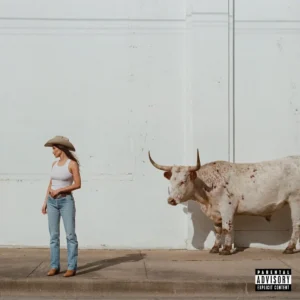
What does the album cover look like?
What about the tracklist?
1. Middle of Nowhere
2. Dry Spell
3. Back on the Wagon
4. I Believe in Ghosts
5. Abilene
6. Coyote [feat. Gregory Alan Isakov]
7. Loneliest Girl
8. Everybody Wants To Be a Cowboy feat. Billy Strings
9. Horses and Divorces [feat. Miranda Lambert]
10. Uncertain, Texas [feat. Willie Nelson]
11. Rhinestoned
12. Mexico Honey
13. Hell on Me
Who is featured on the new album?
Willie Nelson, Miranda Lambert, Billy Strings, and Gregory Alan Isakov guest on Middle of Nowhere. Longtime collaborators Daniel Tashian and Ian Fitchuk co-produced it.
What has Musgraves said about the new album?
In a press release, she said: “The bulk of this record was made during the longest single period of my life. I found that for the first time, it actually felt incredible being alone and existing in a space not defined by anyone else. I became fascinated with the concept of liminal space, both geographical and emotional. We don’t linger in these transitional, empty spaces long enough and rush to define where or whatever is next. I became so at ease with being in the ‘middle of nowhere’ in many senses and sitting in the un-comfort of the undefined.”
Did Musgraves release any music between Deeper Well and the new album?
Last year, Kacey Musgraves shared a cover of Hank Williams’ Lost Highway’ to mark her signing with the revived Lost Highway, which released her Grammy-winning 2013 debut, Same Trailer Different Park.“ Lost Highway was always a musical stable for artists who might be considered outliers or outlaws; those who live on the fringe,” she said at the time. “In 2011, when other record labels questioned my songwriting and my more traditional country sound, Lost Highway believed in me, signing me to my first label deal and helped me take my music around the world. That journey has now come full circle in such a special way with John Janick and Interscope and I’m deeply honored to be able to once again call Lost Highway my musical home.”
Rostam has announced his new album, American Stories, which is slated for release on May 15 via his own label, Matsor Records. The follow-up to 2021’s Changephobia is led by the new single ‘Like a Spark’. It comes with a video from American Stories: A Concert Film, which premieres later this spring. Check it out below, along with Rostam’s upcoming tour dates.
“At some point in making this record I realised the album I wanted to make was one that reflected my identity as both Iranian and American,” Rostam explained in a press release. “Pushing the most Iranian elements right up against the most American ones brought me a certain kind of joy. The first time I put microtonal saz melodies over Western guitar chords, I was thrown off by the way the two rubbed together. But the more I listened the more I became drawn to that rub. I became addicted to it.”
Commenting on the cover artwork, he added: “The presentation of the flag upside down is something that the Left, the Right, and the Native American Land Back movement have all made use of. It’s a symbology that’s shared by all these groups and yet could mean different things to each of us. I’m interested in that conversation; that conversation is fundamentally American.”
The record feautures contributions from fellow Iranian-American Amir Yaghmai (The Voidz), as well as Clairo on vocals (for ‘Hardy’), Yaghmai on saz, violin, and guitar, Daniel Aged on upright bass and pedal steel, Paul Cartwright on violin, Gabe Noel on cello and upright bass, Hamilton Berry on cello, Henry Solomon on flute and clarinet, and Andrew Tachine and Joey Messina-Doerning on drums. Tobias Jesso Jr. also co-wrote a couple of the songs.
American Stories Cover Artwork:
American Stories Tracklist:
1. Like a Spark
2. Back of a Truck
3. Different Light
4. Hardy
5. Forgive Is To Know
6. To Feel No Way
7. The Road to Death
8. Come Apart
9. The Weight
Rostam 2026 Tour Dates:
May 27 – San Diego, CA – Music Box*
May 30 – Los Angeles, CA – The Ford#*
June 3 – San Francisco, CA – The Chapel*
June 5 – Vancouver, BC – Fortune Sound Club!
June 6 – Portland, OR – Aladdin Theater!
June 7 – Seattle, WA – The Crocodile!
June 9 – Boise, ID – Neurolux*
June 10 – Salt Lake City, UT – The State Room*
June 11 – Denver, CO – The Gothic Theater*
June 13 – Minneapolis, MN – Fine Line KCMP/Electric Fetus*
June 14 – Chicago, IL – Thalia Hall*
June 15 – Toronto, ON – The Opera House*
June 17 – Cambridge, MA – The Sinclair*
June 18 – New York, NY – Webster Hall#*
June 19 – Philadelphia, PA – Brooklyn Bowl*
June 20 – Washington, DC – 9:30 Club!
June 22 – Saxapahaw, NC – Haw River Ballroom*
June 23 – Atlanta, GA – Terminal West*
June 24 – Nashville, TN – Basement East*
June 26 – Austin, TX – Mohawk*
Sept 8 – London, UK – Village Underground^
Sept 9 – Paris, FR – La Maroquinerie^
Sept 12 – Amsterdam, NL – Bitterzoet
Sept 13 – Berlin, DE – Berghain Kantine^
Sept 15 – Stockholm, SE – Nalen Klubb^
# = with Zsela
* = with Henry Solomon
! = with Henry Solomon + Elori Saxl
^ = with Bad Actor
Modest Mouse are back with their first new music in half a decade. The frenetic ‘Look How Far’ follows 2021’s The Golden Casket. “Look how far we’ve come/ Oh my god we’re so fucking dumb,” Isaac Brock sings on the track, which credits Janet Weiss on drums. Check it out below.