Sure, InVideo is excellent for creating AI-generated videos, especially once the initial learning curve is completed. Creators can use this tool to produce video content without much hassle. However, they often hit a wall once they download the footage. Users find themselves in need of manual editing for improvements or starting over to create videos intended for different platforms and use cases. It is the point where they start to look for InVideo Alternatives that help transform and enhance existing videos.
With that in mind, this article will explore alternatives to InVideo and highlight why Simfa shines as the best option to achieve faster post-production and more ways to reuse and repurpose content.
Best InVideo Alternatives in 2026
Simfa
Simfa’s video tools focus on transformation. In detail, the face and outfit swaps for videos offer scalability and reusability. Such features enable multiple testing and usage of the same footage without reshoots. For instance, swapping faces or outfits opens up unlimited ad variations, different campaign styles, and localized content for different markets. In the same way, the color grading tool adjusts tone and unifies visual branding. Realism is also not a concern, as Simfa employs a calibration-first process. It ensures that every detail of the source is carefully analyzed to deliver high-quality results.
Pricing
Free Access
Starter Package – $15 a month
Plus Package – $23 per month
Simfa+ Package – $99 a month
Enterprise Package – Customizable
Biteable
Biteable feels closer to InVideo in terms of approach. It primarily contains features and templates designed for creating or generating videos. Nonetheless, it does have a few editing tools that can help refine an existing video. These include trimming, merging, resizing, cropping, removing audio, and adding music or text overlays.
Pricing
Free Trial
Pro Package – $29 per month
Premium Package – $99 a month
Business Package – Customizable
VideoGen
VideoGen works more like a video generator. It has many tools for automated video assembly. Additionally, this option delivers powerful video editor features. In particular, it includes AI voiceovers, background music matching, script generation, B-roll selection, auto subtitles, and video translation. These features streamline video content enhancement for easier variations of the same idea. Because of this, VideoGen is often used for content iteration and brand integration.
Pricing
Free First Video
Pro Package – $24 per month
Business Package – $149 a month
Enterprise Package – Customizable
Kapwing
Kapwing sits somewhere between manual editing and automated transformation. It provides an online video editor that features a drag-and-drop timeline. Aside from this, there are also AI tools for B-roll generation, repurposing, AI dubbing, translation, and many more. With that said, it is clear that Kapwing emphasizes reusability, wider reach, and streamlined workflows.
Pricing
Free Access
Pro Package – $24 per month
Business Package – $64 a month
Enterprise Package – Customizable
Veed
Veed blends traditional online video editing and AI-powered editing. It supports a drag-and-drop mechanic, while also offering AI tools that allow quick editing fixes. Users can take advantage of features such as magic cut, AI translate, AI background removal, filler word removal, auto subtitles, eye contact correction, and more. All of these empower teams to easily produce video content without complex post-production tasks.
Pricing
Free Access
Creator Package – $20 per month
Pro Package – $44 a month
Studio Package – $70 per month
Enterprise Package – Customizable
Final Notes
The rise of InVideo alternatives comes as a gift to content creators. From editing video more easily to seamlessly scaling output, these additional options bring a new system for handling video content.
However, the question remains to be fully answered: Which of these tools gives users more value from the video they already have?
While each choice has something to offer, only one truly stands out. It is none other than Simfa. Why? The creators of this app understood that the problem is repetition and not only production. So, they built Simfa directly around solving that. It does not ask creators to start over or edit videos on their own. The featured video tools automate the process for them. True to its promise, using it feels like stepping into a creative lab. Ultimately, Simfa is the best in terms of making video content more flexible, reusable, and scalable.
Born in Accra, Ghana’s lively capital, Amoako Boafo has become a transformative force in contemporary African art. Renowned for his striking portraiture and figurative painting, this Ghanaian artist captivates global audiences with bold images and an emotionally charged style. His rapid rise from local art scenes to major international exhibitions marks a pivotal moment in the representation of black bodies within visual culture, inviting viewers into intimate dialogues with his sitters. As attention grows worldwide, Boafo redefines what it means to be a visual artist from Africa, engaging deeply with questions of selfhood, history, and celebration.
The roots of a remarkable artistic journey
Long before gaining recognition among curators and collectors globally, Amoako Boafo was influenced by Ghana’s vibrant creative heritage. Immersed in African diaspora culture, he observed and later depicted the ceremonies, relationships, and identities at the heart of his community. These formative experiences fueled his pursuit of a distinct artistic language.
While studying at the Ghanatta College of Art and Design, Boafo acquired structure and classical techniques that shaped his early approach. However, beyond academic training, lived experience and observation would guide him toward new horizons in portraiture and figurative painting, allowing his work to bridge tradition and innovation.
Early influence of identity and environment
Growing up in Accra exposed Boafo to diverse personalities and stories. Each brushstroke in his paintings carries the spirit of neighbors, friends, and relatives—voices woven into the collective narrative across his canvases. Themes such as black joy and subjectivity were not abstract concepts but everyday realities, leading him to create portraits filled with both clarity and complexity.
The city’s bustling streets and vibrant color palettes became a wellspring for Boafo’s evolving practice as a visual artist. By connecting personal experience with universal ideas, his innovative artistic approach ensures each painting resonates on multiple levels, firmly rooted in his background yet open to broad interpretation.
Navigating between tradition and self-invention
Many Ghanaian artists have worked within established traditions, yet Boafo quickly set himself apart by breaking away from conventional brushwork. Experimentation began with palette knives, soon evolving into his now-signature finger painting technique. This tactile method allowed him to evoke skin, gesture, and presence in unprecedented ways. Rather than distancing himself from cultural heritage, these explorations deepened his connection to narratives passed through generations.
This balance—honoring Ghana’s past while seeking new forms—defines Boafo’s path. Over time, his distinctive use of finger painting to render faces and figures became a hallmark, setting his work apart in the realm of contemporary African art.
The fingerprint: amoako boafo’s transformative finger painting technique
No aspect of Boafo’s process is more iconic or technically innovative than his celebrated finger painting technique. Eschewing traditional brushes, he applies oil paint directly with his fingers, especially when portraying the skin of his subjects. Through sweeping, pressing, and blending colors, he constructs luminous surfaces that pulse with energy and immediacy.
This direct contact infuses every portrait with warmth and vitality. The visible rhythm of each layered stroke brings a unique choreography of color and form, distinguishing his work from impersonal or mechanical application. The physicality of his marks animates and dignifies his subjects, transforming them from passive figures into active participants within their own depiction.
Reimagining representation of black bodies
Central to Boafo’s vision is the intentional reframing of how black bodies are shown in art. His finger painting method individualizes texture and shade, countering stereotypes often perpetuated in dominant visual histories. By shaping his sitters’ identities with his own hands, Boafo foregrounds authenticity and empathy, moving away from distance or spectacle.
Every contour formed without mediation echoes his dedication to celebrating black joy and subjectivity. This approach invites careful observation and nuanced understanding, encouraging viewers to engage with each work on a deeper level.
Crafting emotional intimacy through direct touch
Finger painting bridges the divide between creator and subject. For Boafo, touch serves both literal and symbolic functions, linking the artist’s body and intention to the sitter’s spirit. Subtle shifts in pigment, pressure, and layering convey mood and character, producing psychological depth alongside visual brilliance.
This innovative artistic approach aligns closely with values found in contemporary African art, where individuality and collective memory intertwine. Each portrait becomes a testament to shared humanity, narrowing the gap between viewer, artist, and muse.
Celebrating african diaspora culture on the global stage
Boafo’s swift ascent in the art world reflects his ability to blend regional authenticity with universal resonance. His painted figures remain grounded in Ghanaian life, yet their aspirations, gestures, and confidence speak broadly to the culture of the African diaspora. Bold patterns, carefully chosen accessories, and dynamic postures showcase a spectrum of bodies and styles, honoring the diversity of black experience worldwide.
By centering black joy and subjectivity rather than pain or exoticism, Boafo opens new avenues for thinking about representation. Friends, family, and models become empowered protagonists, prompting audiences to reconsider the role of African artists in shaping debates about contemporary identity.
Influence on contemporary african art
Amoako Boafo stands out within a new generation challenging reductive tropes. While earlier West African works often focused on colonial legacies or ethnographic themes, Boafo places modern lives and ambitions at the forefront. His portraits amplify voices historically overlooked by both European institutions and local art canons.
This commitment makes his paintings timely and enduring. International audiences now look to Boafo for an expanded vision of contemporary African art, recognizing the importance of his contributions for the future of creative expression across the continent.
Connecting communities through art exhibitions and galleries
Participation in prominent art exhibitions and galleries has propelled Boafo’s message onto the global stage. Major showings in Vienna, London, Los Angeles, and New York highlight the ambition and diversity of African diaspora culture. At each venue, reactions underscore both the formal innovation of his methods and the optimism radiating from his representations.
Galleries throughout Europe and North America have swiftly acquired and displayed his work, sparking conversations among collectors and critics alike. These encounters foster dialogue around inclusivity, agency, and trends in figurative painting, all seamlessly integrated within Boafo’s compelling tableaux.
Major international surveys and solo exhibitions showcase Boafo’s evolving style.
Museum acquisitions powerfully affirm the importance of Ghanaian and African diaspora artists.
Collectors eager for work that bridges cultural boundaries find inspiration in his vivid scenes.
Scholarly interest continues to grow around his impact on the representation of black bodies.
Signature motifs and evolving narratives in portraiture
Within Boafo’s expanding body of work, certain visual motifs persist and evolve. His sitters exude poise, often gazing assertively or enigmatically. Striking clothing and elaborate prints celebrate self-expression, while expressive backgrounds frame each figure without overpowering them. Attire may reference traditional Ghanaian patterns, seamlessly blended with cosmopolitan influences.
The interplay between vulnerability and pride remains central. Through thoughtful choices in pose and palette, Boafo positions his muses as protagonists, not mere objects of observation. Small details—a clasped hand, uplifted chin, or off-center stance—signal depth and self-possession, urging viewers to look beyond surface impressions.
An evolving dialogue on identity and visibility
As Boafo’s career advances, his artworks continue to fuel conversation on blackness and visibility. Sometimes introspective, sometimes exuberant, each portrait stretches the possibilities of portraiture and figurative painting. Gender, age, and personality intersect naturally, reinforcing the dignity and diversity present in black communities around the globe.
This ongoing evolution keeps collectors, curators, and fellow artists attentive to his next moves. Whether exploring solitary reflection or outward confidence, Boafo’s perspective returns consistently to questions of recognition, value, and belonging within broader visual culture.
Technique meets tradition: lasting imprint as a visual artist
Boafo’s artistic trajectory exemplifies the balance between honoring Ghanaian heritage and pioneering contemporary methods. His finger painting technique sets him apart from peers, yet underlying values connect him to deep artistic lineages across Africa and the wider diaspora. This constant tension injects vitality into his practice, making every work both homage and innovation.
With each exhibition and completed canvas, Boafo’s legacy shapes critical conversations on inclusivity, progress, and the myriad ways artists visualize identity. The result is a robust contribution built on originality, curiosity, and steadfast commitment to amplifying underrepresented voices in today’s global art scene.
Questions about amoako boafo and his groundbreaking art
What distinguishes Amoako Boafo’s finger painting technique from others?
Boafo applies oil paint using his fingers instead of traditional brushes, especially for skin tones and facial features. This method leaves visible gestures that enhance the sense of presence and texture. Finger painting builds an intimate connection between artist and subject, making each portrait uniquely expressive. Many see his tactile approach as adding emotional intensity and realism not commonly achieved through tools alone.
Emphasizes individuality in representations of black bodies
Highlights textural variations across each canvas
Encourages viewers to consider the physical act of painting
How does Boafo contribute to the discourse on contemporary African art?
Boafo challenges stereotypical motifs by presenting black figures as empowered, nuanced individuals. Instead of focusing on hardship or exoticism, his works celebrate black joy and subjectivity within everyday life. Curators, critics, and audiences recognize his role in reshaping the conversation around African artists internationally, placing equal value on innovation, authenticity, and cultural storytelling.
Cultivates pride and agency in every depiction
Expands definitions of portraiture and figurative painting
Inspires new approaches to representing African diaspora culture
Which recurring themes feature prominently in Boafo’s artwork?
Frequent themes include the assertion of identity, celebration of black joy, pride in self-presentation, and exploration of human complexity. Many portraits highlight stylish dress, confident stances, and direct gaze, underscoring agency and charisma. Cultural references sometimes blend rural-urban tension or dialogues between tradition and contemporary sensibility.
Representation of diverse personalities in the African diaspora
Experimentation in color and pattern work
Balancing introspection with extroverted energy
Where have Boafo’s paintings been exhibited internationally?
Boafo’s work has appeared in Europe, North America, and Africa, frequently featured in both group and solo exhibitions. Prestigious galleries in cities such as Vienna, London, Los Angeles, and New York have highlighted his portraits. Museums and private collections rapidly added his pieces, increasing the demand for further displays.
For people exploring niche online marketplaces, one of the most common questions is simple: is FeetFinder worth it? The platform is widely known as a place where users can sell and buy feet content, but curiosity alone is not enough to tell you whether it is the right fit.
Reading a detailedreview of FeetFinder platform can help sellers understand how it works, what they can realistically expect, and whether the earning potential matches the hype.
The short answer is that FeetFinder may be worth trying for some sellers, but it is not a guaranteed income stream. Like most online platforms, success depends on profile quality, consistency, pricing, audience appeal, and how well you market yourself within the platform’s rules.
Why FeetFinder Gets So Much Attention
FeetFinder has gained attention because it offers a more specific marketplace than general social platforms. Instead of trying to promote content in spaces that are crowded or poorly suited to niche selling, users are entering a platform where buyer intent is already present.
That is a big part of the appeal. Sellers are not starting from zero in a random corner of the internet. They are joining a marketplace built around a known category, which can make it easier to understand the audience and position content more effectively.
For beginners, that focused environment can feel less confusing than building an audience independently. At the same time, a niche marketplace also means more direct competition, so simply creating an account is rarely enough.
What Sellers Should Realistically Expect
A lot of new users join platforms like FeetFinder with the hope of easy money. That expectation is usually the first mistake. While some sellers do earn, the outcome depends on effort, presentation, and patience.
New sellers should expect a learning curve. This includes creating a strong profile, understanding what buyers respond to, improving photo quality, setting clear prices, and staying active. In most cases, results are not instant, and earnings can vary significantly from one seller to another.
It is also important to separate possibility from probability. Yes, people can make money on niche content platforms. That does not mean every account will perform well or that every seller will see meaningful income right away.
The Main Benefits of Using FeetFinder
One of the biggest advantages of a platform like FeetFinder is that it gives sellers access to a targeted audience. That alone can save time compared with trying to attract buyers through broader platforms where the niche may not be welcome or visible.
Another benefit is structure. Marketplaces often make it easier to present listings, manage interactions, and understand what kind of content buyers are looking for. For someone new to this space, that can be easier than piecing together multiple apps, payment tools, and promotional channels.
There is also the appeal of testing the market without building a full personal brand from scratch. Some users simply want to see whether this niche works for them before investing more time elsewhere.
The Potential Drawbacks
The biggest drawback is competition. If a platform becomes well known, more sellers join, and standing out becomes harder. That means better visuals, better profile presentation, and better consistency start to matter more.
Another issue is expectation management. Some users hear success stories and assume similar results will happen quickly. In reality, niche marketplaces often reward persistence more than excitement. A strong first week is possible, but many accounts take longer to gain traction.
Fees, account setup requirements, and platform limitations can also affect whether the experience feels worthwhile. A seller who wants complete control may find a marketplace restrictive, while a beginner may see the same structure as helpful.
Is It a Good Option for Beginners?
For beginners, FeetFinder can be a reasonable starting point because it offers a clearer entry into a niche market than trying to generate traffic independently. It gives sellers a place to learn how presentation, pricing, and consistency affect buyer response.
That said, beginners should treat it as an experiment rather than a guaranteed side hustle. It is a platform to test demand, learn what performs well, and decide whether the niche suits their goals. People who approach it with patience are more likely to find value than those expecting instant returns.
What Makes a Seller More Likely to Succeed
Success usually comes down to a few basics. Good images matter. A complete and professional-looking profile matters. Clear communication matters. Consistency matters even more.
Pricing strategy also plays a role. Sellers who price too high too early may struggle to gain momentum, while those who undervalue themselves may make the work feel unsustainable. Finding the right balance takes time and often requires testing.
There is also the reality that niche platforms reward effort outside the upload itself. Thinking about branding, profile appeal, and user trust can make a meaningful difference over time.
So, Is FeetFinder Worth It?
FeetFinder can be worth it for sellers who understand what they are signing up for. It may offer a more direct route into a niche market, but it is still a platform where competition, effort, and consistency shape the results.
For people who want to test the space, learn how the market works, and explore whether the niche fits their goals, it can be a useful option. For people expecting fast, easy income with little effort, it may feel disappointing.
The smarter way to look at it is not whether FeetFinder works for everyone, but whether it works for your expectations, your effort level, and your willingness to treat it like a real platform rather than a shortcut.
So I spent way too much time falling down this rabbit hole last month. Not in a weird way—well, maybe a little weird—but I was genuinely curious about something I kept seeing online. Webcam performers. Not the sites themselves, but the actual people doing this work. The industry around it. How it became this whole… thing.
I blame Twitter. Someone I follow was talking about how webcam performing has basically become the indie music of the 2020s. And that got stuck in my head. So yeah, I went looking.
What surprised me—and I mean actually surprised—was how normal it all is. Not in a sanitized “we don’t talk about sex” way. Normal like… this is a legitimate profession now. With schedules and regulars and people who genuinely care about their craft.
There’s this performer I kept reading about (not watching, reading—just to be clear) who has like 2,000 regular viewers. She’s got a whole thing where she does book reviews on stream sometimes. Just sits there, talks about what she’s reading, people hang out. She’s basically got her own media empire at this point. Different from traditional streaming? Sure. But structurally? Same mechanics.
The thing that actually got to me was something this one creator said in an interview. She was talking about how the job gave her financial independence at 22. Like, she could leave her retail job that was crushing her mental health. Pay for her own apartment. Support her family a little bit. She said “nobody talks about that part.” And she’s right. Everyone wants to debate the ethics of the industry or make it into something sensational, but nobody’s talking about the person who actually paid off her student loans doing this.
It’s kind of like YouTube in that way. Someone discovered YouTube was a viable career path, and suddenly you had millions of people thinking “wait, I could actually do this.” Same happened with webcam platforms. And most of the people doing it are just… working. Trying to build an audience. Figuring out what content works. Having good days and terrible days.
The landscape is honestly wild if you actually look at it. There are people who do 2-3 minute shows. People who stream for 8+ hours. Some focus on one specific thing, others are generalists. The sheer range of content means there’s basically something for every interest. Which sounds obvious when I say it, but the actual specificity is kind of stunning. You’ve got people who specialize in conversation, people who specialize in particular performance styles, people who’ve basically built entertainment formats nobody’s ever seen before.
What got me was how this isn’t some fringe thing anymore. It’s real infrastructure. Real businesses. There are people who’ve been doing this for 10+ years. They’ve got loyal audiences. They’re making serious money. They’ve figured out how to turn attention into a sustainable income.
I’m not here to convince you it’s the future of work or whatever. But I think we’re massively missing the point if we keep treating this like it’s just a novelty or a moral panic. It’s not. It’s people finding markets for their time, their energy, their creativity. Sometimes their bodies, sure, but also their personalities, their humor, their ability to connect with people.
The weird part? I was looking for something salacious or weird and what I found was… mundane. Boring, even. People logging in. Building audiences. Dealing with platform algorithm changes. Worried about paying taxes. Having day jobs on the side to help. Trying to figure out the business side of things.
One creator I read about—and I’m genuinely not making this up—keeps a spreadsheet of her best-performing hours, audience demographics, and content ideas. Like she’s running an actual business. Which she is.
So if you want to know more about the creators and how platforms actually work, there’s a lot more to discover than you might think. Live cam show categories via SparkyMe.com show just how diverse this whole ecosystem has become. It’s not one thing. It’s hundreds of things. Hundreds of different people trying hundreds of different approaches.
The industry got bigger, faster, and way more legitimate than anyone expected. That’s not happening by accident.
Schitt’s Creek co-creator and star Dan Levy is back on television with Big Mistakes, a dark Netflix crime comedy about two siblings who become “the most disorganised duo in organised crime.” With such an enticing tagline, how could we resist?
The show premiered to a decent amount of online buzz and gained 2.7 views during its first week on the platform. It also made the Top 10 in nine countries, sparking conversations about what the future may bring. Could these chaotic characters return in a follow-up? Here’s everything we know.
Big Mistakes Season 2 Release Date
Netflix is yet to renew the series for additional episodes. There’s no need to panic just yet, as the streamer often waits a while before making a decision either way, likely to assess viewership.
That said, we choose to be cautiously optimistic. While numbers aren’t spectacular, this is the kind of show that grows on you. Plus, Dan Levy stated it could go on for years. “I know how the entire show ends,” he told People, hinting that the story is far from over.
If all goes well, Big Mistakes season 2 could arrive in the first half of 2027.
Big Mistakes Cast
Dan Levy as Nicky
Taylor Ortega as Morgan
Laurie Metcalf as Linda
Jack Innanen as Max
Boran Kuzum as Yusuf
Abby Quinn as Natalie
What Could Happen in Big Mistakes Season 2?
In Big Mistakes, one bad decision sparks a deranged chain reaction. The series follows siblings Nicky and Morgan, two wildly unqualified people who find themselves pulled into the world of organised crime.
It all starts as a desperate attempt to help their ailing grandmother by stealing a necklace. Unfortunately, things spiral, and the siblings are blackmailed into working for dangerous criminals. Completely out of their depth, they stumble through each situation, barely keeping themselves alive.
We won’t give away spoilers, but the first season finale drops a bomb that will make the siblings’ lives even more complicated. To call the family dysfunctional would be an understatement, but it’s fun to watch these characters navigate their dire new circumstances. Big Mistakes season 2 can’t come soon enough.
Life today moves at a breakneck speed, and the concept of culture has expanded far beyond the galleries and concert halls. It’s now deeply embedded in how we choose to live our daily lives. We’re constantly curated, from our social media feeds to the coffee shops we frequent.
But beneath the surface of this aesthetic lifestyle lies a fundamental need for stability. Honestly,
I’ve spent far too many mornings scrolling through beautiful interiors while feeling a low-key hum of anxiety about my own bank balance. We often talk about the pursuit of passion and the importance of creative expression, but we rarely discuss the practical foundations that allow these pursuits to flourish.
True creative freedom isn’t just about the absence of boundaries. It’s about the presence of security.
When we feel secure, our minds are free to wander. We can take risks, explore new ideas, and invest ourselves fully in our projects. Conversely, when we’re constantly looking over our shoulders, waiting for the next financial or logistical hurdle, our creativity is stifled. The struggling artist trope is romanticized in films, but in reality, chronic stress is the enemy of innovation. I guess it is hard to paint a masterpiece when you are worried about how to pay for the canvas.
But does it have to be this way?
To truly engage with our culture and contribute something meaningful, we must first ensure that our own house is in order. This involves a shift from a reactive mindset to a proactive one. One of the most practical ways to build this foundation is by looking at our daily logistics. For many of us, the ability to move freely through the world is central to our lifestyle. Whether it’s commuting to a studio, driving to a remote landscape for inspiration, or simply running errands that keep life moving, our vehicles are essential tools.
And that is where the practical meets the personal.
Understanding the nuances ofcar insurance is a vital part of this logistics chain. It’s not about preparing for a catastrophe, exactly. It’s about ensuring that a minor mishap doesn’t derail your momentum. When you’ve got the right protections in place, you’re essentially buying back your mental energy. And that’s the point. You are protecting your time.
What would you do with that extra headspace?
The Psychology of Minimalist Security
There’s a growing movement toward minimalism, not just in our physical spaces, but in our mental ones. We’re learning to strip away the noise and focus on what truly matters. In terms of personal security, this means finding the right balance between being over-prepared and being vulnerable. You don’t need a bunker, but you do need a safety net.
Think about the mental energy consumed by the what-ifs. These tiny, nagging thoughts act like background apps on a smartphone, slowly draining the battery. By the time you sit down to write, paint, or design, you’re already operating at a deficit. You know that feeling when the hum of your laptop fan seems louder than your own thoughts? That is the sound of mental drain.
When you formalize your protections, you close those background apps.
It permits you to be present. This is the intersection of finance and mindfulness. It’s a recognition that your external stability heavily influences your internal state. Why leave your peace of mind to chance? Maybe it is time to take a breath and look at the fine print.
Resilience as a Cultural Value
Our culture often prizes resilience, yet we frequently misunderstand what it means. Resilience isn’t about never falling. It’s about having the structures in place to get back up quickly. In a fast-paced society, the time it takes to recover from a setback is crucial. If a financial shock takes you out of the creative game for months, that’s a significant loss of potential.
Building a resilient lifestyle requires a combination of liquid savings, a supportive community, and professional protective measures. It’s about creating a buffer between you and the unpredictable nature of the world. This proactive stance is a form of self-respect. It says that your work and your peace of mind are worth protecting. Honestly, it is the most adult thing you can do for your inner child.
Curating Your Financial Environment
We spend so much time curating our homes and our wardrobes, but how much time do we spend curating our financial environments? The services we use and the protections we choose are just as much a part of our lifestyle as the art on our walls. They should reflect who you actually are.
If you value flexibility and transparency, your financial tools should mirror that. In an era where information is at our fingertips, there’s no excuse for remaining in the dark about how to safeguard your assets best. Taking the time to research and understand your options is a sign of a mature, grounded approach to modern living.
But is it really as complicated as we make it out to be? Probably not.
The Link Between Safety and Spontaneity
It might seem counterintuitive, but the more structure you have in your life, the more spontaneous you can afford to be. When the boring stuff is handled, you can say yes to a last-minute road trip or a sudden opportunity to collaborate on a project. You don’t have to check your bank account or worry about the hidden costs because you’ve already accounted for the risks.
This is the ultimate goal of intentional living. It’s not to eliminate risk, as that would lead to a very dull life. The goal is to manage risk so that it doesn’t manage you. By taking care of the fundamentals, you open the door to a life that’s rich, varied, and deeply engaged with the world.
Moving Forward with Confidence
As we continue to navigate a complex and often unpredictable world, let’s reframe how we think about protection. It’s not a burden or a boring necessity. It’s a tool for liberation. It’s the invisible infrastructure that supports the visible beauty of our lives.
Start by auditing your own safety nets. Are they sufficient for the life you want to lead? Address these areas with the same creativity and intention you bring to your other pursuits. You’ll find that as your sense of security grows, so does your capacity for joy and creative expression.
In the end, the most beautiful thing you can create is a life that feels authentic and secure. A life where you’re free to explore, to fail, and to begin again. That’s the true essence of a well-lived life in our modern culture.
Shiny Pokémon haven’t been left out of Pokémon Champions, and they’re still just as rare and worth showing off as ever. Shiny Pokémon are alternate-colored versions of regular Pokémon, and while they don’t give you any stat advantages, their low appearance rate makes them highly sought after by players who want something a little more unique.
Traditionally, you can find Shiny Pokémon by exploring the wild or grinding through repeated encounters, but since Pokémon Champions doesn’t feature any exploration or catching, shinies appear when you recruit new Pokémon. Here’s how to get Shiny Pokémon in Pokémon Champions.
Pokémon Champions: How to Unlock Shiny Pokémon
There are basically two ways to get Shiny Pokémon in Pokémon Champions: either through the Roster Ranch recruitment system or by transferring them using Pokémon HOME.
To get a Shiny Pokémon via the Roster Ranch in Pokémon Champions, head to the Recruit menu and generate a lineup of Pokémon. As the animation plays, three silhouettes will appear, and if the final one is accompanied by sparkles, a bright glow or a star effect, that means a shiny is included in that lineup.
Once the Pokémon is revealed, you can check its stats, moves, and appearance before deciding to add it to your team, either temporarily or permanently.
The second way is by transferring a Shiny Pokémon from another game using Pokémon HOME. You’ll need to move your shiny into Pokémon HOME first, then select Pokémon Champions from within the app and send it over. After that, you can collect it in-game through the Recruit section. The Pokémon will keep its shiny appearance and core attributes, although some moves may need to be adjusted for competitive play.
Keep in mind that Shiny Pokémon in Pokémon Champions can’t be sent back to PokémonHOME, so once they’re added to your roster, they will stay there. Moreover, some Pokémon might also come with moves that don’t work in Champions, so you’ll need to swap those out before you can take them into battle. On top of that, box space is limited early on, so you’ll need to be selective about which Pokémon you want to keep.
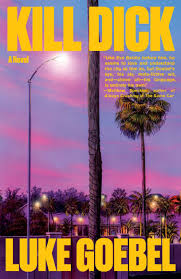
Luke Goebel doesn’t enter my Zoom call, “KILL DICK” does. It’s a sensible stone in the path for an all-out burst of promotion that has included graffiti in Los Angeles, merchandise, a FLAUNT party, and a playlist. The marketing mirrors the book, Goebel says, and Kill Dick goes off like a bomb—a cutting commentary on wealth, homelessness, artistic deprivation and those who profit off the weakest members of our society. It’s a realistic satire with its claws firmly in the present, as if Chuck Palahniuk and Joan Didion wrote one LA’s final episode.
In the novel, Susie Vogelman is a drugged-out 19-year-old NYU dropout resting poolside at her father’s place when a string of horrific murders shock the city. She leaps into action after the re-emergence of Peter Holiday, her former teacher who sets up a halfway house for homeless addicts in an attempt to find his long-lost brother. And her best friend Faia is the heir of the Sickler dynasty, whose CEO is poisoning the world one Oxy at a time. (Her father may or may not have a vested interest in Sickler’s success).
Darkly funny and unabashedly sharp, Kill Dick is a novel uniquely for our time—and a wake-up call for reality. OurCulture sat down with Luke Goebel (who did, in fact, enter my Zoom) to talk about his grief, addiction, and guerilla marketing.
Congratulations on your new novel! How does it feel now that it’s out?
It feels a little like the opening of the sex-party chapter in the book, the homage to Eyes Wide Shut, where Susie talks about Los Angeles having its own force field. You’re either striving to make it, or you already made it and you’re trying to remain relevant and do the next thing. It’s cool to be seeing positive press. And then the OCD, paranoiac part of me is like: all right, how many felonies could I face for this? The stencil campaign, the massive amount of graffiti in the city… I think about whether the family that makes Oxy will want to do a little lawsuit dance. But anybody who hasn’t at least been charged with a few felonies in life… What are they doing writing a book?
Kill Dick feels so connected to our current world, despite it taking place a decade ago. What were some of the strands from reality you wanted to explore further?
I grew up in a little town of 2,500 in the fallout of a Christian cult that my parents met in. I grew up with people talking to me about Satan in the VCR and Hollywood, but later I ended up working in Hollywood. My dad was a Jewish acidhead who found Jesus, joined this cult, then moved into more mainstream culture and became vice president of a Fortune 500 company in Dayton, Ohio. But he was still playing us records by outlaw country singers, folk singers, blues singers, Jimi Hendrix, Bob Dylan, Joni Mitchell, John Prine—people using wit and storytelling and poetry to communicate a tradition of resistance.
Then I called Ken Kesey when I was twelve. Later I met Mountain Girl and John Perry Barlow and the Grateful Dead and the acid movement, while also growing up in Portland in the era of Ani DiFranco, the Animal Liberation Front, Earth First!, the WTO riots. I was a little druggie street creature, a miscreant, asking: what’s really going on here?
Then 9/11 happens. The country shifts. The FBI says the largest terrorist threat will come from eco-terrorists and animal-rights activists. You’re like: how do you get from Saudis attacking the World Trade Center to a war in Iraq to domestic terrorism that wants to protect the earth and living beings? Meanwhile the largest cash shift in the history of mankind is underway to pay Halliburton. It always felt like there was some kind of trickery afoot.
So by 2016, after my brother had died of Oxy a few years before, I was watching the Bernie Sanders / Hillary Clinton split, QAnon. I became appalled by the antisemitism and misogyny at the center of it, and I started to feel that Roger Stone, Steve Bannon, and Donald Trump were using a kernel of truth they were very close to, wrapping it into blood libel and pointing the finger at women and Hollywood. It felt like when I was a kid and people were telling me Satan was in Hollywood. That’s some bullshit.
It’s set in 2016 because that’s when it started feeling undeniable to me. I was thinking about the Sacklers, about Purdue Pharma, about that Kentucky courthouse where they dumped a million documents when asked for evidence that they misled doctors and consumers about Oxy’s addictive nature. That move—the document dump, the flood, the overload—felt central. Instead of truth, you get saturation. You get hyperreality. You get chaos.
Art is not pedantic. I am not a moral authority. It’s a story, and it better be fucking fun.
We’re in a time of profound technological revolution. AI is coming so rapidly and so powerfully that it will dwarf almost any technological advancement that has happened on earth. People are confused about how to orient themselves in reality. We don’t know if the news we’re seeing is true. We don’t know much of anything. So people go online trying to find a way of understanding things, and that often leads toward antisemitism, misogyny, and conspiracy.
At the same time, those conspiracies are important to write about because they are actually shaping reality. What happened in 2016 was inseparable from conspiracy baiting, fractured media, and manipulation. We’ve lost trust in governance, in media. We’re all looking at a million shattered screens feeding us our own beliefs. People take what somebody on YouTube says with the same authority they take what a president says, because leadership itself is no longer operating with fealty to fact. So yes, I think people are writing about it because it’s really happening.
With Kill Dick, a central question was representation itself: how do I represent my dead brother without removing him by turning him into something that isn’t him? For years in early drafts, his body was in the freezer in the basement of the fake rehab. That was a metaphor for my own inability to deal with his death. Later he became part of the book differently. So now, if I write another novel, it will have to be because there’s another question of that scale that I need to live inside.
You mix a lot of serious topics, like addiction, obscene wealth and homelessness, but your humor cuts through. Was it a tight balance?
I was just asked a question by another magazine about exploiting lived experience and transforming it into art, and I took offense to the word “exploiting.” I’ve been in five jails, four rehabs, two mental institutions. I’ve lived in vehicles and above strip clubs in San Francisco for seventy-five dollars a week. I’ve been an addict. I’ve been charged with felonies. I’ve also had a great deal of privilege, and I survived partly because of it. My brother had some of those same resources, and he died. That’s what made me write the book: grief, loss, and outrage at losing my brother to Oxy.
So if we’re talking about humor in relation to these big topics, it’s gallows humor because it’s lived humor. Spend enough time in recovery, lose enough people to drugs and alcohol and crime and poverty and insanity, and humor becomes part of how you survive. I’m on the board of directors for the Portland Alano Club, the oldest and largest nonprofit in America for drug and alcohol services. We’re trying to get Narcan to rural communities and all over Oregon. I go out on the street. I talk to homeless people. I try to help. But if you stay too long in that bleeding-heart, do-gooder space, you can become addicted to your own bullshit. It becomes its own form of egotism and self-righteousness.
It’s always a dance. The world is breaking our hearts. The actions of the ultra-powerful are outrageous. The destruction of this planet is outrageous. The fact that we’re paying for it all while holding fossil-fuel devices in our hands is outrageous. So you need humor, levity, light, beauty, music, wit. Otherwise you’ll lose your mind, and you won’t get anyone to pay attention. If I’m going to get somebody to care about what I care about—my dead brother, or the trajectory of America as it falls under distraction and deception—then it has to be fun and sexy and luxurious as well as derelict. But it also has to make them think and feel. Art is not pedantic. I am not a moral authority. It’s a story, and it better be fucking fun.
Photo by Jaxon Whittington
Tell me about this media and marketing blitz you’ve been on. I feel like you’ve succeeded in making the book larger than life, almost like a movie.
I think the campaign mirrors the way the book works. Susie creates media spectacle, she creates shock. The book isn’t with a Big Five press, it’s with an independent press that is down for the cause. I’m driving a $4,000 car and putting my own money into promoting the book because I think the establishment isn’t working. A lot of what the industry is cranking out, a lot of what it’s putting money behind, feels too safe. I see the book as direct action. Art from a place of radicalism.
I care about the book, I believe in it. That’s a miracle, because it took me ten years to write and I never thought I was going to pull it off. Now that it’s here and I love it and people seem to love it, I’m going to give it everything I’ve got. It feels like we’re running a campaign. I’m not asking for permission. I’m not going to wait to be included through good behavior and pedigree—I’ve lived in too many worlds for that. If you really believe a book is worth all the money and sacrifice that goes into it, why are we treating it like soap? There are no trustworthy tastemakers in the old sense anymore. It’s direct engagement with human beings now. So you better engage. I’ve learned how to launch a book like a movie, and it’s working.
What feels exciting to me is the way the book and the campaign are truly guerrilla, truly indie, naming names and looking at systems that need to be spoken about. I’m also seeing other forms of art reinvigorating radicalism in the American imagination—I think of Vineland becoming One Battle After Another. I think of Sturgill Simpson and his album under his alter ago Mutiny After Midnight, songs like “Ain’t That a Bitch,” which feel like a kindred spirit to Kill Dick. These are expressions of art speaking to oligarchical tyranny, systems of mass deception and distortion that have real-life consequences in hundreds of thousands and millions of deaths. It feels important to be part of resistance, and I’m honored to take part in that.
About her art show she sets up at Skid Row, Susie thinks, “Better to make an art illusion that worked than a real piece of art that was mediocre.” I thought this tapped into something very pertinent of these times, that the image of making art and being an artist often takes precedence over the work.
I toured Skid Row because [the author] Rachel Kushner connected me to a woman, a Skid Row native who had spent her whole life there, in and out of prison, a prison-reform activist, whip-smart and cool as hell. She told me to bring a bag of candy bars so when I met each street boss—because there was a boss who ran each street—I’d have something to offer. A lot of that chapter in the book comes directly from that day, even some of the dialogue. Later Teresa died of an overdose, and I contributed to her burial. She was an amazing human being.
That same night I’m at an art-world party, listening to a man casually talk about owning millions of dollars in art. That’s Los Angeles. You can move between these worlds in a single day. It’s overwhelming, but it’s also why LA is so powerful as a setting. An LA noir can send its tendrils into so many worlds—Skid Row, Beverly Hills, Hollywood, politics, media, finance, crime—in a way that very few cities can. LA feels like a mirror of America: immediate, made up, constantly burning, constantly inventing itself.
Finally, what are you working on next?
I’m working on five movies. Actually six, as of yesterday. One of them I’m going to get paid for, which is nice, because I’ve spent a lot of money being insane with Kill Dick. I keep being told to stop talking about the projects because people want to make announcements for each one, which is part of the whole media machine that I find a little absurd.
I’m also working on Tyrant Books—continuing and trying to carry forward what Giancarlo DiTrapano built: daring, authentic, singular, beautifully crafted voices.
I’m not writing a novel right now. I’m playing with an idea that could be a movie and maybe also a book. Lukas Gage came to me and said he wanted to play a pool boy in the south of France who seduces an entire family. It’s a little [The Talented Mr.] Ripley, a little film noir, and I’m working on that with a co-writer. With novels I’m always trying to understand something that can never finally be understood. That’s what a novel is for me. A movie is often about representing something you partly understand. A novel is where I’m really wrestling with a question.
A cult expert and a filmmaker infiltrating a polygamist sect isn’t just a feat for justice, it also makes for gripping television. Trust Me: The False Prophet is the latest Netflix true crime series to take the internet by storm, proof that the public’s fascination with cults shows no sign of fading.
The non-fiction production is currently the most-watched show on the platform, with 9.8 million views this week. It also reached #1 in 14 countries where the platform is available. Does that mean more episodes are on the way?
Trust Me: The False Prophet Season 2 Release Date
At the time of writing, there’s no official news about a potential Trust Me: The False Prophet season 2. With the story tightly laid out across four episodes, a follow-up is unlikely unless new information comes to light.
That said, you never know. The case is complicated, so a sequel could follow ex-followers as they rebuild their lives.
Trust Me: The False Prophet Cast
Christine Marie
Tolga Katas
Samuel Bateman
Moroni Johnson
Ladell Bistline Jr.
Warren Jeffs
Julia Johnson
What Is Trust Me: The False Prophet About?
Trust Me: The False Prophet revolves around an undercover investigation inside a religious sect.
The story centres on Samuel Bateman, a self-proclaimed prophet who rises to power after the downfall of Warren Jeffs. As Bateman builds a loyal following, he enforces strict control over his community. That means using faith to justify not only polygamy, but increasingly disturbing practices.
Determined to expose the truth, cult expert Christine Marie and filmmaker Tolga Katas embed themselves within the group. What begins as outreach evolves into a dangerous undercover operation. They secretly document Bateman’s inner circle and gather evidence of manipulation and abuse.
The docuseries features hidden recordings, firsthand footage, and survivor testimonies. All reveal how Bateman tightened his grip on followers, ultimately drawing the attention of federal authorities.
“One of the truly rare and exceptional qualities of this footage is that it allows you to witness mind control as it’s actually happening — something documentaries about coercion and brainwashing rarely achieve,” director Rachel Dretzin explains.
While Trust Me: The False Prophet season 2 is a long shot, the four episodes available paint a complete (and grim) picture. Bateman continues to have followers, even as he’s now behind bars. Still, the series leaves viewers on a hopeful note, especially if you focus on the relationship between Marie and the survivors.
Are There Other Shows Like Trust Me: The False Prophet?
Charli XCX has announced the follow-up to BRAT. Music, Fashion, Film will be released on July 24. Here’s everything we know about the pop star’s “rock album” so far.
Is it really a “rock album”?
That’s how Charli herself characterized it in a recent British Vogue story. Despite the shift in genre, Charli is still working on it with two longtime collaborators, A. G. Cook and Finn Keane (formerly known as Easyfun), though Cook is apparently playing guitar on it. (If you want a taste of what that might sound like, check out the records Cook produced with his partner, Alaska Reid.)
Journalist Laura Snapes, who caught up with Charli XCX in Paris during last October’s Fashion Week, wrote the piece. “We knew we wanted to go to Paris to do it,” Charli said. “We knew it would be this very hectic, rich time, and we like creating in that kind of atmosphere.” It’s unclear how far into the process she is now.
Has Charli XCX released any singles from it?
On May 8, Charli XCX released her new single ‘Rock Music’, alongside a video directed by Aidan Zamiri. On May 22, she released another track, ‘SS26’, which was produced and co-written by A.G. Cook and Finn Keane. It arrived alongside a Torso-directed music video. Another single, the appropriately cheeky ‘Wink Wink’, followed on June 26.
What does the album cover look like?
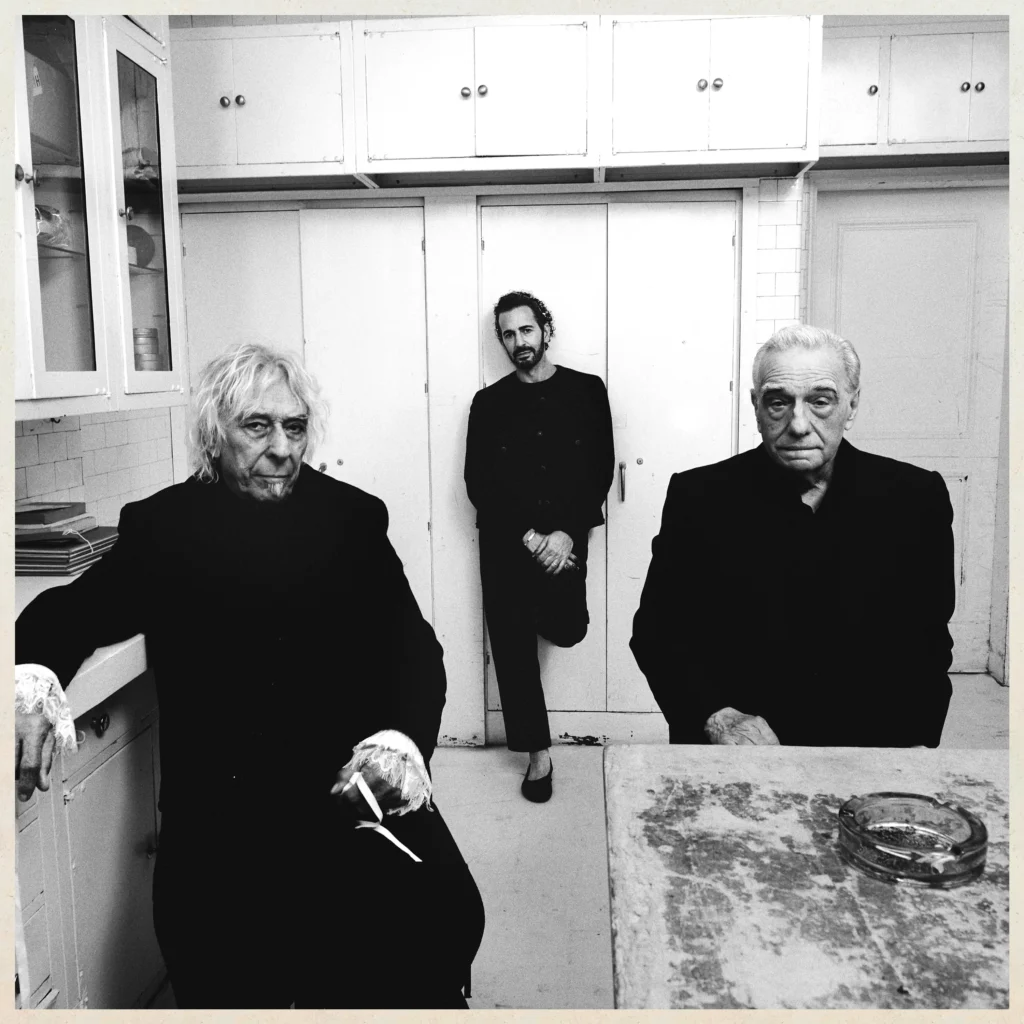
Shot by Aidan Zamiri, the album cover is a black-and-white photo of John Cale, Marc Jacobs, and Martin Scorsese.
How long is the album?
“11 songs, 30 minutes, 5 seconds,” according to Charli’s announcement post.
What are the songs called, and how long is each song?
Upon sharing the album’s tracklist, Charli also revealed the individual song lengths:
1. Rock Music (1:55)
2. SS26 (2.46)
3. Card Declined (3:28)
4. Camera (2:31)
5. 2007 (2:04)
6. I’m Afraid (2:11)
7. Yeah (2:17)
8. Wink Wink (2:03)
9. Persona (2:37)
10. Magic Metal Montana (2:31)
11. No One Lasts Forever [feat. David Cronenberg (5:42)
What else has Charli said about the album?
In the British Vogue story, Charli gave a little more backstory about the direction she took with the record. “If I’d made another album that felt more dance-leaning, it would have felt really hard, really sad,” she said. “But what’s interesting for me is to bend the possibilities of what my perspective on that could be.” She added, “Now there’s just so much noise around anything else that I do in a way that I sometimes find a bit pointless. I’m like, ‘Why don’t I just make the album and listen to it with A. G. and Finn?’ But there’s obviously a narcissism that prevents me from doing that.”
Charli also said that the new album Charli “is commenting on how I interact with the joint main love of my life outside of George and what would happen if it was taking from me — how I would have no purpose, and how for good or bad, art does provide me with purpose in my life.” Presumably, that means there’s no lyric about wanting to rock out with George.
Cook had this to say about the process: “It’s looking for this intensity. It’s not just this flex of, ‘Oh, I did this other album.’ She’s really responding to a feeling that a lot of people have in 2026 of there being so much, almost too much. What do you hold onto? I’m inspired by seeing how she’s so ready to do that rather than take it easy.”
What does the album sound like?
Snapes got to hear some of the in-progress album, and her descriptions offer some idea of what the record might sound like. Of one song with the sample lyric “Card declined,” she writes, “Queasy feedback warps beneath a dead-eyed incantation about going shopping for a new personality and falling at the first hurdle.” Another is “a scuffed, sweetly melancholy song about the ‘quite mad’ night at the philosopher girl’s apartment.” (Sample lyric: “Nothing’s gonna last forever/ And no one’s gonna last forever.”) Another song, in Charli’s words, is about how acting makes her feel “something new and undiscovered and something kinda violent”; Snapes compares it to the vulnerable BRAT highlight ‘I think about it all the time’.
Who is the lone feature on the album?
In a French TV interview, Charli teased that there be a single guest on the LP, saying, “But you won’t be able to guess. I would bet money on you not guessing.” On July 7, she revealed who that guest is: the Canadian horror film director David Cronenberg. Though unexpected, it’s not totally surprising, as Charli has called herself “a big Cronenberg stan” and proposed “Cronnenberg summer” as one alternative to Brat Summer.







 Congratulations on your new novel! How does it feel now that it’s out?