Achieving an undetectable hairline used to feel like an impossible task reserved for high-budget film sets. Modern innovations in lace design and human hair crafting have transformed hairpieces into seamless, versatile styling accessories for daily fashion and protective care.
Whether you seek to shield your natural locks from heat or simply want to change your look with confidence, high-definition construction bridges the gap between synthetic appearance and reality. You can experience effortless beauty while giving your natural scalp room to breathe.
How High-Definition Lace Creates Invisible Transitions
Traditional lace materials often felt thick, visible, and heavy against the forehead. High-definition lace uses ultra-thin, sheer Swiss mesh that mimics the look of natural skin tone without heavy customization.
Light passes through the sheer material effortlessly, allowing your natural complexion to blend with the hairpiece. The delicate weave softens the harsh perimeter line, making the transition from forehead to hairpiece virtually invisible.
Custom cap options and natural hairline construction play an active role in achieving this seamless look. Fashion-conscious buyers looking for realistic, high-definition lace pieces and toppers can explore options from brands like Nuola Wigs to find a style customized for their look. Selecting the right fit ensures that the front edge lays flat against your skin, eliminating the bulkiness of older models.
Choosing Hair Density for Realism
Natural hairlines feature lighter density along the edges and gradually build thickness toward the crown.
Start with lower edge density: Selecting a piece with hand-knotted, sparse front edges creates the realistic illusion of natural baby hairs growing straight from the scalp.
Match your natural scalp balance: Choosing extreme volume directly at the forehead line creates an artificial wall of hair, so balanced gradations remain essential.
How Do 100% Human Hair Pieces Compare to Synthetic Fibers?
Understanding the differences between synthetic fibers and genuine human hair helps you make a long-term investment in your styling routine.
Synthetic units offer pre-styled convenience right out of the box. Heat styling tools quickly damage synthetic fibers, restricting your ability to change parts, curl, or straighten your unit.
Raw virgin human hair offers complete styling freedom and moves with natural fluidity. You can blow-dry, curl, color, and wash human hair just as you would your own growth. Proper maintenance extends the lifespan of human hair pieces significantly longer than synthetic alternatives.
Maximizing Human Hair Lifespan
Apply a thermal protection routine: Treat human hair units with protective sprays prior to using flat irons or curling tools to prevent fiber drying.
Hydrate with deep conditioners: Regular moisture treatments preserve soft movement, shine, and structural elasticity across repeated wearing cycles.
What Scalp Health Benefits Come with Glueless Cap Design?
Glueless cap constructions eliminate the need for heavy liquid adhesives or harsh tapes along the delicate hairline boundary.
Built-in adjustable straps, silicone grips, and strategically placed combs keep the hairpiece secure throughout daily activities. Removing sticky residues from your styling routine reduces the risk of mechanical tension, friction, and clogged hair follicles along your forehead.
Recognizing Scalp Sensitivity and Protection
Direct application of harsh glues and synthetic materials can cause skin issues over time. Research published in PubMed notes that allergic contact dermatitis on the scalp often mimics seborrheic dermatitis, presenting symptoms such as hair thinning or localized hair loss.
Glueless cap frameworks give your skin room to breathe, preventing moisture buildup and chemical reactions. Switching to glueless caps supports long-term hairline preservation while keeping your protective routine clean and easy to manage.
How Does a Quality Hairpiece Support Medical and Protective Needs?
Wearing hairpieces goes beyond simple daily fashion choices for many individuals navigating thinning hair or medical hair loss conditions.
Having access to high-quality scalp prostheses offers direct emotional and functional support during hair recovery journeys. Official medical guidelines from Blue Cross VT classify cranial scalp prostheses as essential prosthetic supplies that conceal baldness and support personal adornment.
Choosing breathable, soft-base materials ensures sensitive scalps remain comfortable throughout extended wear. High-definition craft blends protective hair care with natural aesthetics, helping you feel confident and comfortable in every setting.
How to Maintain a Natural Look with Proper Hairpiece Installation
Proper installation plays a crucial role in achieving a natural appearance and keeping your hairpiece comfortable throughout the day. Begin by preparing your natural hair with gentle braiding or a flat foundation to create an even surface beneath the cap. Position the lace carefully along your natural hairline, ensuring the front edge blends seamlessly with your skin. Choosing the right cap size and adjusting the fit helps prevent slipping, unnecessary tension, and an unnatural appearance around the forehead.
Regular maintenance also helps preserve the quality of HD lace and human hair over time. Clean the lace gently to remove oil, sweat, and product buildup, and use a soft brush to detangle the hair from the ends upward.
Investing in high-grade human hair pieces with modern HD lace offers superior comfort, durability, and natural aesthetic movement. Protecting your natural scalp while enjoying styling flexibility empowers you to express your personal look with total confidence.
Navigating the aftermath of a sudden accident often involves severe physical pain and overwhelming stress. Medical bills can accumulate rapidly, leaving victims unsure of how to cover their basic expenses. Navigating strict filing deadlines and complex paperwork without proper support makes recovering damages far more challenging.
Serious Accidents Require Deep Legal Experience
Every personal injury claim brings its own unique set of circumstances, evidence, and legal hurdles. Serious vehicle collisions, workplace accidents, and slip-and-fall incidents each demand a tailored approach to build a defense. Engaging with personal injury lawyers who possess deep institutional knowledge can make a difference when negotiating with tough insurance adjusters.
A recent article noted that plaintiffs who hired legal counsel received an average of $77,600 in compensation, compared to an average of $17,600 for those who represented themselves. This dramatic difference in settlement outcomes highlights the advantage of professional representation during negotiations. Proper evidence collection ensures that insurance companies cannot dismiss your losses.
Comprehensive claims require strong evidence gathered right after the incident occurs. Whether it’s The Trapani Law Firm or another law firm, securing qualified legal assistance early helps protect your rights while you focus on physical healing. Having a strong advocate in your corner provides peace of mind throughout the entire process.
Understanding the True Value of Your Claim
Calculating fair compensation involves much more than adding up your immediate hospital charges. Many injury claims must account for future medical care, lost wages, and long-term rehabilitation costs. Legal professionals evaluate these complex variables accurately to help secure the financial settlement you deserve.
Emergency room visits and initial hospital expenses
Ongoing physical therapy and specialist appointments
Lost wages from time taken off work to recover
Long-term pain, suffering, and emotional distress
Evaluating non-economic losses like emotional trauma or reduced quality of life requires distinct expertise. Without accurate assessments, victims risk settling early for amounts far below their actual long-term needs.
The Role of Evidence in Building Strong Claims
Strong evidence serves as the foundation for any successful personal injury claim. Physical proof from the scene of the accident provides clear details about how events transpired. Promptly gathering witness contact details, photographic evidence, and police reports helps prevent key details from fading over time.
According to research from Rev, plaintiffs who hired a lawyer received an average of $77,600 in compensation, compared to an average of $17,600 for those who represented themselves. This dramatic difference in settlement outcomes highlights the massive advantage of professional representation during negotiations. Proper evidence collection ensures that insurance companies cannot dismiss or downplay your legitimate losses.
Navigating Complex Insurance Company Tactics
Insurance carriers often aim to settle claims quickly for the lowest possible amount. Adjusters use strategic questioning to get claimants to make statements that might harm their case later. Having professional representation stops these aggressive tactics and protects your rights during every conversation.
When evaluating your legal options, finding the right legal team is vital to your success. Experienced attorneys understand how to push back against low settlement offers effectively. They know the tactics insurers use to delay claims or minimize legitimate payout requests.
Why Self-Representation Poses Serious Risks
Attempting to manage a legal claim entirely on your own creates significant risk. Missing procedural deadlines or failing to file proper documentation can ruin an otherwise solid case. Insurance adjusters take advantage of unrepresented victims who lack familiarity with procedural rules.
Misunderstanding complex legal filing deadlines and statutes of limitations
Accepting initial settlement offers that fail to cover future treatment costs
Making recorded statements that insurance adjusters use against the claim
Representing yourself requires mastering procedural rules while simultaneously trying to physically recover from painful injuries. The immense stress of managing filings and evidence collection can negatively impact your health. Entrusting these tasks to professionals allows you to focus fully on your recovery.
Critical Deadlines in Personal Injury Claims
Every jurisdiction enforces strict time frames known as statutes of limitations for personal injury lawsuits. Failing to file your claim within these legal boundaries permanently revokes your right to seek financial recovery. Acting promptly after an accident protects your rights and ensures critical evidence remains accessible.
Data highlighted by Casepeer indicates medical records are the largest expense category for personal injury law practices. Obtaining, organizing, and analyzing these extensive medical files takes considerable time and resources. Starting the legal process early gives your legal team plenty of time to assemble a robust claim before deadlines expire.
How Specialized Guidance Changes Settlement Outcomes
Specialized guidance changes how insurance companies view your claim from day one. When insurers know you are represented by skilled trial advocates, they approach negotiations far more seriously. This professional leverage often leads to higher settlement offers without the need for prolonged courtroom litigation.
Legal experts handle all communication with insurance adjusters, medical providers, and defense counsel on your behalf. They calculate the full future financial impact, including prospective career changes or lifelong medical dependencies. Professional guidance levels the playing field against powerful corporate defense teams.
Navigating a personal injury claim demands patience, diligence, and professional insight. Securing expert guidance protects your legal rights while relieving the heavy burden of dealing with insurance companies. Taking action quickly ensures you receive the full support and financial compensation needed to rebuild your life.
Fontaines D.C. have dropped their much-anticipated Rosalía collaboration ‘Where Is Gone?’. It’s the latest offering from their upcoming LP Dopamine Chamber, following ‘Marianne’ and ‘Tongue’. Check it out below.
“I’ve been a fan of ROSALÍA since her debut album, which was absolutely beautiful,” guitarist Carlos O’Connell, who has recently been reconnecting with his Spanish heritage, said in a statement. “What really excited me was how she was keeping a Spanish tradition of music alive, which in a spiritual way felt akin to what we’ve tried to do with Irish music. For someone with roots in both countries, it’s been beautiful to see. She’s an artist who’s blown me away at every stage since.”
Dopamine Chamber is out this Friday, October 16 via XL.
A new legal thriller is making waves online. With an appealing cast and killer premise, it’s appointment television you don’t want to miss.
In War, two elite London law firms fight over a high-profile divorce. Expect messy legal maneuvering, infidelity, backstabbing, and questionable ethics. Is all this enough to ensure a season 2? Here’s what we know so far.
War Season 2 Release Date
War was given a two-season order from the get-go. In other words, it will definitely return with more episodes.
That said, the show is an anthology. While the follow-up will feature the same legal teams, it will focus on a different legal battle.
According to Sky, production on War season 2 has already wrapped. There’s no official premiere date available yet, but we can expect the next installment sometime in late 2027.
War Cast
Dominic West as Morgan Henderson
Sienna Miller as Carla Duval
Phoebe Fox as Serena Byrne
James McArdle as Nicholas Taylor
Nina Sosanya as Beatrice “Queen Bea” Ubosi
Pip Torrens as St John Smallwood
Archie Renaux as Jonathan “Johnny” Warren
Celia Imrie as Joy “Budgie” Budge
Nick Mohammed as Michael Stefanou
Emma Laird as Molly Giordano
What Could Happen in War Season 2?
War revolves around the divorce between Morgan Henderson, a wealthy technology entrepreneur, and Carla Duval, a successful film star. The collapse of their high-profile marriage threatens to become one of London’s most sensational legal battles.
Carla is represented by Taylor & Byrne, while Morgan’s interests are handled by Cathcarts & Sons. The plot follows the two teams as they turn the breakdown of a relationship into a professional contest. The lawyers must anticipate their opponents’ moves and protect their clients’ reputations, all while figuring out how much they’re willing to compromise their principles in order to win.
While War season 2 has been confirmed, few details about the plot have been revealed at the time of writing. We do know that it will centre on a defamation case and star Marissa Tomei, Kelly Macdonald, and David Harewood.
Until then, the first season is in full swing, with only two episodes out so far. You can catch the remaining six weekly on Sky and NOW in the UK. The finale is scheduled for late November.
Are There Other Shows Like War?
If you’re enjoying War, shows with similar vibes include Succession, Industry, The Good Wife, The Good Fight, A Very British Scandal, and Divorce.
American Motors have dropped a new single, ‘marlboro miles’, alongside a music video. It’s another grim preview of the Pennsylvania band’s forthcoming album Functional Music, following lead cut ‘No Horses’. Check it out below.
The group’s Dustin White said of the track: “A single without a chorus? Why not baby. In the times before thrift stores just threw out all photos and slides I found a photo of a woman laying in a bed surrounded by Marlboro Miles. It could’ve been Camel Cash, but I’m 100% sure it was some sort of cigarette related currency. Sadly that photo is lost to the abyss that is multiple cross country moves, time, and a general ‘fuck it’ attitude, but it lives in my mind. The first verse deals with a science fiction convention that takes place in Columbus, Ohio that we used to party at every year. It was magical. I saw a Star Wars Stormtrooper and a Klingon makeout there once. This song feels like the connective tissue between our first record and the new one. It seems like a good way to signal that not everything on the record has big pop moments and plenty of it still exists in the same murky reverb drenched hit then pause world that we love. This one is really fun to play live.”
Commenting on the video, Amanda Lee McCarty, aka Clotheshorse, added:
The concept of Marlboro Miles (the real ones, not the song) is pretty dark at its core: buy more stuff from us (and in this case, that particular stuff is going to shorten your life) and in exchange…we’ll give you some different stuff that will advertise the stuff we sell. This isn’t necessarily a unique marketing idea. Yes, tobacco brands used to do this, but even today, brands, airlines, and grocery stores give you the chance to save up points and get free stuff. It makes us spend more money. But is the free stuff really that great? And is it really free?
We wanted to convey the idea of long desired/’earned’ stuff that is now just sitting in a landfill or a thrift store, but we didn’t want to be as literal as ‘here’s a Marlboro hat.’ Another thing we see in a major way in thrift stores is stuffed animals. Like aisles and bins of them. Stuffed animals and Marlboro merch have similar lifespans: wanted (and sometimes earned – in elementary school, I negotiated a Smurfette stuffed animal in exchange for a painful medical test)…then abruptly, stuffed in a donation bin or trash can.
Dermot Henry has announced his debut album, Bad Throw, Good Catch, which arrives on November 20 via Island. Today, the singer-songwriter has previewed with the single ‘I Love You, That’s All’, which he just performed on Later… With Jools Holland. Check it out below.
“I wrote this song when I was scared about the world last year,” Henry said of ‘I Love You, That’s All’ in a press release. “It seems like it’s gotten worse since then. It’s easy to slip into apathy and hopelessness and in this song I was trying to remind myself that connection, community and love are so important to getting around this.”
Bad Throw, Good Catch was tracked live to tape with producer Dom Monks at his Frome studio. Henry’s mother provided backing vocals on ‘Your Love Is A Lifetime’, while his grandad can be heard singing a snippet of an old West Country folk song on the closer.
“I had the beautiful privilege of making this album with some of my closest friends, family, and wonderful collaborators,” Henry shared. “Making this album was a process of trust, love and vulnerability that was captured mostly live and to tape. I am so proud of how this album balances intention and chaos, humour and despair and earnestness and irony. I am not someone who can conceive an end goal which meant us following the way the songs were leading, thus ending up at a conclusion that felt like it always had existed to me…”
Bad Throw, Good Catch Tracklist:
1. The Moon Looks Much Bigger When It’s Close To The Ground
2. (I Wish I Was) Ennio Morricone
3. Newest Old Friend
4. Pilots License
5. Dumb ‘Til I Die
6. Your Love Is A Lifetime
7. River of Dust
8. Big Ol’ Racecar
9. I Love You, That’s All
10. Roman Villa
11. Serious Eyes On A Serious Earth
12. Now, Forever
By the time Geese released their rapturously received fourth album, Getting Killed, Cameron Winter’s debut solo album already had the air of an instant classic. Its success wasn’t quite instantaneous, though: Heavy Metal came out in December 2024 to little fanfare, landing on very few year-end lists that month and ranking higher on every single one it made in 2025. Though it became one of my most-listened-to releases last year, I didn’t get to write about it in any significant capacity until I caught his intimate set at Primavera Sound’s auditorium this summer, the closest I thought I’d get to grasping the reception to his already-mythical performance at New York’s iconic venue. Now, Live at Carnegie arrives as a near-perfect time capsule alongside a Paul Thomas Anderson-directed concert film. As I did in my introduction to the Getting Killed review, I’m prompted bring up a quote by Leonard Cohen, who once warned Jarvis Cocker against dissecting the “sacred mechanics” of songs. Winter has always been at least somewhat deceitful in that crucial way, especially around the promotion of Heavy Metal. But the old mechanics are thrown out the window here, and stripping these songs – including three unreleased tracks – down to their core has a strange way of sanctifying them.
1. It All Fell in the River
Despite opening the record with an unreleased song, Winter allows himself to get comfortable on ‘It All Fell in the River’, whose relatively uncomplicated arrangement belies its overwhelming emotionality. As his pace quickens on the second verse, the song’s peppiness opens the door to existential anxiety: “I’m remembering when what fell in the river once fell on my head,” he sings ambiguously. There is something here about being present with the immensity of loss, not at the moment something passes, but in its fervent memory. Soon, Winter will start launching at the keys of the grand piano as if searching for remnants of it in the grass; for now, he is mostly remembering.
2. Try as I May
All warmed up, Winter accentuates the vulnerability inherent in ‘Try as I May’ with literal effortfulness, nowhere more pronounced than in his recurring, variable falsetto. In this rendition of the track, he has nowhere to hide, all too aware of how this exposure magnifies its emotional dynamics – not to mention the irony of “You came down to watch/ My private ceremoniеs/ All in the dark parts of rooms.” Listening to Live at Carnegie Hall in the dark comfort of your own home, this privacy feels intrusively true. And devastating as it already is, there is some relief in watching him land on a genuinely melancholy note by the song’s end.
3. Emperor XIII in Shades
With the live album’s release, ‘Emperor XIII in Shades’ feels so entrenched in the church-like atmosphere of Winter’s post-debut performances that it’s hard to imagine it fitting into his next solo record. More than a canny prelude to the “God is real” climax, the song sustains a reverent, swoony mood, though not without delivering the set’s most deceptively obvious punchline: “It’s too bad what happened to Jesus/ But Friday was alright.” He’s kind of kidding this time.
4. The Rolling Stones
Winter’s virtuosic cheekiness on the piano permeates the entire performance, but it gets a moment in the spotlight right down the middle of ‘The Rolling Stones’, which finds him sustaining a trill long enough to invite rapturous response before bathing the room in a beam of light. He knows good sense never did its master any favours, but madness has only left his “brown hair all over the goddamn floor.” The best he can do, then, is lean back in desperation and let the authorities bear witness to “me and the pianos,” sounding so much more literal in this context.
5. Love Takes Miles
The applause at the end of ‘Love Takes Miles’, noticeably (as edited) a few seconds longer than the previous songs, signifies that it was already a beloved classic by the recording of this performance, a year into its release. Winter clearly isn’t tired of it, though – his stripped-back rendering is straightfoward but breathless (notice how he careens through the lines “I need somebody sent down from the sun/ Talking to me the way you used to”), lingering in the song’s lonely romanticism as opposed to its wider resonance; as if he’s writing it down in this moment rather than registering the audience beside him.
6. Drinking Age
That loneliness is exacerbated on ‘Drinking Age’, the Heavy Metal song that most gives itself over to a piano-only performance. Still, stripping it of the French horn that imbues the original with a dreamy haze has a bone-chilling effect. The reverberating silence makes even you, the listener not present at the venue (a reality underscored by the inscrutable laughter heard at the end), wonder: Is this night forcing Winter to contend with who he’s become? Is there a meta dimension to “I’m gonna be a piece of meat”? Maybe not, but he allows himself to get lost in the thought, “oohing” and “ahhing” through another melancholic ending.
7. Cancer of the Skull
Winter addresses the crowd for the first time while introducing the song, but no spell is broken. He’s got nothing to lose at this point; after its most quotable lyric, “Songs are a hundred ugly babies/ I can’t feed,” he hums a little and stretches his voice for a full 15 seconds before launching into the verse that foreshadows ‘$0’.
8. If You Turn Back Now
A couple of tracks prior to that highlight, though, sits its evil twin: an unreleased song that betrays the narrator’s emotional avoidance – and transparency – relating to matters of the heart, where the devil is as real as God. His performance is kaleidoscopic and stunningly melodic, his voice sliding into affectation only when he sings, “You’re trying to know who you should want, but you can’t.” Like ‘Emperor XIII in Shades’, his religious language is impossible to ignore, but these lyrics have the demystifying, humanizing effect of a classic breakup ballad. There’s no dressing up the closing couplet: “You’re trying to win back my heart, but you won’t/ My heart is for those who leave me alone.” A small part of it, at least.
9. Nina + Field of Cops
My strongest memory of watching Winter live is of the torrent of feeling culminating in ‘Nina + Field of Cops’, which registers as the most inspired performance on Live at Carnegie Hall, too. The studio version’s swirling piano feels like ambience compared to its visceral closeness here, reflecting a man on the verge of eating his keys. Verbose and exacting, transcendent and naked, the current of words is ripe for interpretation yet unmistakable in its earnestness. Winter fumbles some towards the end, voice faltering, the sign of an artist in complete awe and despair, and stupidly, stupidly good.
10. $0
No doubt the album’s apotheosis, ‘$0’ stands as proof that a live album wouldn’t hit the same way at any other point in Winter’s career – these songs are so intricately connected, rife with references to each other, that cutting some would water the rest ones down. The “Woo!” that some guy yells when he dryly intones “Fuck these people” is canonical in its own way, reoccurring at subsequent shows. Blown out to nearly nine minutes, though, it must be taken as a whole, a feat of endurance unlike anything in his discography.
11. Take It With You
When Winter released ‘Take It With You’ and ‘Vines’ as his debut solo music, almost exactly two years ago, “frontman of NYC-based band Geese” was a necessary appositive, and Live at Carnegie Hall seemed far-fetched. But the first of the two tracks that close out the live album is a gut-wrenching ballad that fits right in, scanning as a direct companion to ‘If You Turn Back Now’. Though seemingly more resolute, his voice has rarely sounded as fragile as when he sings, “If you’re aching to come home, remembеr/ This place ain’t home anymore.” But while his lyrics speak of memories and simpler times, there is once again a viscerality to their rendering: on the line “If you ever get the ache some cold December,” ever is accompanied by a low note that sends shivers down your spine. 2024 may or may not have been a simpler time in Winter’s life; this is a record of something else.
12. Vines
“I keep killin’ your soul with my coldness,” Winter admits, as if in direct response to the previous track and its vindictive farewell. But maybe it also reflects some wariness around the temperament of his music; maybe there’s a way in which “I feel lonеliest when I’m with you” extends to the listener, selfish as that thought may be on our (“the banana-growing masses,” if you will) part. Winter may think little of it, but a few bits of dark humour and embittered sentimentality do nothing to detract from the set’s pervasive warmth, dizzying in a way that the album cover makes sure to capture. We can only thank God it’s a moment frozen in time.
A teen girl who doesn’t quite fit in. Bullies. Telekinetic abilities. A prom night to remember. Does any of this ring a bell? Carrie, a reimagining of Stephen King’s beloved novel, takes the story you’re probably familiar with and twists it into something brand new.
Created by Mike Flanagan, the Prime Video series is currently dominating the platform’s charts and enjoying the kind of buzz you expect during spooky season. Could this mean that a follow-up is on the way? Here’s what we know so far.
Carrie Season 2 Release Date
At the time of writing, Prime Video hasn’t renewed the supernatural series for more episodes.
However, that doesn’t mean that Carrie season 2 is out of the question. While the show is based on King’s novel, it takes some liberties, especially when it comes to the ending. Without giving away too much, the story could easily continue with another installment.
If that happens, new episodes might arrive in late 2027. For now, all we can do is wait and see.
Carrie Cast
Summer H. Howell as Carietta “Carrie” White
Samantha Sloyan as Margaret White
Siena Agudong as Susan “Sue” Snell
Alison Thornton as Christine “Chris” Hargensen
Joel Oulette as Thomas “Tommy” Ross
Josie Totah as Christina “Tina” Blake
Arthur Conti as William “Billy” Nolan
Thalia Dudek as Emaline West
Amber Midthunder as Ms. Rita Desjardin
Matthew Lillard as Henry Grayle
What Is Carrie About?
Carrie White has spent most of her life isolated from the outside world. When her father dies, she leaves the sheltered environment her parents created and attends public high school for the first time. There, she enters an unfamiliar social world she has trouble navigating.
Unfortunately, classmates mock her awkwardness, and a cruel incident turns her into the target of a bullying scandal. Social media allows the humiliation to spread, making things even harder for Carrie. At the same time, she discovers that she has telekinetic powers which allow her to move objects with her mind. Things escalate from there.
The first season adapts the King book for a modern audience, while also applying some changes to the source material.
“It was very much on my mind that there was so much potential for it to expand further, and we wanted to leave room for that too,” creator Mark Flanagan said.
In other words, Carrie season 2 remains a possibility. Flanagan has also teased that his dream scenario involves three seasons. Fingers crossed.
A desire to foster an open and permeable relationship with the viewer has seen curator and cultural researcher Xin Liu frame both artist and observer as expeditionist. In the exhibition Wanderer of the Earth at Sol de Paris Art Gallery in Spring, for example, our physical movement around the gallery space is intended to mirror the journey artist Wei Yixin takes us on across their surreal terrains.
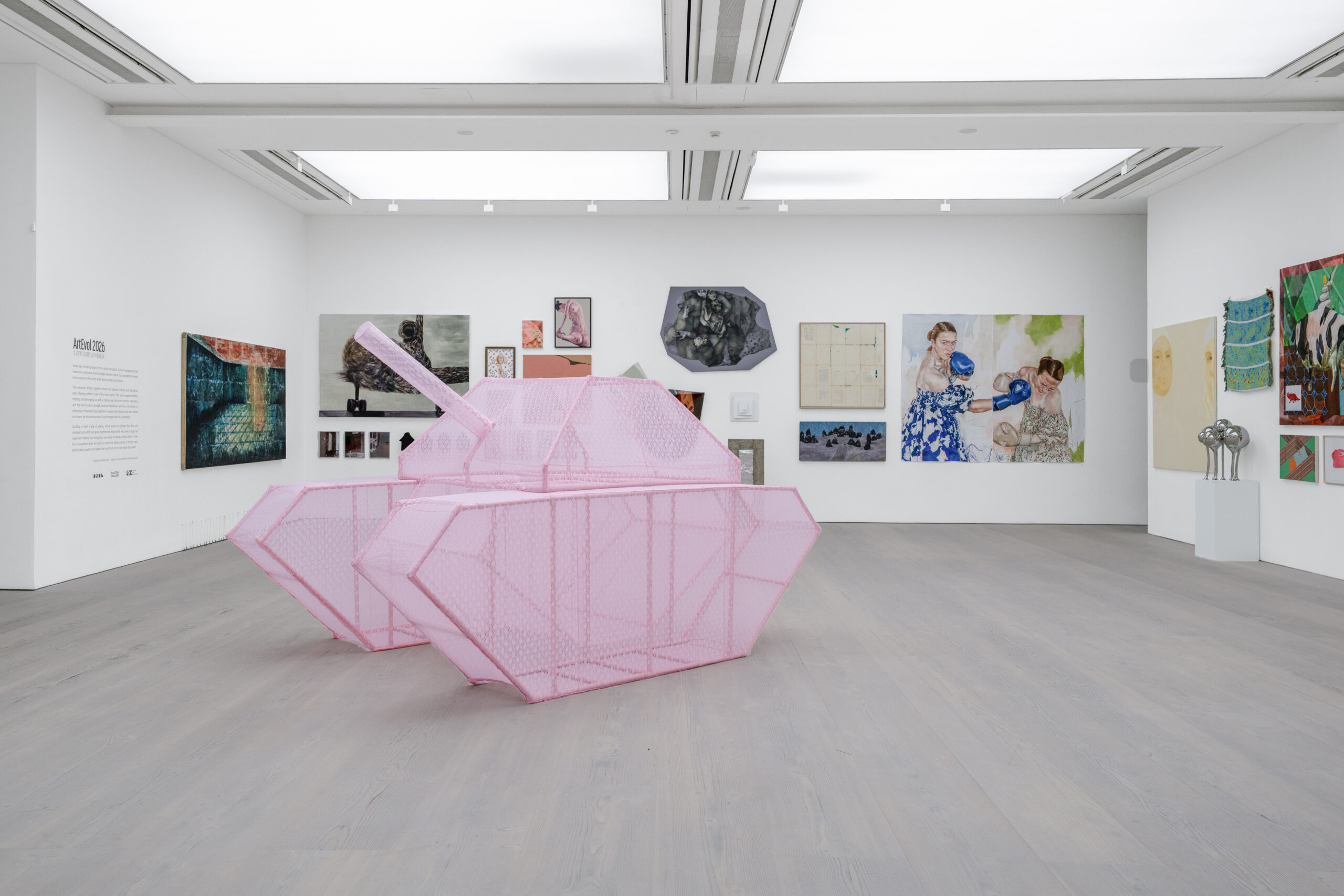
Working alongside Nelson Qin as executive curator of Saatchi Gallery’s large-scale international group exhibition ‘ArtEvol 2026: A View From Everywhere’, Liu realises an ambition to elucidate pluralist creative expressions. The pair make sense of the impossible omniscience that the show’s title proposes, taking the challenge of boundlessness in their stride.
Installation view of “ArtEvol 2026: A View from Everywhere”, Saatchi Gallery, 2026.
Curating is, of course, its own way of seeing: the works chosen and how they are arranged giving prominence to what we visitors –– bringing our own perspectives –– regard as important. With ‘ArtEvol’, Liu eschews the resolution of any universal point of view, placing many global artistic positions in dialogue with one another and asking what might arise when they meet.
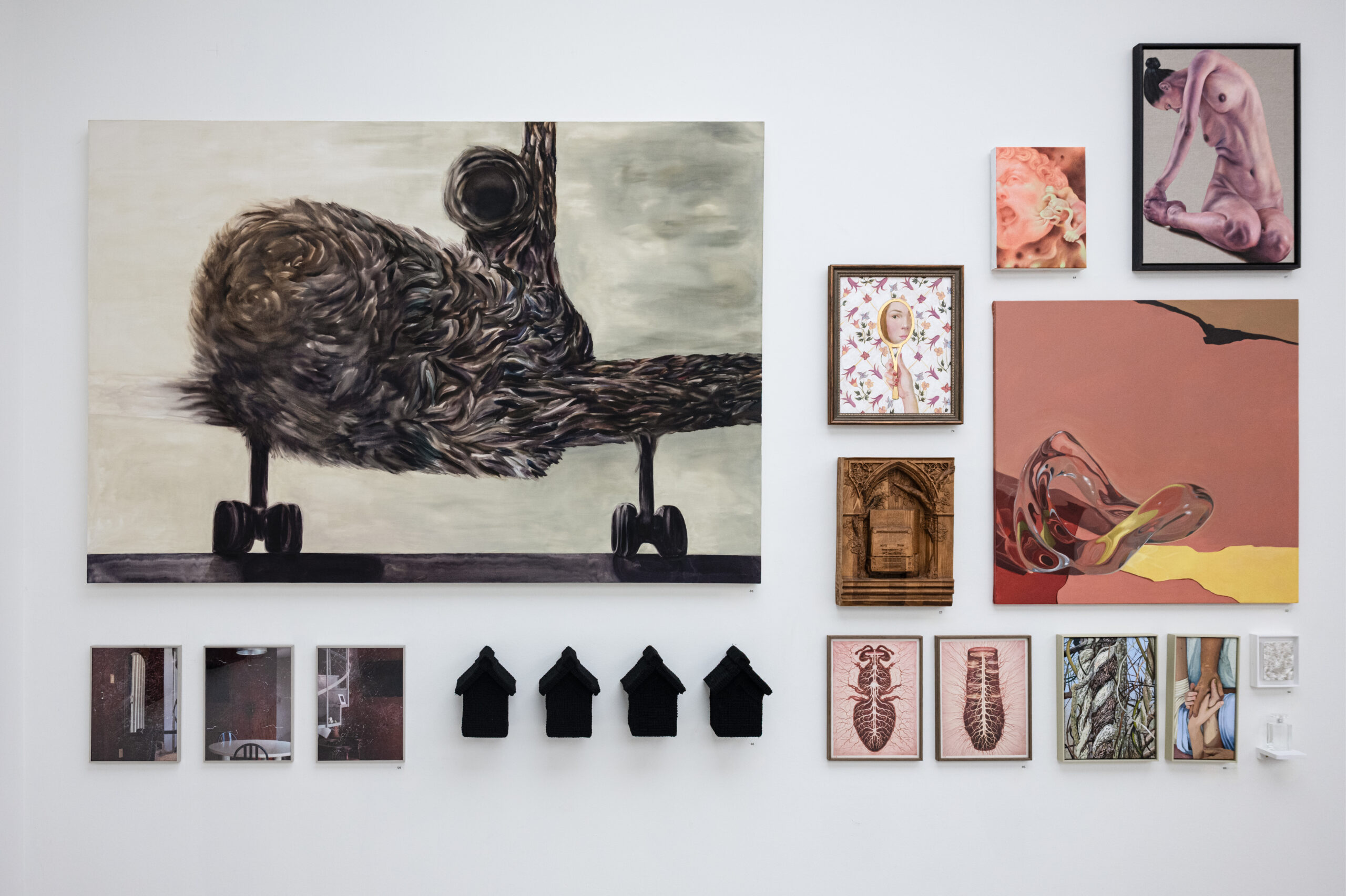
Installation view of “ArtEvol 2026: A View from Everywhere”, Saatchi Gallery, 2026.
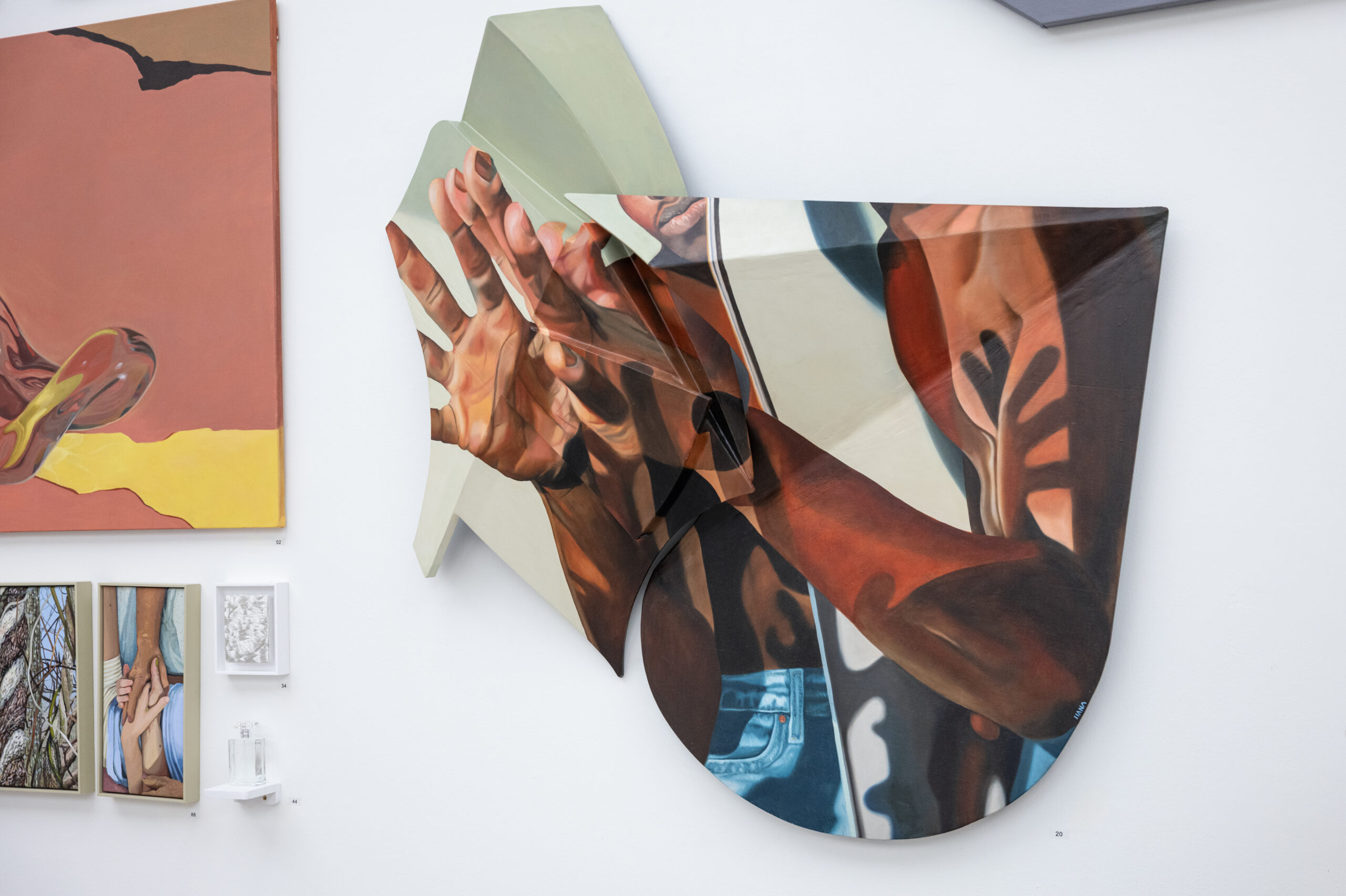
Within this framework, Liu establishes her own domains of interest. Mounted on one of the gallery walls are works all dealing variously with structures of connectivity, and how they register within and upon bodies. In Emily Hana’s work in oil titled Moment (2025), a reaching figure is painted across shards of a sculptural structure, the physicality of their longing for connection coming into focus only as the viewer moves around the work. To its left, the microscopic diptych, Bee Nervous System (2026) by Andrea Abbatangelo is more anatomical in dealing with the theme; the mycelial sensory network of the pollinators body splayed in fleshy pinks.
An academic background in creative and cultural industries informs Liu’s integration of social observation and contemporary visual analysis to her curation. In the group exhibition ‘For a Little While’ which ran at Apsara Studio, London last month, the works chosen by Liu mostly spun around the lasting effects of memory and perception, but there was scope to consider the connotative relationships between technological media and perception too.
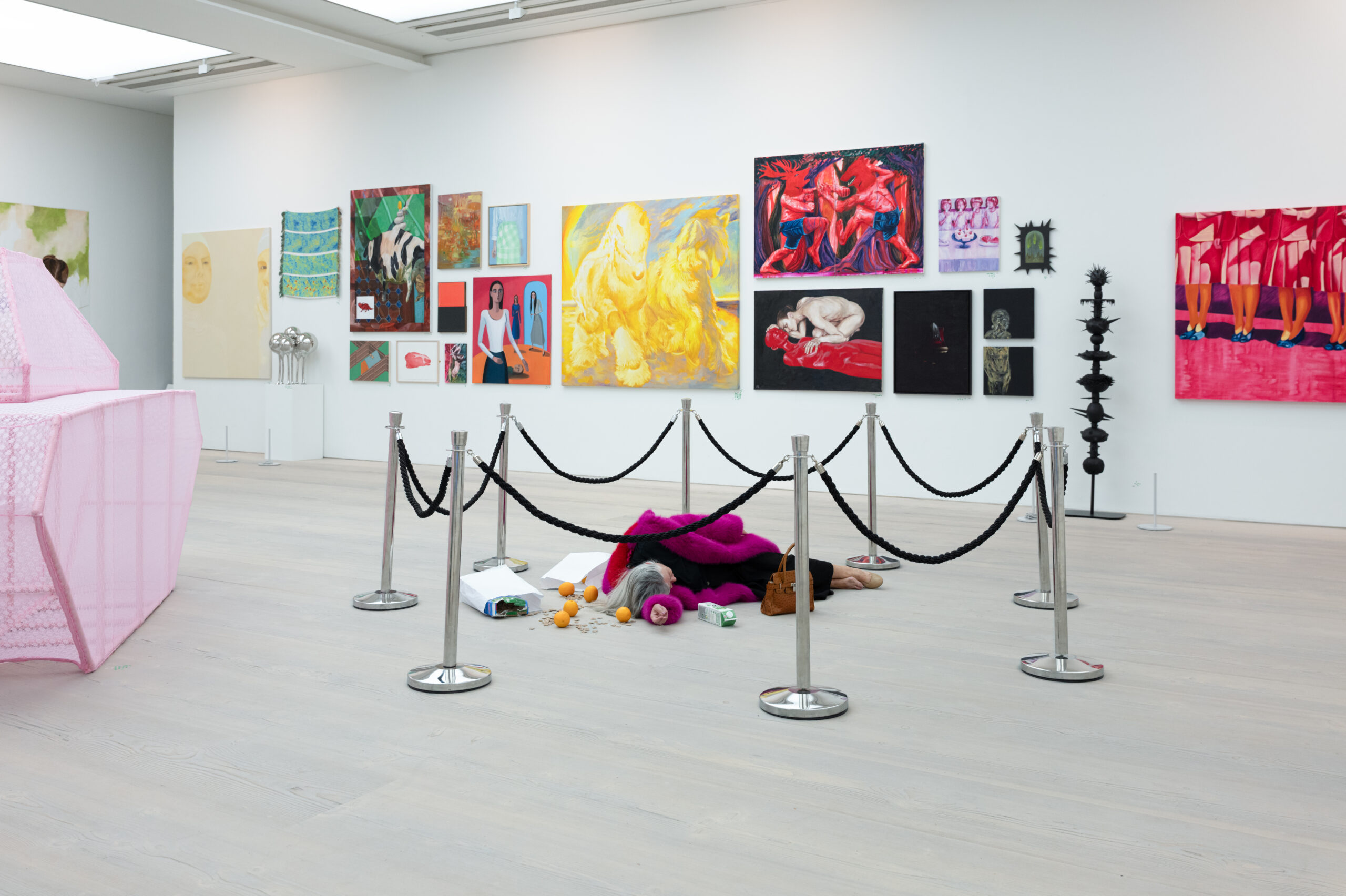
Installation view of “ArtEvol 2026: A View from Everywhere”, Saatchi Gallery, 2026.
The scale of ‘ArtEvol’ affords Liu the space to take this inquiry further, examining how art reconstructs individual experience within a digitalised social environment. In the painting Human (2026) by Judy Clarkson for example, humanity’s uneasy fascination with AI and the notion of moulding our own adversary is represented in two figures; a naked woman bent over and caressing her blood red, humanoid clone.
BeatViz is the best fit in this comparison for independent musicians who want to turn a finished song into a complete AI music video with structured scene planning and timeline editing. Seedance 2.5 is better suited to longer standalone video sequences, Kling 3.0 offers useful controls for character-driven performances, and MiniMax H3 is an option for high-resolution cinematic shots. Seedance 2.5 can generate up to 30 seconds per pass, reducing the theoretical minimum for a three-minute video to six clips before retries, editing, or transitions.
For independent artists, the biggest challenge is no longer generating an impressive AI video clip. It is turning an entire song into a music video that feels consistent, follows the track’s structure, and looks like a finished creative work.
Different AI video technologies solve different parts of that problem. Some specialise in individual shots, while music-focused platforms handle the planning, generation, and assembly of a complete video.
This guide compares the most relevant options for independent musicians in 2026, including their creative strengths, practical limitations, and ideal use cases.
Best AI Music Video Generators in 2026: Quick Comparison
Before choosing a tool, it helps to distinguish a complete AI music video generator from an underlying video generation model.
Tool or model
Best suited to
Key capability
Main consideration
BeatViz
Complete AI music videos from songs
Music analysis, scene planning, AI Director, timeline editing, lip sync
Multi-scene projects still require review and generation credits
Seedance 2.5
Longer visual sequences and creative storytelling
Up to 30-second generation, multimodal references
Full-song assembly may require a separate workflow
Kling 3.0
Performer-focused videos and character-driven scenes
Character references, multi-shot control, up to 15 seconds
Continuity between separate generations needs attention
MiniMax H3
Cinematic imagery and detailed visual scenes
Up to 2K resolution and 15-second clips
Individual shots need to be assembled into a music video
These are use-case recommendations based on documented features, rather than rankings from a controlled performance test.
The distinction matters: a video model generates visual material, while a dedicated music video platform can help organise that material around the structure of a song.
BeatViz: Best AI Music Video Generator for Complete Songs
BeatViz is designed around a problem that independent musicians frequently face: creating a full music video from an existing audio track without manually managing every part of production.
Rather than treating music as background audio added after video generation, BeatViz starts with the song.
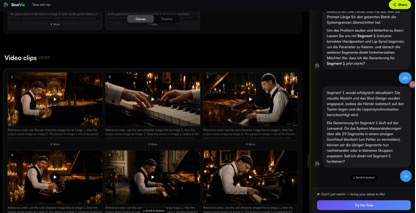
Its workflow analyses the music, develops a visual direction, plans scenes, generates shots, and provides tools for assembling the video.
That makes BeatViz particularly relevant to singer-songwriters, independent producers, and artists who want a complete music video rather than a handful of disconnected clips.
From Song Analysis to a Complete Music Video
A finished song already contains a natural visual structure.
The introduction establishes a mood. Verses develop the narrative. Choruses often demand greater visual energy, while a bridge may call for a change of pace or atmosphere.
BeatViz’s guided Workflow uses music analysis to help develop visual concepts and a scene-by-scene plan.
For example, an independent pop artist could build a video around an intimate opening performance, transition into larger visual environments for the chorus, and return to familiar imagery for the final section.
Instead of generating unrelated clips and hoping they fit together, the creative plan provides a starting point for consistency.
AI Director, Workflow, and Timeline Editing
BeatViz offers different approaches depending on how much control an artist wants.
Workflow Mode guides the creator through song analysis, visual planning, scenes, reference images, video generation, and assembly.
AI Director provides a conversational approach to developing the video’s creative direction, characters, and individual shots.
Editor Mode gives creators a timeline for arranging clips, adjusting sequences, working with first-frame images, and applying lip sync to selected performances.
These approaches are useful for different levels of creative involvement. An artist preparing a release may want guided planning, while a more experienced visual creator may prefer adjusting shots directly on a timeline.
Character Consistency and Lip Sync for Music Videos
A recurring challenge in AI-generated music videos is keeping a performer recognisable across changing environments and camera angles.
Reference images can help establish character identity, while carefully planned first frames can guide individual shots.
For singing performances, BeatViz also provides lip-sync tools that work with the audio associated with selected timeline clips.
Neither feature guarantees perfect results in every generation. Artists still need to review facial details, movement, clothing, and vocal timing.
For musicians, however, having these controls inside the same production workspace can make revisions more manageable.
Best for: Independent artists producing complete music videos, vocal performances, and multi-scene projects built around an existing song.
Seedance 2.5: Best for Longer AI Video Scenes and Visual Storytelling
ByteDance’s Seedance 2.5 offers a different approach, focusing on the generation of longer audio-visual sequences.
The model supports clips of up to 30 seconds in a single generation, alongside multimodal references and editing capabilities.
For artists exploring elaborate visual concepts, that extended duration creates interesting possibilities.
Why 30-Second AI Video Generation Matters
A three-minute song contains 180 seconds of music.
At a theoretical maximum of 30 seconds per generated clip, covering the entire duration would require at least six clips.
That does not mean six generations will automatically produce a finished music video. Failed generations, transitions, changes in camera angle, and creative revisions can increase the actual number significantly.
Still, longer sequences can be useful for continuous performances, narrative development, or scenes that benefit from sustained movement.
For example, a dream-pop artist might want a camera to follow a performer through a series of connected environments rather than cutting to a new scene every few seconds.
Seedance 2.5’s longer generation window makes that kind of visual storytelling worth exploring.
Best for: Experimental music videos, extended cinematic scenes, imaginative transitions, and artists comfortable assembling their own video.
Kling 3.0: Best for AI Music Videos With Consistent Performers
Kling 3.0 places particular emphasis on visual consistency, multimodal references, and more structured shot direction.
Its multi-shot functionality enables creators to define different camera angles and narrative beats within a single generation, with output durations of up to 15 seconds.
These capabilities are especially relevant to performance-led music videos.
Using Character References Across Multiple Shots
Consider an independent rock musician creating a video featuring the same singer across a rehearsal room, backstage corridor, and live concert stage.
Without reliable references, individual generations might alter the performer’s appearance, clothing, or hairstyle.
Kling 3.0 supports image and video references designed to help preserve identifying details while changing camera perspectives and environments.
Its structured multi-shot features also give creators more control over framing, shot sequences, and camera movement.
That can help with performance-oriented storytelling, although maintaining consistency between independently generated clips still requires review.
What About Lip Sync?
Kling 3.0 supports native audio generation and synchronised character speech.
However, generating a speaking character is not identical to synchronising a singer with an existing recorded song.
Musicians planning close-up vocal performances should check whether their chosen implementation supports the required audio-driven lip-sync workflow rather than assuming native audio generation will automatically match their track.
Best for: Singer-focused music videos, virtual performers, narrative scenes, and projects where character references are central to the visual direction.
MiniMax H3: Best for Cinematic AI Music Video Shots
MiniMax H3 focuses on multimodal video generation with high-resolution visual output.
The model supports videos of up to 15 seconds, resolutions up to 2K, and native stereo audio generation.
For independent musicians, its most interesting applications involve visually detailed scenes and atmospheric storytelling.
Creating a Cinematic Music Video on a Limited Budget
A singer-songwriter might imagine an expansive desert landscape, a dramatic coastal setting, or an intimate performance surrounded by carefully directed lighting.
Traditionally, bringing these ideas to life could involve significant location and production expenses.
Generative video models offer an alternative way to experiment with such scenes.
MiniMax H3 supports multimodal input and reference-guided generation, allowing creators to communicate visual information through more than text alone.
The result still depends heavily on direction, references, and the quality of individual generations.
For music videos, carefully chosen cinematic shots can work particularly well as introductions, instrumental passages, or dramatic closing sequences.
Best for: Atmospheric visuals, cinematic storytelling, detailed environments, and individual high-impact music video shots.
How Many AI Video Clips Do You Need for a Three-Minute Song?
Video generation duration is an important practical consideration, particularly for musicians planning a complete release.
A three-minute song contains 180 seconds of audio, but most AI video models generate much shorter sequences.
The following figures illustrate the theoretical minimum number of clips required if every generation uses the maximum available duration.
Model
Maximum clip duration
Minimum clips for 180 seconds
Seedance 2.5
30 seconds
6
Kling 3.0
15 seconds
12
MiniMax H3
15 seconds
12
These numbers are not production guarantees. They do not account for discarded generations, shorter shots, transitions, performance synchronisation, or other editing requirements.
A music video with rapid cuts might need considerably more material.
This is one reason a dedicated music video workflow can be valuable: it helps organise multiple generated shots around the song rather than leaving every production decision to a separate editing process.
How to Choose the Best AI Music Video Generator for Your Music
There is no single approach that fits every independent artist.
The strongest choice depends on the music, creative direction, and type of release.
For Independent Singers and Songwriters
Artists who want their own song to become a complete performance or narrative video should prioritise music analysis, scene planning, consistent character references, and editing control.
A music-focused workflow such as BeatViz is a practical place to begin.
For Electronic and Experimental Musicians
Electronic music often allows more freedom to explore abstract imagery, unusual motion, and non-linear storytelling.
Models such as Seedance 2.5 may be particularly useful for longer visual sequences and experimental concepts.
For Rock, Pop, and Vocal-Driven Performances
Character identity becomes especially important when a singer remains visible across several shots.
Reference-based generation, believable facial movement, and dependable editing tools should take priority over visual spectacle alone.
Kling 3.0’s character and shot controls are relevant to this kind of production.
For Cinematic and Atmospheric Music
Ambient, orchestral, and emotionally driven tracks may benefit from carefully directed landscapes, lighting, and subtle movement.
MiniMax H3’s high-resolution output makes it a potential option for detailed visual sequences.
How to Create an AI Music Video From a Song: A Practical Workflow
Regardless of which technology an artist chooses, a structured production process can reduce unnecessary revisions.
Step 1: Start With the Finished Song
Listen for changes in tempo, energy, instrumentation, and emotion.
Identify where the video should shift between performance, narrative, and atmospheric imagery.
Step 2: Define a Consistent Visual Identity
Choose a clear artistic direction before generating scenes.
Prepare reference images for recurring performers and define the general colour palette, locations, clothing, and visual style.
Step 3: Plan the Video Around Song Sections
Assign different visual purposes to the introduction, verses, choruses, bridge, and ending.
Repeated sections can share visual motifs without using identical footage.
Step 4: Generate, Review, and Revise
Work through the video in manageable sections.
Check whether characters remain consistent, motion looks believable, and the generated scenes fit the emotional direction of the music.
Step 5: Assemble and Prepare for Release
Arrange clips on the timeline, refine transitions, apply lip sync where needed, and check the finished video against the audio.
A carefully developed music video can also provide visual material for teasers, short-form clips, and release announcements.
Frequently Asked Questions About AI Music Video Generators
What Is the Best AI Music Video Generator for Independent Musicians in 2026?
For artists who already have a finished song and want to develop a complete music video, BeatViz is the most directly music-focused option in this comparison.
Artists who primarily want individual AI video sequences can instead evaluate Seedance 2.5, Kling 3.0, or MiniMax H3 according to their preferred duration, character controls, and visual requirements.
Can AI Generate a Full Music Video From One Song?
Yes. Music-focused platforms can help turn an uploaded song into a complete video through music analysis, scene generation, and editing.
However, a finished three-minute music video generally involves multiple generated sequences. Creative review and revisions remain important.
Can AI Music Video Generators Keep the Same Singer Across Different Scenes?
Reference-based generation can help preserve a singer’s appearance across different shots.
Consistency is not guaranteed, particularly when scenes change lighting, camera angles, clothing, or movement. Reviewing character references and individual frames can improve the process.
Do AI Music Video Generators Support Lip Sync?
Some platforms provide dedicated lip-sync features for aligning a virtual performer’s mouth movements with an existing audio track.
Others offer native audio generation or dialogue synchronisation. Musicians should check which workflow is supported before relying on a model for singing performances.
Are AI Music Video Generators Worth It for Independent Artists?
They can be particularly useful for artists who want to explore visual ideas without arranging a traditional video shoot.
The practical value depends on generation costs, creative control, editing requirements, commercial-use terms, and how much usable footage the artist can produce.
Final Verdict: What Is the Best AI Music Video Generator in 2026?
For independent musicians, choosing an AI music video generator comes down to a simple question: Do you need a collection of impressive video clips, or a complete music video built around your song?
Seedance 2.5 offers longer generation windows and flexible visual storytelling. Kling 3.0 provides relevant tools for character-driven performances. MiniMax H3 supports high-resolution cinematic generation.
BeatViz addresses the broader production process, combining music analysis, creative planning, video generation, lip sync, and timeline editing within a music-focused workspace.
For artists starting with a finished song rather than an individual video prompt, that distinction makes BeatViz a particularly relevant option.
The best AI music video is not necessarily the one with the most elaborate effects. It is the one that makes the music feel more memorable.